Unit 3: Water
5. The Frog
Let us Recite
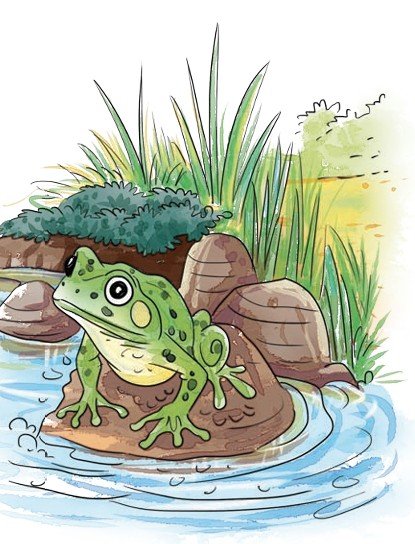
I sit in ponds and in the rain,
Or hop about in a muddy drain.

As a tadpole, I swim with cheer,
A tiny fish-like thing, so clear!
I flick my tongue to catch my food,
It works so fast—now that’s quite good!

I live on land and water too,
In places damp with drops of dew.
My colours match the plants and trees,
I hide so well in grass and leaves!

But snakes are near, I must beware,
Or else they’ll catch me unaware!
I croak my songs, they sound so loud,
Yet in my pond, I feel so proud.

I hop around, I jump so high,
Up I go into the sky!
With webbed feet, I swim with ease,
And leap so high in joyful breeze!
New Words
hop muddy flick damp dew beware croak webbed
Let us Think
- A. Answer the following questions.
- 1. Where does the frog like to sit or spend time?
- 2. How does the frog catch its food?
- 3. How does the frog move in water and on land?
- 4. What helps the frog hide in its surroundings?
- B. Think and discuss
- 1. What would it feel like to live like a frog, both in water and on land?
- 2. If you could hop as high as a frog, what fun things would you do?
- 3. How is a frog’s life different from a fish’s life?
- 4. How are frogs’ webbed feet similar to the flippers used by scuba divers?
Let us Learn
- A. Choose the correct words from the brackets and fill in the blanks.
- 1. My colours match the plants ............... trees. (or/and)
- 2. Would you like to learn about frogs ............... tadpoles? (because/and)
- 3. I hop around happily, ............... I must watch out for snakes! (but/so)
- 4. Frogs swim easily ............... they have webbed feet. (because/or)
- B. The following words have been rearranged into sentences. Choose the correct option.
- 1. hunts/night/the/silently/tiger/at
- Options:
- a. The tiger hunts silently at night.
- b. Tiger hunts the silently at night.
- c. Hunts the tiger at night silently.
- 2. elephants/in/forests/live/large/groups/in
- Options:
- a. Elephants live large in groups forests.
- b. In groups large, elephants live in forests.
- c. Elephants live in large groups in forests.
- 3. web/a/spider/carefully/its/weaves
- Options:
- a. A spider carefully weaves its web.
- b. Spider carefully weaves its web a.
- c. Carefully a spider weaves web its.
- 4. crocodile/waits/the/silently/riverbank/the/near
- Options:
- a. Crocodile waits the silently the near riverbank.
- b. The silently crocodile waits near the riverbank.
- c. The crocodile waits silently near the riverbank
- 5. a/swims/turtle/slowly/in/ocean/the
- Options:
- a. A turtle swims slowly in the ocean.
- b. Swims turtle slowly an ocean in.
- c. The ocean swims a slowly turtle in.
Let us Speak
- A. Three tongue twisters are given below. Try speaking each tongue twister slowly at first. Gradually increase your speed with each repetition. Count how many times you can say it correctly without making a mistake.
- 1. Four fierce frogs fight for flies.
- 2. Fast frogs flip-flop across fluffy fields.
- 3. Funny frogs flap floppy feet.
- B. Listen and repeat
- Say aloud every pair of words. Ensure that learners pronounce it clearly.
- Do this exercise at regular and frequent intervals.
Your teacher will say aloud the following pairs of words. Listen carefully and repeat each pair.
| bet | bat |
| set | sat |
| men | man |
| leg | lag |
| met | mat |
Let us Listen
My Frog’s World
Your teacher will read out instructions for you to follow and create your own ‘Frog’s World’ in the space provided on the next page.
- 1. Draw the place: Imagine a place where your frog might be happy, like a pond, a forest or a rainy area.
- 2. Draw your frog: Draw a frog in the above setting.
- 3. Decorate with words: Around your drawing, write some words from the poem that describe the frog’s life. You can even write your own short sentence about the frog’s world.
- 4. Colour it: Use colours to bring your frog’s world to life! Be creative and make it as colourful as you would like.
My Frog’s World
Read the instructions given in the ‘Let us Listen’ section, adding details of your own. For example, the first instruction may include details like trees, shrubs, plants, water, etc. Similarly, for the second you may elaborate on its webbed feet, its colour, and even its tongue, catching food.
Let us Write
Here is a message for you from Hopper, the frog.
Dear Reader,
Hello! I am Hopper. I am writing this message
to you from my big lily leaf pad. I like splashing
water when it rains. My favourite hobby is sitting
in water puddles and croaking.
I love eating mosquitoes and other insects. What
do you like to do?
Your friend,
Hopper
Write a reply to Hopper in your notebook and share it with your class.
- The activity can be used to introduce learners to write short messages.
- Facilitators may incorporate similar examples and encourage learners to write short messages individually or in pairs.
Did You Know?
How is a frog different from a toad?
Frogs usually have smooth, moist skin, and long legs for hopping, while toads have dry, rough, bumpy skin, and shorter legs for walking or hopping.
Let us Do
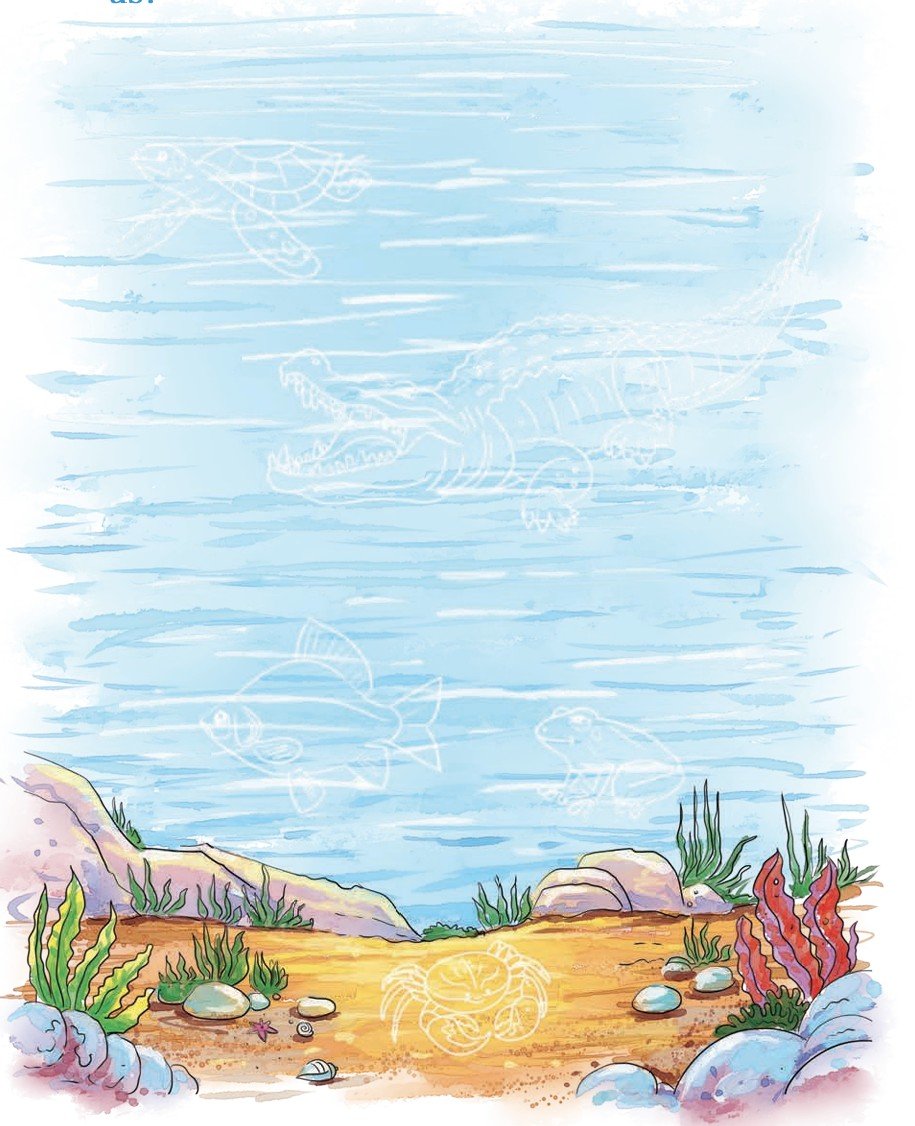
- A. Five of us are hiding in the picture. Can you find us?
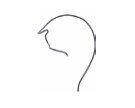
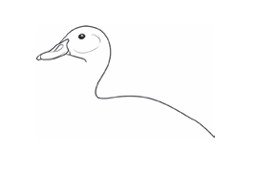
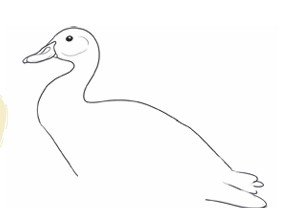
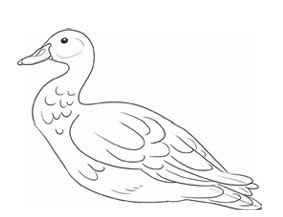
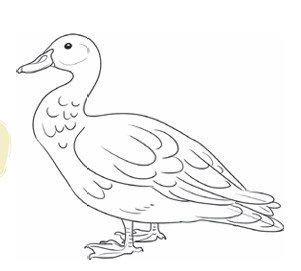
- B. Look at the following steps carefully and draw a duck in the given space.
- C. Move three crayons to change the direction in which the fish is swimming.

Did You Know?
Which is our national aquatic animal?
It’s the Ganges river dolphin! It cannot see well, so it uses sounds to find its way in the water!
Let us Explore
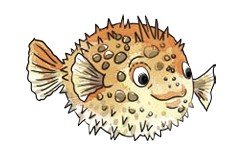
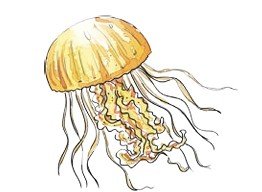
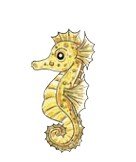
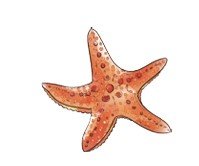
Choose any two of the below and find out a few facts about them.