
6
What a Tank!
Let us Read
Water conservation is a practice that has existed for centuries. Even hundreds of years ago, there were huge water storage structures. These did not just store water but also protected cities from floods, provided drinking water, and brought people together.
Today in many parts of India, many communities still practice the traditional water management methods. In Tamil Nadu, Ooranis store rainwater for drinking and farming. In Kerala, Panam Keni wells are known for not drying up even in the hottest months. Similarly, Tankas as shown below are quite common in Rajasthan’s Thar region.
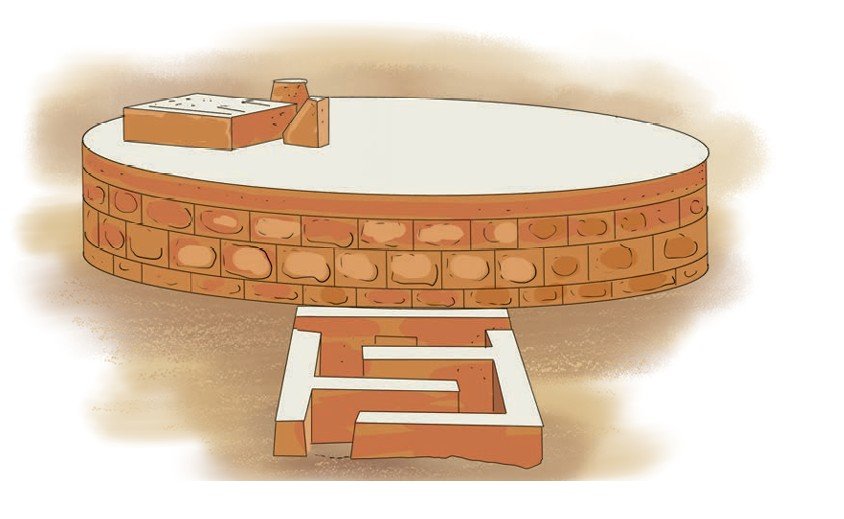
They are underground tanks that can store enough water for six to seven months.
Nowadays most people have water tanks to store water in their homes. These tanks store hundreds and even thousands of litres of water. Usually, they are kept or built on the roofs. Such water tanks are called overhead water tanks.
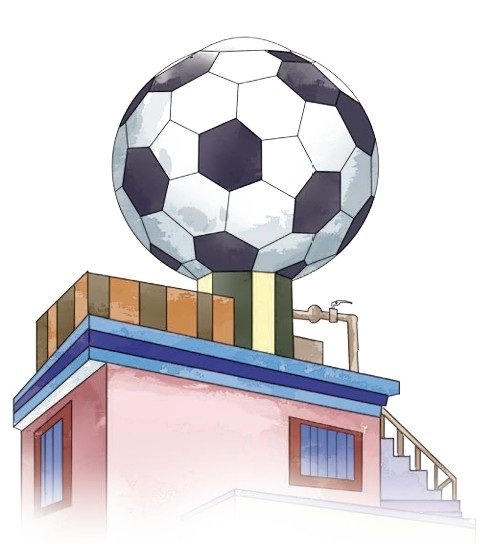
Most of us are familiar with water tanks but there is something different about the overhead tanks of Punjab.
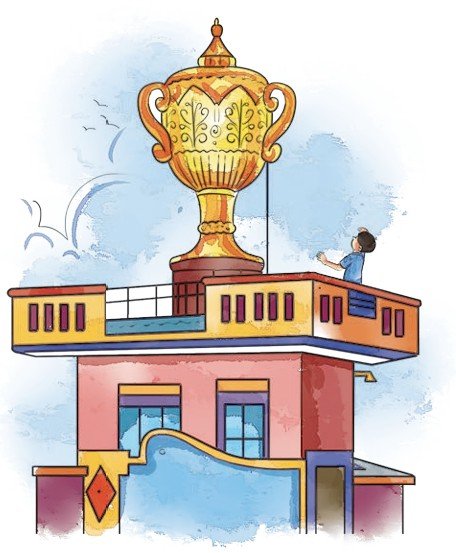
Punjab is a state in the northwestern part of India. Rich in culture and heritage, Punjab is also known for the unique designs of water tanks in its rural areas. You may see tanks shaped like a giant flower, a large football, a brown rooster, a statue or even an aeroplane.
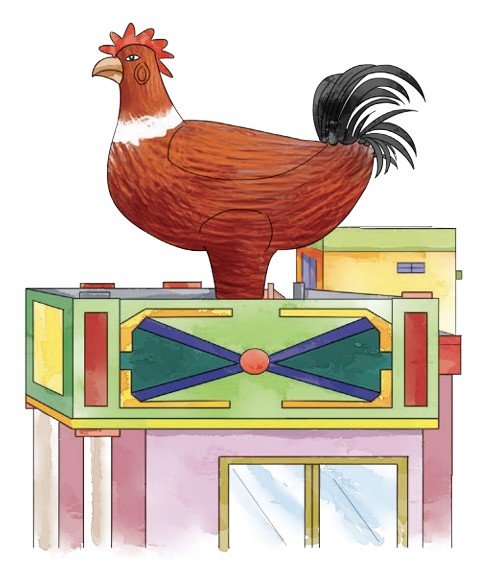
People carefully plan the design of their water tanks. Every tank tells us something about the people of the house. For example, if the owner of the house is a farmer, the water tank may be in the shape of a tractor or a bullock cart or even a rooster. If the owner likes football, the water tank of the house may be shaped like a football.
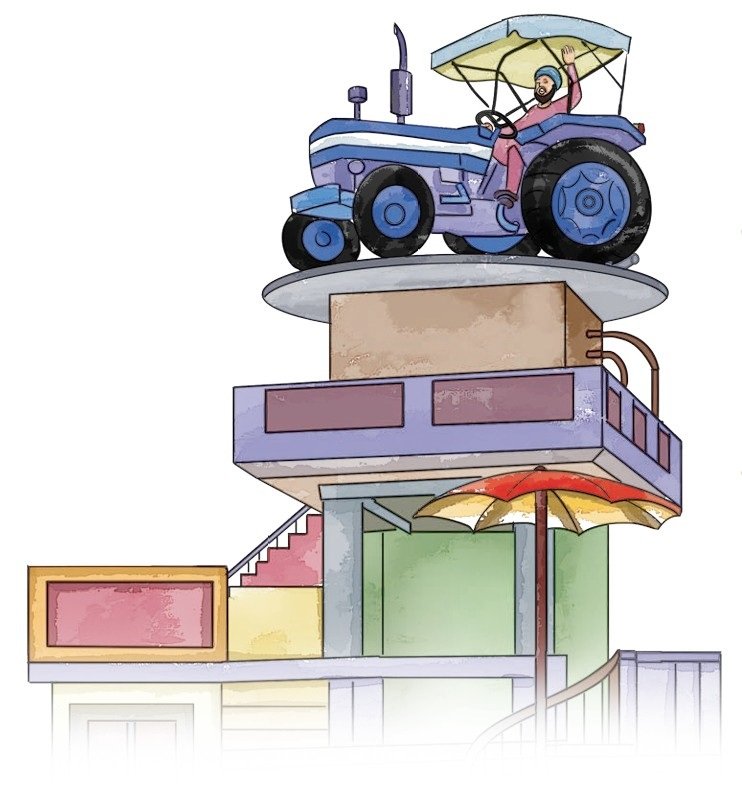
All these tanks are made of cement. The frame of the water tank is made using steel rods. Later, concrete is used to give it final shape. Then it is installed on the roof of the house. The final product is a unique tank that can hold hundreds of litres of water. These unique water tanks are the heart of the communities in rural Punjab.
New Words
conservation overhead culture heritage
containers unique concrete
Let us Think
- A. Answer the following questions.
- 1. What do we use a water tank for?
- 2. Where is Punjab located on the map of India?
- 3. How are the water tanks in Punjab made?
- 4. How do the unique shapes of water tanks reflect the identity of the house owners?
- B. Think and answer
- 1. An overhead water tank is a way to store water. Do you know any other ways of storing water?
- 2. If you had to build a water tank, what would you make it look like? Why?
Let us Learn
Short forms (or contractions) are when two words are combined and some letters are left out. An apostrophe (’) takes the place of the missing letters.
For example:
- aren’t = are not
- wouldn’t = would not
- A. Write the contractions for the following words.
- 1. do not
- 2. is not
- 3. are not
- 4. cannot
- 5. could not
- 6. did not
- B. Rewrite the following underlined words using contracted forms.
- 1. Partho is not feeling well today. His parents have decided that he will stay at home till he gets better. Partho is bored and cannot stay at home anymore. He decides to ask his grandmother if he can go outside, but he thinks she, too, would not agree.
- 2. It is a rainy day, and Tina is not happy. She cannot go out to play with her friends. Her brother does not want to play indoors either. They have decided to watch a movie instead. Their mother says she will make popcorn for them.
- C. Read the following
- 1. That’s so creative!
- 2. He saw a rooster, a tractor, and a giant football, all made of cement!
- 3. Hurrah! India has won the match.
- D. Find at least five exclamatory sentences from your Grade 4 English textbook and identify the emotions or feelings expressed in them.
- You may facilitate this activity by providing learners with a list of words for emotions. You may also use emojis/emoticons to help them understand the words for emotions.
- Learners may work in pairs or groups to find the sentences from their Grade 4 English textbooks.
- Encourage students to read the lines before and after the exclamatory sentences to get a better understanding of the emotions or feelings conveyed.
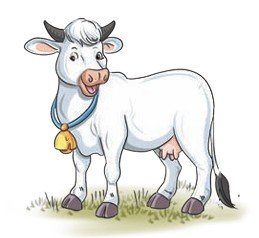
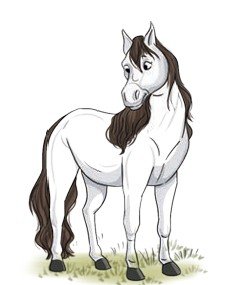
- E. Look at the pictures of the animal families and read the words given below each of them.
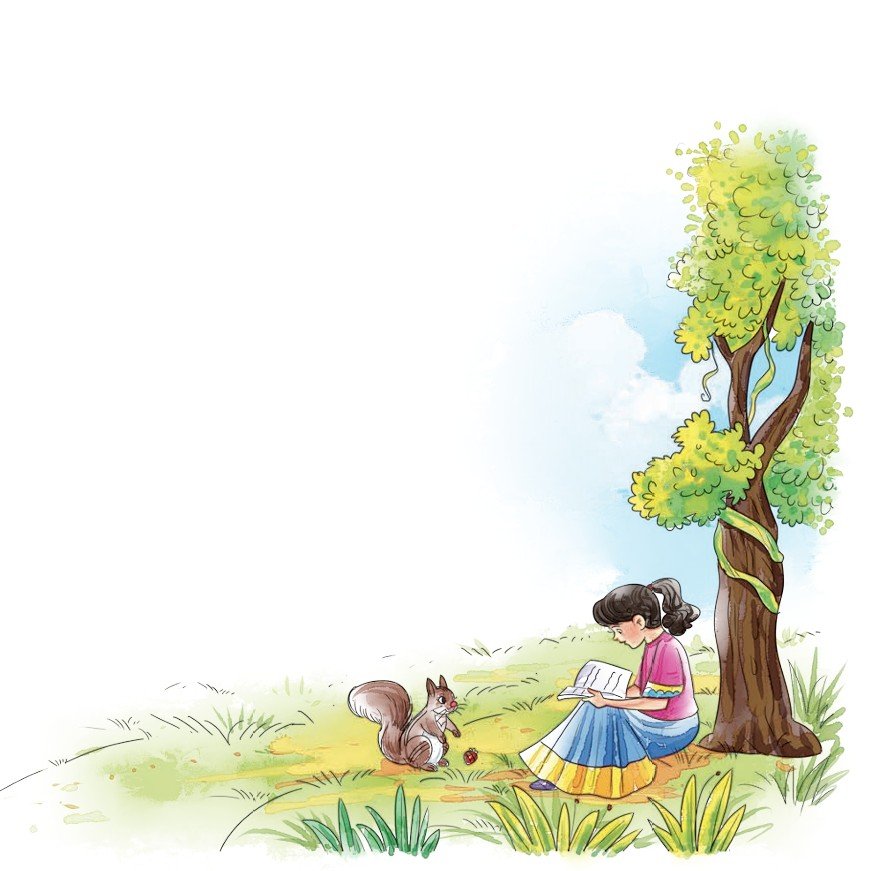
- F. Look at the picture below. Would you like to add anything to this picture? Use your crayons and colour pencils to add to the picture.
These sentences are examples of exclamatory sentences. Exclamatory sentences express strong emotions.
Can you name any four emotions?
...............................................................................................
An exclamatory sentence can be identified by the use of exclamatory words like ‘Wow’, ‘Hurrah’, ‘Oh’ and the use of an exclamation mark (!).
| Sentence | Feeling/Emotion |
|---|---|
| That’s so creative! | amazement/wonder |













Let us Speak
There are many ways in which we can save water. The simplest way is to stop the wastage of water.
- A. Sit in groups of three and discuss:
- How do we waste water in our daily lives?
- What can we do to stop this wastage?
- B. Write at least three such examples and share with the class.
- Encourage the learners to provide their examples after discussing with their group members.
- Help the learners with the English counterparts of the terms or phrases they bring up during the discussion.
- Encourage all the groups to share their points.
- C. Say aloud, ‘What a tank!’ and ‘Water tank’.
- Do both phrases use the word ‘tank’? Yes/No
- Do they mean the same thing? Yes/No
- Do both phrases sound the same? Yes/No
- Do they mean the same thing? Yes/No
For example: Using running water to brush teeth wastes a lot of water. We can use a tumbler or a mug to save water.
Now, say aloud, ‘I scream’ and ‘Ice cream’.
Let us Listen
Listen to your teacher read out the following passage and choose the correct option.
A Day without Water
One hot summer morning, Suma woke up and went to brush her teeth. But when she turned on the tap, no water came out! She was surprised. Her mother said, “There’s no water in the tank. The whole area has no water today.”
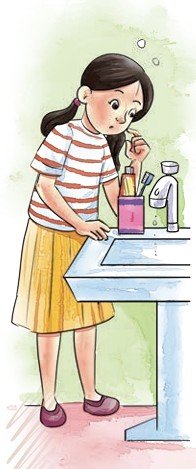
Suma quickly realised how difficult it was to live without water. She couldn’t brush her teeth, wash her face, or take a bath. In the kitchen, there was no water to cook food or clean the dishes. At school, the toilets were closed, very little drinking water was available, and the children were told to bring water bottles from home.
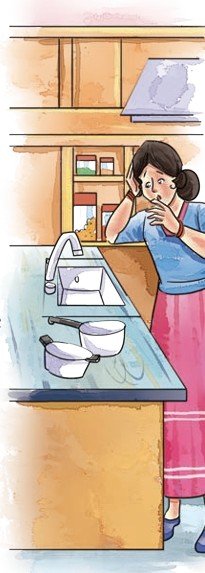
Suma saw that people in her neighbourhood were upset. Some ran to the nearby shop to buy water bottles, while others waited near a water tanker that came from another place. Everyone looked worried.
That evening, the water was finally restored. Suma felt very happy and promised herself that she would never waste water again. She decided to tell her friends how precious water is.
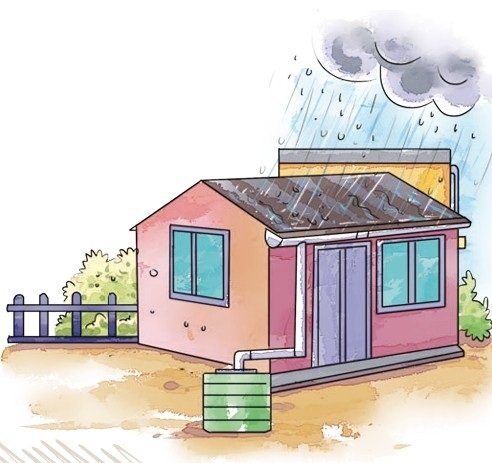
Suma’s school also announced a Water Conservation Week. They planned activities like poster-making, planting trees, and even a water-saving competition.
Suma and her friends made posters with slogans like ‘Save Every Drop’ and ‘No Water, No Life.’
After this experience, Suma understood how important water tanks and water-saving habits are. She asked her parents to set up a rainwater harvesting system at home. Her parents agreed happily.
Choose the correct option:-
1. Why was Suma surprised in the morning?
- a. Her friends came to visit.
- b. There was no water in the tap.
- c. She saw a rainbow.
- d. She had a holiday.
-
2. How did people manage without water?
- a. They didn’t need water.
- b. They bought bottles and waited for tankers.
- c. They drank juice instead.
- d. They went swimming.
-
3. What did Suma promise after the water supply was restored?
- a. To waste more water.
- b. To never waste water again.
- c. To turn off the tap.
- d. To check the water tank frequently.
-
4. What activities were planned during the Water Conservation Week?
- a. Making taps.
- b. Poster-making and planting trees.
- c. Tank making.
- d. Watching flowing water.
-
5. What did Suma suggest to her parents?
- a. To go near a well.
- b. To build a swimming pool.
- c. To fix a rainwater harvesting system.
- d. To buy a new tank.
More questions may be added to the above.
Let us Write
A. Design a poster in the space below, encouraging people to preserve and clean old water tanks.
Include:
- Topic: ‘Save Our Water Tanks — A Community Awareness Campaign’
- A catchy slogan (e.g., ‘Save Tanks, Save Lives!’).
- A few bullet points on why tanks are important.
- An invitation to join a cleaning drive or awareness programme (mention the place and time of the cleaning drive).
B. Write 10 words that end with ‘er’.
......................or
......................at
Let us Explore
- A. You have read a lot about tanks. Have you ever wondered how these tanks are cleaned? Find out about the techniques for cleaning water tanks. You may bring relevant pictures or photographs. Prepare a chart and put it up in your class.
- B. Look at the pictures given below. The story may already be familiar to you.
The Thirsty Crow
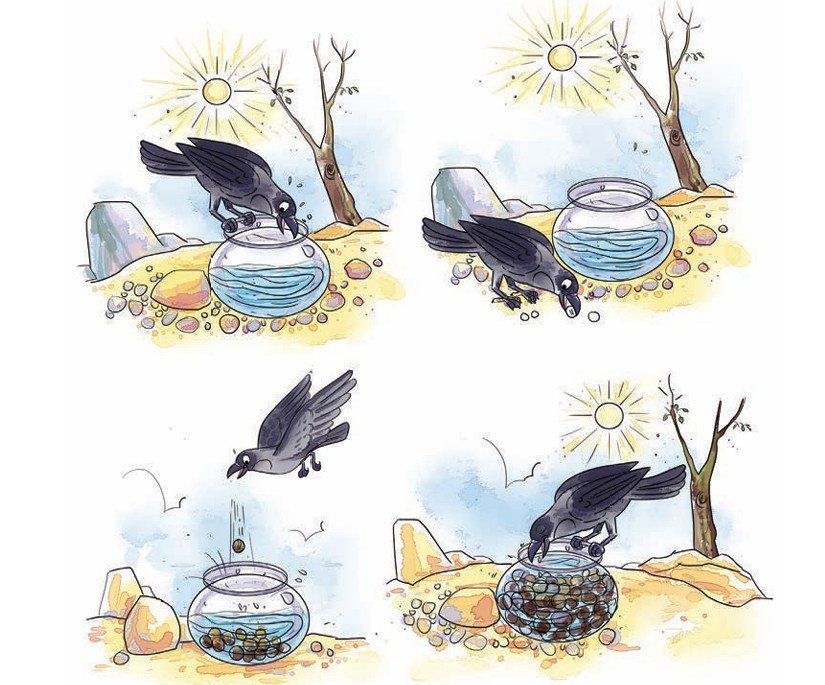
The crow has become famous for its innovative idea. Imagine that your school has invited the crow to interact with the students. Enact the event with the help of your teacher.
You may assign the roles, such as the crow, school principal, teachers, school pupil leader, as well as technicians for mic testing, photographer, and videographer. The audience may consist of 15–20 students, some of whom may ask questions. Ensure that the whole class is involved in the activity.