8
The Decision of the Panchayat
Let us Read
Once upon a time, there lived a farmer in a small village. He had two fields. He used to work very hard. When he prospered, he bought another field. There was a well next to it. Since the farmer needed a source of water for his fields, he bought the well from his neighbour.
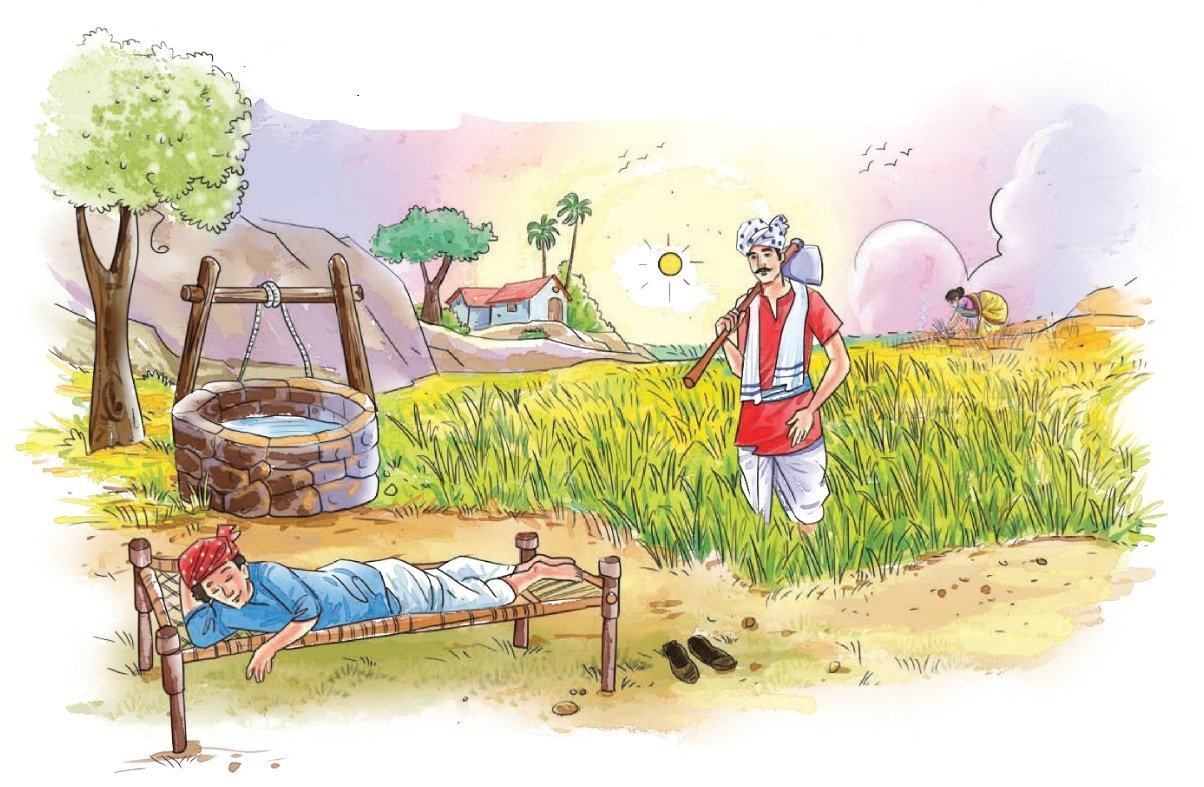
The neighbour was a cunning man. He thought of a plan to cheat the farmer.
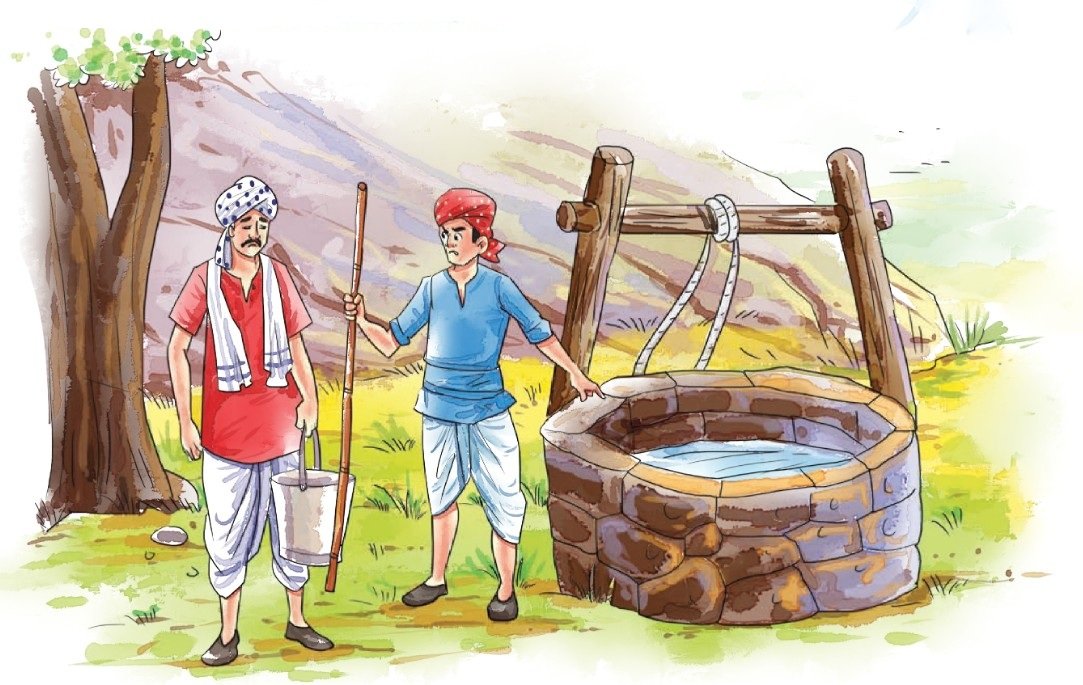
The next day, when the farmer reached the well, he found the neighbour standing there. He refused to let the farmer take water from the well. On asking why, he replied, “I sold only the well to you, not the water. The water still belongs to me. You cannot take it.”
The worried farmer didn’t know what to do. So, he went to the village chief and told her about his case, and said, “He is not letting me take the water.”
The village chief fixed a day for a meeting of the Panchayat.
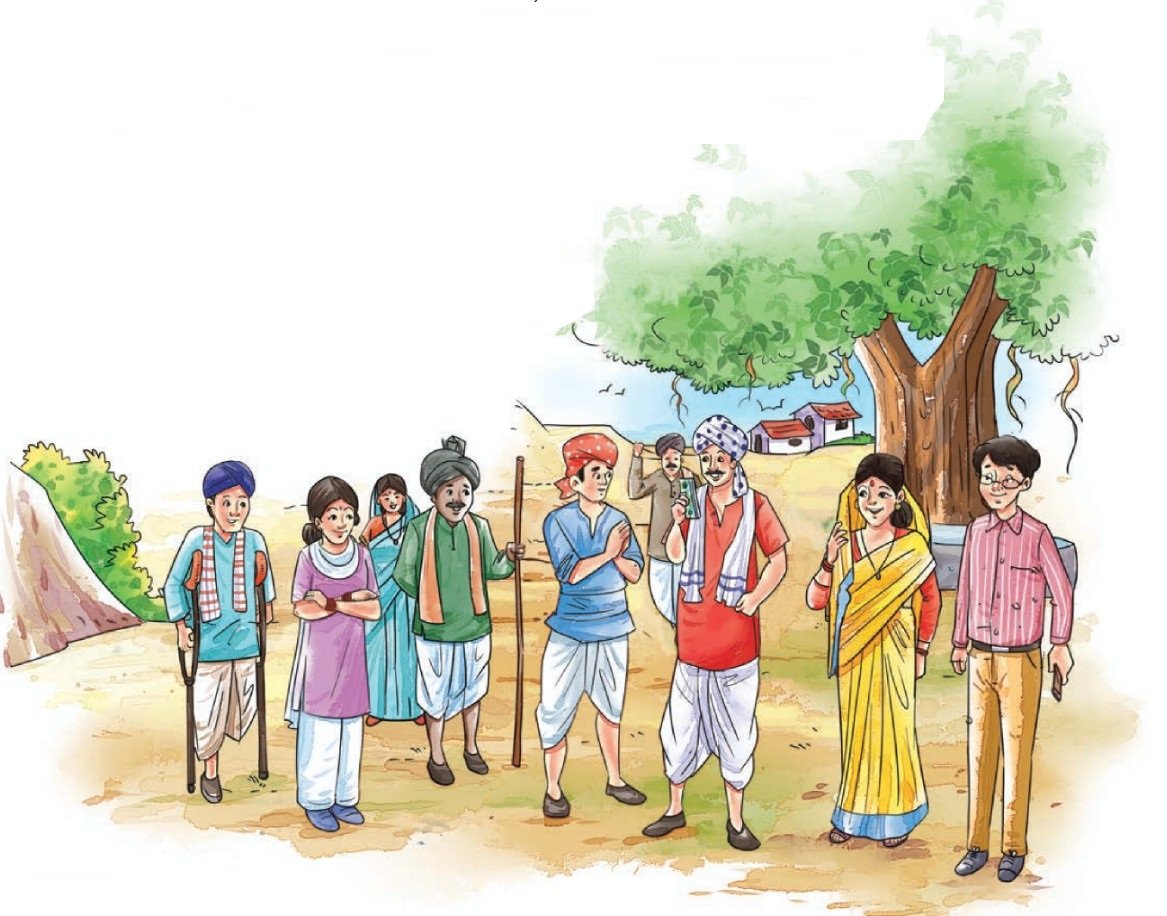
The day came, and the members of the Panchayat gathered under the banyan tree in the centre of the village. Both the farmer and his neighbour were summoned. Most of the villagers were present.
The farmer explained the situation to the gathering. The chief asked the neighbour why he was not letting the farmer draw water from the well. The cunning man said the same thing again, “I sold only the well to him, not the water in it. The water still belongs to me. So, he cannot take my water.”
The members of the Panchayat, as well as the villagers, tried to reason with him, but he was adamant. Finally, the Panchayat members discussed the matter among themselves. Then they stood up to give the judgment. The villagers also stood up.
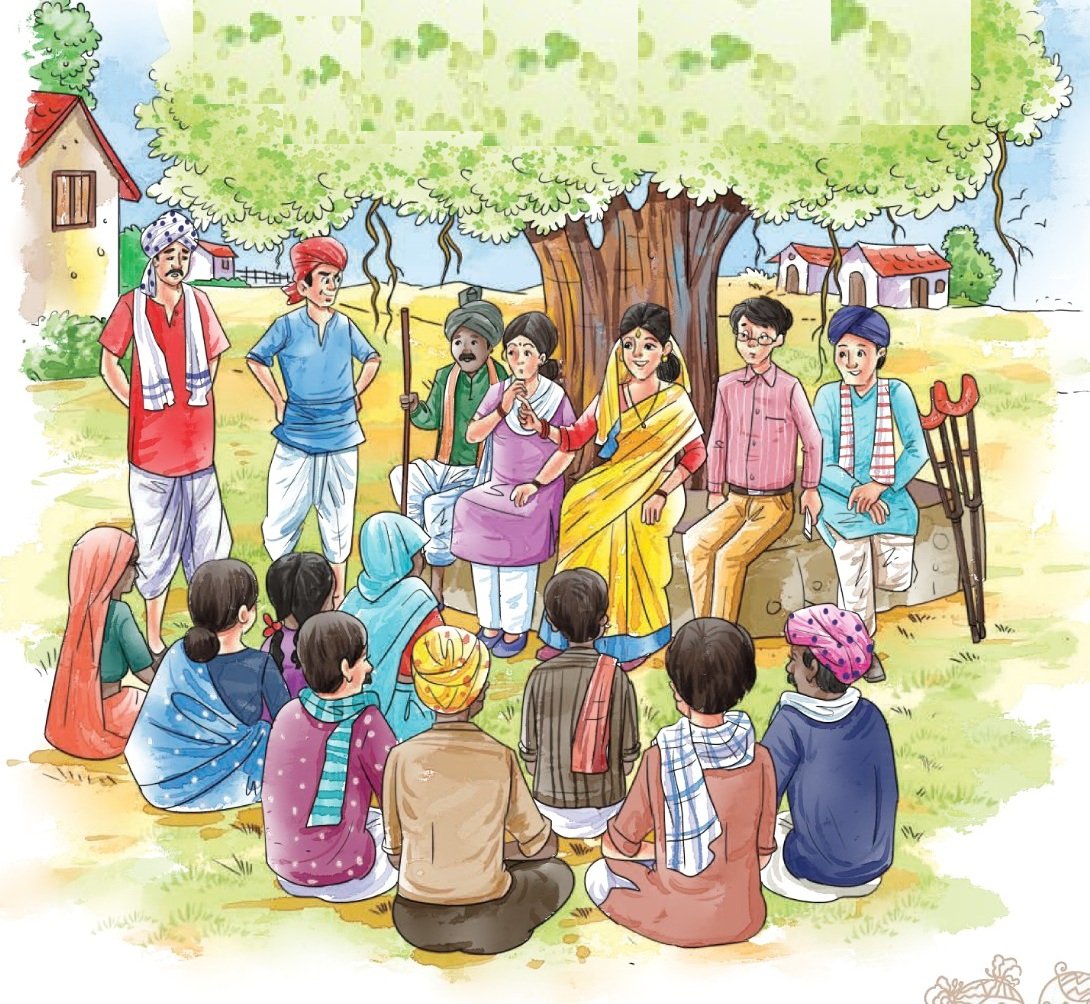
The village chief began, “After hearing both sides, we agree that it is correct to say that only the well was sold.” The neighbour gave a satisfied smile. “However,” continued the village chief, “if you have NOT sold the water and the water is yours, then you have no business keeping your water in his well. Remove the water or use it all up immediately. If not, the water will belong to the owner of the well.”
The farmer was relieved and gave a shout of joy. The cunning neighbour realised that cheating will not lead anywhere. He had to pay a fine as well as apologise to the farmer. The villagers praised the wisdom of the Panchayat.
New Words
panchayat adamant cunning
apologise wisdom
Let us Think
- Answer the following questions.
- Why did the farmer buy the well?
- Why did the farmer become upset?
- How did the Panchayat solve the problem?
- What was the final judgment given by the Panchayat?
- Think and discuss
- Do you think the decision of the Panchayat was correct?
- You have an extra painting box which you wish to share with your friends in the class to complete an activity. Two of your best friends, Radha and Sita, fight for the box. How would you deal with the situation so that you are fair to both of them?
- Who said to whom:
- “I sold only the well, not the water.”
- “Remove the water or use it all up immediately.”
- “He is not letting me take the water.”
Let us Learn
- Match the words with their meanings.
- Fill in the blanks with the correct prepositions (in, at, by, after, before, under, with, to, for). A preposition can be used more than once.
- The farmer went ................... the village chief to explain his problem.
- The neighbour was standing ................... the well, blocking the way.
- The villagers tried to reason ................... the cunning man.
- The decision was made ................... careful consideration of both sides.
- Their lived a farmer ................... the small village.
- The Panchayat members listen to both the sides ................... coming to decision.
- The villagers gathered the Panchayat ................... the banyan tree.
- The neighbour was punished ................... his dishonesty.
- The chief listened carefully ................... both the farmer and the neighbour.
- The villagers agreed to meet ................... a later time to discuss the issue.
- The farmer decided to buy a well ................... buying his third field.
- Rearrange the events in the correct order.
-
Sam sat by a small stream to rest and enjoy the peaceful sound of the water.{......}
-
Sam felt grateful for the time he spent in nature.{......}
-
Sam decided to go for a walk in the forest near his house.{......}
-
Sam walked along the narrow path, listening to the sound of birds chirping and leaves rustling.{......}
-
After resting, Sam continued his walk, feeling refreshed.{......}
| Word | Meaning |
|---|---|
| 1. prospered | a. clever in a tricky way. |
| 2. cunning | b. refusing to change one’s mind. |
| 3. worried | c. to order someone come to a particular place. |
| 4. summon | d. a decision made by a group. |
| 5. adamant | e. very upset. |
| 6. judgment | f. to grow wealthy. |
Ensure that the learners are rearranging the events in the correct order.
Let us Speak
Look at the pictures below:
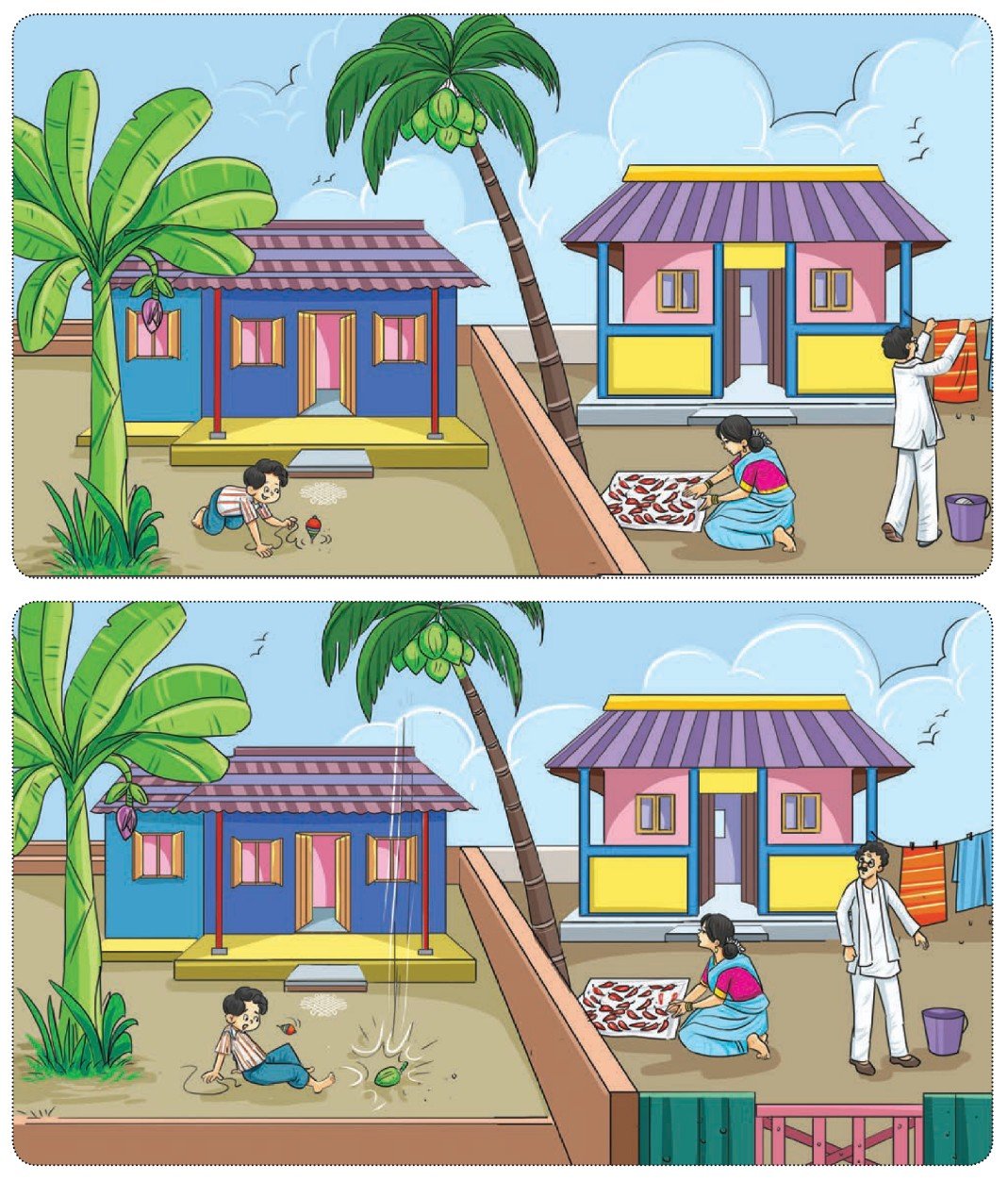
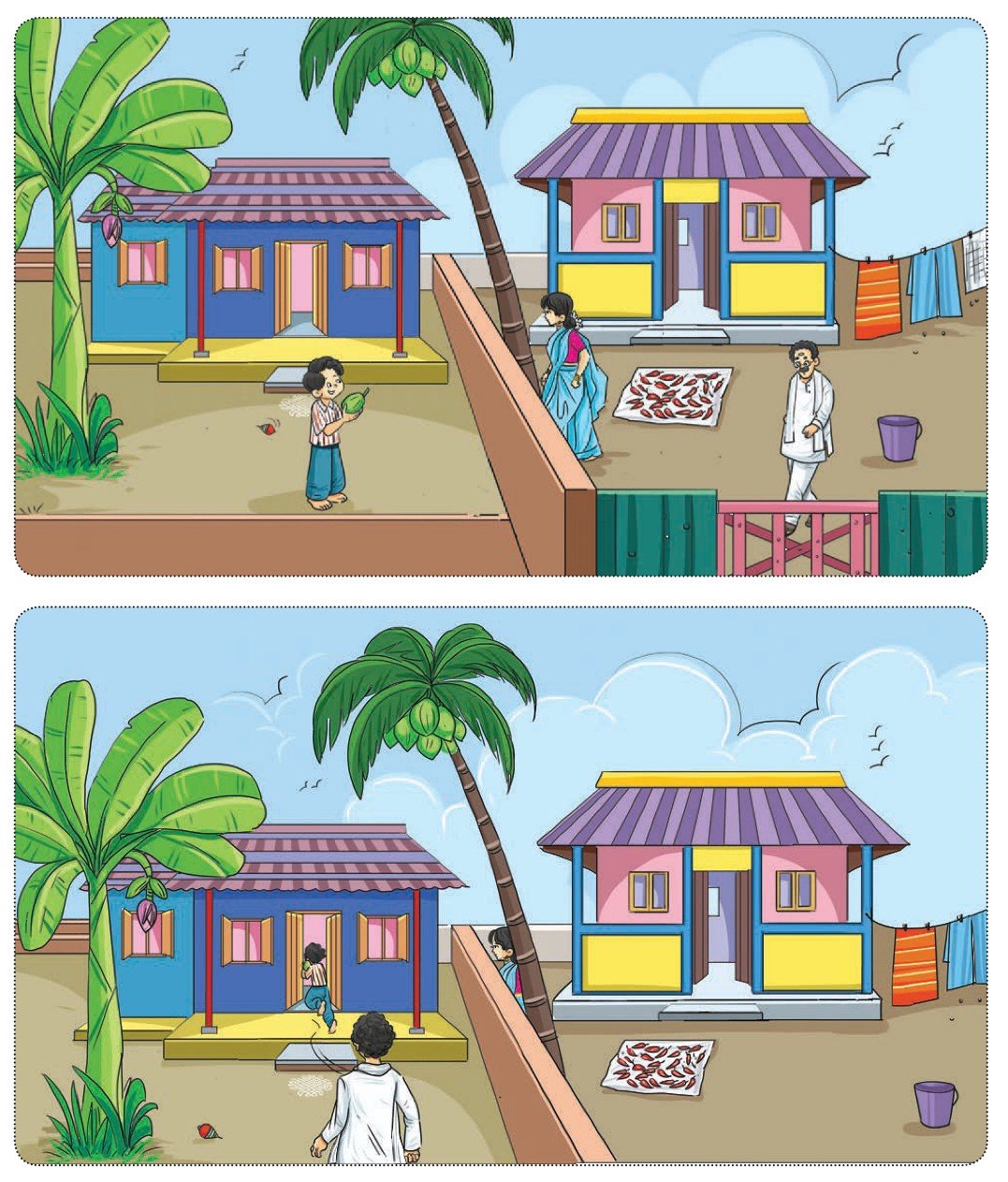
What do you think will happen next? Sit in small groups and discuss. One student from each group will narrate the ending to the whole class
Let us Write
- Imagine you are the farmer. Write a letter to your friend about the incident and the decision of the Panchayat.
- Read the following sentence
You may begin as follows:
My dear friend,
Something happened last week, which I want to tell you. I wanted to buy a well ...
Water is priceless.
It means that water is valuable. It is so valuable
that you cannot put a price on it.
The ‘less’ at the end of the word is a suffix.
| Words | + | suffix | = | New word |
|---|---|---|---|---|
| Use | + | less | = | ................. |
| Care | + | less | = | ................. |
| Hope | + | less | = | ................. |
| Fear | + | less | = | ................. |
| Colour | + | less | = | ................. |
Help learners understand the concept of ‘suffix’.
Let us Listen
Sri Ramakrishna Paramahamsa
A long time ago, in a small village of West Bengal, there lived a kind and wise man named Sri Ramakrishna Paramahamsa. He loved to talk to people about God and taught that all religions are like rivers—they may take different paths, but they all lead to the same ocean. He lived a simple life, wearing plain clothes and eating very little, but his smile and loving words made everyone feel special.
One day, a curious young boy named Naren came to meet him. Ramakrishna saw something special in Naren and became his teacher. He taught Naren about courage, kindness, and how to find peace within.
Naren later grew up to become the famous Swami Vivekananda, spreading his teacher’s wisdom to the world. Even today, Ramakrishna’s teachings inspire many people everywhere.
- Where was Sri Ramakrishna Paramahamsa born?
- A colony in Kolkata.
- A small village in West Bengal.
- A mountain in the Himalayas.
- A forest in Kerala.
- Who was the curious boy that becameSri Ramakrishna’s student?
- Mahatma Gandhi
- Swami Vivekananda (Naren)
- Rabindranath Tagore
- Sri Aurobindo
- What kind of life did Sri Ramakrishna live?
- A life full of luxury,
- A simple and loving life.
- A life of traveling.
- A secretive life.
- What did Sri Ramakrishna compare religions to?
- Trees in a forest
- Stars in the sky
- Rivers flowing to the ocean
- Books in a library
- What did Sri Ramakrishna teach Naren?
- To find a teacher
- To become wealthy
- To travel the world
- To find peace
Did You Know?
The Banyan tree is the national tree of India. It can live for over 200 years and grow to cover several acres of land. Its roots grow down from the branches and become new trunks, making it look like a forest all by itself!
Let us Do
- Read the passage carefully and answer the following questions
- Where can you find neem trees?
- Why do you think ‘neem’ is called a magic tree?
- What happens when dry neem leaves are burnt?
- Why do people put neem leaves in clothes and rice containers?
- How are neem twigs used?
- Find the meaning of the word ‘disappear’ from the following options:
- Find the word in the passage which means ‘a short stick’:
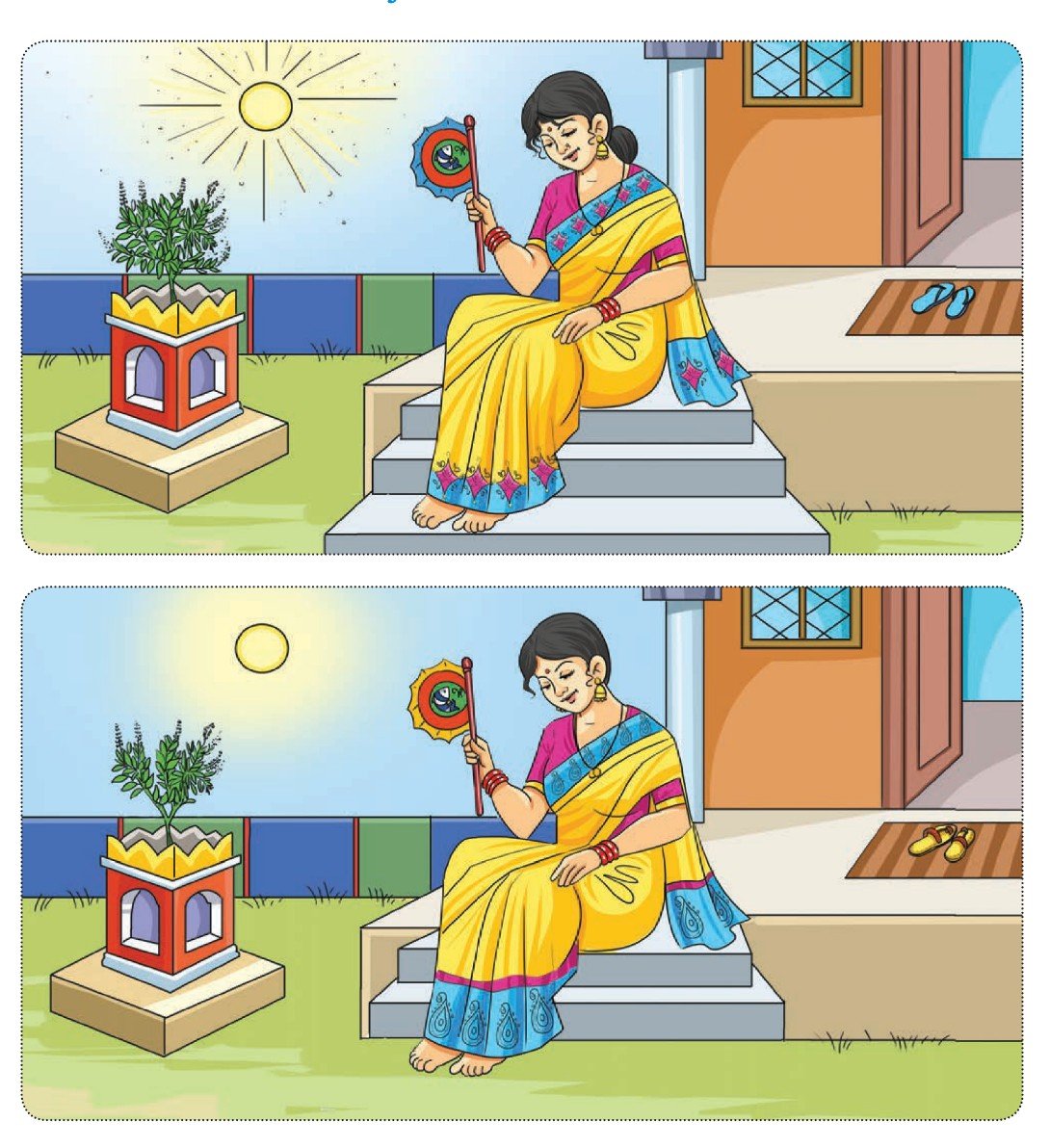
- Point out 11 differences in the two pictures given below. Work in pairs and write down the 11 differences in your notebook.
The Neem Tree
You must have seen a neem tree near your house, or near the school, or beside the road. Almost everyone can recognise a neem tree.
The neem is a magic medicine tree because almost every part of the tree is used for medicine.
Sometimes, sick people are given neem juice to drink. People use the twigs of the neem tree as a toothbrush to clean their teeth. Burn some dry neem leaves inside the house and see the mosquitoes disappear! When you store winter clothing or blankets, keep dry neem leaves between them. This helps keep away insects. When you store rice, keep dry neem leaves at the bottom of the rice bin. This keeps pests away.