
Unit 5: Work is Worship
9. Vocation
Let us Recite
(1)
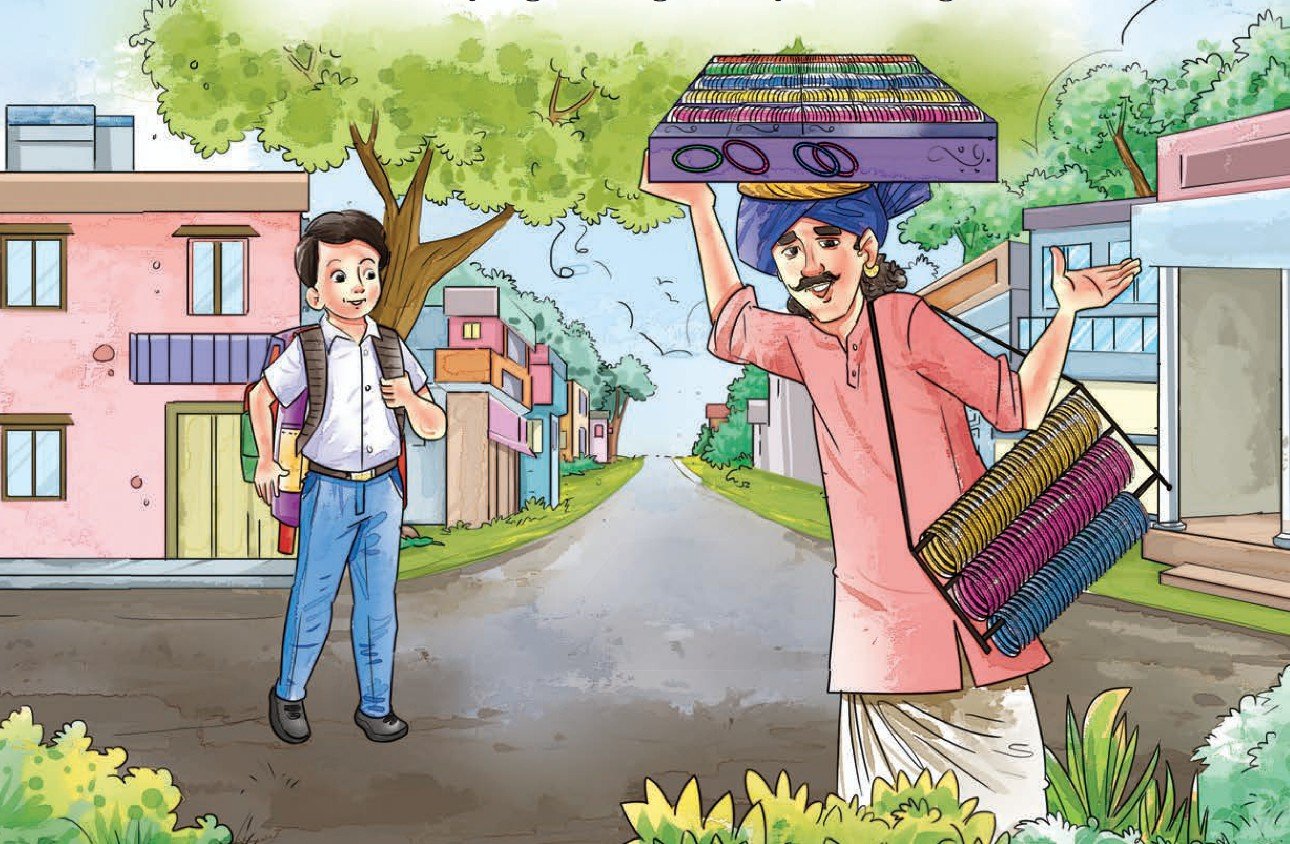
When the gong sounds ten in the morning andI walk to school by our lane,
Every day I meet the hawker crying, “Bangles,
crystal bangles!”
There is nothing to hurry him on, there is no
road he must take, no place he must go to, no
time when he must come home.
I wish I were a hawker, spending my day in
the road, crying, “Bangles, crystal bangles!”
(2)
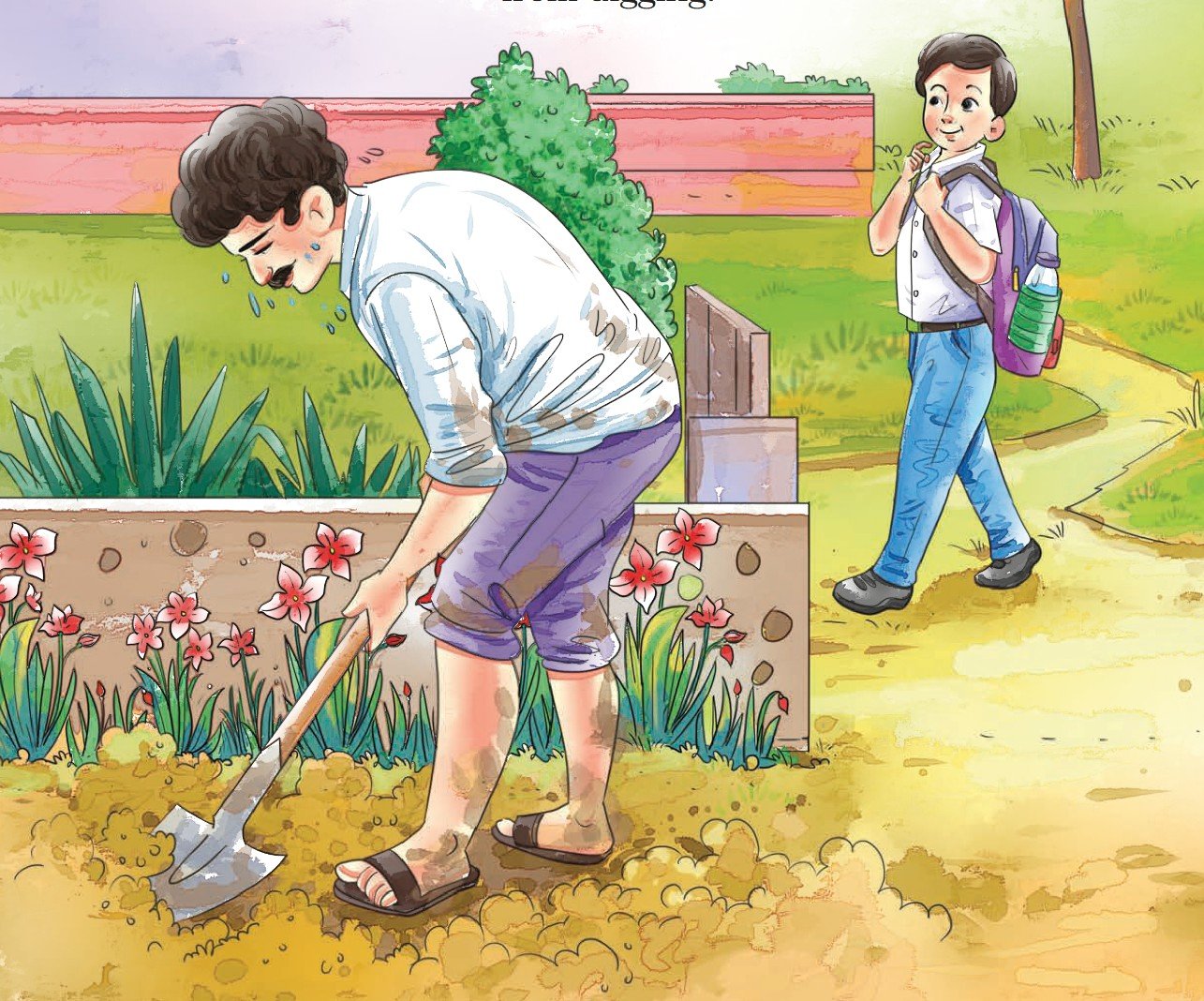
When at four in the afternoon I comeback from the school.
I can see through the gate of that
house the gardener digging the ground.
He does what he likes with his spade,
he soils his clothes with dust, nobody
takes him to task if he gets baked in the
sun or gets wet.
I wish I were a gardener digging away
at the garden with nobody to stop me
from digging.
(3)
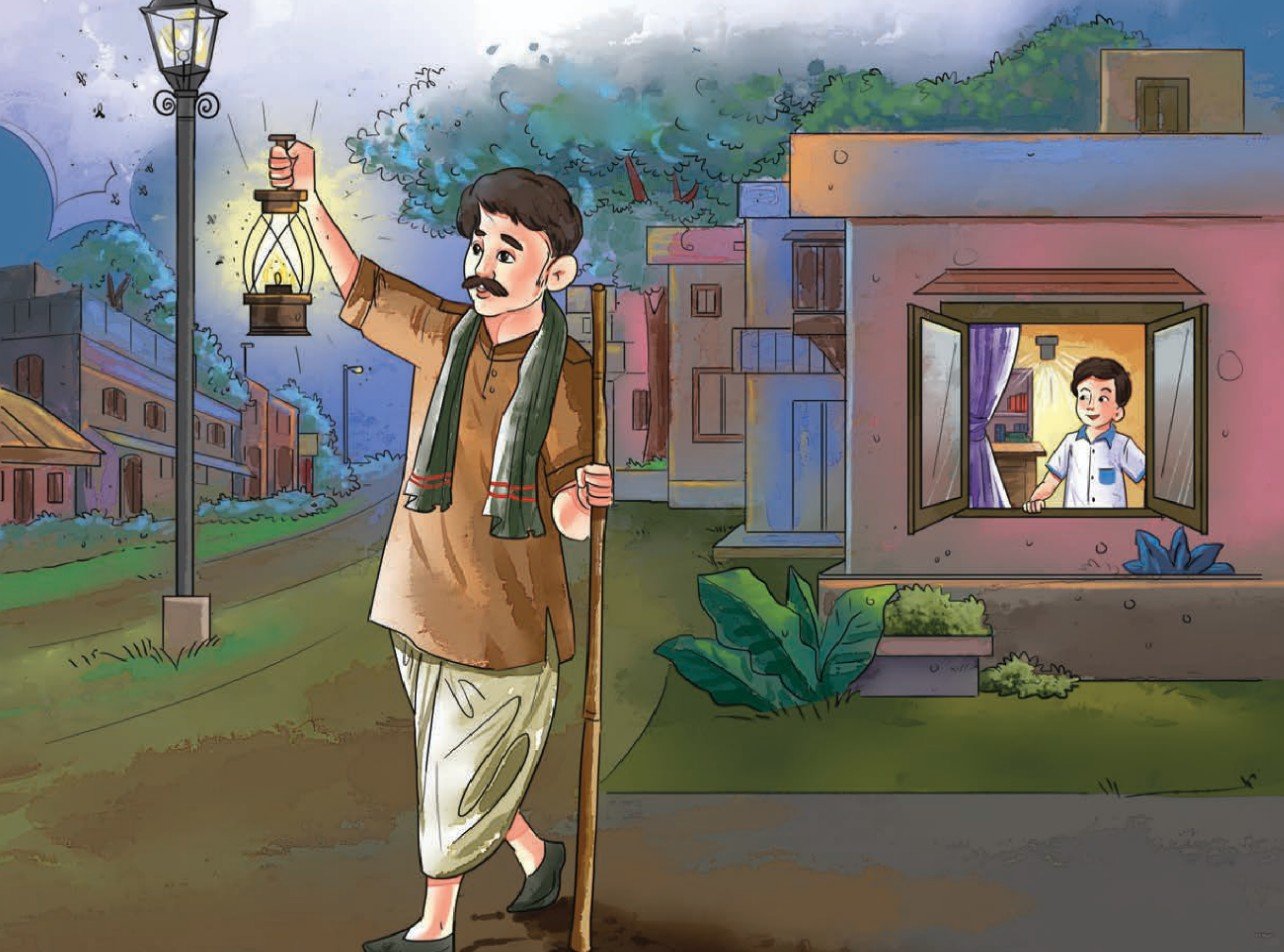
Just as it gets dark in the evening and mymother sends me to bed,
I can see through my open window the
watchman walking up and down.
The lane is dark and lonely, and the
street-lamp stands like a giant with one red eye
in its head.
The watchman swings his lantern and walks
with his shadow at his side, and never once goes
to bed in his life.
I wish I were a watchman walking the streets
all night, chasing the shadows with my lantern.
– RABINDRANATH TAGORE
New Words
vocation gong lane giant spade lantern
Let us Think
- Answer the following questions.
- Who is the speaker in the poem?
- Why does the speaker want to be a hawker?
- What does he like about the gardener?
- What does the speaker compare the street lamp to?
- On the basis of the poem that you have read, share the daily schedule of the speaker.
- Think and discuss.
- Why does the speaker admire people with different vocations?
- What are the things that you observe on your way to school and your way back home?
Let us Learn
- Here are some of the words from Vocation. Read the poem and match each word with its meaning.
- There is one mistake in each sentence given below. Underline the mistakes and rewrite the correct sentences in the given space. One example has been done for you.
- I has recently read a new book.
I have recently read a new book. - The speaker goes for school at ten in the
morning.
................................................... - The fox ran fast than the others.
................................................... - Mita was slept when the doorbell rang.
................................................... - The old elephant walked slow to the river.
................................................... - Radhika is tall than Suman.
................................................... - Sudhanshu ran faster of all the runners.
................................................... - My mother are cooking.
................................................... - He go to school everyday.
................................................... - The birds is flying.
................................................... - This activity includes errors related to different parts of speech.
- Encourage the learners to work in pairs or groups and find the errors.
- Provide more such sentences to learners.
- Look at the pictures and read the words written under them.
| Gong | A tool used for gardening | ||
| Spade | An imaginary man-like creature of great height and strength | ||
| Lane | A case that holds a candle or light in any form and can be easily carried | ||
| Giant | A metal disc that produces a loud sound when hit with a small hammer | ||
| Lantern | A narrow path |
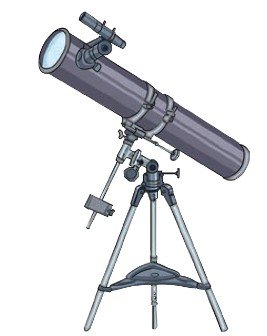
telescope
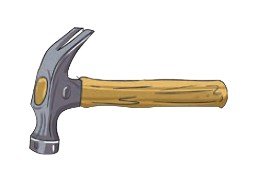
hammer

camera
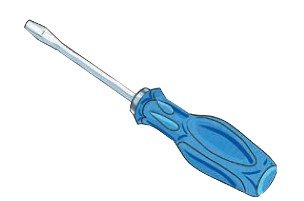
screwdriver

sickle

stethoscope

grater
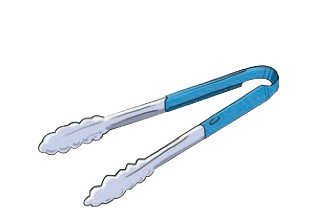
tongs
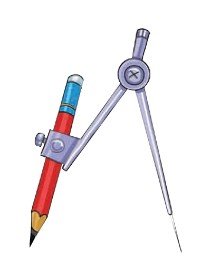
compass
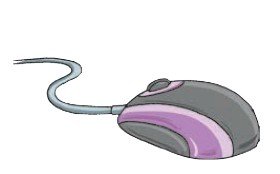
mouse
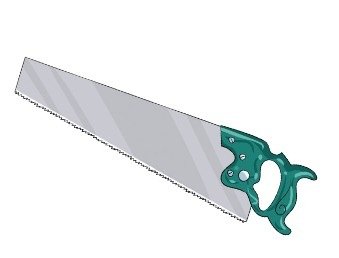
saw
Let us Listen
- Sit in groups of five.
- Each group will discuss and create two questions on the poem Vocation using the question words from the WH-family. Note down the questions.
- Now, put your textbooks back in your bags.
- Each group will get to share their questions with the class.
- One group will present their questions, and the remaining groups will answer the questions. This will continue till all the groups have shared their questions.
- Revisit the types of question words with learners.
- Allot 25–40 minutes to this activity, depending on the strength of the class.
- This activity may be conducted with other texts as well.
Let us Speak
- Listen and repeat
- Say aloud each pair of words. Ensure that learners pronounce it clearly.
- Do this exercise at regular and frequent intervals.
- Listen and speak
- Think of a time when you wanted to do many things but could not.
- What were the things you wanted to do?
- What difficulties did you face in doing many things at once?
- How did it make you feel?
- Share your views with your classmates.
- Give the learners ample time to ponder over the questions.
- Encourage them to write their answers before sharing them with the class.
- Teachers are also encouraged to share their answers with the learners.
- What’s missing?
- In the poem, the speaker tells us about the vocations of different people. Write the vocations of any three of your family members, in 50-60 words each, from the list below.
- What vocations are the following people associated with?
- A.P.J. Abdul Kalam
- M. Visvesvaraya
- Janaki Ammal
- M.S. Subbulakshmi
- Salim Ali
| cushion | ration |
| fashion | tension |
| mention | attention |
| nation | vocation |
The speaker of the poem wants to do many things.
Let us Write
The child sees only the fun part of each job. What do you think might be the difficult or boring part of being a hawker, a gardener or a watchman? Write a paragraph to express your thoughts.
Mother, Grandmother, Aunt, Sister, Father, Brother, Uncle
- Talk about the meaning of ‘vocation’ and ‘work’. For example, is household work paid?
- This activity should be used to prompt discussion on what is considered as ‘work’ and on gender roles.
- Encourage learners to share their write-ups with the class.
Let us Do
Job Mix–Up!
There is something unusual in the given pictures. Notice carefully the things that you find strange. One has been done for you.
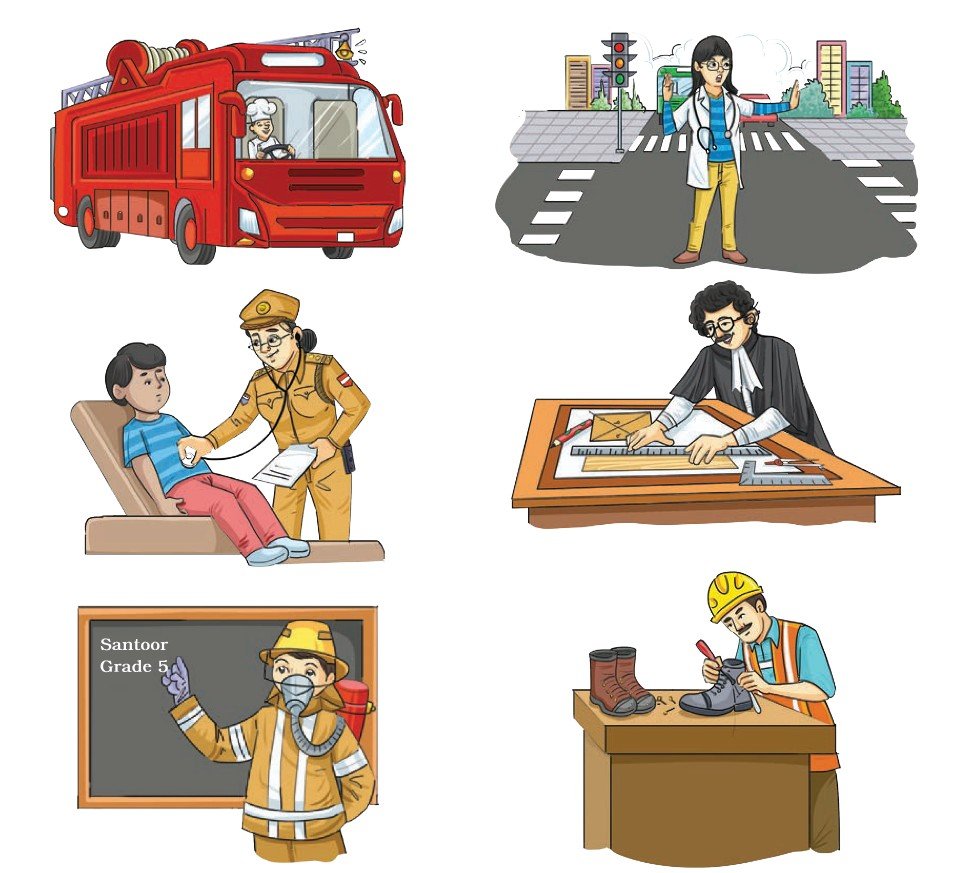
For example: A chef’s job is to cook delicious meals, not to drive a fire engine. That’s something firefighters do.
Write two sentences in your notebook for each picture, following the example provided for you.
Let us Explore
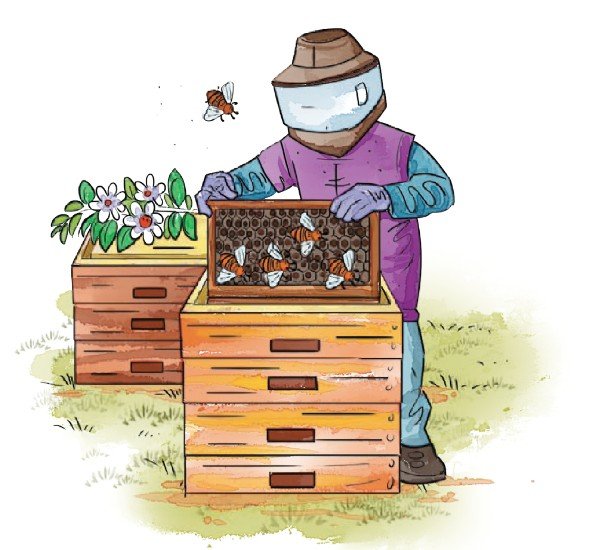

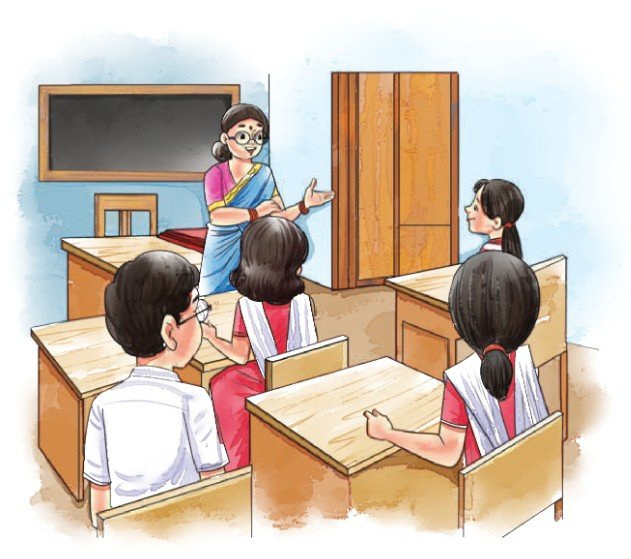
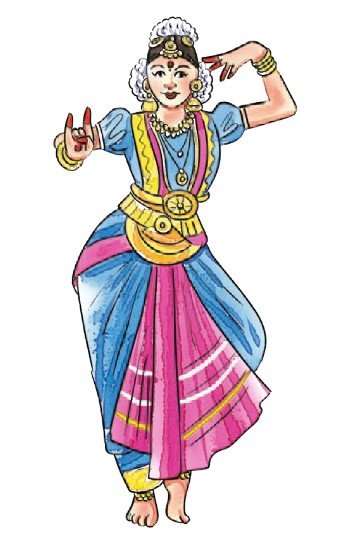
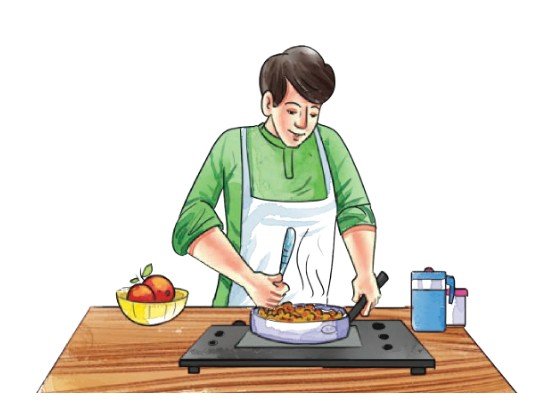
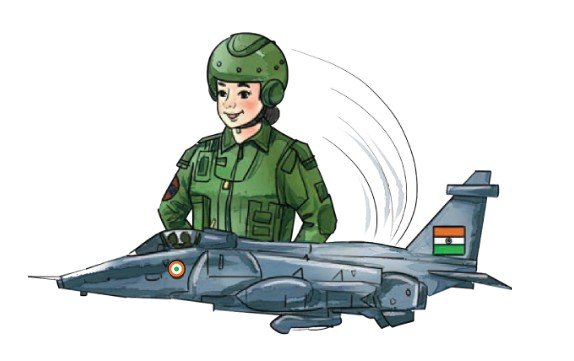
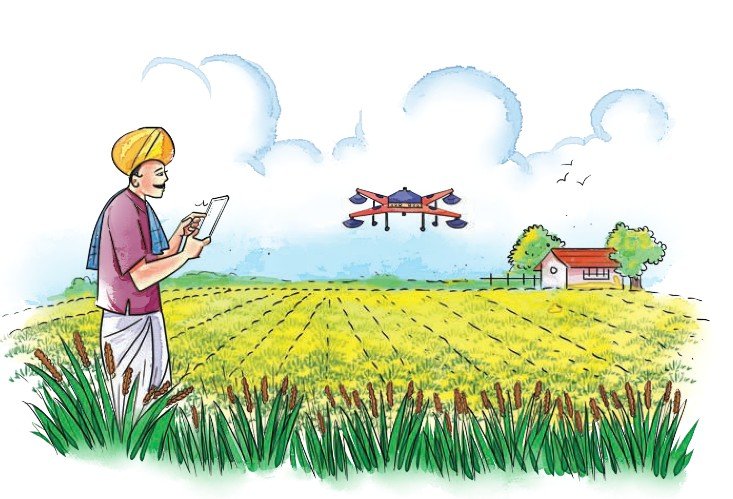
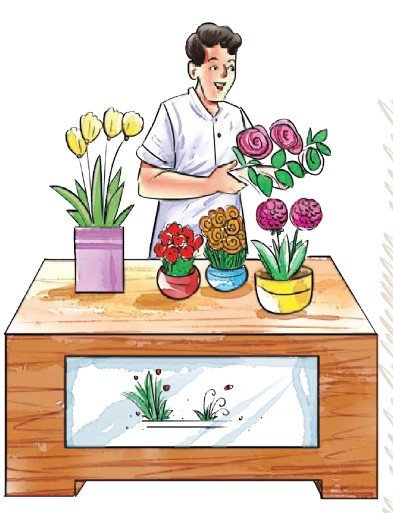
- Which vocation from the above illustrations would you choose for yourself? And why?
- Is there any other vocation not shown in the pictures that you would like to take up as your dream job? Support your answer with a reason.
- Use this activity to create an opportunity to speak about various professions which may even go beyond the text.
- Facilitate a discussion on not only traditional occupations but also new kinds of professions.
- Help learners understand that no work is superior or inferior.
- Draw yourself in the selected vocation in the blank space provided.