10
Glass Bangles
Let us Read
The busy district of Firozabad in Uttar Pradesh is popular for its rich tradition of glassware. Ravi was a skilled glass artisan who lived in this town. Firozabad is famous for its beautiful glass bangles, and Ravi’s family had been crafting these beautiful bangles for a very long time. Each bangle was a piece of art, showing both the culture of the town and the wonderful craftsmanship of the artisans.
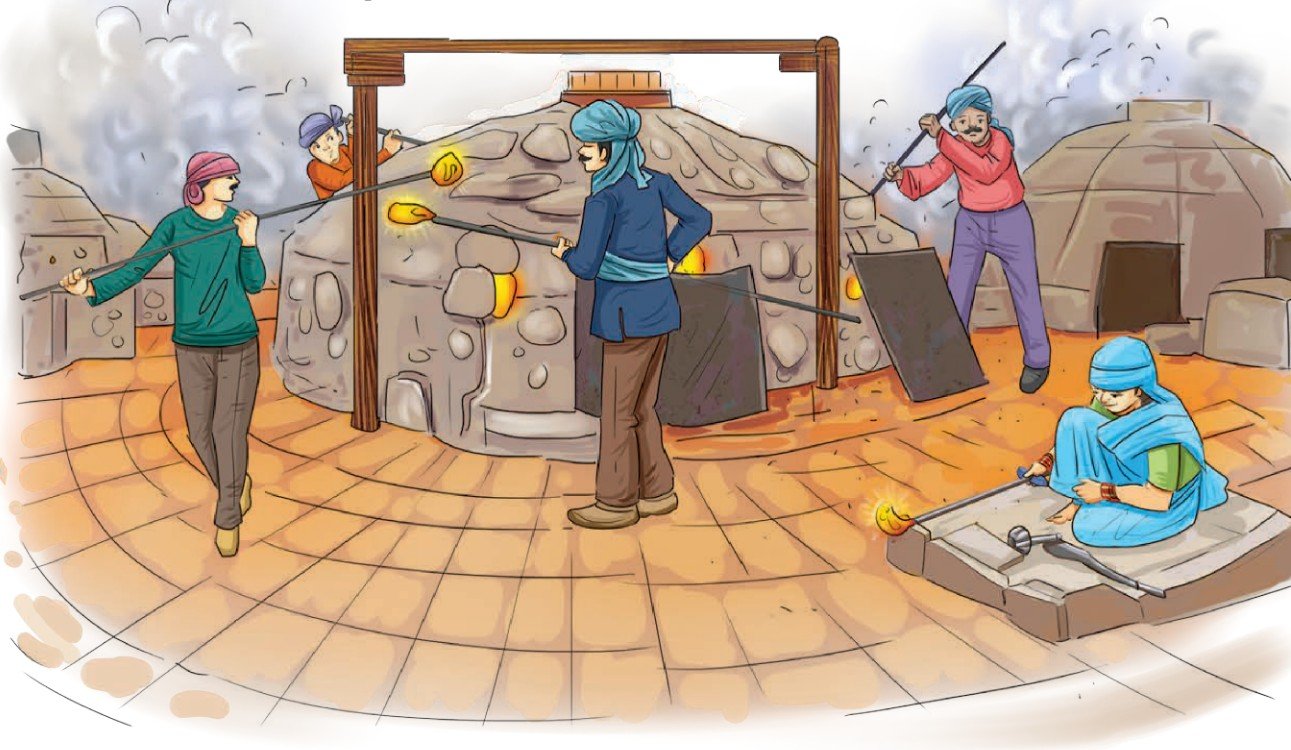
Ravi’s workshop was a centre of activity. The air was filled with the clinking of glass and the gentle hum of conversation as artisans shaped beautiful bangles. The process of making glass bangles was difficult and needed great skill. First, Ravi and his team would heat glass in a furnace. They would then carefully shape the glass into bangles, adding beautiful colours and designs before cooling them to perfection.
Ravi enjoyed his work. He crafted each bangle with full attention, making sure that it was not only beautiful but also long-lasting. The bangles came in a variety of colours, from deep reds and blues to soft pastels, and were often decorated with patterns showing traditional Indian designs.
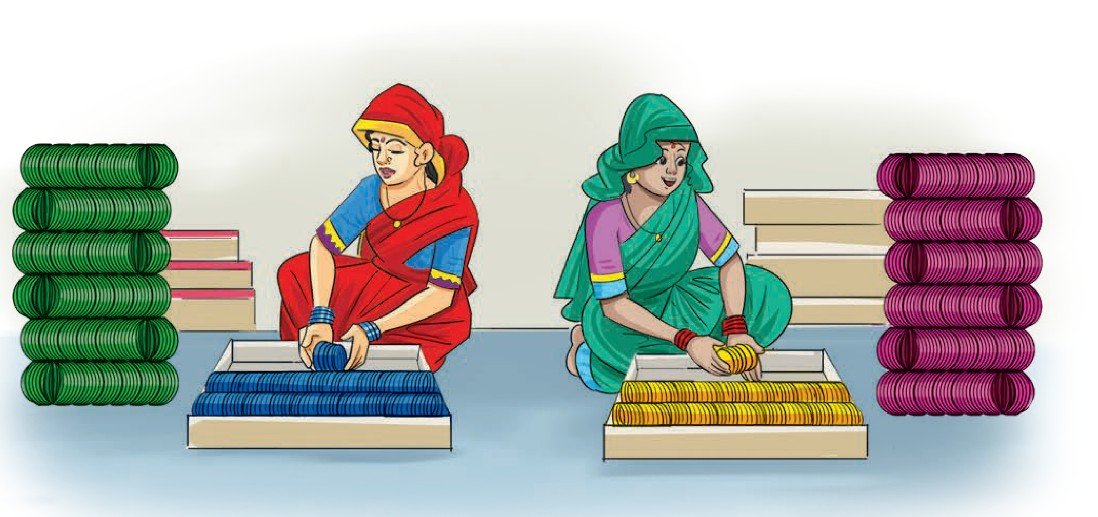
During the festival of Diwali, the demand for glass bangles increased. Diwali is the festival of lights, a time of celebration and joy, and glass bangles were popular among women at this time. Ravi’s workshop was busier than ever, with artisans working around the clock to meet the demand.
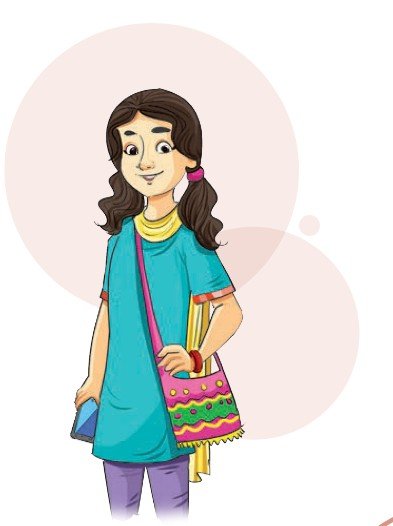
Ravi’s daughter, Ananya, had completed her schooling. She was eager to help her father in his work. She had an eye for design and wanted to put modern elements into the traditional bangle designs. Ravi was supportive but concerned about maintaining the truthfulness of their traditional craft.
One day, as Ananya worked on the bangles, she tried to combine traditional with modern designs. She introduced delicate floral patterns and geometric shapes, combining the old with the new designs. Ravi was initially hesitant but soon saw the beauty in his daughter’s designs. They decided to create a special collection for Diwali that would showcase both traditional and modern elements.
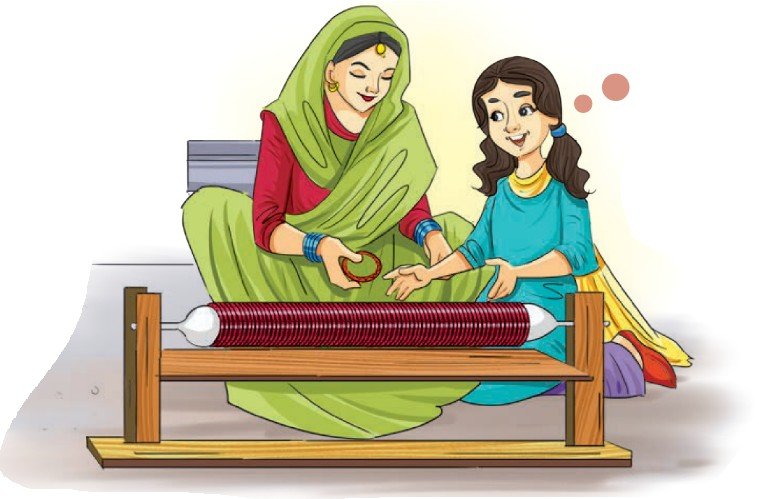
The new collection was a big success. The bangles, with their new designs and exciting colours, were loved by the customers.
On Diwali night, as the streets of Firozabad glittered with lamps and lights, Ravi and Ananya watched with pride as women and girls walked past their shop, proudly wearing the bangles from their new collection. The vibrant colours sparkled under the festival lights.
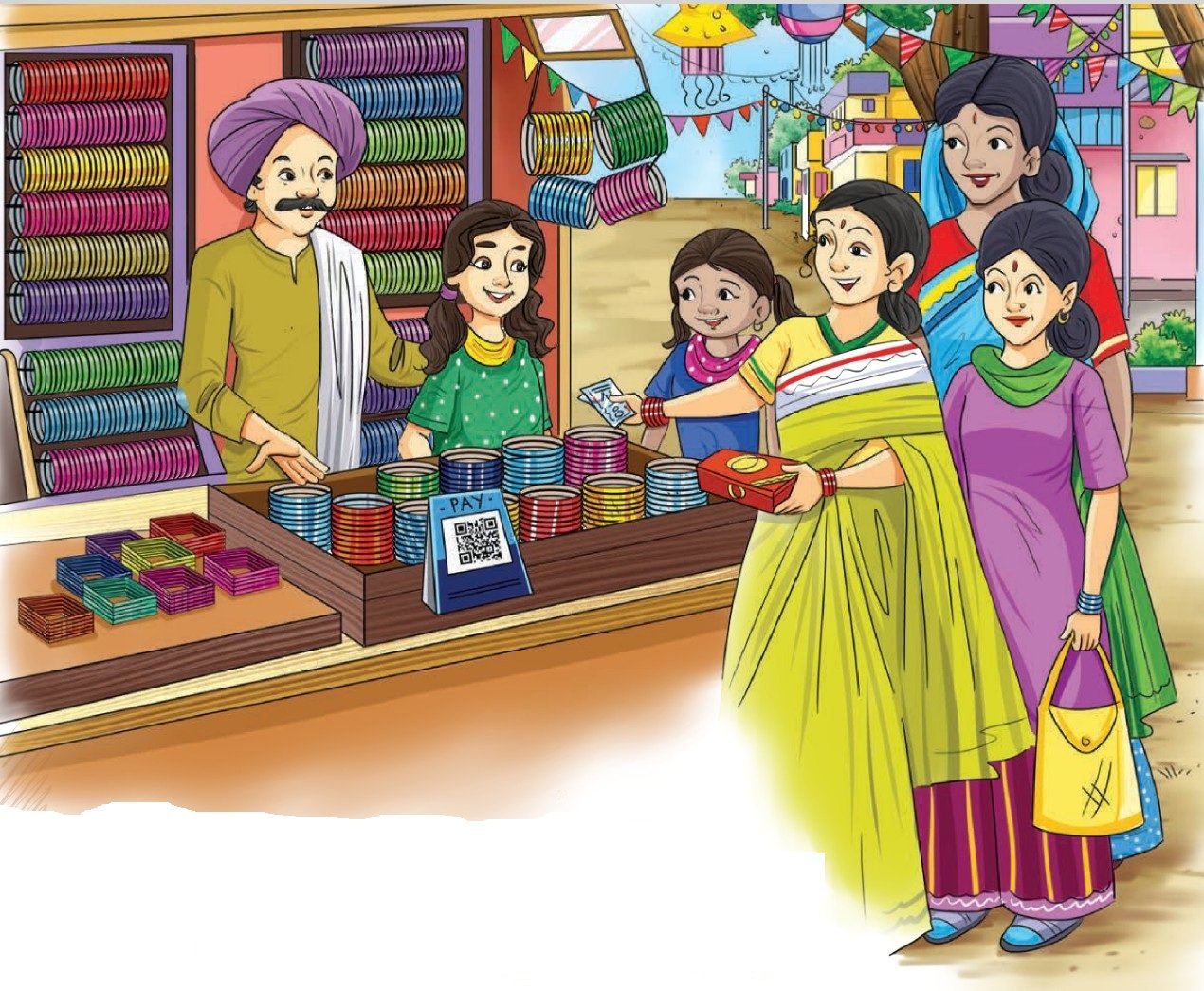
The success of the new collection was not just a personal achievement for Ravi and Ananya; it also had a positive impact on the entire community. The increased demand for bangles led to more work for local artisans. Not only those, more jobs were generated in packing and transportation.
As the festival came to an end, Ravi and Ananya recalled their journey of making bangles. Ravi’s workshop continued to prosper, and Ananya’s innovative designs made their bangle collection quite popular.
New Words
clinking artisans furnace
floral patterns elements
Let us Think
- Answer the following questions.
- How were glass bangles made in Ravi’s small workshop?
- Who was Ananya? How did she help Ravi?
- How did the success of the new bangles help the community?
- Think and discuss
- If you were in Ananya’s place what other modern designs or colours would you add to make the bangles more attractive?
- Ravi and Ananya felt proud seeing people wearing their bangles on Diwali night. Have you ever created something(drawing, writing, or a project) that made you happy? Share your experience with the class.
- Make a list of things that you buy from local markets during festivals.
If students have any artwork, it should be displayed before the class.
Let us Learn
- For each word, list three other words you associate with it. One has been done for you.
- Festivals Joy Sweets Family
- Bangle .......... .......... ..........
- Factory .......... .......... ..........
- Friend .......... .......... ..........
- School .......... .......... ..........
- Use capital letters, full stop (.), comma (,), question mark (?), wherever necessary and rewrite the following sentences.
- the air was filled with the clinking of glass
- On diwali night the streets of Firozabad were lit with lamps and lights
- did ravi like ananya’s new designs at first
- ravi and ananya made a special collection for diwali
- did the customers love the new bangles
- Revisit the rules of simple past tense with the learners.
- It is important to draw the learners’ attention to the fact that the first and the second actions are to be determined by the meaning and not by their positions of occurrence (first and second) in a sentence.
Read the following sentence.
Ananya had completed her schooling before she joined the factory.
The underlined part is an example of past perfect tense. We use the past perfect tense to talk about an action that took place and was completed before another action in the past.
We use both past perfect (for the first action) and past simple (for the second action) in such sentences.
In the above sentence, Ananya’s education is the first action which took place before she joined the factory (next action).
Rule: Subject + has/have + Verb + Object
Identify the first action and the second action in the given sentences.
The crowd had dispersed when we reached the market.
Shivangi had finished the portrait when I called her.
When you rang the doorbell, I had switched off the TV.
When we reached the cinema hall, the movie had ended.
Samar had set the table when the phone rang.
Write more sentences like the ones given previously with the help of your teacher and classmates.
Let us Speak
- Try speaking the following lines. Start slow and gradually increase your speed. See how many times you can say each one without stopping or making a mistake.
- Red lorry blue lorry.
- Babli bought beautiful bangles but the bangles broke.
- Ravi read a red book.
- Green glass globes glow green.
- Ten tiny turtles take turns talking.
- Glass bangles are an important part of the Indian culture, especially during festivals. Are there any crafts or traditions in your region that are linked to festivals? Share with your class.
Let us Listen
Your teacher will read out the paragraph given below. Listen carefully.
Arjun and his sister, Meera, help their mother prepare besan laddus. First, their mother roasts chickpea flour in a pan until it turns golden brown. Their father then adds ghee and sugar to the mixture and stirs it well and then transfers it to a big bowl to let the mixture cool. When it is slightly cool, Meera and Arjun shape the mixture into small round balls. Finally, the kids decorate each laddu with a sprinkle of chopped nuts.
Write the correct sequence of steps that Aarav, Meera, and their parents take to prepare the laddus.
-
The father adds ghee and sugar to the mixture and stirs it well.{......}
-
The mother roasts chickpea flour in a pan until it turns golden brown.{......}
-
The kids decorate each laddu with a sprinkle of chopped nuts.{......}
-
Meera and Arjun shape the mixture into small round balls.{......}
-
Arjun and his sister, Meera, help their mother prepare besan laddus.{......}
Let us Write
- Write a paragraph of 80 –100 words on how you recently celebrated a festival.
- Look at the pictures given below.
Hints: Special dish, meeting with friends and family, prayer, any other related ritual.
Rock Garden, Chandigarh
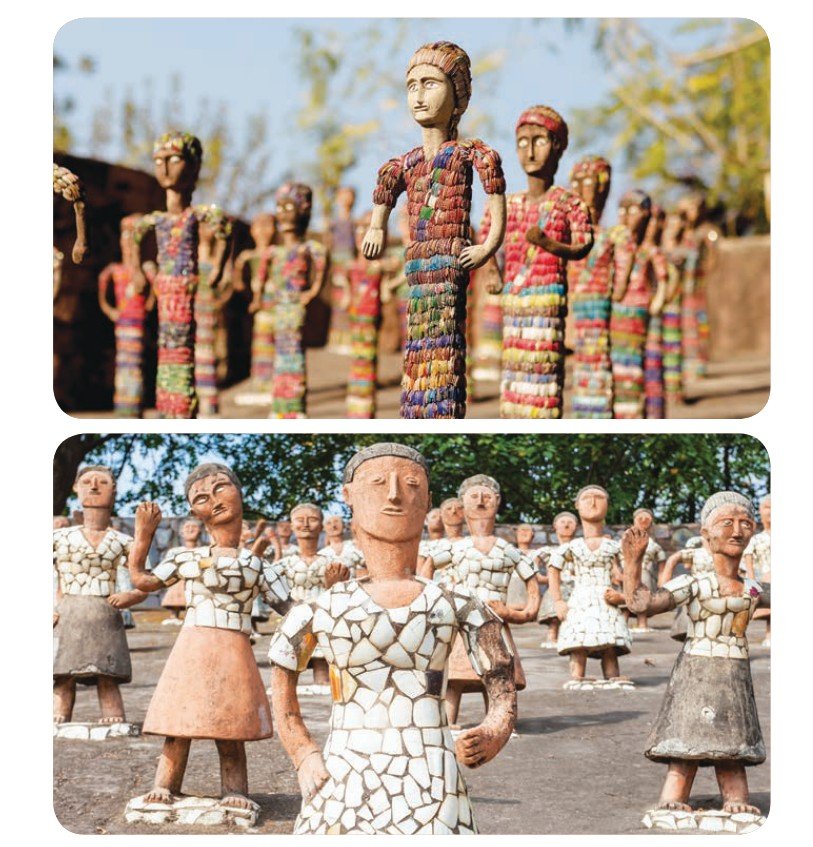
Discuss with your teacher and write a paragraph of 100–120 words in your notebook.
Let us Do
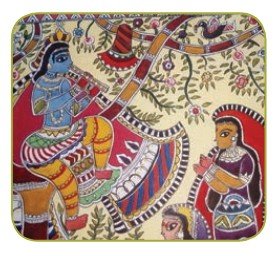
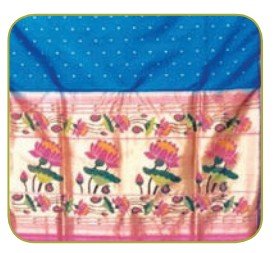
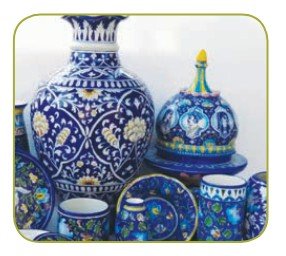
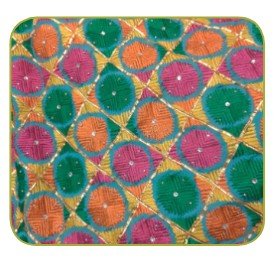
- Firozabad is famous for glass bangles. Find out and write the names of places in India known for the following crafts.
- Madhubani painting
................................
- Paithani Saree
................................
- Blue pottery
................................
- Phulkari embroidery
................................
- Find out what your State or Union Territory (UT) is famous for. Speak about it.
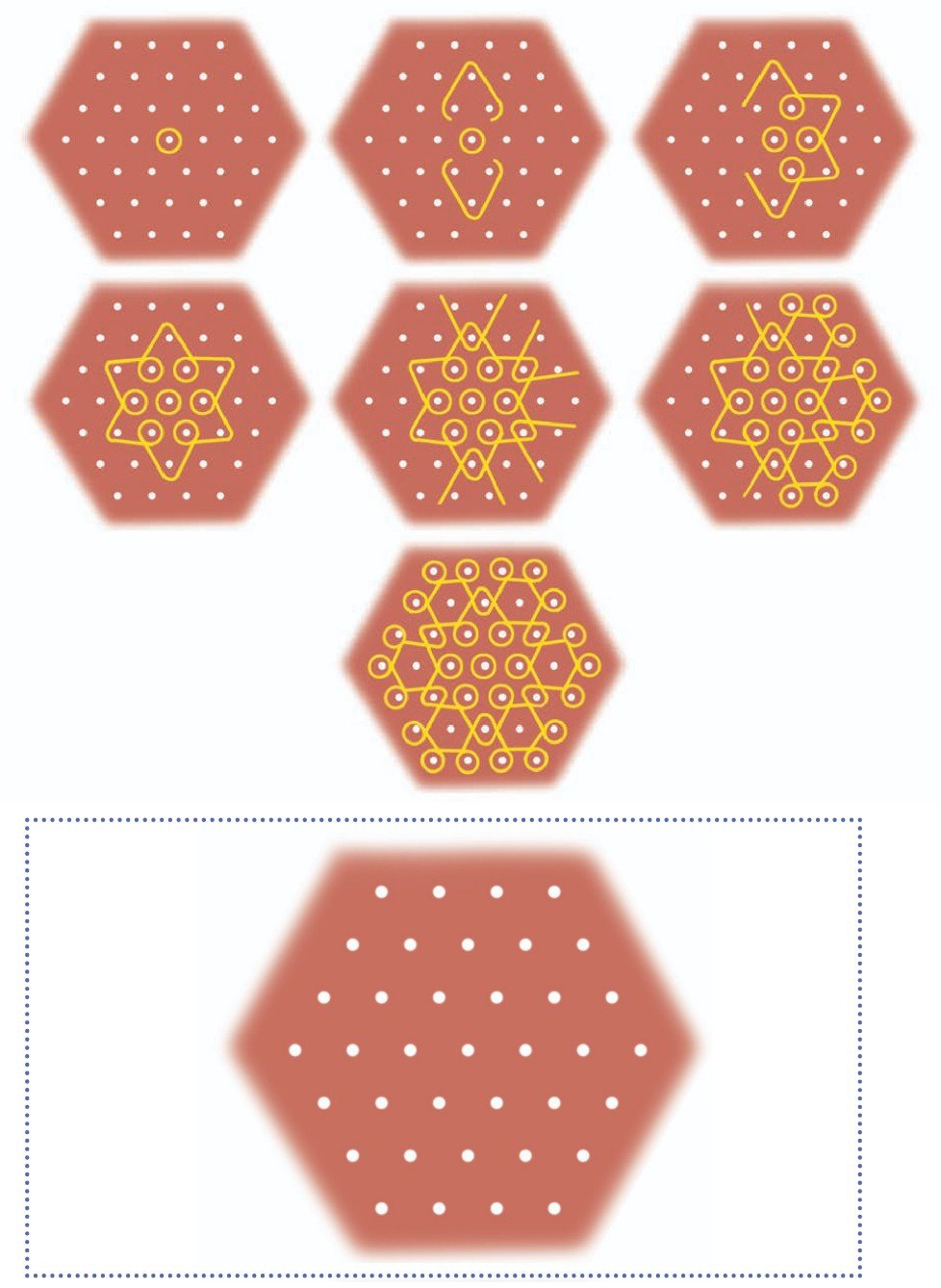
- Follow these steps to create a beautiful rangoli.
The teacher may help the students to locate these places on the map of India.
Let us Explore
Do you know what a bank account is?
It is a safe place to keep your money, just like you keep your money safe in a gullak.
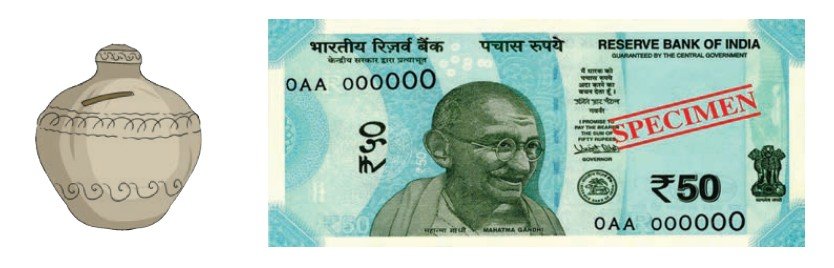
Suppose you get ` 50 for your birthday every year. You put it into your Savings Account. After a year, the bank adds ` 5 more. This is called interest on the Savings Account.
Benefits of a Savings Account:
- Meant for saving money.
- You can add or withdraw money anytime.
- As a reward for saving, you earn interest.
- Do you have a bank account? Yes/ No
- Find out more about Fixed Deposit and Recurring Deposit. Share information on these with your class.
Passbook
CHILDREN’S BANK OF INDIA
Let us Observe
Look at the following pictures. Can you locate them in this textbook and write their name in the space given below?
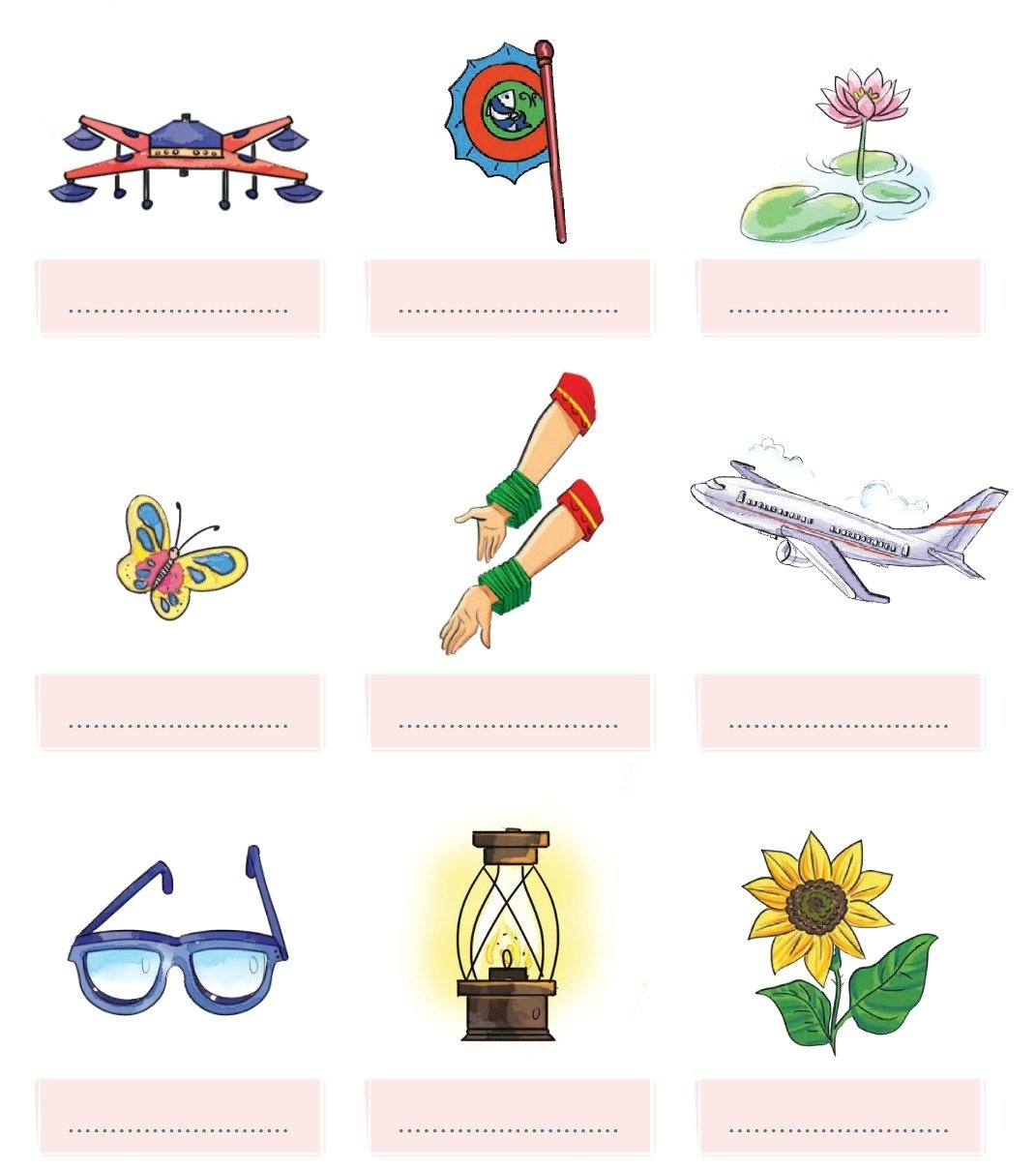
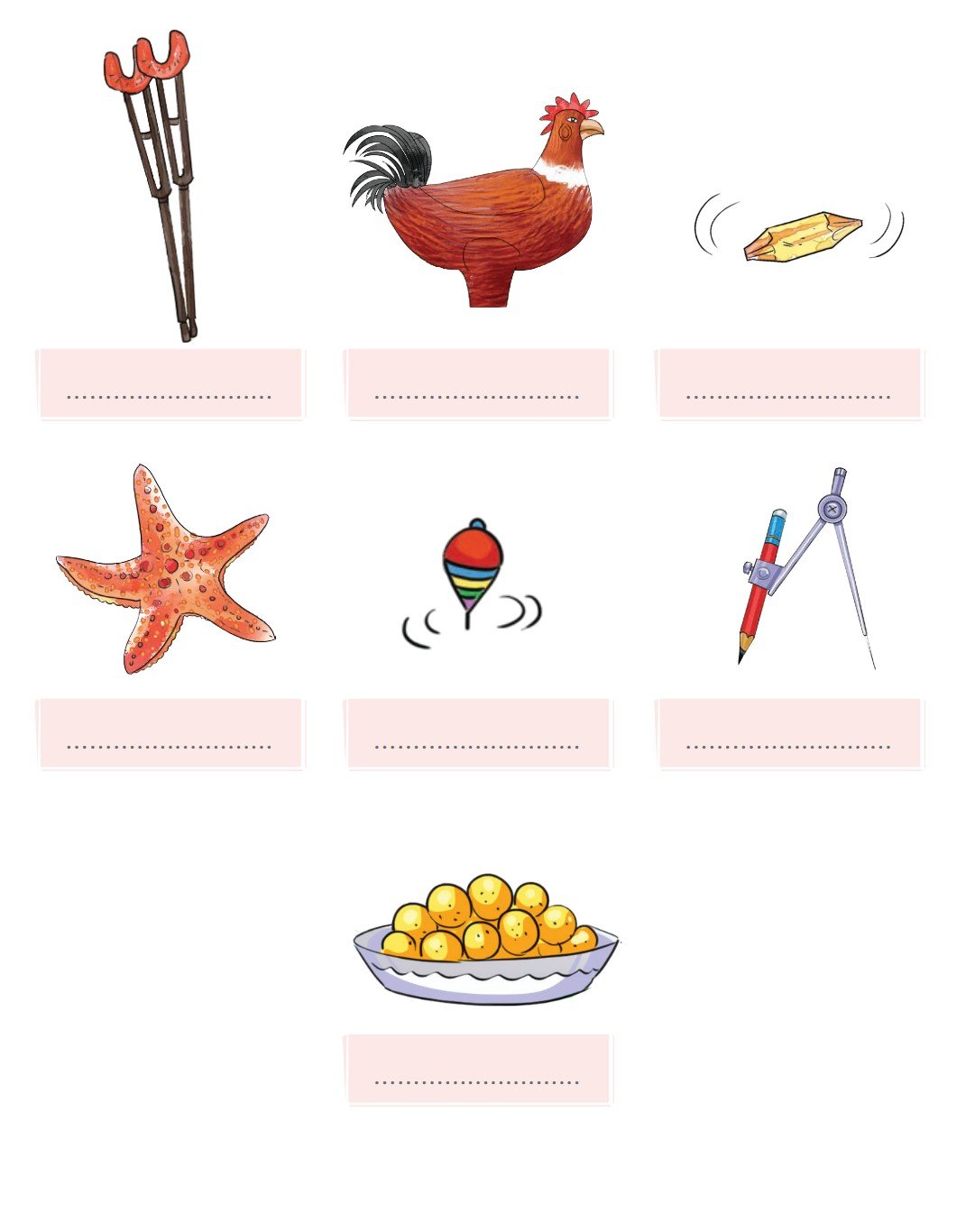
Answer Key
Page 9 A.
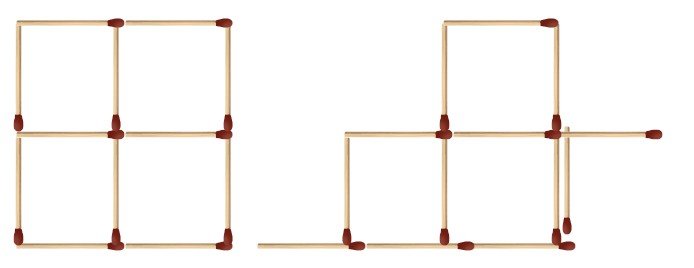
Page 10 Riddle
Onion
Page 64 C.

Page 89 Riddle
Your name
Page 104 B.
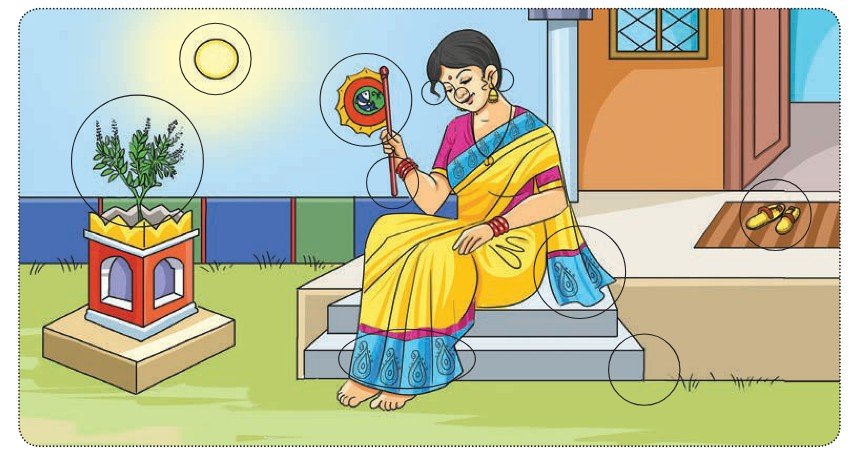
Self-assessment 2
You may select more than one box for each point.
- I can recite the poems with gestures
- by myself.
- in a group.
- by repeating after my teacher.
- None of the above. I like reading poems quietly.
- I can understand the new words
- by using a dictionary.
- after listening to my teacher’s explanation.
- by reading with my classmates in groups.
- by reading the entire sentence again.
- by looking at the pictures.
- I can answer the questions
- in my mother tongue.
- in English.
- in English with a few words of my mother tongue.
- in my mother tongue, with a few words of English.
- I can write a paragraph
- by myself.
- after following my teacher’s instructions.
- after reading my friends’ work.
- with my teachers’/friends’ help.
- I was able to do all the activities
- by myself.
- with the help of my teacher.
- with the help of my classmates.
- with the help of my family members.
- The assessment sheet should be filled by the learners.
- Include this as a part of the learners’ progress trajectory.
Books that I have read this year.
Title:
Author:
Why I liked it ...........................
................................................
................................................
................................................
Title:
Author:
Why I liked it ...........................
................................................
................................................
................................................
Title:
Author:
Why I liked it ...........................
................................................
................................................
................................................
Poems that I have read this year.
Title:
Author:
Why I liked it ...........................
................................................
................................................
................................................
Title:
Author:
Why I liked it ...........................
................................................
................................................
................................................
Title:
Author:
Why I liked it ...........................
................................................
................................................
................................................
New Words
Notes