
Chapter 6
Materials Around Us
उपादानंभवेत्तस्या (मू
षाया:) मृत्तिका लोहमेव च।
(रसरत्नसमुच्चय–१०.३)
The materials used to make the crucible
(a vessel used to melt substances) are clay and iron.
(Rasaratnasamuchchaya–10.3)
6.1 Observing Objects Around Us
Ghulan and Sheeta are thrilled to go to their new class
after the summer break. They enter their classroom and
start talking. “What have you brought to school today?”
asks Sheeta.
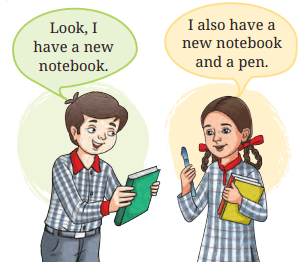
After some time, Madam Vidya, their science teacher,
enters the class and starts interacting with the students to
draw their attention to many things they use in their daily
life. She asks, “How are they similar to or different from
each other? What are their shapes and colours? How does it
feel when you touch them? Are some of them heavier than others?” All things are made up of some materials like paper,
wood, cloth, glass, metal, plastic, clay, and so on.
Any substance that is used to create an object is referred to
as material.
Activity 6.1: Let us identify
Make a list of objects you see around and also write the
names of the materials they are made up of in Table 6.1.
Table 6.1: Identify materials
Based on everyday observations, one can conclude that
objects are made up of various materials.
Do you know?
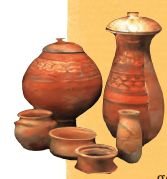
The earliest pottery found in the Indian subcontinent dates
back to 7,000 to 8,000 years in the Ganga plains (Lahuradewa)
and in Baluchistan (Mehrgarh). About 4000 BCE onwards,
Sindhu-Sarasvatī developed techniques of wheel turned pottery production, pigmentation, application
of protective or decorative coats (called ‘slips’) of
multiple colours, decorative painting, etc. These
techniques became further sophisticated during the
Sindhu-Sarasvatī (also known as ‘Harappan’) Civilisation
(2600–1900 BCE), with a bright red surface
painted with black-coloured designs displaying
geometric patterns, and aquatic and terrestrial
animals. The clay used for making pots, dishes,
bowls and other items was carefully selected
and cleaned, sieved, kneaded, turned over a
wheel and finally baked in kilns (baked clay
is called ‘terracotta’). Pots were used for various
purposes, from cooking to storage of food grains,
oil, ghee, and so on. Some very large storage
jars and other pottery items are exhibited at the
National Museum, New Delhi.
Let us explore materials further.
6.2 How to Group Materials?
Activity 6.2: Let us group
- Group the objects shown in Fig. 6.1 based on any common property, such as shape, colour, hardness, softness, shine, dullness or materials they are made up of.
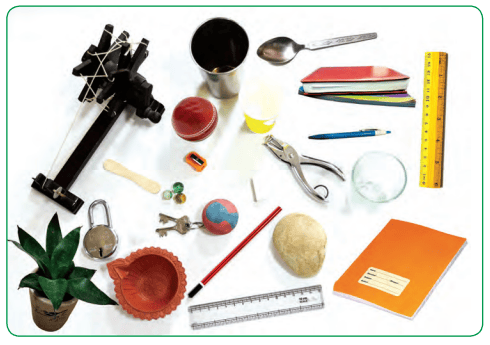
Fig. 6.1: Objects around us
- Which property did you use to group the objects in Activity 6.2?
- Did your friends group objects based on similar properties?
- What did you learn from this activity?
You must have noticed that an object can be made from
different materials and some materials can be used to make
more than one object.
The method of arranging the objects into groups is called
classification. Objects can be classified on the basis of a
common property that they have.
Similarly, we can classify materials based on certain
properties.
Activity 6.3: Let us think
Let us think what materials we can use to make a tumbler.
Fill in the names of the materials in the spaces provided in
Fig. 6.2.
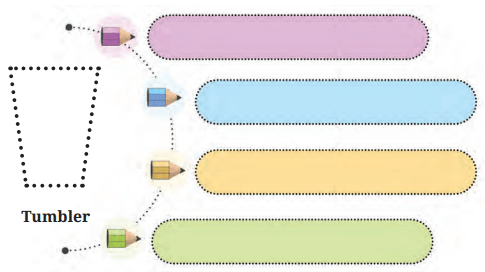
Fig. 6.2: Materials used to make tumbler
Would it be a
good idea to
use paper-like
materials for
making cooking
utensils?
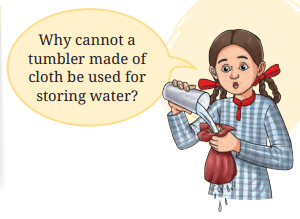
The materials that are required to make a tumbler should
be capable of holding water.
What decides which material should be used for making
an object? We choose a material to make an object depending
on its properties and the purpose for which the object is to
be used.
We may use different materials for making different
parts of an object. For example, a pen may be made up of
different materials like plastic, metal and ink
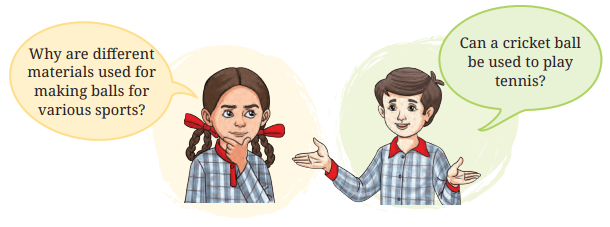
Activity 6.4: Let us explore
Fig. 6.3 illustrates a variety of balls that are of the same size but made up of different materials.
- Take each ball and drop it from a fixed height.
- Note the height to which the ball bounces and record it in Table 6.2.
- Identify the ball that achieves the highest bounce
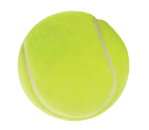
Tennis ball
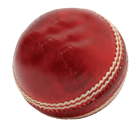
Cricket ball
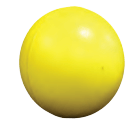
Hand exercise ball
Fig. 6.3: Different types of balls used for various purposes
Table 6.2: Bouncing level of the balls
Discuss in class other properties of sports balls, such as size,
colour, texture and how high they bounce and understand
why balls are made up of specific materials for specific sports.
Observe Fig. 6.4 and group the objects in as many different
ways as possible.
You might have grouped
these objects according to
their shapes or by their
colour or materials they are
made up of.
We have learnt that
materials may be classified on
the basis of their properties.
For example, in the
kitchen, we usually store
things in such a manner that
similar utensils are placed
together. Similarly, a grocer usually keeps all types of spices
in one corner, pulses and grains in another corner and so
on. You may also visit any chemist shop and enquire about
how medicines are arranged.
6.3 What are the different Properties of
Materials?
Let us learn some more properties of materials.
6.3.1 Observe and identify appearance of materials
Materials often look different from each other. Freshly cut
wood, which is unpolished, has a distinct appearance, quite
different from that of iron. Similarly, iron looks different
from copper or aluminium. However, there might be some
similarities among iron, copper and aluminium that make
them different from wood.
Let us do a sorting challenge! Collect small pieces of paper,
cardboard, wood, chalk, copper wire, aluminium foil and any
article made up of brass, bronze, steel, etc. Take a look at the
pieces you have collected. Do any of these materials shine
when light falls on them? Observe their texture (whether rough or smooth), colour and other noticeable features,
and record your observations in the notebook. Group the
collected pieces based on their appearance.
Materials that typically have shiny surfaces are said to
have a lustrous appearance. Such materials with lustre are
usually metals. Examples of metals include iron, copper, zinc,
aluminium, gold, etc. However, some metals may lose their
lustre and start to look dull or non-lustrous due
to the effect of air and moisture on them. As
a result, we often notice the lustre only on
their freshly cut surfaces. Non-lustrous
materials are those that do not have a shiny
surface. Some examples of non-lustrous
materials are paper, wood, rubber, jute, etc.
“All that glitters is not gold” goes an old
saying! Not all the materials that shine are metals.
Surfaces of some materials are made shiny by
polishing or coating them with thin layers of plastic,
wax or any other material which makes them look
shiny. These materials may not be metals.
6.3.2 Which materials are hard?
When you press different objects or materials with your
hands, some of them like stones, may be hard to compress,
while others, like an eraser, can be easily compressed. Take
a metal key and use it to scratch the surface of a piece of
wood, aluminium, stone, iron, candle, chalk and any other
material or object. Can some materials be scratched more
easily than others? Materials which can be compressed or
scratched easily are soft, while other materials which are
difficult to compress or scratch are hard. However, these
properties are relative in nature. For example, rubber is
harder than sponge but softer than iron.
Activity 6.5: Let us observe
- Hold the objects given in Table 6.3 with your hands.
Feel whether the objects are hard or soft. Find out the
materials they are made up of. Enter your observations
in Table 6.3.
Table 6.3: Hard or soft objects and the materials
they are made up of
- Compare your observations with the observations of your friends and discuss.
You have learnt that materials can have different properties, like lustre, hardness, softness and colour. Can you think of any other properties that are shown by materials? Let us explore it further.
6.3.3 Explore materials through which one can
see or cannot see
Ghulan, Sheeta and Sara are playing hide and seek with
their friends. Ghulan hides behind a wall, Sheeta hides
behind a big tree in the garden while Sara hides behind
the frosted glass door (which has a hazy surface). Sheeta’s
younger brother can see all of this happening through a
glass window of his house.
The materials, through which things can be seen clearly,
are called transparent. Glass, water, air, cellophane paper,
etc., are some examples of transparent materials.
Why did Ghulan, Sheeta and Sara choose these places to hide?
Do you think it would be possible for Sheeta’s brother to
see her and her friends through a closed wooden window of
the house?
There are many materials through which you are not
able to see at all. These materials are called opaque. Wood,
cardboard and metals are examples of opaque materials.
The materials through which objects can be seen, but not
clearly, are known as translucent. Butter paper and frosted
glass are examples of translucent materials.
Look at Fig. 6.5. Identify and label the nature of materials
used by Ghulan (A), Sheeta (B), Sara (C) and Sheeta’s
brother (D).
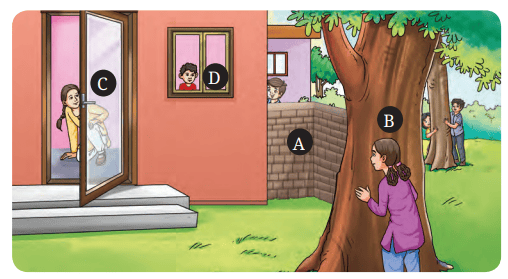
Fig. 6.5: Identify the nature of different materials
(A)___________ (B)_______ (C)________ (D)________ .
Activity 6.6: Let us classify
Classify the following objects as transparent, translucent or
opaque in Table 6.4.
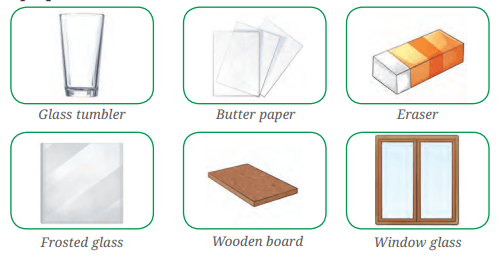
Table 6.4: Classification of objects
Is water
transparent?
Can it
be made
opaque?
6.3.4 What is soluble in water; what is not?
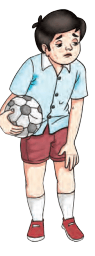
Ghulan was sweating when he came home after
playing in the evening. He was feeling tired and
thirsty. Ghulan’s mother mixed a spoonful of sugar,
a pinch of salt and some lemon juice in a glass of
water and offered him this shikanji (lemonade)
to drink.
Ghulan noticed that while his mother was
mixing sugar and salt in water, the salt and the
sugar disappeared after a while.
Let us try a simple activity to explore how
different materials behave when we mix them
in water!
Activity 6.7: Let us explore
- Collect small amounts of sugar, salt, chalk powder, sand and sawdust.
- Take five glass tumblers and fill them about two-third with water.
- Put a teaspoonful of sugar in the first glass tumbler, salt in the second one, chalk powder in the third, sand in the fourth and sawdust in the fifth glass tumbler.
- On stirring, predict what will happen in each case.
- Use a spoon to stir well the contents of each glass tumbler.
- Wait for a few minutes and watch what happens.
- Write down your observations in Table 6.5.
Table 6.5: Mixing different materials in water
You might have noticed that some materials
completely disappear when mixed in water.
We say that these materials dissolve in
water or, in other words, they are soluble
in water (Fig. 6.6a). Some materials do not
mix with water and do not disappear even
after we stir them for a long time. These
materials are insoluble in water (Fig. 6.6b).
Water plays an important role in the functioning
of our body because it can dissolve a large number of
materials.
Does
everything you
put in water
disappear?
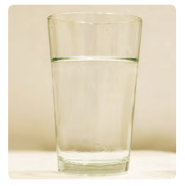
(a) Soluble material in water
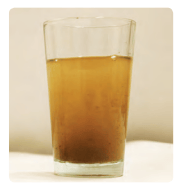
(b) Insoluble material in water
Fig. 6.6: What disappears, what does not?
Make your own ORS!
ORS—Oral Rehydration Solution— is used to treat dehydration due
to diarrhoea or other illnesses. These ready-made ORS packets are
available in primary health centres and also in the market. Each packet
is dissolved in a litre of water before use. If these are not available,
ORS can be prepared at home by mixing six teaspoons of sugar and
half a teaspoon of common salt in one litre of boiled and cooled water
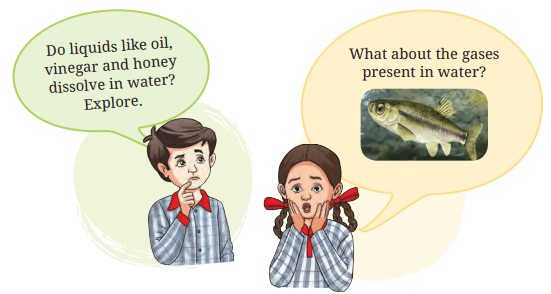
Some liquids get completely mixed with water. Some do
not mix with water and form a separate layer when left
undisturbed for some time. Similarly, some gases are soluble
in water whereas others are not. For example, oxygen gas
dissolves in water. It is very important for the survival of
animals and plants that live in water
6.3.5 How heavy or light?
Activity 6.8: Let us measure
- Let us take three identical paper cups (or bowls). Fill each cup half with the provided materials.
- Fill one with water and mark it as ‘A’, second with sand and mark it as ‘B’, and the third with pebbles and mark it as ‘C’.
- Predict which one would be heavier and which one
would be lighter?
- Weigh each cup using a balance (Fig. 6.7) and record the readings in your notebook.
- Compare the data and infer which is
heavier or lighter
From Activity 6.8, we can say that any object
which is heavier or lighter can be measured in
terms of a property called mass.
The one which is heavier has more mass
and the one which is lighter has less mass
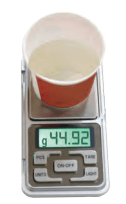
Fig. 6.7: Weighing a paper
cup containing water
Weight is sometimes used in common language for mass as it is
determined by weighing. You will learn more about mass and weight
and their relation in higher classes.
6.3.6 Space and volume
Next day, Madam Vidya enters the class. All the students
stand up to greet her. She reciprocates and deliberately
says, “Please keep your bags on your seats and sit down.”
Students are not able to sit because bags are kept on their
seats. Madam Vidya asks, “Why are you not sitting?” The
students reply that there is no place to sit because the bags
have occupied that space.
Continuing the conversation,
she provides two identical glass
tumblers to two students and
encourages them to pour the
remaining water from their
drinking water bottles into
the respective glass tumblers.
On pouring water in the glass
tumblers, the students observe
that one glass tumbler gets halffilled with water (Fig. 6.8a) while
the other is almost completely
filled with water (Fig. 6.8b).
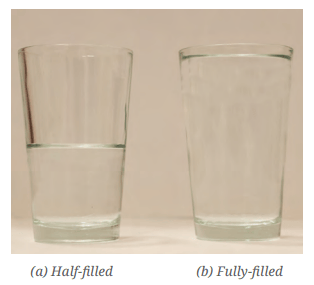
Fig. 6.8: Glass tumblers with varying levels of water
Why is the level of water different in the two tumblers?
Madam Vidya elaborates that both tumblers have the
same capacity. The water levels differ in each case, which
indicates that the amount of water in each tumbler is
different.
The water in the first tumbler occupies less space,
indicating that the volume of water in this tumbler is less
than the water in the other tumbler. The space occupied by
water represents its volume.
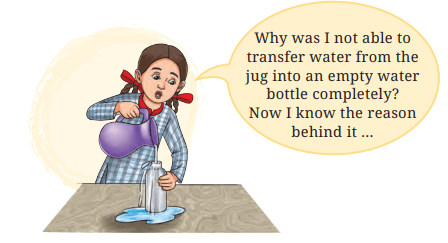
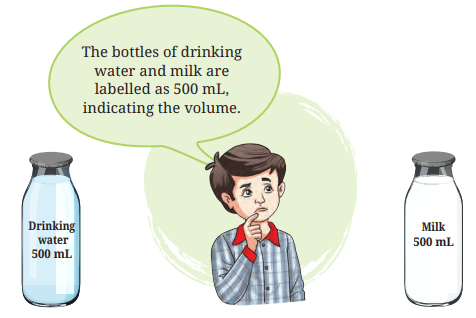
You may have noticed drinking water bottles of different
sizes being sold in the market. Have you noticed 1 L, 500 mL,
200 mL, etc., written as net quantity on the bottles? These
indicate the volume of water in the bottles.
Now you have become familiar with many properties
of materials. However, all
materials do not possess all
these properties.
6.4 What is Matter?
Are there any
properties which
can be shown by all
materials? If yes,
what are those?
Mass and volume are the two
properties that are possessed
by all materials. Can we give a
general name to anything that
possesses these two properties?
Anything that occupies space and has
mass is called matter. The mass gives the quantity of matter,
and the units to measure it are gram (g) and kilogram (kg).
The space occupied by matter is its volume. The units to
measure the volume are litre (L) and millilitre (mL).
Do you
know?
Kilogram is the unit of mass in the International System
of Units (SI). Kilogram is abbreviated in lower case as kg.
There is no space between ‘k’ and ‘g’ in kg, and no full
stop after the symbol, except at the end of a sentence.
While writing the mass, always leave a space between
the number (numerical value) and the unit. For example,
if we have mass of 7 kilograms, it would be written as
7 kg and not as 7 kgs.
Similarly, litre is abbreviated as capital L and
millilitre as mL. There is no space between ‘m’ and ‘L’
in mL. For example, if you have 500 millilitres of water,
it would be written as 500 mL, m will be in lower
case and L will be in upper case. The SI unit for
volume is cubic metre, abbreviated as m3
. The
abbreviation is written with a superscript 3 to
denote cubic metre. For example, if you have
volume of 2 cubic metres, it would be written
as 2 m3
. Always leave a space between number
(numerical value) and the unit. 1 m3 =1000 L.
Can all the materials around us be
considered as different examples of
matter? Discuss with your friends.
For example, water is matter, sand and
pebbles are matter and so is the cup.
Materials are types of matter used in the
creation or making of objects.
We learnt that materials look different
and behave differently. We grouped materials
on the basis of similarities or differences in
their properties.
We find grouping useful as it helps us study and
observe patterns in the properties of things. Humans have
been classifying not only things, but also rocks, plants and
animals. We have learnt about the classification of the living
world in the chapter ‘Diversity in the Living World’. Just like
in the living world, classification of the non-living world is
also done on the basis of their properties.
Think it Over!
Can you think about what changes the
invention of plastic brought to humans? Is it a boon or a bane?
Do you know!
A similar classification system existed in ancient India.
Ayurveda, one of the Indian medical systems, too has a system of grouping things.
ग मन्द हिम
ु स्निग्ध श्लक्ष्ण सान्द्र मदृुस्थिराः|
गणुाः ससक्
ूष्म विशदा: विं
शतिः स विपर्ययाः||
(Aṣhtanga hṛidaya Sūtra sthāna 1.18)
The shloka precisely talks about the 20 properties (guṇa—ten
pairs of opposite properties), which are used to describe all
physical matter in Ayurveda. These properties can also be used
to describe all living systems (plants, animals and humans), the
environment and also food.
These properties are:
(i) guru (heavy) X laghu (light in weight)
(ii) manda (slow) X tīkṣhṇa (quick, fast)
(iii) hima (cold) X uṣhṇa (hot)
(iv) snigdha (unctous) X rukṣha (dry)
(v) śhlakṣhaṇa (smooth) X khara (rough)
(vi) sāndra (solid) X drava (liquid)
(vii) mṛidu (soft) X kaṭhina (hard)
(viii) sthira (stable) X khāla (moving, unstable)
(ix) sūkṣhma (subtle, small) X sthūla (big, gross)
(x) viśhada (non slimy) X picchhila (slimy)
Keywords
Summary
- Objects are made from a large variety of materials. An object can be made up of a single material or a combination of different materials.
- We can use different materials to make objects with similar functions.
- The method of arranging objects into groups is called classification.
- Materials possess different properties which determine their use.
- Materials are grouped or classified based on their similarities or differences in their properties.
- Materials can be grouped based on appearance, such as lustrous or non-lustrous and based on the feel, such as hard or soft.
- Materials are grouped as transparent, translucent or opaque depending on how much we can see through them.
- Some materials are soluble in water, while others remain insoluble.
- Anything that occupies space and has mass is called matter.
- The space occupied by matter is its volume.
- Mass quantifies the amount of matter present in an object.
Let us play
1. Find the companion.
Link the following words by putting arrows between words
that have a connection.
2. Win the ‘Word-hub’
The following words from the chapter like lustrous, nonlustrous, soluble, insoluble, hard, soft, matter, mass,
transparent, opaque, volume and translucent are picked up.
Grid
- Students should randomly choose nine words from the given list and write them in the grid.
- Then, the facilitator either reads the definition of a word or the word itself (randomly) from the given list.
- The learners have to tick if the particular word is there in the grid.
- Whoever finishes ticking off all nine words first will shout out ‘Hurray!’. That person will be the winner if his/her words are marked correctly
Let us enhance our learning
1. Visit your kitchen and observe how your parents have organised various edibles. Can you suggest a better sorting method? Write it in your notebook.
2. Unscramble the letters (Column I) and match with their properties (Column II).
3. The containers which are used to store materials in shops and at home are usually transparent. Give your reasons for this.
4. State whether the statements given below are True [T] or False [F]. Correct the False statement(s).
(i) Wood is translucent while glass is opaque. [ ]
(ii) Aluminium foil has lustre while an eraserdoes not. [ ]
(iii) Sugar dissolves in water whereas sawdust does not. [ ]
(iv) An apple is a matter because it occupies no space and has mass. [ ]
5. We see chairs made up of various materials, such as wood, iron, plastic, bamboo, cement and stones. Following are some desirable properties of materials which can be used to make chairs. Which materials used to make chairs fulfil these properties the most?
(i) Hardness (does not bend or shake on sitting even afterlong use).
(ii) Lightweight (easy to lift or to take from one place toanother).
(iii) Does not feel very cold when sitting during winters.
(iv) Can be cleaned regularly and made to look new even after long use.
6. You need to have containers for collection of (i) food waste,(ii) broken glass and (iii) wastepaper. Which materials will you choose for containers of these types of waste? What properties of materials do you need to think of?
7. Air is all around us but does not hinder us from seeing each other. Whereas, if a wooden door comes in between, we cannot see each other. It is because air is and the wooden door is . Choose the most appropriate option:
(i) transparent, opaque
(ii) translucent, transparent
(iii) opaque, translucent
(iv) transparent, translucent
8. Imagine you have two mysterious materials, X and Y. When you try to press material X, it feels rigid and does not change its shape easily. On the other hand, material Y easily changes its shape when you press it. Now, when you mix both materials in water, only material X dissolves completely, while material Y remains unchanged. What can materials X and Y be? Can you identify whether material X is hard or soft? What about material Y? Justify your answer.
9. (i) Who am I? Identify me on the basis of the givenproperties.
(a) I have lustre. _____
(b) I can be easily compressed. _____
(c) I am hard and soluble in water. _____
(d) You cannot see clearly through me. _____
(e) I have mass and volume but youcannot see me.
(ii) Make your own ‘Who am I?’
10. You are provided with the following materials—vinegar, honey, mustard oil, water, glucose and wheat flour.Make any two pairs of materials where one material is soluble in the other. Now, make two pairs of materials where one material remains insoluble in the other material
Learning further
- Gather information on different materials which can be recycled. You can take help from various sources such as newspapers, magazines, talking to elders in your community, and the internet.
- Recyclers buy old objects based on properties of the materials and do not bother even if an object is broken. Conduct a survey with recyclers near you and find out what properties of materials they check before buying objects from households. Which materials do they not buy and why?
- Collect 20–30 objects from your household and classify them based on the properties of the materials they are made up of. Were you able to put them in separate groups? What relationship do you see between the properties of the materials and the use of the objects?
- Create and decorate a useful object of your choice using
discarded materials and bring it to the class. Discuss with your
friends what they have made and the materials they have
used. Additionally, provide constructive feedback on areas for
improvement, considering functionality and any other points.