CHAPTER -8
Unity in Diversity, or ‘Many in the One’
Oh, grant me my prayer, that I may never lose the bliss of the touch of the one in the play of the many. — Rabindranath Tagore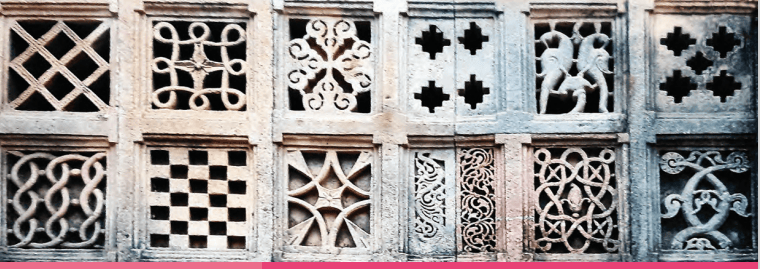
The Big Questions ?
2. What aspects of India’s diversity are the most striking?
3. How do we make out the unity
underlying the diversity?
A Rich Diversity
LET’S EXPLORE
As a class activity, make lists of (1) the birthplaces of at least 5 classmates and the birthplaces of their parents; (2) the students’ mother tongues and other languages known to them. Discuss the results in terms of diversity .
Food for All
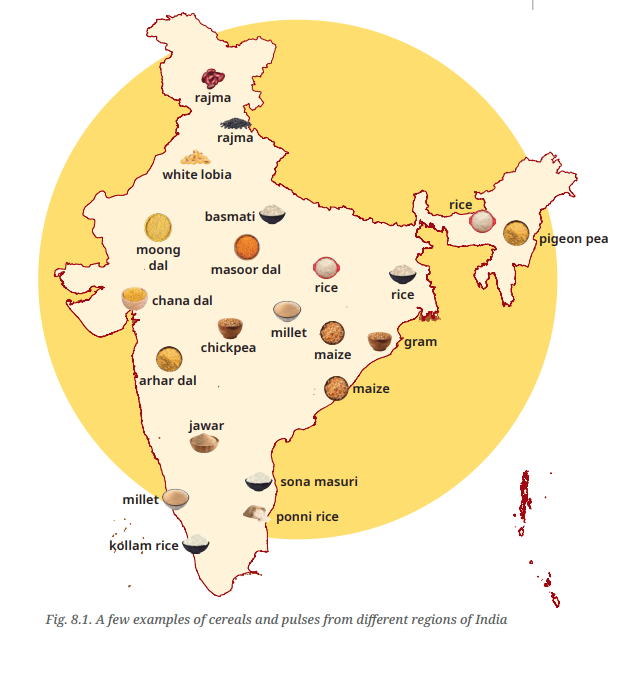
LET’S EXPLORE
---> As a class activity, make a list of ingredients (grains, spices, etc.) that are used in your home.
---> Take any one vegetable and think of the number of different dishes you can prepare with it.
Textiles and Clothing
Relief:
A design
that stands
out from
the surface
of a panel
(which may
be of stone,
wood,
ceramic or
another
material).
LET’S EXPLORE
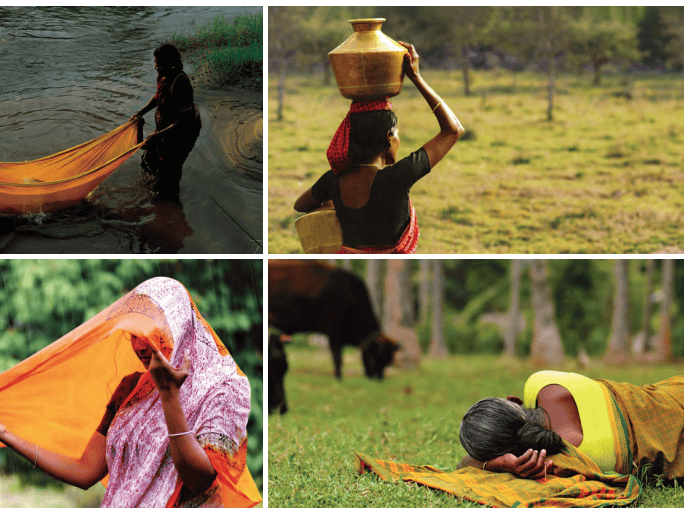
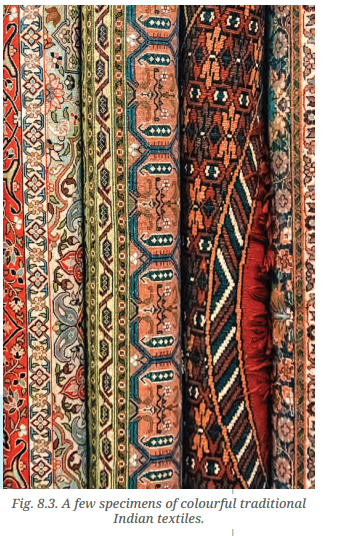
Explain how the example of the sari reflects both unity and diversity (in 100-150 words).
DON’T MISS OUT
For a very long time, India produced the finest cotton in the
world and Indian textiles were exported as far away as Europe.
One beautiful type of printed cotton called ‘chintz’ became so
popular in 17th-century Europe that the sale of some European
dresses dropped sharply. Eventually, to protect their own products, England and France decided to ban the import of
chintz from India!
LET’S EXPLORE
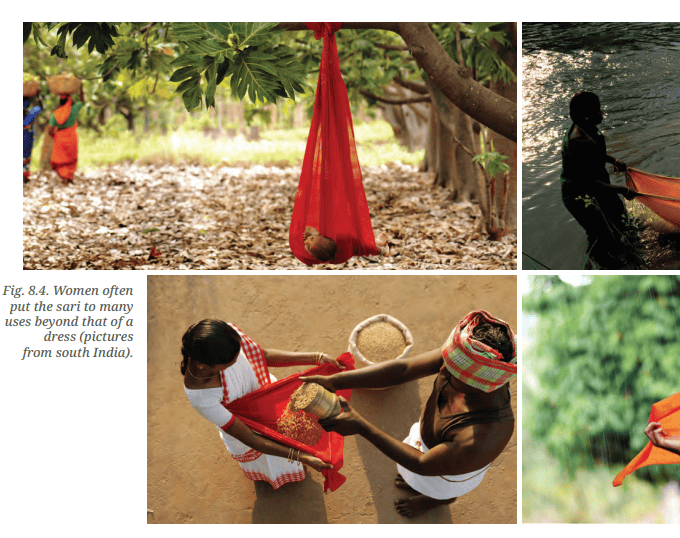
---> In the above pictures, can you recognise what a sari has been used for?
--->Are you aware of, or can you imagine, more uses for the
sari?
---> Following the example of the sari, make a list of different
styles you have seen for the dhoti — both as regards the
fabric and the uses the dhoti can be put to. What conclusion
can you draw ?
LET’S EXPLORE
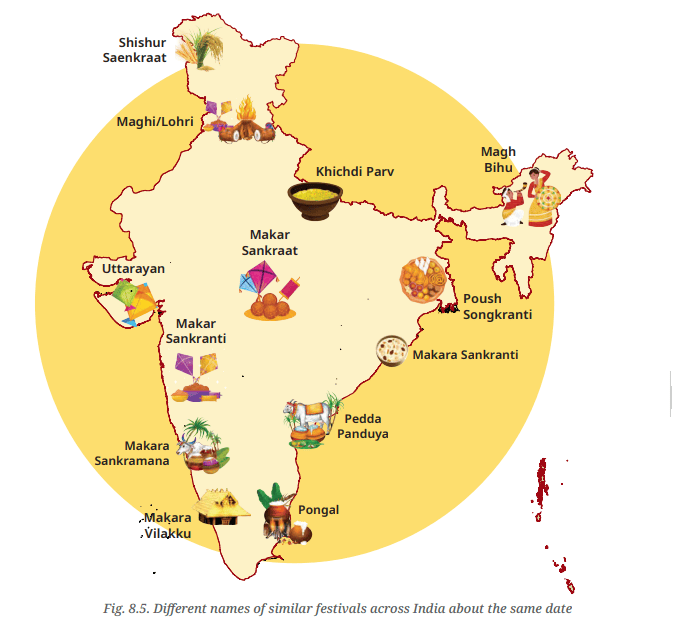
--->What is your favourite festival and how is it celebrated in your region? Do you know whether it is celebrated in any other part of India, maybe under a different name?
---> During October–November, many major festivals take place in India. Make a list of the few main ones and their various names in different parts of the country.
An Epic Spread Literature offers us another fine illustration of unity in diversity. Indian literatures are extremely diverse (and among the most abundant in the world). Over centuries, despite differences in language, technique, etc., they have shared important themes and concerns. Who has not heard of the Pañchatantra, for example? This collection of delightful stories, with animals as the main characters, teaches us important life skills. The original Sanskrit text is at least 2,200 years old, but its stories have been adapted in almost every Indian language. In fact, they have travelled well beyond India, all the way to Southeast Asia, the Arab world and Europe, inspiring new collections of stories on the way — it is estimated that about 200 adaptations of the Pañchatantra exist in more than 50 languages! This illustrates how ‘one’ collection of stories has become ‘many’.
The most striking case, however, is that of India’s two epics
— the Rāmāyaṇa and the Mahābhārata.
Epic:
A long poem
generally
narrating the
adventures
of heroes and
other great
figures of the
past .
These two long Sanskrit poems, which together might fill
some 7,000 pages in their original versions, narrate the
stories of heroes who fight to re-establish dharma. In the
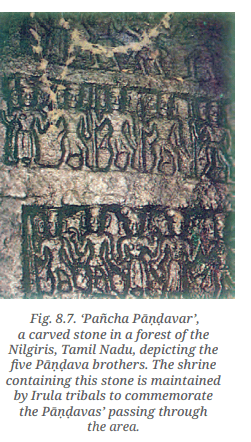
Mahābhārata, the Pāṇḍavas, with Kṛiṣhṇa’s help, fight
their own cousins, the Kauravas, to recover their kingdom.
In the Rāmāyaṇa, Rāma, with the help of his brother
Lakṣhmaṇa and of Hanuman, defeats the demon Rāvaṇa,
who had kidnapped his wife Sītā. These stories contain
many shorter ones that focus on values, and constantly
ask questions about what is right and what is wrong.
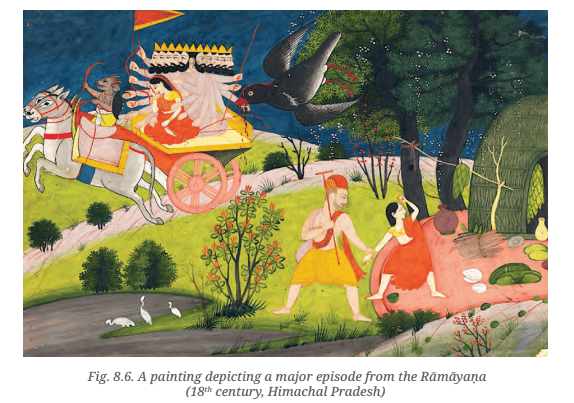
LET’S EXPLORE
In a class discussion, try to identify the episode depicted in
the painting shown in Fig. 8.6 above and important details
associated with it.