
CHAPTER -12
Grassroots Democracy – Part 3 Local Government in Urban Areas
I desire that … a full-fledged local body should be immediately formed, … so that people may know really what is an administration, what are the franchise, what are the powers, what are the rights and what are the privileges in a small sphere, in their own town, in their own villages.
— Rustom K. Sidhwa, Member, Constituent Assembly (during the Constituent Assembly Debates, 13 October 1949)
The Big Questions ?
Introduction
Earlier chapters have shown us how, in a democracy, good governance aims to empower the citizens so they may actively participate in their country’s functioning, whether it is at the rural, regional, urban, state or national level. This is the broader concept of participatory democracy. We saw the basics of the system in a rural context. Let us now see how it works in an urban scenario. Since the latter is generally more complex and diverse than the former, it is understandable that the urban governance system needs to be more complex too. We will however limit ourselves here to its basic principles.
LET’S EXPLORE
--->Why is a city like Kolkata, Chennai or Mumbai more complex and diverse than a village or a town?
---> With your classmates, make a list of diverse communities residing in any city that you are familiar with. How many were you able to list? What else do you observe in the list ?
LET’S EXPLORE
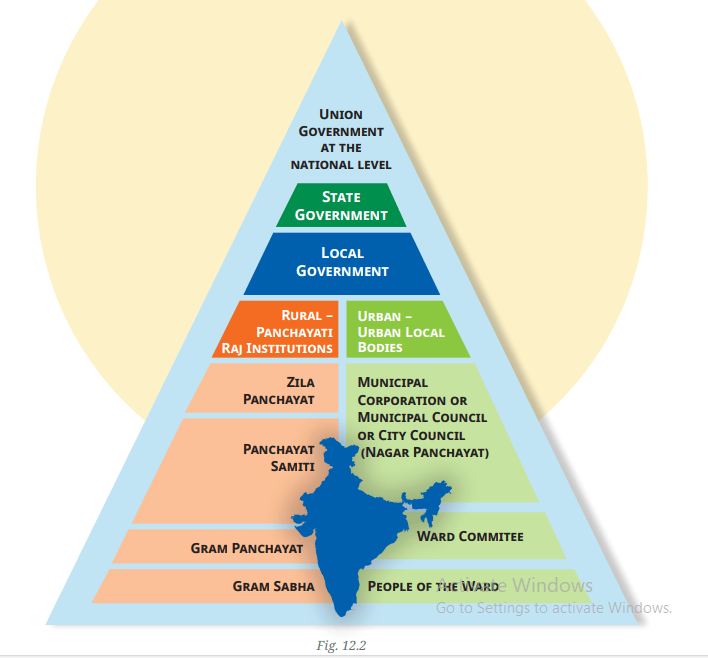
In Fig. 12.2 above, what similarities and differences do you notice between the Panchayati Raj system and the urban local government ?
Urban Local Bodies
LET’S EXPLORE
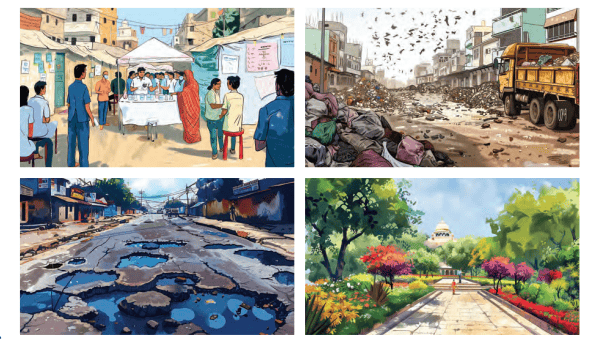
Can you think of four or five more actions that responsible citizens might take to help their area of the city?
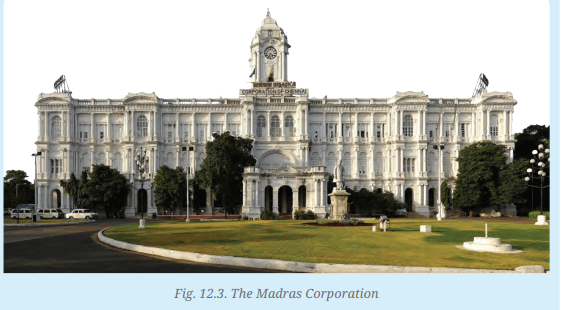
The Madras Corporation (now Greater Chennai Corporation), established on 29 September 1688, is the oldest municipal institution in India. The East India Company issued a charter the previous year constituting the town of ‘Fort St. George’ and all territories within 16 km from the Fort into a corporation. A Parliamentary Act of 1792 gave the Madras Corporation power to levy municipal taxes in the city, which is when the municipal administration properly began.
THINK ABOUT IT
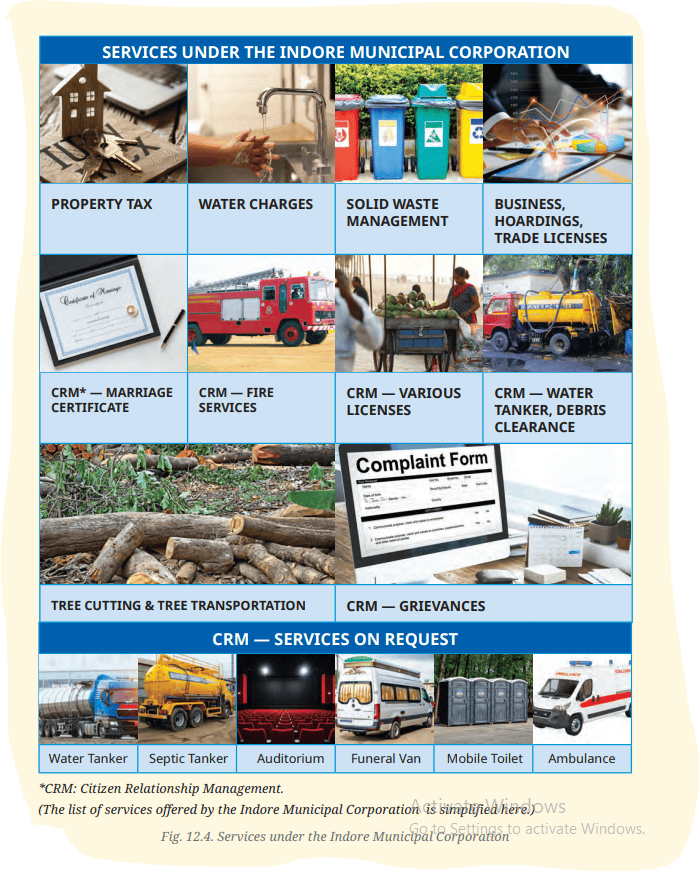
Indore in Madhya Pradesh has been awarded the cleanest city in India under the Swachh Survekshan government scheme for seven years in a row. What could have been the role of Indore citizens in this achievement?
LET’S EXPLORE
---> Select a few cities, from your State and from a few neighbouring States. These may include the city you live in or the city nearest to your town or village. How will you find out if they have a Nagar Panchayat, Municipal Council or Municipal Corporation? Draw a table with the names of the cities and the type of urban local body each of them has.
--->How do urban local bodies fund their activities? (Hint: Look carefully at the pictures of the functions performed by Indore Municipal Corporation in Figure 12.4 on page 178.) Are some of them paid services ?
Sameer: Hello! I haven’t seen you around here before. Are you new to this village?
Anita: Hello! Yes, I’m visiting my grandparents who live nearby. I am from the city. It’s quite different from here!
Sameer: Oh, really? What’s it like in
the city?

Anita: Well, it’s busy and crowded, with tall buildings everywhere. There are so many people rushing around all the time, and it’s noisy compared to the quietness here. Also, people are more independent and often don’t even know their neighbours.
Sameer: Wow! Here, everyone knows everyone else and pitches in to help each other out — we work together in the fields, celebrate festivals together, and even make decisions as a community.
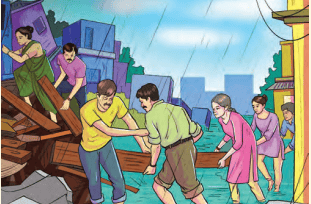
Anita: Well, there’s still some sense of community in the city. Just the other day, following heavy rains, a house collapsed two streets away. Dozens of people gathered from all over the place to help clear the rubble and make sure no one was trapped inside .
Sameer: Doesn’t the local government
help in such cases?
Anita: Yes, it does. In fact, we have local bodies and elected representatives who represent us and our interests.
Sameer: Well, it sounds like our village Panchayat, only bigger. Members are elected, too, but because they all know each other, a lot more people can participate and discuss all kinds of issues that concern the village. Sometimes, even us kids can get heard.
Anita: Really? You are not making that up?
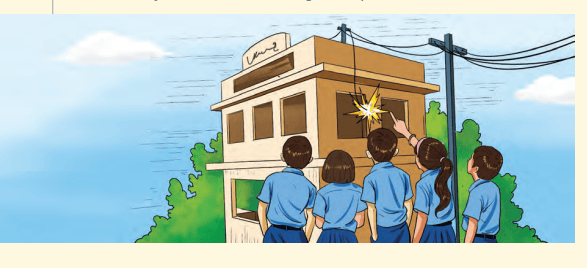
Sameer: Not at all! The other day a few kids noticed that an
electricity wire was hanging dangerously low, almost touching
the roof of a building. Not only did we report it, but we explained
to one of our Gram Sabha members that an electric post should
be shifted a little. And it was done!
Anita: Great! I suppose that’s how democracy should work. It seems more complicated in the city, but the idea is the same — everyone’s voice matters .
Sameer: Yes, it does! Sorry, I must make a move. My mother needs
my help for a little shopping. Thanks for telling me about the city.
Anita: And thanks for telling me about your village! I am definitely
going to look around.
Sameer: Well, maybe we’ll meet again sometime. Bye!
Before we move on …
→ In urban areas, decentralised governance works through different urban local bodies, which fulfil various functions affecting the citizens’ lives.
→ As with the rural context, urban local bodies have elected members who represent the local citizens.
→ The citizens also have duties to ensure that the local bodies
are able to perform their functions efficiently.
Questions, activities and projects
1. On your way to school, you and your friends notice that a water pipe is leaking. A lot of water is being wasted on account of the leak. What would you and your friends do in such a situation?
2. Invite a member of an urban local body near you to your class. Discuss with them their role and responsibilities. Prepare a set of questions to ask them so that the meeting is fruitful.
3. Discuss with adult members of your family and neighbourhood, and make a list of their expectations from the urban local bodies.
4. Make a list of characteristics of a good urban local body.
5. What are the similarities and differences between the
Panchayati Raj system in rural areas and the urban local
bodies?