
CHAPTER -14
Economic Activities Around Us
The root of prosperity is economic activity, the lack of it
brings material distress. The absence of fruitful economic
activity endangers both current prosperity and future growth.
— Kauṭilya’s Arthaśhāstra
The Big Question?
1. How are economic activities classified?
2. What differentiates these activities to be grouped into sectors?
3. How are the three sectors
interconnected?
Introduction
In Chapter 13, we learnt about two types of activities – economic and non- economic. Activities that create monetary value are called economic activities. We also learnt about the importance of non-economic activities. To understand these activities better we will learn how economic activities are classified and what differentiates them in this chapter
Monetary
value: Value
of something
that can be
measured
in terms of
money.
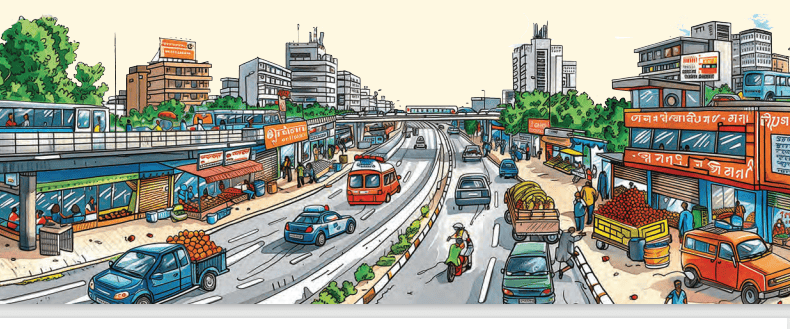
Over the decades, the number of economic activities has increased tremendously. For example, earlier most people were involved in activities such as agriculture, livestock rearing, production of tools, pottery and weaving cloth. As societies progressed, the number of economic activities through which people earn their livelihoods increased vastly.
Today, there are diverse economic activities such as manufacturing computers, mobile phones and drones; working in banks, schools and hotels; driving various types of vehicles for transportation; making furniture; tailoring clothes using machines; creating software; repairing refrigerators and washing machines; etc. Classifying all these activities helps us to understand how they function and the links they have with each other
The Classification of Economic Activities into Economic Sectors
Some economic activities share similar characteristics and based on this, they can be grouped together or classified into broader groups called economic sectors. The three main types of economic sectors are primary, secondary and tertiary economic sectors.
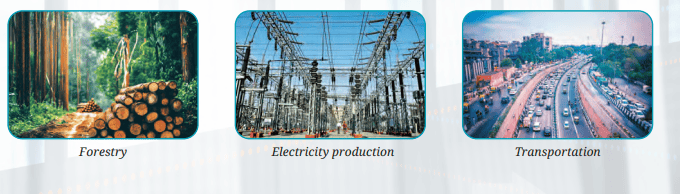
The illustration on the facing page maps out the broad
activities under these categories.
Economic
Sectors:
Broad
groups that
include
various
activities
that help
with the
economic
prosperity
of a nation
A. Primary activities
Those economic activities in which people are directly
dependent on nature to produce goods are known as
primary activities or primary sector economic activities
Primary sector: The group of activities that involves extraction of raw materials directly from nature such as farming, fishing, forestry, etc
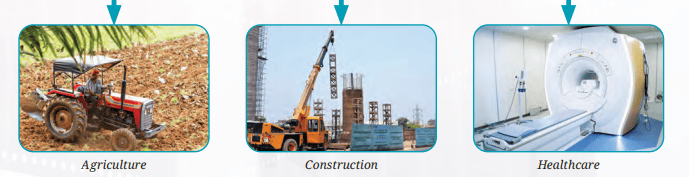
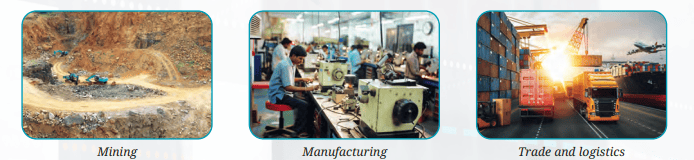
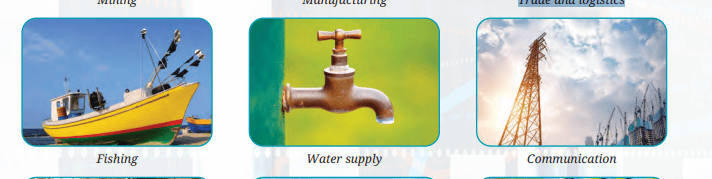

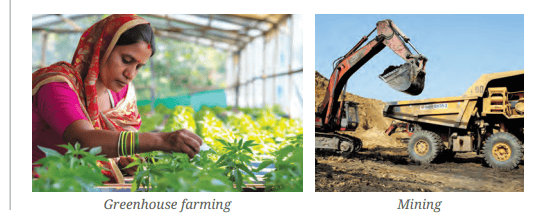
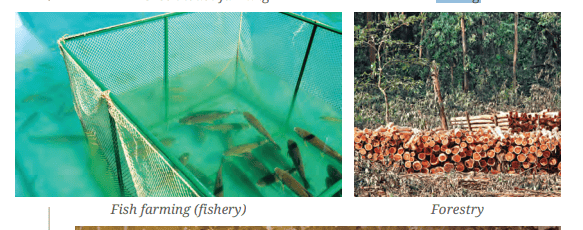
For example, work involving cultivation of grains and
vegetables from agricultural farms, collecting wood from
the forests, extracting coal from mines, fish from fisheries,
eggs from poultry farms, etc., are all primary sector
economic activities.
The most common primary activities are agriculture,
mining, fishing, raising livestock, forestry, etc. Below are
some of the types of activities within the primary sectors.
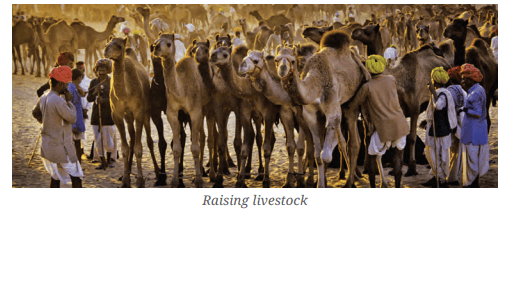
Raising livestock
THINK ABOUT IT
Can you think of any primary activities that you may have seen in the past? What are the natural resources used in these activities? Name two of them and discuss your experiences with your classmates.
1.
2.
B. Secondary activities
Economic activities in which people are dependent on
outputs of the primary sector and transform them to
produce goods are known as secondary activities or
secondary sector economic activities. The secondary sector
includes the construction of buildings, roads, etc., and
providing utilities like water, electricity, gas and other such
necessities. It also includes the manufacturing of products
in factories and production units to process raw material
from the primary sector into some other form that can be
further sold or consumed. Some examples of secondary
sector activities include the processing of grains obtained
from agricultural fields to make flour in mills, extraction of
oil from groundnut and processing of tea leaves to derive
tea. Similarly, wood from the forest is converted into
furniture and paper, cotton is used to make clothes, and
steel from iron ore is used to make automobiles like cars,
trucks, etc.
Secondary
sector:
The group
of activities
that involves
processing of
raw materials
derived from
primary sector
into products
for sale or
consumption
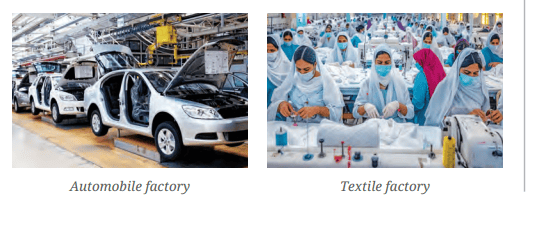
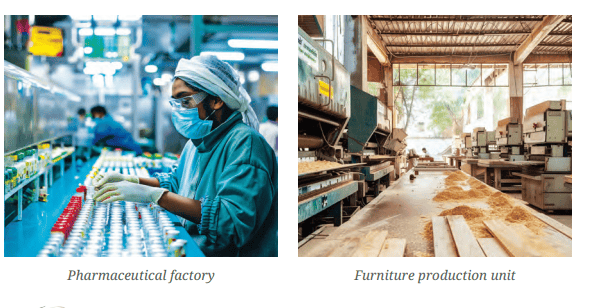
(Source: Society of Indian Automobile Manufacturers, https://www.siam.in/statistics.aspx?mpgid=8&pgidtrail=13 )
LET’S EXPLORE
Now that we have seen some examples of secondary sector activities, can you name two more economic activities in the secondary sector?
1.
2
C. Tertiary activities
All those economic activities that provide support to people
involved in primary and secondary activities are called
tertiary activities or tertiary sector economic activities.
These include services that we may not be able to see but
which still play a very important role. For example, the
driver of a truck transports grains and vegetables from the
farm to a factory or the market
The fruit or vegetable vendors sell the farm produce
to household consumers. Similarly, doctors, nurses,
teachers, lawyers and pilots provide their services to
those who need them. There are technicians who repair
and service electronic items including mobile phones and
televisions, mechanics who repair vehicles like cars and
tractors, and electricians who ensure regular supply of
electricity. Their services make our lives easier. Similarly,
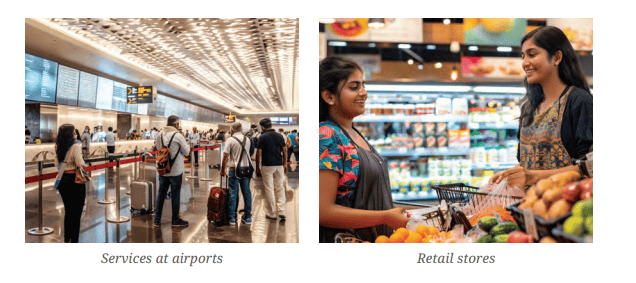
communication services through mobile and internet,
software development, and services at hotels, restaurants,
banks, schools, hospitals, airports, shops, warehouses, etc.
are all examples of tertiary sector economic activities. This
sector is also called the service sector.
Tertiary Sector: The group of activities that involves the provision of services which complement both primary and secondary sectors, such as transportation, banking, and management of business.
Warehouses:
Large buildings
used for storing
products before
they are sold,
used or rented
out to shops

Interdependence Among Sectors
The three types of economic activities or economic sectors
play an important role in the process of conversion of
natural raw materials into finished products for final
consumption. Let us go on an imaginary excursion to a
village in Anand district of Gujarat to study an interesting
example where we will understand how the three sectors
are interconnected and support each other.
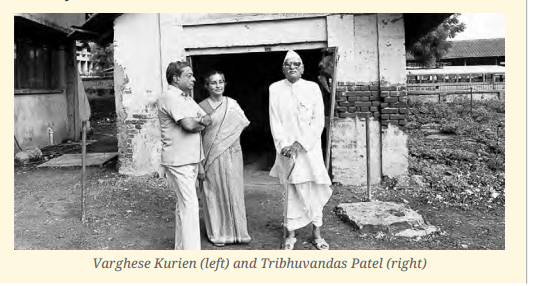
Dairy cooperative: from farm to plate
Cooperative: A group of people who voluntarily come together to meet their economic and social needs in a formal way. They own the cooperative and decisions are taken by the members collectively.
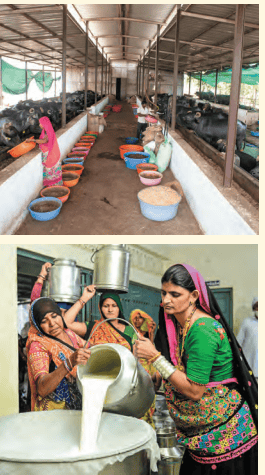
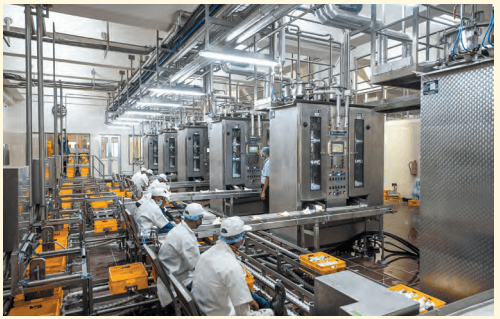
With the help of the images below, let’s see how the books you study are made. The images show the transformation of pulp (wooden fibre of a tree) into paper and, after printing, into textbooks.
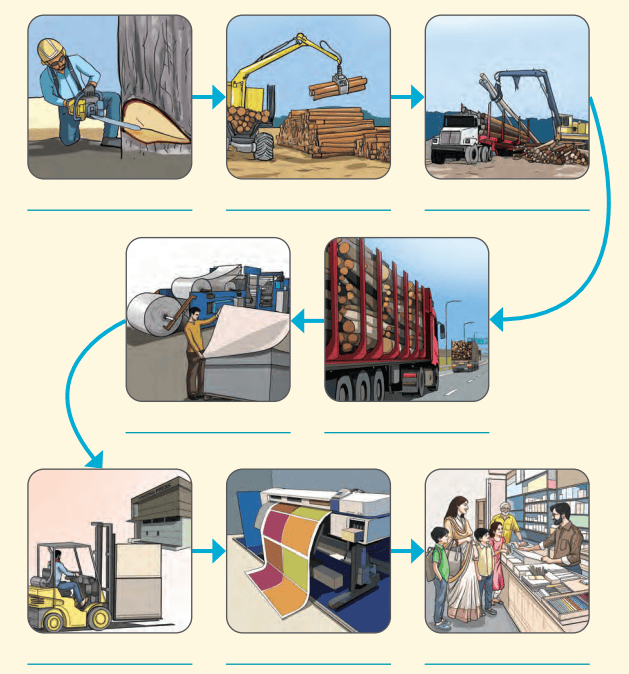
None of the activities that were part of the process – from extracting pulp from the trees to making paper and finally producing the books would have been possible, had it not been for all three sectors working together .
THINK ABOUT IT
Observe the different stages of the process shown in Fig. 14.1 on page 206 and discuss them with your fellow classmates.
LET'S EXPLORE
Label the pictures in the illustration shown in Fig. 14.1 on page 206 as:
1. Primary sector
2. Secondary sector
3. Tertiary sector
 What are the different ways
through which we can judiciously
use paper in the classrooms and
offices of your school?
What are the different ways
through which we can judiciously
use paper in the classrooms and
offices of your school?
LET’S EXPLORE
List the economic activities in your neighbourhood and label them appropriately as primary, secondary or tertiary. Draw arrows to show how they are connected to each other. In what ways are they dependent on each other? What would happen if one of the activities ceased to exist?