
CHAPTER -14
Economic Activities Around Us
The root of prosperity is economic activity, the lack of it
brings material distress. The absence of fruitful economic
activity endangers both current prosperity and future growth.
— Kauṭilya’s Arthaśhāstra
The Big Question?
1. How are economic activities classified?
2. What differentiates these activities to be grouped into sectors?
3. How are the three sectors
interconnected?
Introduction
In Chapter 13, we learnt about two types of activities – economic and non- economic. Activities that create monetary value are called economic activities. We also learnt about the importance of non-economic activities. To understand these activities better we will learn how economic activities are classified and what differentiates them in this chapter
Monetary
value: Value
of something
that can be
measured
in terms of
money.
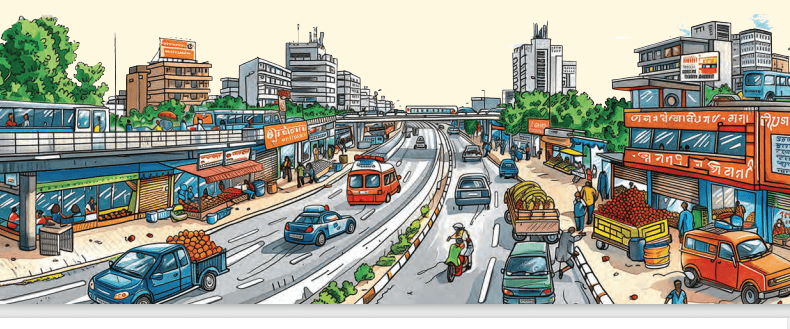
Over the decades, the number of economic activities has increased tremendously. For example, earlier most people were involved in activities such as agriculture, livestock rearing, production of tools, pottery and weaving cloth. As societies progressed, the number of economic activities through which people earn their livelihoods increased vastly.
Today, there are diverse economic activities such as manufacturing computers, mobile phones and drones; working in banks, schools and hotels; driving various types of vehicles for transportation; making furniture; tailoring clothes using machines; creating software; repairing refrigerators and washing machines; etc. Classifying all these activities helps us to understand how they function and the links they have with each other
The Classification of Economic Activities into Economic Sectors
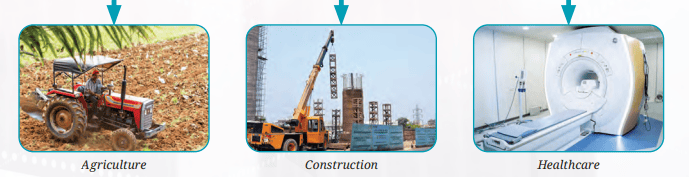
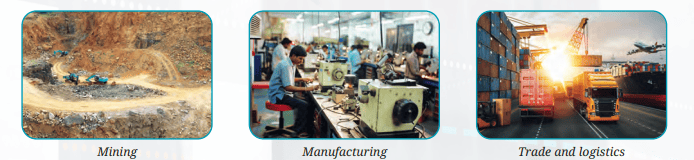
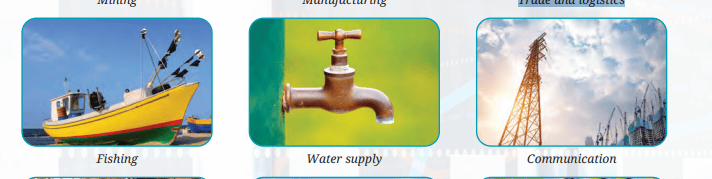
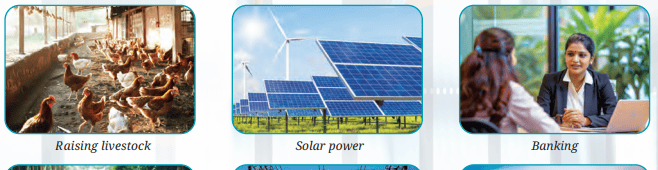
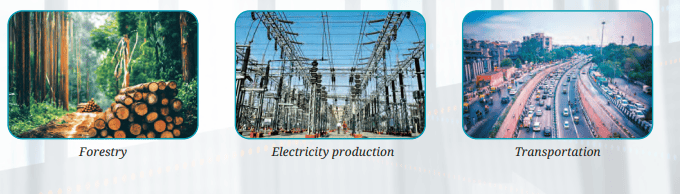
Some economic activities share similar characteristics and based on this, they can be grouped together or classified into broader groups called economic sectors. The three main types of economic sectors are primary, secondary and tertiary economic sectors.
The illustration on the facing page maps out the broad
activities under these categories.
Economic
Sectors:
Broad
groups that
include
various
activities
that help
with the
economic
prosperity
of a nation
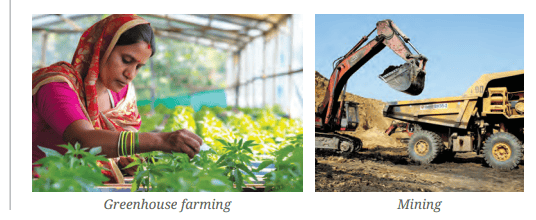
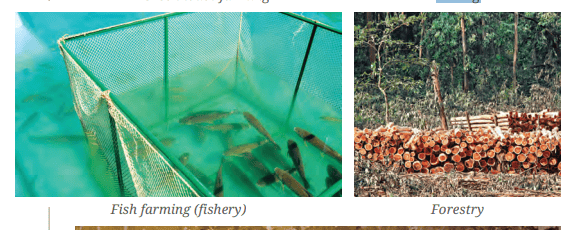
A. Primary activities
Those economic activities in which people are directly
dependent on nature to produce goods are known as
primary activities or primary sector economic activities
Primary sector: The group of activities that involves extraction of raw materials directly from nature such as farming, fishing, forestry, etc
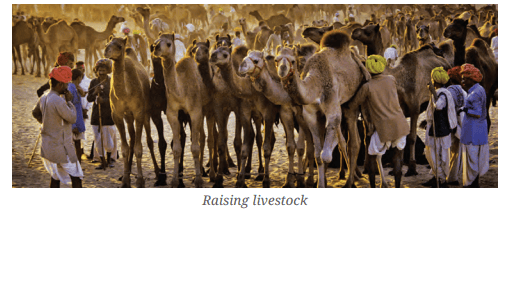
THINK ABOUT IT
Can you think of any primary activities that you may have seen in the past? What are the natural resources used in these activities? Name two of them and discuss your experiences with your classmates.
1.
2
B. Secondary activities
Economic activities in which people are dependent on
outputs of the primary sector and transform them to
produce goods are known as secondary activities or
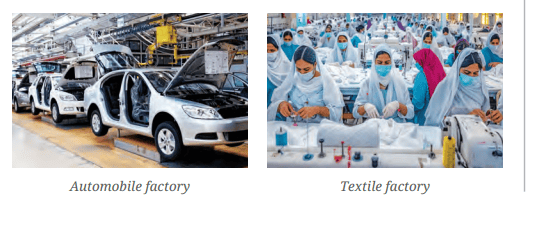
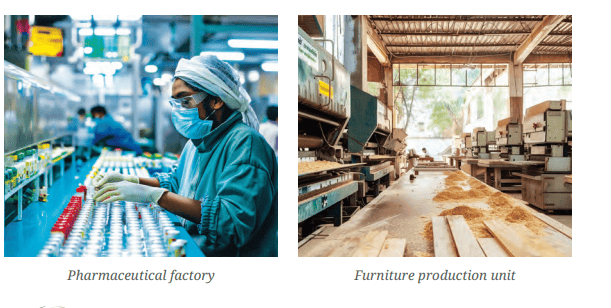
secondary sector economic activities. The secondary sector
includes the construction of buildings, roads, etc., and
providing utilities like water, electricity, gas and other such
necessities. It also includes the manufacturing of products
in factories and production units to process raw material
from the primary sector into some other form that can be
further sold or consumed. Some examples of secondary
sector activities include the processing of grains obtained
from agricultural fields to make flour in mills, extraction of
oil from groundnut and processing of tea leaves to derive
tea. Similarly, wood from the forest is converted into
furniture and paper, cotton is used to make clothes, and
steel from iron ore is used to make automobiles like cars,
trucks, etc.
Secondary
sector:
The group
of activities
that involves
processing of
raw materials
derived from
primary sector
into products
for sale or
consumption
DON’T MISS OUT
(Source: Society of Indian Automobile Manufacturers, https://www.siam.in/statistics.aspx?mpgid=8&pgidtrail=13 )
LET'S EXPLORE
Now that we have seen some examples of secondary sector activities, can you name two more economic activities in the secondary sector?
1.
2.
C. Tertiary activities
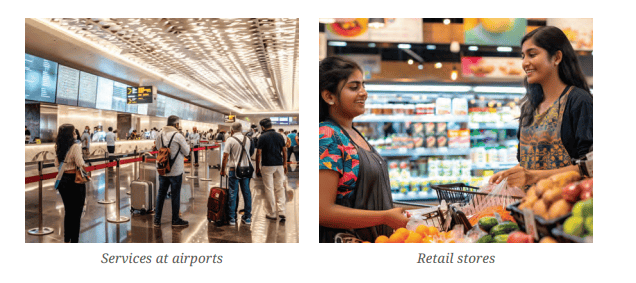
Interdependence Among Sectors
The three types of economic activities or economic sectors
play an important role in the process of conversion of
natural raw materials into finished products for final
consumption. Let us go on an imaginary excursion to a
village in Anand district of Gujarat to study an interesting
example where we will understand how the three sectors
are interconnected and support each other.
Dairy cooperative: from farm to plate
These days, farmers in Gujarat greet the day with the
clinking of milk pails and the happy moos of their best
friends, their cows or buffaloes! Cows have a special place
in the lives of the farmers and their families. The farmers
milk the cows and sell their milk to the dairy nearby. At the
end of the month, they get paid for the milk based on its
quantity and quality. However, this was not the case about
50 years ago.
This is the amazing story of a milk cooperative named Anand Milk Union Limited (AMUL). In the early 1940s, farmers in Anand district would sell milk to the neighbouring villages .They would have to cycle or walk to nearby villages to sell the milk under scorching heat. As you know, milk spoils or curdles very fast in hot weather. The farmers had to sell the milk quickly before it could spoil. This was a lot of effort for the small amount of money they would earn. So, they depended on people called middlemen, who would buy the milk in bulk at meagre prices from the farmers and sell it in the market. Many times, the farmers felt cheated and harassed by the middlemen
They would have to cycle or walk to nearby villages to sell
the milk under scorching heat. As you know, milk spoils or
curdles very fast in hot weather. The farmers had to sell the
milk quickly before it could spoil. This was a lot of effort
for the small amount of money they would earn. So, they
depended on people called middlemen, who would buy the
milk in bulk at meagre prices from the farmers and sell it
in the market. Many times, the farmers felt cheated and
harassed by the middlemen
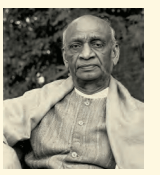
One day, the farmers collectively
approached Sardar Vallabhbhai Patel,
a prominent national leader, with their
problems. He advised them to form a
cooperative to become independent
and stop relying on the middlemen. As a
cooperative, the farmers would be able
to buy and sell milk as a group, taking care of the entire
operation of milk collection, processing and distribution
themselves. The farmers took Sardar Patel’s advice.
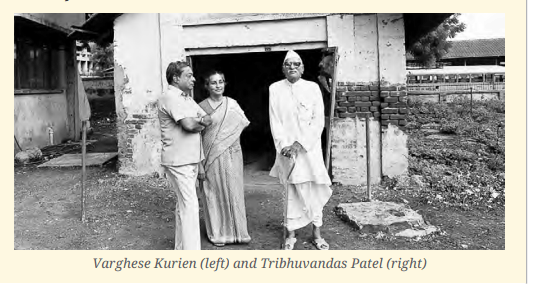
Amul was set up in 1946 under the leadership of
Tribhuvandas Patel (lawyer and freedom fighter) and Dr.
Varghese Kurien (an engineer who was working at a dairy
factory in Mumbai).
Cooperative: A group of people who voluntarily come together to meet their economic and social needs in a formal way. They own the cooperative and decisions are taken by the members collectively.
Middlemen: Persons who buy goods from producers and sell them to consumers. The middlemen charge a fee for this service
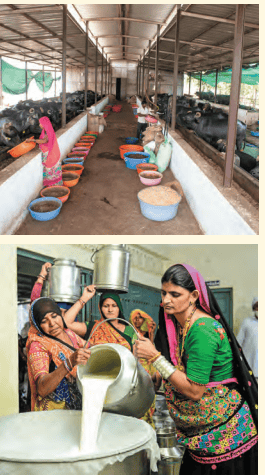
This initiative brought farmers, including women, together
and gave them control over the production and sale of
milk. The milk producers collectively made their own
decisions on all matters such as production, pasteurisation
and sale of milk. The tasks were shared by everyone, which
helped raise their income gradually. They did not need the
middlemen anymore and became like one big family!
As more and more farmers began to see the benefits of the cooperative, it continued to grow. The quantity of milk that was being collected was so huge that the farmers decided to make other products out of it. They set up a factory in Anand, and began to produce butter and milk powder.
Today, the cooperative has a
wide range of products made
at many milk processing
plants and factories all
over India. Can you name a
few? The products are then
transported and sold in both
small and large retail shops
all over the country. In fact, they also export the products to
several countries around the world. Is it not amazing?
In this fascinating story, the farmers of this cooperative
milk their cows to sell the milk later. This kind of economic
activity is called a primary sector economic activity because
the product (milk) is derived directly from a natural source
(cows/livestock) .
Pasteurisation→ A process by which milk is preserved through heating to a specific temperature to kill harmful bacteria.
Factory→Building or group of buildings where goods are manufactured, or various components are put together, to make a final product.
Retail→The sale of goods in small quantities for use by the end consumer rather than for resale.
Export→ Goods and services that are produced in one country and sold to buyers or consumers in another country.
Milk is then processed and converted from one form (liquid) into another — milk powder, ghee, cheese, butter and many others in the factories. These economic activities are called secondary sector economic activities .
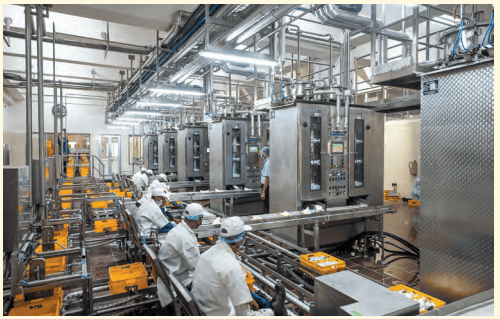
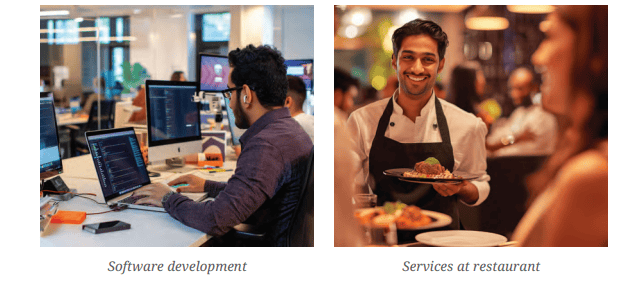
What does AMUL do with all the products it makes? It sells them in various places. AMUL uses lorries and trucks, as well as railway, air and shipping services, to transport its products. It has set up retail stores and supplies milk and milk products to other shops in towns, cities and villages all over Gujarat, as well as in different states across India. Here, transportation, trading and retail is a tertiary activity.
DON’T MISS OUT
Just like AMUL, there are many other milk cooperatives under
brands such as Nandini from Karnataka, Mother Dairy from
Delhi-NCR, Aavin from Tamil Nadu, Vijaya from Andhra
Pradesh, Kevi from Nagaland, Sudha from Bihar, Verka from
Punjab, etc. Can you name one cooperative around you that
has helped groups like farmers, persons with disabilities, and
women, to come together and has brought prosperity to their
lives?
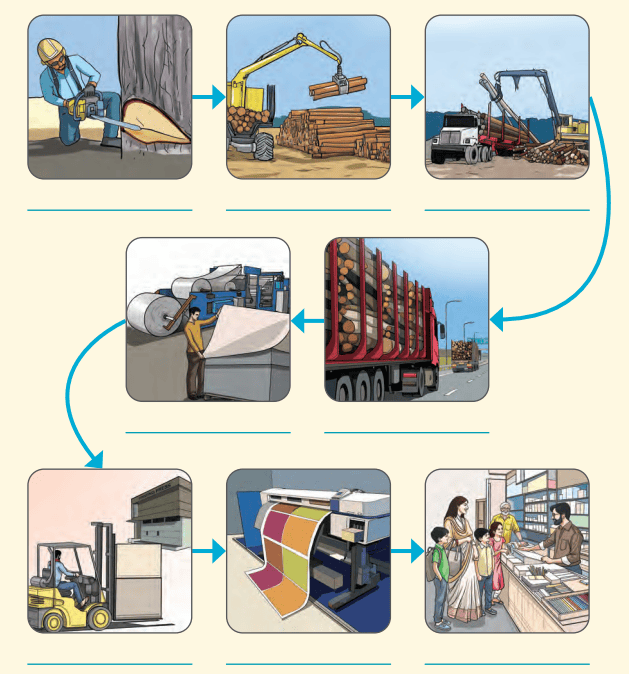
None of the activities that were part of the process – from
extracting pulp from the trees to making paper and finally
producing the books would have been possible, had it not
been for all three sectors working together.
THINK ABOUT IT
Observe the different stages of the process shown in Fig. 14.1
on page 206 and discuss them with your fellow classmates.
LET’S EXPLORE
Label the pictures in the illustration shown in Fig. 14.1 on page 206 as:
1. Primary sector
2. Secondary sector
3. Tertiary sector
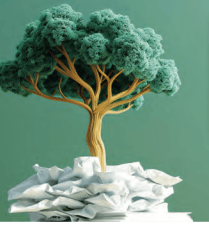
What are the different ways through which we can judiciously use paper in the classrooms and offices of your school?
LET’S EXPLORE
List the economic activities in your neighbourhood and label them appropriately as primary, secondary or tertiary. Draw arrows to show how they are connected to each other. In what ways are they dependent on each other? What would happen if one of the activities ceased to exist?