
Project 6
Cooking without Fire
- Learn about
cooking without
fire
- Conduct a
survey to
decide a menu
- Use tools and
equipment,
measure
ingredients and
prepare food
items
- Dispose
of waste
materials
properly
- Prepare beverages
- Organise a
food Mela
Nutritional Value of Food
You must have learnt about different components of food, nutritional
value, balanced diet and related concepts in Science. A diet rich in
essential nutrients, especially those coming from raw fruits and
vegetables, helps us in maintaining a healthy body and mind .
What will I be able to do?
At the end of the project, you will be able to:
1. Make use of basic kitchen tools, equipments and utensils;
2. Prepare tasty dishes without using fire;
3. Present dishes in a way that make them look tempting; and
4. Dispose of food waste and leftovers in an environment friendly manner.
What will I need?
• Tray, bowl, plates and vessels or pots.
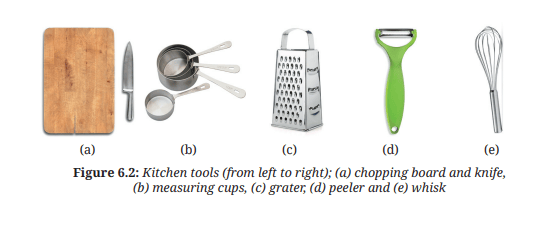
• Measuring cups, knife, kitchen weighing scale, chopping board, peeler, grater, fork, whisk, tablespoon, cups, wooden churner (Maadhani).
• Locally available fruits, vegetables, lentils, pulses, milk, curd, puffed rice, peanuts, butter and bread.
• Soap and water.
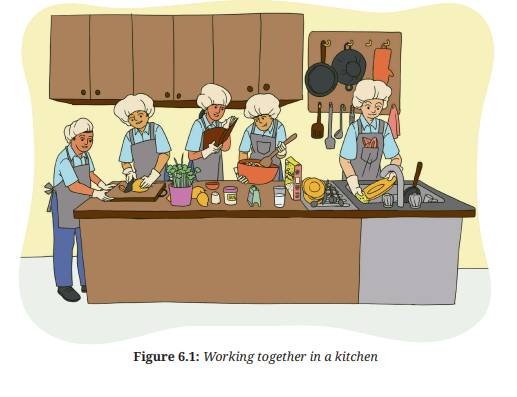
• Apron, haircap or any cloth to cover hair.
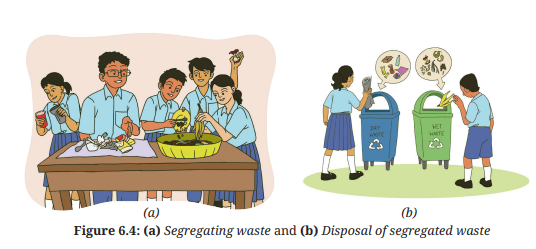
• Dustbins for keeping wet and dry waste.
How do I keep myself and others safe?
What do I need to know before I start?
You will need to know the recipes of the dishes you are going
to prepare. A recipe is a set of instructions that tells you how to
make a dish. It has the list of ingredients and the steps to follow .
There are many ways to cook, but you will use a few way in
the projects are as follows :
• Mixing: Combining ingredients together, as in a salad or a beverage
. • Spreading: Applying a soft substance over a surface, such as butter or cheese spread on bread or Chutney in a Chapatti roll.
• Assembling: Putting ingredients together to make a dish,
like making Bhel Puri or sprouts Chaat .
Activity 1: Reading recipes
Before you start following the recipes, you need to learn how
to read them:
- Read it all first: Before you start, read the entire recipe
from start to end.
- Check the ingredients: Make sure you have the right
quantity of all the ingredients.
- Prepare: Gather the equipment and utensils you may need.
- Follow the steps: Complete each step in the order it is listed.
- Look up for unfamiliar words: If you see a word you do
not know, use a dictionary or ask the teacher.
Dish Presentation
The way your dish looks is almost as important as its taste.
Here are a few tips for making your dish look great:
- Use colourful ingredients to make your dish vibrant; if you make a
fruit salad, use fruits of different colours.
- Arrange your food neatly on the plate. Add a little garnish; e.g.,
some Sev and peanuts placed decoratively on a plate of Bhel Puri or
mint leaves on buttermilk to make it look nice.
- You can search on the internet for photographs of beautifully
arranged food for inspiration, using the keywords; ‘presentation +
beautiful + dishes + food’ and ‘presentation + beautiful + dishes +
food + Indian’.
Dish Presentation
The way your dish looks is almost as important as its taste.
Here are a few tips for making your dish look great:
- Use colourful ingredients to make your dish vibrant; if you make a
fruit salad, use fruits of different colours.
- Arrange your food neatly on the plate. Add a little garnish; e.g.,
some Sev and peanuts placed decoratively on a plate of Bhel Puri or
mint leaves on buttermilk to make it look nice.
- You can search on the internet for photographs of beautifully arranged food for inspiration, using the keywords; ‘presentation + beautiful + dishes + food’ and ‘presentation + beautiful + dishes + food + Indian’.
The space provided against the name in each recipe is for you to
write any other name(s) you use for the dish
Making
Buttermilk /.....................................
You will need:
• 2 cups of curd
• 2 cups of water
• 1 teaspoon of roasted cumin powder
• Salt to taste
- Chopped mint leaves
(optional)
What to do:
• In a bowl combine curd, water,cumin and salt.
• Whisk until smooth.
• Pour into glasses and garnish with chopped mint leaves, if desired.

Making
Jaljeera /.......................................
You will need:
• 2 tablespoons of Jaljeera powder
• 4 cups of cold water
• 1 tablespoon of lemon juice
• 1 tablespoon of mint leaves, finely chopped
• 1 tablespoon of coriander leaves, finely chopped
What to do:
• Take a large jug and add
chopped mint leaves,
chopped coriander leaves,
Jaljeera powder and lemon
juice. Mix them up well.
• Add 4 cups of water to
the jug and mix quickly
till all the ingredients are
completely blended. If
possible, you can use a
blender.
• Pour the mixture equally
into the glasses and then
pour the remaining water
into the glasses, mix well.
• Serve immediately.
Making
Kokam Sherbet /.......................................
You will need:
• 10-12 dried kokam petals
• 4 cups of water
• Sugar or honey to taste
• Roasted cumin powder (optional)
What to do:
• Soak the okam petals in water
for 2-3 hours.
• Strain the kokam -infused
water into a pitcher.
• Add sugar or honey to taste
and stir until dissolved.
• Optionally, add a pinch of
roasted cumin powder for
extra flavor.
• Chill in the refrigerator before
serving (optional).
Making
Salad /.......................................
You will need:
• 3 cups of cut assorted
locally available
vegetables (cucumbers,
tomatoes, capsicum,
carrots, lettuce)
• ¼ cup of vegetable oil
• 2 tablespoons of lemon
juice
• 1 teaspoon of honey
• Salt and pepper to taste
What to do:
• Wash and chop the vegetables
into small cubes.
• Tear the lettuce leaves into
small pieces.
• In a small bowl combine
vegetable oil, lemon juice,
honey, salt, and pepper.
• Wisk till the mixture is well
combined, taste and adjust the
seasoning
.
• In a large bowl, toss the
vegetables with salad dressing,
salt, and pepper.
Making
Koshimbir /......................................
You will need:
• 1 cup of soaked and
drained Moong Dal
• 1/2 cup of grated carrot
• 1/4 cup of grated coconut
• 1/2 cup of cucumber, small
cubes
• 1-2 green chillies, finely
chopped
• Chopped coriander leaves
• Salt to taste
• Lemon juice to taste
What to do:
• Wash and soak the Moong Dal
for 30 minutes.
• Wash and prepare the
vegetables.
• In a bowl, mix soaked Moong
Dal, grated carrot, grated
coconut, chopped green
chillies, and coriander.
• Season with salt and lemon
juice according to taste.
Making
Fruit Chaat /......................................
You will need:
• 3 cups of cut assorted
locally available fruits (e.g.
apples, grapes, oranges)
• 2 tablespoons of lemon
juice
• Honey or sugar (optional)
• Chaat Masala to taste
What to do:
Wash and chop fruits into
bite-sized pieces
.
• Put the cut fruit in a large
bowl, drizzle lemon juice to
prevent discoloration.
• Sweeten with honey or
sugar, season with Chaat
Masala
.
• Toss gently to combine.
Making
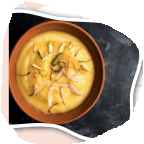
Shrikhand /......................................
You will need:
• 3 cups of thick curd
• 1/2 cup of powdered sugar
• 1/2 teaspoon of cardamom
powder
• Saffron strands (optional)
• Chopped nuts for garnish
(optional)
What to do:
• Hang the curd in a muslin
cloth for a few hours to
remove excess water.
• In a bowl, mix the hung
curd, powdered sugar and
cardamom powder until
smooth.
• Add saffron strands for flavor.
• Garnish with chopped nuts
before serving
Making
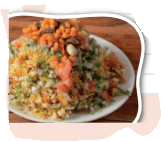
Bhel Puri /......................................
You will need:
• 2 cups of puffed rice
(Murmura)
• 1/2 cup of chopped onions
• 1/2 cup of chopped
tomatoes
• 1/4 cup of chopped
coriander
• 1/4 cup of Sev or roasted
peanuts
• Chaat Masala to taste
• Salt to taste
• 2 tablespoons of Mint
Chutney (optional)
What to do:
Wash and chop the onions,
tomatoes, and coriander.
• In a large bowl, mix puffed
rice, chopped onions,
chopped tomatoes, and
chopped coriander
• Season with Chaat Masala
and salt.
• Mix well and enjoy.
• Top with Sev or roasted
peanuts before serving.
If a mixer or grinding stone is
available to make Mint Chutney,
add 2 tablespoons to the Bhel
Puri (optional).
Making
Sprouts /.......................................
You will need:
• 1/2 cup of legumes (e.g.
green Moong, Kabuli
Chana, black Chana)
• Water
• Muslin cloth
What to do:
• Put the legumes in three
separate bowls.
• Cover with water and let
them soak overnight.
• Place the soaked legumes
onto a wet muslin cloth.
Sprinkle some water over
them.
• Fold the muslin cloth over the
grains or legumes and place
them in a bowl. Cover it lightly
with a lid so air can circulate.
• Check the muslin cloth from
time to time. If it starts to feel
dry, sprinkle some water over
it to keep it moist.
• It will take at least 12 hours
for the legumes to sprout. You
will see little sprouts coming
out of each one of the soaked
legumes.
• Once you see the sprouts,
transfer them to a storage
container. They are now
ready to be included in your
salad.
Making
Lemonade /.......................................
You will need:
• 4 cups of water
• 8 lemons
• 1/2 cup of sugar (as per taste)
What to do:
• Cut and squeeze the juice out
of the lemons.
• In a bowl, mix water, lemon
juice, and sugar until it
dissolves.
• Chill in the refrigerator before
serving (optional)
Making Mint chutney /.......................................
You will need:
• 1/4 cup of mint leaves
• 1/4 cup of coriander leaves
• 1 or 2 green chilies
• 1 small piece of ginger
(about the size of your
thumb)
• 1 small lemon
• Pinch of salt
• Water
What to do:
• Wash the mint and coriander
leaves, shake off the extra
water.
• Cut the ginger and green
chillies
.
• Grind coriander leaves, mint
leaves, ginger, green chillies,
salt, and a little water in a
mixer or grinding stone till
smooth.
• Add the juice of the lemon, mix
well.
Making
Sandwich /.......................................
You will need:
• 8 bread slices
• 2 tomatoes
• 2 cucumbers
• 2 tablespoons butter
• Salt and pepper to taste
What to do:
• Wash and slice the vegetables.
• Spread a thin layer of butter
on all the bread slices.
• Put a layer of sliced tomato or
cucumber
.
• Season with salt and pepper.
• Cover with another bread slice.
• Cut the sandwich to the
desired shape.
If a mixer is available, spread a
thin layer of the Chutney after the
butter (optional).
Making
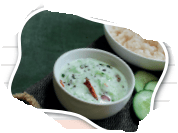
Cucumber Raita /.......................................
You will need:
• 1 cup of plain yogurt
• 1 grated cucumber
• 1/2 teaspoon rosted cumin
powder
• 1 tablespoon chopped
coriander leaves
• Salt and pepper to taste
What to do:
In a bowl, whisk the yogurt
until smooth.
• Add the grated cucumber,
roasted cumin powder, salt,
and chopped coriander leaves.
Mix well.
• Serve immediately.
If a mixer or grinding stone is
available to make Mint Chutney,
add 1-2 table spoons to the Raita
(optional).
Making
Sprouts Chaat /.......................................
You will need:
• 1 ½ cup of assorted sprouts
(e.g. green Moong, Kabuli
Chana, black Chana)
• 1 ½ cup of chopped
vegetables (e.g. tomatoes,
onions, cucumbers, carrot)
• 1-2 green chillies, finely
chopped
• 1 tablespoon lemon juice
or vinegar
• Salt and pepper to taste
What to do:
• Wash and cut the vegetables.
• In a bowl, mix sprouts and
chopped vegetables.
• Season with lemon juice or
vinegar, salt and pepper.
• Toss well to combine.
Making Coconut Chocolate Balls /......................................
You will need:
• 1 cup of shredded coconut
(unsweetened)
• 1/2 cup of sweetened
condensed milk
• 3 tablespoons of cocoa
powder
• 1/2 teaspoon of vanilla
extract
• Additional shredded
coconut or cocoa powder
for rolling (optional)
• A mixing and serving bowl
What to do:
• In a mixing bowl, combine
the shredded coconut,
sweetened condensed
milk, cocoa powder,
and vanilla extract. Stir
until everything is well
combined and forms a
thick, sticky mixture.
What to do:
• Scoop out small portions of
the mixture and roll them into
balls between your palms. You
can make them any size you
prefer, but they are usually
small.
• If desired, roll the balls in
additional shredded coconut
or cocoa powder to coat them
evenly.
• Place the coated balls on a
plate or tray lined with paper.
• Leave the balls to set at room
temperature for at least 1-2
hours. During this time, they
will firm up slightly, making
them easier to handle.
• Once they have set, your
coconut chocolate balls are
ready to enjoy!
Activity 2: Deciding on dishes to be prepared
Conduct a survey of students in the school to find out what they
like to eat. Some questions you may ask are as follows:
1. What is your favourite dish?
2. Which dishes do you like that can be prepared without
fire?
Table 6.1 : Preferences of food items mentioned by students
during the survey
Making Buttermilk /.....................................
You will need:
• 2 cups of curd
• 2 cups of water
• 1 teaspoon of roasted cumin powder
• Salt to taste
- Chopped mint leaves
(optional)
What to do:
• In a bowl combine curd, water,cumin and salt.
• Whisk until smooth.
• Pour into glasses and garnish with chopped mint leaves, if desired.
Making
Jaljeera /.......................................
You will need:
• 2 tablespoons of Jaljeera powder
• 4 cups of cold water
• 1 tablespoon of lemon juice
• 1 tablespoon of mint leaves, finely chopped
• 1 tablespoon of coriander leaves, finely chopped
What to do:
• Take a large jug and add
chopped mint leaves,
chopped coriander leaves,
Jaljeera powder and lemon
juice. Mix them up well.
• Add 4 cups of water to the jug and mix quickly till all the ingredients are completely blended. If possible, you can use a blender.
• Pour the mixture equally into the glasses and then pour the remaining water into the glasses, mix well.
• Serve immediately.
Making Kokam Sherbet /.......................................
You will need:
• 10-12 dried kokam petals
• 4 cups of water
• Sugar or honey to taste
• Roasted cumin powder (optional)
What to do:
• Soak the okam petals in water for 2-3 hours.
• Strain the kokam -infused water into a pitcher.
• Add sugar or honey to taste and stir until dissolved.
• Optionally, add a pinch of roasted cumin powder for extra flavor.
• Chill in the refrigerator before serving (optional).
Making Salad /.......................................
You will need:
• 3 cups of cut assorted locally available vegetables (cucumbers, tomatoes, capsicum, carrots, lettuce)
• ¼ cup of vegetable oil
• 2 tablespoons of lemon juice
• 1 teaspoon of honey
• Salt and pepper to taste
What to do:
• Wash and chop the vegetables into small cubes.
• Tear the lettuce leaves into small pieces.
• In a small bowl combine vegetable oil, lemon juice, honey, salt, and pepper.
• Wisk till the mixture is well combined, taste and adjust the seasoning
.
• In a large bowl, toss the
vegetables with salad dressing,
salt, and pepper.
Making Koshimbir /......................................
You will need:
• 1 cup of soaked and drained Moong Dal
• 1/2 cup of grated carrot
• 1/4 cup of grated coconut
• 1/2 cup of cucumber, small cubes
• 1-2 green chillies, finely chopped
• Chopped coriander leaves
• Salt to taste
• Lemon juice to taste
What to do:
• Wash and soak the Moong Dal for 30 minutes.
• Wash and prepare the vegetables.
• In a bowl, mix soaked Moong Dal, grated carrot, grated coconut, chopped green chillies, and coriander.
• Season with salt and lemon
juice according to taste.
Making
Fruit Chaat /......................................
You will need:
• 3 cups of cut assorted locally available fruits (e.g. apples, grapes, oranges)
• 2 tablespoons of lemon juice
• Honey or sugar (optional)
• Chaat Masala to taste
What to do:
Wash and chop fruits into
bite-sized pieces
. • Put the cut fruit in a large bowl, drizzle lemon juice to prevent discoloration.
• Sweeten with honey or sugar, season with Chaat Masala
.
• Toss gently to combine.
Making Shrikhand /......................................
You will need:
• 3 cups of thick curd
• 1/2 cup of powdered sugar
• 1/2 teaspoon of cardamom powder
• Saffron strands (optional)
• Chopped nuts for garnish
(optional)
What to do:
• Hang the curd in a muslin
cloth for a few hours to
remove excess water.
• In a bowl, mix the hung curd, powdered sugar and cardamom powder until smooth.
• Add saffron strands for flavor.
• Garnish with chopped nuts before serving
Making Bhel Puri /......................................
You will need:
• 2 cups of puffed rice (Murmura)
• 1/2 cup of chopped onions
• 1/2 cup of chopped tomatoes
• 1/4 cup of chopped coriander
• 1/4 cup of Sev or roasted peanuts
• Chaat Masala to taste
• Salt to taste
• 2 tablespoons of Mint Chutney (optional)
What to do:
Wash and chop the onions, tomatoes, and coriander.
• In a large bowl, mix puffed rice, chopped onions, chopped tomatoes, and chopped coriander
• Season with Chaat Masala and salt.
• Mix well and enjoy.
• Top with Sev or roasted peanuts before serving.
If a mixer or grinding stone is
available to make Mint Chutney,
add 2 tablespoons to the Bhel
Puri (optional).
Making Sprouts /.......................................
You will need:
• 1/2 cup of legumes (e.g. green Moong, Kabuli Chana, black Chana)
• Water
• Muslin cloth
What to do:
• Put the legumes in three separate bowls.
• Cover with water and let them soak overnight.
• Place the soaked legumes
onto a wet muslin cloth.
Sprinkle some water over
them.
• Fold the muslin cloth over the grains or legumes and place them in a bowl. Cover it lightly with a lid so air can circulate.
• Check the muslin cloth from time to time. If it starts to feel dry, sprinkle some water over it to keep it moist.
• It will take at least 12 hours for the legumes to sprout. You will see little sprouts coming out of each one of the soaked legumes.
• Once you see the sprouts,
transfer them to a storage
container. They are now
ready to be included in your
salad.
Making Lemonade /.......................................
You will need:
• 4 cups of water
• 8 lemons
• 1/2 cup of sugar (as per taste)
What to do:
• Cut and squeeze the juice out of the lemons.
• In a bowl, mix water, lemon juice, and sugar until it dissolves.
• Chill in the refrigerator before
serving (optional)
Making Mint chutney /....................................... You will need:
• 1/4 cup of mint leaves
• 1/4 cup of coriander leaves
• 1 or 2 green chilies
• 1 small piece of ginger (about the size of your thumb)
• 1 small lemon
• Pinch of salt
• Water
What to do:
• Wash the mint and coriander leaves, shake off the extra water.
• Cut the ginger and green chillies
. • Grind coriander leaves, mint leaves, ginger, green chillies, salt, and a little water in a mixer or grinding stone till smooth.
• Add the juice of the lemon, mix well.
Making
Sandwich /.......................................
You will need:
• 8 bread slices
• 2 tomatoes
• 2 cucumbers
• 2 tablespoons butter
• Salt and pepper to taste
What to do:
• Wash and slice the vegetables.
• Spread a thin layer of butter on all the bread slices.
• Put a layer of sliced tomato or cucumber
. • Season with salt and pepper.
• Cover with another bread slice.
• Cut the sandwich to the
desired shape.
If a mixer is available, spread a
thin layer of the Chutney after the
butter (optional).
Making Cucumber Raita /.......................................
You will need:
• 1 cup of plain yogurt
• 1 grated cucumber
• 1/2 teaspoon rosted cumin powder
• 1 tablespoon chopped coriander leaves
• Salt and pepper to taste
What to do:
In a bowl, whisk the yogurt until smooth.
• Add the grated cucumber, roasted cumin powder, salt, and chopped coriander leaves. Mix well.
• Serve immediately.
If a mixer or grinding stone is
available to make Mint Chutney,
add 1-2 table spoons to the Raita
(optional).
Making Sprouts Chaat /.......................................
You will need:
• 1 ½ cup of assorted sprouts (e.g. green Moong, Kabuli Chana, black Chana)
• 1 ½ cup of chopped vegetables (e.g. tomatoes, onions, cucumbers, carrot)
• 1-2 green chillies, finely chopped
• 1 tablespoon lemon juice or vinegar
• Salt and pepper to taste
What to do:
• Wash and cut the vegetables.
• In a bowl, mix sprouts and chopped vegetables.
• Season with lemon juice or vinegar, salt and pepper.
• Toss well to combine.
Making Coconut Chocolate Balls /......................................
You will need:
• 1 cup of shredded coconut (unsweetened)
• 1/2 cup of sweetened condensed milk
• 3 tablespoons of cocoa powder
• 1/2 teaspoon of vanilla extract
• Additional shredded coconut or cocoa powder for rolling (optional)
• A mixing and serving bowl
What to do:
• In a mixing bowl, combine the shredded coconut, sweetened condensed milk, cocoa powder, and vanilla extract. Stir until everything is well combined and forms a thick, sticky mixture.
What to do:
• Scoop out small portions of
the mixture and roll them into
balls between your palms. You
can make them any size you
prefer, but they are usually
small.
• If desired, roll the balls in
additional shredded coconut
or cocoa powder to coat them
evenly.
• Place the coated balls on a plate or tray lined with paper.
• Leave the balls to set at room temperature for at least 1-2 hours. During this time, they will firm up slightly, making them easier to handle.
• Once they have set, your
coconut chocolate balls are
ready to enjoy!
Activity 2: Deciding on dishes to be prepared
| Give preference from 1 to 5 , 1 = Least preferred , 5 = Most preferred |
||||||||||||||
|---|---|---|---|---|---|---|---|---|---|---|---|---|---|---|
| Sr. No. | Name of student | Buttermilk | Bhel Puri | Sprout Chaat | Salad | Sandwich | Jaljeera | Lemonade | kokam Sherbet | Koshimbir | Fruit Chaat | Cucumber Raita | Shrikhand | Coconut Chocolate Balls |
| 1. | ||||||||||||||
| 2. | ||||||||||||||
| 3. | ||||||||||||||
| 4. | ||||||||||||||
| 5. |
On the basis of the survey, list the dishes that will be prepared as
part of the activity in the school.
1. ..................................................
2......... .........................................
3. ..................................................
4. .................................................
5. .................................................
Did you know?
Using Artificial Intelligence to read information on food packets. Have you seen the thick and thin black lines on back of any package? This is called a ‘Bar Code’. This code contains information that can be read by machines. You can use mobile apps like Google Lens to read this Bar Code to get information related to ingredients, nutritional information, expiry dates and so on.
Try reading the Bar Code of any food packet.
Activity 3: Measure your food ingredients
You might have discussed standard and non-standard units of
measurement in your Science classes .
When cooking, both standard and non-standard units are
commonly used for measuring ingredients. Understanding
these measurements will help you to ensure accuracy and
consistency in your preparation. For example, one pinch of sugar
(non-standard measurement) and 10 grams of flour (standard
measurement).
In case a kitchen weighing scale or measuring cups are not available, you can use common kitchen items, like cups, teaspoons and table spoons to estimate quantities kitchen of ingredients. Some examples of measuring quantities of liquids are given below:
• A teaspoon can contain about 5 ml of liquid.
• A table spoon can contain about 15 ml of liquid.
• One cup can contain about 250 ml of liquid.
• One litre of any liquid can be estimated with a capacity of
1 litre drinking water bottle.
Therefore, it is good to have a rough idea of how many grams
or litres of an ingredient can fit into a cup or table spoon.
Using cups and a kitchen weighing
scale to measure different kinds of
ingredients (liquid and solid). Measure
the same quantity of any ingredient
with a cup, tablespoon or teaspoon
used on a daily basis and record your
observations in Table 6.2.
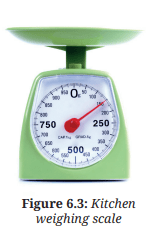
Using a kitchen weighing scale
(Figure 6.3) to measure the quantity
that can fit into a cup, teaspoon or
tablespoon will help in choosing the
right amount of ingredients.
| Ingredient | Quantity in
Grams or Litres |
One Cup |
One Cup |
One Tablespoon |
| Honey | ||||
Lemon
juice |
||||
| Cucumber (chopped) |
||||
| Flour (Atta or Maida) |
Activity 4: Handling tools with care and safety
Table 6.3: Draw sketch of the tools
| tool | Sketch of tool |
| 1. Knife | |
| 2. Grater | |
| 3. Whisk | |
| 4. Peeler |
Activity 5: Storing food
| Ingredient |
Best way to store
(e.g. room temperature, cool place, in the fridge) |
| Hard fruit |
|
| Soft Fruit |
|
| Green leafy vegetables |
|
| Onions |
|
| Cut vegetables |
|
| Bread |
|
| Milk |
Activity 6: Handling and disposing of kitchen waste
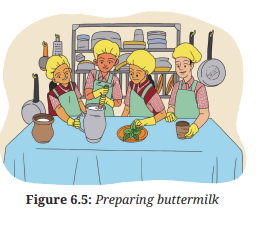
Activity 7: Beverage making
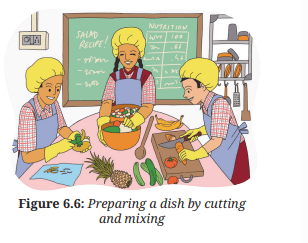
Activity 8: Make dishes that require cutting and mixing
Activity 9: Make dishes that require cutting and assembling
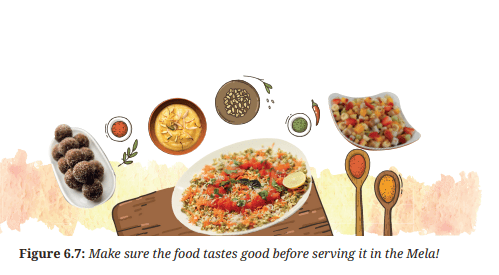
Activity 10: Organise a food Mela
What did I learn from others?
Think about what you did and respond to the following questions:
1. Did you get recipes other than the ones in your Activity Book? Yes/No
2. Did you ask someone to help with the recipes in your Activity Book? Yes/No
3. Did you face any issues while working in team? How did
you resolve it?
4. Did you learn measurement of ingredients from others? Yes/No
What did I do and how long did it take?
What else can I do?
| What is needed | What is to be done |
Think and Answer!
1. What did you enjoy doing during the activity?
2. What would you like to do differently?
3. Do you think you can prepare an entire balanced meal without using fire? Yes/No.
4. What jobs are related to the project? Look around, speak
to people and write your answer. A few examples of jobs
related to the work you just did are cook at home, chef in
a hotel, and an artist who presents food in different forms.