Chapter 11
Music and Society
Objective: Listening to stereotypes in the lyrics of songs and attempting to create alternatives.
Music can be used for social messaging. During the freedom struggle, our leaders used music to unite people against the British.
Activity 1: Music that Unites!
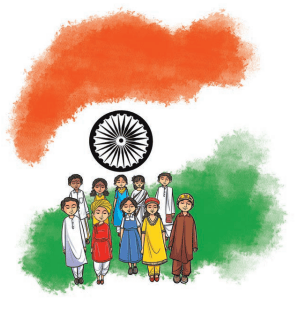
Our national anthem is a reflection of the diversity that is India!
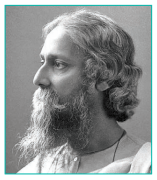
Nobel Laureate Rabindranath Tagore was the first Indian and non-European who broke the stereotype and won the Nobel Prize in Literature, 1913. The national anthem was composed in sanskritised Bangla. It highlights India’s vast and diverse geographical landscapes.
• Understand the lyrics and the meaning of the song and reflect on how it celebrates India’s diversity.
• Analyse how the composition makes the song feel majestic.
• Discuss the emotion that the song evokes both through its words and music.
Activity 2: Our Roots
You must have heard about the ancient texts, the Vedas and the Upanishads. They inspire us to be kind, truthful and loving, even when we are different from each other.
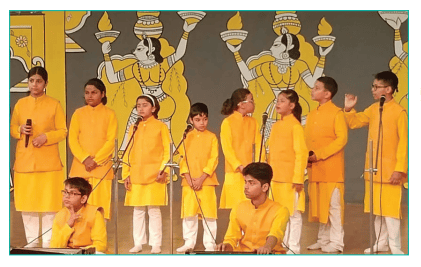
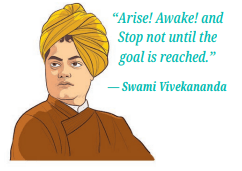
Watch and learn to sing this inspirational verse from the Kathopanishad, which was also a favourite verse of Swami Vivekananda.
Extended Activity
What stereotype do these songs reinforce?
Gudiya Raani Bitiya Raani Pariyon Ki Nagari Se Ek Din
Raajakunvar Ji Aaenge Mahalon Mein Le Jaaenge
Translation: My princess doll, one day your prince charming will come and he’ll take you to his palace.
Yashomati Maiya Se Bole Nandlala
Radha Kyon Gori Main Kyon Kala
Translation: Nandala asked Yashodha, why am I dark and why is Radha fair?
Can you recall a song in your native language that reinforces a stereotype? Write down the original lyrics and share how you would alter them.
Uthishtha Jaagrata
Uthishtha Jaagrata
Praapya Varaan Nibodhata,
Kshurasya Dhaara Nishita
Duratyayaa, Durgam Pathastat
Kavayo Vadanti
Listen and Respond
Now, listen to this song. What feeling does it evoke?
Activity 3: Be the Change!
Listen and learn this song, and think about how you can be a superhero and bring about positive change.
Activity 4: Stereotypes
Music can also be used to create stereotypes. Stereotypes refer to preconceived ideas or generalisation based on culture, race, colour, gender or other factors. But you can change it! Listen to the following song and if you are not familiar with the language, read the translation:
Babua Ki Murgi
Babua Ki Murgi Bole Na
Babua Ka Murga Kukadoo Koo
Babua Ki Murgi Rooth Gayi
Naa Maanoo Mai Naa Maanoo
Babua Ka Murgaa Kyu Akade?
Uske Sir Par Kalgi Hai
Jiske Sir Par Taaj Nahi
Vo Bechaari Murgi Hai
Translation
Babua’s hen stays quiet,
While Babua’s rooster goes
cock-a-doodle-doo!
Babua’s hen is upset,
Saying, “I won't agree!”
Why does Babua’s rooster strut
around?
Because he wears a fancy plume, Unlike the poor hen, with no crown!
One way you can change the above song is:
Babua Ki Murgi Kyon Khush Hai, Kyon Khush Hai? Kyonki Anda Deti Hai, Deti Hai!
Translation: Why is Babua’s hen happy? Because she gives eggs!
Music helps us to bring people together but it can also create stereotypes. Find a song that uplifts you. Learn and teach it to your friend. Consider creating a book with songs that motivate you.