
Chapter 18
In the Company of Theatre
Imagine living with a big team of artistes who only do theatre shows everyday and earn their living through that. You will be doing rehearsals everyday, wearing costumes, make-up and performing everyday! You would eat, play, sleep and even travel with them, all for performing shows. These were called, ‘Company Theatres’, that existed in the eighteenth, nineteenth and twentieth centuries. Very few have survived till now!
Let us get a glimpse of this fascinating concept of company theatres that is almost non-existent now.
Company Theatre is used to describe professional companies of artists who perform theatrical
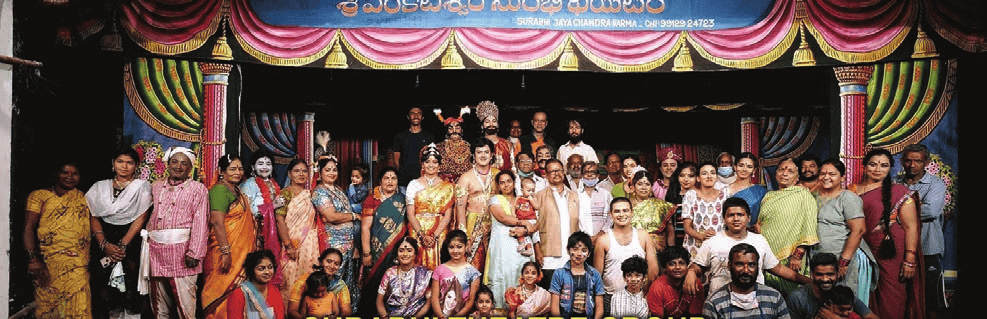
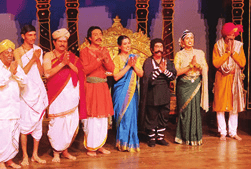
Company theatre team after a show
productions. There were such theatre troupes in Kolkata as early as the 1700s. It usually consisted of a large number of people, self-sufficient in
their requirements, professionally and personally. These troupes had everyone — make-up men, costume tailors, set designers, painters, light
technicians, actors, dancers, singers, writers, cooks, managers and accountants. Most of the time, it had entire families including children, being a part of it! They worked together performing shows and travelling for their entire lives.
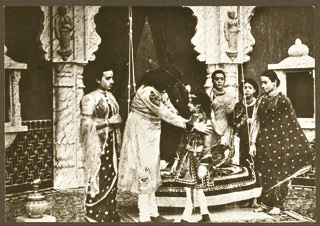
Parsi natak mandali
The very first company theatre troupes that travelled to different regions in India were the ‘parsi theatre companies’ in Bombay, Maharashtra, that performed plays all over India during the 1850s to
1930s.
The first Parsi theatre company called ‘Parsi Natak Manḍali’ performed their first play, Roostum Zabooli, and Sohrab in 1853. It was
followed by King Afrasiab, Rustom Pehlvan and Padsah Faredun. By 1860, over 20 Parsi theatre groups were formed in Mumbai.
Their proscenium style productions inspired many theatrical productions all over India. Subsequently, the company theatre form picked up in other parts of Maharashtra, Karnataka and Andhra Pradesh.
Popular Companies, Shows and Stories
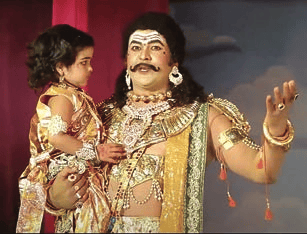
Surabhi Theatre or Sri Venkateshwara Natya Mandali was formed in 1885 in Andhra Pradesh. Its first play was Keechaka Vadha. This is a family theatre company that performs stories based on Hindu
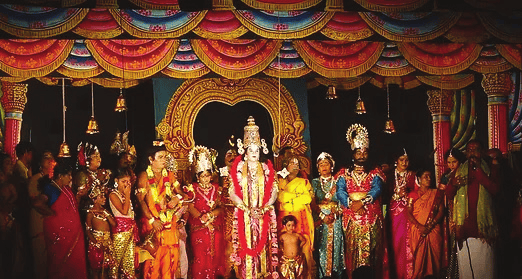
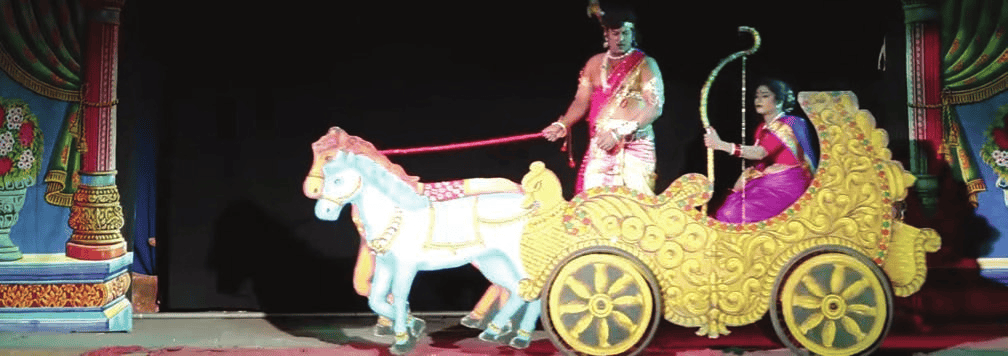
Surabhi theatre plays are known for using magic, live VFX and logic defying feats on stage
tradition and history. This is one of the few troupes that has survived since 138 years. Surabhi theatre still showcases the following plays —
Sri Krishna Leelalu: The exploits of little Krishna.
Jai Pathala Bhiravi: The story of folk legend Thota Ramaudu.
Bhakta Prahlada: The tale of Prahlada — a devoted child.
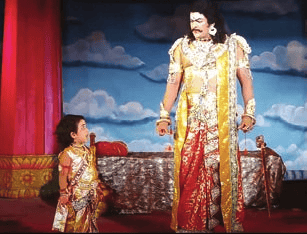
Maya Bazar: The tale of demon King Ghatothkacha.
Sri Venkateshwara Udhbhavam (Srinivasa Kalyanam).
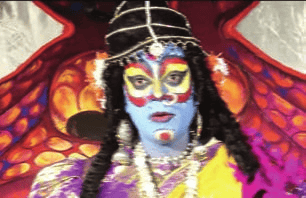
Balanagamma: The story of a wicked sorcerer.
Karnataka Nataka Mandali was established in 1874 at Gadag in Karnataka. Sakkere Balacharya (Shantha Kavi) is the person behind this. Plays like Kichaka, Banasura and Vatstrapaharana were very popular on the stage.
Around the same time, Halasangi Nataka Mandali was started at Halasangi, Bijapur district of Karnataka. Srimati Parinaya, Madalasa Parinaya, Droupadi Vatstrapaharana, and Bhoumasura Vadhe, etc., written by Venkannacharya Agalagatti were also popular.
They had the patronage of the Maharajas of Mysore, who supported them and donated liberally towards encouraging the performing arts.
Shree Channabasaweshwara Nataka Mandali or famously the Gubbi Company, was the most famous theatre company in Karnataka. Their popular plays Sadharame, Subhadra, Hemareddy Mallamma, among many others always ran houseful shows. People waited in queues for days to buy tickets to watch them!
Some unique features —
• This troupe was the first to allow women to act.
• The most famous Kannada actor Dr Rajkumar started his theatre career in this company.
• BV Karanth, the famous theatre director from Karnataka also started his career here.
The Present Situation
The era of company theatres in India slowly declined after Independence.
There were many factors that led to the decline —
• Most companies were not managed with the financial efficiency required.
• The novel techniques of the cinema industry stood as a very strong contender.
• Content and stories became less family friendly as some companies resorted to unhealthy humour.
• The concept of amateur theatre or Havyasi theatre gained popularity for its convenience.
Professional Theatre in India
At present, there has been a decline in company theatre, there are many professional repertoires that provide high quality productions, even to this day. With the development of science and technology, theatre techniques have also upgraded and this allows for enhanced experiences.