UNIT 2

Motor
Fitness
In this unit, we will learn about the importance of
fitness. We will also understand that being fit can
help us to be healthy and strong. Here are a few
things we can do to be fit:
- Endurance: We will do fun activities that will help us to play longer without getting tired.
- Building strength: We will get stronger with
regular exercise. It will build our muscles and
bones.
- Becoming flexible: When we stretch and
move in guided ways, our bodies will become
flexible.
- Learning balance: When we practice being
steady while playing and exercising, we also
learn to balance our body.
Let’s get moving and explore fitness with fun!
Introduction to
Motor Fitness
Motor Fitness refers to the ability of our body’s muscles
and nerves to work together effectively and efficiently. It
involves skills like coordination, balance, agility, and reaction
time. Good motor fitness helps us to perform daily tasks
and activities easily and with control. But before we do any
activity, we need to understand the concepts and techniques
of warm-up, cool-down and stretching. Let us start our
journey of fitness with the right first step!
Why is warm-up important?
Warming up prepares the body for an activity,
by raising the body temperature and heart
rate which improves physical efficiency and
performance. Warming up, stretching muscles
and moving joints prior to an activity minimises
the risk of injury.
How to warm-up?
For approximately 5–10 minutes engage
in any progressively light to intense grade
exercise related to the sporting activity can be
performed. For example, football kick, rugby
ball passing, lifting light weights, shadow
boxing, etc., followed by general exercises such
as jogging, shuttle runs, high knee sprints can
be perfomed. Once you start feeling energised,
stretching exercises must be performed prior to
commencing the sport or activity.
Why should we stretch? 
Stretching exercises are recommended before and after
participating in any sport as they prepare the body for the
forthcoming physical activity by enabling joints to move
through their full range of motion. Pre-stretching reduces the
risk of injury and post-stretching helps in recovery.
How to stretch?
Keep your body relaxed. During stretching, concentrate on
taking slow and deep breaths. Flexibility improves when the
mind and muscles are relaxed. Everyone’s ability to move and
flexibility varies as they depend on physical characteristics,
fitness levels and age. Always remember to stretch within your
limitations and do not try to compete.
Some Stretching Exercises
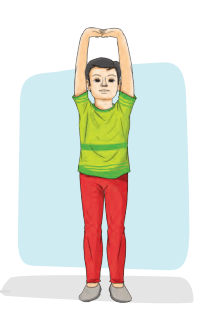
Overhead Arm Stretch
Stand straight with a gap between your feet. Now raise
both arms simultaneously upwards and then lock
fingers of both hands. Push your arms upwards with
palms facing the sky, as shown in the picture.
Variation: Lean forward and backward whilst arms
outstretched.

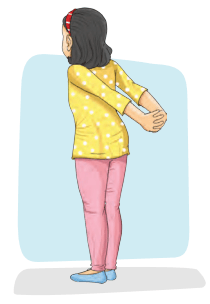
Rear Shoulder Stretch
Stand straight with your feet joined together or closer
to each other. Move your arms towards your back and
try to join them backwards. Now lock your fingers of
both the hands and push your arms backwards as far
as possible.
Variation: Lean forward whilst pushing hands
backwards to increase intensity.
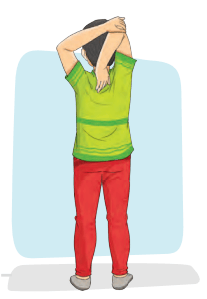
Overhead Triceps Stretch
Stand straight with gap between your feet. Raise your
arms upward. Bend one of your arms from elbow
behind the neck. Hold it from elbow with the other
hand and pull sidewards. Repeat the same with the
other arm.
Variation: Bend your upper body in the direction of
the pull.
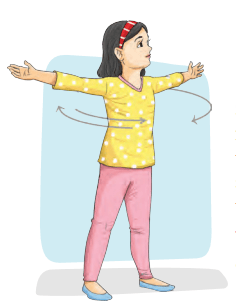
Chest Stretch
Stand straight with a gap between your feet. Now
raise both your arms like an open hug posture and
then stretch both your arms as much as possible,
so that you can feel the stretch of your chest. Swing
them backwards as far as possible.
Variation: Bend your elbows to form almost 90-degree
angle and do the same stretch.
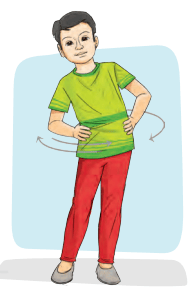
Hip Circles
Stand straight with a gap between your feet. Then
put both hands on the sides of your waist. Now rotate
hips forming large circles in both clockwise and
anti-clockwise direction keeping the legs straight as
shown in the picture.
Variation: Place your hands straight on your sides and
bend sideways alternately letting your hands slide
sliding hand towards your knee one after the other.
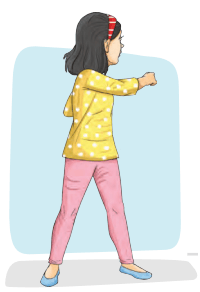
Torso Twist
Stand straight with feet shoulder width apart. Raise
both the arms parallel to the ground and rotate your
upper body using your hands and shoulders while
keeping your lower body still. Repeat it in the other
direction.
Variation: Raise your arms above your head and do
the same twist.
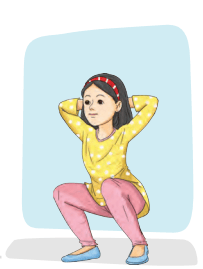
Squat
Stand straight with a gap between your feet. Now
raise both the arms up and place them with crossed
fingers at the back of your head. After that, slowly
lower your body as if you are sitting on an invisible
chair while keeping your head straight with the same
position as above and keeping your back straight.
Variation: Change the position of your arms to
increase or decrease the difficulty level.
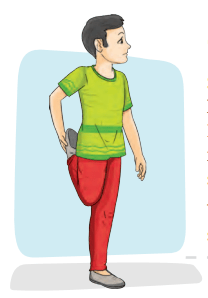
Quadriceps Stretch
Stand straight with gap between your feet. Now
balance on one leg and move the other leg backwards.
Hold the ankle of the leg bent backward and pull
it towards your hip as close as possible. Repeat the
same with the other leg.
Variation: Lean your body forward while doing the
same stretch.
Floor Touch
Stand straight and keep your feet apart. Raise
both arms straight upwards, parallel to each other,
adjacent to both ears, as if each earlobe is covered
by both inner arms. Now, slowly lean forward in
the same position and try touching the floor with
both palms without bending your knees.
Variation: Stay in the stretch and move your palms
on the floor forward and backward.
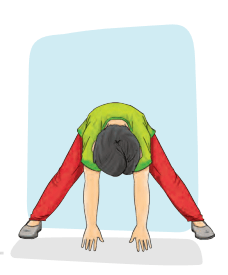
Calf Stretch
Stand straight in front of a wall at an arm length.
Placing both hand on the wall. Now place one foot
in front of the other and slightly bend the knee of
that leg. You must ensure that the heel of your back
leg is touching the floor. Feel upper calf stretch in
the back leg.
Variation: Move your back leg further backwards to
increase the stretch.
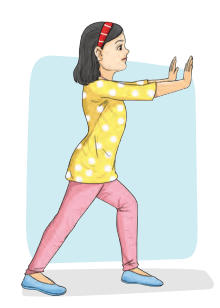
Crossed-leg Toe Touch
Stand straight with both feet joined together. Now
cross one of the legs without bending. The leg which
is crossed should be slightly ahead of the other
leg. Lower your upper body to touch the toe of the
crossed leg with both the arms.
Variation: You may stand on heels with crossed leg
while staying in the stretch.
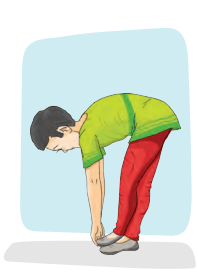
Crouch-leg Stretch
First, sit down while balancing the body weight
on both your knees and on your feet. Now
stretch out one leg such that it is completely
straight and the toe is raised towards the top, as
shown in the picture.
The balance of the other foot should be on the
toes entirely and you can touch the floor with
both hands for balance.
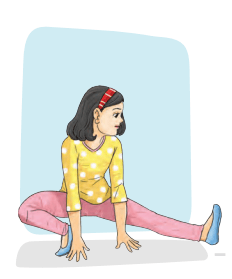
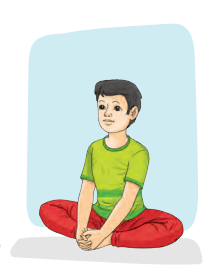
Groin Stretch
Sit down on the floor, one leg crossing over the other.
Now gently bring the soles of your feet together.
Grab each foot with your hands and place your
elbows against the inner thighs. Keep your back
straight during this stretch.
Variation: Try the same stretch in supine lying
position.
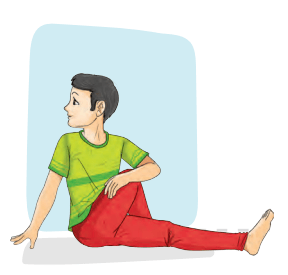
Hip Stretch
Sit down and stretch both the legs straight with the
feet joined together. Now bend one leg and cross it
over the inner thigh of the other leg.
Variation: Try the same stretch in lying position
alternately with single and both legs.
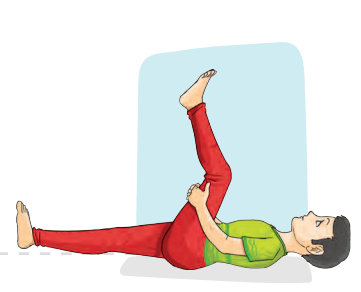
Hamstring Stretch
Lay down on the floor in supine position. Then, lift
one leg as shown in the figure. Now provide support
to the inner thigh below the knee with both hands
and try to pull the bended leg towards the chest.
Variation: Sit with your legs straight
in front of you. Try to reach your toes
without bending your knees.
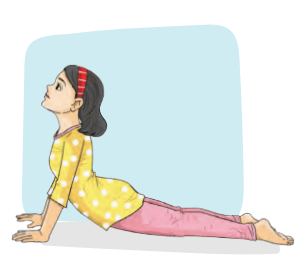
Abdomen Stretch
Lay down on your stomach. Place your hands
on the floor next to your ears. Now lift your
upper body with the support of your arms
and straighten the arms completely so that
the shoulders are parallel to the earlobes.
Variation: Stay in the position and try to lift
both legs together.
Why cool-down?
Cooling down brings the body
to the rest systematically by
lowering the body temperature
and heart rate in a controlled
manner. It also presents an
opportunity to reflect on your
performance, calm down and
relax.
How to cool-down
After the physical activity
gently stretch your body
for 5–10 minutes. Perform
the exercises as illustrated
above focusing on relaxing
the muscles from head to
toe. Include deep breathing
exercises for relaxation.
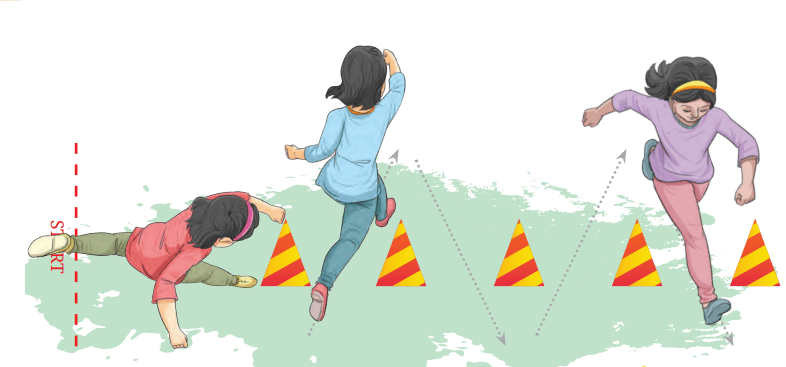
Obstacle Race
Obstacle Race is a challenging event where participants run
through a course filled with various obstacles. It tests their
strength, agility and endurance.
| Warm-up | Activity | Cool-down | Circle Time |
|---|---|---|---|
| Overhead Arm Stretch Crossed Leg Toe Touch Rear Shoulder Stretch | Obstacle Race | Groin Stretch, Head to Knee Stretch Abdomen Stretch | Identify a physical injury |
How to
play?
- Make two teams. Arrange cones and
hula hoops in a straight line.
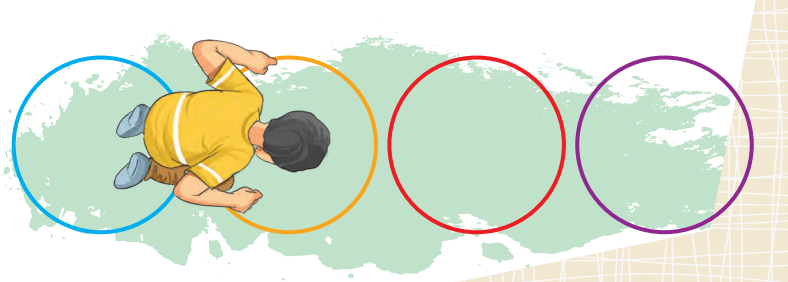
- First player in the lane will start the race by running across the cones (zig-zag) followed by hopping inside the hula hoops and then running back to the starting line, and single clapping the next teammate’s hand.
- This sequence will continue till the last teammate completes
the course.
- The team that finishes first wins the game.
Circle Time – Identify a physical injury
- Identify the distress signals and report physical injury to
your teacher such as discomfort in movement, bruises and
rashes, blood, intense pain, facial expressions, etc.
- Share a moment when you kept trying to complete a task in a game despite the fact that the game was difficult.
Balancing Act
Balancing Act involves maintaining stability and control. It
requires coordination and concentration to prevent falling. For
example Lemon and Spoon Race, Balancing a stick on fingers,
etc. Let’s try balancing act.
| Warm-up | Activity | Cool-down | Circle Time |
|---|---|---|---|
| Chest Stretch
Hip Circles
Floor Touch |
Balancing Act |
Calf Stretch,
Head to Knee Stretch
Hamstring Stretch |
Balancing |
How to
play?
- Place any soft small object on your head.
Walk straight while balancing the object
on the head from start to finish line
without dropping the object. The one to
finish first will be the winner.
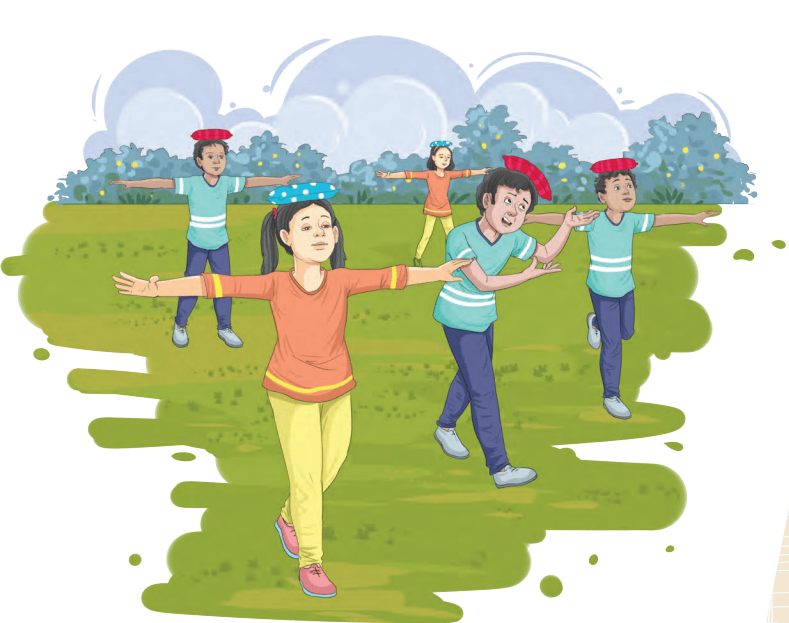
Circle Time – Balancing
Identify the movements of the body parts which helped you in
balancing the object on your head.
Shivam Says
Shivam Says is a game that tests listening skills and quick
reactions.
| Warm-up | Activity | Cool-down | Circle Time |
|---|---|---|---|
| Rear Shoulder Stretch
Shoulder Circles |
Shivam Says |
Overhead Triceps Stretch
Side lunges
Cross-legged Toe Touch |
Feel the muscle
stretch |
How to
play?
- Stand in a circle at a
certain distance from each other.
- Follow the commands of your teacher.
- The command will start with “Shivam says”.
- For example, Teacher commands “Shivam says, - touch your toes”. You have to follow the command and hold that position until the next command is given. Feel the stretch in your muscles.
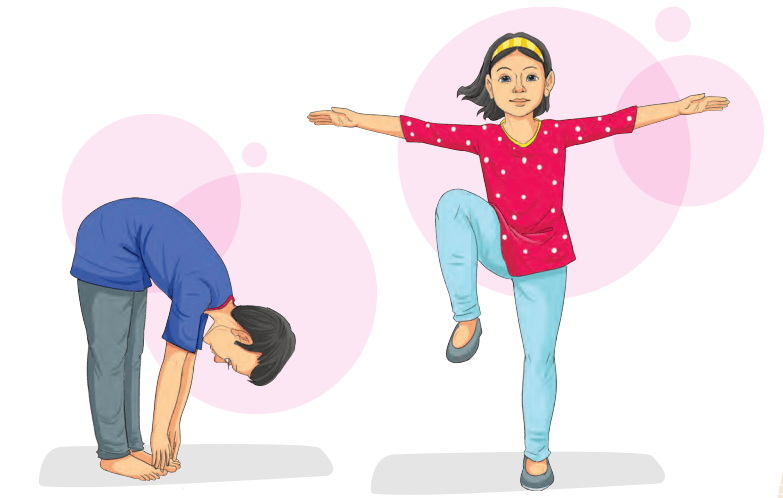
Circle Time – Feel the muscle stretch
Do this circle time while performing any activity. Hold the
position and feel the muscle stretch involved while performing
that specific activity
Collaborate and
Conquer
Collaborate and Conquer highlights the benefits of teamwork,
strategy and helping each other.
| Warm-up | Activity | Cool-down | Circle Time |
|---|---|---|---|
| Shoulder Circles
Floor Touch
Groin Stretch |
Running
Between the
Cones |
Hamstring Stretch
Calf Stretch
Cross-legged Toe Touch |
Helping Others |
How to
play?
- Form two teams with five players each
and a captain.
- Each team captain has to arrange all the cones in a given period of time.
- Remove the cones after recording the time.
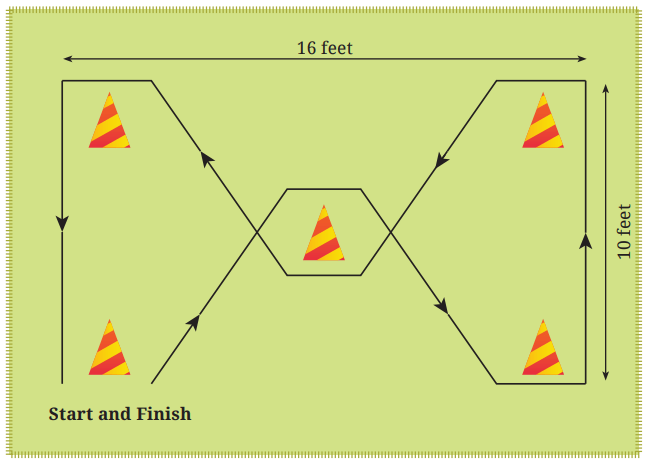
- Then all the players from both the teams will arrange
the same cones as shown in the picture in a given period
of time.
- Before playing, teams should discuss the strategy for
1–2 minutes.
- The team that finishes first wins the game.
Circle Time – Helping others
- Compare the time taken by the captain and the team. What
do we learn from that observation?
- How can you use the learning of today’s activity in helping
your teacher?
Grab the Ball
Grab the Ball is a variation of Rumaal Jhapatta wherein we will
learn to be agile, attentive, work on our movement time, and
spot the opportunities all together
.
| Warm-up | Activity | Cool-down | Circle Time |
|---|---|---|---|
| Rear Shoulder Stretch
Overhead Arm Stretch
Squat |
Grab the Ball |
Floor Touch
Hip Circles
Abdomen Stretch |
Appreciating
others |
How to
play?
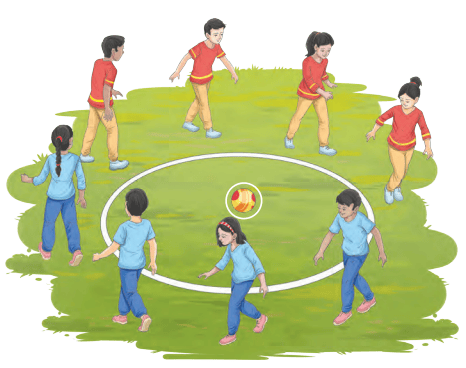
- Form two groups — A and B.
Make a large circle. Inside the circle
draw a smaller circle and place a ball inside
the small circle.
- Numbers will be assigned to each player randomly.
- One player from each team will be assigned the same number.
- All players will start jogging outside the circle.
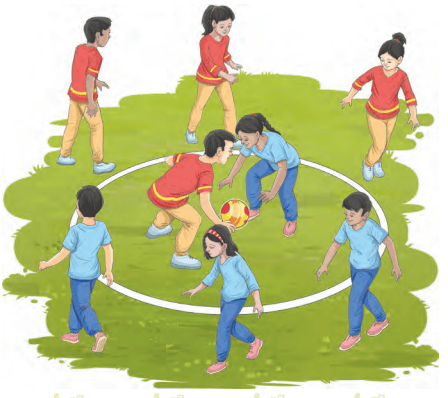
- When the teacher calls out a number. Both the players assigned that number will run to pick up the ball.
- Player who picked the ball should get out of the larger circle
without being touched by the opponent.
- The player who returns with the ball successfully wins one point
for the team.
- The team with the maximum points will win the game.
Circle Time – Appreciating others
- Share one good quality of the opposing team player.
- Discuss how it felt while appreciating the opposing team player.
Push-up Position
and Pass the Ball
Push-up Position and Pass the Ball is an unconventional game
which will help to develop physical strength and mental
toughness while having fun.
| Warm-up | Activity | Cool-down | Circle Time |
|---|---|---|---|
| Overhead Arm Stretch
Rear Shoulder Stretch
Overhead Triceps Stretch |
Push-up
Position and
Pass the Ball |
Chest Stretch
Shoulder Circles
Cross-body Shoulder Stretch |
Mental
Toughness |
How to play?
- Make two teams for the game.
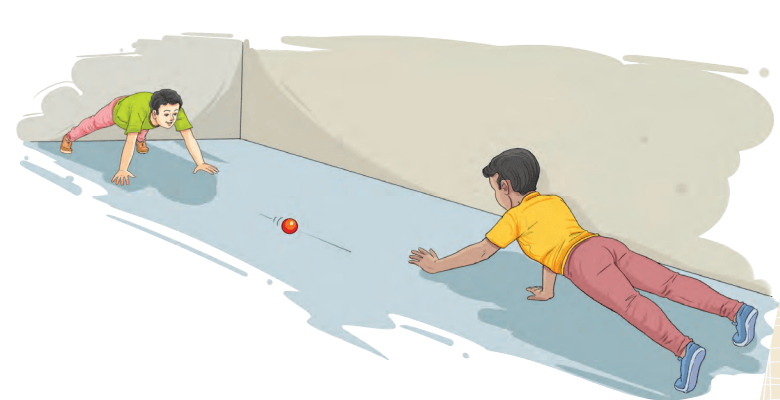
- Two players from each team will get down in a
standard push-up position, balancing their body
weight on their toes and palms facing their partner
approximately five metres apart.
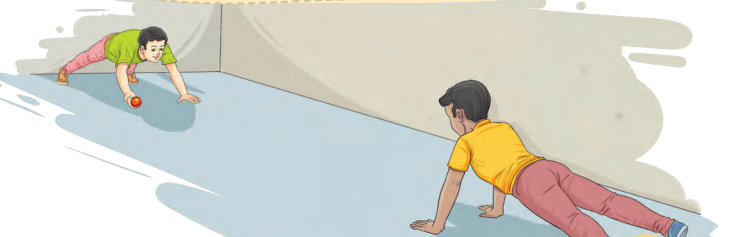
- Each player from both the teams will roll the ball towards their partner alternatively.
- The pair which holds the position for longer duration
will be the winner.
Circle Time – Mental Toughness
Express how you felt when you were on the verge of quitting
the game. What motivated you to maintain the position?
Tic-Tac-Toe
Dribble Relay
Tic-Tac-Toe is a game generally played on a paper. Have fun and
enjoy this along with some physical activity.
| Warm-up | Activity | Cool-down | Circle Time |
|---|---|---|---|
| Torso Twist
Squat
Quadriceps Stretch |
Tic-Tac-Toe
Dribble Relay |
Floor Touch
Calf Stretch
Side Lunges |
Team Spirit |
How to
play?
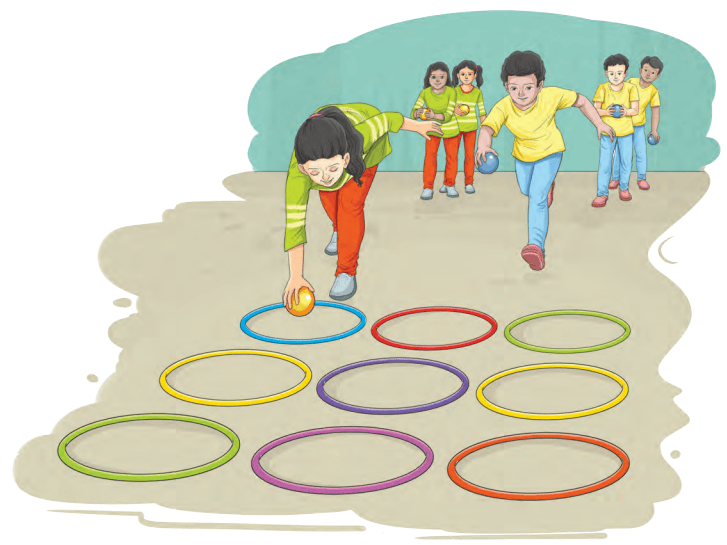
- Make two teams and ask them to
stand in a queue. Take one minute to
collectively discuss your moves.
- On the first whistle, the first member of each team will
dribble (slightly bounce) the ball till it reaches the first ring
and place it in the empty ring. Then that player will give the
turn to next teammate by giving a single clap on the hand.
- Next player will do the same.
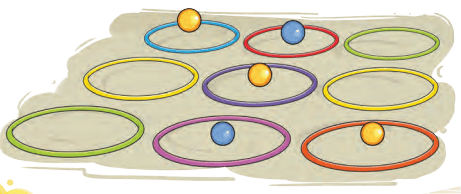
- The first team to get three of their marks in a row
horizontally, vertically, or diagonally wins the game.
- If all squares are filled without a winner, the game is a draw.
Circle Time – Team spirit
Share your experience of collective thinking that helped your
team in blocking the opponent’s move and progressing your
team’s move? What do you think can build team spirit among
the players in such activities?
Crocodile Race
Crocodile Race is an interesting game in which we follow the
crocodile movement for the development of strength and
coordination. Enjoy the game!
| Warm-up | Activity | Cool-down | Circle Time |
|---|---|---|---|
| Overhead Arm Stretch
Rear Shoulder Stretch
Overhead Triceps Stretch |
Crocodile
Race |
Chest Stretch
Shoulder Circles
Cross Body Shoulder Stretch |
Coordination |
How to play?
- Select players in pairs as per
their body weight.
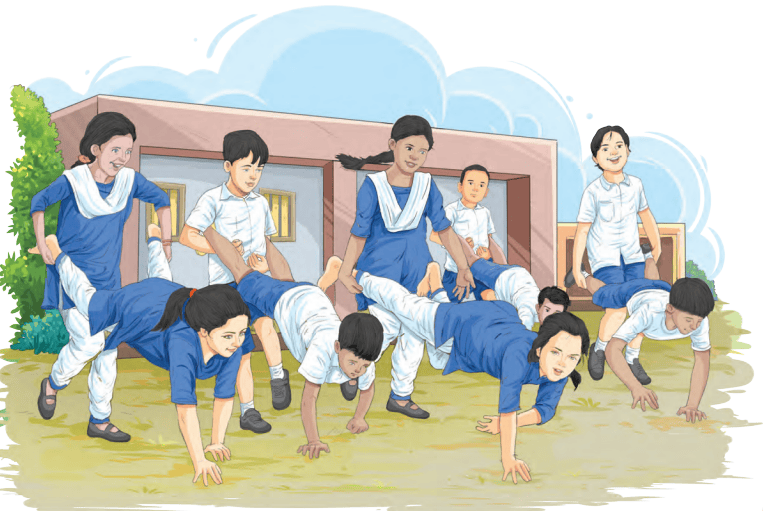
- The first member of each pair takes a plank position.
- The second member will grab the ankles of the first
member of each team carefully after the first players
have established complete body balance on their hands.
- Pairs will start moving forward coordinating with each
other’s body position.
- Once the pair has reached the end line, switch the role
and come back towards the starting line.
- The pair that reaches the starting line first, will be
the winner.
Circle Time – Coordination
- Identify the mistakes you did during the game and discuss
how to improve them.
- Discuss how you maintained coordination and balance with yourself and with your game partner.
Head, Shoulder,
Knee and Ball
Head, Shoulder, Knee and Ball is a local game which aims at
developing attentiveness and following instructions at the same
time, while enjoying the game.
| Warm-up | Activity | Cool-down | Circle Time |
|---|---|---|---|
| Neck Stretch
Hip Circles
Floor Touch |
Head, Shoulder,
Knee and Ball |
Overhead Arm Stretch
Torso Twist
Cross-legged Toe Touch |
Attentiveness |
How to
play?
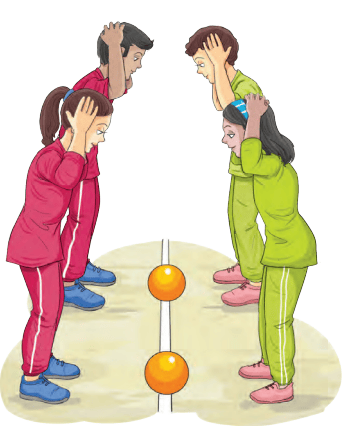
- Mark a straight line on the
playground.
- Place balls on that line at one metre from each other.
- Pair up while facing each other
and keep appropriate distance to
avoid collision while playing.
- Teacher will call the names of
different body parts and players
have to give prompt response
by touching the called-out
body part.
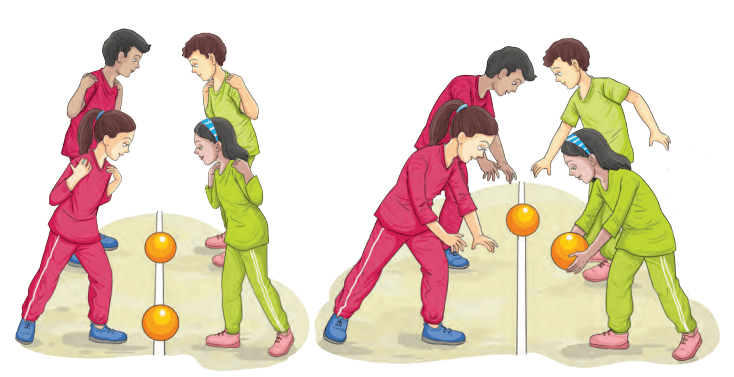
- For example, if the teacher says “head”, you
have to touch your head, but when the teacher says
“grab” you have to grab the ball.
- One who grabs the ball first will be the winner of that
round. In case both players grab the ball at same time
it will be a draw.
Circle Time – Attentiveness
Share your experience on how you remained focused to give
the right response to each call.