The journey of a plant generally begins with the germination of a
seed. With proper nourishment, the seed becomes a sapling and matures into a young plant. This journey is marked by some specific
changes. Some of the visible changes are an increase in its height, the appearance of more leaves, and the development of flowers,
fruits, and new seeds. From these seeds, new plants emerge.
It is quite unlikely that a seedling will develop the capabilities
to produce its own seeds immediately after germination. It needs
to grow and reach maturity to become capable of producing seeds. Similarly, animals also need to grow and reach maturity before they can reproduce. Some animals lay eggs that hatch into young ones, while others, like humans, directly give birth to young ones. In both cases, the young ones gradually grow in size and develop over time.
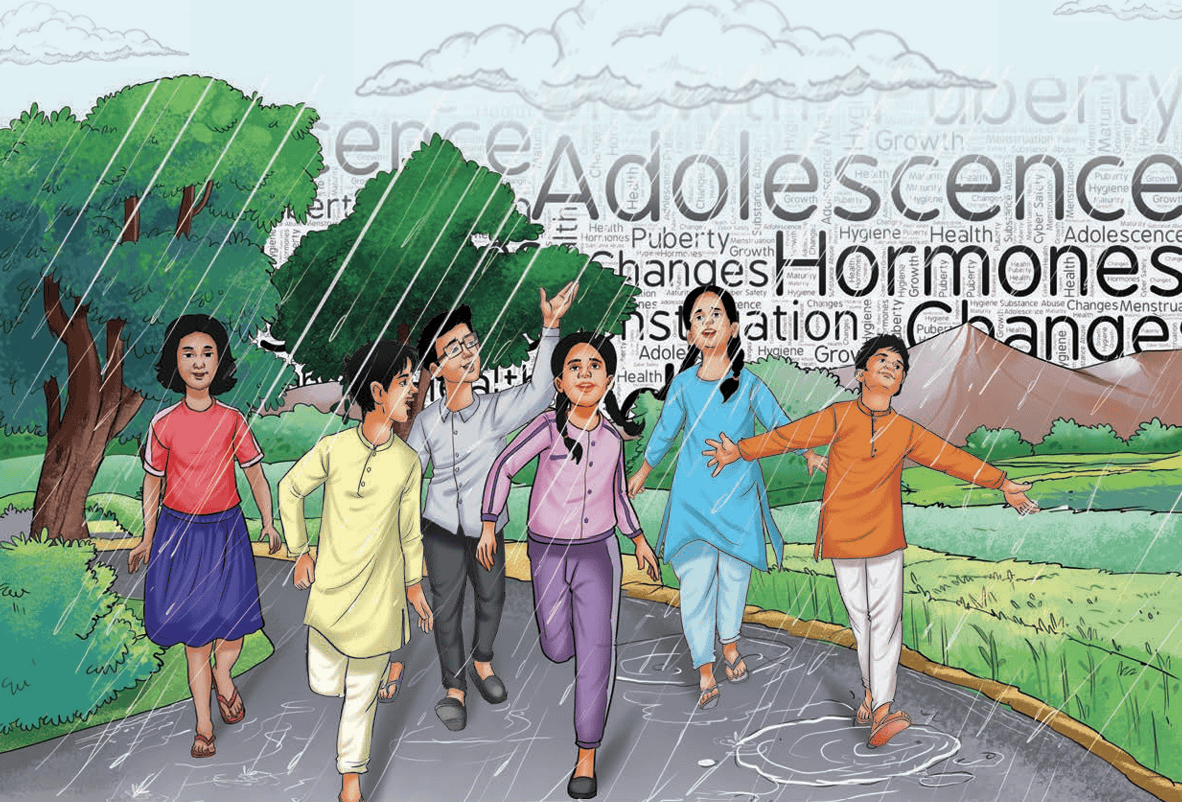
The journey of life of a human can be divided into different stages—infancy, childhood, adolescence, adulthood, and old age. Each person experiences these stages at their own pace, and the duration of each stage may vary from one individual to another. From infancy to adulthood, our bodies undergo various changes. Until around 10–12 years of age, most changes are related to height and weight. After this, other noticeable changes begin to occur, marking the onset of adolescence. This is a period of rapid growth and development, typically occurring between the ages of 10–19. During adolescence, the body prepares for adulthood.
Humans, like most other living beings, can not reproduce immediately after their birth. Their bodies need to grow and reach a stage of maturity to be able to reproduce.
As humans grow and develop, they experience significant physical, emotional, and behavioural changes, along with the ability to reproduce. Some of these changes may be quite clearly observable, while others occur internally and may go unnoticed. In this chapter, you will explore adolescence, understand its importance, and learn how to handle it with a sense of responsibility.
6.1 Growing With Age: The Teenage Years
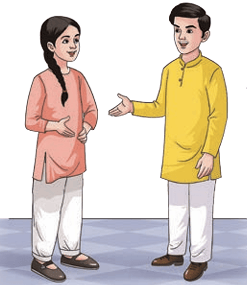
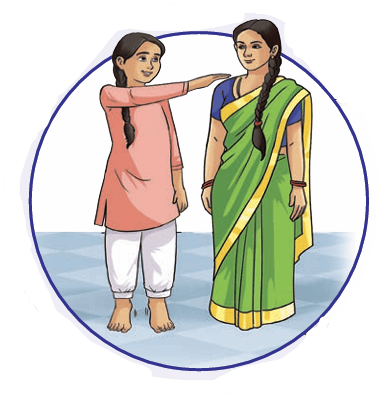
During the summer vacation, Venkatesh visited his grandparents. As he entered the house, his 12-year-old cousin, Devyani came running to greet him.
Venkatesh, you have a thin moustache now!!
Your voice has also changed!
You have become so tall, Devyani!
Let us try to understand this interesting conversation between Venkatesh and Devyani.
Activity 6.1: Let us discuss
Take a jar and some paper slips.
Write down the changes you can notice among students as they go from Grades 5 to 8. These could be related to height, strength, behaviour, or any other aspect. Please avoid writing names on the slips.
Fold the slips and place them in the jar.
Mix all the slips received from the students in the class and
unfold the collected slips one by one. Based on the information
on the slips, discuss the changes with the students in the class.
What were the most commonly observable changes among students, as mentioned on the slips? List these in Table 6.1.
Table 6.1: Most common changes during growing up
S.No.
Changes
Your observations
1.
Height
2.
Weight and strength
3.
Appearance
4.
...
Have you also experienced some of these changes? If yes, then it is because you are also reaching this stage gradually. This stage starts around 10 years of age and can continue up to the age of 19. It is usually a stage of development between childhood and
adulthood, and is called adolescence.
While analysing Table 6.1, you might have noticed the following:
Increase in height
From birth, our body undergoes continuous growth and development including an increase in height. However, the increase in height becomes more prominent during adolescence.
Changes in body structure, weight gain, and strength
As boys grow, it might be seen that along with growing taller, they gain weight, their shoulders might become a bit broader, and their chests may get wider.
Girls also undergo changes in height and weight, and other body changes like development of breasts.
Changes in voice
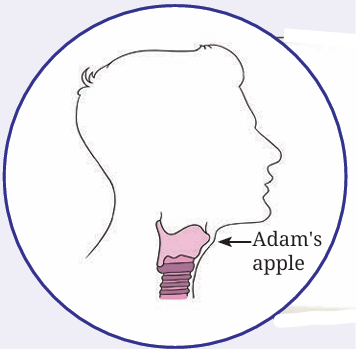
In adolescent boys, the growth of the voice box leads to a voice that sounds hoarse. The voice box is a structure in our throat that helps us to speak. The growth may be seen as a bump in the throat region and is called the Adam’s apple. However, it is not noticeable in every individual. The voice box also grows in adolescent girls but it is not as big as in the boys, leading to only slight changes in voice.
Appearance of hair in different parts of body
Both boys and girls experience the growth of hair in different parts of their bodies, such as the armpits and pubic region.
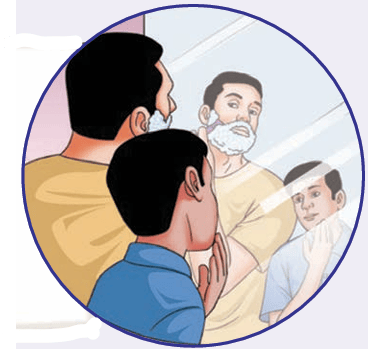
Boys often develop facial hair, which later grows into a moustache and a beard as they move towards adulthood. Some boys may also develop chest hair and back hair, though few boys may have no significant hair growth. Variations in and timing of appearance of
hair growth is completely normal.
Changes in facial skin: emergence of pimples
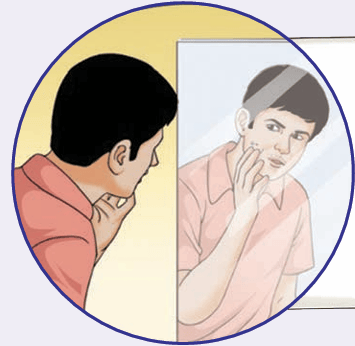
Another common occurrence during the adolescent years is a skin condition called acne, in which small, reddish pimples appear. These are commonly visible on the face. Acne occurs due to an increase in oily secretions from the skin during adolescence that can clog the skin pores and lead to infections. While acne is a condition, pimples are a manifestation of it.
A key point to remember
Whether it is a change in height, voice, or facial hair, it is
important to recognise that the timing, nature, and extent of these changes vary among individuals. These variations are completely normal.
Each person experiences adolescence at his or her own pace, and its duration also varies from one person to another.
Now, we have understood some of the changes that take place
during adolescence, particularly those that are easily observable.
Some of these characteristic changes, like change in voice, the growth
of facial and chest hair in boys, and the development of breasts
in girls are not directly involved in the process of reproduction.
However, these characteristic changes help distinguish males
from females. For this reason, they are called secondary sexual characteristics.
Secondary sexual characteristics are natural signs that the body is preparing for adulthood. They mark the onset of puberty.
Puberty is the stage in which the body of an adolescent undergoes external and internal changes to develop into an adult capable of reproduction.
6.2 Changes that Indicate Reproductive Capability
Adolescence is marked not only by observable changes but also by internal changes that are not visible from the outside. One such
change is the maturation of various parts involved in the process
of reproduction.
Both boys and girls experience such changes gradually, and these changes are a natural part of the process of growing up. An important internal change associated with adolescent girls is
the onset of the menstrual cycle. It recurs generally every 28–30 days and is more commonly known as ‘the period’. Many healthy girls may have longer or shorter menstrual cycles ranging from 21–35 days. The menstrual cycle is an important natural process and is one of the signs of good reproductive health. The phase of the cycle when blood discharge occurs from the body is referred to as menstruation. It may last for three to seven days. Some girls may feel pain or discomfort in the lower abdomen during these days. Usually, by the age of 45–55, menstruation stops naturally, marking the end of the reproductive capability in a woman’s life.
Breaking myths about menstruation
There are many wrong beliefs about menstruation that often lead to unnecessary fear, shame, or even guilt. These beliefs have given rise to certain myths and taboos. Among such myths and taboos, physical isolation of menstruating girls is unfortunately still quite prevalent. Menstruation is a natural process, and such myths have no scientific basis. By encouraging a scientific outlook towards menstruation, we can help society appreciate the need to promote good reproductive health of women and contribute positively towards a healthier lifestyle for women.
Adolescence is not just about physical changes or changes
associated with reproductive capability but also about emotional
and behavioural changes. Let us discuss them!
6.3 Emotional and Behavioural Changes in Adolescents
Activity 6.2: Let us list
Take a moment to think if there are any changes in your emotions or behaviour or that of your classmates and friends in the past one or two years. These changes may be exciting, confusing, or both.
Let us list some emotional changes in Table 6.2 along with their probable effects on behaviour and ways for positive growth and development.
Table 6.2: Emotional changes, their probable effects on behaviour, and ways for positive growth and development
Key emotional changes
Probable effects on behaviour
Ways for positive growth and development
Mood swings
Engage in varied activities like music, dance, or sports
Self-exploration and involvement in activities that may lead to
creativity and innovation
Strong emotions
Increased sensitivity
Compassion, involvement in social work
Any other
While discussing Table 6.2, you may have explored the diverse behavioural changes in adolescents. This is because adolescence is often marked by stronger emotions than childhood. These emotions might affect adolescents’ behaviour like taking up/joining social initiatives to support the needy and the disadvantaged, or developing deeper interest in new areas.
Understanding how our emotions influence our behaviour and actions, can help us make better choices and respond to situations thoughtfully.
6.4 Making Adolescence a Joyful Experience
The journey of adolescence is a unique experience. Heightened
curiosity and excitement during this stage of life give adolescents
a new viewpoint towards almost everything around them. Good habits, thoughtful decisions, and small actions can have a powerful positive impact on the overall well-being of adolescents. Let us know about them!
6.4.1 Meeting nutritional needs
In Grade 6 chapter ‘Mindful Eating: A Path to a Healthy Body’,
you learnt about the need for a healthy diet. Since adolescence is
a period of growth and development marked by several changes in the body, a nutritious diet is of utmost importance.
For proper growth, and to perform well on the playground, we need
proteins and carbohydrates!
Not only that, we also need an adequate amount of fats, vitamins, and minerals as well!
Activity 6.3: Let us list
Based on the locally available foods, fill Table 6.3 with the healthy food sources, nutrients present in them and how these nutrients can help our growth and development.
Table 6.3: Food sources, nutrients present in them, and functions of these nutrients
Food sources
Nutrients we get from them
Functions of these nutrients
Milk, millets, curd, cheese, and paneer
Calcium, proteins, fats ___________
To help optimal bone growth ___________
___________
Proteins ___________
To help proper growth, gain strength, and improve levels
of energy ___________
Spinach, kidney beans, and dried fruits like raisins, and figs
Iron ___________
To help in the formation of blood
Science and Society
Adolescents, especially girls, may sometimes suffer from blood-related health problem(s) because of a deficiency of iron or vitamin B12 in the body.
Find out about such health problem(s).
How can we manage iron deficiency in our body?
Find out about government schemes aimed to prevent such deficiencies.
Know a Scientist
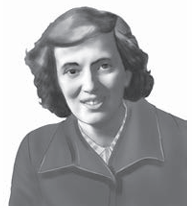
Dorothy Hodgkin was a brilliant scientist who studied the structure of vitamin B12. In 1964, she became the third woman to win the Nobel Prize in the field of chemistry. Did you know that vitamin B12 is required for the proper functioning of the human body? Like
most vitamins, it cannot be made in the human body and has to be obtained from the food we eat. Discuss the sources of vitamin B12 with your teacher.
6.4.2 Personal hygiene
Besides nutrition, personal hygiene is also crucially important during adolescence. Maintaining body hygiene, particularly in the armpits and the pubic region, may protect us from potential infections.
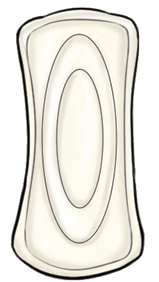
For girls, maintaining proper hygiene during menstruation is essential for both comfort and health. Menstrual hygiene can be maintained using items such as sanitary pads (Fig. 6.1) and reusable cloth pads designed for this purpose.
Fig. 6.1: Sanitary pad
The government also attempts to provide these products free of charge or at a low price to improve the menstrual hygiene of girls and women. As a society, we should all make efforts to ensure the availability of necessary facilities in schools and public places to promote menstrual hygiene. Collectively, we should move forward, reducing any stigma around sanitary pads and helping in menstrual hygiene.
It is important to dispose of used sanitary pads properly by
wrapping them in newspaper and disposing inside a dustbin. This is to ensure community health and environmental cleanliness. These days, biodegradable sanitary pads are also available that are environment-friendly.
Science and Society
To support menstrual hygiene, the government has introduced
several initiatives—
Menstrual Hygiene Scheme (MHS): Under this scheme by the Government of India, sanitary pads are provided free of charge or at a reduced price to adolescent girls in rural areas. Awareness programmes are also conducted to educate girls about menstrual hygiene and health.
Rashtriya Kishor Swasthya Karyakram (RKSK): It aims to improve the overall health of adolescents, including menstrual health and hygiene. It encourages peer education, where older students help younger ones learn about these topics.
Suvidha Sanitary Napkin Initiative: Under this initiative, biodegradable sanitary pads are provided at affordable prices through Jan Aushadhi Kendras. The initiative aims to improve access to menstrual hygiene products for women and adolescent girls.
State-Level Initiatives: Various state governments have their own programmes, such as the ‘Shuchi Scheme’ in Karnataka and free sanitary napkin schemes in states like Tamil Nadu and Odisha. These programmes aim to distribute free sanitary pads in government schools.
6.4.3 Physical activities
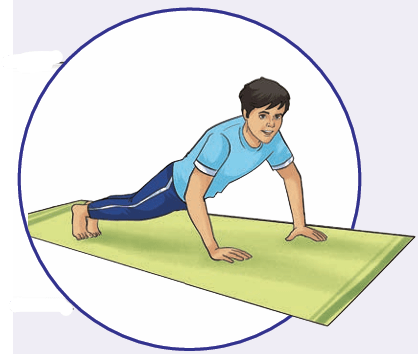
Regular exercise and physical activities are also very important
during adolescence. Do you exercise regularly or participate in
games and sports? What kinds of exercises do you do? These
activities will keep your body and mind fit and healthy, build up
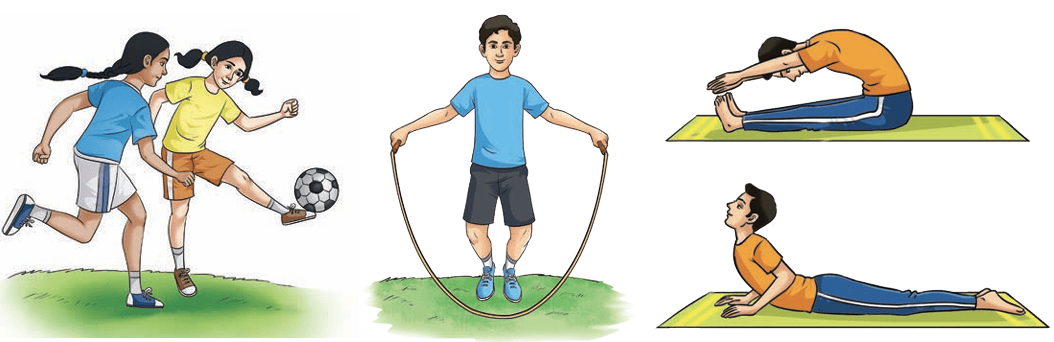
your stamina and boost your mood (Fig. 6.2).
Fig. 6.2: Physical activities for fitness
6.4.4 Balanced social life
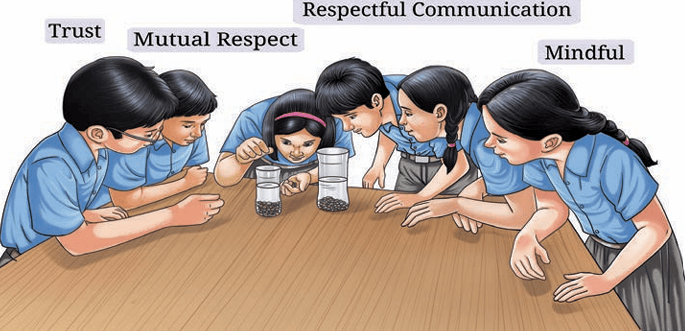
We all live in a society and interact with each other in our day-to-day life. We should all be polite and respectful towards each other (Fig. 6.3). This helps create a favourable and safe environment.
Since adolescence is a stage of life marked by new experiences
and emotions, we must be thoughtful and responsible while
interacting with others — whether in person or through social media. This is the time adolescents may feel attracted to their
peers, and mimic their behaviour. Today, they often interact with each other online.
Fig. 6.3: Collaborative learning in action
Modern technologies have made online platforms available for all to obtain information, make connections, interact, and share information with each other. We should use these platforms responsibly for the collective well-being of all. Sometimes, we,
knowingly or unknowingly, use social media platforms carelessly. Seeking guidance from elders and teachers can help use these platforms positively.
Science and Society
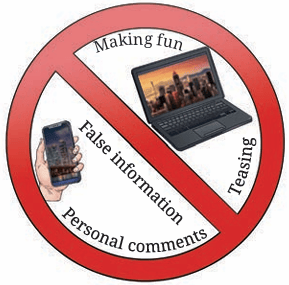
Cyberbullying involves the use of digital devices such as phones, computers, or online platforms to harass others by sending misleading messages, spreading false rumours, or sharing personal information without consent (Fig. 6.4). However, if someone tries to bully you, it is important not to feel scared or helpless. Rather, handle it wisely and seek help from parents and teachers.
Additionally, you should be cautious when uploading any picture
online or sharing personal information with strangers.
Fig. 6.4: Cyberbullying
Activity 6.4: Let us spread awareness
Work in groups to design posters and pamphlets about various aspects of responsible social media behaviour and paste them at designated places in the school. Also, fill in Table 6.4 based on your collective observations.
Table 6.4: Dos and don’ts to be followed on social media
Dos
Don’ts
Be respectful and kind.
Do not share personal photos with strangers/ virtual friends.
Think before posting.
___________
Protect privacy
___________
6.4.5 Avoiding harmful substances — learn to say NO
Some people, including your peers, may tempt, persuade, force or,
create pressure on you to consume harmful substances such as
tobacco, gutka, cigarettes, beedi, alcohol, or even life threatening illegal drugs. Since adolescence is marked by curiosity and excitement, adolescents might get influenced by such people and try these substances.
These substances are not just harmful to physical and mental
health but are also addictive. This means that once people start
consuming them, they develop a strong urge to take them again
and again. Over time, they start using them regularly. This is called substance abuse.
Someone who is addicted today, might have started once with ‘just
one time’!
Say no to addictive substances the first time and every time!
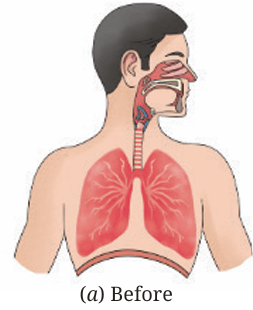
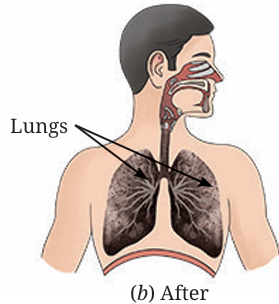
Fig. 6.5: Condition of the lungs before and after prolonged
exposure to bidi/cigarette smoke
Using these substances can cause serious health problems, such as breathing difficulties, memory loss, and damage to the lungs (Fig. 6.5), depending on the substance. To stay healthy, it is important to completely avoid these substances and make healthy choices instead. It is important to remain firm and confident in your decision to say ‘NO’.
The first step to overcoming addiction is seeking help and
support from family and friends, and talking to trusted people,
such as parents or teachers. Counselling and medical advice can
also be helpful in handling such situations. Remember, your health and your future are in your hands — choose wisely!
Science and Society
Nasha Mukt Bharat Abhiyaan
The Nasha Mukt Bharat Abhiyaan was launched by the Ministry of Social Justice and Empowerment, Government of India. It intends to reach out to the masses and spread awareness on the issue of avoiding substance abuse through active participation of the youth, women, and the community. The special focus is on the prevention of substance abuse among early-age children.
The Government has launched a National De-addiction Helpline—
14446, to deal with drug addiction and to help drug addicts.
6.5 The ‘Why’ Question for Adolescence
We now understand the different changes in adolescence and also know some ways to handle it with a sense of responsibility.
But I wonder why these changes occur at this stage of life!
Many changes in adolescence, including menstruation and other signs of puberty, are mainly due to hormones — certain chemicals produced in our bodies. Hormones play a crucial role in regulating various aspects of growth and development, contributing to the proper functioning of the body. They are produced in different parts of the body and are released at an appropriate time in response to signals from the brain. Some hormones influence mood and behaviour.
By staying informed, seeking support and guidance when needed, and making healthy decisions, you can build a strong foundation for your life ahead.
In a Nutshell
Adolescence is the period of change from childhood to
adulthood. It generally begins around the age of 10 years and usually lasts until 19 years.
Adolescence is marked by significant and characteristic
physical, biological, and emotional changes.
Features that help to distinguish the male from the female
but are not directly involved in reproduction are called secondary sexual characteristics.
Puberty is the stage in which the body of a child undergoes
observable and internal changes to develop into an adult capable of reproduction.
Adolescence in girls is also marked by start of the menstrual
cycle, during which there is a discharge of blood generally after every 28–30 days, a process called menstruation. Menstruation begins at puberty and generally ends by the age of 45–55 years.
Adolescents face several emotional and behavioural changes.
Eating a balanced and healthy diet, maintaining good personal hygiene, and participating in physical activities help adolescents to stay healthy.
Addictive substances, such as tobacco, alcohol, and drugs,
have adverse effects on the body and mind. It is wise to say
‘NO’ to these substances and stay away from them.
Changes that take place in the body during adolescence are
primarily controlled by certain chemicals produced in the body. These chemicals are called hormones.
Proper guidance and awareness help adolescents manage physical, emotional, and behavioural changes effectively.
Let Us Enhance Our Learning
1. Ramesh, an 11-year-old boy, developed a few pimples on his face. His mother told him that this is because of ongoing biological changes in his body.
(i) What could be the possible reasons for the development of these pimples on his face?
(ii) What can he do to get some relief from these pimples?
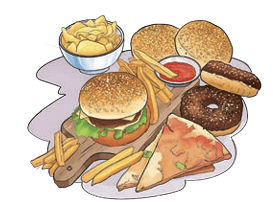
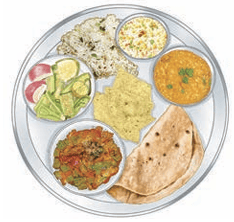
2. Which of the following food groups would be a better option
for adolescents and why?
(i)
(ii)
3. Unscramble the underlined word in the following sentences:
(i) The discharge of blood in adolescent girls which
generally occurs every 28–30 days is nstmnoiaretu.
(ii) The hoarseness in the voice of adolescent boys is due to
enlarged iceov xob.
(iii) Secondary sexual characteristics are natural signs that
the body is preparing for adulthood and mark the onset of urtypeb.
(iv) We should say NO to lahoclo and srugd as they are addictive.
4. Shalu told her friend, “Adolescence brings only physical changes, like growing taller or developing body hair.” Is she correct? What would you change in this description of adolescence?
5. During a discussion in the class, some of the students raised
the following points. What questions would you ask them to check the correctness of these points?
(i) Adolescents do not need to worry about behavioural changes.
(ii) If someone tries a harmful substance once, they can stop
anytime they want.
6. Adolescents sometimes experience mood swings. On some days, they feel very energetic and happy, while on other days, they may feel low. What other behavioural changes are associated with this age?
7. While using a toilet, Mohini noticed that used sanitary pads
were scattered near the bin. She got upset and shared her feelings with her friends. They discussed the importance of menstrualhygiene and healthy sanitary habits. What menstrual hygiene and sanitary habits would you suggest to your friends?
8. Mary and Manoj were classmates and good friends. On turning 11, Mary developed a little bulge on the front of her neck. She visited the doctor who gave her medication and asked to take iodine-rich diet. Similarly, a bump was developed on the front of Manoj’s neck when he turned 12. However, the doctor told him that it was a part of growing up. According to you, what could be the possible reason for advising Mary and Manoj differently?
9. During adolescence, the boys and girls undergo certain physical changes, a few of which are given below.
(i) Change in voice
(ii) Development of breasts
(iii) Growth of moustache
(iv) Growth of facial hair
(v) Pimples on the face
(vi) Growth of hair in the pubic region
(vii) Growth of hair in armpits
Categorise these changes in the table given below:
Physical changes during adolescence
Observed only in boys
Observed only in girls
Common in boys and girls
10. Prepare a poster mentioning the tips for adolescents to live
a healthy lifestyle.
Exploratory Projects
Find out about some personalities and organisations working in your locality to improve mental health of youth. Interview them. List at least five questions that you will ask in the interviews.
Perform a role play on the theme ‘Child marriage: A social evil’, highlighting how it negatively impacts the overall well-being of children, particularly the health of young girls.
21 June is celebrated as International Yoga Day. Organise a
small camp with the help of your teachers and practise some asanas.