
9 From the Rulers to the Ruled: Types of Governments
"A ruler’s duties in the internal administration of the country
are three-fold: rakṣha (protection of the state from external
aggression), pālana (maintenance of law and order within the
state), and yogakṣhema (safeguarding the welfare of the people)."
— Kauṭilya in Arthaśhāstra (translation by L.N. Rangarajan)
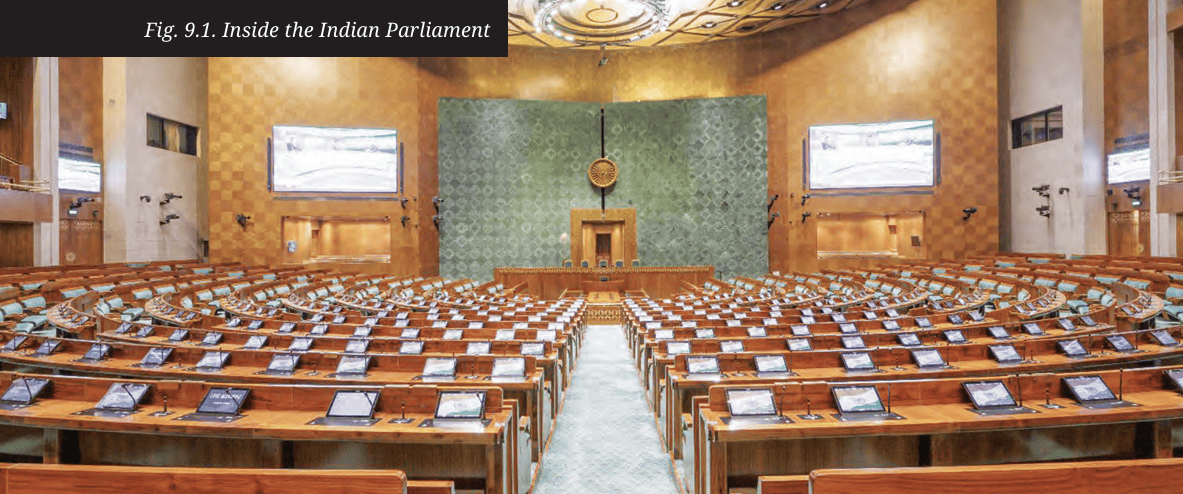
The Big Questions?
1. What are the different types of
government?
2. Where do governments get their
power from?
3. How does a country’s
government interact with the
people?
4. Why does democracy matter?
What is Government?
What are its Functions?
In Grade 6, we learned what government is and explored some
of its roles.
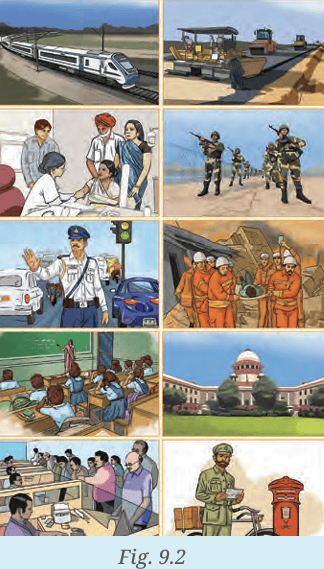
The government plays an important role in our lives. This role
includes:
- maintaining law and order in society;
- ensuring peace, stability, and security for the people;
- managing relationships with other countries;
- taking care of national defence;
- delivering essential goods and services (education, healthcare, infrastructure);
- managing the economy and economic activities;
- working for the welfare and improving people’s lives.
- Do you remember this picture from your Grade 6 textbook?
- The government also has many other roles. Try to list them.
In Grade 6, we learned that India has a democratic form of
government. Like India, many countries have a democratic
government; but some countries have other forms of
governments. Even all democratic governments are not exactly
the same. In this chapter, we will learn about various forms of
government, how they differ from each other, and how they
function.
What is Democracy?
As we studied in Grade 6, ‘democracy’ is best understood as ‘rule
of the people.’ This means that the source of power and authority
in a democracy are the people of the country. Let’s understand
this with the example of a school.
A school is full of activities and things that must be done. Many day-to-day tasks need to be managed, and things need to be organised. For example, there are timetables to be made and followed, sports activities to be organised, food to be served during lunch time (also called the mid-day-meal), utensils to be cleaned, speakers to be decided for the morning assembly, and activities to be arranged for ‘No Bag Days’. The list is very long in terms of all that needs to be done in the school.
With so many things to be done, the Head Teacher realised that a Student Committee should be appointed so that students can be part of making the relevant rules to get all this done, then help in implementation of the rules, and ensure that the rules are being followed. The question before the Head Teacher was — who will be part of the committee?The Head Teacher discussed this in the assembly. She proposed that it would be good if some students can take responsibility for these tasks. A student committee should be formed. Hearing this, the students got excited and started arguing.
Naghma: Students in Grade 12 are the most senior; we will take care of everything.
Shobha: But you will finish school in a few months. The students in Grade 11 should take care of everything.
Gurpreet: If the students of only one grade will take care of everything, then how will they know about the problems that other grades face?
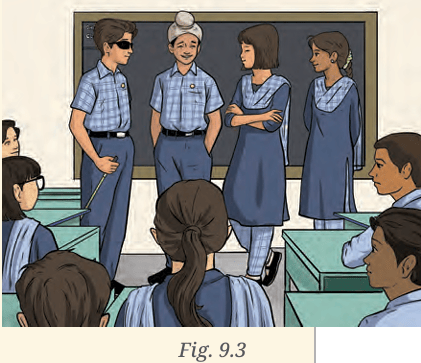
In this exciting situation, the students finally came to three options:
- Everyone in the school becomes part of the committee and takes responsibility.
- The Head Teacher chooses the students herself for the committee.
- The students choose their representatives through voting, and the chosen representatives become the members of the committee.
LET’S EXPLORE
Which of the three methods do you think is most effective? Why?
The first method may seem appealing, but if every student in the school is part of the committee, it will be difficult to reach decisions and manage implementation effectively. In the second method, since the Head Teacher selects the students for the committee, many students will not have a role and won’t have a way to ensure that their voices are heard regarding what they need and want. However, in the third method, students from each grade can choose one representative from among themselves — someone they believe will effectively advocate for their class’s needs. This representative will serve on the committee, meaning that the student committee will consist of representatives from each grade. This approach is a democratic way to choose representatives and form a committee.
Functions of Government
Previously, we discussed the various roles that a government plays in our lives, similar to the responsibilities of a student committee in a school. Just like the school committee, a government must create necessary rules, implement them, and ensure that everyone follows these rules. These three responsibilities are known as the functions of government.The creation of rules is called the legislative function; these rules serve as the framework for running the country. The implementation of these rules and the administration of the country according to them is known as the executive function. Finally, ensuring that the rules are followed is referred to as the judicial function.
Democracy is defined as the ‘rule of the people’. This means that, similar to the third method of electing representatives in a school, in a democracy, the people select their representatives to govern them. However, not every country uses the same method for choosing these representatives. We will explore this topic in more detail in the following sections. DO YOU KNOW?
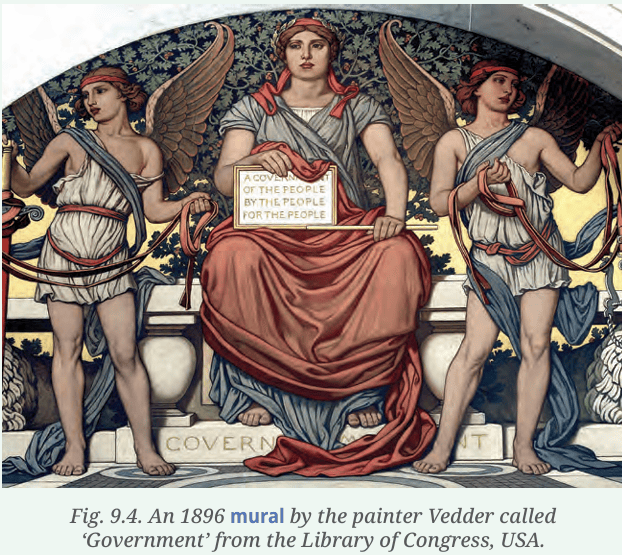 Abraham Lincoln, a U.S. president in the late 19th century,
described democracy as a ‘government of the people, by the
people, for the people’, a phrase still widely used today.
Abraham Lincoln, a U.S. president in the late 19th century,
described democracy as a ‘government of the people, by the
people, for the people’, a phrase still widely used today.
What Makes Governments Different?
The government of any country evolves over time. Since countries have their own history, culture, and aspirations, it is natural that governments of different countries are different. Let’s look at some aspects that can make one form of government different from another. These differences will become clearer when we look at various types of government later in the chapter.Key differences between governments
1. Who gets to decide that ‘this is the government’?This is the most basic difference across many types of government. Who or what says that ‘this is the government of our country’? That is, who or what gives the government its authority and power? For example, in a democracy like India, it is the people of the country who decide and are the source of authority, while in a theocracy, the source of authority is religious beliefs and the head of a religious institution.
2. How is the government formed?
In a democracy, a
government is formed usually through some kind of
election. While in kingdoms which have kings or queens,
the kind that you have read about in other chapters,
usually someone from within the family continues to
rule and decide how the government will be set up.
There are other ways of forming a government, and even
in democracies there can be different kinds of elections.
Any government has many parts and systems, and these vary across different types of government. For example, the three functions of government referred to earlier — legislative, executive, and judiciary — can be performed by totally independent bodies or by the same body. The system to decide how the government will work can be written down in a book of fundamental rules of the country, called the ‘constitution’, which is what happens in most democracies. Or it can be decided by the king or queen, as it happens in ‘monarchies’ — governments of kings or queens.
4. What is the government working for? What goals is it
trying to achieve?
Governments are designed to work
towards certain values and ideals. Some governments,
like the government of India, are designed to work
towards equality and prosperity for all, while some other
governments may be designed only for the prosperity of
some families or groups.
Democratic Governments around the World
Democracy is the most popular form of government in the modern world. In this part of the chapter, we will see that there are different kinds of democratic governments. Before we get into the differences, we should know that there are some fundamental principles of any democracyFundamental principles of democracy
Equality in a democracy means that every person has the right to be treated equally. It also means that everyone should have equal access to facilities like education and health, and that everyone is equal before the law.
Freedom in democracy means that citizens have the right to make their own choices and express their opinions.
Representative participation means that every person has a right to choose and elect their representatives. This is done through the process of elections. Elected representatives become a part of the legislature.

Universal adult franchise grants every citizen (above a certain age) the right to vote to choose their representative.

Fundamental rights of a citizen, such as — right to equality, right to freedom of speech and expression, and right against exploitation — are all provided and protected in a democracy.
Independent judiciary ensures that every citizen’s fundamental rights are protected, and that laws are followed by the citizens and also by all the parts of the government.

It is useful to remember that even these fundamental principles have evolved over time. For example, India provided universal adult franchise (meaning the right to vote in elections to all adults) from the very beginning of the Indian republic in 1950; on the other hand, in Switzerland, women got the right to vote only in 1971.
Clearly, the above principles are ideals; not all democracies are able to put them in practice. But equally clearly, it is important for the citizens to keep these ideals in front of them.Different forms of democratic governments
Let us now understand the different forms of democratic governments around the world.1. Direct democracy
This is a form of democracy where all the citizens of a country are directly responsible for all the rules, regulations and functions. They participate in all the decisions directly. and functions. They participate in all the decisions directly.In contemporary times, some kinds of this form are followed in a few countries, like Switzerland. The limitation of this form of government is that it is very hard to carry out in practice, particularly in larger countries — just as we saw in our school story: if everyone becomes a part of the committee, then decision-making and working on all tasks smoothly will be difficult.
2. Representative democracy
This is the form of democratic government in which the people elect their representatives through universal adult franchise, just like in India. In this form of democracy, the people do not directly govern, but the government is always accountable to the people.Accountability: Accountability in democracy means that the government is answerable to the people who have elected them.
Elections are an integral part of representative democracy through which people can express changes in their choices as well. To accomplish this, elections happen in regular and fixed intervals of time. In India we have general elections every five years, while in the United States of America they occur every four years.
As we stated in the beginning, democracies have evolved over time, and so have their characteristics. Even today, there are a lot of differences in the functioning of these democracies. It is useful to remember that when these countries adopted democracies, they may not have had all the principles of democracy as we understand them today. For example, effective Universal Adult Suffrage in the UK happened in 1928 and in the USA by 1965.
| Country | Year when democracy was established |
|---|---|
| USA | 1787 |
| Switzerland | 1848 |
| India | 1947 |
| Germany | 1949 |
| Kenya | 1964 |
| Nepal | 2008 |
Most of the democracies today are representative democracies. But every democracy functions differently. Here are the two forms of representative democracy
a. Parliamentary democracy
In this form of government, the members of the executive are also part of the legislature. For example, in India, the prime minister and the council of ministers are also members of the parliament.The council of ministers are accountable to the legislature and continue working as long as they have the confidence of the legislature. In India, the council of ministers can continue working while they have confidence of the Lok Sabha.
In this form of government, people elect the legislature but not the executive. Selected members of the legislature become ministers.b. Presidential democracy
In this form of government, the executive works independently of the legislature. The president is elected by the people. The president does not need to have the confidence of the legislature for his / her position.In some countries like India, states within the country such as Rajasthan or Kerala have their own governments, but they are not completely independent. They are still governed by a larger national government, the Union Government of India.
The different forms of democratic government have different structures. You can understand the basic differences from the table 9.1 on the facing page.What do these terms mean?
Executive: The executive is the organ of the government which is responsible for implementing the law. But the process of its election is different in different countries.Legislature: The legislature is the body of the government which is responsible for making laws. It is known by different names in different countries. In India, it is called Parliament; in the USA, it is called Congress. In most democracies, it has two houses, the Upper House and the Lower House.
Upper House and Lower House: In most countries, the Lower House is elected by direct voting and is generally more powerful than the Upper House, which is formed either by election or nomination. These Houses are known by different names in different countries. In India, the Lower House is called the Lok Sabha, and the Upper House is called the Rajya Sabha.Separation of Power means that the three organs of the government — Legislature, Executive, and Judiciary — work independently and do not interfere in each other’s functions.
LET’S EXPLORE
- Fill the blank columns under Country A and Country B in table 9.1 given on the previous page by taking two different countries of your choice.
- Analyse the table and discuss amongst yourselves the similarities and differences in all the examples.
LET’S EXPLORE
- After studying the above examples, list the core principles of a democratic government. Based on your understanding, do the activity given below:
- You have to form a Student Committee in your school.
Make a plan and execute it in a democratic manner,
ensuring that:
- Functions of the committee are well defined
- The election process of the committee members is democratic
A Peek into History
Early republics
A republic is a form of government in which the head of state is elected and is not a hereditary monarch.This was the case in at least two of India’s ancient mahājanapadas, as you might recall from the chapter ‘New Beginnings: Cities and States’. In the Vajji (or Vṛiji) mahājanapada, the Lichchhavi clan, in particular, practised collective decision-making, and leaders were chosen based on merit rather than birth. Key positions were filled through elections, and representatives from various clans met regularly to address issues and develop solutions to ensure the people’s welfare. As a result, such states have been called early republics.
Indeed, the voice of the common people has been valued and upheld in India through the ages, even when the power was in the hands of a king or queen. A remarkable example from the Chola period is seen in the Uttaramerur inscriptions from the 10th century CE in Tamil Nadu, which provide us with details about the election of members to the village sabhā (local administrative body). We learn about the election process, including sealed ballot boxes, qualifications of members, their duties, and also the conditions that could lead to their dismissal.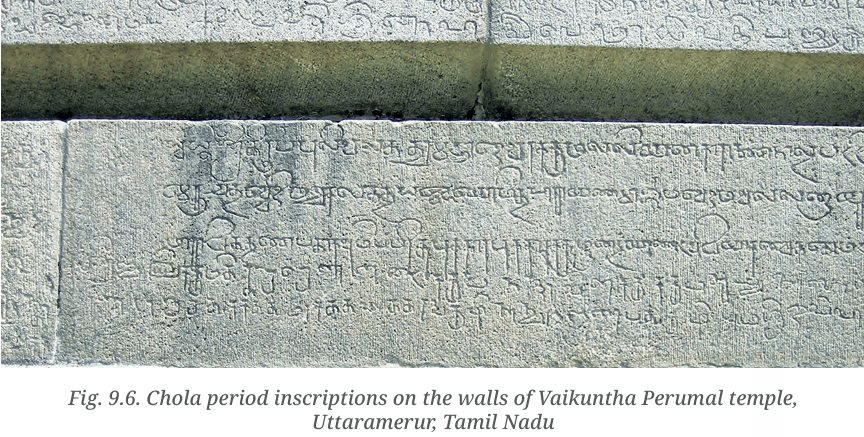 For instance, members would be immediately removed if found
to have indulged in any corruption.
For instance, members would be immediately removed if found
to have indulged in any corruption.
There were republics in other parts of the world too. In the 5th and 4th centuries BCE, Rome and Greece had republics. In some regions of Greece, free men could vote, but women, workers and slaves could not. Other areas had a system where only a small, privileged group could vote or make decisions.
Other Forms of Government
In the previous sections we saw that democracy is the most popular form of government in today’s world, and that there are different forms of democracy as well. Let us now look at other forms of governments, and understand their basic structures.1. Monarchy
As we saw in chapters of ‘Tapestry of the Past’, mahājanapadas were headed by kings, who were guided by the sabhā or samiti and were expected to take decisions and advice of these institutions seriously. As empires were built and expanded across India, kings began to gain immense power. Yet, they relied on a council of ministers and a network of officials to help them govern the empire. In many cases, the king also sought the advice of learnt scholars on matters related to dharma. Of course, there were also examples of kings who used their power to subjugate their people.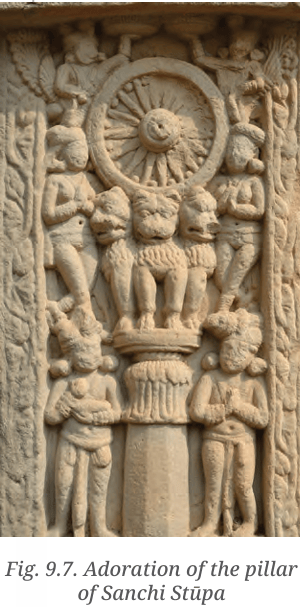
In some parts of the world, kings had all the power; they made the laws, enforced them, and also decided the punishments. In some cases, they claimed to have received divine power from God.
However, in many parts of India, the power of the raja was neither absolute nor beyond question. The king was expected to make decisions while staying within the limits of rājadharma; this meant ruling according to dharma and ensuring the welfare of all people. This was an ideal that kings did not necessarily achieve.THINK ABOUT IT
What might happen if the king considered himself to have
divine powers? How would he rule over the people?
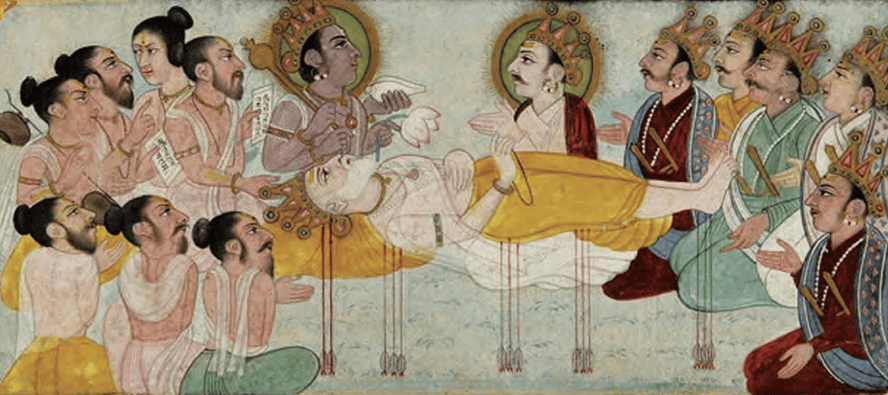
King Chandrāpīḍa wanted to build a temple to his deity,
but the hut of a stubborn cobbler stood in the way. When
the builders complained to the king that he did not even
allow them to take measurements, the king blamed them
for not asking the cobbler’s permission first. The king
received the cobbler, who explained that his humble hut
was like a mother to him and as precious to him as the
palace was to the king: “The misery people feel when
their homes are forcibly taken away can be described
only by a god who has fallen from his celestial car or
by a king who has lost his kingdom!” Nevertheless, the
cobbler expressed his readiness to let go of his hut if
only the king would come and respectfully ask for his
permission — which the king did, giving him adequate
money as compensation. “For those who desire
happiness, there should be no false pride,” concludes the
text, while the cobbler praised the king’s commitment
to dharma, even towards a lowly subject!
– From Rājataraṅgiṇī by the Kashmiri
scholar Kalhaṇa (12th century CE)
2. Monarchies today
A monarchy is the type of government that is ruled by a monarch. Kings and queens are called monarchs, who exercise their sovereign power. Monarchies are usually hereditary; typically, the eldest son of the ruling monarch becomes the next king.
Today we have two types of monarchy:
a. Absolute monarchy
In an absolute monarchy the monarch
has complete control in the making of laws,
ensuring that they are followed and adjudicating when
they are not. Saudi Arabia is an example of an absolute
monarchy; here the king holds all power and governs
according to Islamic law. However, he appoints a council
that advises and assists him on governance; but he is not
bound by the council’s advice.
b. Constitutional monarchy
Let us consider an example of a different kind of monarchy.
The United Kingdom or Britain is also a monarchy. The
head of the state is the king or queen, but he or she has
only nominal power and the real power of the executive
is exercised by the prime minister. The legislative power is
exercised by the parliament.
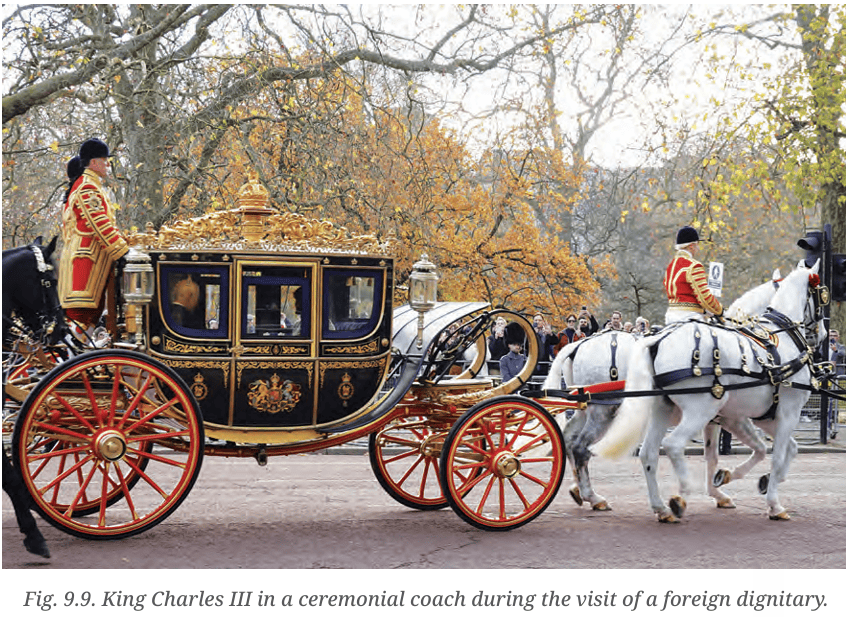
This means that all the laws are made by the elected
parliament, and executive power is exercised by the Council
of Ministers led by the prime minister. So while Britain has
a king, it really is, today, a parliamentary democracy. This
kind of monarchy is called a constitutional monarchy.
2. Theocracy
A theocracy is a form of government where the country is ruled
by the rules of religion and religious leaders.
Iran, whose full official name is ‘Islamic Republic of Iran’ has a unique political system combining elements of both a theocratic and democratic governance. Their constitution is based on the fundamental principles of Islam, the country’s official religion. The Supreme Leader, who has the ultimate authority over the legislature, executive and judiciary, is selected by a group of Islamic clerics and his term is for life. There are also an elected president and a parliament that take care of everyday governance. The intent of the republic is to establish a society based on Islamic norms.
Other theocracies currently in existence include Afghanistan and Vatican City.
3. Dictatorship
A dictatorship is a form of government in which one person,
or a small group possesses absolute power — they do not have
any limits imposed on them by a constitution or law. The 20th
century witnessed many examples of dictators who created
extremely difficult circumstances for the people; we will only
see two of them here.
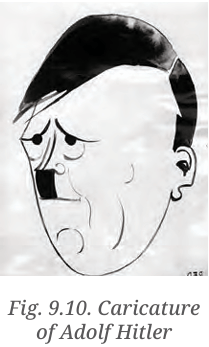
- Soon after Adolf Hitler was appointed Chancellor of Germany in 1933, he passed laws that gave him full power and eliminated the opposition. He was now a dictator. Convinced of the superiority of his people, he believed that Germany should rule the world and dominate ‘inferior races’. He was responsible for the killing of at least six million Jews (this is known as the ‘Holocaust’) as well as hundreds of thousands of Roma and other groups of people. In fact, he was the cause for World War II in the years 1939–1945, which resulted in immense loss of life and property in many countries.
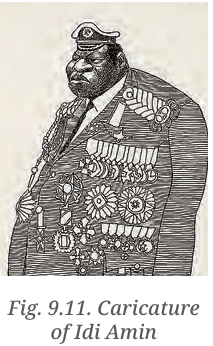
- Idi Amin was a military dictator in
Uganda. He was directly responsible
for the merciless killing of thousands
of people. Many Indians whose
ancestors had migrated to Uganda a
few generations before were forced to
flee the country.
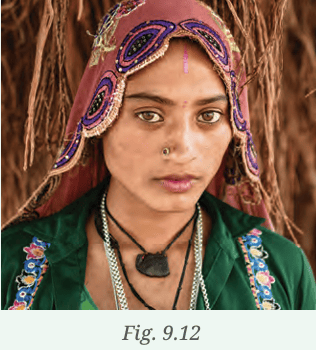
The Roma, or Romani people; were originally nomads. Based on their linguistic and cultural characteristics, scholars have determined that they originated in India. They first settled in parts of eastern Europe but have now migrated to several countries of the world.
Shane lives in North Korea which has a set of defined rules for his everyday living. He is currently serving in compulsory military service in which he is expected to serve in the military till the time government decides. There are also rules about how his hair should be cut and the clothes he should wear. He cannot access the global internet, and so is unaware of the world outside his own country. The government watches his every action closely and he is also expected to report about anyone who tries breaking any of the defined rules. One day he met a tourist who asked him, “Why do all of you have the same haircut here?” To this Shane responded, “We all want to explore new styles, but the government decides the way we should keep our hair.”
- Does Shane’s country look like a democracy?
- How do you think Shane’s everyday life would be?
- Would you like to live in such a country? Explain why.
4. Oligarchy
The word ‘oligarchy’ is of Greek origin, where olígos means a few and árkhō means to rule or command. It is a type of government where a small, powerful group makes all the important deci sions; usually they are wealthy families or influential people.In some places in ancient Greece, aristocratic families ruled as oligarchies. In modern times, political commentators have observed that even some democracies show signs of oligarchy when a small group of politicians and wealthy businesspeople hold too much influence in governance.
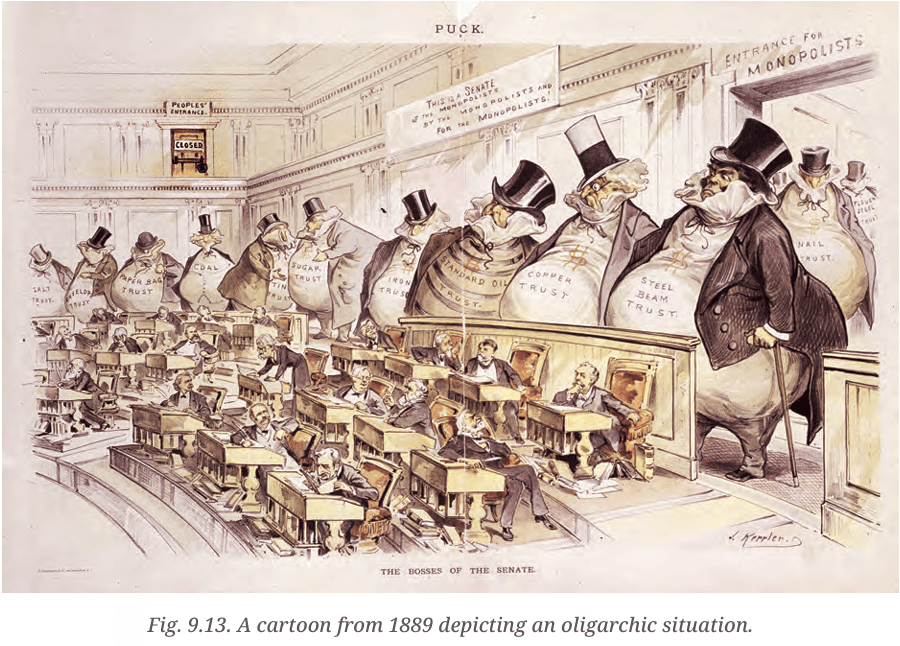
- Look carefully at the picture in Fig. 9.13 on the previous page. It depicts an elected body in the USA in the late 19th century. The people shown in the cartoon are all elected members. What do you observe? What do you see at the top left-hand corner of the cartoon? Who do you think is making decisions in this elected body?
- Can a democracy turn into an oligarchy? What can people do to keep democracy strong?
Why Democracy Matters
These different types of governments show us that democracy
is not the only way in which countries are governed. But in
most countries, democracy is considered to be a better form
of government than others. Let us do a quick comparison to
understand this better.
Consider the characteristics below in different forms of
government and fill in the blank boxes with Yes or No:
| Characteristics | Democracy | Dictatorship | Absolute Monarchy | Oligarchy |
|---|---|---|---|---|
| Universal Adult Franchise | Yes | No | No | No |
| Equality amongst citizens | ||||
| Freedom of speech | ||||
| Separation of powers | ||||
| Wellbeing and Prosperity of all citizens |
You have learnt the basic characteristics of various forms of governments. Do a small role play of the various forms in your classroom:
- Enact democracy
- Enact monarchy
- Enact dictatorship
- What do you find to be the most suitable form of government?
You have read about different forms of government above and how the form of government defines the lives of its citizens. In the previous table, we could see that the representation of people’s choices and rights varies across the different forms.
In a genuine democracy, the people can lead their everyday lives in the way they want. They can choose what to speak, what to wear, what beliefs to follow, and how to express themselves. All of this can be done in a democracy until and unless it harms someone else’s rights.
In a democratic government, the people choose their government. The government is accountable for protecting the rights of its people and is responsible for providing basic needs to its citizens. If the government does not perform its functions properly, the people can change their representatives through elections. This ensures that there is a constant check of what the government does. Thus, the values and ideals of the government in a democracy should focus on the well-being of all its people.
Our country is a democracy, and you can see many of the features of a democracy in our lives every day. It is therefore no wonder that more than half of the countries in the world have adopted democracy and democratic forms of government.
It is important to keep in mind, however, that even democracies have their problems. Issues such as corruption, wealth disparity, excessive control by a few over democratic institutions, erosion of the judiciary’s independence, manipulation of information channels, and several more, can cause hurdles in achieving the ideals of democracy. What can we do as individuals, and as a society, to remain vigilant and minimize these issues and hurdles?Before we move on ...
- Government plays an important role in running a country. Different types of governments across the world have different answers to the following questions: Who decides “This is the government”? What are the parts of the government and what do they do? Who or what is the government working for? What values and ideals should the government follow?
- The most popular form of government in the world today is democracy. Democratic governments across the world have variations, including direct democracy and representative democracy.
- There are two types of representative democracy — presidential and parliamentary democracy. India is a parliamentary democracy.
- Other types of government include monarchy, theocracy,
dictatorship and oligarchy.
- Democracy matters, but there are serious challenges to
democracy that citizens need to remain vigilant about.
Questions and activities
1. Write names of the various types of government that you have learnt in the chapter.
2. Which type of Government does India have? And why is that called that type?
3. You read that an independent judiciary is present in all types of democracies. State any three reasons why you think it is important for the judiciary to be independent.
4. Do you think democratic government is better than other forms of government? Why?
5. These are some practices in a few different countries. Can
you match the practice with the type of government?
| S. No | Practice in the country | Type of Government |
|---|---|---|
| I. | All citizens are treated equally before law | Dictatorship |
| II. | The government refers to the religious leader for each and every decision it takes. | Monarchy |
| III. | After the queen’s death, her son became the new king. | Democracy |
| IV. | The ruler is not bound to follow any Constitution. He makes all the decisions as per his choice. | Theocracy |
6. Below is a list of countries. Find out the types of government these countries have:
| S. No | Country | Type of Government |
|---|---|---|
| 1 | Bhutan | |
| 2 | Nepal | |
| 3 | Bangladesh | |
| 4 | South Africa | |
| 5 | Brazil |
7. What are possible hurdles in a democracy iDemocracy is different from monarchy and dictatorship. Explain.n achieving its values and ideals? How can they be overcome?
8. Democracy is different from monarchy and dictatorship. Explain.