
12 Understanding Markets
Prosperity emanates from the market that develops when
people need goods and services that they can’t create
themselves.
— Adam Smith, 18th century economist
The Big Questions?
1. What are markets and how
do they function?
2. What is the role of markets
in people’s lives?
3. What role does the
government play in markets?
4. How can consumers assess
the quality of goods and
services they purchase?
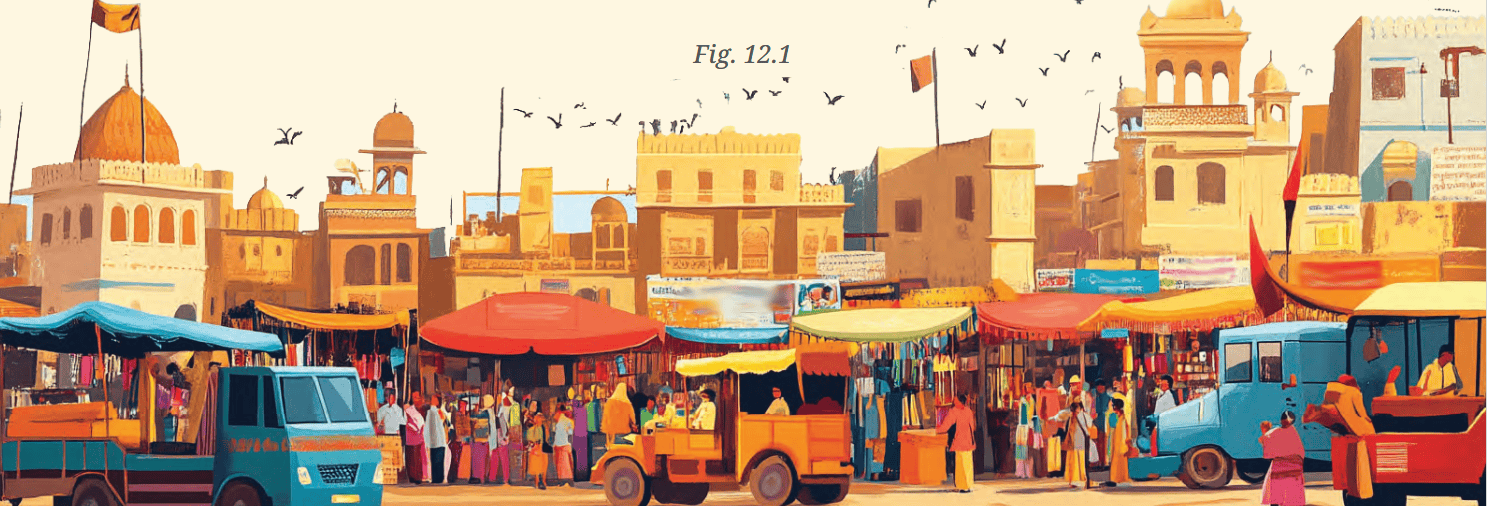
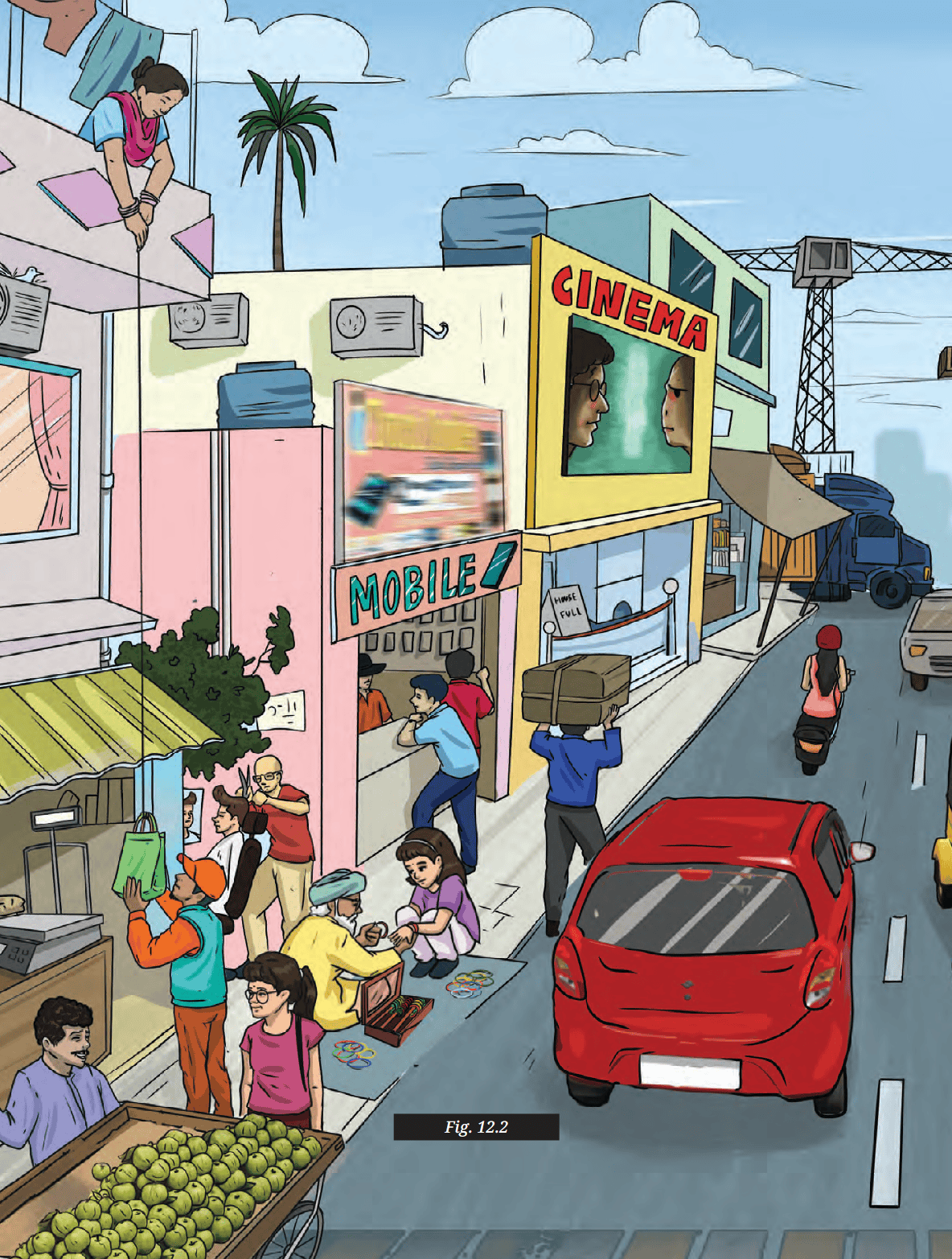
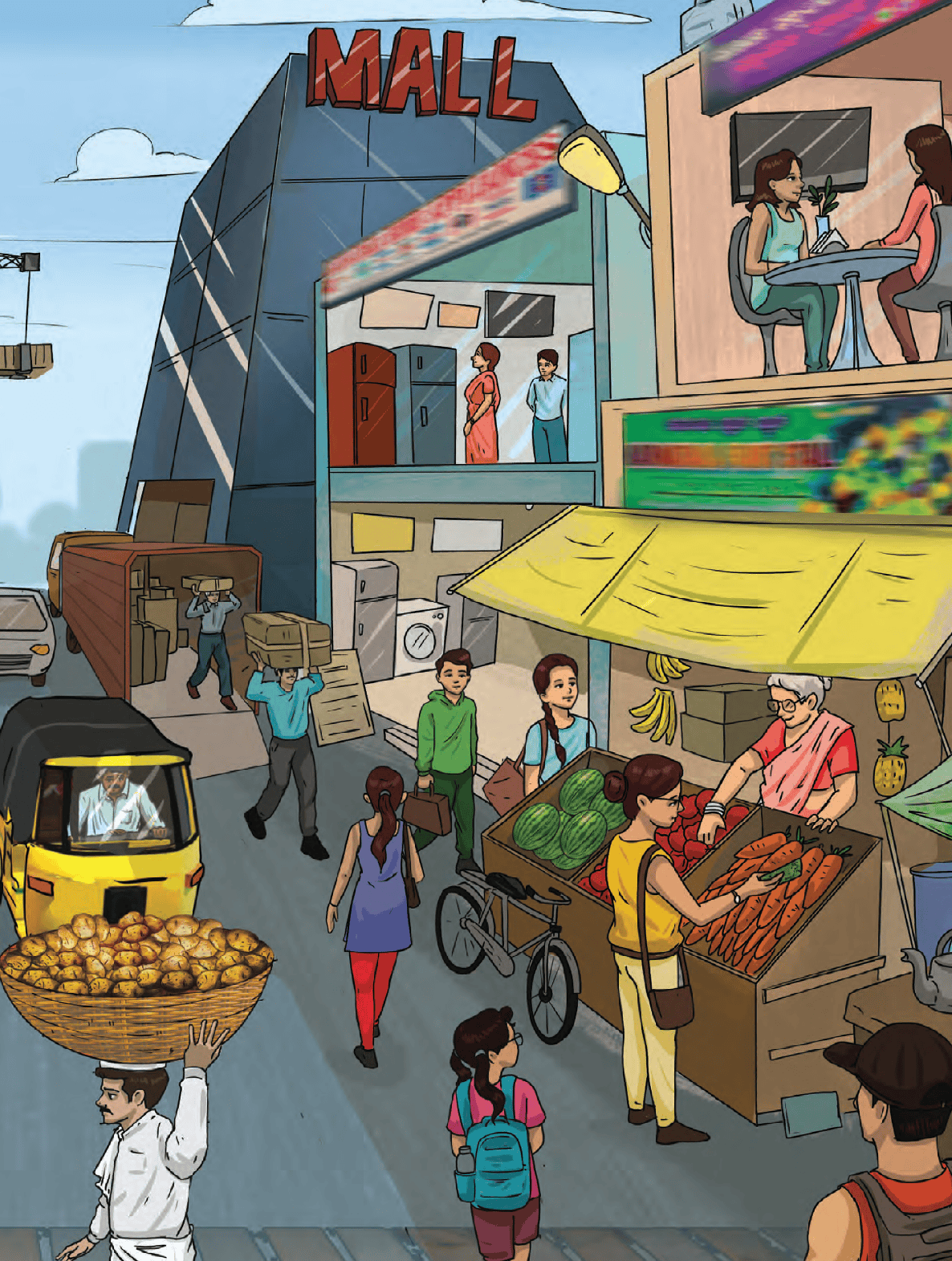
In the picture on the following page you will see people buying and selling goods — vegetables, fruits, clothes, groceries, mobile phones, refrigerators, and so on. These goods result from various types of economic activities — primary, secondary, and tertiary — that you studied in Grade 6. But how do these goods reach us?
What is a Market?
A place where people buy and sell goods is called a market. It is also known as bazaar, haat (in Hindi), and mārukatté (in Kannada). What is it called in your region? This can be at a physical place or, as is becoming popular today, online. Goods and services become available to individuals, households, and businesses through markets. For a long time, people have relied on markets to fulfil their needs and wants for goods and services. In addition, markets connect people, traditions, and ideas.
Let’s see an example of a market from 16th century India.
The Glorious Hampi Bazaar, Karnataka
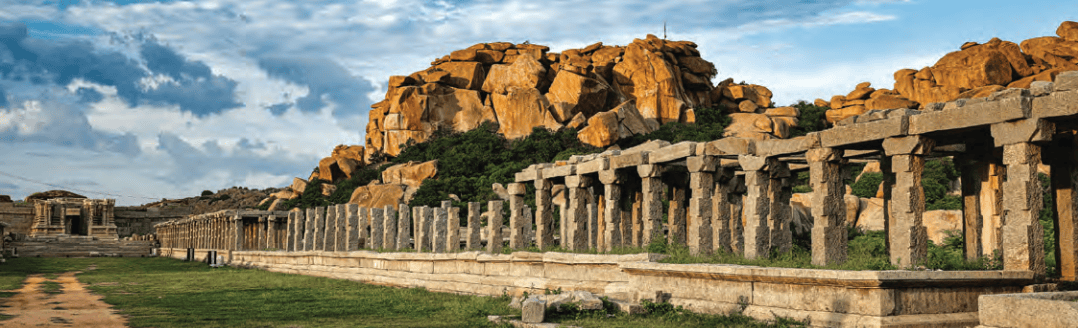
The Hampi Bazaar in Karnataka was one of the prosperous markets in the Vijayanagara Empire which was the centre of flourishing trade. The bazaar was located opposite the Virupaksha temple. The sheer abundance and prosperity of the city have been described in many foreign accounts.
The famous Portuguese traveller, Domingos Paes, called Hampi “the best-provided city in the world” due to the wide variety of products traded in the market— grains, seeds, milk, oil, silk, animals like cows, rabbits, horses, and even birds like quails and partridges. Another Portuguese traveller, Fernao Nuniz, wrote about the bazaar, “There were craftsmen, also, working in their streets, so that you saw made there, golden jewels and gewgaws, and you will find all kinds of rubies and diamonds and pearls, with every other kind of precious stone for sale… sellers of cloths… they being of cotton… grass and straw in infinite abundance. I do not know who could describe it to be believed, so barren a country is this… it is a mystery how there should be an abundance of everything therein.”
Wants: In economics, a want is something that a person desires but is not essential for survival.
Trade: buying and selling or exchange of goods and services between people or countries
LET'S EXPLORE
⇒ Can you imagine what this bazaar must have looked like during its peak?
⇒ Do you know of any old markets from your state? How would they be similar or different from today’s markets? Discuss with elders in the family and community.
Let’s learn more about markets and how they function!
LET'S EXPLORE
Observe the illustration. What are these people discussing? Imagine you and your partner as a buyer and a seller of guavas. Prepare a set of dialogues between both of you and present it in your class as a skit.
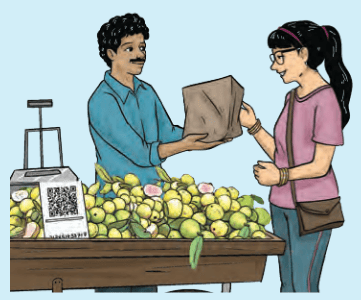
Certain features are required for places to be called markets. As you observed in the figure 12.2 (on introductory big spread page number 248) every market has a buyer and a seller. They both need to agree on a price at which the transaction would take place. Price is an important feature in completing a transaction.
Often the buyers and sellers negotiate and bargain to arrive at an acceptable price. What type of negotiation and bargaining took place in your skit?
THINK ABOUT IT
Prices and Markets
What happens when there are many buyers and sellers in the market? How do prices respond to how buyers and sellers interact in the market?
In the figure given below, the seller wants to sell the guavas at ₹80 per kg. However, buyers may not be willing to buy at that price. If a buyer finds the price very high, he will ask for a price that he is willing to pay. The seller may not be willing to sell at the price offered by the buyer because it would not be profitable for him. The buyer and seller negotiate until a mutually agreeable price is reached. The transaction can then be completed. If such a point is not reached, i.e. the point where the buyer and the seller agree on a price, the transaction may not take place.
Let’s see some scenarios below to understand this.
1. What happens in case the seller fixes the price very high?
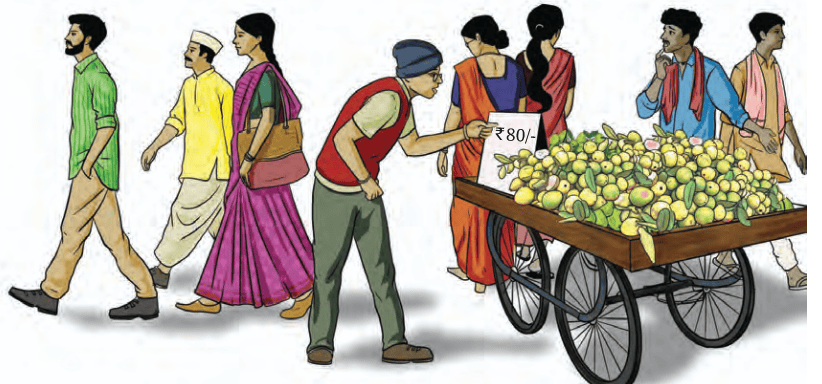
Let’s see some scenarios below to understand this.
2. What happens in case the seller fixes the price very low?
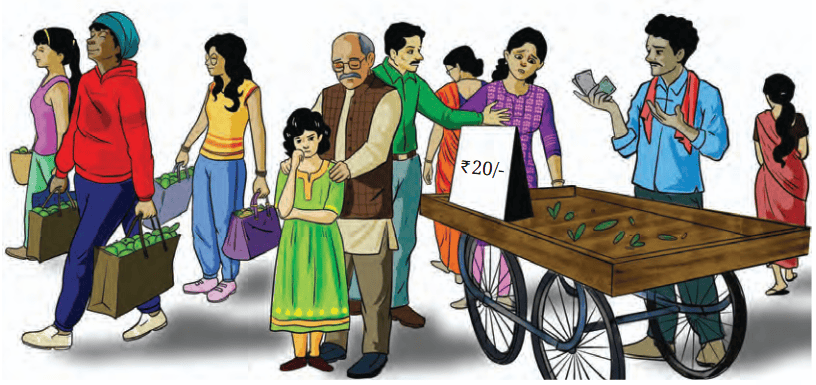
Let’s see some scenarios below to understand this.
3. Over time the price of guavas is fixed at one that is just right, not very high for the buyer, not too low for the seller!
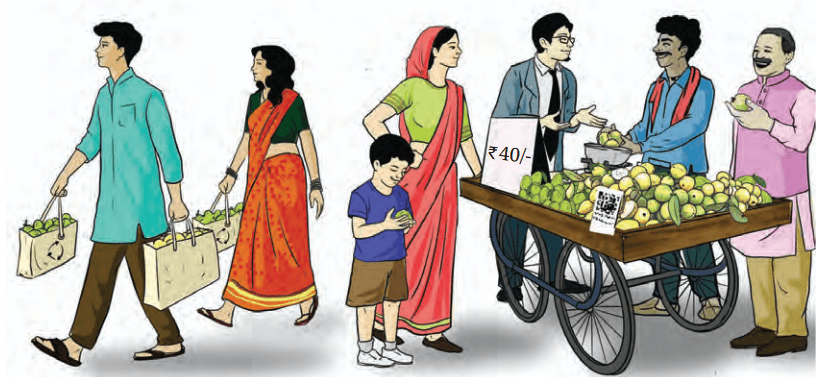
Learning from all three scenarios, the seller can assess approximately what quantity of guavas are needed by the buyers and offer that quantity in the market in future.
Over time, the amount of goods offered by the sellers and the amount required by the buyers help determine the price of the goods that is just right, high enough for the seller, and low enough for the buyer.
THINK ABOUT IT
Vegetables are sold cheaper late at night at the weekly market compared to during the day. Why do you think this is so? Garment stores offer heavy discounts on woollen clothing at the end of the winter season. Why does this happen?
Markets Around Us
Markets are present everywhere and in various forms.
Physical and online market
A physical market is where buyers can meet the seller physically, and purchase goods or services in exchange for money. This is the most common type of market. It includes weekly markets and haats where vendors sell vegetables, other essential items, and handicraft items lined up on a cart. Local markets with shops and buzzing with vendors selling street food, knick-knacks, and so on are also physical markets. There are also multi-storey buildings, i.e., malls in cities and towns spanning large areas with stores inside.
Today buyers and sellers need not necessarily meet in person to engage in a transaction. They can transact from a convenient location even thousands of kilometres away from each other. They can use shopping applications (apps) or websites on a phone or a computer. These apps or websites are created by businesses that make available a wide variety of goods and services. We will read about how this works in a section below.
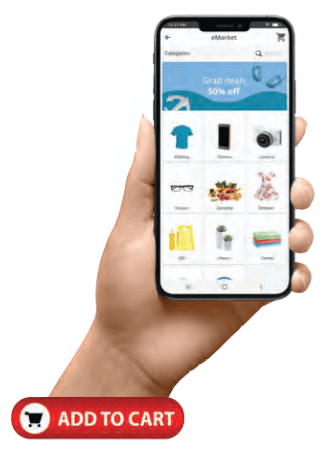
One can buy goods ranging from books, clothes, furniture, and grocery items to electronic items like TVs, mobile phones, and laptops, and get them delivered to their doorstep. Manufacturers can also buy components online to be used as inputs for production of goods. Apart from goods, one can also avail of services like online classes without having to step outside the home. Payments for such services can also be made online.
Manufacturer: A person or company that makes goods for sale
THINK ABOUT IT
- What do you think are the pros and cons of online and physical shopping respectively? Explore this question from the point of view of both, sellers and buyers.
- Some services require in-person contact like tailoring and cannot be provided online. Can you suggest other services where physical markets are needed?
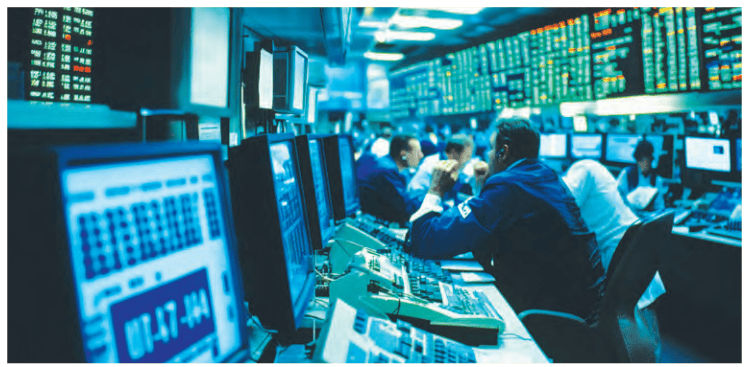
There are other types of markets that do not transact goods and services. One of them is the share or stock market.
Ask your family members, teachers, or members in your community about it. We will explore these concepts later in the year.
Domestic and international markets
A market where goods and services are bought and sold within the geographical boundaries of the country is called a domestic market. For example, to print this book, paper was procured from big paper mills located all over India. The transaction between the buyer and the seller took place within the country.
International markets exist outside a nation’s boundary; the sellers in one country export their products to another country, or the buyers in one country import products produced in another country. Thus, trade occurs across borders of countries.
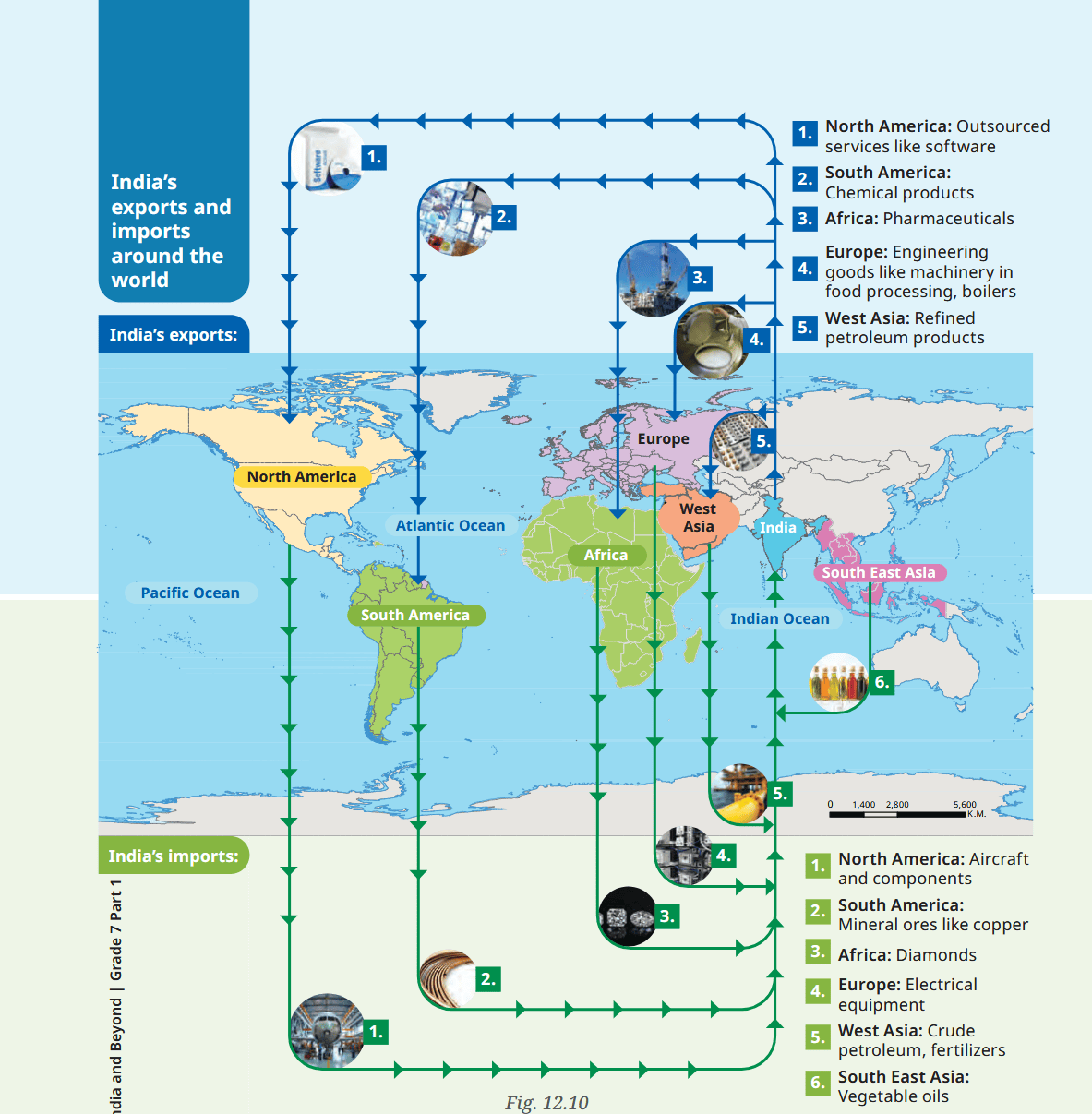
Import: Buying goods or services from other countries and bringing them into one’s own country.
DON'T MISS OUT
Wholesale and Retail Markets
Several participants play their role in the smooth functioning of the markets.
LET'S EXPLORE
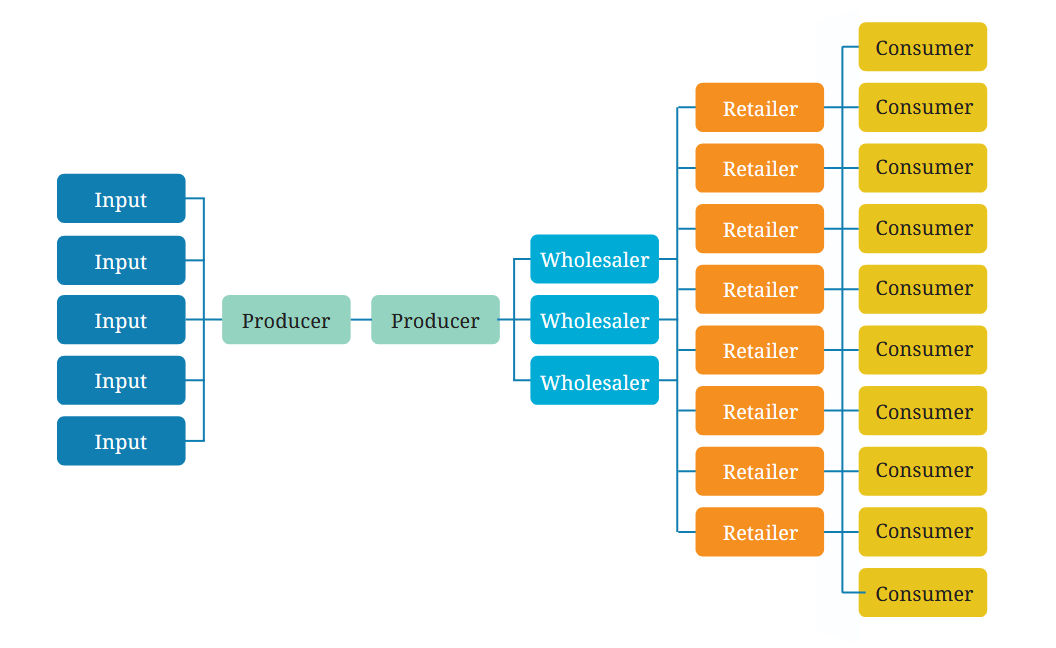
Observe the diagram and describe the flow of goods from the manufacturer / producer to the consumer. What is the role of the wholesaler and the retailer in the flow?
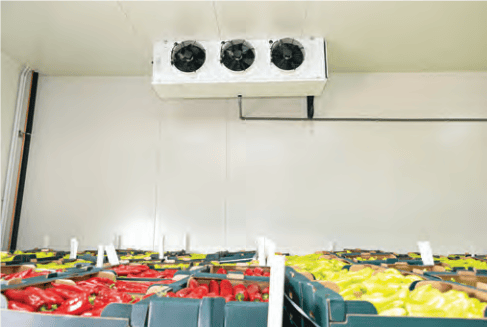
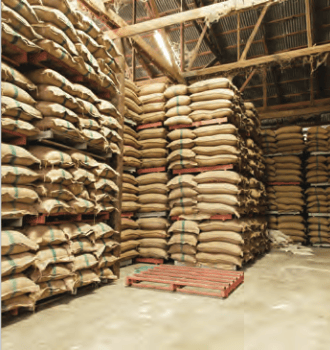
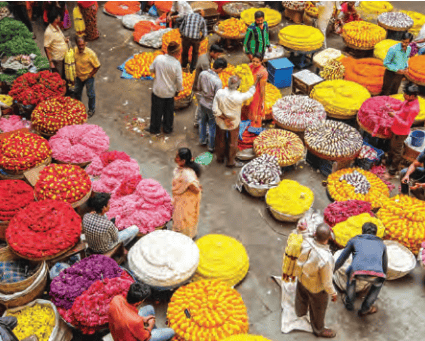
In the case of physical markets, wholesalers buy goods in large quantities from the producer or manufacturer of the product. For example, grains, vegetables, and fruits are bought by wholesalers directly from the farms. The produce is then stored in large warehouses called godowns. In the case of perishables, the warehouses may also have cold storage facilities. They are then brought to markets called mandīs.
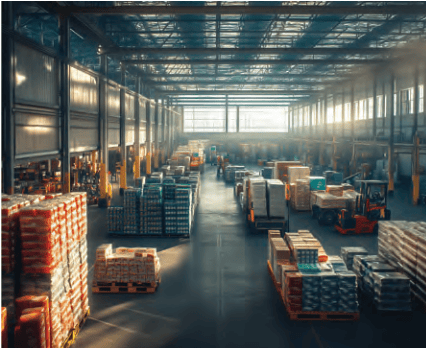
Similarly, there exist wholesale markets for other commodities like chemicals, electronic items and components, construction materials, automotive parts, etc.
Several participants play their role in the smooth functioning of the markets.
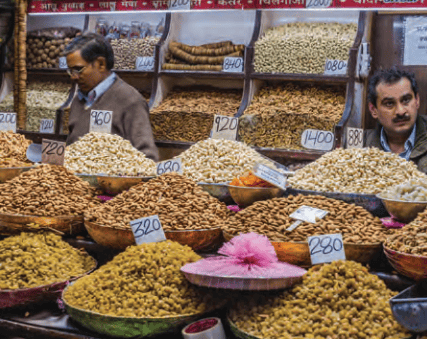
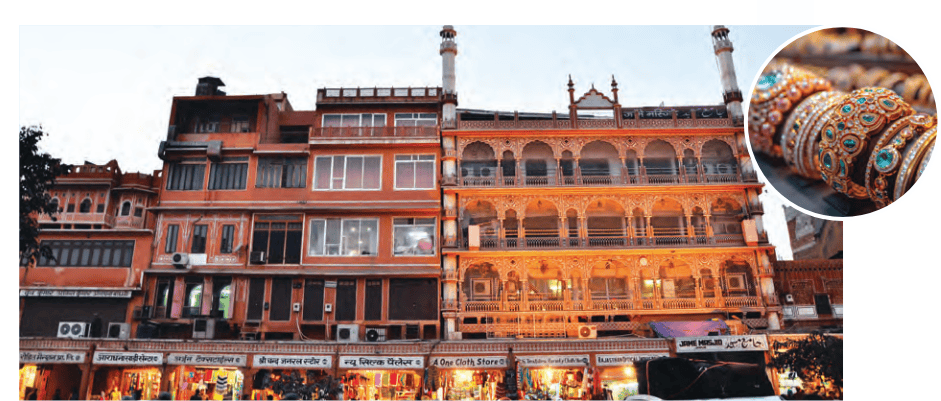
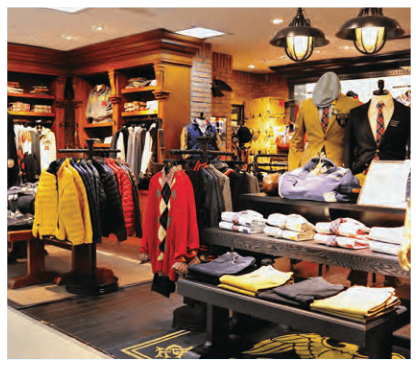
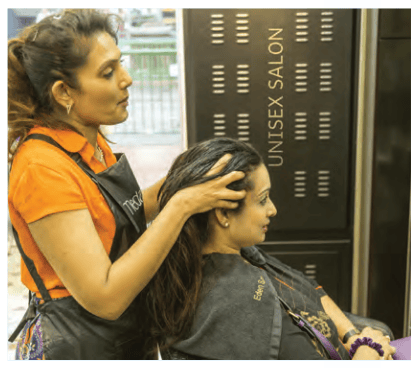
The wholesalers supply goods to the shops and stores located near households. These shopkeepers are called retailers. They sell goods to final consumers like us. Unlike wholesalers, retailers sell in smaller quantities, and the products are meant for consumption rather than resale. Retail stores also exist for services like salons, movie theatres, and restaurants. Retailers help increase the availability of goods and services to households.
In some cases, it may be difficult for wholesalers to reach a large number of retailers because of distances and terrains. Distributors help to bridge this gap. Do you remember the middlemen for milk in the AMUL story from Grade 6?
However, the distribution channel is different in the case of online markets. Here manufacturers send bulk quantities of their products to the warehouse of the business that sells through online apps. Consumers buy the product from the online option (website or mobile application). These businesses are called aggregators. The aggregator then packs the products and delivers them to the online buyer.
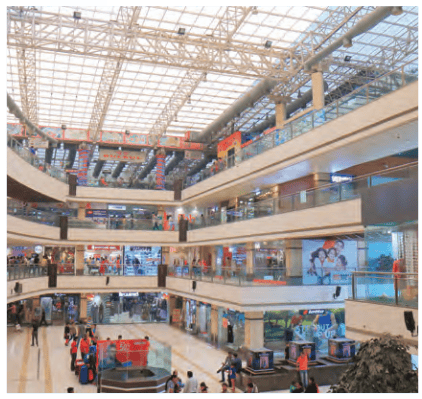
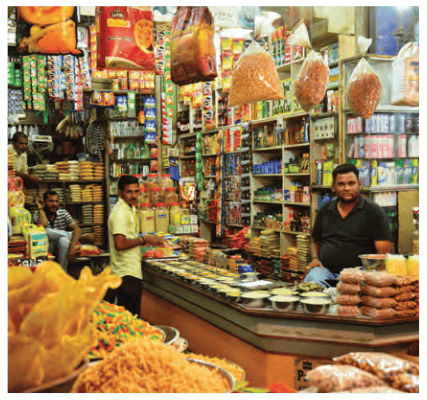
Let’s explore the chain of supply in physical markets for the textile market in Surat, Gujarat — Asia’s oldest textile market, and the city famously known as a textile hub.
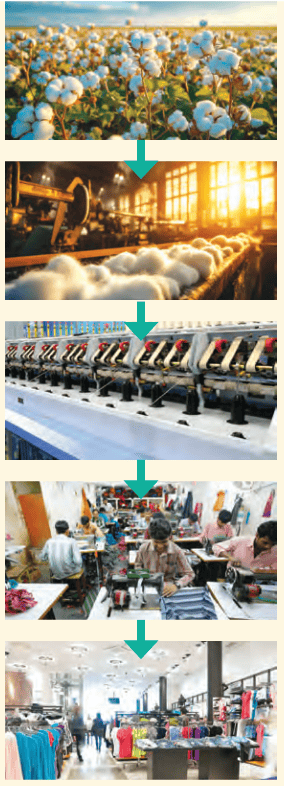
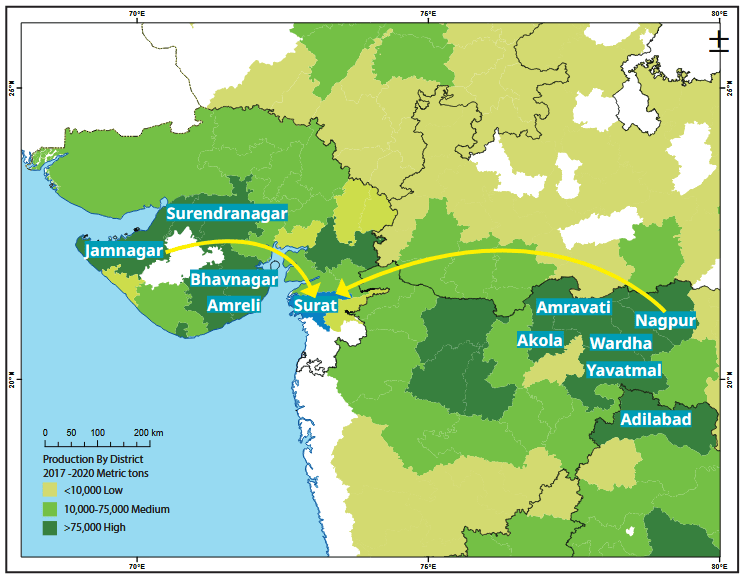
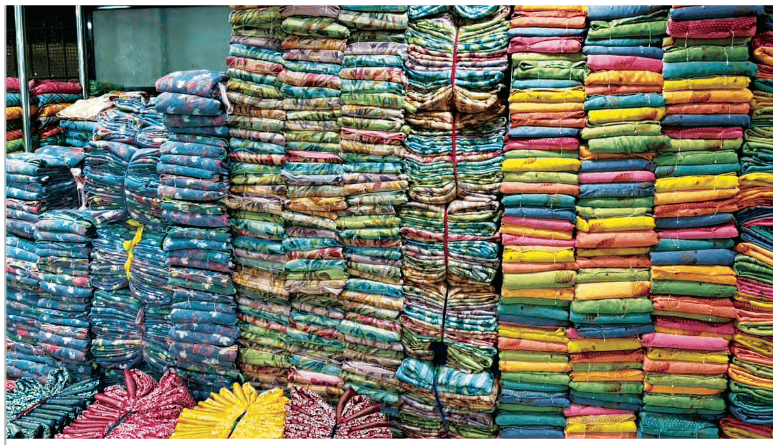
The Surat textile market consists of thousands of factories manu- facturing cotton and synthetic textiles. In the case of cotton textiles, raw cotton is received here through cotton mandīs from nearby states like Maharashtra, as well as from other parts of Gujarat. It is transformed into finished fabric or garments after processing at various stages — weaving on power looms, dyeing in processing units and so on. The product moves from one stage to another through markets — for woven fabric, for dyed fabric, and for finished products (sarees, or ready-made garments, for example).
The finished product from the fabric is traded by the manufacturing units in the wholesale market. The wholesalers are an important channel of supply as they oversee the distribution of products to small shopkeepers and big retail stores across the country and internationally. They also assess how much product is required by retailers. This helps maintain the stock of products with the manufacturers and ensures an uninterrupted supply of products to the end consumers.
LET'S EXPLORE
Ask your nearest retailer about a product, its place of origin, and the chain of suppliers in the process of the product reaching the shop. Trace this using a flow chart like Fig. 12.11 and share it in class.
DON'T MISS OUT
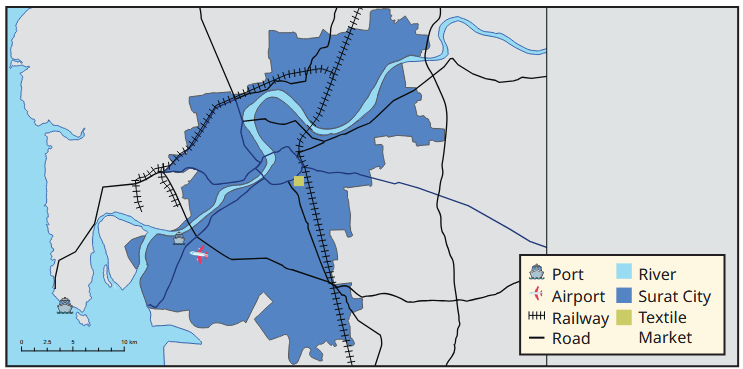
→ Apart from textiles, Surat is home to the largest diamond industry in the world. Approximately 1.5 million artisans are involved in activities like cutting and polishing diamonds on a gigantic scale. Trade flourished here from the 16th century onwards. The city’s location on the west coast led to the setting up of ports and road networks that continue to be important today. Communities of expert artisans and skilled persons have lived here for centuries; their skills have been passed on over generations making it a flourishing city.
→ Can you spot the port, highway and railway network on the map in Fig. 12.24? How do you think they helped make Surat a trading hub?
The Role of Markets in People’s Lives
As we can see from the sections above, markets play an important role in the economic life of the people. It facilitates transactions between producers and consumers. It helps individuals, households and businesses access goods and services that they need and cannot produce themselves.
THINK ABOUT IT
We have discussed different dimensions of markets. Can we imagine what life might be like without markets? What would happen if farmers did not bring rice, wheat, dal, vegetables and fruits to the market? What would happen if the producers of cloth in Surat could not procure inputs like cotton from markets?
In this section, we will explore a few other dimensions of the role of markets.
Aakriti is a professional artist who creates oil paintings on canvas. Her paintings are appreciated, but she finds it difficult to find buyers. She is worried about where to sell the paintings and what price she should offer them for. Unlike the case of guavas, there are fewer local buyers and sellers for artwork.
Can you think of other products which do not have a ready market? How does it affect those willing to buy or sell? What are the different ways in which artists can find buyers for their work today?
How markets benefit society
LET'S EXPLORE
Consumers prefer to buy refrigerators that use less electricity. When a large number of consumers begin to ask for refrigerators that use less electricity, what do you think happens in the network you saw in Fig. 12.11?
The producers get an indication as to what consumers would buy. They produce refrigerators which use less electricity. This benefits society through the production of energy-efficient refrigerators.
Although buying and selling is an economic activity that involves monetary exchange, interactions in the markets often move beyond just enquiring about the product or service or negotiations between parties.
Often, a relationship develops between buyers and sellers that continues even across generations. Some families have long-lasting trusted relationships with their tailor, jeweller, and doctor over decades. Many families in India maintain an account with the local grocer that is settled at the end of the month.
So, while the primary role of the market is to promote economic activities, it also has non-economic significance in many people’s lives.
Mother’s Market, Ima Keithal in the Meitei language of Manipur, is a unique market in Imphal. About 3000 women own and run all the shops in this market. They sell vegetables, clothes including traditional Manipuri attire, hand-loom and handicrafts, local produce, and daily essentials that people in the city and the surrounding areas require. On one hand, the market provides employment, becoming an important source of income for thousands of families; on the other hand, the market is a melting pot of cultures. People from different communities come together to exchange ideas and enjoy shared traditions.
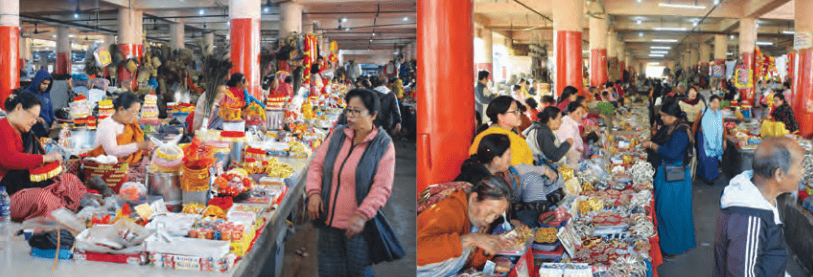
Fig. 12.26. Ima Keithal of Imphal
DON'T MISS OUT
There are many traditions followed even today that go beyond just buying and selling. In south India, the sellers of haldi and kumkum (turmeric and vermilion) give a small quantity of haldi and kumkum separately, at no charge, as a mark of auspiciousness and good wishes to the buyer.
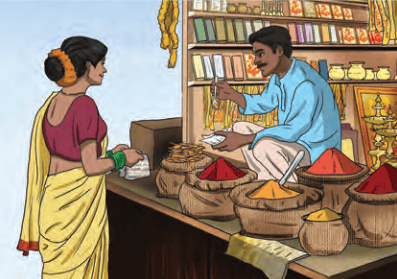
Fig. 12.27
LET'S EXPLORE
Have you observed any such practices in your community or neighbourhood? Describe the practice as a drawing or in a short paragraph.
Government’s Role in the Market
Markets function through interactions of demand from buyers and supply by sellers. However, there are some situations in which this may not work very well. The government plays a crucial role in such situations. It monitors the interaction between consumers and producers, and fair determination of price.
Supply: Quantity of a product or service that sellers are willing and able to sell at a particular price at a given time.
Controlling prices for protecting buyers and sellers
The government controls the prices of certain goods. For example, it sets the maximum price that the seller can charge. Several essential goods and services, such as lifesaving drugs, have an upper limit on their prices. Another instance is where the government sets the minimum price at which essential agricultural products like wheat, paddy and maize can be sold. This ensures that farmers do not incur losses. The government also sets minimum wages for work done by employees so that employers make fair payments to them.
However, the government needs to carefully implement such price limits. If the price is too low, producers would not have any motivation to produce. If the prices are too high, consumers would be disadvantaged.
LET'S EXPLORE
→ Onions are an important part of the cuisine in most parts of India. In some seasons, the supply of onions comes down in the market. What do you think happens to the price of onions when this happens?
→ What will happen if the people supplying onions do not bring the required quantities to the market? What do you think the government should do in this situation?
Ensuring quality and safety standards
The government has a role in ensuring the welfare of consumers and protecting them from unfair practices. The government ensures that manufacturers follow the required quality and safety standards while producing goods and delivering services. For instance, pharmaceutical companies manufacture medicines for treating diseases. The government sets procedures for approvals of medicines and conducts sample testing to check if the produced drug meets standards of quality. These regulations ensure the quality and safety of the drugs so that there is no risk to the consumers’ health.
Mitigating the external effects of markets
Markets sometimes have significant effects beyond the selling and buying. For example, the markets for certain goods require production in factories that could pollute the environment. The government plays a crucial role in understanding and controlling such effects of markets. For example, what happens when the manufacturing of certain items, like single-use plastics, pollutes the environment and poses health risks to consumers? In such cases, the government intervenes by implementing strict regulations to mitigate these negative effects.
Similarly, the government puts in place systems to monitor the weights and measures of the packaged products to check the net quantity contained in the package.
THINK ABOUT IT
The practice of rulers protecting consumers is not a phenomenon of modern India. Kauṭilya’s Arthaśhāstra includes instructions for the traders trading in clarified butter (ghee). It mentions that buyers shall be given 1 / 50 part more as mānasrāva to compensate for the reduction in quantity owing to (the ghee)…sticking to the measuring can.
Governments make rules to ensure markets work fairly and consumers are not exploited. However, too many rules can make it difficult for markets to function properly.
Providing public goods
Producers make and sell goods and services to be able to make a profit. However, there are some goods and services that producers do not expect to make a profit on; for example, public parks, roads, policing, and so on. In addition, you read about the rights that citizens have to certain welfare provisions in a previous chapter. So, the government provides these public goods and services.
THINK ABOUT IT
- What are the other areas where you can see the government being involved in the markets?
- Are there areas where government intervention needs to be reduced? Discuss with family or relatives.
How can consumers assess the quality of products and services?
Markets enable access to a wide variety of goods and services to consumers. How will consumers decide what they would like to buy?
THINK ABOUT IT
There is a marbles competition in your neighbourhood with the team in the next street. You want to buy new marbles for the competition. You have ₹150 saved up. You go to a shop to buy the marbles. What are the qualities you would look for in the marbles so that you can win the competition?

Fig. 12.28
Did you think about the price, size of the marbles, strength and the attractive colours? As you can see, every consumer would need to assess the quality of products that they are buying.
In the following section, we will look at various ways in which this can be done.
Suppose your parent asks you to get a 1 kg packet of gram flour from the nearby grocer. There are different types of packets available at the shop such as the one shown below. Observe it carefully. How would you determine that the quality of gram flour meets the required standards?
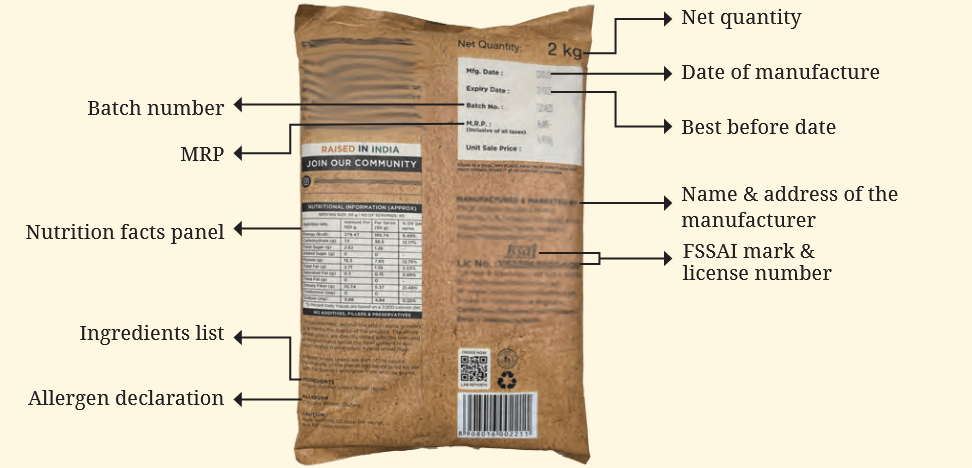
Fig. 12.29
Did you notice the FSSAI logo?

FSSAI means Food Safety and Standards Authority of India and its symbol on the food packets and cartons indicates that food has been tested by the government and is safe to consume.
Government agencies provide such certifications that help buyers to assess product quality. Their presence on the product or its package confirms that the product fulfills the minimum quality standards.
Let’s see what each of these labels mean:
■ Just like FSSAI, there is Indian Standards Institution issued by the Bureau of India Standards (BIS). This symbol is generally present on electrical appliances, construction materials, automotive tires, paper, etc. This ensures quality and that the product is safe to use.

■ Similarly, AGMARK (Ag for agriculture) is the certification mark for agricultural products like vegetables, fruits, cereals, pulses, spices, honey, etc.
■ Electronics items like TVs, laptops, air conditioners, etc. have BEE STAR rating. BEE stands for Bureau of Energy Efficiency. These ratings are printed on the product package as stars. Higher stars indicate that the appliance uses less energy and electricity. This is good for consumers as the electricity bill would be lesser and good for the environment as well.
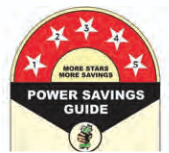
LET'S EXPLORE
Check out the BEE Star labels on the electronic devices in your home and make a chart of all the devices in an increasing order of their energy efficiency.
On the other hand, purchase decisions of buyers are influenced by the reputation of the product. This is built through word of mouth. Have your family members bought some product because their friends or relatives suggested it to them?
Online reviews and feedback from other consumers about products and services help us decide whether to buy or not while shopping online.

Fig. 12.30
Before we move on...
⇒ Markets facilitate exchange between buyers and sellers at a mutually agreed price which is determined by the demand from buyers and supply by sellers.
⇒ Markets have a chain of participants like manufacturers, wholesalers, distributors and retailers that enables supply of goods to the final consumers.
⇒ Markets are also places for interaction as they bring people together and enable exchange of ideas and traditions.
⇒ The government plays a regulatory role in the markets to promote quality standards for products and services and fair practices in the market. However, consumers can also assess the quality of products and services through certification marks on the products from government agencies and through online reviews.
Questions and activities
1. What are the main features of a market? Recall a recent visit to a market to purchase a product. What are the different features of a market that you observed during this visit?
2. Remember the epigraph from a famous economist at the beginning of the chapter? Discuss its relevance in the context of the chapter you have read.
3. In the example of buying and selling of guavas, imagine that the seller is getting a good price, and is able to make a profit. He will try to get more guavas from farmers to be able to sell them at the same price and increase his earnings. What is the farmer likely to do in this kind of a situation? Do you think he will start thinking about the demand for guavas in the next season? What is likely to be his response?
4. Match the following types of markets with their characteristics:
| S.No. | Markets | Criteria |
|---|---|---|
| 1 | Physical market | Goods and services flow outside the nation’s boundaries |
| 2 | Online market | Deals in bulk quantities |
| 3 | Domestic market | Serves the final consumers with goods and services |
| 4 | International market | Requires physical presence of buyers and seller |
| 5 | Wholesale market | Buyers and sellers meet virtually and can transact at any time |
| 6 | Retail market | Lies within the boundaries of a nation |
5. Prices are generally determined by the interaction between demand from buyers and supply by sellers. Can you think of products where prices are high despite lesser number of buyers demanding the product? What could be the reasons for that?
6. Look at the real life situation that a retail seller of vegetables encountered: A family came to shop for vegetables. The price of beans that the seller on the cart was offering was ₹30 / kg. The lady started to bargain with the seller to bring the price down to ₹25 / kg. The seller protested and refused to sell at that price saying he would make a loss at that price. The lady walks away. The family then goes to a super bazaar nearby. They buy vegetables in the super bazaar where they pay ₹40 / kg for the beans that is neatly packed in a plastic bag. What are the reasons that the family does this? Are there factors that affect buying and selling which are not directly connected to price?
7. There are some districts in India that are famous for growing tomatoes. However, during some seasons, the situation is not good for farmers. With a large quantity of harvest, there are reports of farmers throwing away their produce and all their hard work going to waste. Why do you think farmers do this? What role can wholesalers play in such situations? What are the possible ways of ensuring that the tomatoes are not wasted, and the farmers are also not at a loss?
8. Have you heard about or visited a school carnival / fair organized by your school or any other school? Discuss with your friends and teachers about the kind of activities organized by students there. How do they conduct selling and negotiation with the buyers?
9. Choose any 5 products and check out the label with the certification signs discussed in the chapter. Did you find products that did not have a logo? Why do you think this is so?
10. You and your classmates have manufactured a soap bar. Design a label for its packaging. What in your opinion should be mentioned on the label for the consumer to know the product better?