
5India,
a Home to Many
"ayam nijah paro veti gaṇanā laghucetasām
udāracharitānām tu vasudhaiva kutumbakam
“This is mine, that is not mine,” so think the narrow-minded.
For the noble-minded, the whole world is family." — Hitopadeśha
Learn to make the whole world your own. No one is a stranger, my child; the whole world is your own."
— Last message of Sri Sarada Devi
(spiritual consort of Sri Ramakrishna Paramahamsa)
The Big Questions?
- What has made India a home for people from different parts of the world?
- Why did oppressed or persecuted people from other countries seek refuge in India?
- What is it about the nature of Indian society that enables people to assimilate here?
In the chapter “Unity in Diversity, or ‘Many in the One’ ” (Grade 6 Social Science textbook), we read that “many Indians may be called migrants, in the sense of people not living near their birthplace or with their original community.” In this chapter, we will explore another type of migrants — people who came to India from other parts of the world and settled here, adding another dimension to the diversity. There have been many such migrant communities in India’s history, up to recent times. We cannot cover them all in this chapter and have selected only a few representative examples.
THINK ABOUT IT
-> Imagine this scenario — A stranger knocks at your door at midnight. It is raining heavily outside, and the stranger seeks shelter for the night claiming that his car broke down while he was driving in the vicinity. Your family goes into a huddle to discuss the pros and cons of letting a stranger into the house at night. Form two groups to discuss the arguments for and against in this scenario.
-> Now extend this scenario to a country like India — when refugees seek shelter in India, will similar arguments apply?
The Story of Indian Jews
Jews sought sanctuary in India in several waves. The persecution of Jews in various countries led to them having to flee their homes. India has proved to be a safe haven where they can practise their faith without fear.
The Bene Israel are a Jewish community that lived on the Konkan coast, just south of Mumbai. According to some scholars, they came around 175 BCE, from the ancient Kingdom of Israel. On their journey, their ship was caught in a storm and shipwrecked near the coast. The survivors settled in India and started a new life. Although they lost their holy books, they remembered their prayer, which says there is only one God. Over time, the Bene Israel grew to become the largest Jewish community in India, numbering over 25,000 shortly after India gained independence.
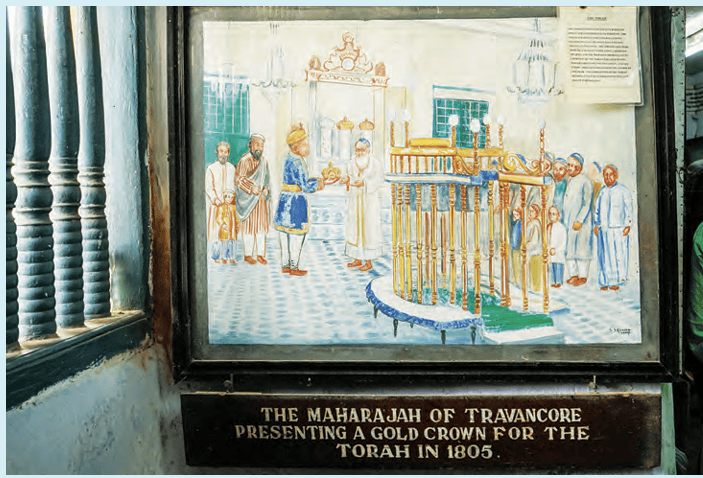
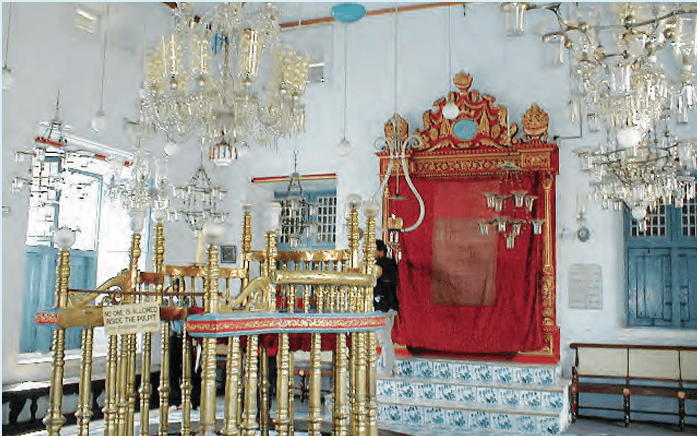
Several groups arrived much later, between the 12th and 19th centuries, again facing persecution in their respective countries. Some Jews settled near Cochin (present-day Kochi). The Raja of Kochi granted them land free of cost “as long as the world, sun, and moon endure.” The Jews built a synagogue, which enabled them to practise their faith even as they became part of the Indian society.
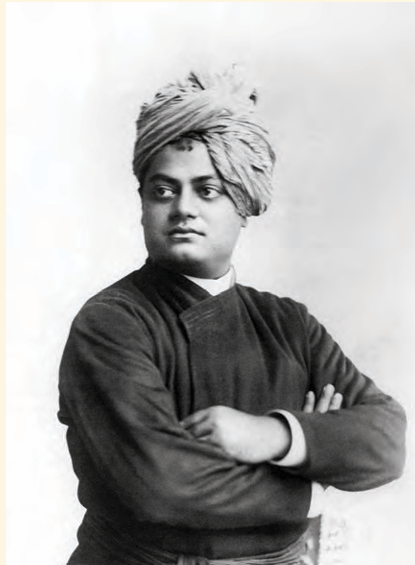
Swami Vivekananda, in his speech delivered at the World Parliament of Religions held at Chicago in 1893, had these memorable words:
"I am proud to belong to a nation which has sheltered the persecuted and the refugees of all religions and all nations of the Earth. I am proud to tell you that we have gathered in our bosom the purest remnant of the Israelites, who came to Southern India and took refuge with us in the very year in which their holy temple was shattered to pieces by Roman tyranny. I am proud to belong to the religion which has sheltered and is still fostering the remnant of the grand Zoroastrian nation. "
LET'S EXPLORE
Look at the two pictures below. Is the place shown in both the photographs the same? Why is the Maharaja of Travancore (the name of the kingdom in and around Kochi at that time) giving such an expensive gift to the Jewish synagogue for the Torah (religious book of the Jews)?
LET'S EXPLORE
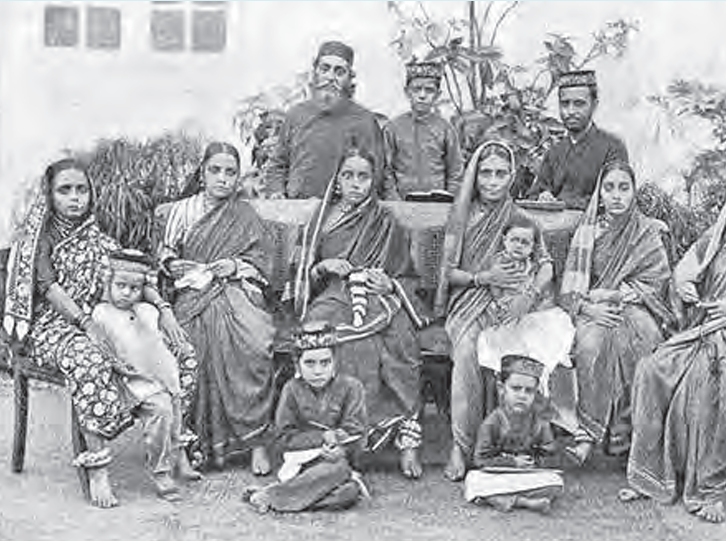
Observe the picture Fig. 5.4. What clues do you get about the integration of the Jewish community into Indian society over time?
The Syriac Christian Community
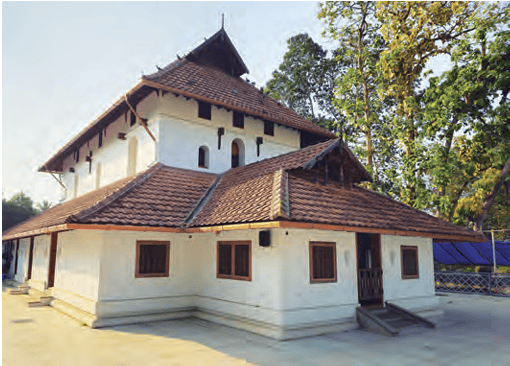
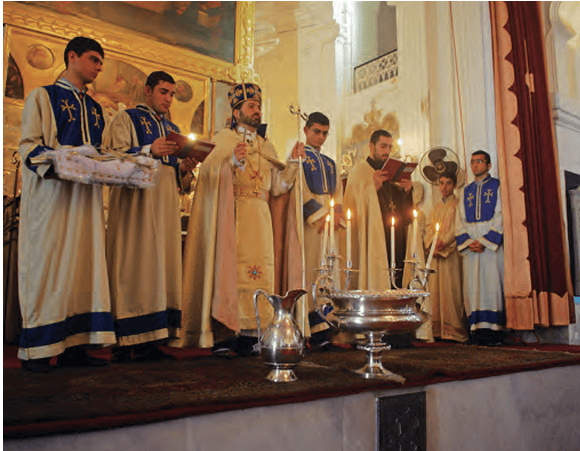
From the 4th centuries CE, some Christian groups who used the ancient Syriac language in their worship and traditions faced difficulties in West Asia. Under the Roman Empire, they were sometimes treated as heretics because some of their beliefs about Christ were different from those of the official Church. In the Persian Empire, they were suspected of secretly helping the Romans, who were enemies of Persia, and were persecuted as a result. To escape such persecutions, some Syriac Christians travelled eastward along trade routes and reached the Malabar coast of India (present-day Kerala), where they could live and worship freely. In India, Syriac Christians are also called ‘Syrian Christians’; they are divided into several sects.
LET'S EXPLORE
Observe the pictures below. What are the clues you get about the integration of the Syriac Christian community into Indian society?

The Legend of the Parsi Wise Man, Milk, and Sugar
The Parsis (followers of Zoroastrianism) came to India primarily to escape religious persecution in Persia (modern day Iran) after the Islamic conquest of Persia in the 7th century CE. Zoroastrianism was the state religion of the mighty Sassanid Empire (3rd to 7th centuries). After the empire fell to Arab Muslim forces in the middle of the 7th century, Zoroastrians faced religious persecution in many forms — forced conversions to Islam, religious taxes (jizya), destruction of their sacred fire temples, as well as social and legal marginalisation. They were, therefore, forced to flee Persia. Unable to freely practise their faith, groups of Zoroastrians made the courageous choice to leave their homeland and sail across the Arabian Sea. Several groups of them reached India’s western coast (in present-day Gujarat) between the 8th and 10th centuries.
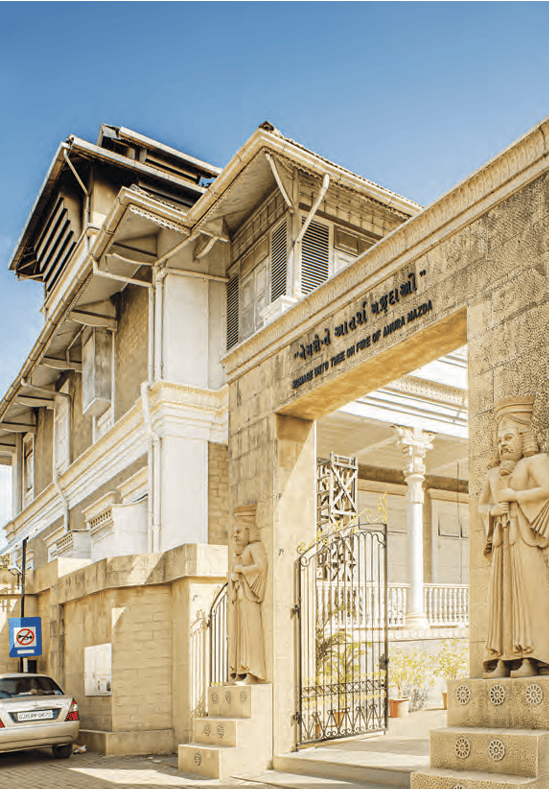
The Parsis carried little with them — their sacred fire and some hope to make a home in a place they had heard was safe, India. Raja Jadi Rāṇā was the king of Sanjān, in coastal Gujarat. According to a legend, the Parsis approached the Raja for a safe place to stay. Since they were unfamiliar with each other’s languages, the Raja showed them a jug full of milk, indicating that the kingdom was full and could not accommodate more people. A wise man among the Parsis took a spoon of sugar and dissolved it into the milk without allowing the milk to spill over. Jadi Rāṇā was pleased and provided a secure place for them to settle in his kingdom.
THINK ABOUT IT
What do you think dissolving the sugar in the milk without spilling it meant?
The ancient sacred fire continues to burn in Udvada, a short distance from where the Parsis first arrived. They combined their ancient traditions with those of the local culture. Today India has the largest population of followers of Zoroastrianism in the world. The Parsis continue to live in India and enrich various aspects of its society.
LET'S EXPLORE
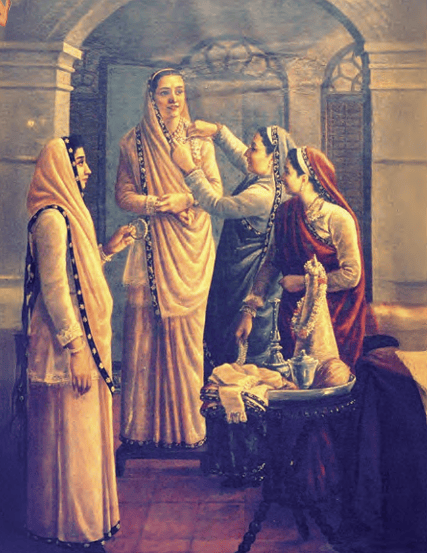
This painting of a Parsi bride getting ready for her wedding shows many aspects of Indian culture. Do any of them seem familiar to you? Based on what you see, can you draw any conclusions about the integration of Parsi culture in India?
There are deep connections between the philosophy of Zoroastrianism and India’s ancient Vedic schools of thought. For example, they share the same concept of a cosmic order holding the universe together. Their rituals also show similarities, since both give much importance to fire worship.
There are also interesting differences: in the Vedas, the devas are beneficial gods; in the Avesta, the Parsis’ ancient sacred text, daevas are evil gods who drive towards chaos; the Avesta’s chief god is Ahurā, but in India (after the Vedic period), asuras are seen as harmful powers or demons.
As you can see, there are also similarities between the two languages. Indeed, Old Avestan (the language of the Avesta) and Vedic Sanskrit share many word roots and also grammatical features. A few more examples (with the Vedic word on the left and the Avestan word on the right):
- soma (a divine drink) = haoma
- hotar (a priest) = haotar
- yajña (sacrifice) = yasna.
There is much more to show that there are deep spiritual and linguistic ties between ancient Iran and ancient India.
The Arab Merchant Community
Arab merchants came to India from the 7th century onward, and many of them settled along the west coast in places like Kerala, Gujarat, and Karnataka. They traded spices and other goods, married local women, and formed new communities. In Kerala, they became part of the Mappila Muslim community, and helped build India’s oldest mosque, the Cheraman Juma Masjid. These early Arab settlers in India came as peaceful traders, not as conquerors. They brought new ideas, culture, and religion, and played an important role in India’s history of trade and cultural exchange.
The African Connection
We have a different kind of story with the Siddis. The Siddis are
of African origin; enslaved there, they were brought to India as
slaves of Arab, Portuguese, and British traders between the 7th
and 19th centuries. In the 18th century, some Siddis gained
prominence in Muslim rulers’ armies and briefly controlled parts of Bengal. Their cultural identity represents a fusion of
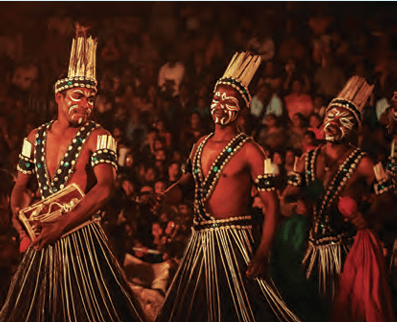
African and Indian traditions. The Siddis have a distinctive dance 
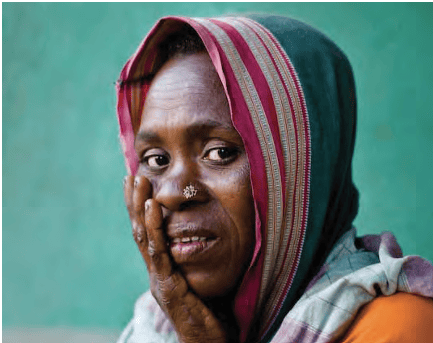
accompanied by African-style drumming. Over time, they have
adapted their language to regional influences and integrated
African religious practices with adopted faiths of Hinduism,
Islam, or Christianity. The Siddis are designated as a scheduled
tribe. However, the Siddis’ overall economic condition remains
poor and efforts are being made to provide them with better
access to education and livelihood options.
LET'S EXPLORE
What clues do you get about African and Indian cultural integration from the pictures here and above? Identify and name a few features that are distinctly Indian.

Hirabai Lobi was from the Siddi
community that settled in Gujarat.
She worked hard for the upliftment
of the women of her community,
connecting them with banking
services, educating them on organic
farming and other livelihood
options. She was awarded the
Padma Shri in 2023 for her selfless
service to the community.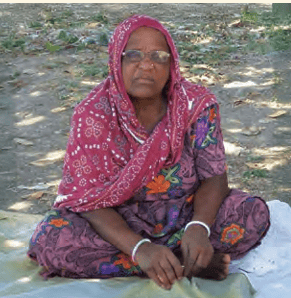
The Armenians in India
Armenia is a relatively small, mountainous country located between Turkey and Azerbaijan, just north of Iran. Centuries ago, Armenian merchants traded in Indian spices and fine muslins. There is some historical evidence of them establishing a first settlement on the Malabar coast in the 8th century. During the time of the Mughals in the 16th century (you will meet them in Grade 8) many Armenians from Persia gained patronage from the emperors and began developing settlements in India.
The earliest such Armenian settlement was in Agra where the Mughal emperor, Akbar, gave them permission to build a church and follow their Christian religious practices. Armenians began to play important roles in the Mughal royal household, the army, as well as the administration during the time of several Mughal emperors. For example, Abdul Hai was Chief Justice in Akbar’s court while Lady Juliana was a doctor in the royal palace.
The Armenians also settled in Surat, Kolkata, and Chennai, building schools, churches, and cemeteries, and creating a lasting cultural impact. Kolkata became a major Armenian hub. The 18th-century Armenian College and Mother Mary Church continue to be active. Their story reflects India’s tradition of embracing diverse communities seeking refuge and prosperity.
The thriving trade routes of Madras (present-day Chennai), drew Armenian merchants who settled there around the mid-17th century. They became influential in commerce, especially dealing in silk, spices, and precious stones, and left a lasting mark on thecity’s economic and cultural history. Armenian Street in George Town memorialises their presence, while the St. Mary’s Armenian Church, built in the mid-18th century, stands as a symbol of their faith. Though the once-flourishing Armenian population has dwindled over the centuries, a handful of families and heritage groups continue to preserve their architectural, mercantile, and spiritual legacy in Chennai.
The Baha’i Community in India
In the mid-1800s, a new religion called the Baha’i began in
Persia (modern-day Iran), led by a man named Baha’u’llah. His
teachings spoke of unity among all people and harmony between
religions. The ruling
religious leadership in
Iran, however, branded
them as heretics because of their different beliefs, 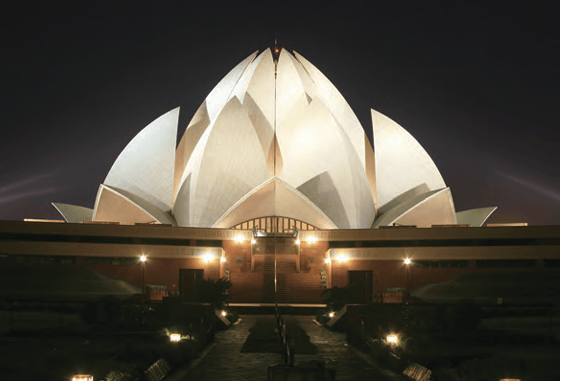
and they were treated
badly. Some Baha’is
looked for safer places to
live, and one of the first
places they came to was
India. Baha’is had started
arriving in India during
the late 19th century. Over
the years, many Indians joined the faith. The Baha’is welcome
people of all religions and backgrounds. Though Iranian Baha’is
came to India to escape danger, most Baha’is here today are
Indians who believe in the faith’s message of unity and love.
The ‘Good Maharaja’ and the Polish Children
If you happen to visit the Good Maharaja Square in Warsaw, Poland, you may be surprised to see this monument (Fig. 5.15).
There is an inspiring story behind this. Poland was invaded during the Second World War, which took place between 1939 and 1945. Thousands of families were torn apart, and many children were orphaned. Digvijaysinhji Ranjitsinhji Jadeja, the Maharaja of Nawanagar State (present-day Jamnagar), was touched by this tragedy. He mobilised the Red Cross and other organisations to help him rescue the children and take them to Jamnagar, and provided them with a safe place to stay, food to eat and cared for them. He is credited with saving the lives of around a thousand Polish orphans between 1942 and 1946. Several thousand Polish refugees fleeing from other areas were also welcomed to stay in the safety of his state. The children and others returned home safely after the war ended.
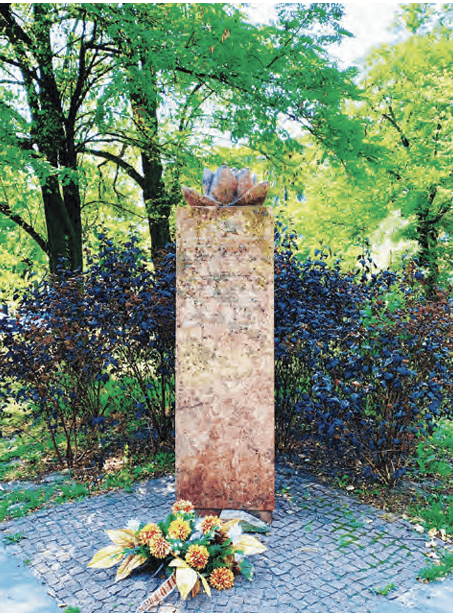
In the early 21st century, his service to the people of Poland was recognised by the President of Poland and the monument was constructed in the Maharaja’s honour. India was a home away from home, even if for a brief period, for the orphaned children.
Tibetan Refugees in India
Located on the other side of the Himalayan range, Tibet is India’s northern neighbour. In the 7th century, the ‘Land of Snows’, as Tibet is sometimes called, became a centre of Buddhism when its king embraced the Buddha’s teachings. Gradually, despite a few setbacks, Buddhism expanded in Tibet.
During the 12th and 13th centuries, Turko-Afghan military invasions in eastern India led to the destruction of Nālandā and other Buddhist centres of learning (see ‘Turning Tides: 11th and 12th Centuries’ in this textbook). Many monks left for Tibet, often taking precious manuscripts of Sanskrit texts with them. From the 15th century onward, the Dalai Lamas, each one said to be his predecessor’s reincarnation, assumed a greater role, eventually becoming spiritual heads and (from the mid-17th century) Tibet’s rulers.
DON'T MISS OUT
Tibetans, soon after taking refuge in India in 1959, started propagating their traditional system of medicine called Sowa Rigpa (also known as ‘Art of Healing’); it was codified in the 8th century CE by a medical council held near Lhasa in Tibet, and blends ancient principles and practices of Ayurveda with inputs from China, Central Asia, Persia and even Greece.
Today, Tibetan medicine remains popular in Himalayan regions, including Nepal and Bhutan. In India, institutions like Men-Tsee-Khang in Dharamshala (Himachal Pradesh) practise this system to treat chronic diseases and manage epidemics. It has also been integrated in the Government of India’s AYUSH programme, which supports traditional and indigenous systems of medicine, including Ayurveda, Yoga and Naturopathy, Unani, Siddha, Sowa Rigpa, and Homoeopathy.
From 1950 onward,
the People’s Republic
of China overran Tibet
in several waves, even
tually annexing it.
In 1959, following a
popular uprising in
Lhasa (the religious and
administrative capital of
Tibet at the time) against
the Chinese presence,
the 14th Dalai Lama was
advised to flee across
the Himalaya and take
refuge in India, where the government granted him asylum. Since then, he has been an 
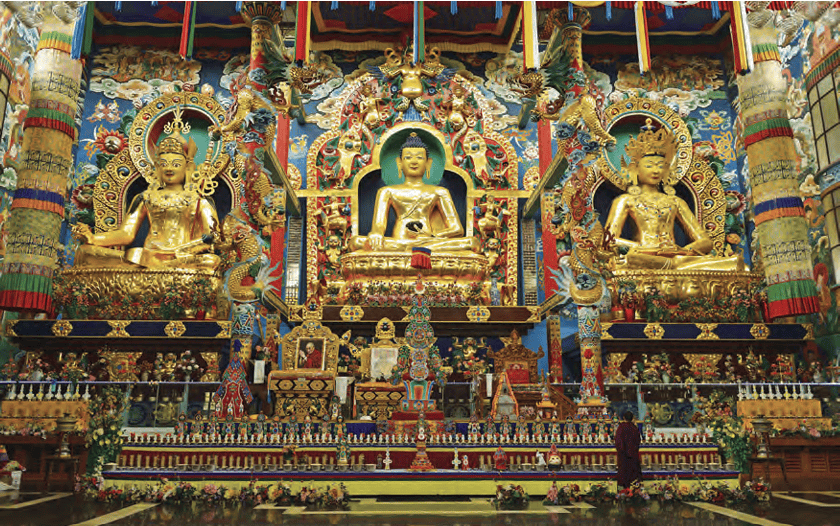
The Indian government rehabilitated the Tibetan refugees, provided education to their children, and facilitated the creation of Tibetan settlements to enable this community to make India a second home and preserve and promote its language, culture and heritage. The establishment in India, particularly in Karnataka, of many Tibetan monasteries patterned on the original ones in Tibet, created a space for Tibetan Buddhists to pursue their way of life and spiritual practices without fear or hindrance. Many non-government organisations have also supported the community by providing livelihood options. Over time, Tibetan refugees in India have become part of the society.
“The Whole World is Family”
These are a few examples of people making India their home, either seeking refuge or seeing opportunities for prosperity and a good life. These stories give us a glimpse of the culture of acceptance and inclusion that is a part of the Indian ethos. The idea of vasudhaiva kutumbakam, “the whole world is family”, is not just a slogan but has been a practice for millennia.
LET'S EXPLORE
Are there communities in your neighbourhood whose ancestors might have come to India centuries ago and made it their home? Have a class discussion on what their experience may have been.
How did India develop a reputation for being a compassionate country that welcomed people from different parts of the world and provided them with a place to call home? As we saw in earlier chapters in ‘Tapestry of the Past’, India had developed many schools of thought. Their core teachings included ideas like sarve bhavantu sukhinah or “may all creatures be happy”, atithi devo bhava or “a guest is like God”, and the value of compassion. The Karaṇīya Mettā Sutta (‘The Buddha’s Words on Loving-Kindness’) expresses the same sentiment beautifully in these words: “Even as a mother protects with her life her only child, so with a boundless heart should one cherish all living beings; radiating kindness over the entire world…”
LET'S EXPLORE
Identify similar values in any story or local tradition etc. known to you. You could ask your guardians or relatives too. Collect these stories and create a class manuscript. You could include illustrations.
Indian Values Beyond India
It is also striking to see how the Indian expatriate community has carried and practised similar values abroad. Wherever there is a sizeable community of Indians living today, it has been perceived as a peaceful, law-abiding, progressive and prosperous minority that contributes to the economy and integrates well in the society of the respective country.
While religious persecution has been experienced for centuries in many parts of the world, India developed a culture of peaceful coexistence and acceptance of various diverse faiths and schools of thought. This innate character of its people and culture has created a haven for the persecuted.
There are also many cases where people came intending to conquer India but were conquered instead by our diverse culture, rich philosophy and knowledge traditions, unique geography and climate, and thriving economy. We saw earlier (‘The Age of Reorganisation’ in Part 1 of this textbook) the cases of the Indo-Greeks and the Kuṣhāṇas, and there are more.
The idea of the fundamental unity of humankind is one of the core civilisational values of India, which can help the world resolve some of the crises we face today — wars, climate change, increasing inequality and discrimination.
Before we move on …
-> India has been a haven for people persecuted in their respective homelands, or simply looking for a new land with new opportunities.
-> India’s cultural values such as vasudhaiva kutumbakam, atithi devo bhava, or sarve bhavantu sukhinah are the basis for the sense of inclusion and acceptance that have enabled even small communities to find India a secure place and maintain here their traditions over centuries.
-> These values have universal relevance at a time when there are multiple crises facing the world.
Questions and activities
- On the outline of a world map, try to trace the routes that the communities mentioned in this chapter may have used to reach India. What types of physical geographies did they have to negotiate?
- What are the key values intrinsic to Indian culture that enable it to welcome people of different backgrounds?
- Homi Bhabha, Sam Maneckshaw, Ratan Tata, Fali Nariman, Nani Palkivala, and Cornelia Sorabji are a few names of Parsis who excelled in their respective fields. Find out more about people from other communities that made India their home and their contributions.
- Take up a class project. Divide the class into groups. Each group takes up a small project to study a little more about the communities that we have been listed here. Share what you have gathered with your classmates through one of these ways — drama, posters, song, painting, etc