
8Banks and the Magic of Finance
"The banker is not only a middleman; he is the producer of
a vital service, enabling entrepreneurs to transform ideas
into reality through credit." — Joseph Schumpeter, Economist
The Big Questions?
- What is financial infrastructure, and what does it comprise?
- What are the main functions performed by banks and how do they impact people’s lives?
- How does financial infrastructure contribute to a nation’s progress?
Introduction
In the previous chapter, we learned about India’s physical infrastructure, like roads, railways, and telecommunication, which support economic activities driven by money-related transactions. Do you recall the flow of money from shopkeepers to workers as salaries, who further spent it on essential items (chapter ‘From Barter to Money’ in Part 1 of this textbook)? How do these monetary transactions take place between people? Also, how is the development and maintenance of the vast physical infrastructure funded?
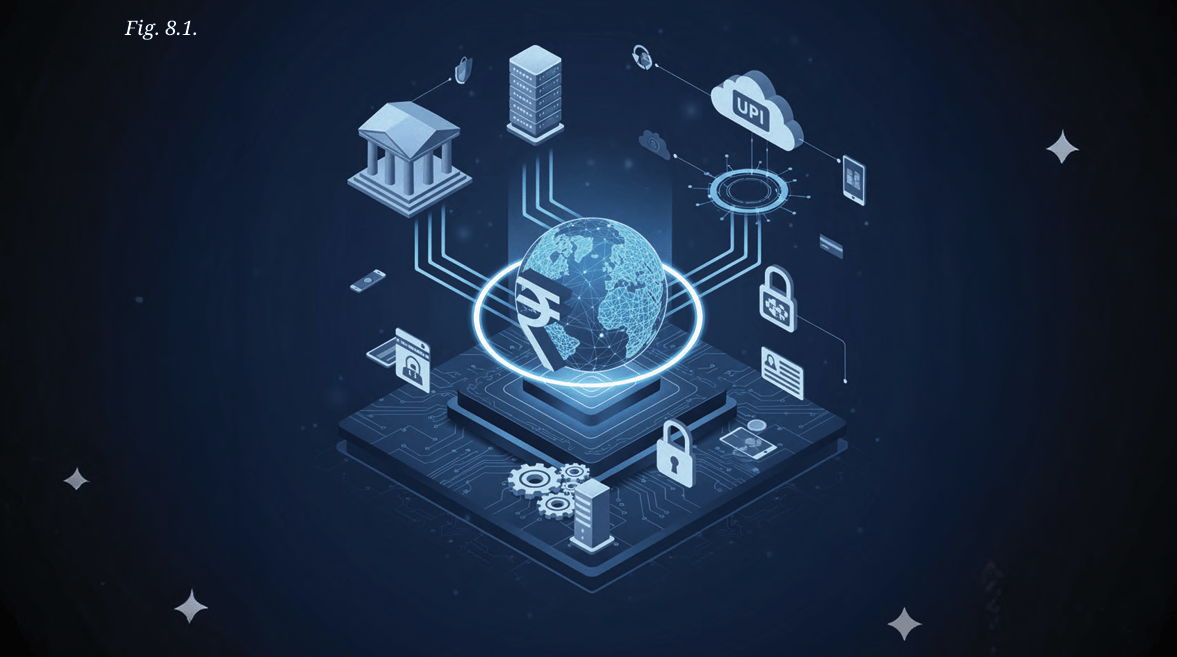
This is made possible by financial infrastructure — a network of banks, payment systems, stock markets, and other financial institutions that help people, businesses, and the government facilitate financial transactions and manage money. Let us find out more about them.
LET'S EXPLORE
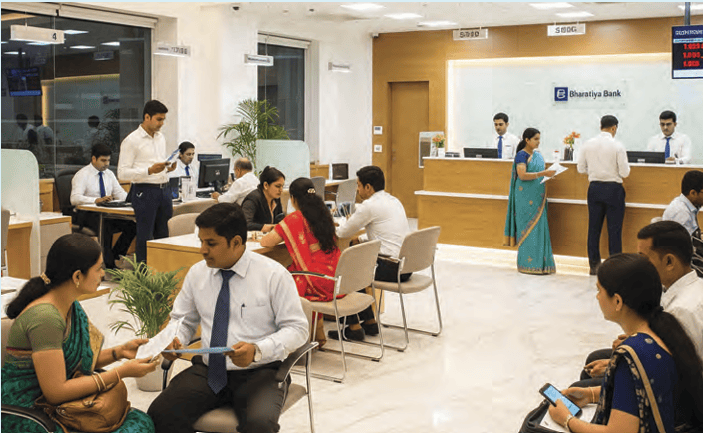
This picture is from a bank. What do you think the people are doing? Ask your family members if they have visited a bank and learn more about the activities there.
THINK ABOUT IT
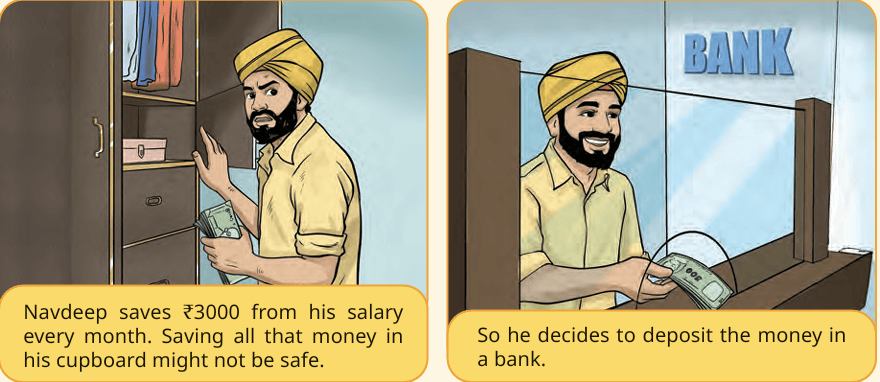
- Why does Navdeep think that saving at the bank is better than keeping cash at home?
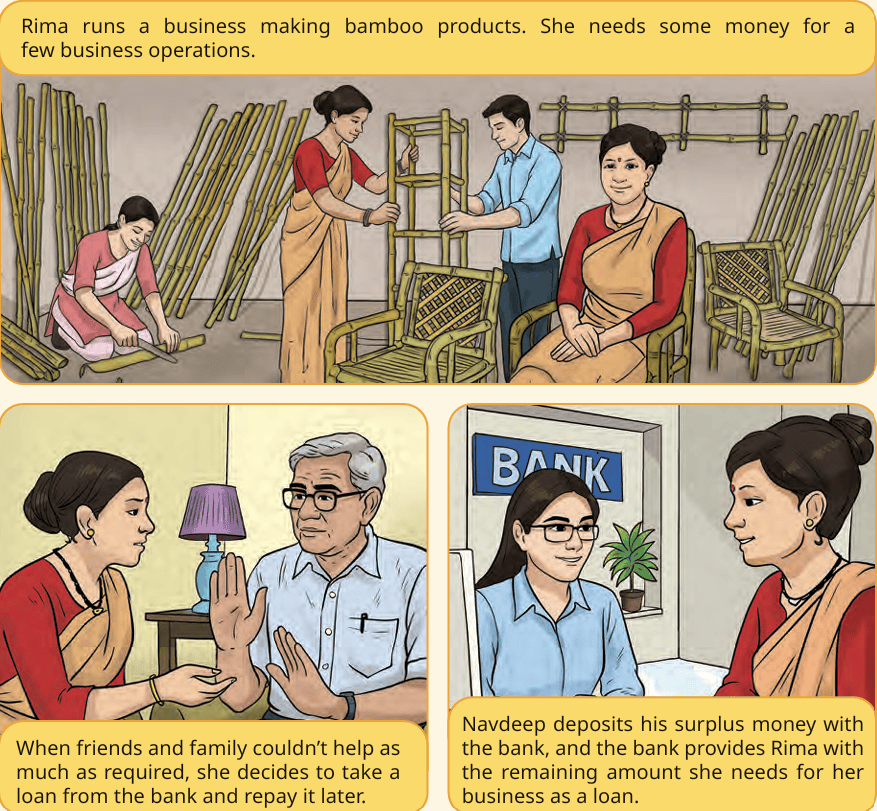
- Can Navdeep and Rima lend to each other directly without the bank? What could happen in that case? Discuss.
What are banks and what do they do?
Banks help make monetary transactions easy by offering services such as saving, withdrawing, and borrowing money. These services are used by a wide range of people, including farmers, shopkeepers, nurses, and also businesses and institutions. To use the services of a bank, one first needs to open a bank account. The person or business is then called a bank account holder, and the bank offers them several services. Let us learn about these services.
Hold deposits
A bank accepts and holds money (deposits) that people put into
Banks provide the following types of accounts:
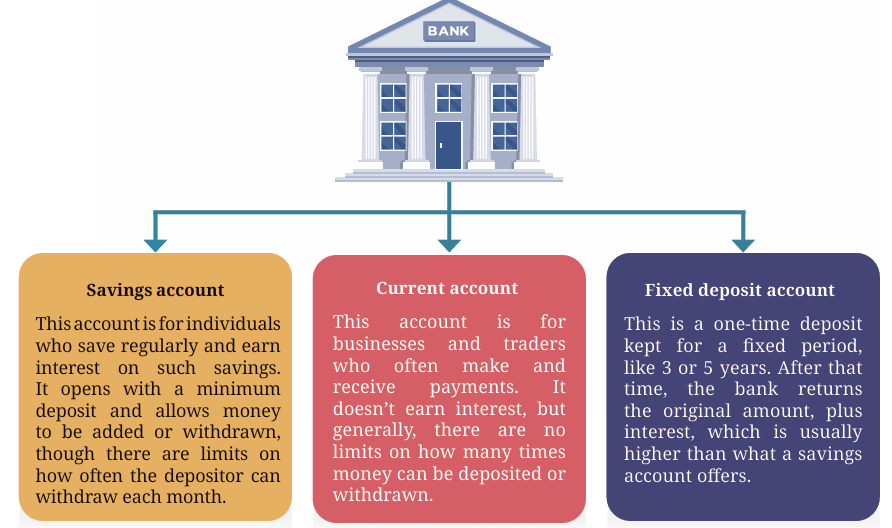
the bank account. They not only keep it safe for us but also lend it to businesses or other people. In return, the banks give us some extra money over a regular period (say quarterly or monthly or annually) in the form of ‘interest’, which helps the amount of our money saved to grow over time. Through this, banks encourage individuals to save.
Let us understand how your savings would significantly increase if you save for a long time.
Imagine you get ₹1000 on your birthday from your mother. You take it to a bank and deposit it in your account. The bank pays 6% interest on this amount each year if you don’t withdraw it. At the end of one year, you will have:
Original amount + one year’s interest, i.e.,
₹1000 + 6% of 1000
= ₹1000 + (6/100 × 1000) = ₹1000 + 60 = ₹1060.
If you don’t spend this money next year as well, you earn interest on ₹1060, not just ₹1000, which is 6% of 1060 = ₹63.60.
So, the total money at the end of the second year would be:
1060 + 63.60 = ₹1,123.60
So, you earn an interest not just on the original amount of ₹1000 but on the amount including interest earned in previous years. As you can see, the interest earned in subsequent years increases, from ₹60 in the first year to ₹63.60 in the second year,and so on. This process of earning interest on previous interest is known as compounding. If you continue saving for 12 years, your money will grow to ₹2012.20. This highlights how compounding is a powerful f inancial concept that helps your money grow exponentially over time.
The Magic of Compounding – The story of a King and a Sage
A king from Ambalappuzha, Kerala, known for his love for chess, once challenged a visiting sage to a game. The king offered any reward to the sage if he defeated him. However, the sage asked for a simple reward — one grain of rice on the first square of the chessboard, two on the second, four on the third, doubling each time for all 64 squares. The king was surprised at the sage’s small demand and agreed. But he lost the game to the sage and asked his courtiers to place the rice grains on each square of the chessboard as promised. The eighth square had 128 grains, which was the last square of the top row. The ninth square had 256 grains, the 10th had 512, the 11th had 1024 and so on. But as the grains kept doubling, the total grew significantly. By the 16th square, it was already 32,768 grains, and by the 32nd square, over 210 crore! The king realised how powerful exponential growth can be — but only after paying a heavy price. This story shows how compounding works, and how small amounts can grow into large sums over time!

THINK ABOUT IT
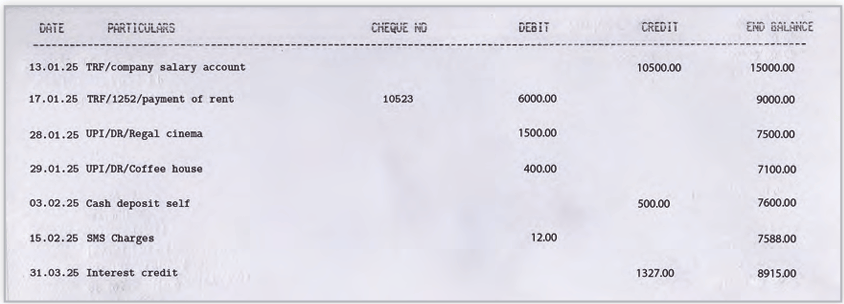
- How does one track so many transactions of deposits and withdrawals? The bank provides a diary-like document called a passbook that keeps a record of all the receipts and payment transactions. This can be updated regularly at the bank.
- Look at the passbook in Fig. 8.7. Observe all the particulars
under the expenses (debit) and income (credit). Why is
keeping records of financial transactions important?
Discuss in the class.
Offer loans or credit
Banks lend money to borrowers as loans for specific purposes such as buying a house or vehicle, funding education, etc. Businesses borrow money for purchasing new machinery and raw materials, transporting products, launching new products in markets, among other purposes. Just as banks pay interest on savings to depositors, they charge interest from borrowers on the loans they provide. After a specified period, the borrower repays the loan amount, along with the interest charged by the bank.
DON'T MISS OUT
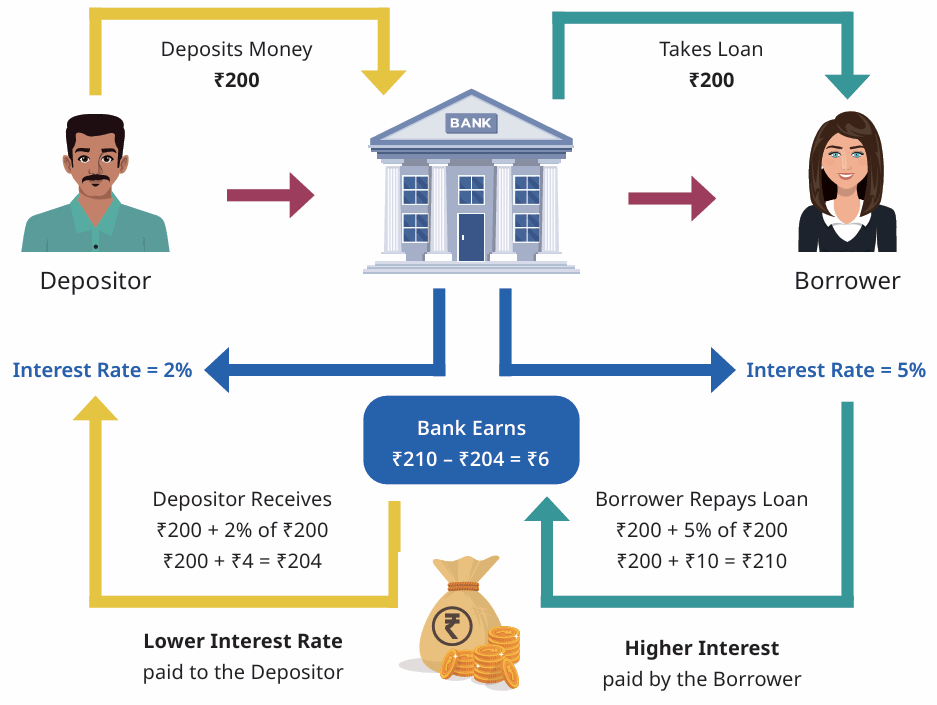
The banks pay lower interest rates on savings deposits to depositors and charge a higher interest rate on loans from borrowers. This difference in interest rate is a source of income for the banks. Let us understand this through an example.
Anand deposits ₹200 in his bank account, and the bank offers an interest rate of 2% on his savings. The bank lends the amount of ₹200 to Shreya and charges an interest rate of 5%. Shreya repays the amount of ₹10 (5% of ₹200) as interest on loan along with the original loan amount of ₹200, making the total ₹210. The bank pays ₹4 (2% of ₹200) to Anand as interest and earns ₹6. It is important to note that the banks have reserve money and do not lend all the deposits as loans to individuals or businesses.
How the Jan Dhan Yojana revolutionised banking in India
Before 2014, only 15 crore Indians had bank accounts, with most relying on cash. The Pradhan Mantri Jan Dhan Yojana, launched in 2014, aimed to give every Indian, especially low-income earners, access to a bank account without requiring a minimum balance or fees. Since then, over 50 crore accounts have been opened — mainly by women. Now, banking services are used by people from all walks of life. For instance, farmers borrow money to start a small business or expand their agricultural activities. Workers receive their wages directly into their bank accounts, and students who perform well academically receive scholarships from institutions into their accounts. Such direct transfers have reduced middlemen and ensure the timely disbursement of funds.
Other Financial Institutions
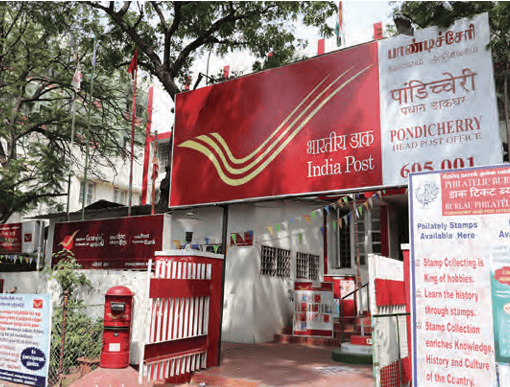
Apart from banks, Indian post offices offer a variety of financial services, including savings schemes such as National Savings Certificates (NSC), Kisan Vikas Patra accounts, and Sukanya Samriddhi accounts. Their vast network and presence, even in remote locations, make them a popular savings option.
There also exist other financial institutions that support specific sectors. For example, the Industrial Finance Corporation of India funds businesses in areas like power and textiles. National Bank for Agriculture and Rural Development (NABARD) supports rural development by funding banks that give loans for farming, village industries, and infrastructure like roads and irrigation.
With numerous banks and financial institutions, it is essential to have clear rules and regulations that everyone follows. But who sets these regulations?
How the Jan Dhan Yojana revolutionised banking in India
The Reserve Bank of India (RBI) is the bank that supervises the Indian banking system. It is also called India’s central bank. Countries have central banks which supervise and manage policies related to their banking system.
RBI was established in 1935 and performed some of the functions of a central bank. After Independence, the RBI was transferred to the Government of India, and has been functioning as the banker of banks, the central bank, since 1949. It maintains accounts of other banks and facilitates exchange of funds between them. It also provides loans to banks and the government.
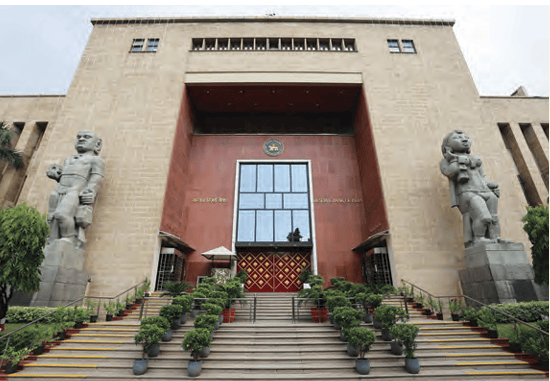
RBI sets rules and regulations regarding —
- Printing and distributing Indian currency like banknotes
- Fixing of the benchmark interest rates
Interestingly, the entrance of the RBI office in Delhi is flanked by the statues of a yakṣha and yakṣhi. According to Hindu mythology, yakṣhas belong to a class of demigods who act as the guards of treasures for Kubera, the God of Wealth. RBI could be compared to Kubera, with its sole right of issuing currency and by being a banker to banks!
THINK ABOUT IT
- In ancient India, temples acted like banks. Although they did not accept public deposits like modern banks, they lent money to artisans, merchants, and the local government for building infrastructure. Contracts between the temples and the concerned party were etched on copper plates. These have survived to give us a glimpse of how they functioned.
- One such example is an inscription from Kodumbalur in Tamil Nadu, dating back to the 13th century, which refers to communities that borrowed money from the Tirumudukunramudaiya-Nayanar temple with an agreement to pay interest.

Payment Modes and Systems
Payment modes and systems are another key part of the financial infrastructure. They help with the transfer of money from one person to another. Some of the modes of payment include cash, cheques, and debit cards. However, payment systems, such as the Unified Payments Interface (UPI), have become popular as a quick and convenient way to transfer money today. Let us learn more about them.But first, let us understand how account holders can withdraw cash from bank deposits.
Generally, savings can be withdrawn from the bank account through multiple methods —- One can fill out a withdrawal slip at the bank, submit it at the cash counter, and withdraw cash at the bank from their account. You can try filling one for yourself at the end of this chapter!
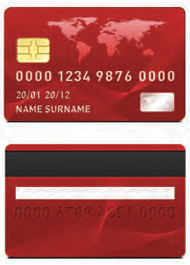
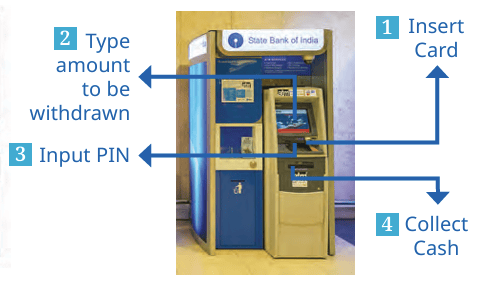
- Banks also provide debit cards to customers when they open an acoount. Debit cards can be used to withdraw cash from Automated Teller Machines (ATMs) at any time. These self-service machines are like mini-banks, available 24×7 at public places like bus depots, local shopping markets, railway stations, airports, malls, etc. To withdraw cash, one has to insert their debit card into the machine and input the PIN (Personal Identification Number) and the exact amount to be withdrawn.
How can money be transferred from one bank account to another?
Cheque
A cheque is a paper instrument that allows you to pay someone
directly from your bank account. The bank provides a cheque
book with multiple cheques. To pay ₹5,000 to your friend Rohan,
you write a cheque with the exact amount, Rohan’s name, and
your signature. Rohan can then deposit the cheque in his bank.
The amount gets withdrawn (debited) from your account and is
transferred (credited) to Rohan’s bank account.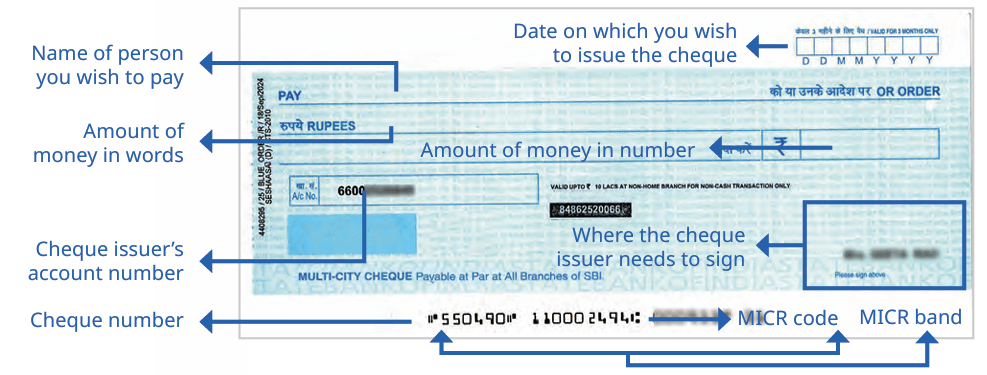

Debit cards and Point of Sale (POS) machines
Debit cards can be used to make payments at retails stores such as a grocery or clothing store, and chemist. On one hand, they help withdraw cash from ATMs as seen above, and on the other hand, they enable the transfer of money from customers to the store owner. Customers use their debit card by swiping or inserting it into a POS machine, inputting the amount, and entering the PIN. The cashier can also enter the amount, while the customer enters their PIN. The amount is instantly deducted from the customer’s account.
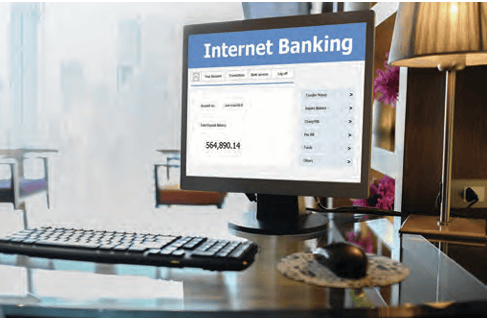
Internet Banking (Netbanking)
Another electronic tool for transferring money is internet banking or online banking, which allows account holders to check balances and transaction history, and transfer money, through the bank’s website or mobile application using a computer or smartphone.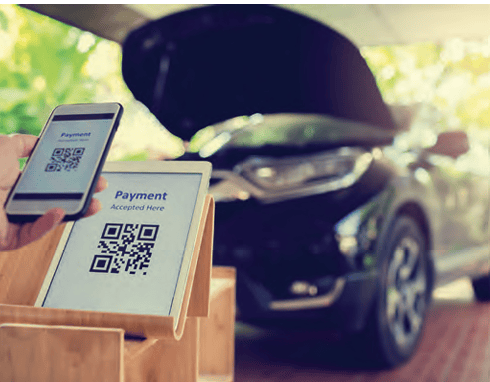
Mobile payments
Additionally, digital payments are made through mobile phones using digital payment applications such as BHIM, which is based on the Unified Payments Interface (UPI) payment system. UPI enables easier and quicker digital money transfers using a QR code or the phone number of the recipient, allowing quick payments and receipts. It reduces the need for physical passbook updates. It allows users to check balances and track transactions anytime on their phone.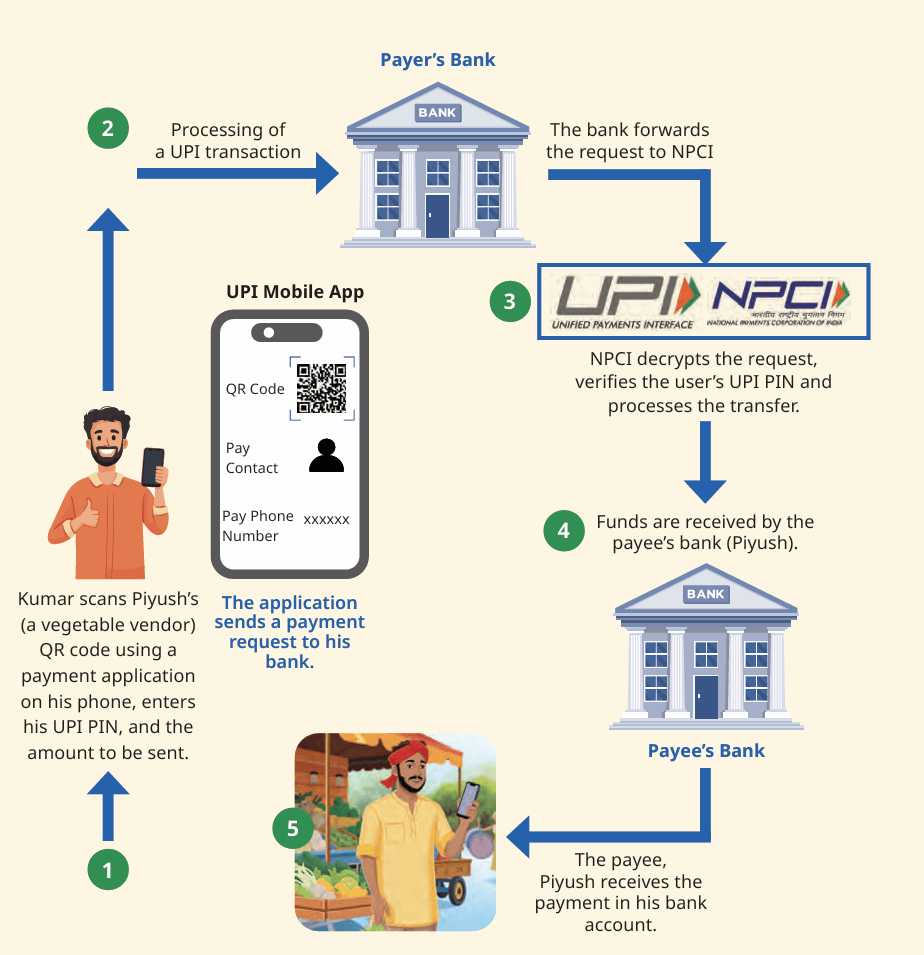
Unified Payments Interface (UPI) — India’s gift to the world of payment systems
Traditionally, transferring funds from one person’s bank account to another person’s account required filling out the cheque with the details of the receiver, dropping it into the bank’s drop box or handing it over to a bank official. It was time-consuming and discouraged a majority of people from using banking services, leading to heavy reliance on cash due to which billions of rupees were used every day without a record.
This changed in 2016 when the National Payments Corporation of India (NPCI) launched UPI, a fast and secure digital payment system that enables transfer of funds. See Fig. 8.18 to learn more about this with an example.
Do you see how effortlessly UPI allowed a digital transaction between Kumar and Piyush? You may remember that during the COVID-19 pandemic, maintaining social distancing became essential to prevent the spread of infection. During this period, UPI gained popularity for supporting cashless transactions. Moreover, its user-friendly design in multiple languages makes it accessible to everyone.
THINK ABOUT IT
India’s digital payments revolution is expanding rapidly across borders. Nepal was the first country to adopt India’s UPI as a payment platform in 2022. Today, nations such as the United Arab Emirates, France, Sri Lanka, Bhutan, Mauritius and so on have adopted it, and more countries are increasingly showing interest. This instant, efficient and secure system is truly India’s gift to the world of payment systems!
Stock Market
Previously, you learned about various markets like retail, wholesale, online and so on. Imagine the stock market like a giant online book store — but instead of buying books — people buy and sell shares.
Suppose you own a small restaurant and wish to expand it with a variety of cuisines. However, if you do not have enough money, you can borrow it from friends in exchange for a share of profits, for which they become part-owners of your business. Similarly, a ‘share’ is a part-ownership in a company. So, when you buy a share of a company, you become a part-owner of that company due to your investment. The more shares you own, the higher your ownership. If a company is like a big chapati, each share is one piece. A collection of shares can be referred to as a stock. Holding stocks allows individuals to put their savings where they expect to see an increase in their value when the share price increases; on the other hand, issuing shares help companies raise funds for their operations.
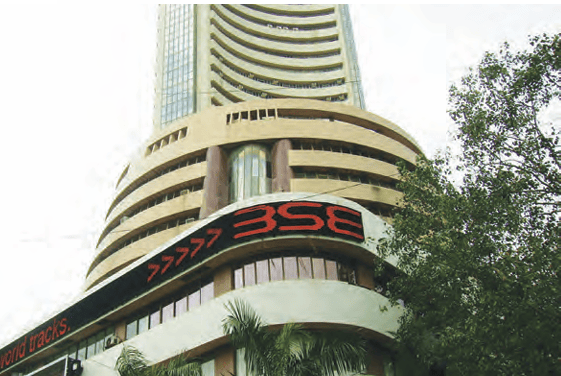
The actual buying and selling of shares takes place at the stock exchange. In India, the Bombay Stock Exchange (BSE) was established in 1875 and is one of the oldest stock exchanges in the world. Back then, the share transactions were conducted manually using paper tickets, which in the modern world have been replaced by digital transactions using advanced computers and other devices.
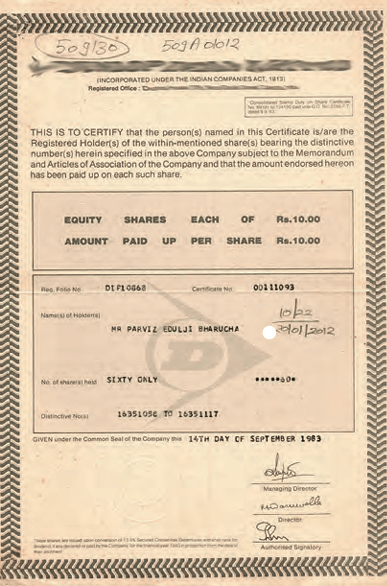
Like commodity prices, share prices also rise and fall. When the share prices of many companies fall simultaneously, it results in a stock market crash. On the other hand, a rise leads to a stock market boom.


Trading shares can bring gains or losses, as their prices fluctuate due to many factors.
If a company is doing well and people think it will earn money, its shares become more valuable. But if the company has problems — like a bad product, a workers’ strike, or a big loss — fewer people want its shares, so the price of the share drops. Apart from a company’s performance, government’s policy changes like new laws, tax rules, political instability, wars, or economic shocks can also cause share price fluctuations.
THINK ABOUT IT
Why do companies issue shares, and why do people buy them? Are there any benefits of owning shares?
Financial frauds and how to prevent them
Digital payments have made life easier, but users must beware of fraud and scams. Fraudsters trick people through fake calls or messages to download harmful apps or mislead people into sharing bank details or One-Time Passwords (OTPs). This gives them access to the user’s mobile or computer, enabling them to steal personal data from the device and draining money from the bank accounts.
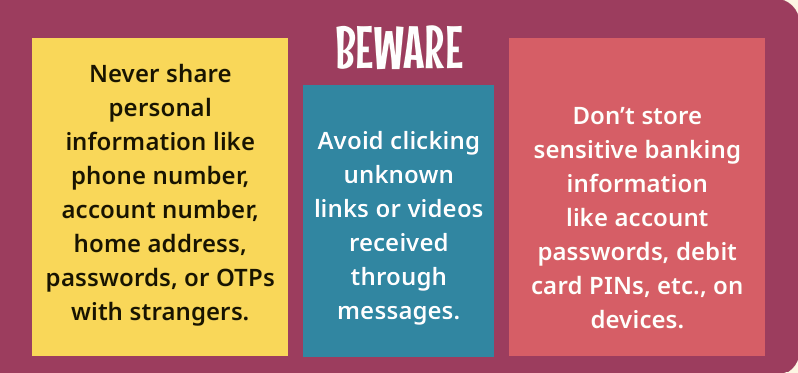
In case of fraud, report via helpline 1930 or the National Cybercrime Reporting Portal.
Before we move on …
-> Financial infrastructure comprises financial institutions like banks, payment systems, the stock market and so on. These help with the flow of money among people, businesses, and the government by enabling smooth financial transactions.
-> It also promotes savings, credit and investment that boosts economic activity, and ultimately contributes to the nation’s prosperity.
Questions and activities
- What is financial infrastructure? How does it complement physical infrastructure?
- How does having a bank account help people? Should everyone be required to have a bank account?
- What could be the possible advantages and disadvantages of compound interest for savers and borrowers?
- How does financial infrastructure enable the flow of money between households and businesses? Can you think of how the government can facilitate this flow?
- What could be the reason for the higher interest rate earned on fixed deposits as compared to a savings account?
- Sahil received ₹10,000 as a prize in a poster-making competition. His father promises to pay him 12 per cent interest per year if he does not spend the amount. After 3 years, how much money would Sahil have?
- How does the stock market help mobilise the savings of individuals? In what ways do companies benefit by issuing shares to people?
- How can we balance the convenience of digital payments with the risk of cyber fraud?
- Ask your family members or neighbours about—
- how they save money?
- whether they use UPI, ATM or cheques, the kinds of transactions they perform through UPI; do they find UPI better than using cash or not, and why.
- if they or their acquaintance have experienced digital fraud, for instance, through a fake call or message asking for bank details. What did they do when they realised it was a scam, and what did they learn from that experience?
- Create a Financial Safety Poster.
- Design a poster with dos and don’ts of digital banking safety (for example, not sharing OTPs, reporting frauds).
- Include emergency numbers or websites like https:// cybercrime.gov.in or 1930 helpline.
- Hang the posters in school corridors or the library.
- Cheques are often used to pay utility bills. Ask your parents to allow you to fill out the cheques for a few monthly payments.
- Suppose you have to withdraw ` 10,000 from your bank account, how would you fill out the cash withdrawal slip at your bank? Let us try below!
Summarise your findings in a table or short report. Share one surprising insight with your class.