1 GEOMETRIC TWINS
1.1 Geometric Twins
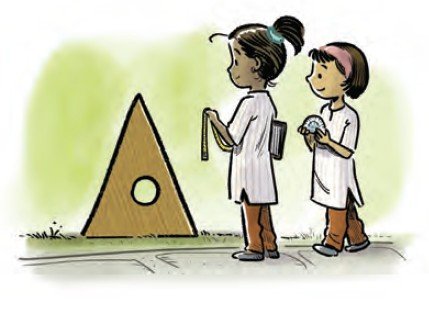
The symbol on this signboard needs to be recreated on another board.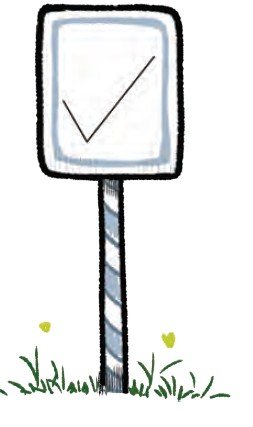
How do we do it?
One way is to trace the outline of this symbol on tracing paper to reconstruct the figure. But this is difficult for big symbols. What else can we do?
Can we take some measurements that would allow us to exactly recreate this figure? If yes, what measurements should we take? Let us name the corner points of this symbol as shown.
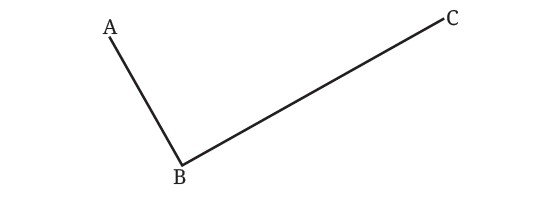
Are the arm lengths AB and BC sufficient to exactly recreate this figure?
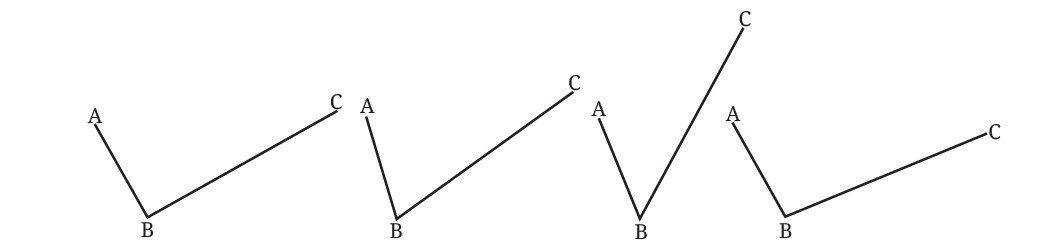
Suppose these lengths are AB = 4 cm, BC = 8 cm. We observe that several such symbols can be constructed with the same lengths.
To get the exact replica, would it help to take any other measurement? The measure of ∠ABC, along with the two arm lengths AB and BC, fix the shape and size of this figure.
Can you draw the symbol if it is known that AB = 4 cm, BC = 8 cm, and ∠ABC = 80°?
These three measurements can help us create an exact replica of the symbol on the signboard. Figures that are exact copies of each other or have the same shape and size are said to be congruent. Congruent figures can be superimposed exactly, one over the other.
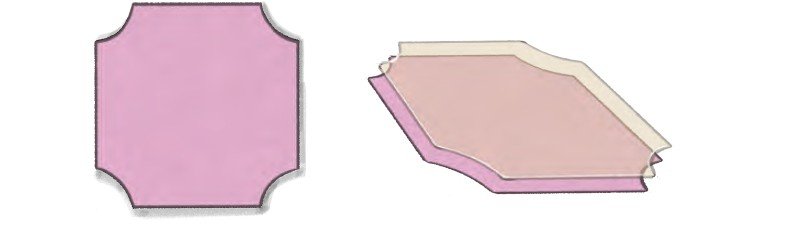
Two congruent figures are shown below. You could use a tracing
paper to trace the first figure and superimpose it on the second one. You
will find that they fit exactly, one over the other.
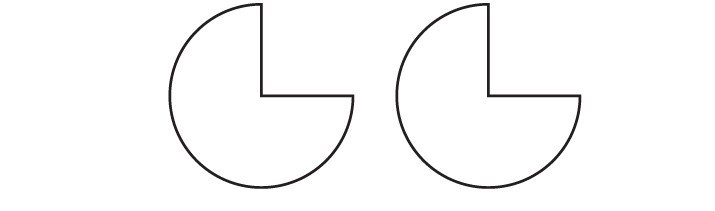
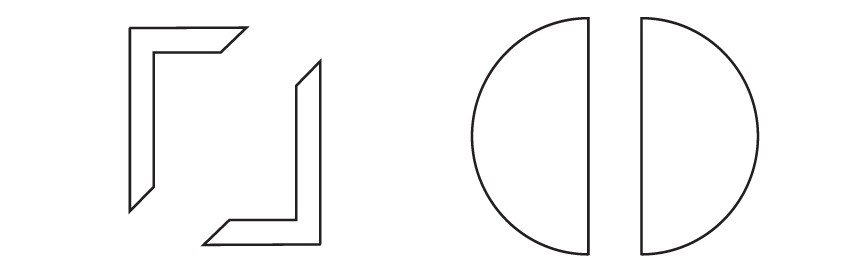
Note that while checking for congruence, a figure can be rotated or
flipped before superimposing it on the other figure. So, the following
pairs of figures are also congruent to each other.
Let us get back to the symbol we saw on the signboard. Suppose there
are two such symbols that look identical and we need to confirm that they
are indeed congruent. Can we use their measurements to verify this?
If it is known that both symbols have the same arm lengths, can it be
concluded that the two symbols are congruent?
We have seen that there can exist several such non-congruent figures
with different angles between the given arm lengths. Fixing the angle
determines the shape and size of the figure.
Thus, if both symbols have the same arm lengths and angle, we can be
sure that the figures are congruent.
Figure it Out
- 1. Check if the two figures are congruent.
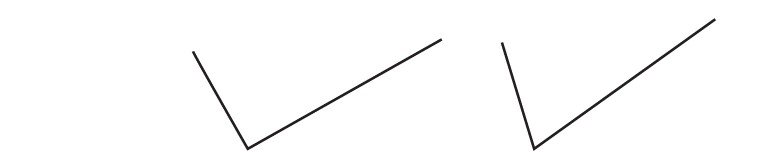
- 2. Circle the pairs that appear congruent.
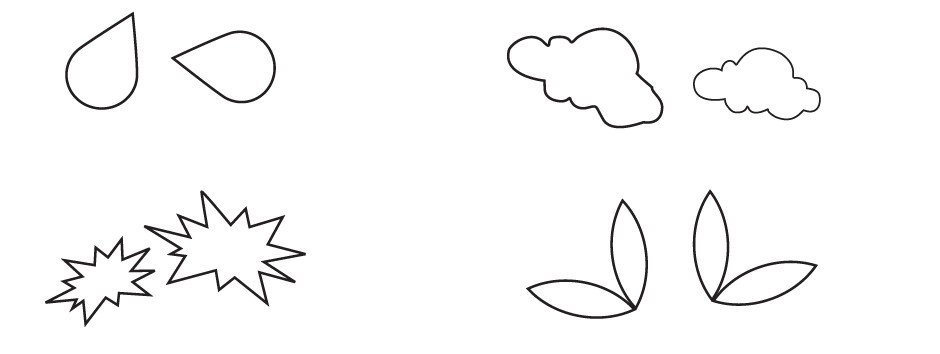 r
r - 3. What measurements would you take to create a figure congruent to
- a given:
- 4. How would we check if two figures like the one below are congruent?
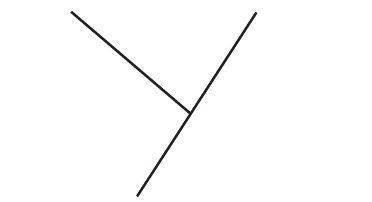
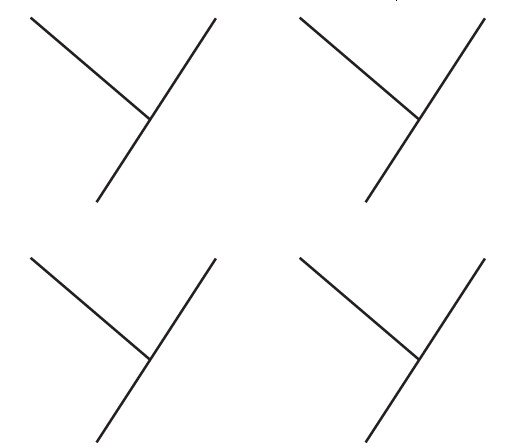
1.2 Congruence of Triangles
big to be traced on a paper and replicated.
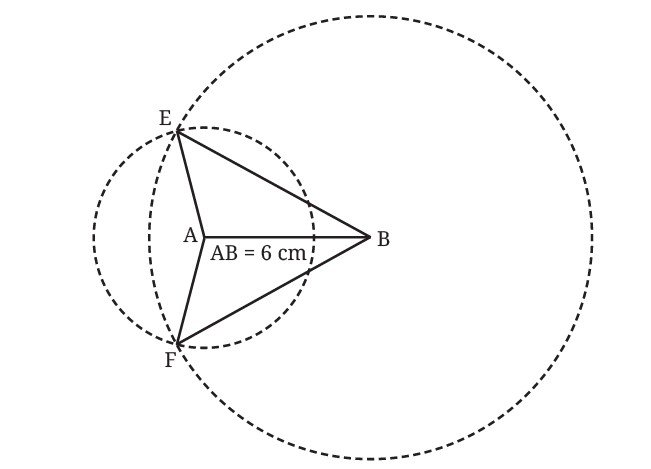
Measuring the Sidelengths
Do you agree with Meera?
Conventions to Express Congruence
This has to be done so that the equal sides overlap. Figure out how.
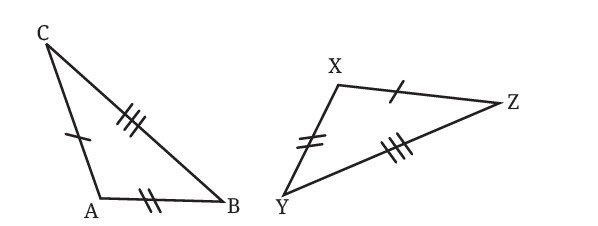
Overlapping Vertex A over Vertex X, Vertex B over Vertex Y and Vertexn C over Vertex Z will ensure that equal sides overlap, making the triangles fit exactly over each other.
Are there other ways of overlapping the vertices so that the triangles fit exactly over each other?
The fact that these triangles are congruent shows that their respective angles are equal:
∠A = ∠X, ∠B = ∠Y and ∠C = ∠Z
Thus, when two triangles are congruent, there are corresponding vertices, sides and angles which fit exactly over each other when the triangles are made to overlap. In this case, they are
- (a) Corresponding Vertices: A and X, B and Y, C and Z
- (b) Corresponding Sides: AB and XY, BC and YZ, AC and XZ
- (c) Corresponding Angles: ∠A and ∠X, ∠B and ∠Y, ∠C and ∠Z
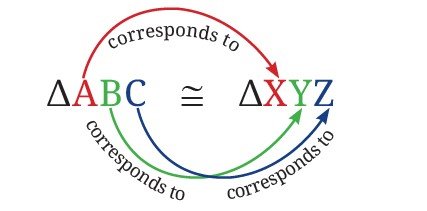
- • the first vertex in the name of Δ ABC corresponds to the first vertexn the name of Δ XYZ,
- • the second vertex in the name of Δ ABC corresponds to the second vertex in the name of Δ XYZ, and
- • similarly with the third vertices in the names of Δ ABC and Δ XYZ.
Can you identify a pair of congruent triangles below? Why are they congruent?
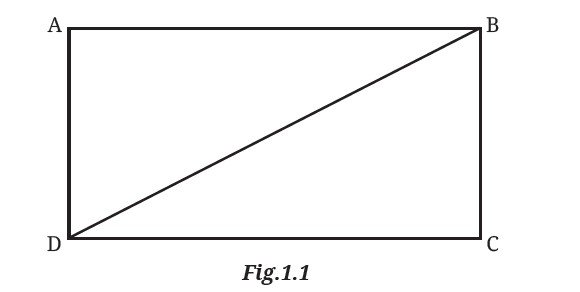
Consider Δ ABD and Δ CDB. Since ABCD is a rectangle, we have
AB = CD
AD = CB
If the remaining sides of Δ ABD and Δ CDB have the same length then the SSS condition is satisfied, confirming the congruence of the two triangles. Is this the case?
The remaining side is a common side BD, so the SSS condition holds. Hence, the triangles are congruent.
We know the corresponding sides of the two triangles. We have to identify the corresponding vertices. Can they be the following?
ΔABD ΔCDB
A C
B B
D D
Verify this by superimposing paper cutouts of the triangles obtained from the rectangle ABCD (Fig. 1.1).
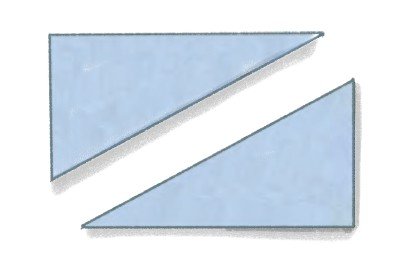
We see that this correspondence lays the side AB of Δ ABD over the side CB of Δ CDB. But these sides need not be equal, and hence, this superimposition will not establish congruence.
Identify the correct correspondence of vertices and express the congruence between the two triangles.
Figure it Out
- 1. Suppose Δ HEN is congruent to Δ BIG. List all the other correct ways
- of expressing this congruence.
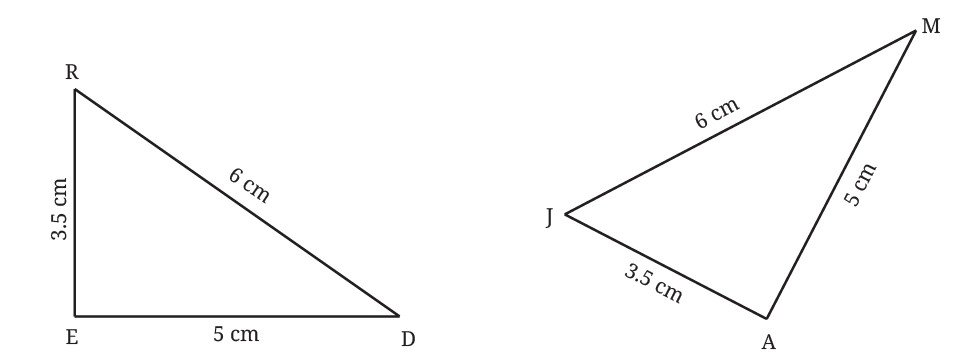
- 2. Determine whether the triangles are congruent. If yes, express the congruence.
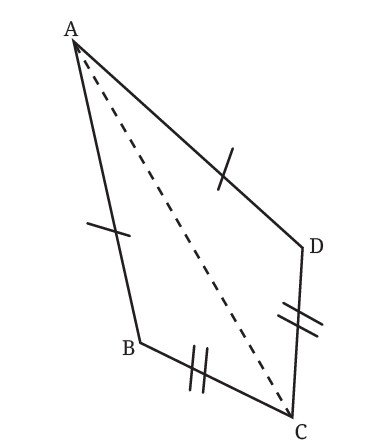
- 3. In the figure below, AB = AD, CB = CD.
Can you identify any pair of congruent triangles? If yes, explain why they are congruent.
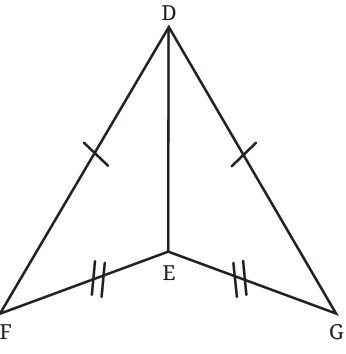
- 4. In the figure below, are ΔDFE and ΔGED congruent to each other? It is given that DF = DG and FE = GE.
Measuring the Angles
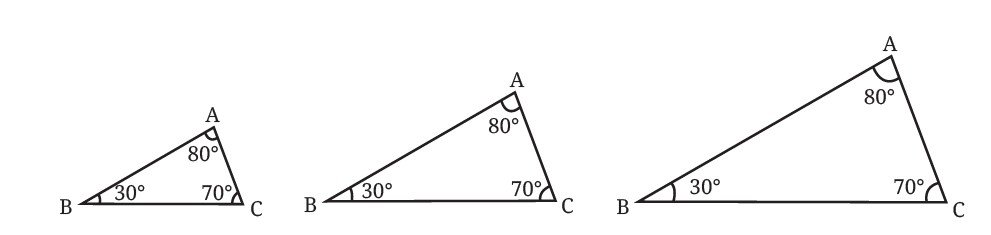
Instead of measuring the three sidelengths of the triangular frame, if Meera and Rabia measure the three angles, can they recreate the triangle exactly?
Suppose the angles are 30°, 70°, and 80°. Can we create an exact copy of the frame with this?
As we see, we can draw many triangles with these measurements that are not congruent.
Measuring Two Sides and the Included Angle
Construct a triangle having the above measurements.
Measuring Two Sides and a Non-included Angle
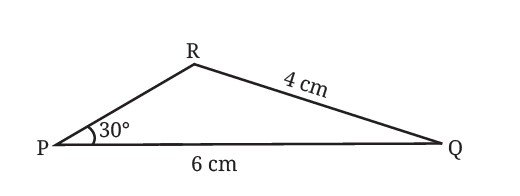
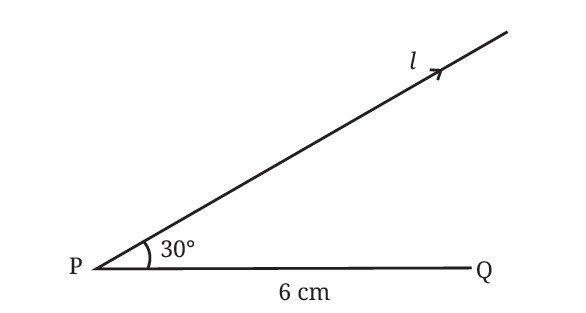
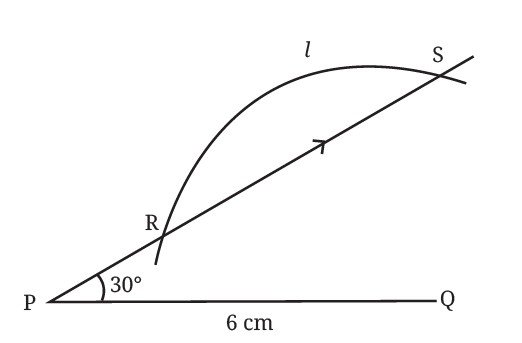
Both Δ PQR and Δ PQS satisfy the given measurements.
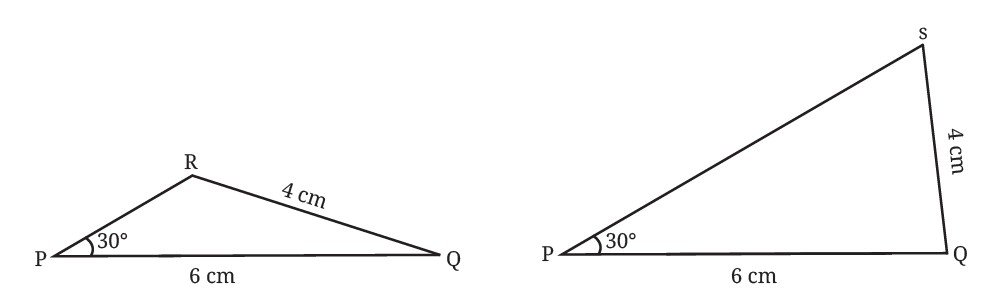
Hence, we can draw two non-congruent triangles with the given measurements.
This is called the SSA (Side Side Angle) condition. We have seen that SSA condition does not guarantee congruence.
We have examined cases using two sides and an angle for determining congruence. Can we use two angles and a side?
Let us first take the case of two angles and the included side.
Two Angles and the Included Side
Are they congruent?
Can there exist non-congruent triangles having these measurements? Construct and find out.
We have seen how to construct a triangle when we are given two angles and the included side.
This construction should make it clear that all the triangle having these measurements must be congruent to each other. Hence, ΔABC ≅ ΔXYZ.
This condition is referred to as the ASA (Angle Side Angle) condition for congruence.
In the figure, Point O is the midpoint of AD and BC. What can one say about the lengths AB and CD?
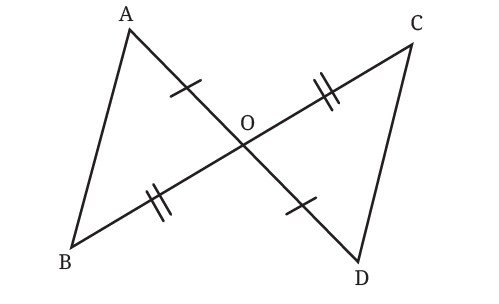
We have,
AO = OD (as O is the midpoint of AD)
BO = OC (as O is the midpoint of BC).
Are there any other equal sides or angles?
What are the Corresponding Vertices?
As we need AO and OD to overlap, and BO and CO to overlap for the triangles to exactly fit over each other, the corresponding vertices in ΔAOB and ΔDOC are A and D, O and O (vertex common to both the triangles), and B and C. Thus,
Figure it Out
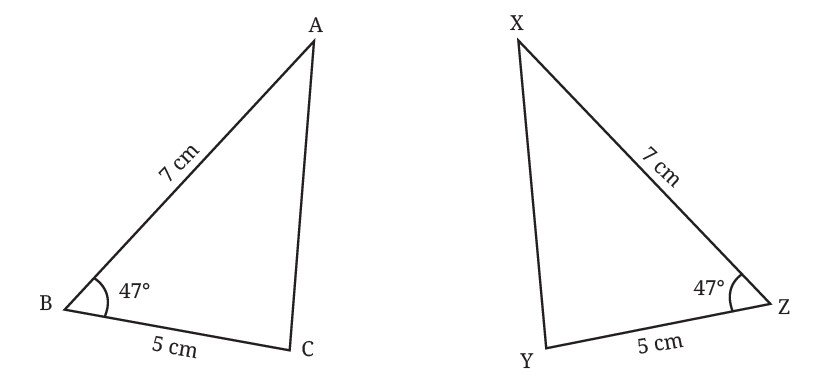
- 1. Identify whether the triangles below are congruent. What conditions did you use to establish their congruence? Express the congruence.
- 2. Given that CD and AB are parallel, and AB = CD, what are the other equal parts in this figure? (Hint: When the lines are parallel, the alternate angles are equal. Are the two resulting triangles congruent? If so, express the congruence.)
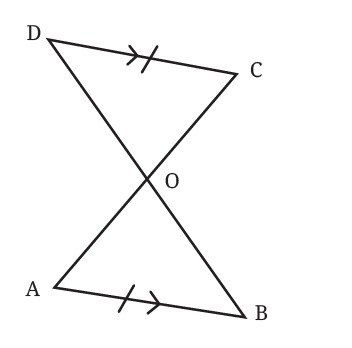
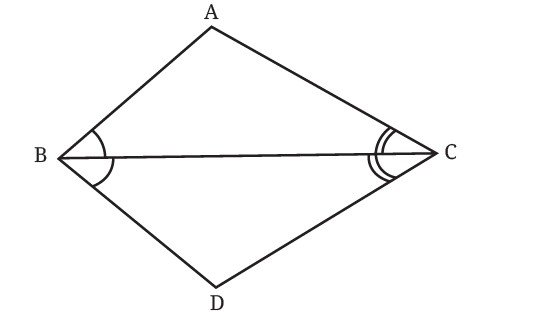
- 3. Given that ∠ABC = ∠DBC and ∠ACB = ∠DCB, show that ∠BAC = ∠BDC. Are the two triangles congruent?
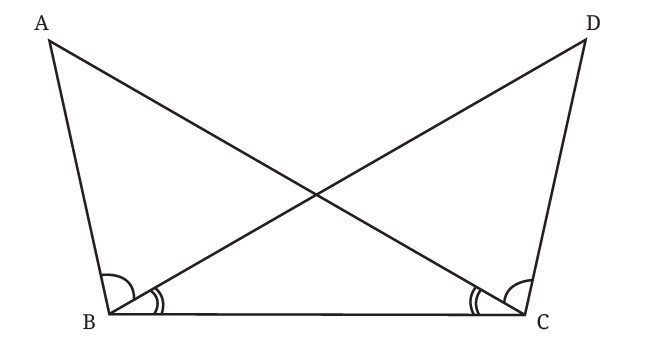
- 4. Identify the equal parts in the following figure, given that ∠ABD =
- ∠DCA and ∠ACB = ∠DBC.
Measuring Two Angles and a Non-Included Side
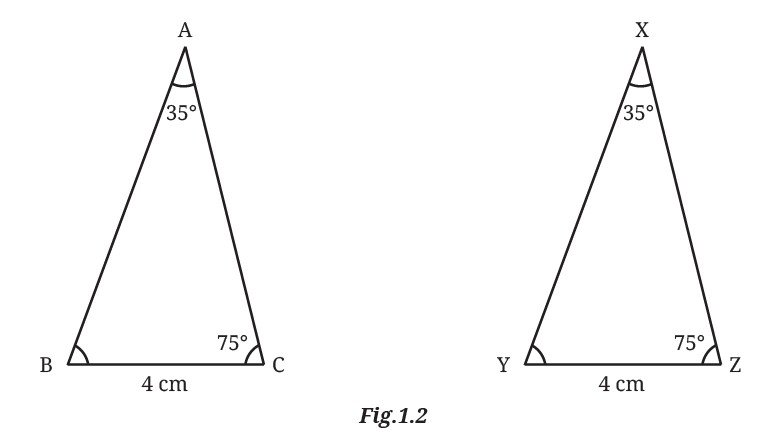
The following triangles ΔABC and ΔXYZ are such that ∠A = ∠X = 35°, ∠C = ∠Z = 75°, and BC = YZ = 4 cm. Are the triangles congruent? Give a reason.
How do we proceed with this problem? Here is a method.
What are the measures of ∠B and ∠Y?
We know that the sum of the angles of a triangle is 180°.
So ∠B + 35° + 75° = 180°,
or ∠B + 110° = 180°
Thus, ∠B = 70°.
Similarly, ∠Y is also 70°.
Thus, we have ∠B = ∠Y.
Does this help in showing that Δ ABC and Δ XYZ are congruent?
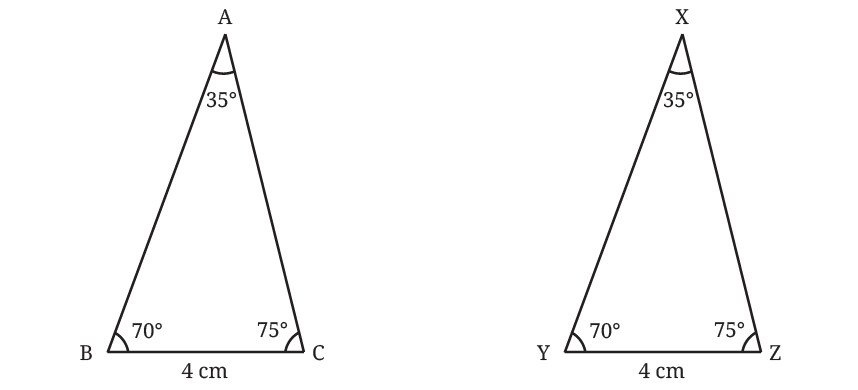
These two triangles now satisfy the ASA condition with
∠B = ∠Y
BC = YZ
∠C = ∠Z
So, Δ ABC ≅ ΔXYZ.
In Fig. 1.2, the equalities are between two angles and the non-included side of the two triangles. This condition is referred to as
the AAS (Angle Angle Side) condition.
As we have seen, the AAS condition guarantees congruence.
We have seen that the SSA condition doesn’t always guaranteecongruence. However, there are some special cases when SSA does guarantee congruence. Here is one such important case.
Measuring Two Sides in a Right Triangle
Looking at the rough diagram helps in planning the construction.
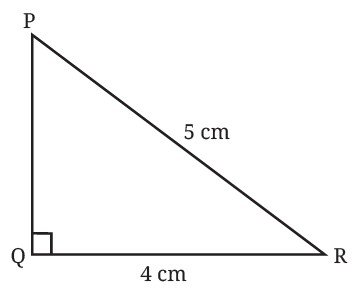
Step 1: Draw the base QR of length 4 cm.
Step 2: Draw a line l perpendicular to QR from Q.
Step 3: From R, cut an arc on line l of radius 5 cm.
Step 4: Let P be the point at which the arc intersects the line l. Join PR.
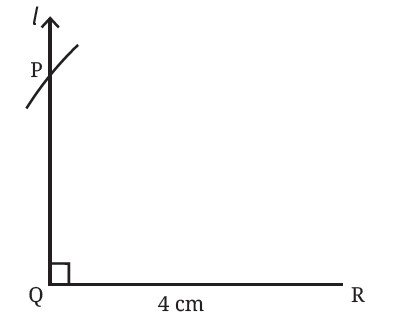
ΔPQR is the required triangle.
Consider the downward extension of line l below QR. Would the arc from R meet this line downwards as well (as in the case of triangle
construction when the sidelengths are given)? If so, would this lead to a triangle whose size and shape are different from Δ PQR, and yet has the given measurements?
It can be seen that the other triangle we get below is also congruent to ΔPQR. Why? Therefore, all triangles having these measurements will be congruent to each other.
Thus, we conclude that Δ ABC ≅ ΔXYZ. In the case that we have considered, the parts that are equal to their
corresponding parts in another triangle are
(a) the right angle
(b) two other sides, one of which is opposite to the right angle. This side is called the hypotenuse.
This is called the RHS (Right Hypotenuse Side) condition, and is one more condition for congruence.
Conditions that are sufficient to guarantee congruence
From the discussions so far, we can see that two triangles are congruent
if any of the following conditions are satisfied:
(a) SSS condition (b) SAS condition
(c) ASA condition (d) AAS condition
(e) RHS condition
1.3 Angles of Isosceles and Equilateral Triangles
ΔABC is isosceles with AB = AC, and ∠A = 80. What can we say about ∠B and ∠C?
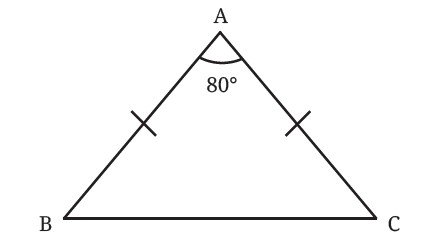
We have,
AB = AC (given)
∠ADB = ∠ADC = 90° (from construction)
AD is a common side of the two triangles Δ ADB and Δ ADC.
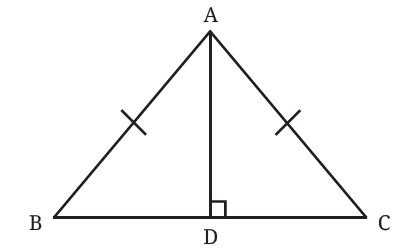
Thus, the triangles satisfy the RHS condition. Hence, Δ ADB ≅ ΔADC.
This shows that ∠B = ∠C, as they are corresponding parts of congruent
triangles.
Thus, the angles opposite to equal sides are equal.
Can you use this fact to find ∠B and ∠C?
Angles in an Equilateral Triangle
Equilateral triangles are those in which all the sides have equal lengths.
What can we say about their angles?
We can use the recently discovered fact that angles opposite to equal
sides are equal.
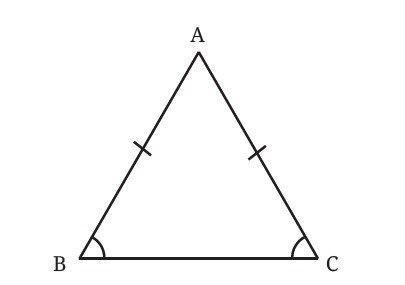
The sides AB and AC are equal. So ∠B = ∠C.
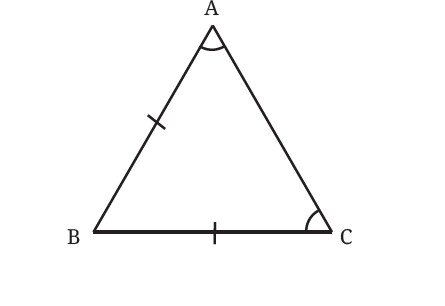
Similarly, the sides AB and BC are equal. So ∠A = ∠C.
So, all the three angles of an equilateral triangle are equal, just like their sides.
What could be their measures?
As the three angles should add up to 180°, we have 3 × angle in an equilateral triangle = 180°. So each angle is 60°.
Verify this by construction.
Thus, just using the notion of congruence, we have deduced that the angles of an equilateral triangle are all 60°.
Congruent Triangles in Real Life: Congruent triangles can be seen in various constructions and designs from ancient to modern times. Here are a few examples.

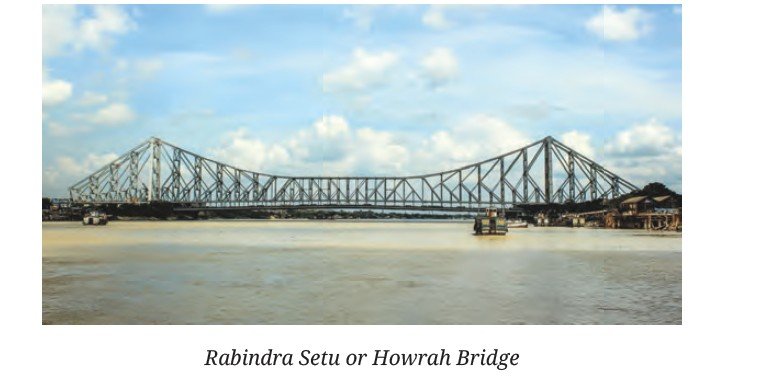
Describe the congruent triangles you see in each picture.
Figure it Out
- 1. ΔAIR ≅ ΔFLY. Identify the corresponding vertices, sides and angles.
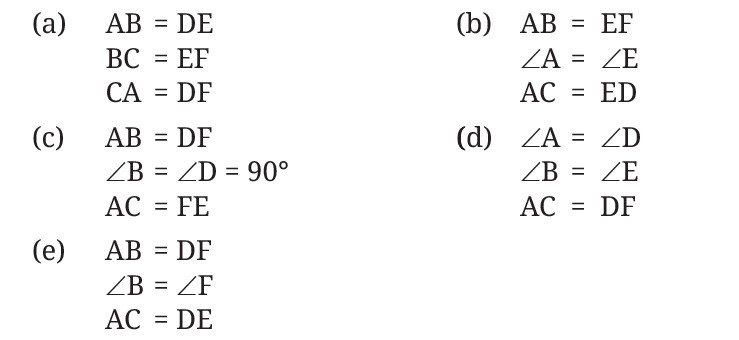
- 2. Each of the following cases contains certain measurements taken from two triangles. Identify the pairs in which the triangles are congruent to each other, with reason. Express the congruence whenever they are congruent.
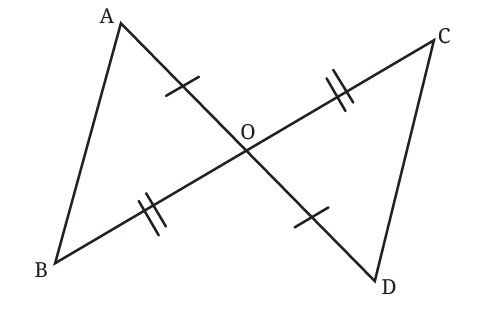
- 3. It is given that OB = OC, and OA = OD. Show that AB is parallel to CD. [Hint: AD is a transversal for these two lines. Are there any equal alternate angles?]
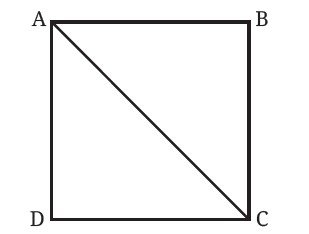
- 4. ABCD is a square. Show that Δ ABC ≅ ΔADC. Is Δ ABC also congruent to Δ CDA?
Give more examples of two triangles where one triangle iscongruent to the other in two different ways, as in the case above. Can you give an example of two triangles where one is congruent to the other in six different ways?
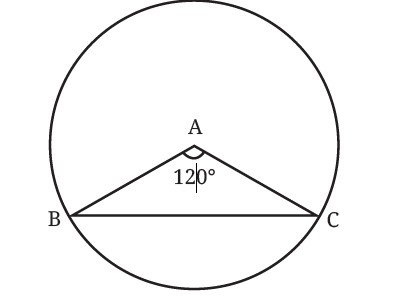
- 5. Find ∠B and ∠C, if A is the centre of the circle.
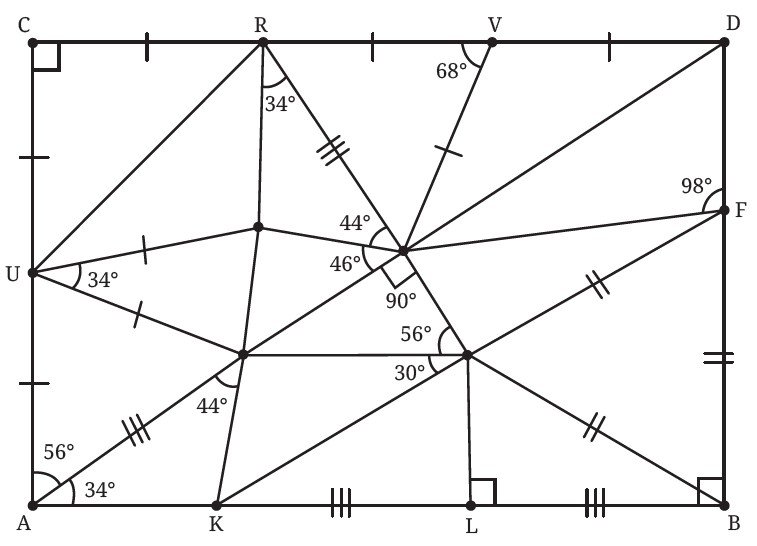
- 6. Find the missing angles. As per the convention that we have been following, all line segments marked with a single ‘|’ are equal to each other and those marked with a double ‘|’ are equal to each other, etc.
- While verifying congruence, a figure can be rotated or flipped to make it fit exactly over the other figure via superimposition.
- When two triangles have the same sidelengths, we say that the SSS (Side Side Side) condition is satisfied. The SSS condition guarantees congruence.
- When two sides and the included angle of one triangle are equal to the two sides and the included angle of another triangle, we say that the SAS (Side Angle Side) condition is satisfied. The SAS condition also guarantees congruence.
- When two angles and the included side of one triangle are equal to the two angles and the included angle of another triangle, we say that the ASA (Angle Side Angle) condition is satisfied. The ASA condition guarantees congruence. Congruence holds even if the side is not included between the angles AAS (Angle Angle Side) condition.
- In a right-angled triangle, the side opposite to the right angle is called the hypotenuse.
- When a side and a hypotenuse of a right-angled triangle are equal to a side and the hypotenuse of another right-angled triangle, we say that the RHS (Right Hypotenuse Side) condition is satisfied. The RHS condition also guarantees congruence.
- Two triangles need not be congruent if two sides and a non-included angle are equal.
- In a triangle, angles opposite to equal sides are equal.
- The angles in an equilateral triangle are all 60°.
Expression Engineer!