
Project 6: Family Health Handbook
This project will help you learn about maintaining the health and well-being of your family. You will create a family health handbook and identify actions to improve the health of your family.
As part of the project, you will be able to:
- Identify factors impacting health
- Visit a centre and interact with health professionals
- Create a first-aid kit
- Record and analyse health related data
- Develop a plan to improve family health
Family health refers to the overall physical, mental, and emotional well-being of all members within a family. The health of individuals and the family as a whole are interconnected with each other.
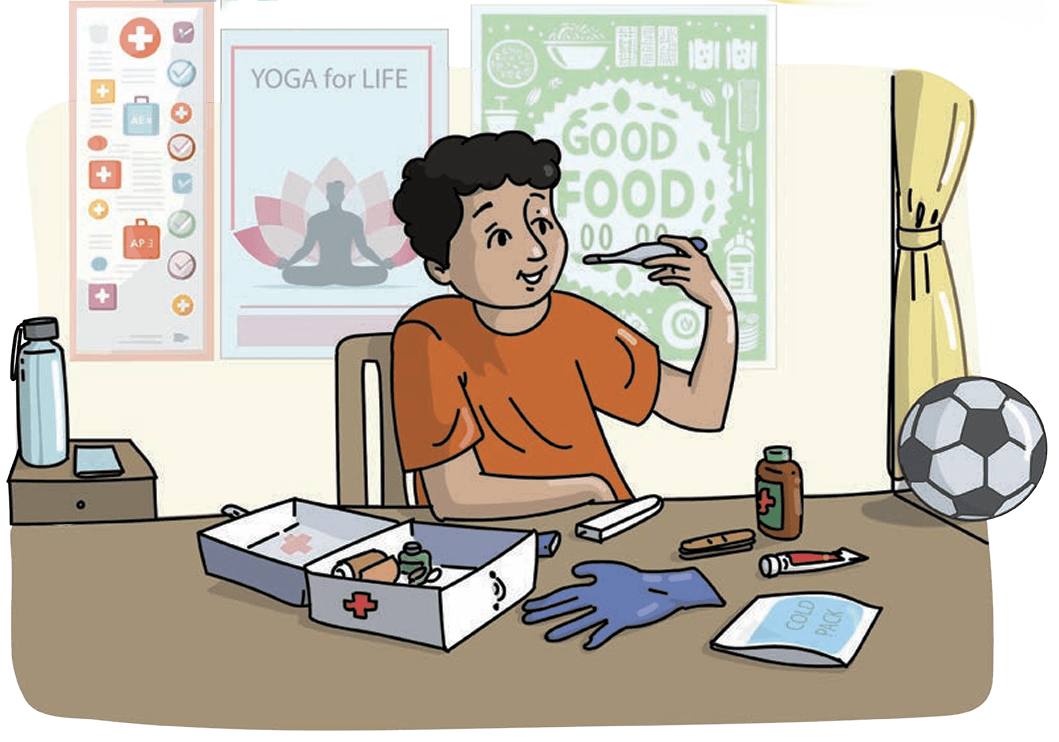
Good health results from many factors, including diet, physical fitness, sleep, mental well-being, and environmental factors (Figure 6.1). While all these factors are important for people of different ages, the needs of people from various age groups are different. This project is about understanding the needs of different members of the family and creating a family health handbook.
You have learnt about the importance of health both in school, and from family and friends. You are also aware that good health, a positive attitude and mental well-being are very important for your happiness. You may have been practicing Yoga and found that it helps you not only to be physically fit but also to be calm and energised throughout the day. You become more flexible and stronger while being able to concentrate on whatever you are doing.
You have also learnt that a nutritious and well-balanced diet is necessary to meet the body’s needs. Different components of food are necessary to fulfil different needs of the body, and give us energy to work and play.
In addition to this, rest is very important. Our body repairs itself when we sleep, and we wake up refreshed and ready for another day. Depending on age, sleeping for a certain number of hours daily is, therefore, very important for health.
Positive attitude and mental well-being are equally important. A well-balanced diet, regular exercise, personal hygiene, positive thoughts, and kindness are important for mental well-being. Along with these, it is important to do things you enjoy and to spend time with loved ones.
Still, despite all these efforts, people fall ill due to various reasons, including environmental factors. Therefore, you need to take care to protect yourself and your family. For example, timely vaccination, taking precautions to prevent spread of infections, keeping the surroundings clean, and ensuring there is no stagnant water where mosquitoes can breed. Knowing whom to ask for help and when to see the doctor is also important.
Thus, essential factors for assuring health are – well-balanced and nutritious diet, physical fitness, sleep, positive attitude and mental well-being, and environmental factors.
In this project, you will learn more about these factors and what can be done to maintain your health and that of your family. You will develop and maintain records and write your action plan in the family health handbook.
What will I be able to do?
By the end of this project, you will be able to:
- Identify the specific needs of individuals of different age groups.
- Respond to any health issue in the family.
- Create a first-aid kit for use in school and at home.
- Develop a plan to support good health and well-being in the family.
What will I need?
- Notebook/sheets and binder for the handbook and stationery
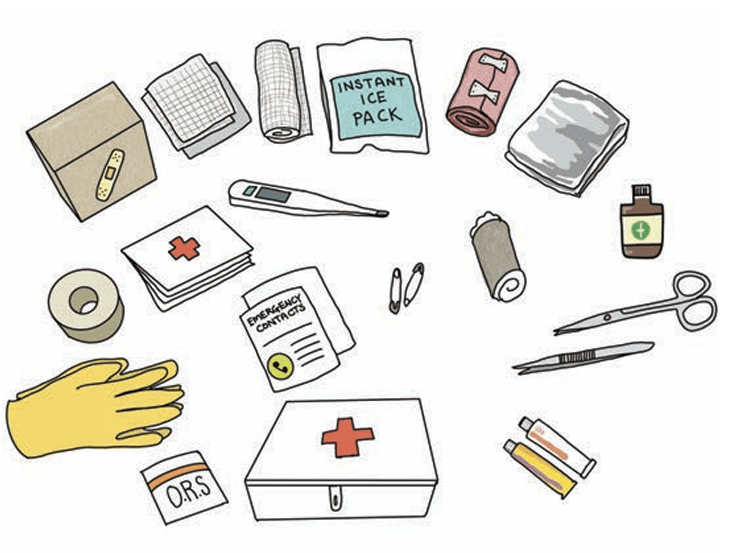
- First-aid materials (small bandages, cotton balls or swabs, medical tape, hand sanitiser/disinfectant, masks and gloves, antiseptic ointments, basic medicines as per advice of doctor, salt, sugar, ORS, thermometer, tweezers, scissors, safety pins, and others as per the advice of the expert).
How do I keep myself and others safe?
- You must follow all safety instructions, and use tools and equipment as directed.
- During visits to the hospital/ Primary Health Centre (PHC)/ Community Health Centre (CHC), maintain your distance and wear a mask to protect yourself and the patients. Remember to wash your hands thoroughly after the visit.
- Dispose of used gloves, masks and bandages as directed by the expert and/or your Teacher to prevent the spread of infection.
- Be sensitive and empathetic to the injured, young children and the old.
- Accept diversity — do not judge people by body shapes, sizes, or food habits.
Internet safety: Ask your teacher for help while using the Internet. Be careful not to upload or download anything without checking. Do not share personal information anywhere.
What do I need to know before I start?
You know some of the common factors affecting health.
Discuss the factors affecting health with others in your group, your parents and teachers.
Activity 1: Factors Affecting Health
Some factors that affect our health are given below. Please give examples of how they impact us. Add any factors that you feel are important:
- Lack of personal hygiene
- Pollution (e.g., noise, air, soil, water)
- Unclean environment
- Lack of nutritious and balanced diet
- Loneliness
- Lack of sleep
- Lack of exercise
- Excessive use of TV/mobile phone
- Any other factors you can think of
Which factors can you do something about, and which are out of your control?
Did you know?
These are some recommendations by health experts.
Diet and Nutrition
- Meal Frequency: Eating three main meals and 1–2 healthy snacks at consistent intervals prevents overeating or dips in energy.
- Hydration: Drinking at least 6–8 glasses of water daily is essential for digestion, temperature regulation, and mental focus.
- Eat home cooked food and limit eating processed food: Even a ‘simple meal’ like dal fry and rice ordered from outside may not be healthy since you are unsure of the amount of oil added or whether the dal is freshly cooked or stale. Therefore, limiting food ordered from outside, processed snacks (e.g., chips), sugary drinks, and fried foods is good for health.
Sleep Pattern
- Sleep duration varies by age. Ideally, about 9–11 hours of sleep is ideal for students aged 6-13, while about 8–9 hours of sleep is sufficient for adults. Children below the age of 5 require more than 11 hours of sleep.
- Healthy body functioning is also determined by a regular sleep schedule (going to bed and waking up at the same time daily); this helps regulate the body’s internal clock.
- Disruptions like noise, bright lights, or uncomfortable bedding can affect sleep patterns.
- To go to sleep easily, avoid stimulating activities, like screen time, loud music, or heavy meals an hour before sleep.
Physical Fitness
- Lack of physical activity and a sedentary lifestyle can have a very harmful effect on body functions in the long run.
- Consistency is key, so you should choose a physical activity that you like. It can be yoga, sports or a simple walk.
Mental Well-being
Just as our physical well-being can be affected by many factors, our mental well-being is also prone to being affected. For example, due to a fight with a friend, examination stress, concerns about family, or any other reason. Mental and physical well-being are interconnected, and both are equally important. Spending time with friends and family, and on productive activities, including games and sports, helps maintain mental well-being.
What do I have to do?
You have identified factors that affect health and may have noted some questions. As you continue to work on your project, you will try and find answers to these questions. You will understand the needs of persons of different age groups and identify environmental factors around you that may affect health. You will also learn how to provide first-aid, and how to avail medical care. Finally, you will come up with an action plan to improve and maintain your and your family’s health. All this will be part of your family health handbook.
You can learn more about family health and first-aid techniques by searching on the Internet.
You can search using keywords, like family health, basic first-aid and steps, tips for family health and wellness, first-aid for common injuries, etc.
Activity 2: Framing questions related to your and your family’s health
Think about your and your family members’ health. What questions come to your mind?
Write these questions or even any relevant thoughts in your handbook. Some examples are given on the next page. Add to these sample questions – do remember to leave space for answers.
- My younger sister is 4 years old. Why does she catch a cold so often?
- What can I do if someone at home gets a fever?
- My parents often say, “Don’t watch TV before sleeping”. Why is that so?
- Why does my grandmother refuse to eat?
The answers to some of these questions may be available with family members, other community members and teachers. But you may have to speak to experts, like doctors, nurses, Accredited Social Health Activists (ASHA workers), and Anganwadi teachers/ workers to get answers to others. You may also be able to answer some of these questions yourself as you take up the different activities in the project.
Activity 3: Visit to a hospital/Primary Health Centre (PHC)/ Community Health Centre (CHC)
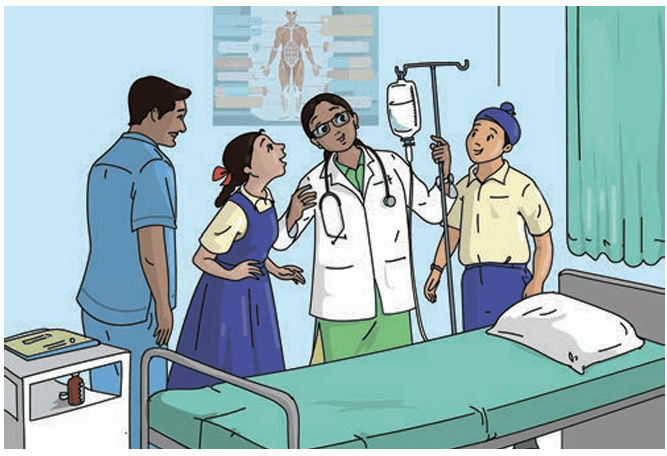
Visiting a hospital/PHC/CHC will help you develop a deeper understanding of health-related factors. You will be able to observe a day in the life of a health expert. Observe them, how they treat a patient, what equipment they use, and how the comfort of patients is taken care of (Figure 6.2).
Request the experts you meet to demonstrate the use of the first-aid kit, and to help you put together a list of materials and medicines to keep in the kit. Also, gather helpful information that could help you in the future (e.g., emergency numbers, number for ambulance).
In addition to the questions you have already identified, examples of specific questions to ask the doctors and nurses you meet are given. Add other questions that come to your mind.
Remember, even if some other questions come up during the project, you can request permission from the expert(s) to connectwith them later.
Date and time of visit:
Location:
Type of centre (hospital/CHC/PHC/other):
Name of centre:
Name of expert(s) you interacted with:
Emergency contacts:
Emergency contact number:
Phone number for ambulance:
National emergency number (police, ambulance, fire): 112
National number for ambulance: 108
Any other observations:
For your health handbook: Write down the following information after you visit the hospital.
- What are the different facilities available in your centre?
- What services are provided to patients (e.g., vaccination, outpatient treatment, diagnosis, in-hospital treatment, and specialised treatments)?
- What are the most common illnesses in our area? How can we prevent them?
- What should we do in an emergency? What should we do if an accident happens?
- What are the fees charged to the patient? How is billing done? How is the payment to be done? Are there any concessions given (e.g., for senior citizens and military personnel)?
- How do we decide if someone needs medical help or we can manage at home?
- What should we do if someone falls sick during the night or on a holiday?
- What precautions are to be taken while taking medicines?
Activity 4: Creating a first-aid kit
Once you have observed and understood the use of the first-aid kit at the centre, you can create it on your own in school.
In our daily lives, we often experience minor cuts, accidents, wounds, and minor illness. A first-aid kit can provide medical assistance. It is equipped with basic medicines for emergencies. You should also have a first-aid kit at home as a part of your safety readiness plan.
The first-aid activities you could focus on are:
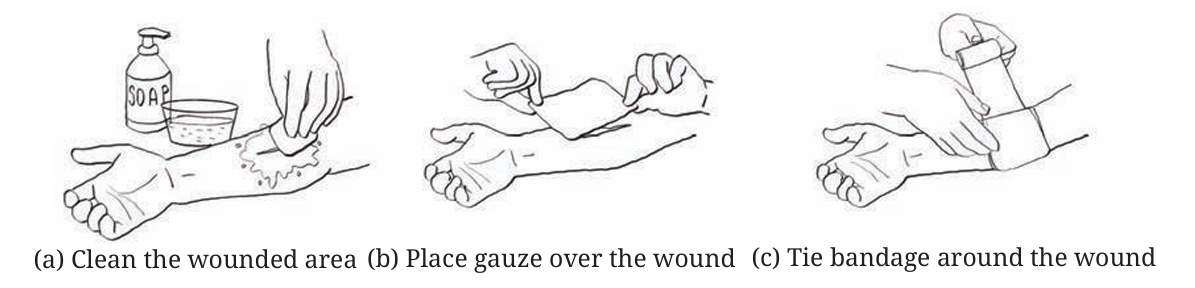
- Tying bandages for minor cuts (Figure 6.3).
- First-aid for minor burns (Figure 6.4).
- Preparing ORS during dehydration (Figure 6.5).
Remember, first-aid is only emergency treatment before you take the patient to the doctor.
You can organise a workshop in school to create a first-aid kit. The workshop must be conducted by an expert, who could either be a health professional or a teacher or parent.
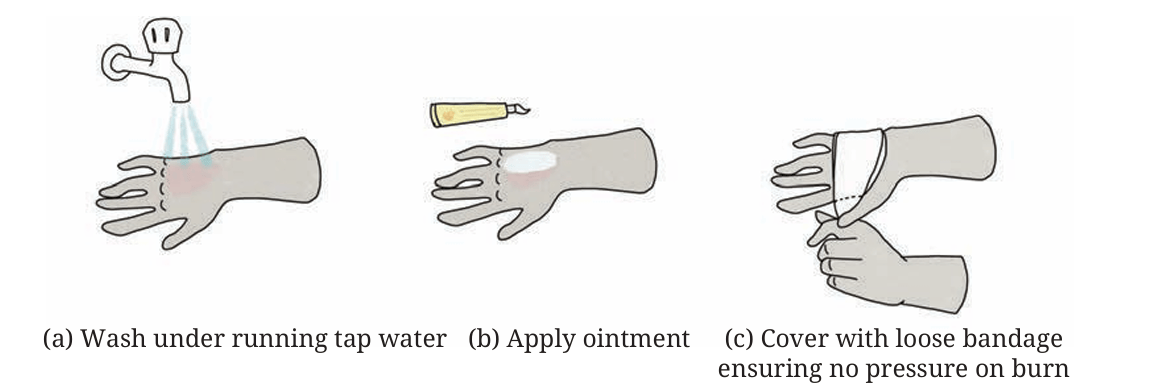
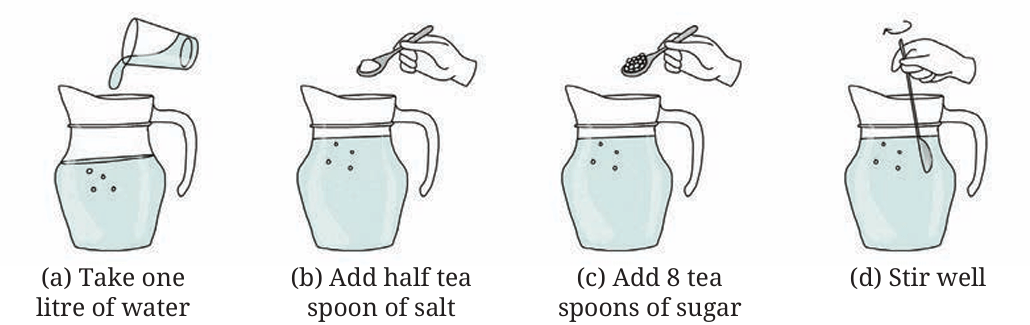
Creating a First-aid Kit Workshop
This format will help you organise the workshop.
Duration of the workshop:
Participants:
Facilitator (Expert can be anyone with an understanding of first-aid):
Materials Required:
Content of the Workshop
- Discussion on the importance of a first-aid kit to treat basic ailments.
- Exploring components of the first-aid kit: Decide the contents that can be incorporated into the school first-aid kit. Brainstorm on possible injuries and health issues which might occur on school premises and what components will be required.
- Organising and labelling the components of the first-aid kit.
- Making the first-aid kit: The components you have selected must be placed in a wide metal container or a small bag with pockets. You may make separators using cardboard or place the components in smaller boxes or bags to ensure you can find them easily, if needed. The box or bag must have the label ‘first-aid kit’.
- Demonstration and practice of use: Make notes while experts demonstrate basic procedures, such as applying bandages for cuts, treating minor burns, dehydration, fever, etc.
Practice once with the support of the expert. - Deciding where to place the first-aid kit: The first-aid kit should be kept in an easily accessible place on the school premises, but out of reach of the younger students.
Figure 6.6 shows the components of the first-aid kit. What else do you think could be required?
While emergencies can happen despite our best efforts, some illnesses can be avoided by taking what is called ‘preventive action’. This means that care must be taken to ensure nutrition and diet, sleep, physical fitness, mental well-being, and environment so that people stay as healthy as possible. To do this, you must understand the needs of people at different ages.
Activity 5: Factors affecting health at different ages
People have different needs at different ages. You may have noticed that babies eat and sleep a lot, and elderly people like to rest in the afternoon. To identify specific needs of your family members, you must understand the factors affecting health at different ages.
Each family is different, e.g., some families have parents and one or more children, some are joint families with many generations living in the same house, some are only made up of one parent and a child – many variations are possible. However, most of us will have people of all ages in our extended families, or family friends of different ages.
With this in mind, collect and document basic health data and some observations related to daily routine for the following age groups: (i) Below 5 years, (ii) 6–18 years, (iii) 19–30 years, (iv) 31–45 years, (v) 46–60 years, (vi) above 60 years. Even if you do not have a family member from any of these age groups, you can collect information from a relative/neighbour/friend. You can make separate sections for every age group using 3–4 sheets, or as required, for each member in your handbook.
Few examples of questions you can ask are given in table 6.1. Add to these questions as per your need.
All questions may not be relevant for particular persons; you may skip those. For children in the age group under 5 years, fill the information after speaking to their parents.
| Category | Questions | Responses |
|---|---|---|
| Diet and Nutrition | How many meals do you eat in a day? | 1/2/3/More |
| How often do you eat fruits and vegetables? | Daily/3–4 times in a week/0–2 times in a week | |
| Do you include lentils and grains in your food? | Yes/No | |
| Do you include dairy products/ meat in your food? | Yes/No | |
| How often do you eat junk food (e.g., chips) and have sugary or soft drinks? | Daily/Weekly/Rarely | |
| What is the daily intake of water (approximate amount in glasses)? | ||
| Physical Fitness | Do you engage in any physical activity or exercise? | Yes/No |
| If yes, what type of exercise do you do? (e.g., walking, yoga, sports) | ||
| How many days a week do you exercise? | ||
| Sleep Pattern | How many hours of sleep on an average do you get daily? | |
| What time do you usually go to bed and wake up? | ||
| Do you take naps during the day? If yes, for how long? | ||
| Do you use electronic devices (TV, phone, computer) before sleeping? If yes, how long before bedtime? | ||
| Is your sleeping area quiet and comfortable? | ||
| Mental Well-being | How often do you feel stressed or anxious? | Always/Sometimes/Never |
| What do you do to relax? (e.g., talk to someone, listen to music, exercise, hobbies)? | ||
| Do you have hobbies or activities that you enjoy? If yes, please mention. | ||
| Do you ask your family and friends for help? | Always/Sometimes/Rarely | |
| How often do you take time to relax or meditate? | Daily/Occasionally/Never | |
| Any special needs related to health (e.g., vaccination requirements, any condition that requires regular medication, any special advice from the doctor)? | ||
| Any other relevant information? | ||
These questions were related to diet and nutrition, physical fitness, sleep and mental well-being. However, environmental factors also play an important role related to health and mental well-being.
Observe the environment around you, and respond to the questions in table 6.2.
| Environment | Is there an open drain in the area around your home? Are there places where water gets clogged? | |
| Is there any place with stagnant water with potential for becoming a breeding ground for mosquitoes? | ||
| Is there timely garbage collection near your home? | ||
| What is the condition of any river or other water body in your neighbourhood? | ||
| Is there a plastic /industry waste dump nearby? | ||
| What is the quality of air in your home (pollution/ smoke/exhaust of industry, etc.)? | ||
| Is there a source of noise pollution near your home? |
Using tablet/smartphone to collect data on pollution
Noise is measured in decibels (db). Sound above 85 db is considered harmful for humans.
You can measure noise pollution using apps on a tablet/smartphone. Search with the keywords: noise measuring app
You can also find the Air Quality Index (AQI) at your geotag location on the MAUSAM website of the Environmental Monitoring Service managed by the India Meteorological Department (IMD).
You now have data from the survey of family members, as well as your observations of your environment. Analysing this data will help you develop an action plan for improving and maintaining your and your family’s health.
Did you know?
Testing quality of potable water
Clean drinking water is essential for good health. Contaminated water can lead to diseases, like diarrhoea, cholera, typhoid, and other long-term health problems. Testing the quality of water helps to ensure that it is safe to drink; this can protect your family from harmful illnesses.
It is very easy to test if water is potable. The H₂S Strip Test Kit is a simple method used to check for bacterial contamination in water.
Using H₂S strip test kit
- Pour the water sample into the bottle up to the given mark (20 ml).
- Cap the bottle and mix well. The colour of the water will change to golden brown.
- Keep this bottle at room temperature (about 25–35˚C). In case of low temperatures, the bottle should be wrapped in a warm cloth and kept in a warm place.
- Do not disturb the bottle for 24–28 hours.
- Now observe the colour of the sample (Figure 6.7).
Interpreting test
- If the colour does not change and remains golden brown: Water is safe for drinking.
- If the colour turns black: Water is contaminated with harmful bacteria and is not safe for drinking.
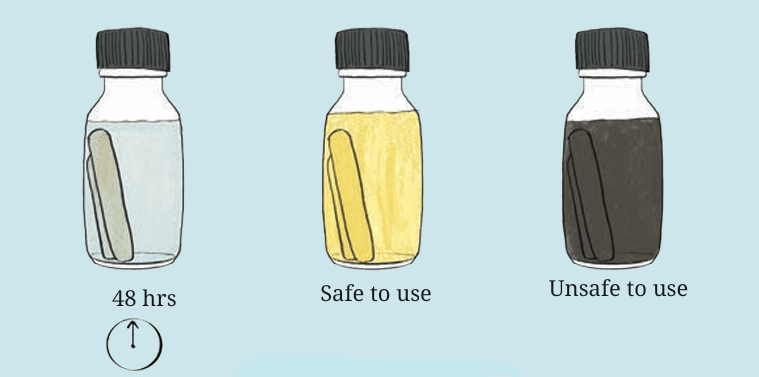
Source of water sample:
Date of testing:
Date of results (24–48 hours after testing):
Colour of water in the bottle:
Water is safe for drinking: Yes/No
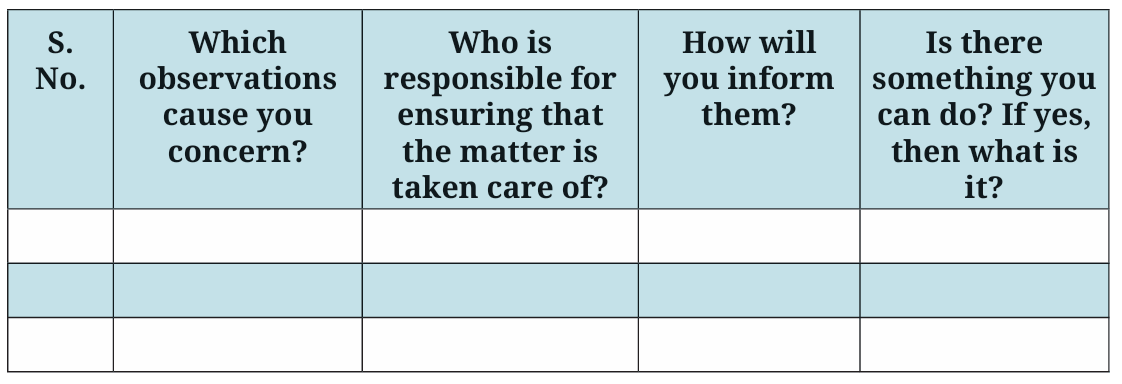
If you find water is not safe for drinking, inform those using this water about potential danger, e.g., you can paint a poster and put it near the water source.
Discuss the results with your Teacher and elder members of the family and learn how to clean water before drinking.
Activity 6: Analysing data from the survey of family members
Analyse the data you have from each family member for each factor. This will help you to get an idea of what their needs are. You can fill the table 6.3 based on this analysis.
| Healthy Analysis Summary | ||||
|---|---|---|---|---|
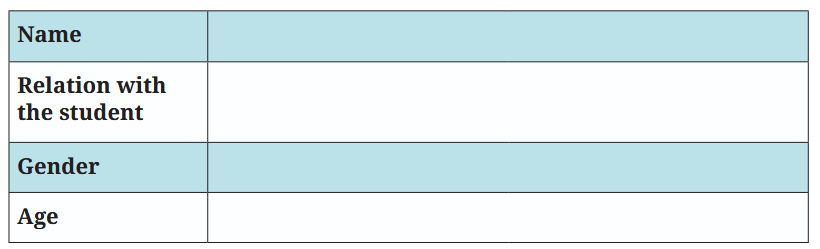
| Name | Age | |||
| Factor | Is there anything that is a cause of concern? | Who can address this issue? | Who is responsible for taking action (society, self, doctor, family members, others)? | |
| Diet and Nutrition | ||||
| Physical Fitness | ||||
| Sleep Pattern | ||||
| Mental Well- being | ||||
| Environment | ||||
When you do the analysis, keep in mind the specific needs of elders (e.g., lack of sleep due to noise pollution), babies (e.g., special type of food preparation), and of persons with disabilities (Divyang).
Activity 7: Making a plan to improve your and family’s health
You noted the absence and presence of certain things in the environment. Identify what actions are needed to be taken, and who needs to take the action. For example, what can you do to eliminate mosquitoes in surrounding areas – will you start a cleanliness drive? Or take support from elders to raise the issue to the relevant municipal authority?
Fill table 6.4 based on your analysis.
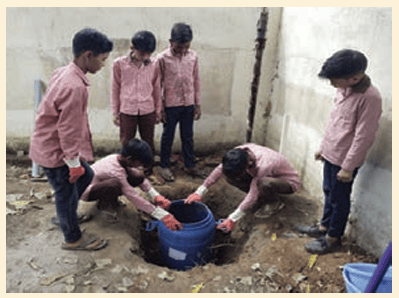
Taking action: Making a soak pit
Soak PitStagnant water is a breeding ground for mosquitoes. Therefore, soak pits are made to soak excess water around the kitchen or washing areas. A soak pit must be made at least 5 metres away from borewell/well/other water source, and also 5 metres away from buildings (Figure 6.8).
Follow the following step to make soak pit (Figure 6.9):
- Dig a 1 m × 1 m × 1 m pit where excess water is to be released.
- Make 20 cm alternating layers of sand and brick, respectively.
- Next, create a 10 cm thick layer of sand on top of the layers.
- Make an arrangement to carry the excess water to the soak pit.
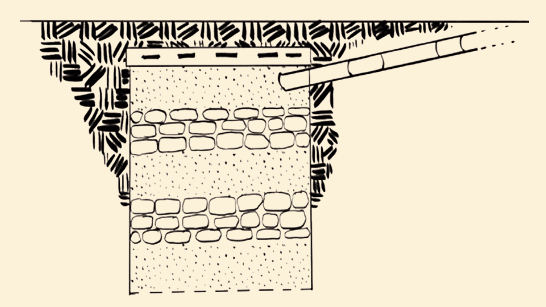
You can also place an old drum in the pit. Make holes in it and make the layers inside the drum as instructed above (Figure 6.9).
This soak pit will prevent stagnant water and therefore breeding of mosquitoes.
Discuss the analysis of data amongst your group. On the basis of this discussion, write down the most important action that your class will take to prevent ill health due to environmental factors in and around the school.
Activity 8: Preventing action related to environmental
Prevention is always better than cure. So, based on the activities so far, what kind of action would you take related to each factor in order to maintain health?
Think of the key actions you will implement with your family.
-
Nutrient-rich diet (e.g., home cooked food, avoid junk food, like chips and packaged snacks)
-
Sleep (e.g., sleeping at the same time, avoiding electronic devices before sleep)
-
Physical fitness (e.g., doing yoga with friends and family)
-
Mental well-being (e.g., eating together at night, playing games with family and friends)
-
Environment (e.g., using mosquito nets, disposing waste)
- Any special needs to be met
Did you know?
Malaria is one of the major health problems in our country. It is caused by the bite of an infected female Anopheles mosquito. However, there is a simple solution to preventing Malaria – using mosquito nets reduces the cases of Malaria by preventing mosquito bites.
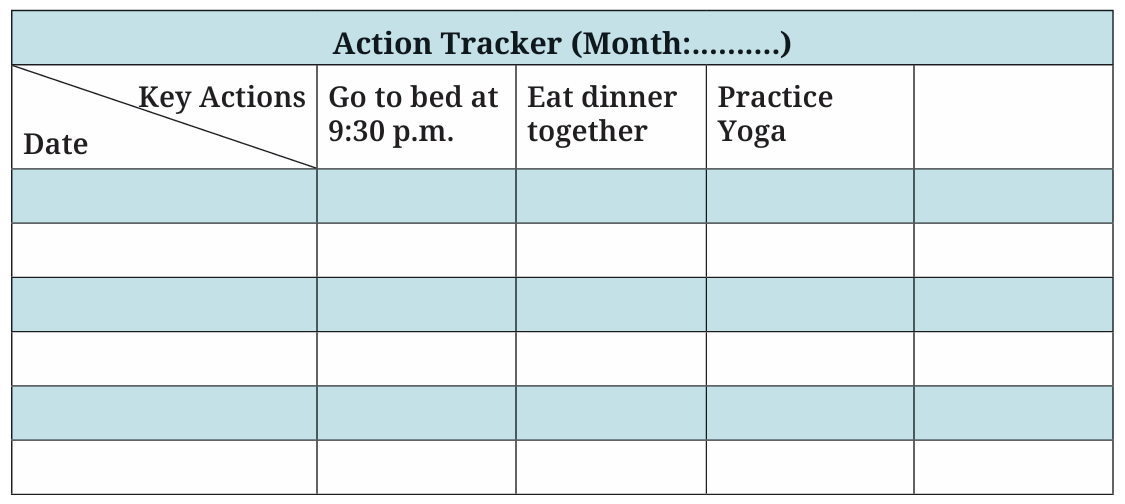
Consistently practising the identified actions will help you see results. Identify five key actions you will take. Track them monthly using the template given in the table 6.5.
Our ancestors were deeply aware of the importance of health. A shloka from the Brihadaranyaka Upanishad says:
ॐ सर्वे भवन्तु सुखिनः। सर्वे सन्तु निरामयाः।
सर्वे भद्राणि पश्यन्तु मा कश्चित् दुःखभाग्भवेत्॥
This translates to:
May all sentient beings be at peace,
May no one suffer from illness,
May all see what is auspicious, may no one suffer.
Use your family health handbook wisely to keep yourself and your family safe.
What did I learn from others?
- According to you, what were the two most important things you learnt during the visit to the health centre and from interaction with health professionals?
- Often, we are well aware of what we have to do and yet we do not practise it. For example, we all know exercise is important, but we often skip it. What do you think is the reason for this? What can be done to change this?
What did I do and how long did it take?
It is important to understand how much time is required for an activity to be completed.
Calculate the approximate amount of time in hours you spent on each activity. Mark them on the timeline on the following page.
If you did more than the activities suggested in the book, pleaseadd the the number and time taken.

What else can I do?
- A lot of waste is produced related to health needs. For example, baby diapers, diapers for the elderly, medicines that have expired/not been used, and so on. Have you ever thought about how this waste is disposed? Find out and write a plan to dispose off similar waste at your home and school.
- Draw up a plan for vaccination of children of different ages in your community, with the help of local health professionals. Participate in a polio vaccination campaign.
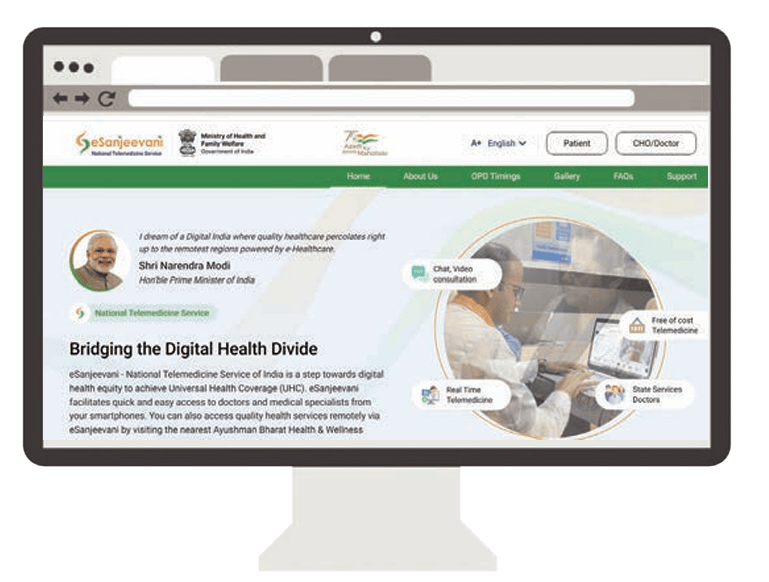
- Explore the telemedicine facility of the online portal e-Sanjeevani managed by the Ministry of Health and Family Welfare (Figure 6.10). Find out how it can be used to consult a doctor.
Think and Answer
- What did you enjoy doing?
- What were the challenges you faced?
- What will you do differently next time?
- According to you, how does drinking water get polluted and how will you ensure it is safe for drinking?
- Identify few examples of jobs related to the work you just did. For example, doctor, nurse, ASHA worker, Anganwadi worker, counseller. Can you think of any other kind of work related to health? Look around, speak to people and write your answer.