
Chapter - 3
LET’S DESIGN — STAGE TECHNICALS 2
I. BACKSTAGE WORK — THE INVISIBLE PILLAR OF THEATRE
A tree in full bloom with flowers and fruits is such a beautiful sight to watch!
But what is the source of its beauty? Its strong and healthy roots.
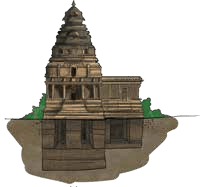
A beautifully constructed ancient temple that tells us many stories of the past, is a matter of pride. What is its strength?
Its strong and deep underground foundation.
What do you understand from these examples?
Anything that is interesting, meaningful and successful to the people, needs a strong support system.

This is the work of backstage crew for any performance. It is a team of people who take up different responsibilities and work hard to ensure the performance runs smoothly, without any glitches. While most people think that theatre is mainly about acting on stage, it is a lesser-known fact that those working backstage are equally, if not more important.
You will learn
- Backstage and its importance.
- Life skills from theatre — problem solving, discipline and integrity.
- Script writing — character work and scene division.
With so much importance being given to backstage work, you must be wondering, what is backstage? Is it the physical space that extends behind the performing area? Why is it so important?
It is important not because of the physical space, but because of the work that happens and the people involved. Notice all the effort and hard work of the backstage team as the actors perform on stage.
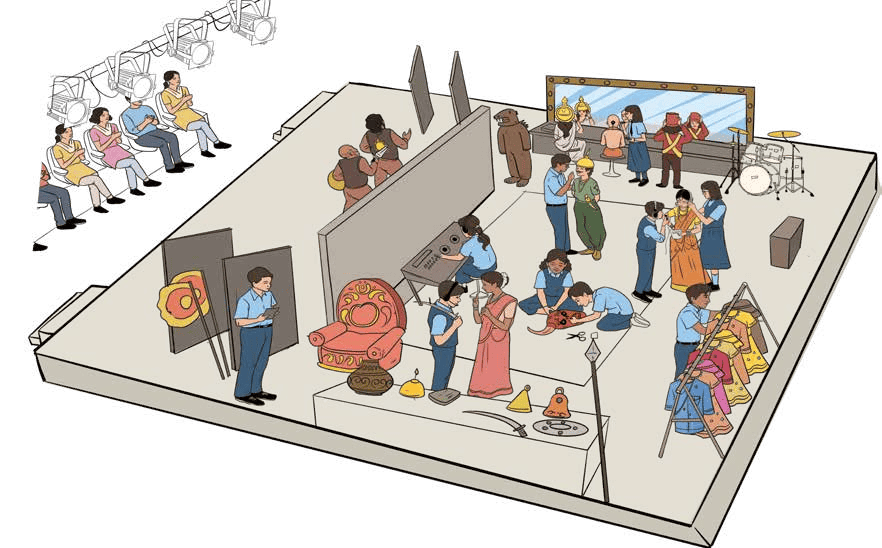
Backstage work involves the following aspects —
1. Set and Properties
- Changing the stage set according to the scenes being performed.
- Keeping all the hand props ready for the actors to pick up.
- Making sure the stage is free of objects that may obstruct the actors.
- Support during the scene, in case something goes wrong or something is forgotten by the actor.

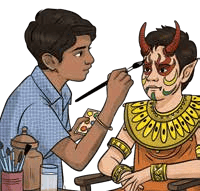
2. Costume and Make up
- Getting the actors ready with character related costume and make up.
- Helping with quick changes between scenes.
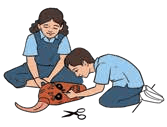
- Support with minor
tear and damage in
costumes.
3. Music
- Working with the actors and tech team to get the right cues for sound tracks.
- Working on music and sound effects that suit the performance.
- Sometimes cover-up onstage glitches with appropriate sound or music.

4. Lighting
- Plan lights and know your cues well.
- Timing lights and supporting the actors during unexpected issues.

If you noticed, all the above points are about things done during the show. Though the major backstage responsibility is during the show, there is a lot of planning and preparation that happens before and after the show. Planning after the show? Yes! Read on …
|
|
Before the show |
After the show |
|
Set and Properties
|
Set and Properties
|

|
Costume and Make up
|
Costume and Make up
|

|
Music
|
Music
|

|
Lights
|
Lights
|
With the above understanding of the kind of work that happens backstage, how many people do you think are required for each department? And how many people would be working backstage for a play that may have about 8 – 10 actors? At least 15 – 18 people! (sometimes more).
Planning, Management and Discipline
There are many life skills that can be acquired by doing theatre and more specifically backstage work.
With so many people and teams working together for one show, what would be the most important aspect to make sure all of it functions well?


|
Team Work and Leadership All departments to work in coordination and mutual understanding with each other. A problem with one could affect the whole show. |

|
Human resource Having the right kind of people to take up different responsibilities is of prime importance. Ensuring all are comfortable in their work also helps in maintaining high quality of work. |

|
Time management This is a must for every member — be it actors or backstage. It is spoken of in detail in the section given in the next page. |

|
Communication Constant sharing of ideas and issues between teams is crucial for a show. If one team is unaware of what the other team is facing, coordination would be affected which would in turn affect the performance. |

|
Resource Management Making sure the materials for making set, props and costumes are procured on time, ensuring they are stored safely and keeping a check on finances and budget. |

|
Sales and Marketing With all the hard work being put in by the teams, is it not important to have a good audience to watch it? |
Discipline and commitment
This is a quality that every member has to develop to be able to successfully perform as a team. Qualities like —
- Attending all rehearsals and preparation sessions without giving excuses.
- Doing your assignments and preparation as per the director’s instructions.
- Arriving on time and not making the team wait for you.
- Making sure you are present for all repeat shows and their rehearsals.
- Volunteering for additional help during free time, sharing resources like costumes and props.
With all the elements of backstage discussed above, do some of the points sound similar to what your teachers and parents constantly tell you to follow in school or at home? It is true that most of these qualities are applicable in your daily life too. But the only difference is, theatre lets you have fun as you learn these skills.
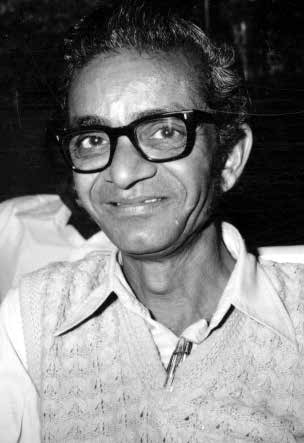
V Rama Murthy was a backstage professional well-known across the country for his work in lighting, sound, stage design, mime and music. He not only produced many plays and mime shows, but also trained many people/backstage crew, who are successfully employed in theatre till today!
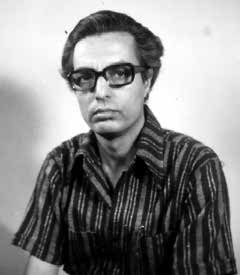
Tapas Sen was an expert lighting designer between 1940 and 2006. He was like a magician with lights, in an era when sophisticated equipment was not available. Apart from the numerous plays he designed lights for in India, he was invited to design lights for new year celebrations of the year 2000 at the Eiffel tower, Paris. He designed lights for numerous shows across the world.
Let us make a list of things that you think you can use outside of theatre also. First two have been given as examples —
Theatre skills in my life
1. Take good care of your belongings — books, uniform and stationary.
2. Practise (study) regularly so you are confident during performance (exams). Saving everything for the last minute will not help.
3. ..............
4. ..............
5. ..............
You are free to add to this list in your notebook.
History of Backstage
Backstage work for plays is as ancient as theatre, this is because, any performance at any point in history, needs a strong support system working behind it. Infact, the oldest treatise on performing arts — the Natyashastra, written more than 2500 years ago, has an extremely detailed description and step-by-step set of instructions of all that has to be followed in a preparation for the show. History of backstage is called Poorvaranga Vidhi, it elaborates on everything from setting up the musical instruments, sets and properties to invoking the blessings of Gods to have an uninterrupted show.
Three bells in theatre
Any professional theatre performance has three bells at different intervals. Each one has a different meaning. This is not just for the cast and crew, but for the audience as well! Here is what they mean:

|
First Bell An indication for the audience to maintain silence, as the play would start soon. By this time, the sets and props related to the first scene are placed on stage. |

|
Second Bell Now, the actors are on stage and in position. Everyone back stage also gets in position. This is an indication that the stage mics have been switched on. The announcement is made (name of the play, playwright, director and special mentions). A strict ban on flash photography and usage of phones during the play are also announced. |

|
Third Bell The show is like the final exam for the team, after so many rehearsals. Can you identify the three steps that you would follow, to make sure you avoid stress before exams and do well? |
There are also detailed descriptions of the structure of Natya Gruha — the place where performances were held and Nepathya the backstage or the entire space around the stage except the audience. The discipline and procedures followed here are called Nepathya Vidhi. It had Mahavarinis (big elephant-shaped pillars) at the corners of the stage where artists would keep the sets and properties ready for entry and exits. Today we have the concept of side wings that do a similar job. Usually theatres have three wings creating three pathways for entry and exit on both sides of the stage.
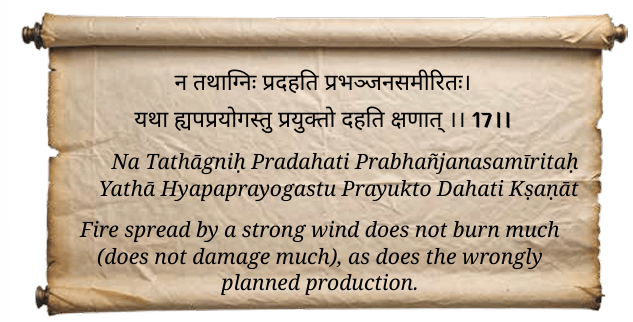
The importance of backstage work is summarised in the below stanza from the Naṭyashastra — Chapter 5 Poorvaranga.
DO YOU KNOW?
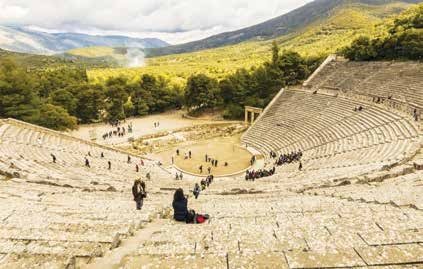
The Greek Theatre too had such arrangements, specially since the performance space was open-air.
The place where the actors got ready with costumes and masks were behind the performing area, covered by green vineyards, trees and bushes. This is why it was called the Green Room. This is used by performers across the world to this day! The place where make up and costume changes are done are still called Green Rooms, though there is nothing green about it anymore.
Brain Booster
Here are some scenarios that can happen anytime in a theatre performance. Put yourself in the situation and write down the solution. You can also come up with more than one solution.
But keep in mind the time required for planning and the actual time available. What is also important is the money involved. For instance, you may not be able to buy an entire new set, as it could get very expensive.
Scenario 1
It is 11 in the morning and the show is scheduled for the same evening. The team has just arrived at the venue for a quick rehearsal. After that they start getting ready for the show. During the rehearsal the main actor falls down accidentally and injures his leg. The injury, as the doctor says, is quite serious and the actor will not be able to walk easily.

You also notice that the costume worn by the actor is also torn. It is not possible to get a different costume as that specific colour and style was made-to-order. It has an important reference in the play. The same costume has also been included in the posters for publicity.
The show begins in 5 hours. What will you do?
Scenario 2
you are preparing for a show based on a magical bracelet. The entire story revolves around it. It is a specially made bracelet not available in shops. It is show day. Everyone is prepared and excited, when the props in charge comes running to say the bracelet has been stolen! What will you do then?

Make something that looks like the stolen bracelet (the original took 5 days to make), change the script or manage with lighting and dialogue to suit the situation? Look for the thief ? Find a solution individually or discuss as a team.
CIRCLE TIME
Backstage
- Which department of backstage are you most interested in? Why?
- What backstage skill would you like to use in your everyday life?
- What skill would help you better during exams?
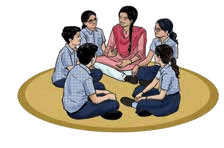
II. SCRIPT WRITING ‘WRITE RIGHT’
“Without the script, a play is like a ship without compass. A script anchors the story to the vision.”
With such a major role, it is of utmost importance to understand the details to make sure you have the right script to work on your play.
You have so far learnt the following —
- Difference between a story and a script.
- Three parts of a story: Beginning — Middle — End.
- Importance of conflict.
- Writing simple conversations.
It is not enough to just learn these concepts. You have to constantly practise them. You may not have to write scripts all the time. You can also identify them in the story books you read or in the movies you watch. It will give you a good understanding of how it is implemented.
We now move on to the next steps of writing a script.
1. Structure
Structure, is simply the order in which you arrange story events. The basic structure that you will have to follow is to ensure you have the following elements —
Protagonist — Who the story is about.
Goal — What does he/she want?
Conflict — Obstacle in his/her path to the goal.
Resolution — Does he/she achieve goal? How?
For example, let us look at the Ramayana which we all are familiar with. Identifying the structure, we have:
Protagonist — Rama
Goal — Take care of Ayodhya as the king, follow the path of Dharma.
Conflict — Banished to the forest for 14 years, his wife Sita is kidnapped by Ravana.
Resolution — Finds support of Hanuman to bring back Sita, completes 14 years, returns to rule Ayodhya.
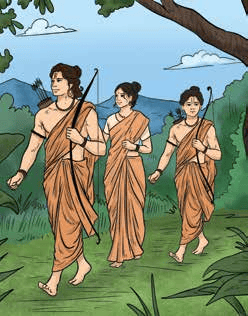
Now, with these main pointers in place, it is easy for you to connect them to form a well-structured story.
You can put this structure to any story. Let us try with stories from your Social Science textbook.
|
Story |
Protagonist |
Goal |
Conflict |
Resolution |
|
a. Chandragupta Maurya and Kautilya |
|
|
||
|
b. Prabhavati Gupta |
|
Excellent! This a great way to understand and remember stories. You can work on more stories like Vikramaditya and Prithviraj Chauhan in your book.
2. Characters
A script has many characters that support in communicating the story. But when you are writing, you have full control over how many characters you want and what each character does in the story. You, as a writer, have the right to introduce any character and remove any character when you choose to. But, any right comes with responsibility! So, write responsibly.
Know your main characters well
What do they want in the story? What issues or problems do they have as an individual? (Not to be confused with the conflict of the story.)
Example: Harsha wants to solve the mystery of the sound coming from the backyard of his house. His problem is that he is afraid of darkness.

ACTIVITY 3.2.1
List out the main characters with these details —
- Name, age, background information.
- Individual problem and special features, if any.
Understand the changes in characters through the story
Every experience and situation we face brings about a change in us. It could build strength in us or give us a new perspective about a person or change our opinion about something. Just like it happens to us, it can happen to the characters too.
Example: Harsha tries to solve the mystery but keeps failing as he avoids going out after dark. One day his Ajji visits and tells him about how she was scared of getting into a bus, but worked on herself to get over it. This inspires Harsha to get over his fear of darkness. So, the story from this point onwards will have Harsha reacting differently when he goes to the backyard after it is dark. This is known as the character arc.
ACTIVITY 3.2.2
- Make a note of characters in terms of thought and behaviour.
- How are they when the story begins?
- How are they mid-story?
- How are they at the end of the story?
Supporting characters
Though the story is not about them, these characters are equally important. The main characters will not be able to do much without these characters. So feel free to add new characters who help the story. But remember to be responsible! Every new character has to have a meaning and purpose towards the goal of the script.

Example: Ajji, who helps Harsha overcome his fear is a good supporting character. A scientist who gives information about sound and wind is a good supporting character. But, a milkman who comes home everyday, without contributing to the actual mystery, need not be in the script at all.
ACTIVITY 3.2.3
List all supporting actors in your script and check if this character is —
- Making a difference to the main character or the goal?
- Providing context to a situation. If they do not, consider removing them.
3. Scenes
You must have seen a book divided into chapters. Likewise, parts of a play/movie are divided into scenes. Why is this required? Why can everything not go on continuously?
Scenes are divisions that mark a change in time, place or action
You have the right to choose how many scenes you want to have. But remember? With rights, come responsibilities! Check for these points for every scene you have. If it does not satisfy them, you will have to rework on the division of scenes.
Purpose of a scene
Does it take the story forward or introduce a new character or bring clarity to a situation?
Valid scene transitions
Scene change should not be abrupt, it must follow the thought flow of the audience.
Each scene should logically connect to the previous and next scene.
Beginning — Middle —End for each scene
An introduction, achieving the core purpose and concluding with a lead to the next scene.
First scene and Last scene
Grab the audience’s attention in the first scene to maintain interest throughout. End with impact, tying up all loose ends without leaving unanswered questions.
CIRCLE TIME
Script Writing
- Which character in a play or movie you saw, is your favourite? Identify its character arc and flaw.
- Since you have to start writing your script, what genre and topic would it be about?
- Is there a movie or play where you thought the script was not good at all? Why?
Brain Booster
Write your own Script!
Yes, by putting together all that you have learnt till now, you are definitely capable of writing your own script. Here is a quick step-by-step checklist to support you in this process —
- I will write the script On my own In a group (get your team ready with 3 – 4 friends).
- Choose a concept or idea that inspires you (if it doesn’t interest you, it can’t interest your readers).
- or
- Choose one of the pictures on the right. Observe it and build a story.
- Prepare an overall Beginning — Middle — End structure with the conflict clearly defined.
- Put it into the structure of protagonist — goal — obstacle — resolution.
- Create characters, divide into scenes and write dialogue.

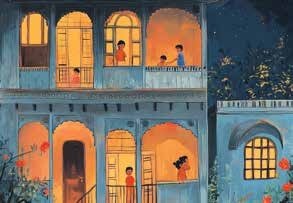

You now have the ‘Draft 1’ of your first script! You can make improvements till it is ready. Now start rehearsing!
KEY TAKEAWAYS — LESSONS FOR LIFE
Backstage — Making magic happen
Theatre is not just about the actors in costumes performing on stage. It is a collective effort. For every successful performance by an actor, there are multiple people working backstage, to make it happen. This builds a spirit of mutual respect and value for work. Backstage work always happens in silence. All the work happens when the play is going on. So, from coordinating to troubleshooting, it is all done in silence (you can probably use your mime skills here!). What is also silent is the congratulatory messages. While most of the applause is taken by the actors, the backstage crew accept the applause and congratulations silently!
The most beautiful feeling of doing backstage work is the feeling of ‘making the magic happen’. After a successful show, you know that your time and effort has been majorly instrumental in that success.
ASSESSMENT
CHAPTER 3: Let’s Design — STAGE TECHNICALS 2
|
CG |
C |
Learning Outcomes |
Teacher |
Self |
|
3 |
3.1 |
Is able to understand the discipline and hard work involved in backstage work |
||
|
3 |
3.1 |
Can categorise stories based on the structure and implement it in one’s script writing |
||
|
3 |
3.2 |
Can relate the skills of theatre to improve everyday discipline in life |
||
|
3 |
3.2 |
Compares historical backstage work to present day work |
||
|
3 |
3.2 |
Can plan scenes and attempts to write a script independently |
Teacher’s Comments and Student’s Observations
...............
...............
...............