
Chapter - 4
Story of India’s Storytelling traditions
Once upon a time, there was a girl — Kathanjali, who loved telling stories.
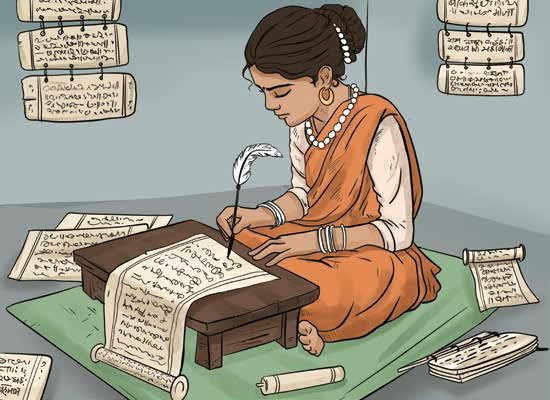
She knew all the stories from ancient history to the most modern ones. She also created stories. She has been living for thousands of years. She has seen many kings and rulers, lived among the common people, and also travelled across the world. So, she remembers the stories she has read and lived through many of the stories! But she is always curious and in search of more interesting stories.
Let us listen to her —
You will learn
- Folk forms of storytelling in India.
- Problem faced by the artists today.
- Well-known traditional storytellers.
Namaste! Though I have travelled across the world, my favourite place has always been Bharata. No matter where I am, I prefer to come back here as it feels like home! It has the most beautiful stories. Do you know how it all started? Many, many years ago, when I was going to different places in Bharata, I realised that the people did not know stories at all. They were missing the fun and the values they could learn. I had to find a way to tell them stories. Since I could not do it all by myself, I created storytellers.
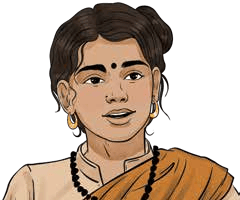
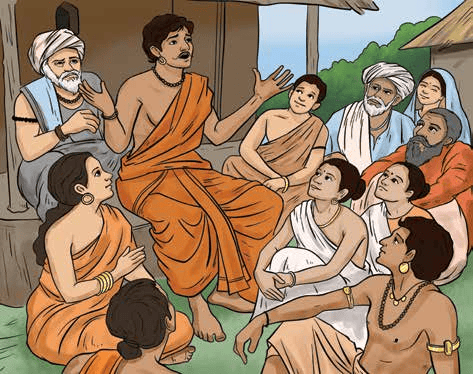
They were people who could remember and narrate stories in very interesting ways. This was fun. There were so many storytellers across the country telling different stories to everyone from small children to old people.
This went on for hundreds of years. Around the 2nd century BCE, I noticed that the listeners sometimes got bored or were distracted. So I had to find something new to make it interesting. That is when I introduced pictures, music, dance and puppets. Wow! This made storytelling a very different experience for people of all ages. I went to different parts of the country and created different ways of using pictures, music and dance to tell stories, based on their traditions. Do you want to know about some of them?
HARIKATHE
During the 12th century, I was travelling in the southern part of Bharata. I visited a lot of beautiful temples and met kings who encouraged art and culture. But, I realised that a lot of people were still unaware of the wonderful stories we have. I remembered Narada Muni who went from one place to another, narrating stories of Lord Vishnu. This would be a great way to tell stories here, I thought. So I encouraged the Bhagavatar community to start telling stories through songs and dance. The people loved it as it was also interactive. Because they narrated the stories of Lord Hari, it came to be known as Harikathe.
It became popular across Andhra Pradesh, Telangana, Maharashtra, Karnataka and Tamil Nadu. The storyteller was called Harikathe Dasa.
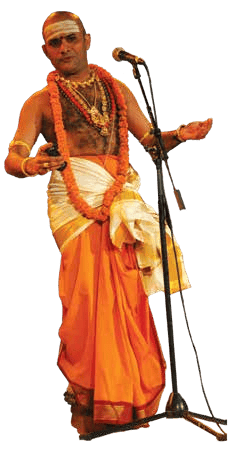
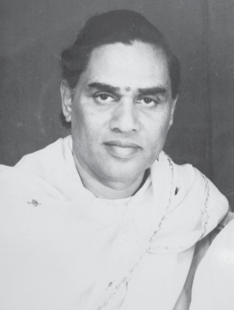
Harikathe — Gururajulu Naidu
This multilingual, multitalented storyteller, Gururajulu Naidu, was born in 1931.
His contributions to Harikathe gave him the title Karnataka Harikathe Pitamaha.
While actual Harikathe performances were going on all night long, his style revolutionised Harikathe performance, with a duration of 90 minutes, which was welcomed by the audience.
His famous Harikathe performances include Bhakta Markendeya, Bhakta Siriyala, Mahi Ravana, Maya Bazaar, Nallathanga Devi, Gaja Gowri Vrata, Shri Krishna Garudi, Lava Kusha, and many more.
He has also been an actor in movies like Mooruvare Vajragalu, Hannele Chiguridaaga, Madhu Malathi, and many more.
KAAVAD KATHA
This is a storytelling tradition that is over 500 years old. When I realised that the common people were unable to read scriptures like the Ramayana, Mahabharata, Puranas and other stories from our tradition, I asked the Bhaats, a craftspeople community in Rajasthan to create an interesting way of using pictures to tell stories. As pictures do not need language, anyone could understand them. So they travelled from village to village with the Kaavad, telling stories to people in their language. They also included songs in it.
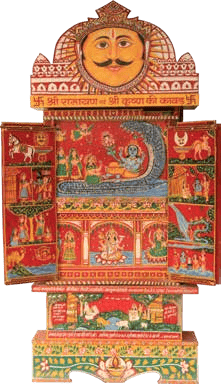
They also told stories from the Panchatantra and Hitopadesha for children. These days, they also tell modern stories that give valuable messages that are socially relevant, like educating girl children in villages and maintaining hygiene.
This box of pictures is created with the wood of mango tree. According to the requirement of the story, the boxes have anywhere between 8 to 16 parts. the biggest cover made so far is 25 feet long!
There have been many storytellers in these forms who travelled across the country telling stories and keeping the art alive. Some have also travelled to different countries, showcasing the stories of our country and its traditions. Do you want to know about some of them?
Kaavadiya — KhojaRam ji
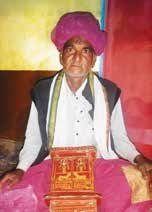
Khojaram ji is from Kumar Dhani near Jodhpur, Rajasthan. He has been practicing Kaavad Katha for more than 40 years now. He is among few surviving Kaavadiyas.
He says, earlier people believed in gyan-daan-bhagwan. Everyone would gather under a tree to listen to Kaavad Katha. Kaavad, as the temple would come to them and they would not just look at the God but listen to the knowledge embedded in the stories of Gods. Now, we go to the jajman’s house once a year. He, like other Kaavadiyas also maintains a book which also keeps the records of people living, dead and newly born, in the families of the neighbourhood.
Phad paintings, Rajasthan
Stories of Puranas, kings and battles they fought. Praise of local deities like Pabuji and Devnarayan.
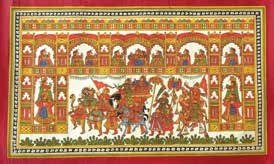
Thangka — Ladakh, Sikkim, Jammu, Kashmir and Arunachal Pradesh
Stories from Buddhist scriptures, events in the lives of saints and local folk stories.
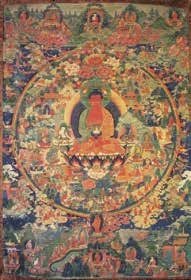
Though these were very popular, now they are slowly becoming rare. Young people are not learning this to take it forward. With everyone watching television and smartphones, there is no one to listen to their stories. If the storytellers are gone, the stories also go away with them. Don’t you think it is important to keep these traditions alive and spread them across the world?
Would you like it if your school textbooks were taught to you in such interesting ways? Let us try. Take any story from your English or Social Science textbook and try to narrate it with pictures. Infact, this will help you remember the lessons.
CIRCLE TIME
- If you had to create a new form of storytelling, what are the things you would add? How would you make it more interesting?
- If you were in the government, list out two things you would do to save these art forms from dying out.
Brain Booster
Become a storyteller!
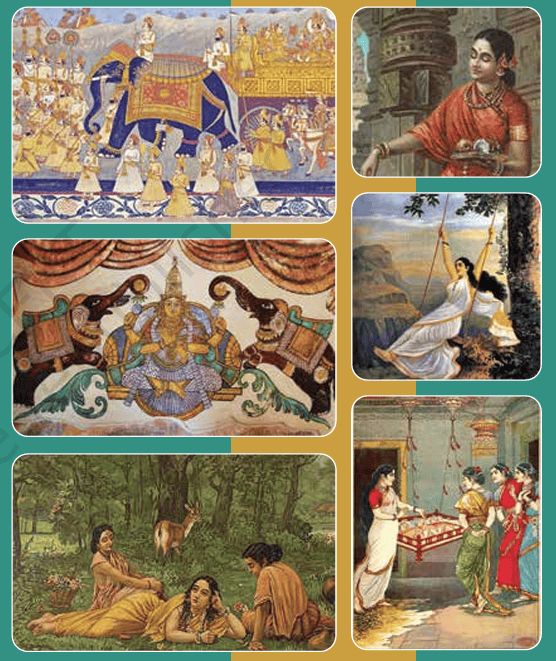
- These are some pictures of traditional paintings.
- Connect them to form your own story. Make it as unique as possible. You can also change the order of the pictures.
- Think of a unique way of narrating it. You could speak every line in a sing-song tone or add some dance steps to describe situations or think of songs that suit the situation.
- You can even try using rhyming words to write your story. That will make it interesting to narrate.
- Present it in front of your class and share feedback.
KEY TAKEAWAYS — LESSONS FOR LIFE
Storytelling — A Treasure in Tradition
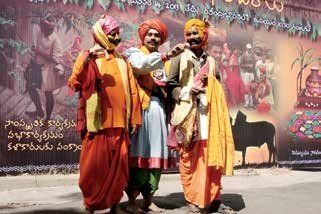
You might be wondering why we have to save these storytelling forms. These are oral traditions. Stories have been passed down through generations. Everyone in our country knows about the Ramayana and Mahabharata today because of these oral traditions. Even if a person cannot read or write, these stories can teach them values for life. The most important factor is that they keep our culture and traditions alive. While written books or computer data can be destroyed in seconds, these stories in oral tradition can never be destroyed. So, go ahead and learn a storytelling style and carry the tradition forward!
ASSESSMENT
CHAPTER 4: Story of India‘s storytelling Traditions
|
CG |
C |
Learning Outcomes |
Teacher |
Self |
|
4 |
4.1 |
Understands storytelling as a performing art that integrates music, dance and art |
||
|
4 |
4.1 |
Attempts to think of initiatives to protect and grow the dying art forms |
||
|
4 |
4.2 |
Identifies storytellers from one’s own experience and describes their style of performance |
||
|
4 |
4.2 |
Compares contemporary storytelling with older formats |
Teacher’s Comments and Student’s Observations
...............
...............
...............
SUMMATIVE ASSESSMENT
|
|
Activity for Assessment (Example) |
Criteria for Assessment |
|
Individual |
|
|
|
Group |
|
|
Teacher’s Comments and Student’s Observations
.......................
.......................
.......................
.......................
Doodles and Notes
.......................
.......................