Skip to content

Chapter - 8

The MUSIC of the people
Our country’s music is incredibly diverse, reflecting the unique cultural heritage of each state, shaped by the creativity of its people. This diversity also exists in other art forms like visual arts, dance and theatre.

You may have listened to music that belongs to different regions of our country. Just tick (✔) or strike (x) in the given columns.
1. The tune of every song is almost the same. ___
2. The rhythmic structure of every composition is varied. ___
3. The songs do not have any theme. ___
4. The songs tell us about life and nature in those regions. ___


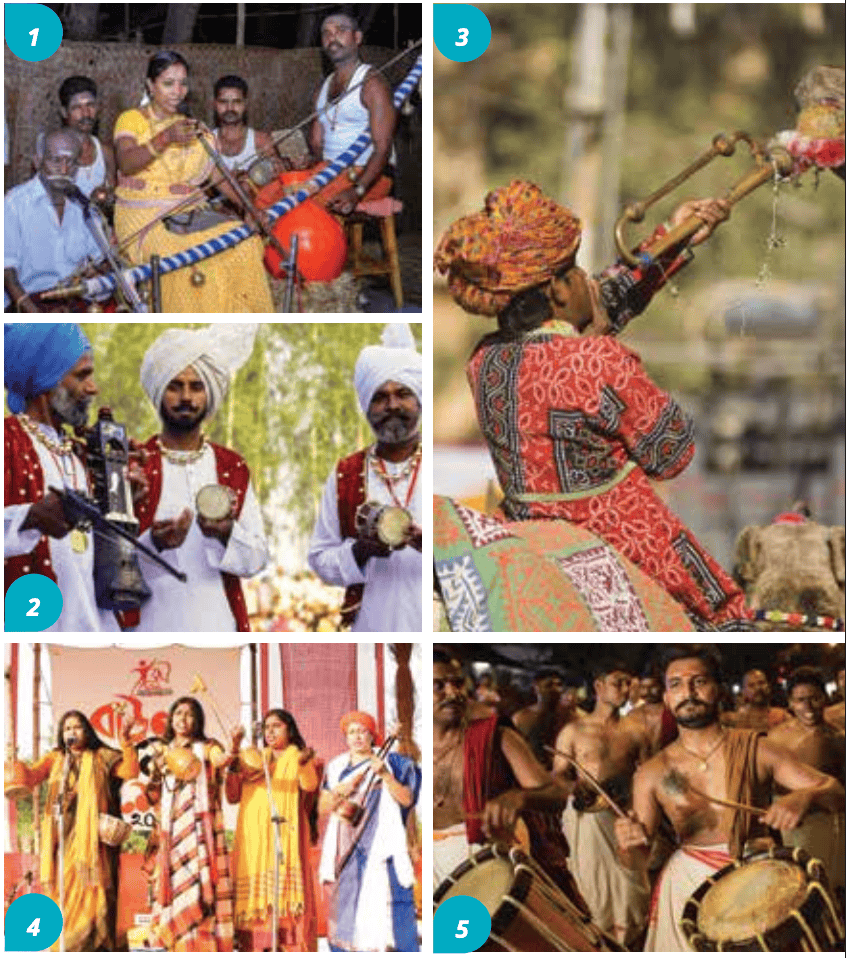
Lok means the people. Hence, lok sangeet is the music of and by the people of our country. Lok sangeet expresses different emotions or rasas and informs you about festivals, rituals, traditions, occupations, beliefs, faith, etc., through the lyrics.

Screenshot 2025-09-12 at 9.45.50 AM

1. Vilavel
2. Sarangi and Damru
3. Desi saxophone
4. Ektara and Gopi jantra
5. Chenda

FOLK SONGS AND COMMUNITY

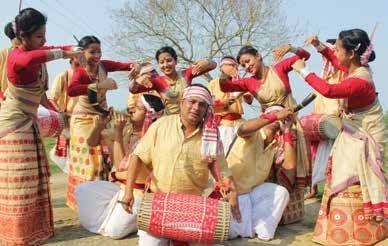
Let us listen to this song given below. It is an Assamese song and its form is Bihu. What is a form? We have discussed this in the previous classes. A form in music refers to the style of singing or playing musical instruments.
Sing the song but first of all, try to read all the words properly. Clap while singing, this will help you understand the rhythm of the song. You can all stand and dance in Bihu style.
6

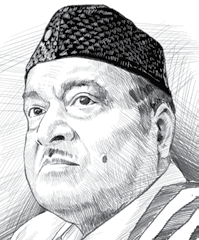
Bhupen Hazarika

SONG: BIHU BIHU LAGISE GAAT

Assamese song by Bhupen Hazarika
Bihu bihu lagise gaat bihu maro ahana Uru uru korise mon epak naso ahana Sinu sinu lage tomar naam ki tomar kuana
Bihu maro ahana epak naso ahana Naam ki tomar kuana jaan
O ...nasani ye naasi jaa Bihu geet epaki gaa bihu epaki gaa Chiyuri mahare pepaki gateelo Ahotor talate roy ukhal makhal lohalo Nasaniye naasi jaay bihu geet epaki gaay
O...Bohagare akakhote naase Korekoye bijuri ulahere Meghore aare aare
O...Daore jen dhol bojaye taale taale Botajoke bihure geet gaare ohol paare paare Hurr runjhun moina gun gun moina guri guri jaa naasana

7

Bihu dancers
SONG SUMMARY

This Bihu geet, captures the spirit of Bohag Bihu, a popular festival. The lyrics express joy, celebration, and a deep connection to nature, rhythm and tradition.

You can find more information about Bihu and the associated festivities in your Grade 6 Hindi textbook - Malhar.

ACTIVITY 8.1

    Just like the Assamese folk song you previously learnt, there are different folk songs sung by people of different regions. Do you know any folk song of your region?
    • Learn a folk song or a song of celebration from your region.
    • Think about the background of the song and the purpose it serves in the community.
    • What are the musical instruments used in the regional song? Identify them with their names and sound.
    • Sing this song in the class and present the same in the school assembly.
    • Also make a presentation about the special elements in the song, the people or the community that sing it.
    • Record the song through a mobile phone and share it with your friends.
    • Listen to a similar song from a different region of India.
    • Use appropriate movements along with the song.
    8
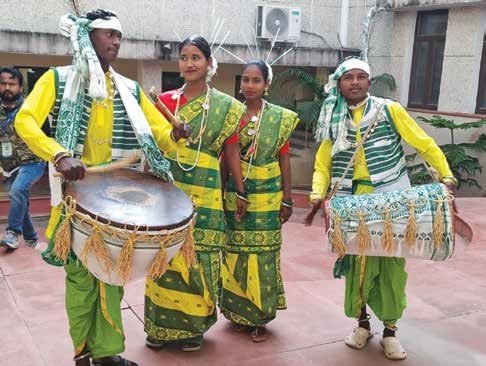
    People of Jharkhand playing the Nagada

    9

    Note to the Teacher:

    Share such projects with other
    schools in your cluster. Also during bagless days, have both, discussion and presentation by the students. Encourage the students to listen to other songs composed by Sri Bhupen Hazarika, who has been awarded the Bharat Ratna for his music.

    UNIQUE VOICES

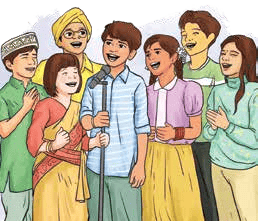
    • Listen carefully to the voices of your friends in the classroom. Are they all unique, or do some sound similar? Probably not! You will hear a variety of tones sharp and clear, rich and deep, and soft and gentle. Just like our appearances, each voice is unique and distinct. No two people look exactly alike and similarly, no two voices sound exactly the same.
    10
    • Have you ever wondered about the difference between a male and a female voice? We often assume that male voices are low-pitched and female voices are high-pitched. However, this is not always true. You will get a fair idea of different types of voices when you listen to the voices of your classmates.

    ACTIVITY 8.2: UNCONVENTIONAL SINGERS
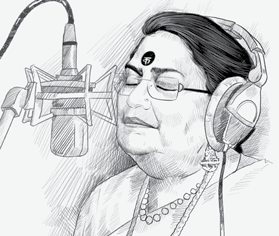
    Here are some examples of male and female voices that are unconventional or unusual. Many renowned artists have unconventional voices, and this is what makes them unique and special. Listen to their music online.12
    Usha Uthup
    13
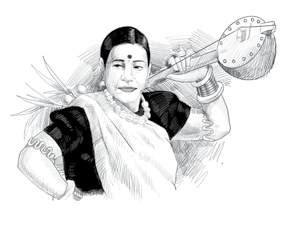
    Teejan Bai
    11

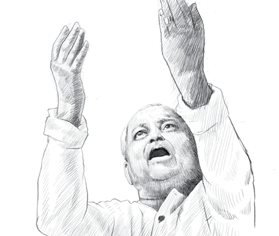
    Kumar Gandharv
    14

    D K Pattammal

    BREAKING STEREOTYPES

    Now let us sing another type of song - A lullaby or a lori.
    A lullaby is a song sung to help a child fall asleep. While a lullaby is usually sung by a mother, can you think of other people in the family who can sing a lullaby for a baby?
    16

      ACTIVITY 8.3
    • Learn a lullaby from the members of your family.
    • Ask your parents or grandparents whether you had a favourite one when you were a baby.
    • Make a note of the words and the specific tune of the lullaby.
    • There is a lyrical lullaby, which was sung by a famous singer Geeta Dutt for films. The song was Nanhee kali soney chali hawa dheerey aana, Neend bharey pankh liye jhoolaa jhoola jaana. Listen to this song online.
      ACTIVITY 8.4
    • Let us listen to a qawwali. A qawwali is a form of devotional music that is related to the Sufi Islamic tradition. Traditionally, qawwalis have been performed by a group of male musicians,
    • however today, many female musicians perform qawwali, showing how musical forms can evolve and adapt over time.
    • Some famous female qawwali singers include Roshanara Begum, who was born in Kolkata.
    • Find and listen to a performance by a female qawwali group online.
    • Learn a qawwali. So learn from a recording or from an artist, who is in your vicinity.
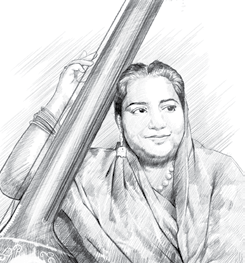
    15
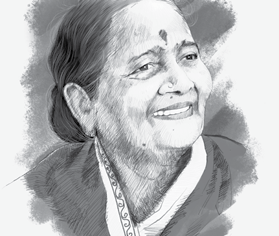
    Roshanara Begum

    WOMEN IN MUSIC

    Several Indian women have left an indelible mark on music through their poetry and compositions.

    MIRABAI
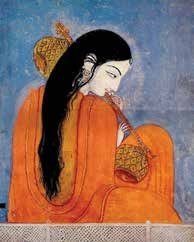
    Mirabai was a poet and devotee of Shree Krishna who lived in the 15th century CE. She was born a princess in a royal family of Rajasthan and married prince Bhojraj of Mewar. From a young age, she was devoted to Lord Krishna, and later on, travelled to many places associated with Krishna like Dwarka and Vrindavan. She was a celebrated poet, and composed hundreds of bhajans (devotional songs) in praise of Krishna. She is remembered today as a great saint of the Bhakti movement, and her bhajans are still sung in both classical and devotional music styles. Let us learn a popular Mira Bhajan.

    SONG: BHAJAN-PAYOJI MAINE

    Payoji maine ram ratan dhan paayo (2)
    Vastu amolik dee mera sataguru, kripaa kar apnaayo (Payoji)
    Janam janam ki punji payee, jag mein sabhi khovayo (Payoji)
    Meera ke prabhu giridhar nagar, harash
    harash jas gaayo (Payoji)

    17

    SONG SUMMARY

    The song expresses Mira's devotion to her lord, Shree Krishna. She expresses that she has found the most precious thing, her guru or teacher who has been very kind to her. She says though she might have lost worldly possessions, this devotion has given her assets worth many births. Then she says her lord is Krishna and she would sing his praises happily.

    ACTIVITY 8.5

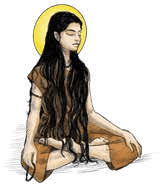
    Let us get to know Lal Ded.

    Lalleshwari, commonly known as Lal Ded, was a Kashmiri mystic and poet. She created many vakhs (short poems), which are rich in philosophical meaning.

    Find more information about Lal Ded online, or from a book in your library.

    • Which century did she live in?
    • What were her poems about?
    • How has she contributed to music and poetry?
    • Read the translation of one of her poems and discuss your feelings about it.19

    MUSIC AND SOCIAL REFORM

    Music can be used to express a point of view and the urge for change in society. Many music composers and poets have used songs to protest against the existing social conditions and to advocate for messages of equality and togetherness.

    ANNAMACHARYA

    20
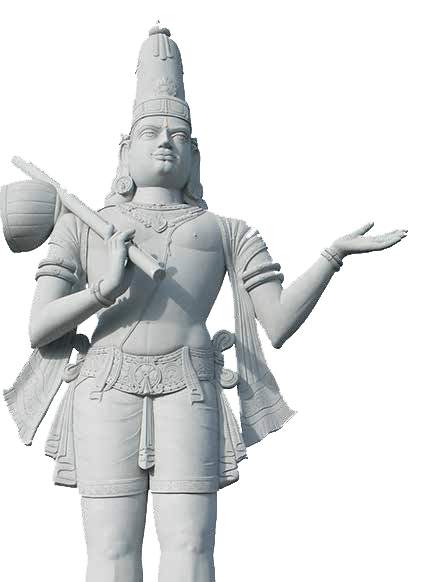
    Annamacharya was a Telugu musician, composer and saint who lived in the 15th century. He is said to have composed 32,000 sankirtanas (devotional songs) in praise of Lord Venkateshwara of Tirupati. He was among the earliest to oppose social stigma His songs preach against untouchables. messages of brotherhood and morality.
    One of his well-known compositions is Brahmam Okate.

    SONG: BRAHMAM OKATE

    Tandanana ahi tandanana pure Tandanana ahi tandanana pure Tandanana bhala tandanana
    Brahmam okate para brahmam okate para Brahmam okate para prahmam okate.. Kanduvagu heenadhikamulindu levu
    Andariki shri hare antharaathma Indulo jantukulamintanokate Andariki shri hare antharaathma Hare antharaathma
    Shri hare antharaathma..
    Kadagi enugu meeda kaayu endokate Pudami shunakamu peeda polayu yendokate Kadu punyalanu papa karmulanu sarigaava
    Jadiyu sri venkateshvaru namamokate Venkateshvaru namamu okate


    SONG SUMMARY

    This song describes how God is one. There are no class distinctions like high or low, as God dwells in all beings.

    CHARANKAVI MUKUNDA DAS
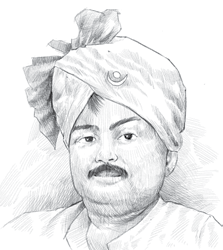
    In Bengal, Charankavi Mukunda Das, also known as Jogeshwar Datta, who lived in the 19th or 20th century, preached objectives of the Swadeshi movement through his songs and plays in villages. Here is a composition by him-
    21

    SONG: BAAN ESHECHEY

    Baan eshechey maura gange khulte haube nao tomra ekhono ghumao
    Kauto Joog Gaichey ketey dekhecho kauto shaupon Ebaar badar boley dhauro boithaa jibon mauron paun Daumkaa hawaar kaal kaal giyaachey Phagun boiche paal khaatao
    Kaandtey haube sharaa jibon joog joogantor tauposhshatey eshechey ei laugon Parer maajhi haal dhorechey michey paurer mukh takao

    SONG SUMMARY

    The song says, "A tide has risen, a flood swells in the river", symbolising the flow of life. "Do not sleep arise! Much time has already slipped away. If you do not take the oars into your own hands and steer the boat, all opportunities will be lost, and you will be left with only regret for your inaction".

    ACTIVITY 8.6: VOICE FOR CHANGE
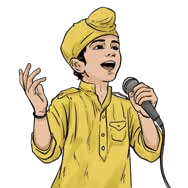
    You also, can use music and poetry to bring about change.
    What change would you like to see in your school or your community?
    Write an 8-line poem or rap describing why this change is important in a way that convinces others.
    22

    INSTRUMENTS AND REGIONS

    “देशे देशे जनानां यद्रुच्या हृदयरञ्जकम्| गीतं च वादनं नृत्तं तद्देशीत्यभिधीयते|"

    संगीत रत्नाकर

    "Deśhe deśhe janānām yad ruchyā hridaya rañjakam Gītam cha vādanam nrittam tad deśhī-tyabhidhīyate"

    - Sangeet Ratnakar

    MEANING

    The diverse tastes and choices of people across different regions of India reflect the country's rich cultural mosaic. This diversity inspires a variety of art forms, including music, musical instruments and dance, creating expressions that resonate with local traditions, beliefs and ways of life.23
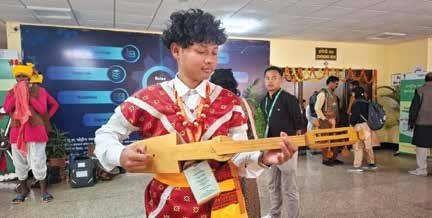
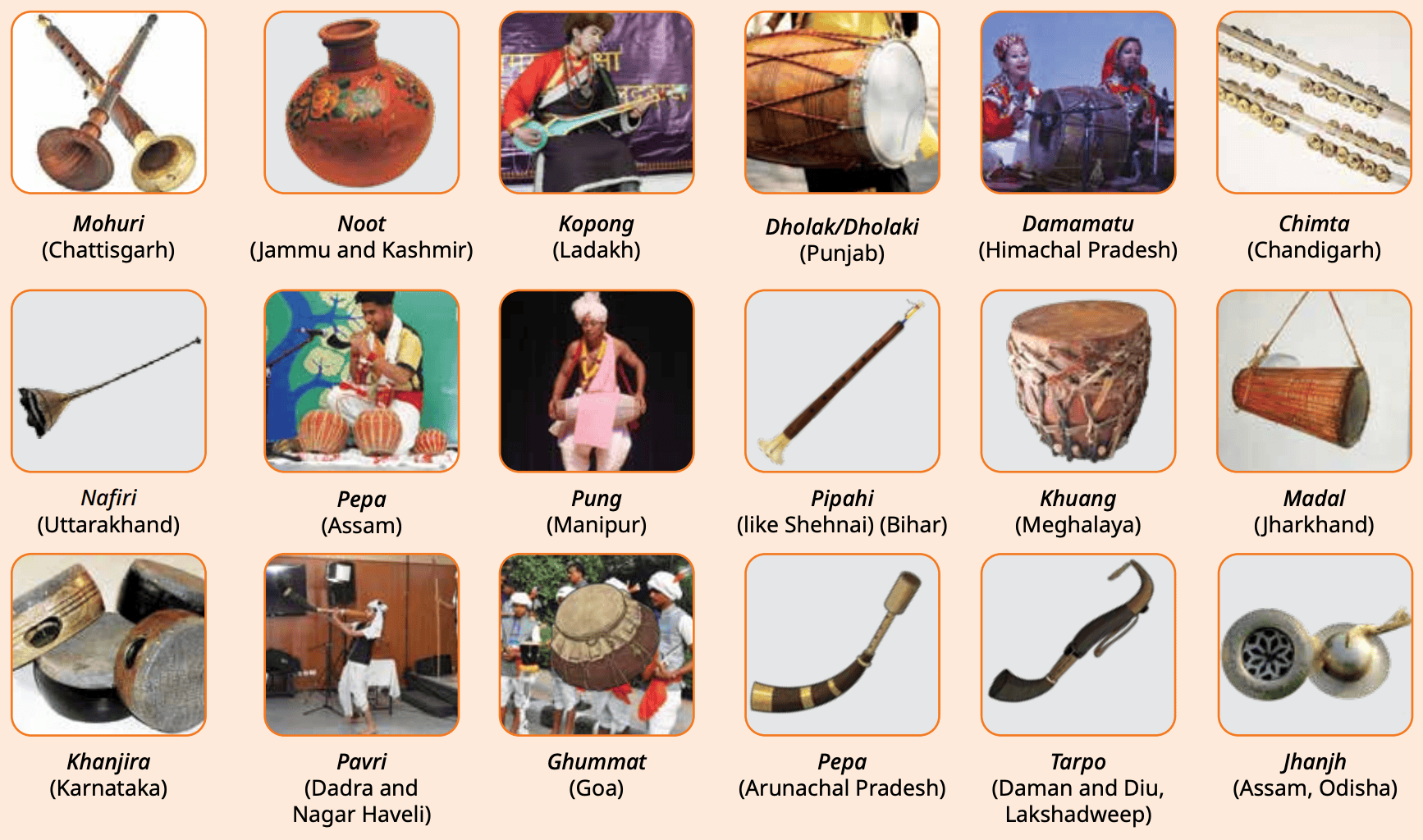
    Kopong - Musical instrument of Ladakh

    Different regions in India have different instruments that are characteristics of those regions. Note: Some instruments may be played in more than

    one state and sometimes, the same instrument can also be known by different names.

    ACTIVITY 8.7: MAP THE INSTRUMENT

    1. In Grade 6, the categories of musical instruments have been given. Find images of these instruments online. Which category do the following musical instruments fall in?
    Musical Instrument Category
    Mohuri
    Noot
    Damamatu
    Chimta
    Tarpo

    ACTIVITY 8.8

    Print or bring a large map of India. Paste the image of the instrument on the region of the country that it is from.
    Screenshot 2025-09-12 at 11.42.08 AM

    ACTIVITY 8.9: KNOW YOUR MUSICIAN

    Find and interview a musician in your locality or in your vicinity. Here are some sample questions, feel free to add your own or change these questions.

    1. What is your name?

    2. What is your style of music called and where is it from?

    3. Can you tell us a little bit about your instrument, if you play one? How is it made and how is the sound produced?

    4. When did you start learning music and from whom did you learn?

    5. How much did you practise when you started learning and how much do you practise now?

    6. How is your style of music usually performed?

    7. What was one of your most memorable performances and why?

    8. What advice would you give to young musicians?

    9. How can one learn this style of music if they want to?

    10. Is there anything else you would like to share?

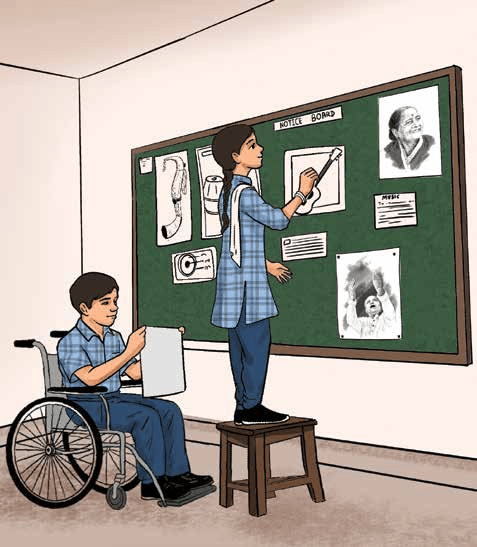
    Make a collage of musicians from your region and post it on your notice board.
    43

    ASSESSMENT

    CHAPTER 8: THE MUSIC OF THE PEOPLE

    CG

    C

    Learning Outcomes

    Teacher

    Self

    2

    2.1

    Is able to speak about the role of music in social reform

    2

    2.2

    Is able to appreciate the importance of diversity in music

    2

    2.2

    Expresses their thoughts clearly in the form of a poem or rap

    4

    4.1

    Is able to sing a local folk song

    4

    4.2

    Is able to present information about a musician

    Teacher’s Comments and Student’s Observations

    ...............

    ...............

    ...............