11

DANCE VOCABULARY AND TECHNIQUES
NRITTA, NRITYA AND NATYA
Dance comprises many units which are beautifully connected together. Some have joyous movements, some narrate a story or a situation and some tell the full story. Below are the definitions of nritta, nritya and natya given from the treatise, Abhinaya Darpana, a text widely followed by classical dancers.
नृत्तं - भावाभिनयहीनं तु नृत्तमित्यभिधीयते ॥ १७॥
nṛttah bhāvābhinayahīnam tu nṛttamityabhidhīyate
Nritta consists of dance with only movements without any specific emotive content or narrative.
नृत्यं – रसभावव्यञ्जनादियुक्तं नृत्यमितीर्यते ॥ १६॥
nṛtyam rasabhāvavyañjanādiyuktaṁ nṛtyamitīryate
Nritya combines dance with narration of stories or situations with rasa and bhava.
नाट्य – नाट्यं तन्नाटकं चैव पूज्यं पूर्वकथायुतम् ।
nāṭyaṁ : nāṭyaṁ tannāṭakaṁ caiva pūjyaṁ pūrvakathāyutam
Natya is a dance drama where all aspects of performance are integrated to narrate a full story.
You will explore the vocabulary of nritta and nritya in this chapter.
The most important unit of a dance form are the basic steps that need to be learnt. These steps form the dance vocabulary. The various steps are then strung together to make a dance.
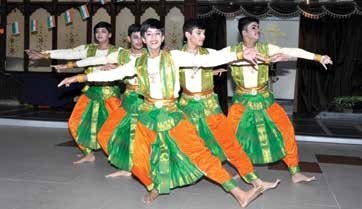
ACTIVITY 11.1: BASIC STEPS AND RHYTHMS — NRITTA
You have been learning steps and rhythm in your earlier grades, now try some different rhythmic beats, i.e., 5, 6 and 7 beats. Add some permutations and combinations to this. Look at the images drawn below. They are combinations of steps exploring different beats. Do you wish to try your own combinations with various rhythms. Different ways the feet can be used are shown below —
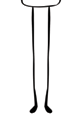 Feet together Feet together |
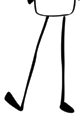 Heel — front, side Heel — front, side |
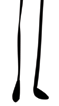 Toe — front and back Toe — front and back |
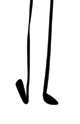 Cross in front Cross in front |
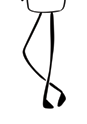 Cross at the back Cross at the back |
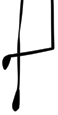 Jump with one leg raised Jump with one leg raised |
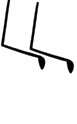 Jump with both legs Jump with both legs |
|
You will use these foot positions and movements to build your dance.
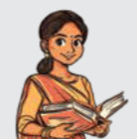
Note to the Teacher: Suggestive step combinations are given on Page 118. Actual practice can be based on appropriateness, and convenience based on the region and level of learning. Beginners may try rhythms with simple steps as decided by the teacher. It can be aligned with maths for understanding counting and beats better.
Bols (rhythmic syllables) and counts for the beats can either be decided by the teacher or students.
5 BEATS ARE A COMBINATION OF 2 AND 3 BEATS
Examples for 5 beats or step counts.
| 1 | 2 | 3 | 4 | 5 |
|---|---|---|---|---|
STEP COMBINATION 1Start with the right leg. |
||||
| right | left | right | left | right |
| stamp | stamp | heel | stamp | stamp |
| Now, repeat with left leg. | ||||
| left | right | left | right | left |
| stamp | stamp | heel | stamp | stamp |
STEP COMBINATION 2Start with the right leg. |
||||
| right | right | left | right | left |
| jump | step | cross | step | stamp |
| Now, repeat with left leg. | ||||
| left | left | right | left | right |
| jump | step | cross | step | stamp |
Like the above combination of 5 beat steps, combine more steps with heel in front, heel to the side and other variations.
6 BEAT ARE A COMBINTION OF TWO 3 BEATS (3+3)
Examples of 6 beats or step counts.
| 1 | 2 | 3 | 4 | 5 | 6 |
|---|---|---|---|---|---|
STEP COMBINATION 11 Start with the right leg. |
|||||
| right | left | right | left | right | left |
| toe cross | stamp | heel front | stamp | stamp | stamp |
| Repeat with left leg. | |||||
| left | right | left | right | left | right |
| toe cross | stamp | heel front | stamp | stamp | stamp |
STEP COMBINATION 2Start with the right leg. |
|||||
| right | Left | right | right | left | right |
| heel | stamp | stamp | toe cross | stamp | stamp |
| Repeat with left leg. | |||||
| Left | right | left | left | right | right |
| heel | stamp | stamp | toe cross | stamp | stamp |
Follow the above example and try different combinations of leg movements.
7 BEAT ARE A COMBINTION OF 3 AND 4 BEATS OR 3+2+2 OR 4+3 (3+3) OR 4+3
Examples for 7 beats or step counts.
| 1 | 2 | 3 | 4 | 5 | 6 | 7 |
|---|---|---|---|---|---|---|
| Step Combination 1 Start with the right leg. | ||||||
| right | left | right | left | left | right | right |
| stamp | toe | stamp | heel | stamp | heel | stamp |
| Repeat with left leg. | ||||||
| left | right | left | right | right | left | left |
| stamp | toe | stamp | heel | stamp | heel | stamp |
| Step combination 2 Start with the right leg. | ||||||
| right | left | right | left | right | left | right |
| heel | stamp | stamp | cross | stamp | stamp | stamp |
| Repeat with left leg. | ||||||
| left | right | left | right | left | right | left |
| heel | stamp | stamp | cross | stamp | stamp | stamp |
Practise the above rhythms in different patterns. You can use music bandishes given in music class and add arm movements of your choice.
NRITYA
In Kriti, Grade 6, you started with a shloka from the Abhinaya Darpana, that gave the concept of the use of hand gestures. This is connected to narration and concentration of the mind in bhava to evoke rasa for a successful performance. Let us recap the shloka and its meaning to present your nritya.
यतो हस्त स्ततो दृष्टि । यतो दृष्टि स्ततो मनः
यतो मनः स्ततो भावः । यतो भाव स्ततो रसः
yato hastastato dṛiṣhṭi, yato dṛiṣhṭistato manah
yato manastato bhāvah, yathobhāvastato rasah
Wherever the hand moves, the eyes follow;
Wherever the eyes go, the mind follows.
Where the mind is directed there bhava is created; Where there is bhava, rasa unfolds.
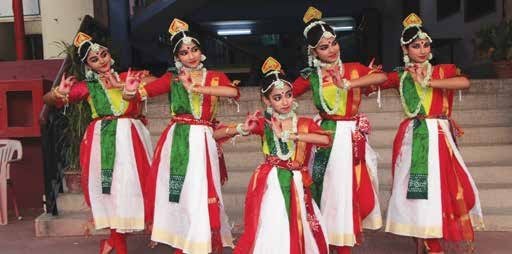
ONVERSATION USING HASTA
In Chapter 1, you learnt how hastas were
skillfully used in sculptures to convey
expressions and communicate specific
messages. These hastas play a vital role in
portraying emotions, and narratives in visual
and symbolic ways.
You are familiar with the usages of asamyuta
hastas which you have done earlier.
Note: Please refer to the Kriti, Grade 6 for asamyuta hasta usage.
Activity 11.2
Now, explore the various ways you can use samyuta hastas.
Here are some samyuta hastas with various uses.
 NAME: Anjali NAME: AnjaliUSES •Namaskar |
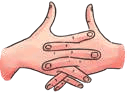 NAME: Karkata NAME: KarkataUSES •Gathering of people •Show belly •Twist and stretch the limbs |
 NAME: Pushpaputa NAME: PushpaputaUSES •Offer flowers •Drink water •Receive things •Perform aarti |
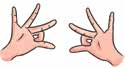 NAME: Shakata NAME: ShakataUSES •Anger •Demon |
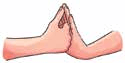 NAME: Shankh NAME: ShankhUSES •Blow conch shell |
| NAME: Pasha USES •Disagreement •Tight knot •Chain |
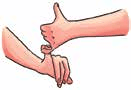 NAME: Kilaka NAME: KilakaUSES •Friendship •Affection |
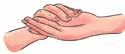 NAME: Samputa NAME: SamputaUSES •Hide object •Rolling dice |
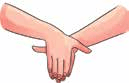 NAME: Matsya NAME: MatsyaUSES •Fish |
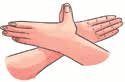 NAME: Garuda NAME: GarudaUSES •Eagle •Bird |
Activity 11.3
Now, converse in the class using spelling — asamyuta and samyuta hastas (Refer to your asamyuta hasta usages from Kriti, Grade 6).
Demonstrate a meaningful sentence using both asamyuta and samyuta hastas in front of your friends, and let them guess its meaning.
Try short phrases first like:
WELCOME, MY FRIEND
| Welcome |
my friend |
WE ARE TOGETHER
 We are We are |
together |
DO NOT BE ANGRY AND FIGHT
 Do not Do not |
be angry |
 fight fight |
IN THE FOREST, THERE WAS A DEER
| In the forest |
 there was there was |
 a deer a deer |
THERE ARE FISHES IN THE RIVER
| There are |
fishes |
the river |
Then, combine further to make full sentences. You can combine hand gestures as per your creativity.
Example:
• Welcome, my friend. Do not be angry and fight, let us go and play together.
• In the forest, there was a deer, flying birds and fish in the river.
Have fun conversations —
1. Do you know Karate? What are the different postures used in it?
2. Do you realise that it can be an important way of communication?
Note to the Teacher:
 Sentence can be given by
the teacher to individual
student.
Sentence can be given by
the teacher to individual
student.
JUMPS AND PIROUETTES (SPINS)
IN HOW MANY WAYS CAN YOU JUMP AND SPIN IN DANCE?
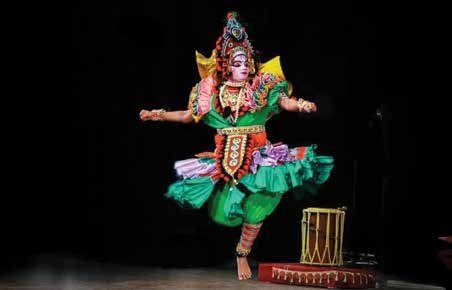
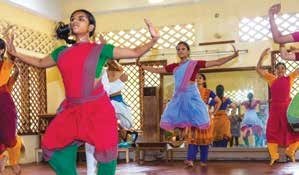
Jumps, utplavana, pirouettes and bhramaris (spins) play an important role in a dance performance. The execution of jumps and pirouettes is another unit of dance vocabulary, which can be used in pure dance or to enhance emotive content.
Both jumps and pirouettes can be performed in rhythm with music beats, enhancing the overall impact of a dance. In a dance with stories, it can be without rhythm.
ACTIVITY 11.4: ENHANCING MY DANCE WITH JUMPS AND SPINS
You might have jumped and spun around while playing, dancing or engaging in everyday activities. Below are some examples of jumps and spins.
JUMPS
Jump with one
leg raised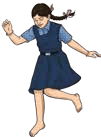 |
Jump with one leg
to move in front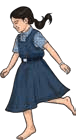 |
Jump by folding both
the legs back |
Jump without
folding legs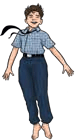 |
Think, jump and spin with your friends. Did you enjoy it?
PIROUETTES
Spin on one leg 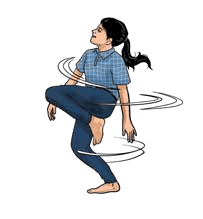 |
Spin spreading
both hands in air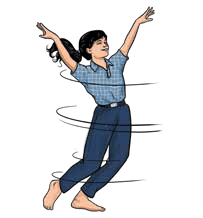 |
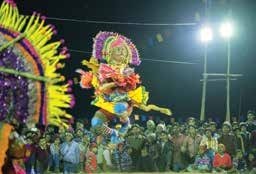 |
 |
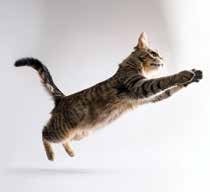
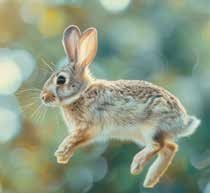
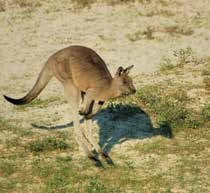
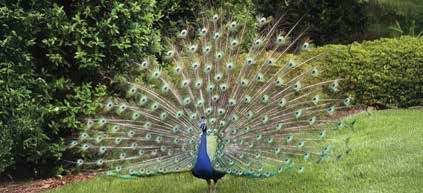
ANIMAL JUMPS AND PIROUETTES
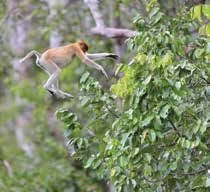
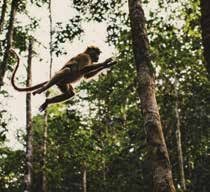
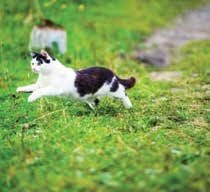
Observe how different animals perform jumps and pirouettes in their natural movements.
How does a monkey jump from tree to tree?
 |
 |
How does a cat jump gracefully to land softly?
 |
 |
How do rabbits and kangaroos jump as if they have spring on their legs?
 |
 |
How elegantly does a peacock turn in circles while spreading its feathers?
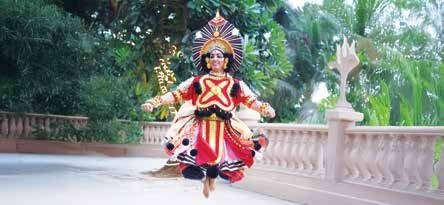
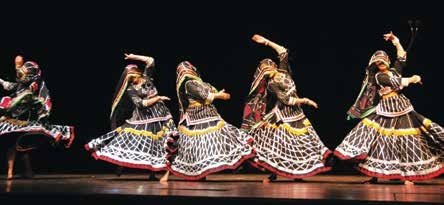
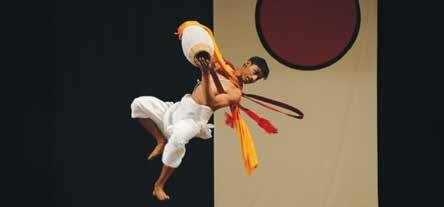
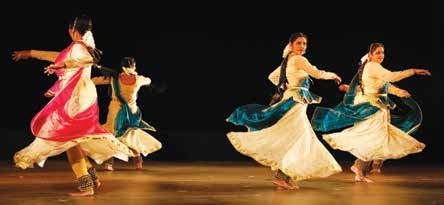
These movements are an integral part of our folk, traditional and classical dance forms. In Karnataka’s Yakshagana, the artist performs pirouettes while standing on knees, often executing them multiple times. Kalbelia, a traditional dance from Rajasthan is performed in a circular motion while taking pirouettes in a circular path. In the Pung Cholom dance of Manipur, the drummers jump and spin holding a drum. Kathak, the classical dance form of northern India is characterised by the spins the dancer executes.
Activity 11.5
Search and watch the below-listed dance forms. Discuss and tick whether they include jumps, pirouettes or both.
| Dance Form | Jumps | Pirouettes |
|---|---|---|
| Aji Lamu from Arunachal Pradesh | ||
| Cherchera from Chhattisgarh | ||
| Poykall Kuthirai (dummy horse) from Tamil Nadu | ||
| Googa Dhamoda from Haryana | ||
| Cham from Ladakh | ||
| Fugdi from Goa |
Divide yourselves into four groups, and in each group try some of these jumps and pirouettes that you have observed in these dances.
Activity 11.6: Storytelling
STORYTELLING WITH OWN DANCE TECHNIQUES
You have learnt basic steps, expressing emotions appropriately based on the situation, effective use of hastas, and incorporating jumps and pirouettes, create your sequence of situations, incorporating all the above elements.
Game Time — Mookaabhinaya
Form two groups. The first group will act out a small situation using expressions and hand gestures. The other group must guess the situation. Continue the game for a few rounds and then decide the winning group.
It will be a lot of fun.
Note to the Teacher: Suggest different situations to children, depending on their level and ability.
ASSESSMENT
Chapter 11: Dance Vocabulary and Techniques
| CG | C | Learning Outcomes | Teacher | Self |
|---|---|---|---|---|
| 1 | 1.1 | Understands basic techniques of combining different parts of feet for movement | ||
| 1 | 1.2 | Understands the rhythmic elements used for practising basic dance steps | ||
| 1 | 1.2 | Understands the importance of hand gestures as tool of communication | ||
| 2 | 2.2 | Correlates jumps and spins in various dances | ||
| 2 | 2.2 | Feels comfortable in practising jumps and spins | ||
| 2 | 2.2 | Uses all techniques to express oneself |
Teacher’s Comments and Student’s Observations