
12
DANCE, YOU AND CREATIVITY
Movements of Hips in Dance
After exploring the movement of upper torso, lower torso, arms and
legs you will now see the movement of the hips and the kati — another
body part mentioned in the Natyasastra.
Hip movements in Indian dance tradition play
a vital role in expressing the rhythm and emotion
of the song. While their specific use and style can
vary across different classical and folk dance forms,
they are characterised by grace, precision and fluidity.
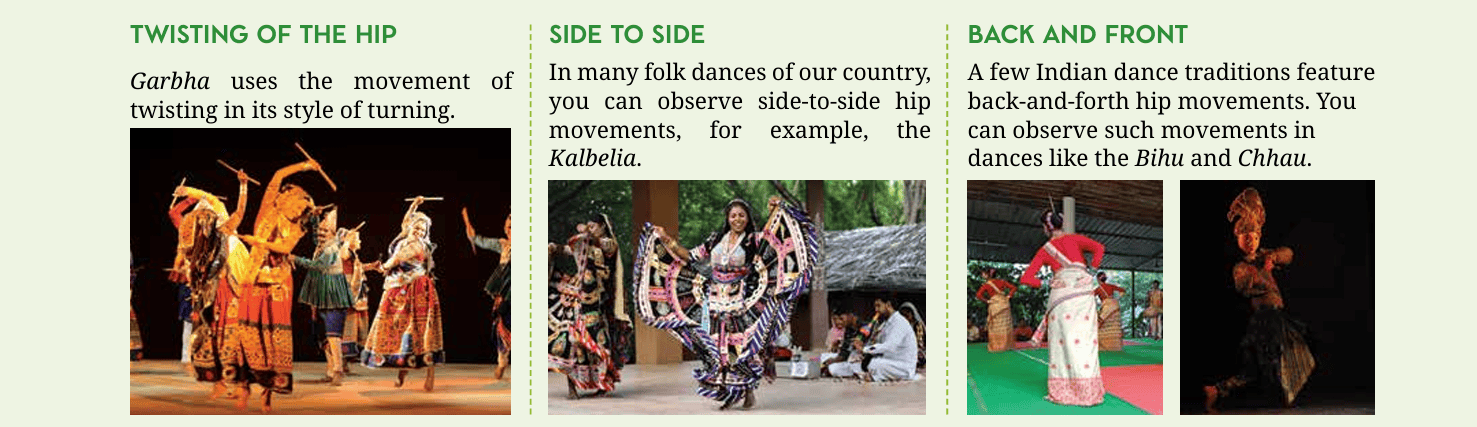
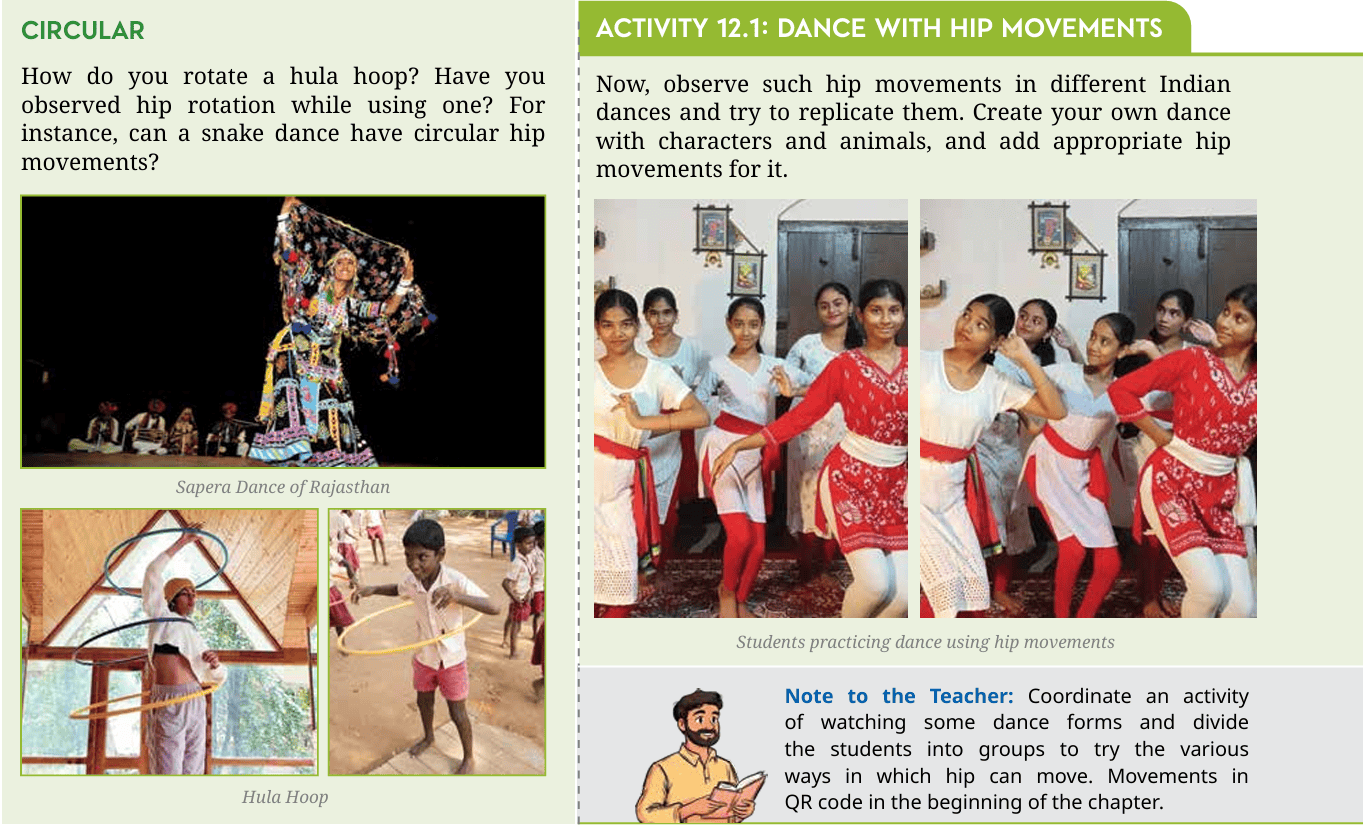
Below are the hip movements intricately woven into
Indian dance traditions.
Traditions and Transformations Beyond Boundaries
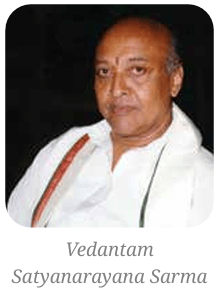
In Kriti, Grade 6, we discussed many dance traditions and the role of male and female dancers. In solo traditions, the solo dancer plays different roles and switches from one character to another. There was a strong tradition of female dancers all over India, who enacted stories and poetries, taking on various roles. Simultaneously, there were male dancers who sometimes performed in the garb of a woman. One such personality is the famous Kuchipudi dancer, Vedantam Satyanarayana Sarma, who performed in female costume. In traditional dance-drama traditions male dancers often take on the role of women and their costume decides the portrayal of the character. Some dance traditions also use masks for portrayals like Chhau which we learnt about in Kriti, Grade 6.
We will learn about two more such performance traditions where men have traditionally been playing female characters. Though now both traditions are welcoming women into their traditional practises.
Bhagavata Mela Natakam from Melattur, Tamil Nadu
A dance-drama tradition of southern India. This form to originated in the village of Kuchipudi in Andhra Pradesh, the main protagonists were Tirtha Narayana Yati and Siddhendra Yogi. Some bhagavatars moved from Andhra after the decline of the Vijayanagara Empire to Melattur, Thanjavur patronised by the Nayaka kings and thus started the Melattur tradition Famous Sanskrit scholars, Gopal Krishna Shastri and his son Venkatrama Shastri became disciples of saint Narayana Tirtha Yati. Patrons, Achyutappa Nayak and Sevappa Nayak gifted the village Mellatur to these Brahmans and it became a centre of fine arts. Early 20th century CE, the most famous bhagavatar was Natesha Iyer, and after his death, the troupe was continued under G. Swaminathan. Other important persons were Balu Bhagavathar and T.V. Natesh Bhagavathar. E. Krishna Iyer was instrumental in reviving the tradition with the Madras Music Academy in 1950.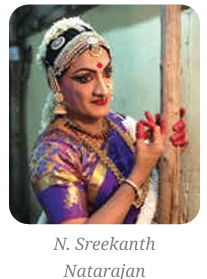
The main performance was Prahlada Charitam at the Varadaraja Perumal temple during Narasimha Jayanti in May or June. Conventionally male dancers play the role of women.
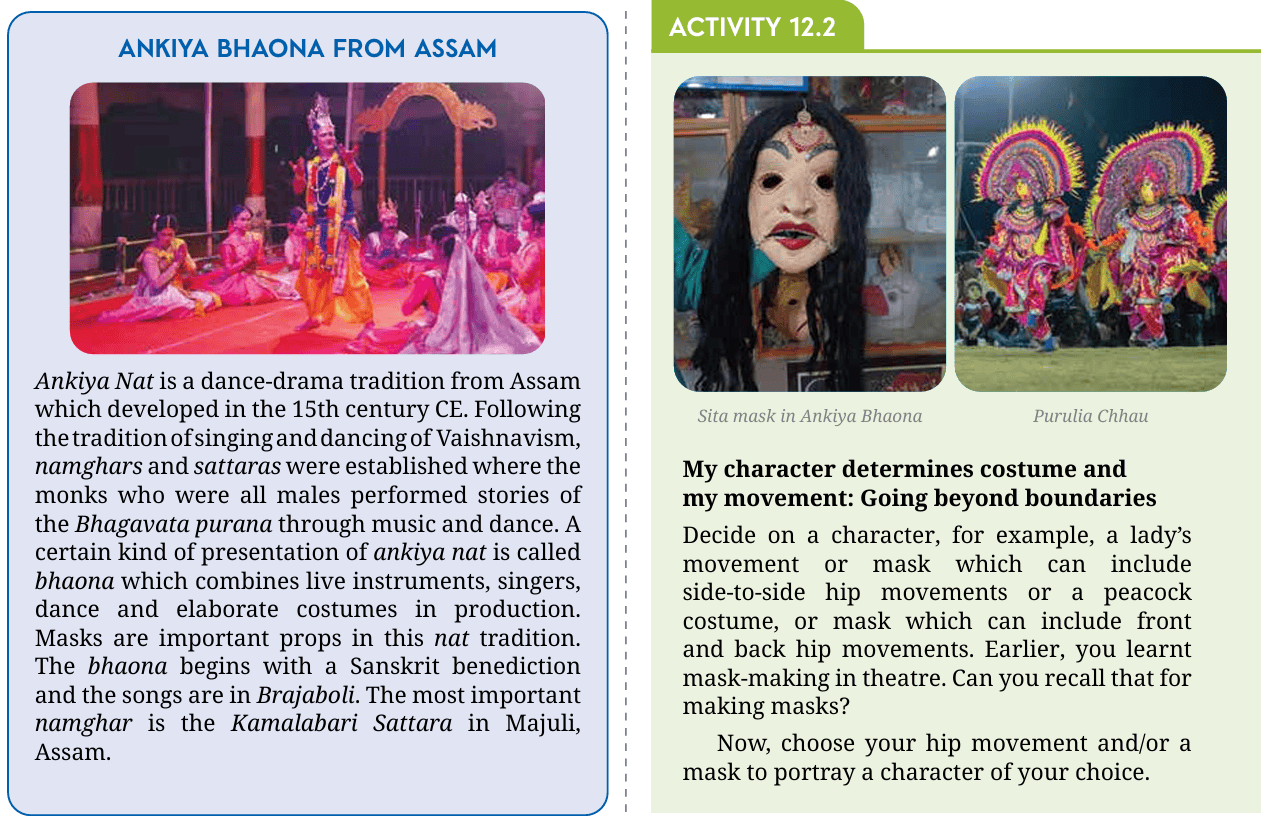
Dance Traditions in Transition and Transformation
During cultural reconstruction with the nationalist movement, there was a regeneration of classical dances and emergence of contemporary movement vocabulary.
Rabindranath Tagore
Rabindranath Tagore established one of the first fine arts universities, the Vishwabharati University in Shantiniketan in 1921. It was instrumental in developing a new dance vocabulary, drawing from our traditional dances that came to be known as Rabindra Nritya. He pioneered professional dance for women.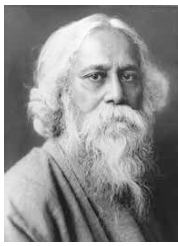
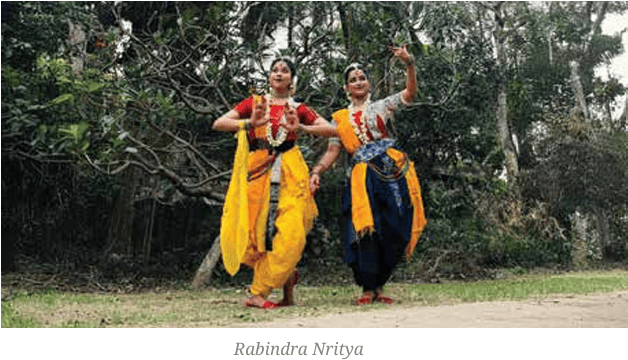
Now, try to dance two lines of a dance in Rabindra Nritya.
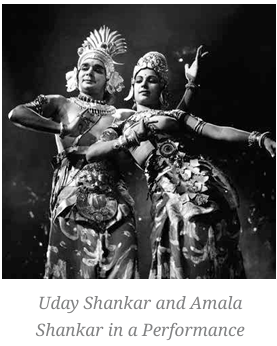
Uday Shankar
Uday Shankar was perhaps the pioneer of modern Indian dance. He began his dance career in 1920, dancing with Anna Pavlova with no formal training.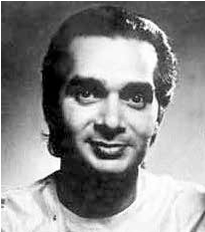 He
creatively amalgamated
various dance traditions of
India from classical, folk,
traditional, and tribal to present a completely
new dance style which has come to be known
as the Uday Shankar Style. His dance film Kalpana made in
1948 has remained
unparalleled to date.
Watch some clips
of Uday Shankar and
film Kalpana from
your QR Code, and try
to dance few phrases
of that.
He
creatively amalgamated
various dance traditions of
India from classical, folk,
traditional, and tribal to present a completely
new dance style which has come to be known
as the Uday Shankar Style. His dance film Kalpana made in
1948 has remained
unparalleled to date.
Watch some clips
of Uday Shankar and
film Kalpana from
your QR Code, and try
to dance few phrases
of that.
Choreography: from stage to screen
You have been getting used to the term choreography in dance. Now, you can see the same on screen. Indian cinema throughout its existence has used many Indian dances in its choreography. Notable ones being Mughal-e-Azam, choreographed by Lacchu Maharaj and jhanak jhanak payal baje by Gopi Krishna. Many south Indian actresses were accomplished Bharatanatyam dancers and danced beautifully in movies. Bharat Ratna awarded, M S Subbulakshmi had a flair for abhinaya and performed such sequences in many of her films. In recent times, the famous kahe ched ched mohe choreography by Birju Maharaj became very popular. Beautiful Garba sequences and many other folk forms are also seen in many movies in every part of the country.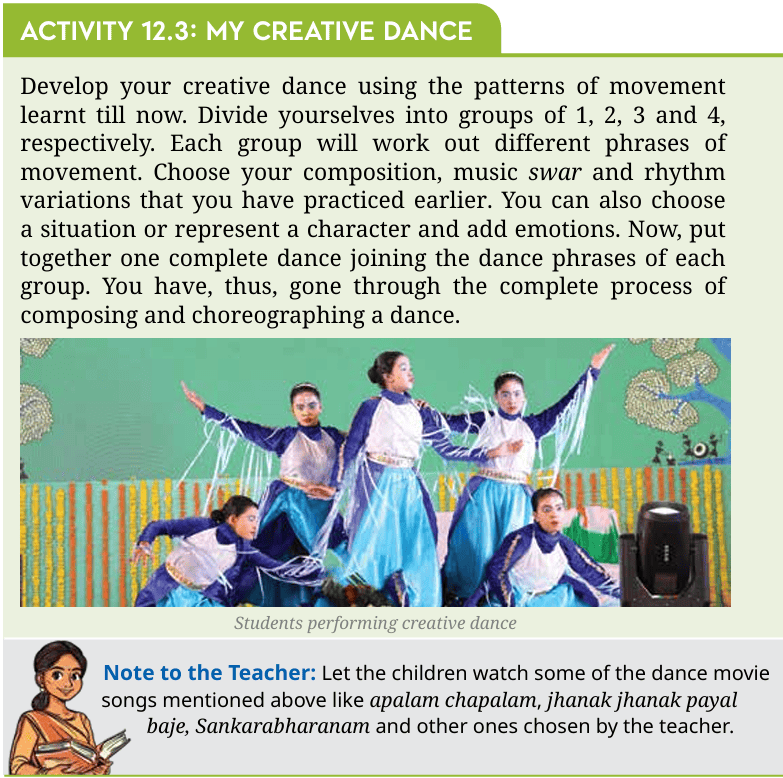
ASSESSMENT
Chapter 12: Dance, You And Creativity
|
CG |
C |
Learning Outcomes |
Teacher |
Self |
|
2 |
2.2 |
Overall participation in class |
||
|
3 |
3.1 |
Explores the use of props like masks or something else to enhance their characterisation |
||
|
3 |
3.2 |
Feels comfortable in using hips in movement and creatively adds it to their movements |
||
|
3 |
3.2 |
Is interested to try different character postures and movements while using the hips |
||
|
3 |
3.2 |
Creatively uses all techniques learnt to make a dance |
||
|
4 |
4.1 |
Interested in knowing about contemporary development of dance traditionally and in popular culture |
Teacher’s Comments and Student’s Observations
...............
...............
...............