
18
TEXTILES AND
TRADITIONS
Just like you use a pencil and paper to create pictures, artists use cloth, thread and needle to create artwork.
Indian textiles are known for a variety of motifs, each having symbolic meanings of their own. Motifs are decorative images that usually repeat and form patterns. They vary from region to region and are seen in many fabrics worn today.
Explore some of the motifs and their meanings here, before you proceed to other activities in this chapter. Learn a few basic skills and techniques to create your own textile artwork.
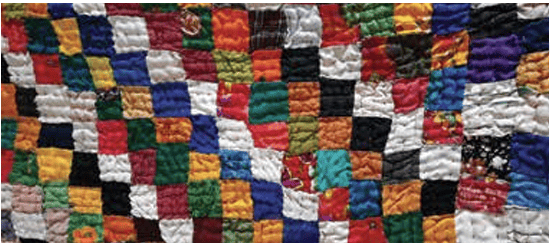
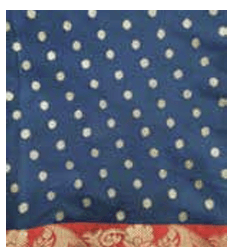
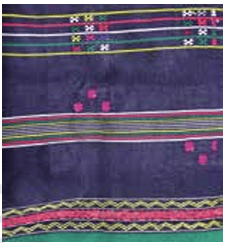
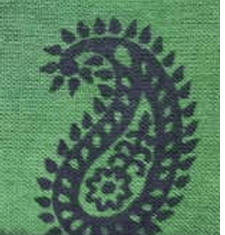
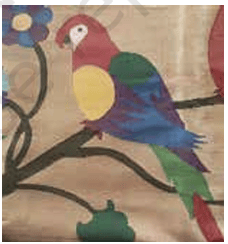
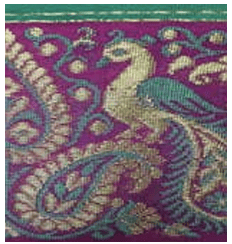
Notice the elements of art in these motifs.
THREADING STORIES
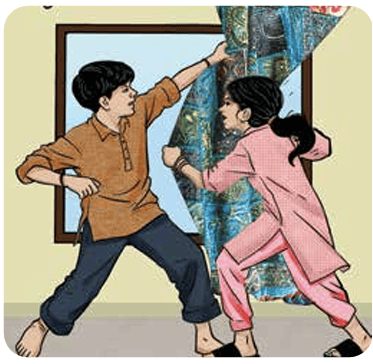
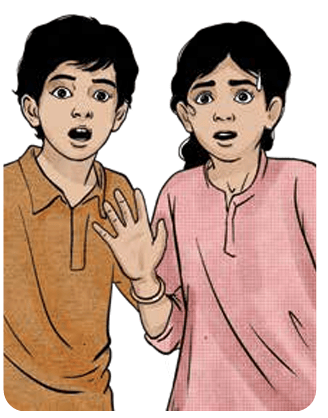
Dhaaga and Soodi had an argument one day. Dhaaga wanted the curtain open and Soodi wanted it shut. The curtain was being pushed around and it f inally screamed, “Stop it! Both of you!”
Hearing the curtain speak, Dhaaga and Soodi froze!
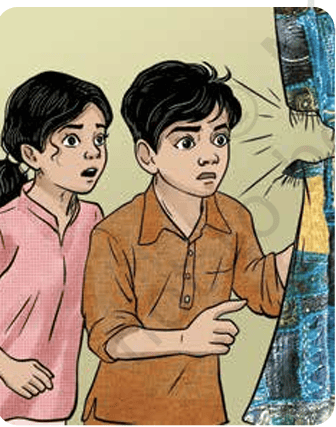
“Look what you have done! You have hurt me and now I have a tear…”, the curtain said. Dhaaga and Soodi went closer and looked at the damaged curtain.
The curtain continued to speak and told them the story of how it was made.
“When your Aaji passed away, your parents kept few of the special clothes she used to wear. I am the patchwork they created using pieces of fabric from her clothes.
Look at all the pieces that have been stitched together on my body. Each of these is from the clothes your Aaji wore. Here is a piece from the beautiful sweater she knitted herself. Next to it, is a piece from the yellow saree that had a big tea stain! Touch the design on it, your father took that stained portion and
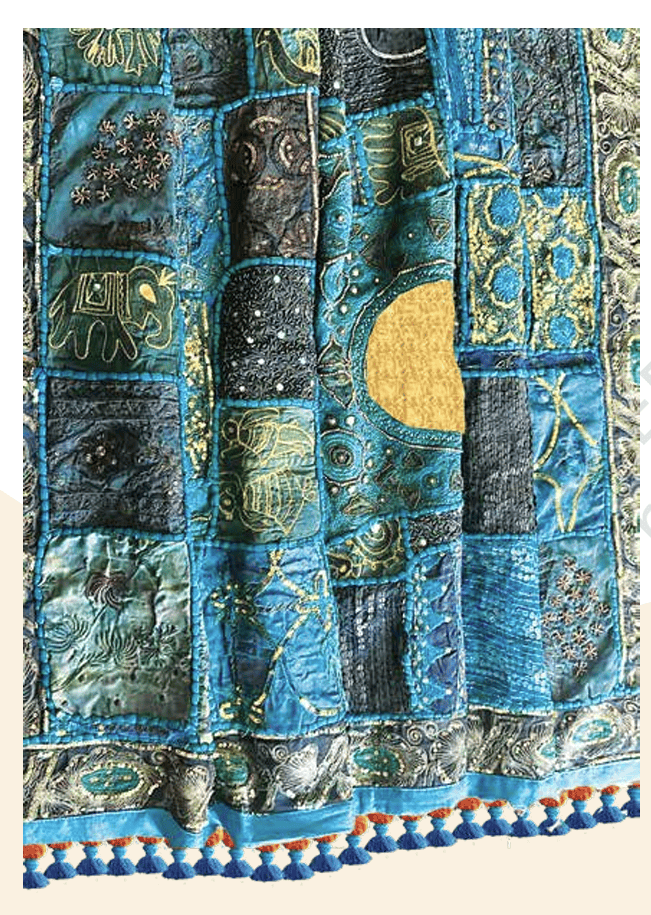
created this beautiful embroidery over it. Do you see the square window at the centre of this patchwork? It was made by a process called crochet. This piece was your Aaji's favourite. Have you noticed the bottom edge of the patchwork? These are called tassels. You will see fine threads in it, arranged together and knotted in beautiful patterns. There are some loose threads even in my tear …see? You can clearly see the warp and weft of the weave.
Remember, I am not just a curtain, I am a patchwork of stories. Each piece in me has its own story. They are all stitched together with many threads.
When threads start fighting among themselves like you both just did, what do you think will happen?”
Dhaaga and Soodi looked at each other and smiled, “Shall we repair the tear together?”, Soodi asked Dhaaga. He agreed and they got busy. What would you do if you were Dhaaga or Soodi?
ACTIVITY 18.1: FABRIC JOURNAL
Step 1: Look at the variety of objects in your home that are made of fibre or fabric.
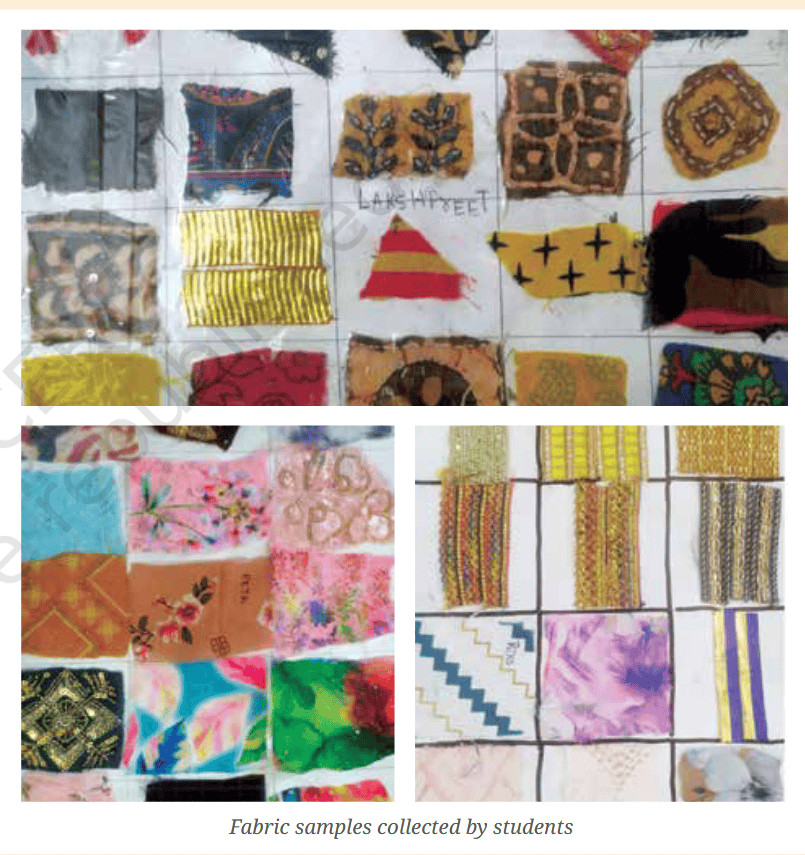
Step 2:Collect a few samples from discarded clothes, bags, mats and rags. Visit a local tailor and ask them if they can spare small pieces of fabric of different thicknesses and textures.
Step 3:As you collect textile samples, remember to note down a few stories about each fabric. Note where you found it, who it might have belonged to, what kind of fibre it is made of and a few lines about the patterns you see.
Step 4: Plan the pages of your journal. Work in pairs gathering both your textile samples and stories. Discuss and identify the different materials you have managed to collect (cotton/silk/wool/jute, etc.).
You can choose to organise them by material, colour, texture or pattern. For example, plain coloured fabrics together, printed fabrics together, all cotton together, etc. Include your notes and stories to make your journal interesting.
ACTIVITY 18.2: EXPLORE EMBROIDERY TRADITIONS
Embroidery is the art of different kinds of stitches, patterns and needlework techniques on a fabric. There are several embroidery traditions in India. Some traditions also incorporate mirrors, beads and sequins into their designs.
Here are a few examples of embroidery traditions practised in different parts of India.
| Name of embroidery | Place/region |
| Chikankari | Uttar Pradesh |
| Chamba Rumal | Himachal Pradesh |
| Kasuti | Karnataka |
| Toda | Tamil Nadu |
| Ahir | Gujarat |
| Kantha | West Bengal |
| Khneng | Meghalaya |
| Gota | Rajasthan |
| Kashida | Kashmir |
What kind of embroidery have you seen on clothes and fabrics around you?
Find artists who embroider and talk to them about their art.
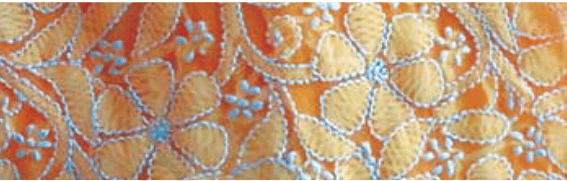
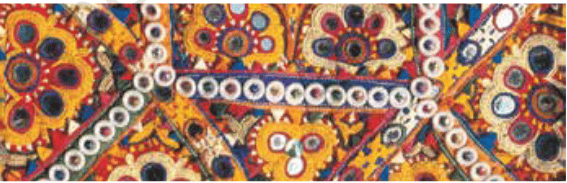
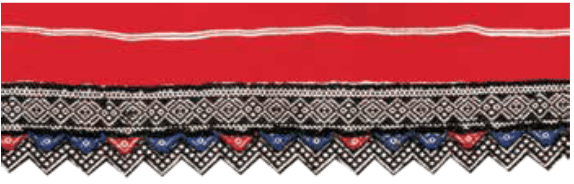
INVITE LOCAL ARTISTS
Organise a workshop to introduce some basic skills and techniques to students, exposing them to various vocations for future.ACTIVITY 18.3: BASIC STITCHES IN EMBROIDERY
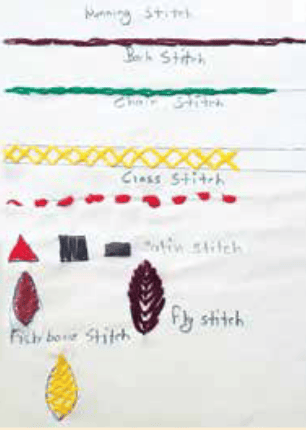
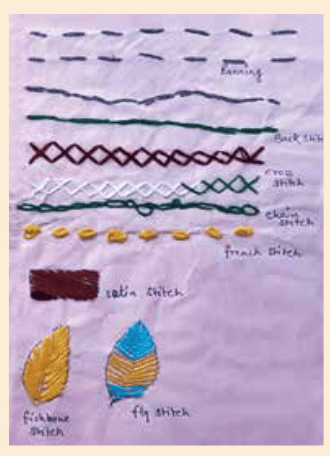
Embroidery can be done using simple materials and tools. If you have never tried embroidery before, start by learning the basic stitches.
Process
- Take a thread that is approximately 50 cm in length.
- Thread your needle and keep one of the ends short.
- Make a knot at the end of the longer end.
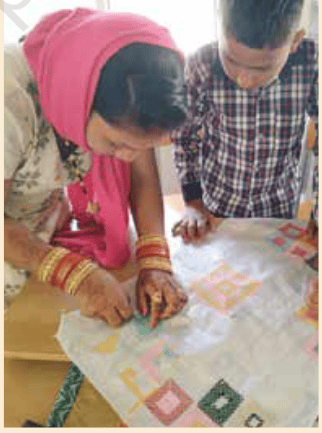
- Prepare your card sheet/cloth by marking lines and piercing holes with the needle (See the picture).
- Start stitching and follow the pattern for each stitch.
- At the end of your line or when your thread is about to finish, make a knot on the reverse side of your work and cut the thread.
MATERIALS
Card paper, discarded invitation cards or thick drawing sheet (approximately 20 cm × 15 cm) Medium-sized needle Thread or wool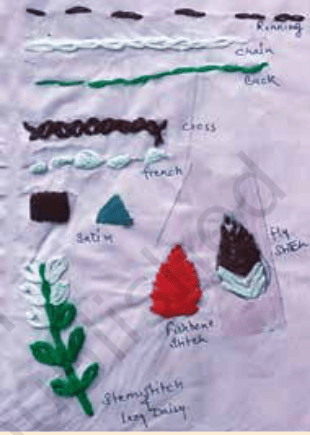
ACTIVITY 18.4: MAKE YOUR TEXTILE ARTWORK
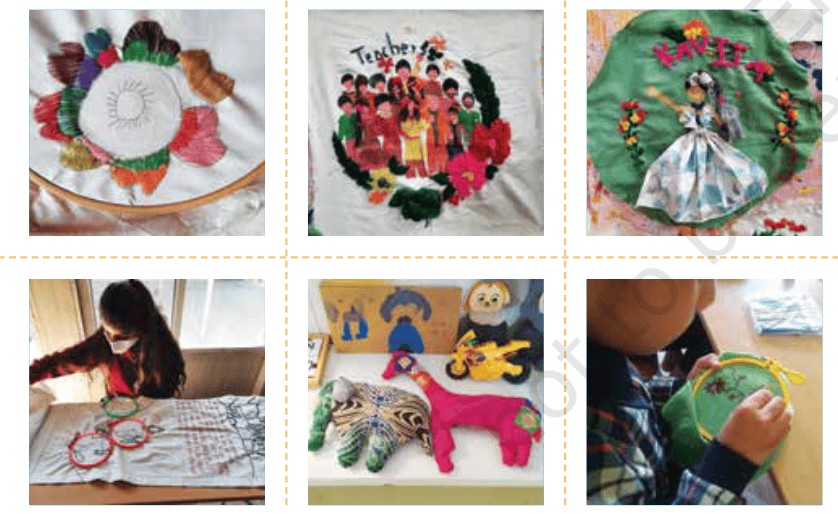
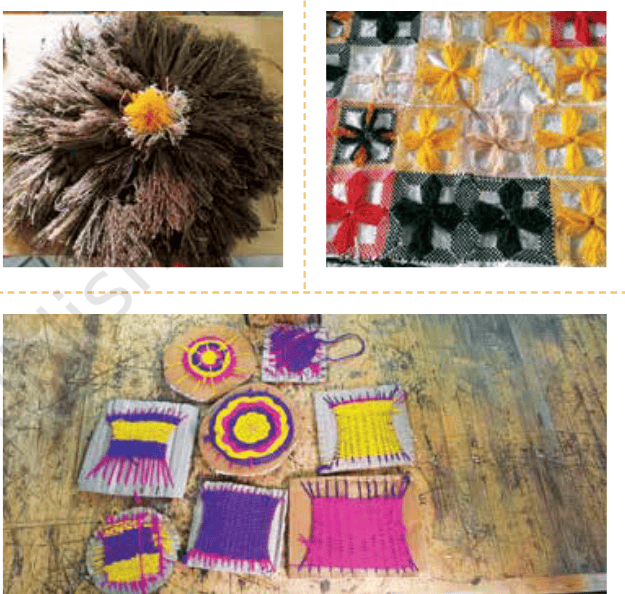
Textile artworks need not be made only on a flat surface. They can be three-dimensional too. You might have seen attractive toys that are made of cloth, yarn or fibre. There are many well-known artists who have been inspired by textile arts and crafts traditions.
Look at the examples of artwork created by students like you. What kind of textile artwork would you like to make? You may find inspiration from your local textile traditions. It could be weaving, knitting, crochet, macramé, fabric toys, painting, printing, tie and dye, etc.
| CHAPTER 18: TEXTILEs AND TRADITIONS | ||||
|---|---|---|---|---|
| CG | C | Learning Outcomes | Teacher | Self |
| 1 | 1.1 | Gathers fabric samples from their surroundings and writes about them | ||
| 2 | 2.2 | Identifies and draws common textile motifs seen in their culture and surroundings | ||
| 3 | 3.2 | Creates a textile artwork using simple stitches or any other techniques | ||
Teacher’s Comments and Student’s Observations