
Unit 3: Fundamental Skills of Sports
Badminton
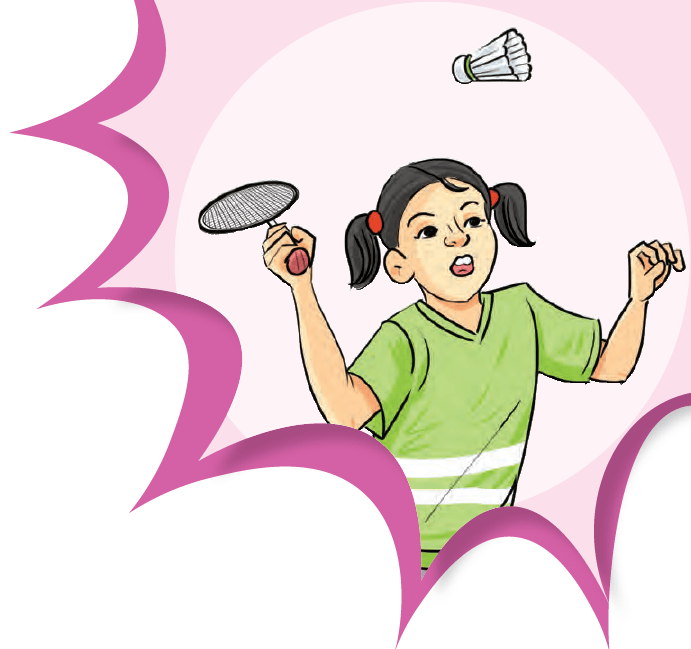
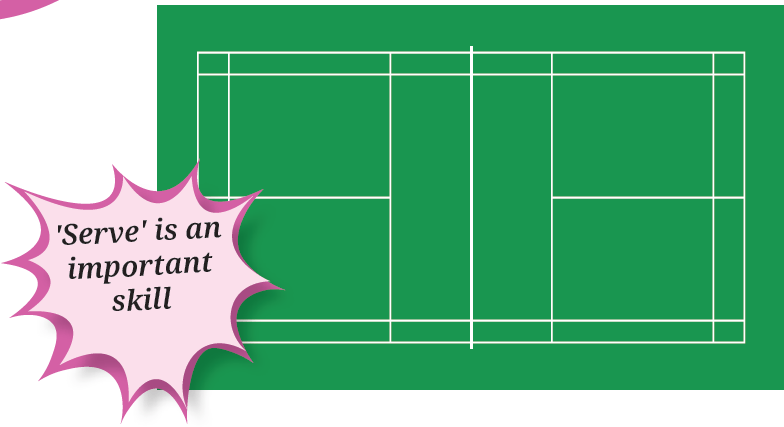 Badminton is a fun and fast-paced sport played with a
shuttlecock and a racket. It can be played as singles (one
player on each side) or doubles (two players on each side).
The objective is to hit the shuttlecock over the net and land it
in the opponent’s court to score points. Badminton improves
physical fitness, hand-eye coordination, and reflexes. It is an
Olympic sport and popular worldwide.
Badminton is a fun and fast-paced sport played with a
shuttlecock and a racket. It can be played as singles (one
player on each side) or doubles (two players on each side).
The objective is to hit the shuttlecock over the net and land it
in the opponent’s court to score points. Badminton improves
physical fitness, hand-eye coordination, and reflexes. It is an
Olympic sport and popular worldwide.
FSA - 1
Forehand Grip and Air Toss
|
Warm-up |
Skill |
Cool-down |
Circle Time |
|
Wrist Rotation, Flexion and Extension |
Forehand Grip |
Wrist Stretching |
Understand the importance of forehand grip |
The grip is how you hold the racket, and the stance is the initial stationary position of your body for executing the desired skill. Both are key for playing better badminton.
Forehand Grip
Steps to Learn
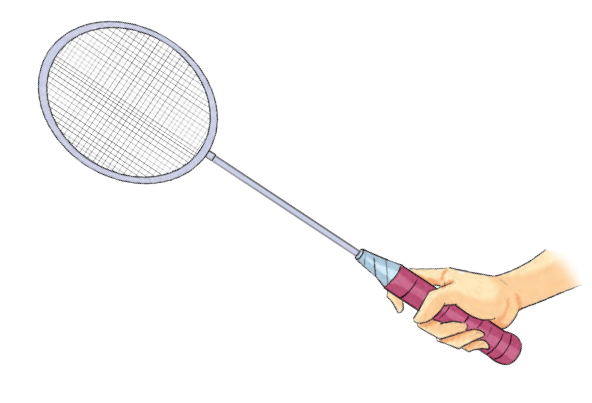
• Use a handshake grip to hold the racket.
• Grip the lower part of the handle for better control.
• Place your index finger slightly higher on the grip.
• The racket should be held perpendicular to the floor.
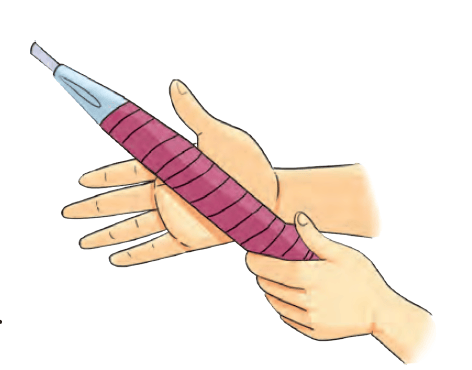
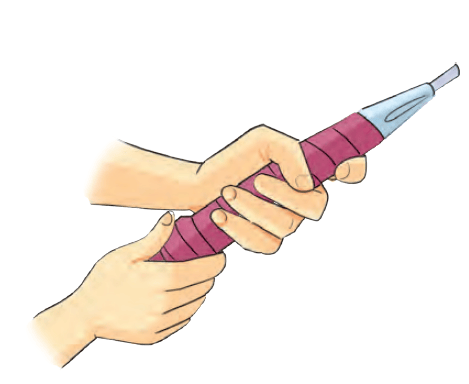
• Rest your thumb gently on the lower left side, touching the middle finger.
• Hold the racket loosely and squeeze it lightly for a relaxed grip.
• Hit a plastic shuttlecock with the racket using the forehand grip and try to keep it in the air as long as possible.
Lead-up Activity
• Divide the players into pairs.
• Ask the players to tap the shuttlecock using only the forehand grip up into the air five times and play back it to their partner without dropping it.
• Now the partner will tap the shuttlecock five times and it will continue until the shuttlecock drops.
• The pair with a minimum number of drops will be the winner.
• Increase the number of taps in a row progressively without dropping the shuttlecock.
Note for the teacher
The teacher can identify the incorrect grip or stance while the players are practising and guide them to correct it.
Circle Time – Understand the importance of forehand grip
Discuss how many times you were forced to change your grip and what you did to maintain the right grip.
FSA - 2
Backhand Grip and Air Toss
|
Warm-up |
Skill |
Cool-down |
Circle Time |
|
Overhead Arm Stretch, Waist Rotation/ Flexion/ Extension, Shoulder Rotation |
Backhand Grip |
Elbow Stretching, Shoulder Stretching |
Attention to the grip |
The grip refers to how you hold the racket, while the stance is your initial stationary position for executing the desired skill. Both are key skills for playing better badminton.
Backhand Grip
Steps to Learn
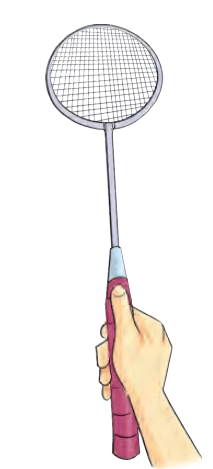
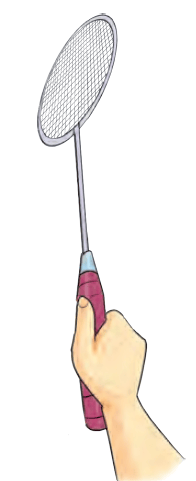
• Place the base of your thumb against the back of the handle.
• Your index finger and other fingers should wrap around the handle comfortably.
• Don't hold your racket too tightly and squeeze it gently to switch the grip.
• Hit a shuttlecock with the racket using the backhand grip and try to keep the shuttlecock up in the air as long as possible.
• The racket should be held perpendicular to the ground.
Lead-up Activity
• Divide the players into pairs.
• Ask the players to tap the shuttlecock using only the backhand grip up into the air five times and toss it to their partner without dropping it.
• Now the partner will tap the shuttlecock five times and it will continue until the shuttlecock drops.
• The pair with a minimum number of drops will be the winner.
• Increase the number of taps in a row progressively without dropping the shuttlecock.
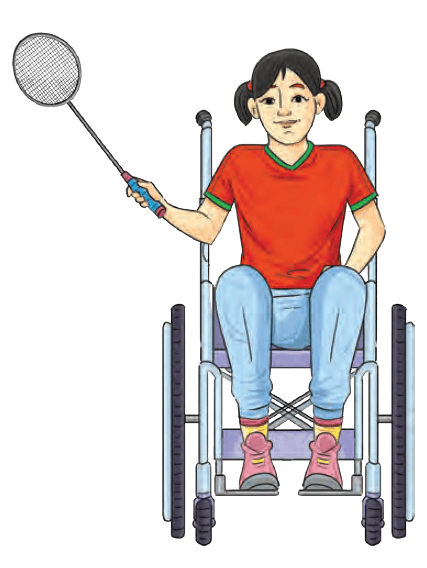
Circle Time – Attention to the grip
Compare the forehand grip and the backhand grip while hitting the shuttlecock, and discuss the differences you experience.
FSA - 3
Footwork Skills
|
Warm-up |
Skill |
Cool-down |
Circle Time |
|
Squats, Lunging and Ladder Drills (High Knees) |
Footwork Skills |
Seated Forward Hold, Butterfly Stretch |
Analysing footwork steps and reaction time through footwork |
Good footwork helps you reach the shuttlecock quickly across the court. It includes different steps and movements that make it easier to move around the court and stay balanced.
Footwork Skills
Steps to Learn
• Chassé steps mean one foot follows the other without catching up.
• The back foot stays slightly behind the front foot at an angle.
• Use chassé steps to move sideways, diagonally forward, and in backward directions.
• Start with short distances to teach chassé steps effectively.
• Chasse movements should end with a shuttlecock toss to a partner.
Lead-up Activity
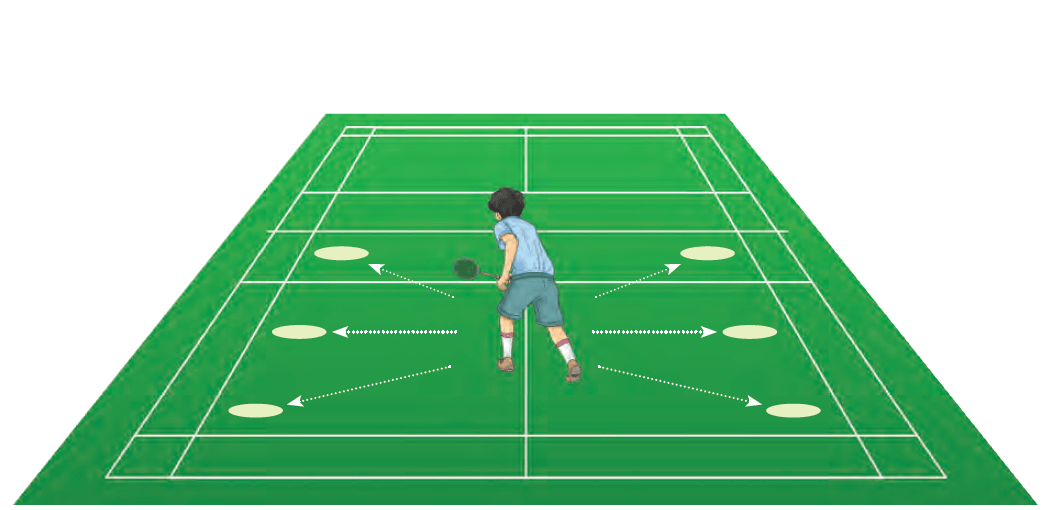
• Place six buckets as shown in the figure.
• Place six shuttlecocks at the centre of the court.
• When commanded, the player will take one shuttlecock at a time and put it inside any bucket using proper footwork.
• One by one, the player will put all the shuttlecocks into all the buckets.
• The player who completes the drill in the shortest time will be the winner.
Circle Time – Reaction time through footwork
Discuss how practising this footwork drill can enhance your playing ability.
FSA - 4
Backhand Low Serve
|
Warm-up |
Skill |
Cool-down |
Circle Time |
|
Triceps Stretching, Forearm Stretching |
Backhand Low Serve |
Standing Forward Fold, Overhead Triceps Stretch, Chest Stretch |
Hand-eye Coordination, Service Rules |
For the backhand low service, the shuttlecock must pass from one service court to the diagonally opposite service court and the rest of the service rules should be followed. The backhand low service passes close to the top of the net and lands at the front of the diagonally opposite service area.
Backhand Low Serve
Steps to Learn
• Apply backhand grip.
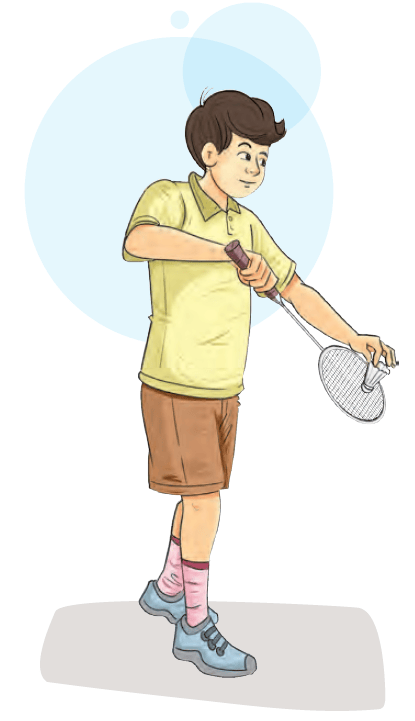
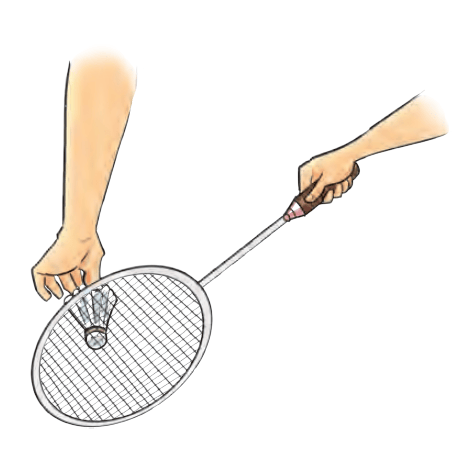
• Hold the shuttlecock at waist level using the index and thumb fingers of the non-racket arm.
• Place the racket in front of the body, bend the elbow, rotate forward slightly downward so that the racket faces the shuttlecock.
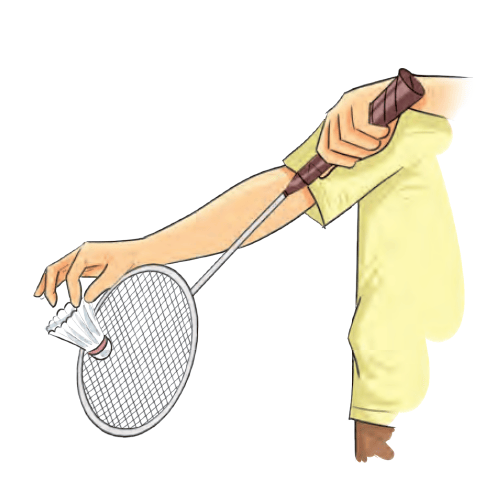
• Take a short backswing of the racket and hold the racket face slightly up.
• Push the shuttlecock gently forward in a way that it just passes over the net.
Lead-up Activity
• Players can practice serving and try to land a correct service as close as possible to the short service line.
• The teacher can create an arch near the T joint and short service line using markers and ask the players to land the shuttlecock in the arch using backhand low service.
• 10 chances will be given and the player who will lend the shuttlecock inside the circle for the maximum number of times will be the winner.
Circle Time – Hand-eye Coordination, Service rules
Discuss the service rules in badminton.
FSA - 5
Backhand Lift
|
Warm-up |
Skill |
Cool-down |
Circle Time |
|
Shoulder Rotation, Dynamic Forward Lunges |
Backhand Lift |
Slow/Static Stretching |
Identify the mistakes |
It is easier to generate power in this stroke. This stroke will provide more recovery time to reach the centre of the court.
Backhand Lift
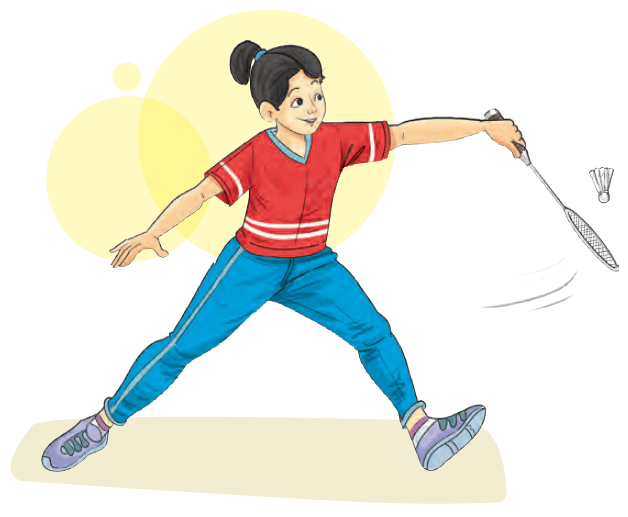
Steps to Learn
• Use a backhand grip to hold the racket comfortably.
• Position your body sideways with your racket foot slightly forward.
• Swing the racket upward with a smooth motion while using your wrist for control.
• Contact the shuttlecock below the tape of the net and lift it high towards the back of the court.
• Players can also hit the shuttlecock across the cross-court.
• Follow through gently after the shot to maintain balance and control.
Lead-up Activity
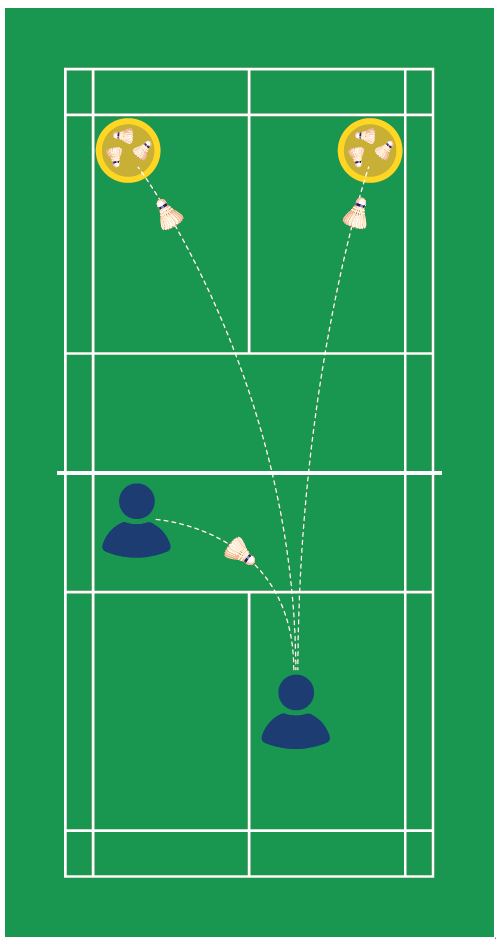
• Identify a feeder and a lifter. Provide 20 shuttlecocks to the feeder.
• The feeder will throw the shuttlecock to the lifter and the lifter will play the backhand lift shot to hit the shuttlecock into the circles drawn into the opposite court as shown in the figure.
• The lifter will score five points for dropping the shuttlecock into the circle and one point anywhere inside the court.
• You can also play the rally in pairs without dropping the shuttlecock. Mark out target zones where players are supposed to aim to hit the shuttlecock.
Note for the teacher
• Teachers can identify the mistakes while players can practise and try to correct them.
Circle Time – Identify the mistakes
Players will discuss the right technique and service rules. Try to identify who among them performed better.
FSA - 6
Forehand Lift
|
Warm-up |
Skill |
Cool-down |
Circle Time |
|
Shoulder Rotation, Trunk Rotation and Calf Stretch |
Forehand Lift F |
Forward Bending Ground Touch |
Right technique |
When the shuttlecock is low, you can use this shot to lift it high and far. This gives you more time to prepare for the next shot.
Forehand Lift
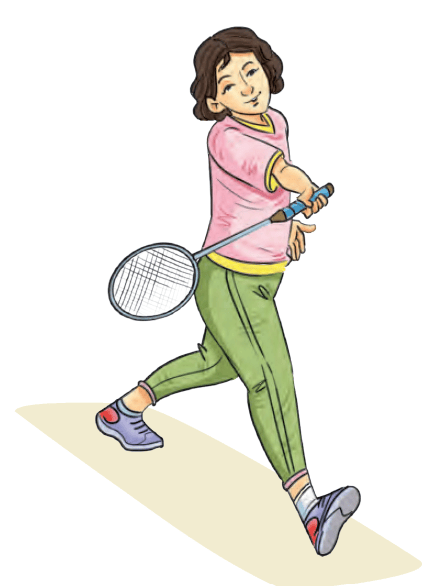
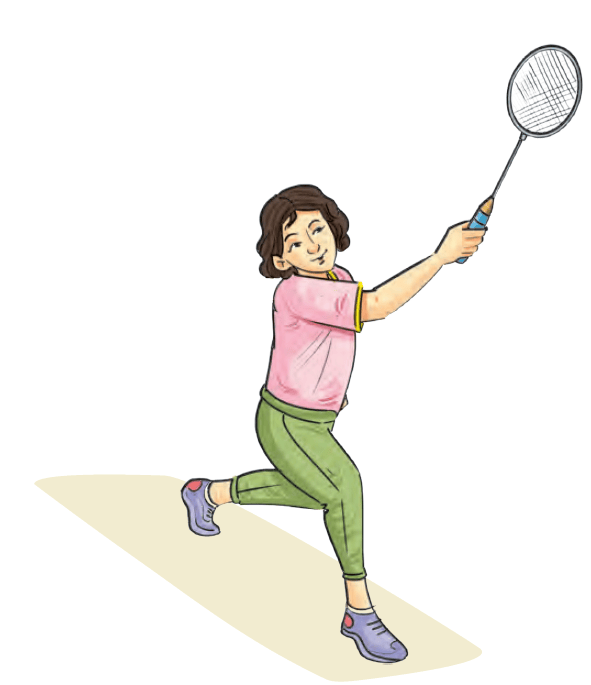
• Use a forehand grip to hold the racket comfortably.
• Position your body diagonally with your racket foot slightly forward.
• Swing the racket upward in a smooth motion, using your wrist and forearm for control.
• Contact the shuttlecock below the tap and lift it high towards the back of the opponent's court.
• Follow through naturally to maintain balance and control after the shot.
Lead-up Activity
• Identify a feeder and a lifter. Provide 20 shuttlecocks to the feeder.
• The feeder will throw the shuttlecocks one by one to the lifter and the lifter will play the forehand lift shot to hit the shuttlecock into the circles drawn into the opposite court as shown in the figure.
• The lifter will score five points for dropping the shuttlecock into the circle and one point anywhere inside the court.
• You can also play the rally in pairs without dropping the shuttlecock. Mark out target zones where players are supposed to aim to hit the shuttlecock.
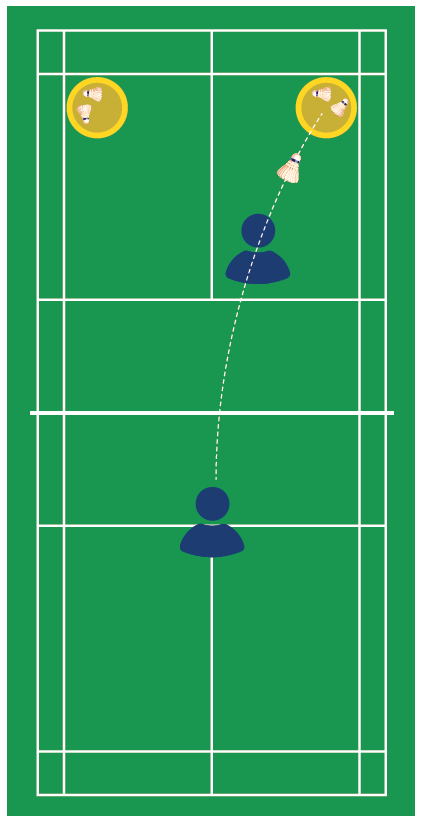
Note for the teacher
• The teacher will identify the mistakes while players can practice and try to correct them.
Circle Time – Right technique
Players will discuss the right technique and try to identify who among them performed better.
FSA - 7
Forehand High Serve
|
Warm-up |
Skill |
Cool-down |
Circle Time |
|
Leaping and Skipping, Cross Toe Touch |
Forehand High Serve |
Sit and Reach |
Path of the shuttlecock while hitting |
This serve sends the shuttlecock high and far into the opponent's side of the court. It’s a good way to start the game and push the opponent back.
Forehand High Serve
Steps to Learn
• Use a forehand grip and stand with your non-racket foot forward.
• Hold the shuttlecock by the feathers as shown in picture.
• Swing the racket smoothly upward in a controlled motion.
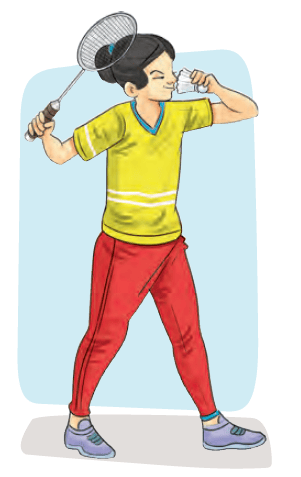
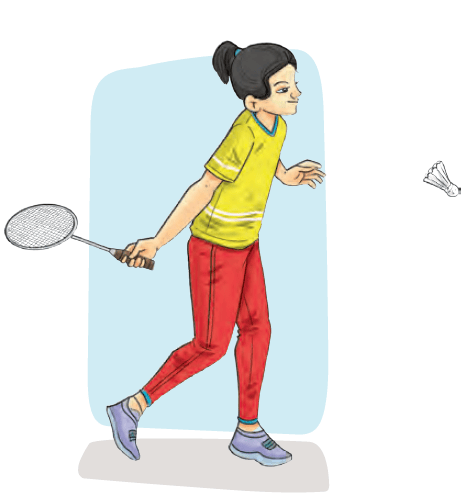
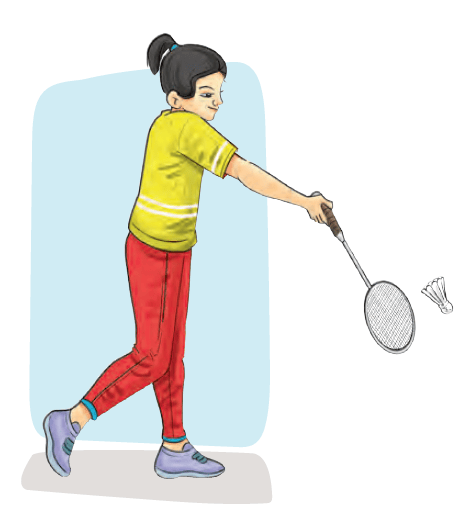
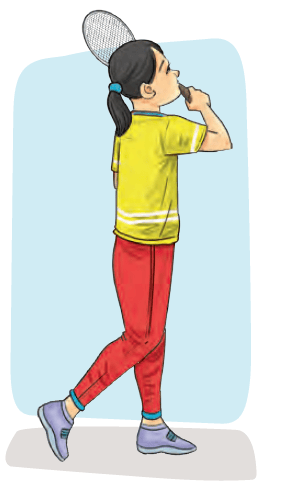
# The non-racket foot refers to the foot on the opposite side of the hand holding the racket.
• Hit the shuttlecock below the waist level to lift it high and deep into the opponent’s court.
• Follow through naturally to maintain balance and accuracy.
Lead-up Activity
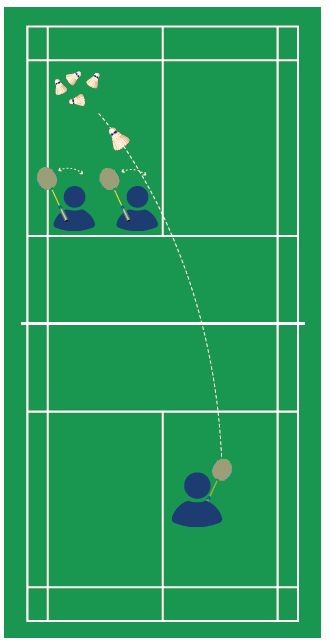
As shown in the figure, set up the net and have two players stand horizontally in the middle of the opposite court with rackets raised at the top of their heads in their hands. Mark a line in the opposite court just before the back line. Each player will get five chances to serve. The objective will be to drop the serve towards the back of the player. The shuttlecock should travel, passing over the top of the racket of the opponent.
Circle Time – Path of the shuttlecock while hitting
• Discuss how high you should hit the shuttlecock so that it goes above the racket of the opponent player but not so far.
• Discuss the flight and the direction of the shuttlecock.
FSA - 8
Forehand Low Serve
|
Warm-up |
Skill |
Cool-down |
Circle Time |
|
Spot Running, Star Jump |
Forehand Low Serve |
Head-to-toe Stretch |
Placement of the service with accuracy |
There are two types of forehand serves — high serve and low serve. We will learn low serve in this lesson.
Forehand Low Serve
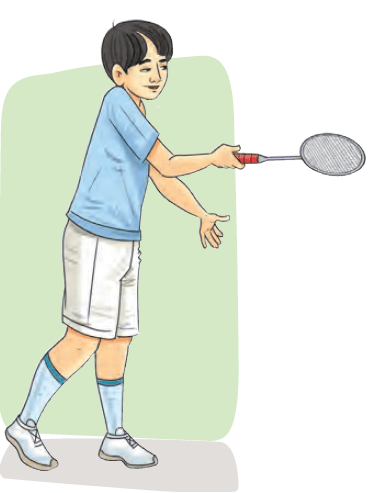
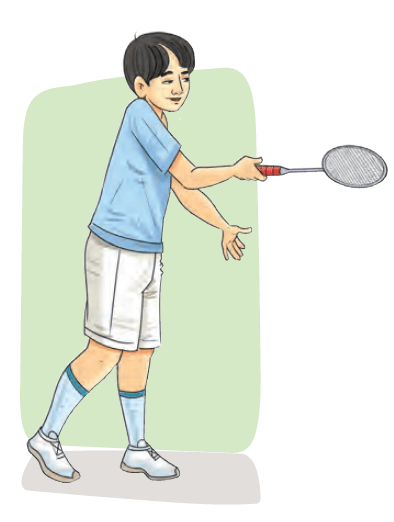
Steps to Learn
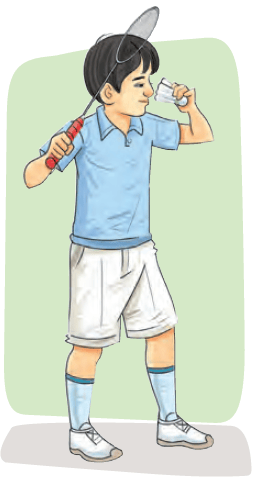
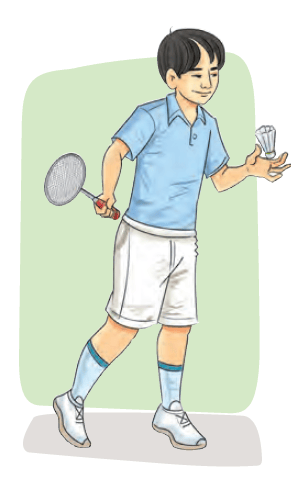
• Stand sideways in the service box with a forehand grip, holding the racket and shuttlecock high, and keeping your weight on the rear leg.
• Transfer your weight forward, drop the shuttlecock slightly towards the front or to the side, and lower the racket while bending your wrist.
• Swing the racket forward, maintaining a bent wrist and using a smooth motion.
• Strike the shuttlecock towards the front or to the side while pushing through the shuttlecock for control.
• Finish the shot by bringing the racket back to the ready position.
Lead-up Activity
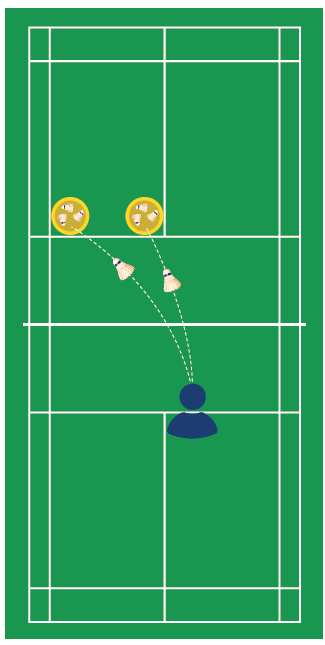
Place two buckets close to the service line as shown in the figure. Players will take turns to serve so that the shuttlecock falls into the bucket. One point will be scored for dropping the shuttlecock in the bucket.
Circle Time – Placement of the service with accuracy
Discuss how you will decide where to serve based on the position and movement of the opponents.
FSA - 9
Forehand Drive
|
Warm-up |
Skill |
Cool-down |
Circle Time |
|
Biceps and Triceps Stretch, Trunk rotation |
Forehand Drive Serve |
General Cool-Down Exercise With Special Focus On Upper Body |
Right technique |
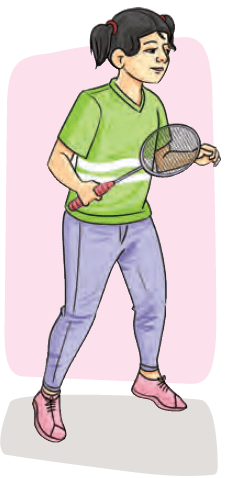
The forehand drive is an offensive flat shot that is usually played over the net. Its purpose is to put pressure on the opponent by shortening their reaction time.
Forehand Drive
Steps to Learn
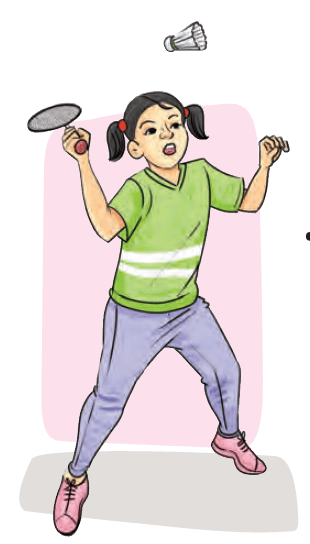
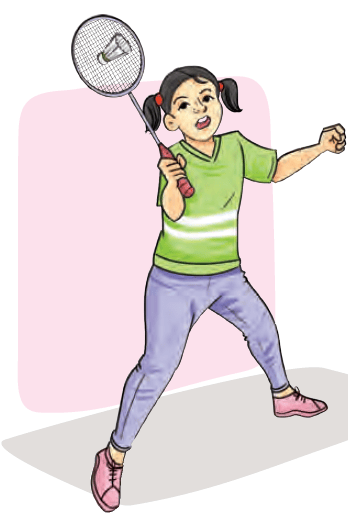
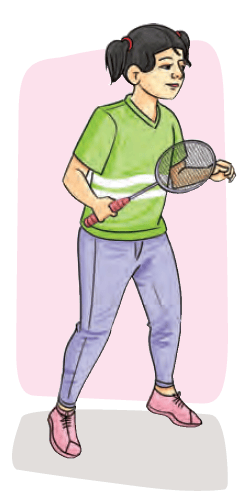
• Ready your racket with a forehand grip and step out to hit the shuttlecock with slightly bent elbows.
• Extend the elbow by relaxing the wrist and hit the shuttlecock in front of your body.
• Then hit the shuttlecock flat and straight towards the opponent’s court.
• After hitting the shuttlecock, body weight should shift to the non-racket foot and the racket will follow the path of the shuttlecock.
Lead-up Activity
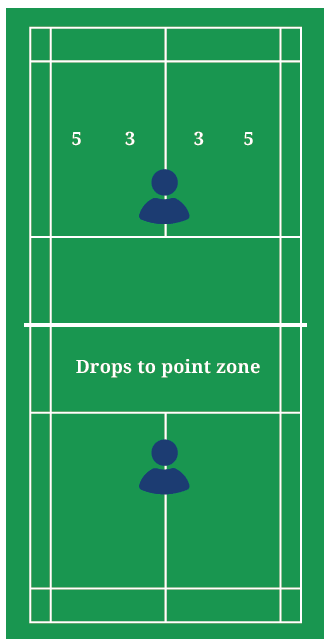
The feeder standing across the net, will feed the player you parallelly to the forehand side while the player hasto return the shuttlecock using a forehand drive.
Circle Time – Right technique
• Discuss how fast you should hit the shuttlecock to go towards the opponent’s court.
• Also, discuss the hand and foot movement for hitting the shuttlecock towards the opponent’s court.
FSA - 10
Backhand Drive
|
Warm-up |
Skill |
Cool-down |
Circle Time |
|
Leaping and Skipping, Cross Toe Touch |
Backhand Drive |
Slow/Static Stretching |
Right technique |
The backhand drive is an offensiveflat shotthatis usually played over the net. Its purpose is to put pressure on the opponent by shortening their reaction time.
Backhand Drive
Steps to Learn
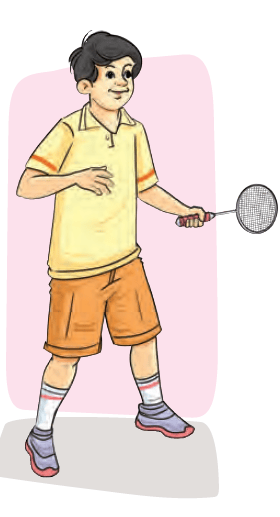
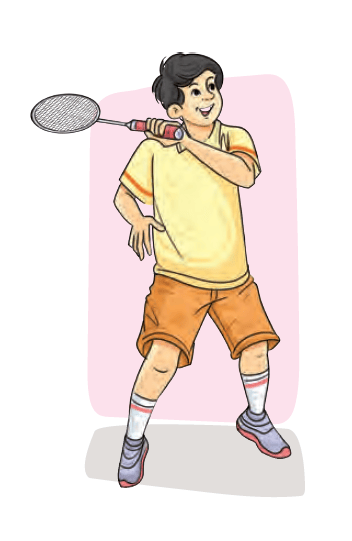
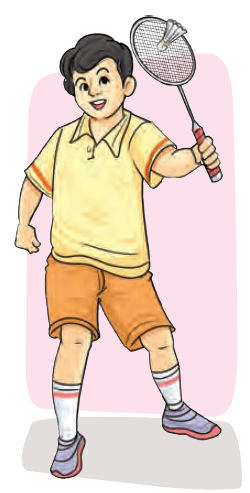
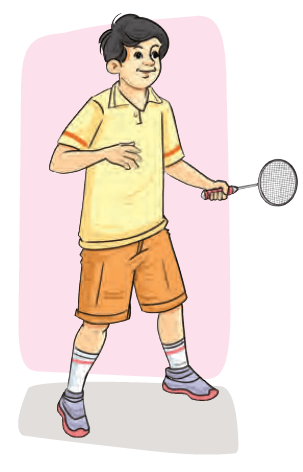
• Position yourself with a backhand grip, turn your non-racket shoulder toward the shuttle, and bring the racket back near your non-racket shoulder. Swing forward with a wrist snap, making contact with the shuttlecock in front of your body, then follow through slightly and return to the ready position.
• Hold the forearm up, hit the shuttlecock in front or to the side, reach out and extend your elbow.
• Hit the shuttlecock in front or on the side of your body at the highest point possible.
• Turn back to the net, keeping the racket ready.
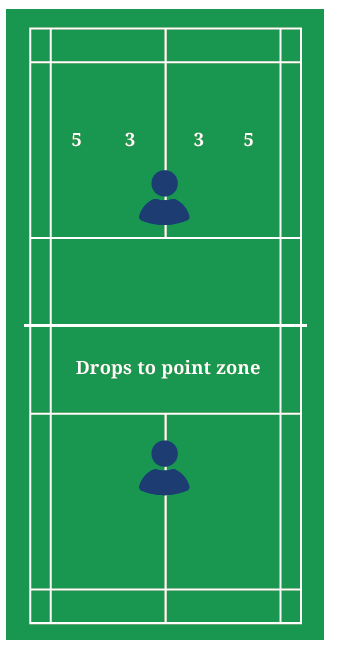
Lead-up Activity
The feeder standing across the net, will feed the player parallelly to the forehand side while the player has to return the shuttlecock using a backhand drive.
Circle Time – Right technique
• Discuss how fast you should hit the shuttlecock so that it moves parallel to the ground.
• Also, discuss the hand and foot movement for hitting the shuttlecock parallel to the ground.
FSA - 11
Forehand Clear
|
Warm-up |
Skill |
Cool-down |
Circle Time |
|
Overhead Arm Stretch, Rear Shoulder Touch, Shoulder Rotation |
Forehand Clear |
Head-to-knee Stretch |
Hand-eye Coordination |
It is an essential badminton stroke for sending the shuttlecock to the rear end of the other team's court. Depending on the circumstances of the game, this shot can be played defensively or offensively.
Forehand Clear
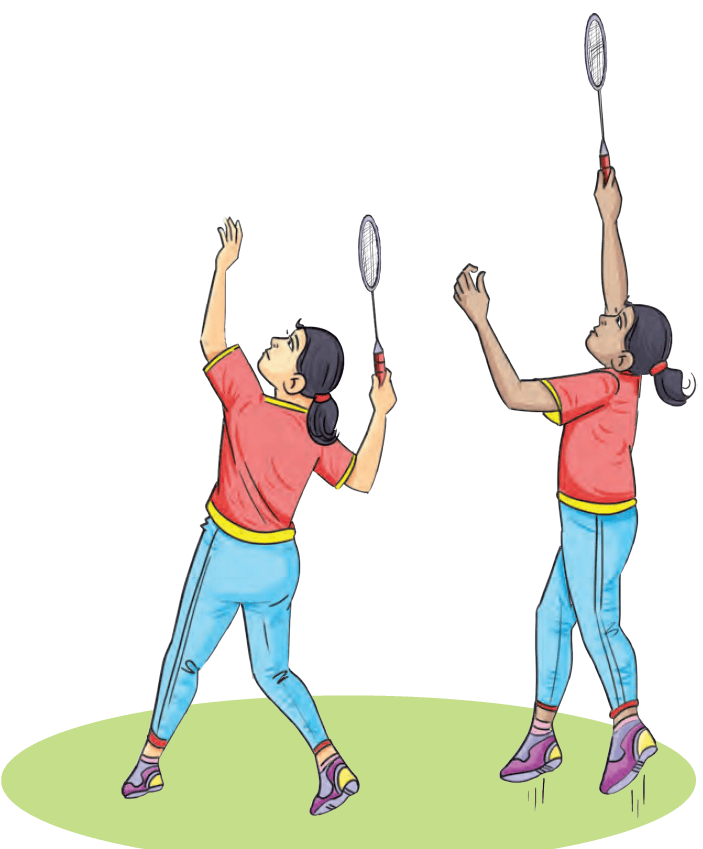
Steps to Learn
1. Use a forehand grip and stand sideways with your non-racket shoulder facing the net.
2. Shift your weight to your rear foot and raise your non-racket hand for timing and balance.
3. Bend your elbow, lock your wrist, and prepare to swing forward.
4. Contact the shuttlecock high and in front of your body with a strong throwing action, straightening your elbow and unlocking your wrist.
5. Follow through with your racket, shift your weight to your front foot,and return to your base position.
Lead-up Activity
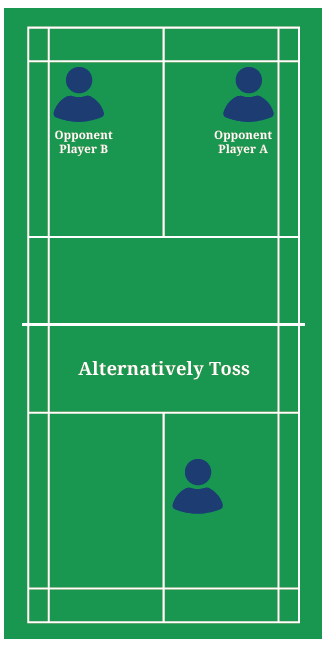
1. Players can practice in pairs and try to hit the shuttlecock towards the end of the court. The objective is to place the shuttlecock in a back gallery. This exercise can also be done by tossing the shuttlecock to two opponents standing on far corners of the court as shown in the figure. Keep opponents A and B in a stationary position to develop accuracy
2. You can also play the rally in pairs without dropping the shuttlecock. Mark out target zones where players are supposed to aim to hit the shuttlecock.
Circle Time – Hand-eye Coordination
Discuss how you accurately predict the shuttlecock's path to determine the contact point for your clear.
# The non-racket shoulder or hand refers to the shoulder or hand on the opposite side of the hand holding the racket.
FSA - 12
Forehand Drop
|
Warm-up |
Skill |
Cool-down |
Circle Time |
|
Overhead Arm Stretch, Rear Shoulder Touch, Shoulder Rotation |
Forehand Drop |
Head-to-knee Stretch |
Finding new things |
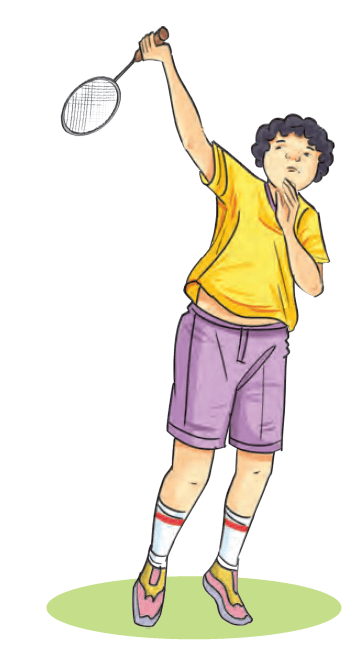
The forehand drop shot is a gentle hit that lands close to the net on the other side. It’s a tricky way to bring your opponent closer to the net and take advantage.
Forehand Drop
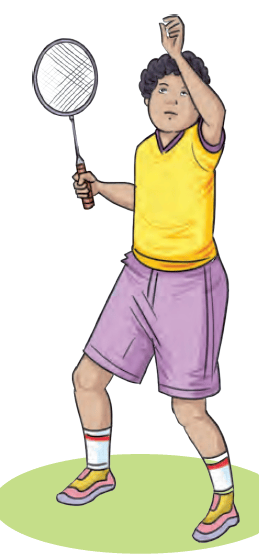
Steps to Learn
• Use a forehand grip and stand sideways with your non-racket shoulder facing the net.
• Shift your weight to your rear foot and raise your non-racket hand for timing and balance.
• Bend your elbow, lock your wrist, and prepare to swing forward.
• Contact the shuttlecock high and in front of your body, and hit the shuttlecock gently to control the shot.
• Follow through, shift your weight to your front foot, and return to your base position.
• Try to land the shuttlecock between the net and the short service line.
Lead-up Activity
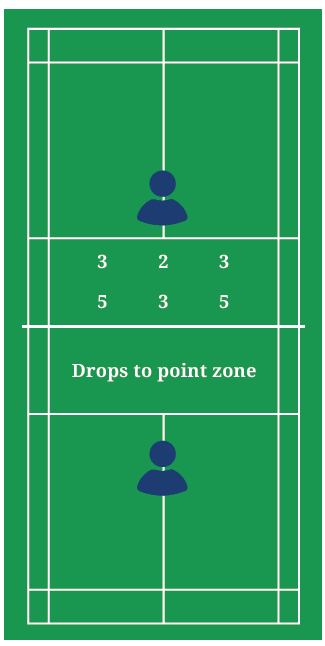
Your feeder standing across the net, will feed you the high serves continuously while you have to return the drop closer to the net and come back to the centre of the court. Each player will get 10 chances.
Circle Time – Finding new things
Discuss different ways of hitting the shuttlecock in which the force on the shuttlecock reduces significantly without much change in the action.
FSA - 13
Badminton Match
|
Warm-up |
Skill |
Cool-down |
Circle Time |
|
Full Body Stretching, Jogging on the Spot, Ladder Drills, High Knees |
Badminton Match |
Full Body Stretching Exercises |
Enjoyment and Focus |
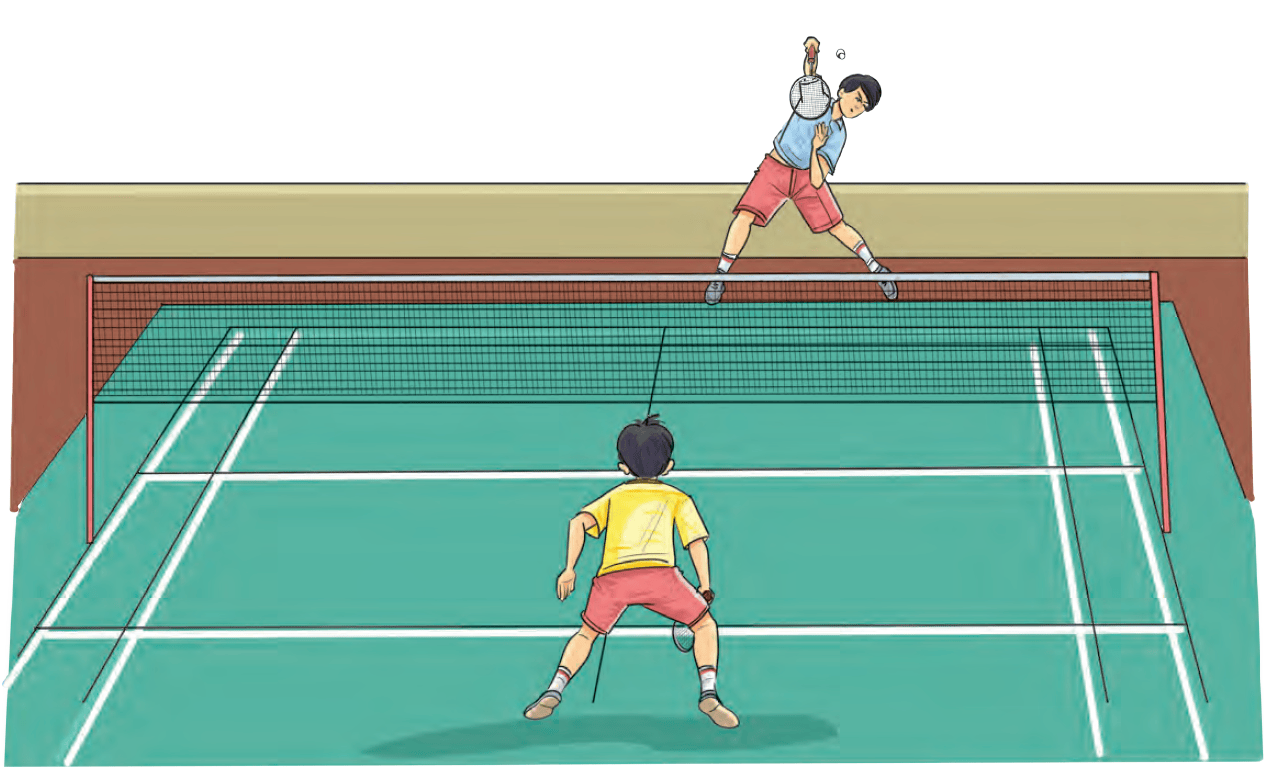
How to play?
• The game is won by the first player who scores five points.
• The player who wins a rally earns a point each time.
• In the situation where Player A serves and wins the rally, Player A advances to serve with a 1-0 lead.
• If Player B wins the subsequent rally, Player B receives the serve and the score is tied at one. Players keep serving and rallying throughout the game until one person reaches five points.
Circle Time – Enjoyment and Focus
• Identify the rallies, shots, and movements in the games which you enjoyed the most irrespective of who scored the points.
• How did you regain focus when you started trailing on points?
Complete the following task
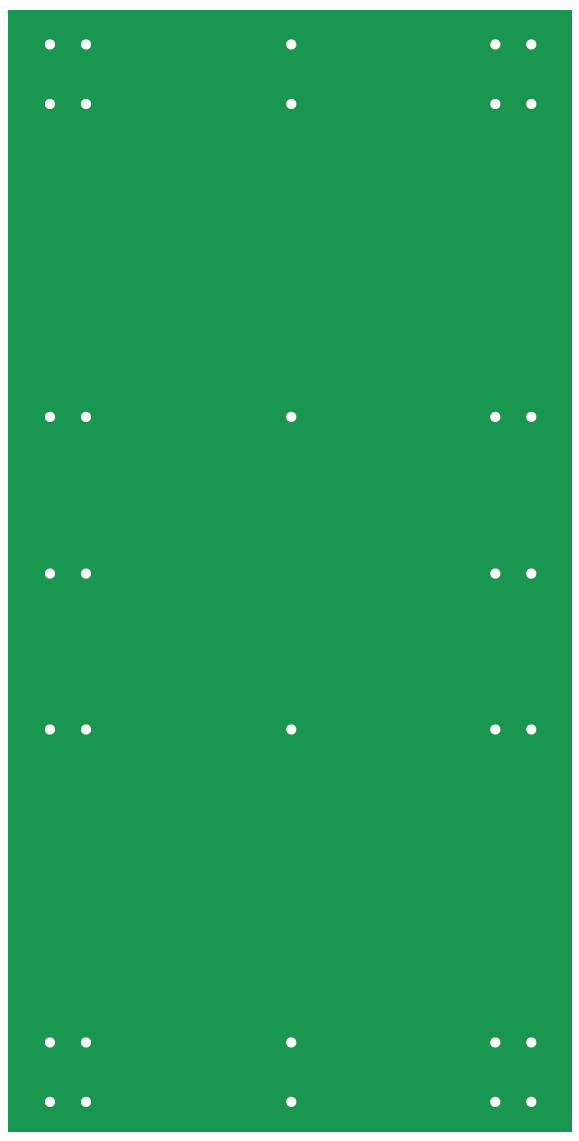
• Mark the court by joining the dots in the figure below.
• Find out the court dimensions for single and doubles and label it.
• Find out the basic rules of Badminton and discuss them with your peers.
Teacher-Assessment
Serve (Backhand Low Serve, Forehand High Serve and Forehand Low Serve)
|
1 |
2 |
3 |
4 |
5 |
|
Student is learning how to control the racket and shuttle as they serve. |
Student is making simple serves and working on accuracy and consistency. |
Student can occasionally change up serves and have a moderate level of accuracy. |
Student can modify their technique as per the requirement and serve consistently with good placement. |
Student use a variety of serves with accuracy, control, and strategy. |
Lift (Backhand Lift and Forehand Lift)
|
1 |
2 |
3 |
4 |
5 |
|
Student is learning how to control lifts in order to get the shuttle over the net. |
Student has trouble with consistency, height, and distance of the lifts. |
Student raises the shuttle with a respectable height and depth with control. |
Student lifts the shuttle to the backcourt consistently and precisely. |
Student use strategically positioned lifts in rallies and execute them with accuracy. |
Drive (Forehand and Backhand)
|
1 |
2 |
3 |
4 |
5 |
|
Student is able to hit the drive with improvement in timing and control. |
Student can hit drives, but lacks consistency, speed, and direction. |
Control has improved as the student hits the drives with respectable speed and accuracy. |
Can keep opponent under pressure by executing quick and controlled drives. |
Confidently executes strong, accurate drives and intelligently employ them throughout rallies. |
Understand Bullying
|
1 |
2 |
3 |
4 |
5 |
|
Student has trouble identifying feelings and hardly ever acknowledge their problem. |
Occasionally becomes aware of the distress but finds it hard to pinpoint the reason. |
Although having trouble controlling themself, student is aware of the distress and its causes. |
Has a good understanding of their distress and can control emotions to some extent. |
Successfully controls emotions and completely understand the reasons behind distress. |