
Unit 4: Fundamental Skills of Sports
Football
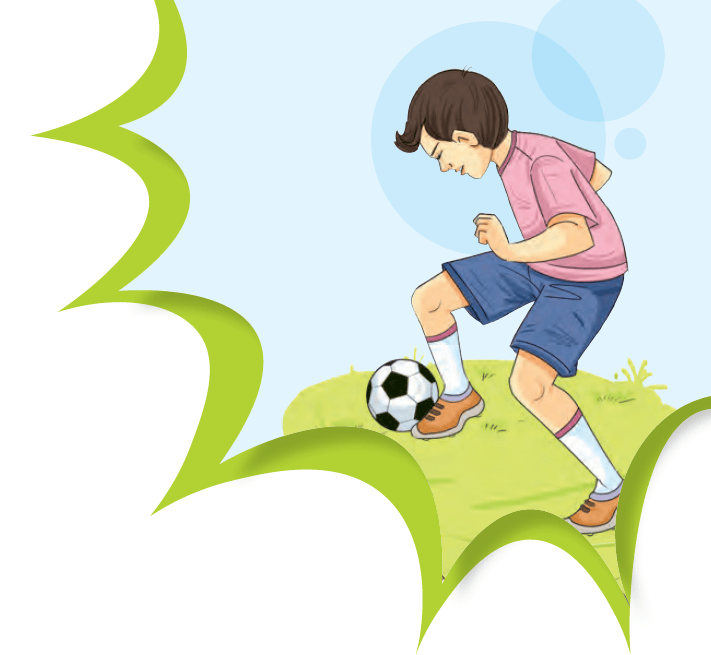
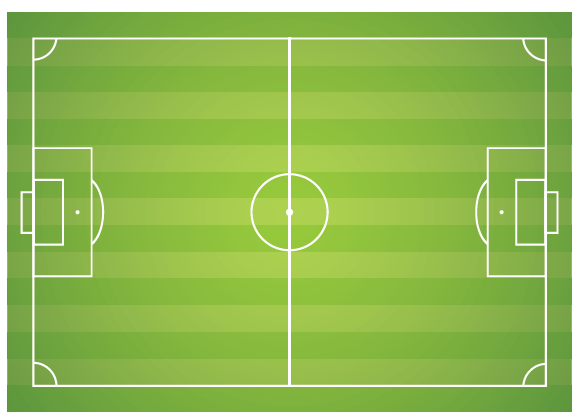
Football is a popular sport played between two teams, each with 11 players. The goal is to kick the ball into the opponent’s net to score points. Players use their feet, head, and body to control the ball, but only the goalkeeper can use hands. Football improves fitness, teamwork, and coordination. It is the most-watched sport in the world and is played in big tournaments like the FIFA World Cup. It is also known as Soccer
FSB - 1
Kicking the Ball with the Inside of the Foot
|
Warm-up |
Skill |
Cool-down |
Circle Time |
|
Side Walk, Back Walk, Jogging Drills |
Kicking the Ball with the Inside of the Foot |
Floor Touch, Calf Stretch |
Basic moves and strategies |
Kicking the Ball with the Inside of the Foot
Kicking with the inside of the foot is a fundamental skill in football that many players use for passing, shooting and controlling the ball.
Steps to Learn
You would have done similar activities in the Preparatory Stage (Grades 3 to 5). Let us learn the skill:
1. Approach
• Be in the direction of the ball.
• Place the non-kicking foot pointing towards the target by the side (6 to 8 inches apart) of the ball.
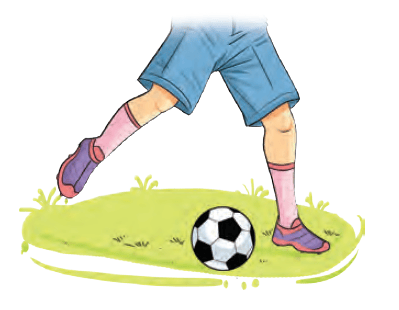
2. Execution of the Skill
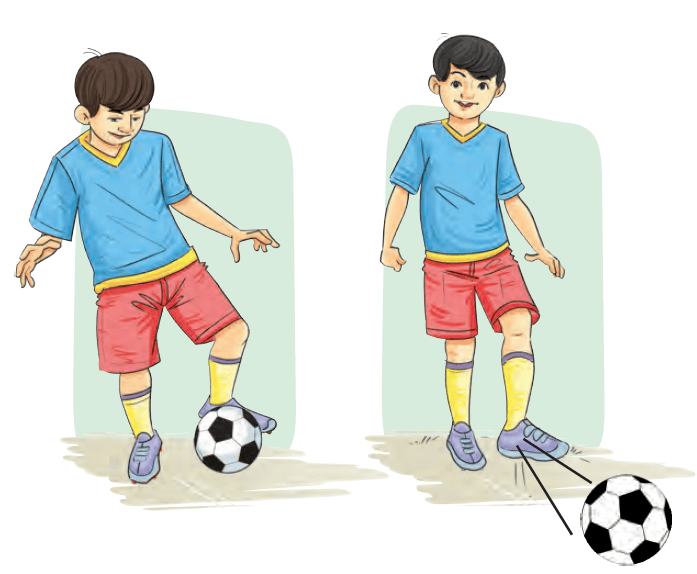
• The last step will be slightly bigger than the approach run. The kicking leg will get a good swing to connect the ball with the inside of the foot.
• Lock your ankle in such a way that the toes are pointing outside, whereby the whole inside of the foot comes in contact with the ball while kicking.
• Connect your foot at the centre and behind the ball.
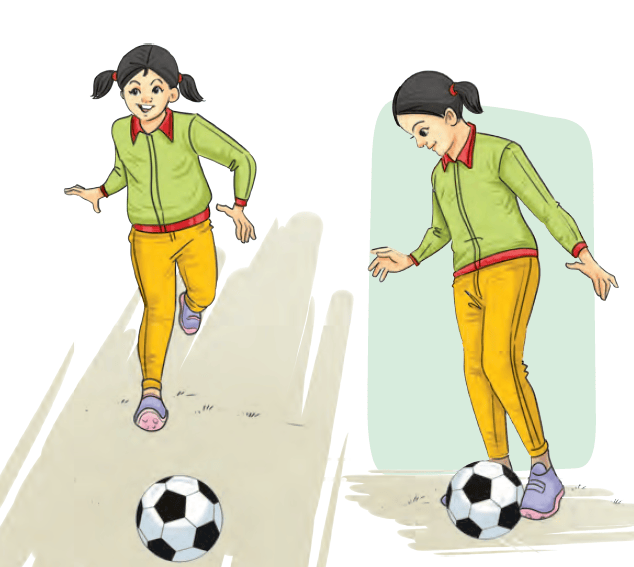
3. Follow Through
• Make sure your kicking foot is in the direction of the target after making contact with the ball.
Lead-up Activity
Pair up with your partner and kick the ball toward each other with your instep. Gradually increase the distance to 3 m, then 5 m, and finally 7 m, while also practicing with a moving ball. You can only kick the ball with the inside of the foot. Your partner will score a point if you fail to kick the ball through your instep. Try to increase the speed of the rally to unsettle each other.
Circle Time – Basic moves and strategies
Discuss the point of impact of the foot and the ball so that it remains on the ground and travels in the desired direction.
FSB - 2
Receiving the Ball by Inside of the Foot
|
Warm-up |
Skill |
Cool-down |
Circle Time |
|
Lower Limbs Rotations, High Knee |
Receiving the Ball by Inside of the Foot |
Torso Twist, Crossed-leg Toe Touch |
Safety measures |
Receiving the Ball by Inside of the Foot
Receiving the ball using the inside of the foot is a fundamental skill in football that allows players to control and direct the ball effectively.
Steps to Learn
You would have done similar activities in the Preparatory Stage (Grades 3 to 5). Let us learn the skill:
1. Approach
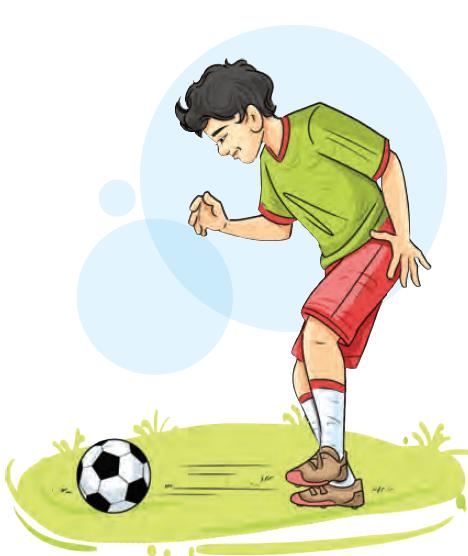
• Face the direction from which the ball is coming and align your body accordingly.
• Turn your shoulder and hips towards the direction of the passing to widen your body.
2. Execution of the Technique
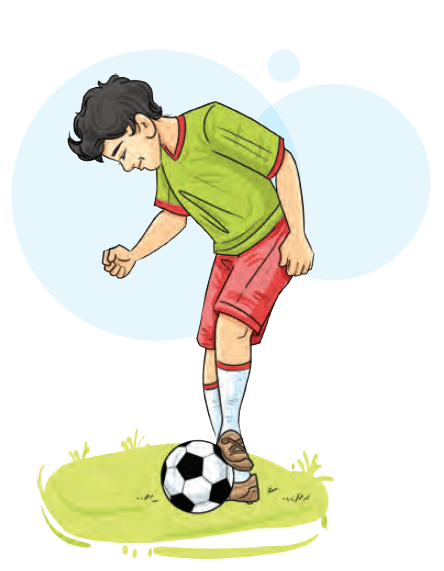
• Place your receiving foot in front of your standing leg and allow the ball to touch your foot.
To cushion the ball and slow it down, use the inside of your foot.
3. Follow Through
• At the time of contact with the ball, the receiving foot will be taken back so that the cushioning effect will be there to control the ball.
Lead-up Activity
Pair with your partner, stand at a distance of 5 m and start kicking the ball towards each other with your inside of the foot. You have to receive the ball through your instep as explained. Make sure that you keep the ball in control while receiving. If the ball deflects while receiving, the shooter will score a point. Try to increase the speed of the rally to unsettle each other.
Circle Time – Safety measures
Discuss the point of impact of the foot while receiving the ball and ways to offset the impact so that the ball does not deflect.
FSB - 3
Passing the Rolling Ball
|
Warm-up |
Skill |
Cool-down |
Circle Time |
|
Frog Jumps, Hip Muscle Stretch |
Passing the Rolling Ball |
Chest Stretch, Shoulder Circles |
Personal Behaviour during Game and Appreciating Strong Player |
Passing the Rolling Ball
Passing a rolling ball in football is a fundamental skill that involves delivering the ball to a teammate with precision and control.
Steps to Learn
You would have done similar activities in the Preparatory Stage (Grades 3 to 5). Let us learn the skill:
1. Approach
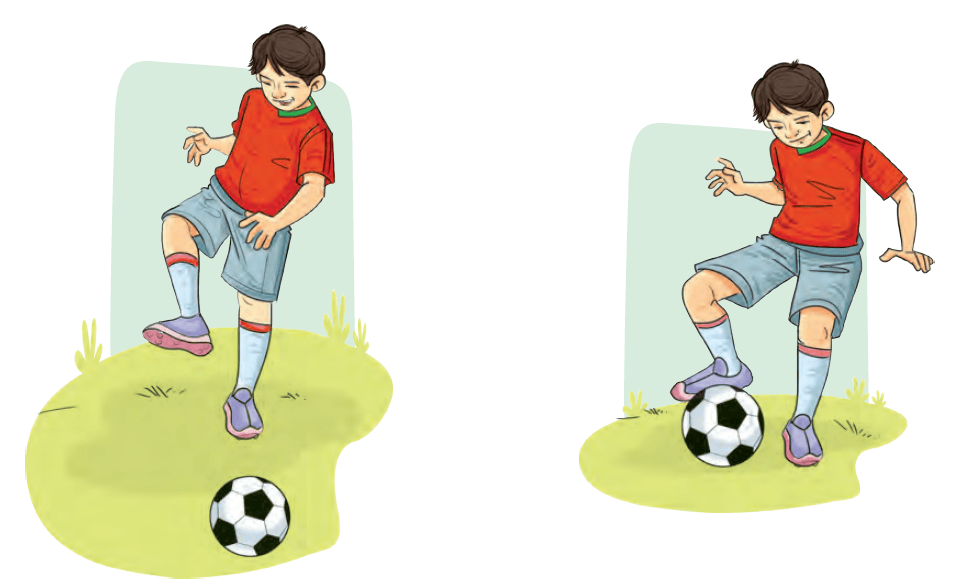
• Make sure your body is positioned correctly in relation to the ball.
• With your toes pointing in the direction of the pass, place your non-kicking foot next to the rolling ball.
• Look up to see where your opponents and teammates are positioned.
• You might need to modify the approach to better control the ball before passing if it is rolling fast.
2. Execution of Technique
• Use your correct foot to strike the ball in order to pass efficiently; for a more controlled pass, use the inside of your foot.
• You must strike the ball at the right time, ideally as it enters your stride.
• Depending on how you choose to pass, change the angle of your foot.
• Keep your foot parallel to the ground and slightly open for a more direct low pass.
• The circumstances determine the pass's power, such as whether a longer driven pass or a short crisp pass is needed.
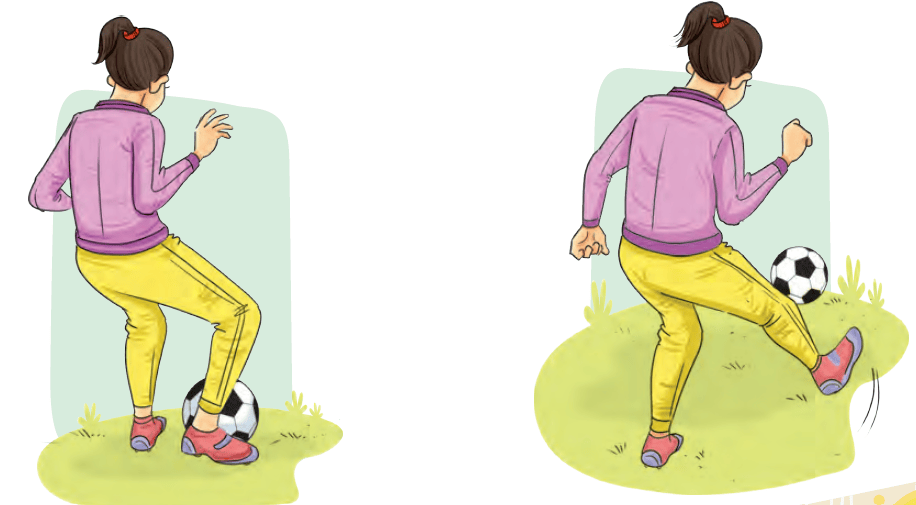
3. Follow Through
• Let your foot follow through in the direction of the pass after you've struck the ball.
• Make sure your body weight is evenly distributed to maintain your balance both during and after the pass.
• Make a swift transition to your next movement after the follow through.
Lead-up Activity
Drill Under Pressure
• The goal is to pass the ball precisely and quickly as it rolls while the opposition puts pressure.
• Mark a small area. Have three players pass the rolling ball to each other while one defender will intercept.
• If the ball goes out of the small area, the person who kicks the ball will become the defender.
• The defender will become the player.
Circle Time – Personal Behaviour during Game and Appreciating Strong Player
Identify your areas of improvement and strengths while executing a rolling ball pass.
Discuss how you can ensure self-safety and safety of other while moving in a small areas.
FSB - 4
Step Trapping
|
Warm-up |
Skill |
Cool-down |
Circle Time |
|
Jogging, High Knees, Butt Kicks, Lateral Shuffles |
Step Trapping |
Hip Flexor Stretch, Glute Stretch, Calf Stretch, Groin Stretch |
Personal Goal |
Step Trapping
Steps to Learn
Step Trapping is a fundamental skill in football that involves controlling and stopping the ball with various parts of the body.
1. Approach
• When you are ready to trap the ball, place your body behind the line of the incoming ball.
• Anticipate the direction, path and bounce of the ball.
• Take a low balanced position by bending your knees a little.
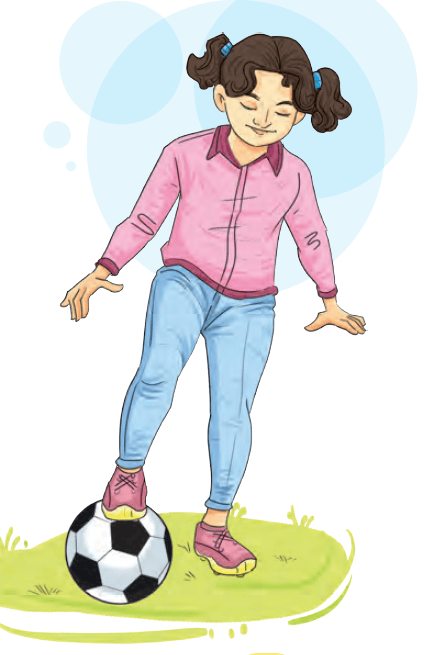
2. Execution of Technique
• If the ball is rolling towards you, simply place your foot directly on top of it to stop it.
• If the ball is coming to you on a low bounce, extend your receiving foot in its direction and bring it back right before contact to stop the ball. Make sure that the ball dead drops on impact.
3. Follow Through
• As soon as the ball is trapped, get ready to transfer it into space or away from the defender.
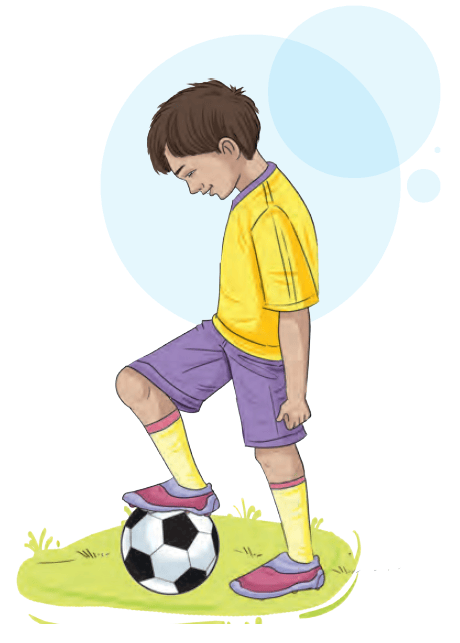
Lead-up Activity
• Make as many small boxes of 30 inches × 30 inches.
• Play this with your partner. One of the partners will stand behind the box and the other partner will roll the ball by hand towards the box from a distance of five metres.
• The partner behind the box has to trap the ball within the box. One point will be awarded for one trap.
• Each player will set a goal for trapping the ball, for example, five times out of six or three times out of six.
• Each will get three chances of rolling a ball and three chances for low bouncing the ball randomly. The player with the maximum points will be the winner.
Circle Time – Personal Behaviour during Game and Appreciating Strong Player
•Discuss on what basis you set your goal and how you felt after achieving your goal.
•What steps you will take if you do not achieve your goal?
FSB - 5
Dribble
|
Warm-up |
Skill |
Cool-down |
Circle Time |
|
Jumping Jacks and Frog Jump, Chest and Back Stretch, Quadriceps Stretch |
Dribble |
Bow Pose, Crocodile Pose, Wheel Pose |
How to move quickly |
Dribble
Steps to Learn
Dribbling is one of the fundamental skills in football that involves moving the ball with control while running or walking.
1. Approach
• Bend your knees slightly to lower your centre of gravity to maintain the balance.
•Keep the ball between your leg and close to the body to protect the football from the defender.
2.Execution of Skill
• Use both feet’s, inner and outer parts, to control and guide the ball to move in the desired direction.
• Apply short and gentle touch to the ball. Adjust the force of the touches on the situations, and the pace so that the ball is in your control.
• Keep your head up, to stay aware of the surroundings, especially the location of the opponents and teammates.
• Dribble the ball while using both feet for unpredictable results.
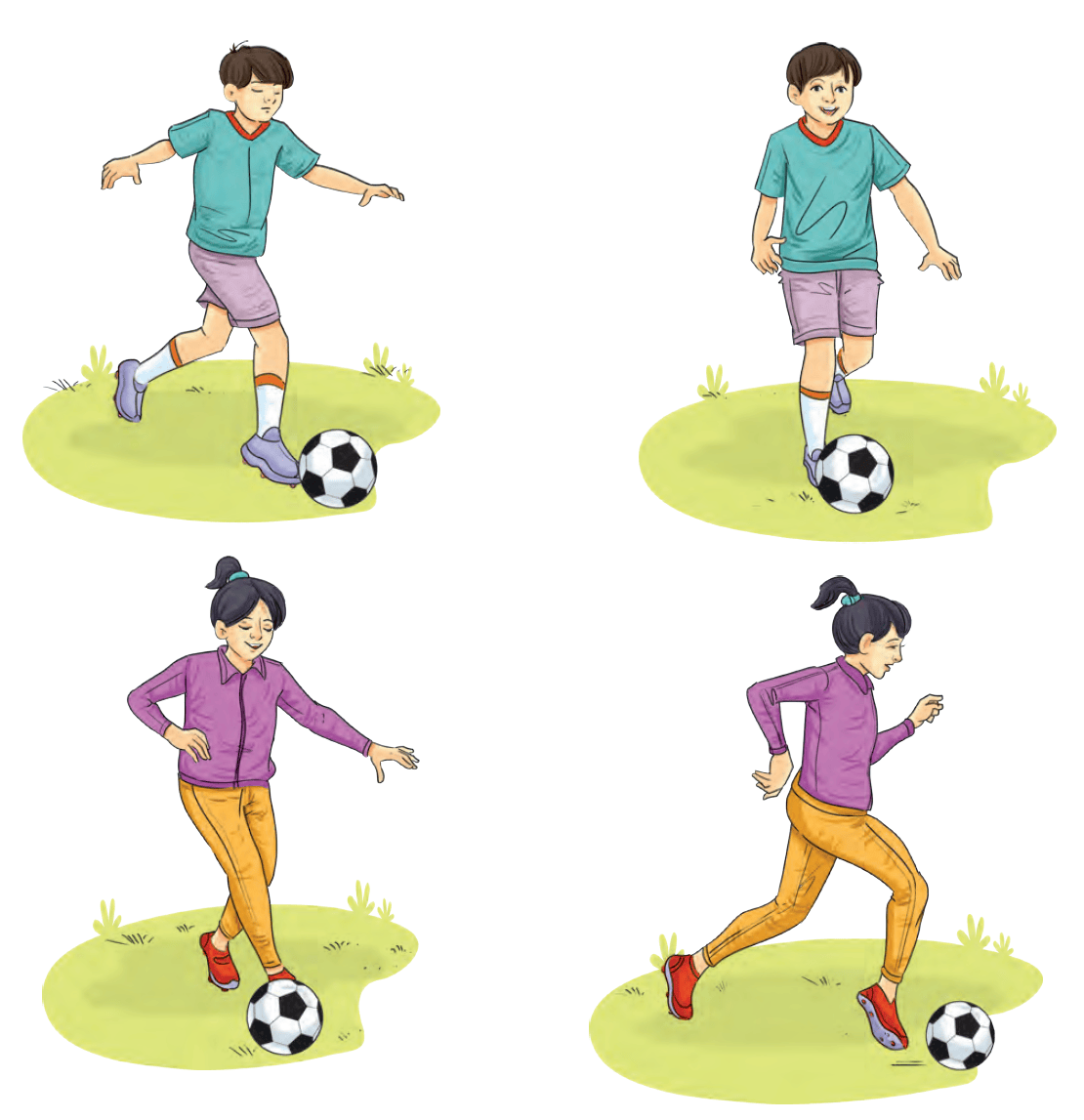
3. Follow Through
• Maintain the body balance and balance after finishing; continue the dribbling.
• Plan for the next action.
• Maintain the momentum after execution.
Lead-up Activity
• Place the cones as shown in the figure.
• The players will take turns for dribbling the ball through the cones in different patterns.
• The players who are not dribbling the ball will observe the other players who are dribbling.
• The player who will complete the dribble in minimum time will win.
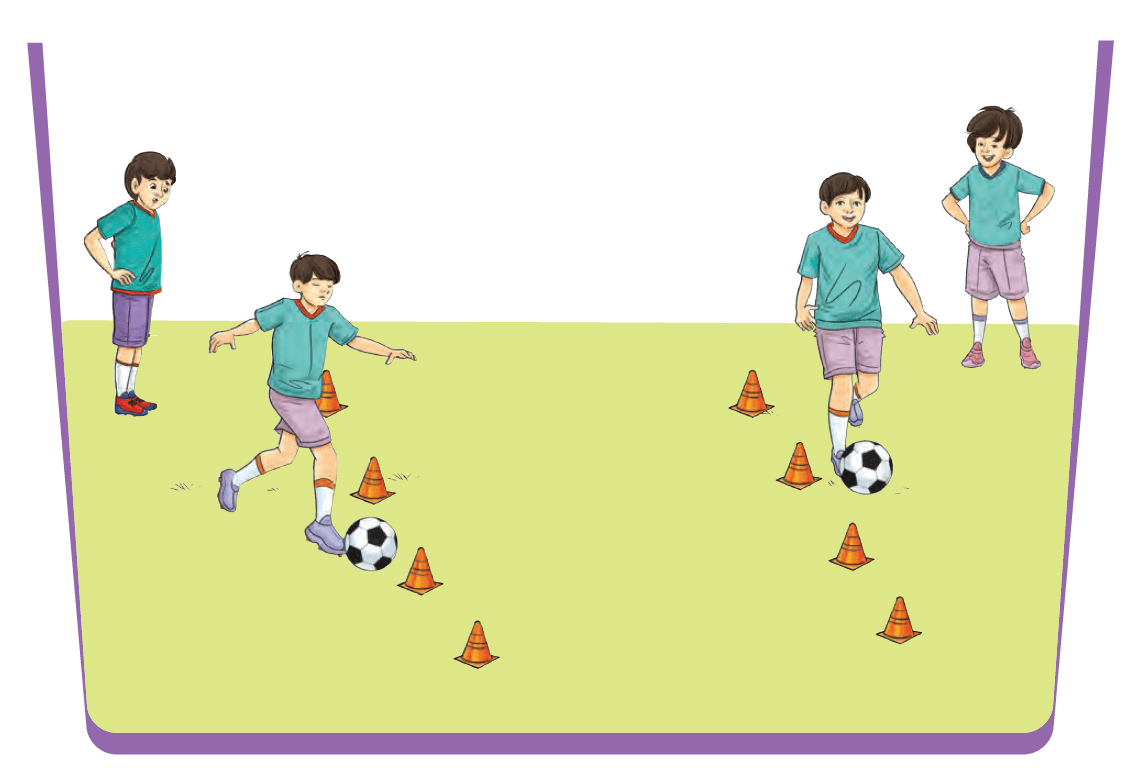
Circle Time – How to move quickly
•Discuss what technique you observed that helped the players who finished the dribble in the lowest time.
•Discuss what technical improvements are required for the player who took more time.
FSB - 6
Feinting
|
Warm-up |
Skill |
Cool-down |
Circle Time |
|
Jogging, High Knees, Butt Kicks, Lateral Shuffles |
Feinting |
Hip Flexor Stretches, Glute Stretch, Calf Stretch, Groin Stretch |
Patterns of opponent’s play |
Feinting
Steps to Learn
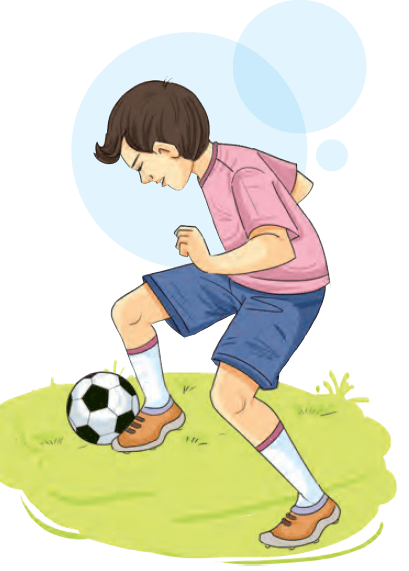
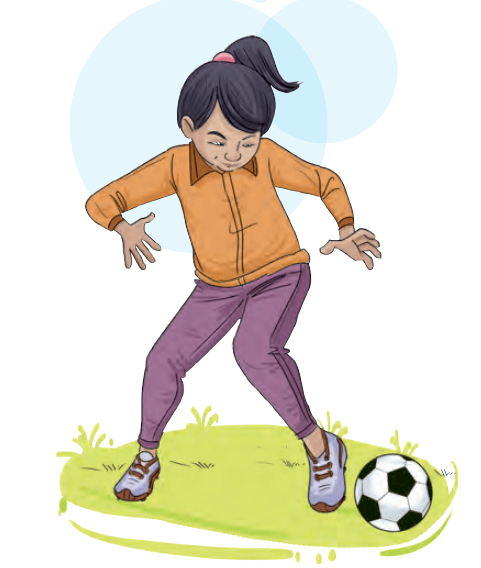
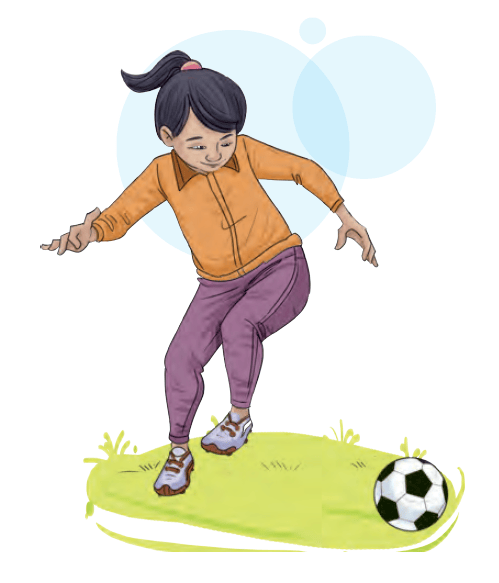
A feint usually involves a sudden shift of body weight, a fake dribble, or a head movement that suggests the player is going in one direction while they actually intend to go another way. The objective is to wrong-foot your opponent in order to make your way with or without the ball.
1. Approach
• With your knees bent and your body ready to change direction rapidly, maintain a low centre of gravity.
• Make it appear as if you are going to shoot, dribble, or pass in a single direction.
2.Execution of Skill
• Use your entire body to make the feint seem realistic by exaggerating the movement of your legs and feet, as though you were going to pass or dribble in that direction.
• Push off your planted foot and go in the opposite direction as soon as the opponent responds to your feint.
3. Follow Through
• Once you've managed to trick the defender, speed into the gap produced to move forward.
• Once you have defeated the defender, consider your alternatives. Your options will vary depending on the situation. Youcanshoot, dribble farther,or pass.
Lead-up Activity
Choose a partner for yourself. While the one player practices feints in front of other, the other player assumes the role of the defender. The attacker practices selling the feint and rapidly changing direction while the defender imitates the attackers moves rather than tackling.
Circle Time – Patterns of opponent’s play
• Discuss how will you identify whether the other players are feinting or not.
• When you were unable to imitate your partner, express your feelings and share with your peers.
FSB - 7
Kicking the Ball for Accuracy
|
Warm-up |
Skill |
Cool-down |
Circle Time |
|
Sliding and Galloping, Knee Hug |
Kicking the Ball for Accuracy |
Hip Flexor Stretches, Glute Stretch, Calf Stretch, Groin Stretch |
Patterns of opponent’s play |
Kicking the Ball for Accuracy
Steps to Learn
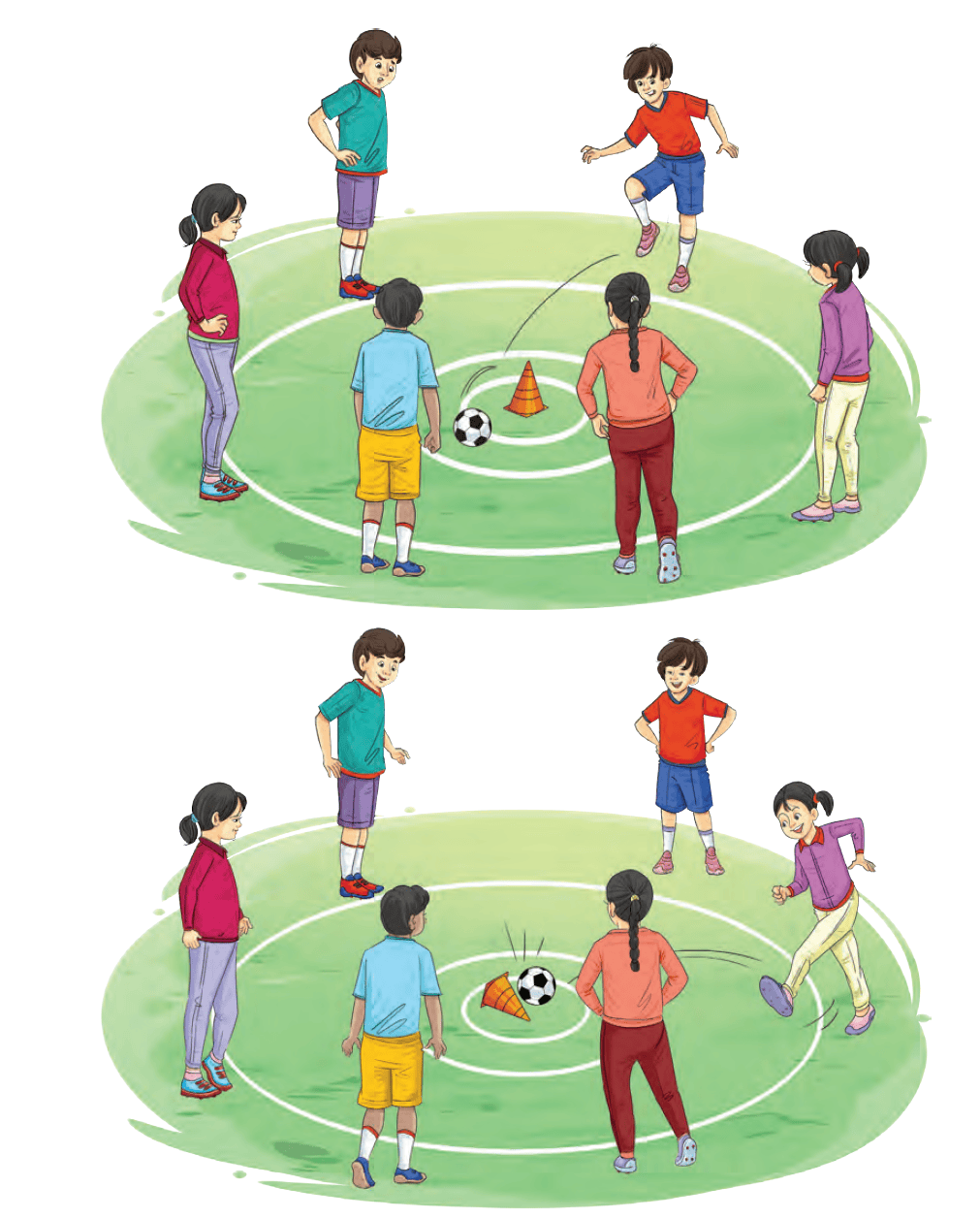
• Mark a big circle that is between 10 – 15 yards wide.
• Make two circles inside a big circle as shown in the figure and keep a marker right in the middle of the inner circle.
• Each player will stand around the circle’s edge.
• Players will take turns trying to get their ball as close to the marker as they can.
• The ball that hits the cone gets five points. The ball that gets through the first inner circle without touching the marker gets 3 points. The ball that gets through the outer circle gets 1 point.
• Each player will get equal chances. Repeat the game multiple times and total the points. The player with the maximum time wins.
• Increase the distance of the circle to make the game more challenging.
Circle Time – Patterns of opponent’s play
• Discuss and compare what contributed to accurately kicking the ball from below:
• Use of Instep • Balance • Focus • Footwork
FSB - 8
Passing the Ball in the Air
|
Warm-up |
Skill |
Cool-down |
Circle Time |
|
Floor Touch, Calf Stretch, Crouch Leg Stretch |
Passing the Ball in the Air |
Forward Lunges and Backward Lunges |
Discussing the drill |
Passing the Ball in the Air
Steps to Learn
1. Approach
• To properly time your contact, align yourself with the ball's path.
• Make rapid, little adjustments to your position as the ball gets closer to ensure that you are balanced.
• Do it in two steps.
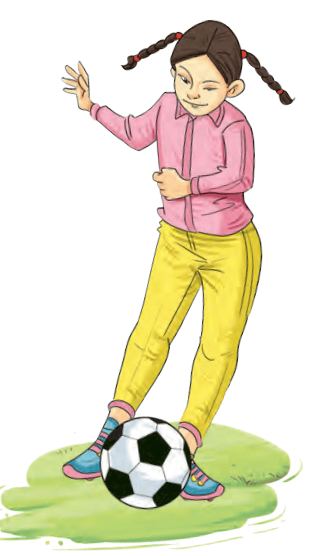
• To hold the ball down and maintain control, lean a little forward.
2.Execution of Technique
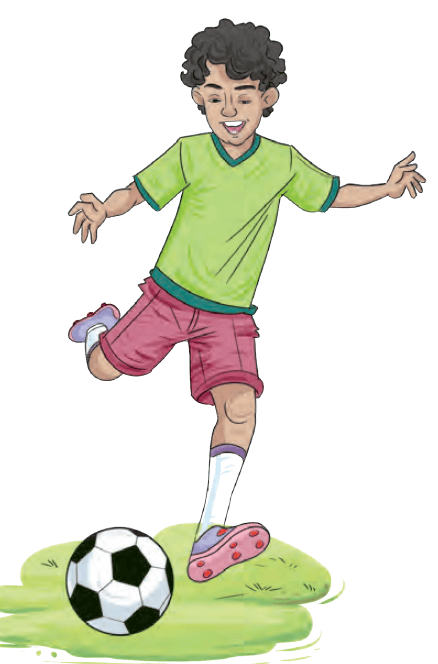
• First, receive the ball and take a step back. Then use your instep diagonally to kick the lower half of the ball.
• You should usually aim for the middle or lower portion of the ball while making such a pass.
• Depending on the style of pass, use different areas of your foot (instep for longer and driven aerial passes, inside of the foot for shorter and more controlled passes).
• Use a smooth, steady leg swing to provide power.
3. Follow Through
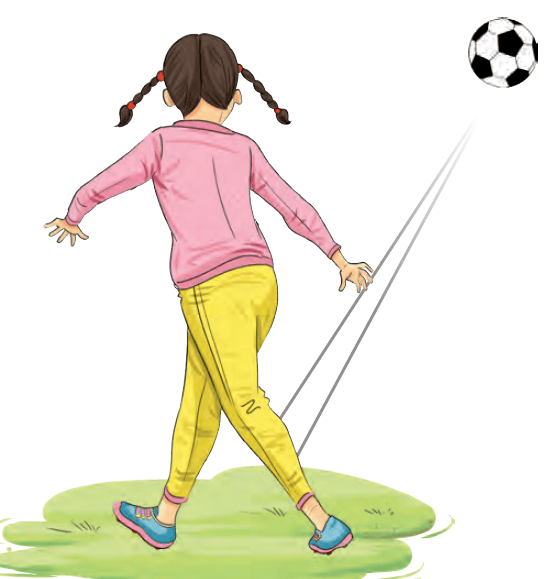
• Your kicking leg should continue to move forward naturally after it makes contact with the ball.
• Maintain your body's balance while performing the follow-through.
• After making the pass, get ready quickly to go on to your next move.
Lead-up Activity
• Stand ten to fifteen feet apart with a partner for the twoplayer drill.
• Pitch a stump in between. Try kicking the football over and above the stump. You will score one point for kicking the ball over the stump. Player with the most points win.
• Gradually advance to longer kicks by increasing the distance from the stump; utilise the instep after beginning with short, controlled kicks using the inside of the foot.
Circle Time – Discussing the drill
Observe and discuss the difference between the flight path of the ball when it is kicked from different parts of the foot. Also observed and discuss if the change in body position.
FSB - 9
Pass and Move Relay Drill
|
Warm-up |
Skill |
Cool-down |
Circle Time |
|
Sliding and Galloping, Knee Hug and Quadriceps Stretch |
Pass and Move Relay Drill |
Torso Twist, Calf Stretch, Quadriceps Stretch |
Personal Behaviour during Game and Appreciating Strong Player |
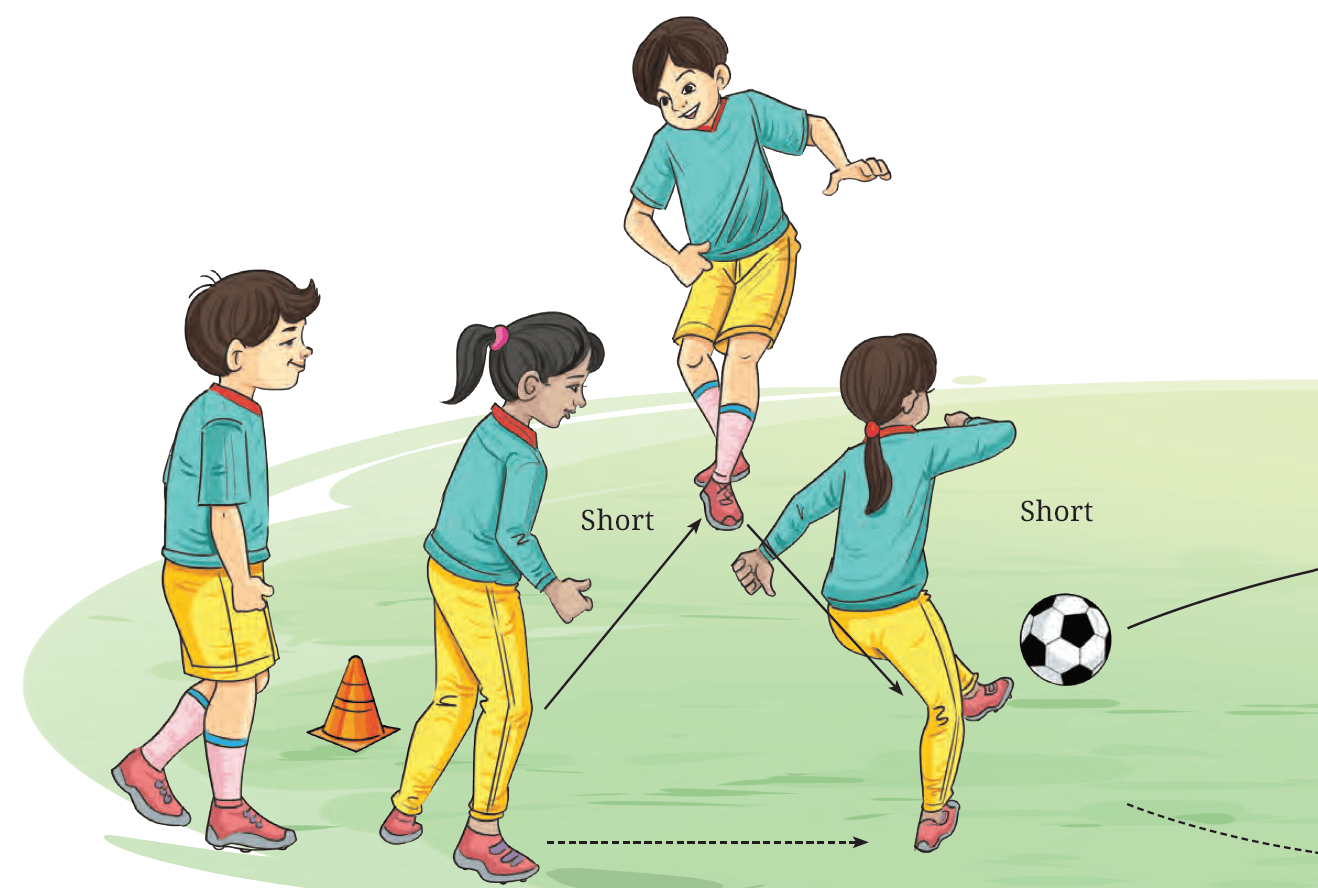
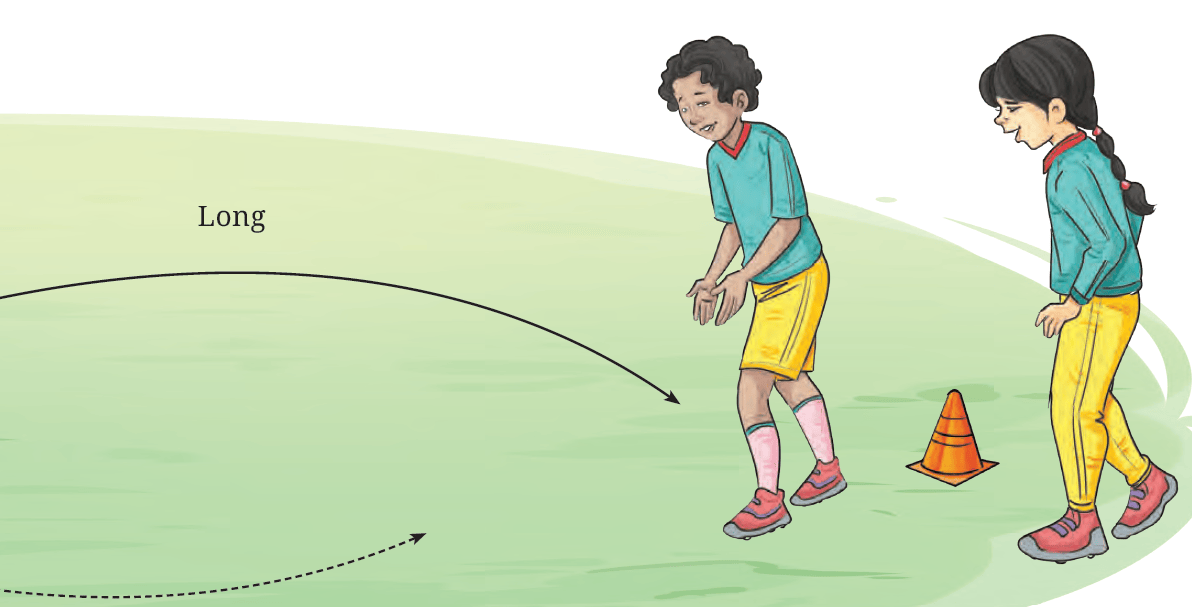
Pass and Move Relay Drill
Steps to Learn
• The first player in line makes a short pass to the player standing next to him at a distance of 5-7 metres.
• The player returns the ball to the first player in line, and then he makes a long pass to the player in front of him at a distance of fifteen (15) metres, or as close to it as possible, depending on space availability.
• The receiving player will dribble the ball till the starting line, and the cycle will be continued.
Circle Time – Personal Behaviour during Game and Appreciating Strong Player
Discuss the distress signals that you may identify during a course of drill and game e.g. discomfort in movement, bruises and rashes, intense pain, facial expression, etc.
FSB - 10
Interception
|
Warm-up |
Skill |
Cool-down |
Circle Time |
|
Leg Swings, Hip Circles, Walking Lunges, High Knees, Butt Kicks |
Interception |
Light Jogging, Quadriceps Stretch, Hamstring Stretch, Hip Flexor Stretch |
Discussing the drill |
Interception
Steps to Learn
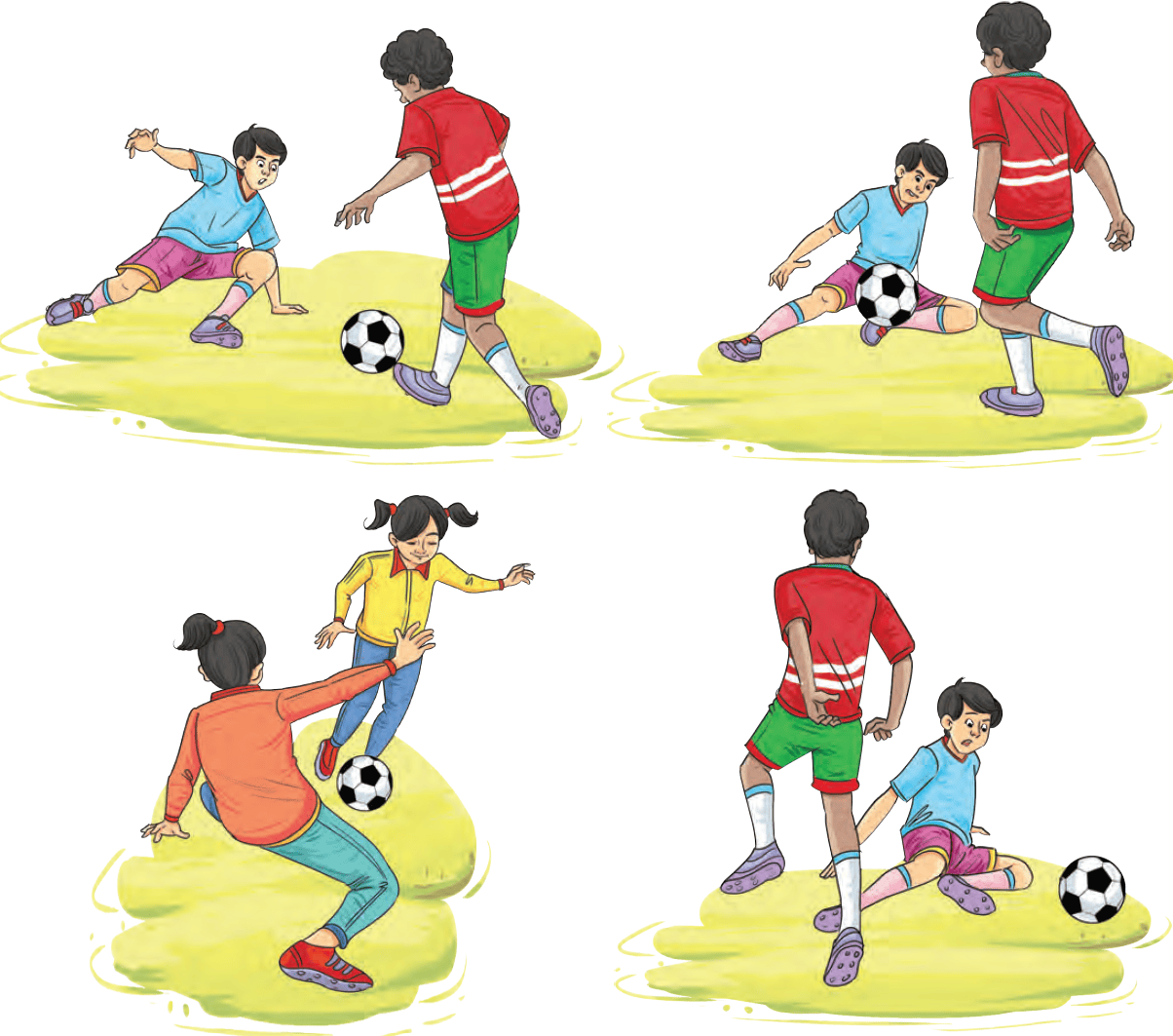
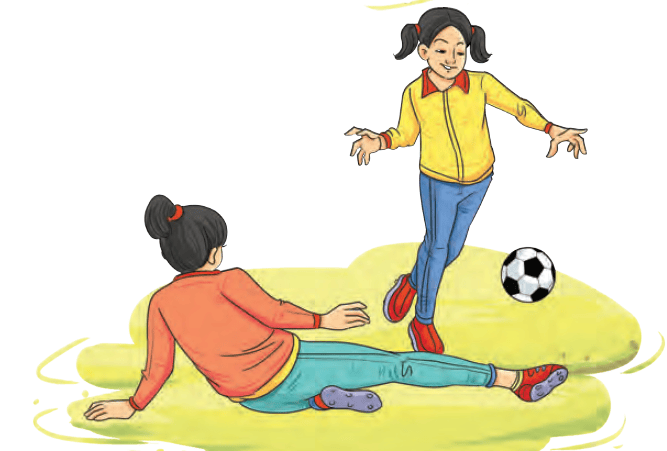
An interception is a defensive action where a player anticipates and intercepts (or takes possession of) the ball intended for an opponent.
1. Approach
• Keep yourself ready so that you intercept the given pass.
• Maintain a low centre of gravity by balancing your weight on your feet and bending your knees.
• Continue to look around the field with your head elevated. Wait for the ball to move.
2.Execution of Technique
• Judge and wait for the ball's movement towards the target after it has been passed.
• Move swiftly into the ball's path and intercept it when it is passed.
• Cut across and intercept with an explosive, fast step.
3. Follow Through
• The objective is to keep control of the ball after you've intercepted it.
•Make a swift switch from defence to offence after intercepting.
Lead-up Activity
• Make a circle and let the players stand at the edge of the circle. One or two players will be the defenders who will intercept the ball while others pass the ball through the circle.
• The one who successfully intercepts will join the players in the circle and one who made an unsuccessful pass will become a defender.
Circle Time – Discussing the drill
Discuss what strategies can be made with your defender partner to intercept the football.
Discuss the passing strategies to dodge the defender while passing the ball.
Do You Know
Person to person marking is a defensive strategy in which one player is tagged to another player of opposition side. The player is supposed to remain close to the opposing side player to refrain the opposing player for receiving a pass.
FSB - 11
Front Block Tackling
|
Warm-up |
Skill |
Cool-down |
Circle Time |
|
Leg Swings, Hip Circles, Walking Lunges, High Knees, Butt Kicks |
Front Block Tackling |
Light Jogging, Quadriceps Stretch, Hamstring Stretch, Hip Flexor Stretch |
Regulation of Behaviour and Observing Others |
Front Block Tackling
Steps to Learn
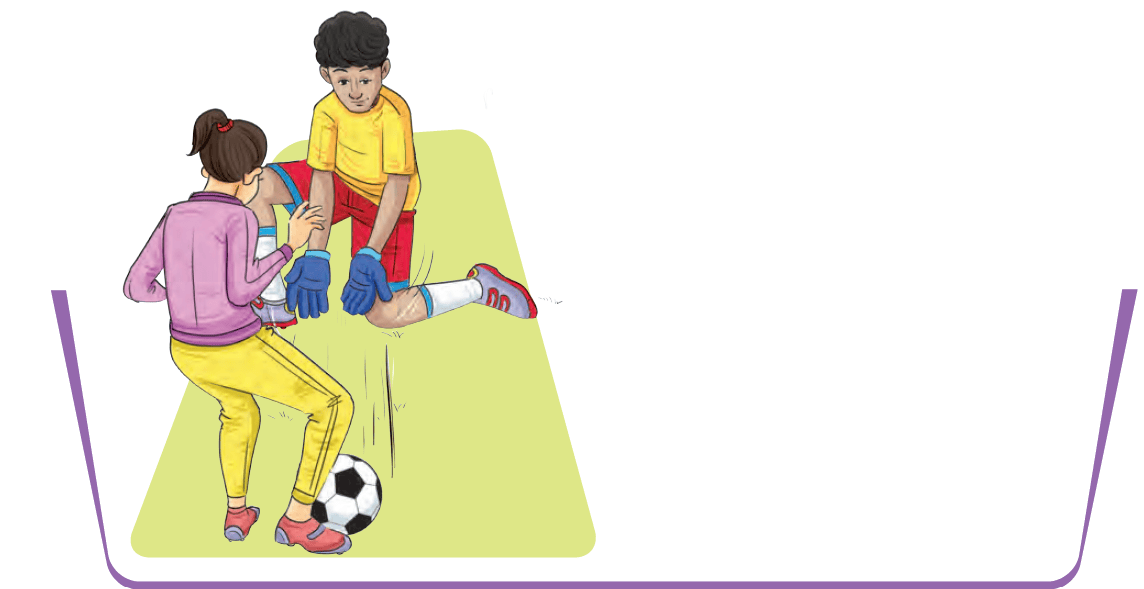
A front block tackling is a defensive technique in football that aims to dispossess an opponent of the ball without making direct contact with them or committing a foul.
1. Approach
• Get close to the opponent who is controlling the ball.
• Keep your body leaning slightly forward, knees bent, and approach swiftly to the opponent.
• To prevent being dribbled past, keep a safe distance.
2.Execution of Technique
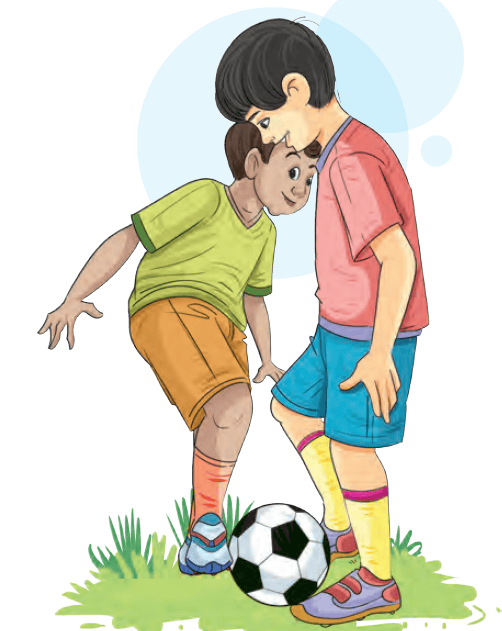
• Step in to make the tackle as soon as you are within range and the opponent is about to lose control of the ball.
• The ball can be blocked or knocked aside by using the inside of your foot.
• For balance, place your non-tackling foot firmly on the ground as you make the tackle.
• Be cautious not to be too aggressive, but use enough force to get the control of the ball.
3. Follow Through
• Return to your starting position as soon as you've completed the tackle.
• Get ready to face another player that will be attacking.
Lead-up Activity
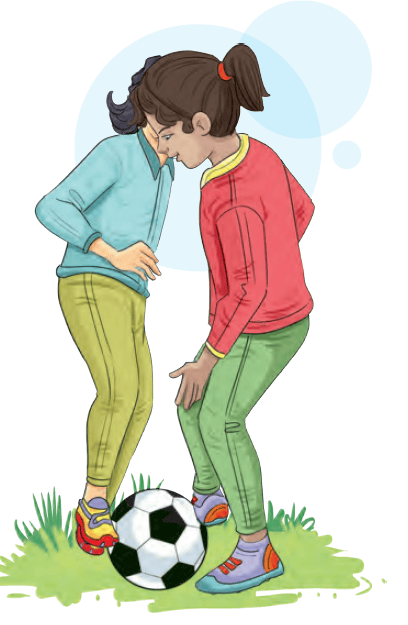
•Mark a spot and place a ball on it. Two players will approach the ball.
• Both the players will gently place the foot touching the ball as shown in the figure.
They will then push the foot by applying pressure on the foot to unsettle the opponent and take control and dribble into.
Circle Time – Regulation of Behaviour and Observing Others
Discuss the precautions you took to prevent the injuries while doing this activities.
FSB - 12
Goal Keeping
|
Warm-up |
Skill |
Cool-down |
Circle Time |
|
Leaping and Skipping Jumps, Hip and Pelvic Muscle Stretch |
Goal Keeping |
Chest Stretch, Shoulder Circles, Cross Body Shoulder Stretch |
Stance, Action and Arm Movements |
Goal Keeping
A goalkeeper is the only player allowed to use their hands and arms to play or control the ball, within the designated area, penalty area.
Steps to Learn
1. Approach
• Maintain a shoulder-width distance between your feet while bending your knees slightly.
• Join your hands in the ‘W’ position.
• Always keep your eyes on the ball.
2.Execution of Technique
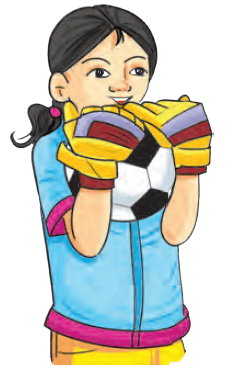
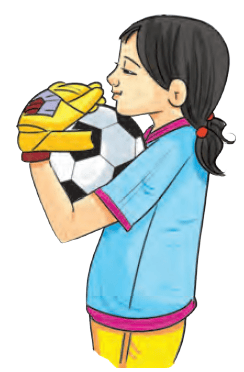
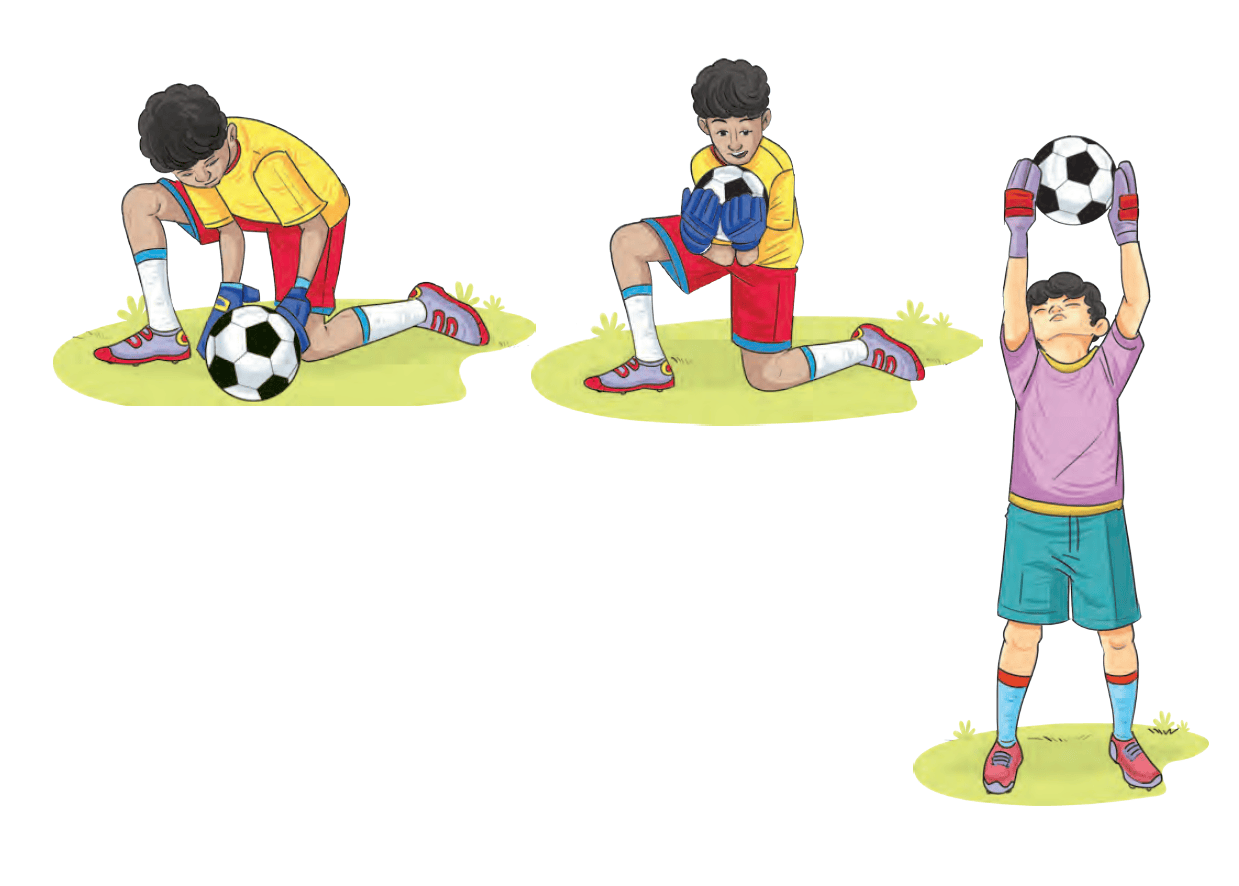
• Using your hands and arms, form a “basket”. Hold your hands close together with your fingers pointing downward and slightly cupped.
• In order to provide a safe landing place for the ball, your elbows should be close to your sides.
• Allow the ball to enter the basket you’ve made with your hands and arms as it gets closer.
• As you catch the ball, bend your elbows and bring your hands slightly towards your body to allow your body to absorb the force.
3. Follow Through
• Once you get the ball in your hands, secure it by bringing it close to your body.
• As a result, the ball won’t returned back or get knocked down by an opponent.
Lead-up Activity
Make a pair. Set up the cones in a zigzag pattern. One player will run between the cones and then catch the ball. The partner will throw the ball towards the other players. Drill will be continued for the set time period.
Circle Time – Stance, Action and Arm Movements
Discuss how did you anticipated the direction and path of the ball just before the catching.
FSB - 13
5-a-side Match
|
Warm-up |
Skill |
Cool-down |
Circle Time |
|
Fast running on the Spot, Head to Toe Stretch |
5-a-side Match |
Overhead Arm Stretch, Torso Twist, Crossed-leg Toe Touch |
Personal Behaviour during Game and Appreciating Strong Players |
5-a-side Match
Steps to Learn
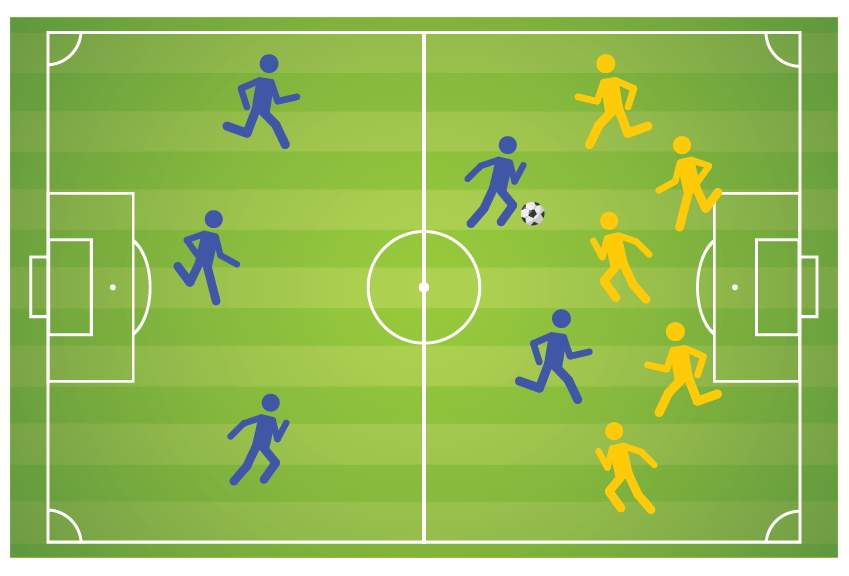
• Divide the players into groups of five each.
• Mark a small area of 30 by 40 yards.
• Use the cones to mark the goal area.
• A match will be played for 5 minutes each. The team that wins the match will play the next round.
Circle Time – Personal Behaviour during Game and Appreciating Strong Players
Discuss how goal scorer dribble and what thought appeared in your mind when someone tackled ball from your possession.
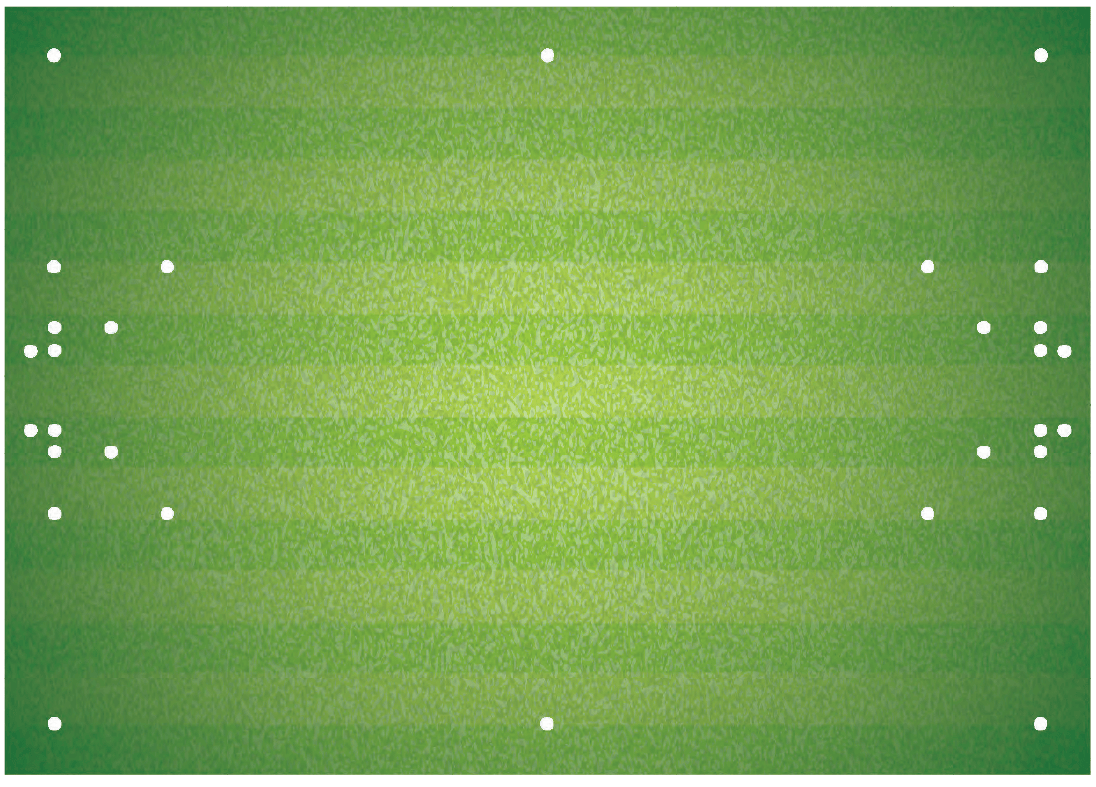
Below is a puzzle to create a football ground - explore the rules and measurements as per the guidelines of the international body and adopted by the national federations.
Complete the following task
• Mark the court by joining the dots in the figure below.
• Find out the courts dimensions for junior boys and junior girls and label it.
• Find out the basic rules of Football and discuss them with your peers.
Teacher-Assessment
Passing and receiving the ball while looking at the partner
|
1 |
2 |
3 |
4 |
5 |
|
The student tries to spot the teammate while learning how to pass and receive the ball. |
Can pass and receive the ball, but occasionally have trouble with awareness and accuracy. |
Student is getting better at passing and receiving while searching for a teammate. |
Searches the field for options while making accurate passes, and receiving the ball. |
Passes and receives with confidence and accuracy while keeping teammate’s position in mind. |
Dribble
|
1 |
2 |
3 |
4 |
5 |
|
Student is getting better at controlling the ball while dribbling. |
Can dribble the ball but needs to work on awareness and control. |
Can dribble fairly well and occasionally look up to check the field. |
Can use both feet while keeping head up to make decisions and maintaining strong ball control. |
Can use both feet to dribble with confidence and full control while keeping the head up. |
Goalkeeping
|
1 |
2 |
3 |
4 |
5 |
|
Student is learning the basics of goalkeeping, with a focus on positioning and simple saves. |
Student is getting better at placement while being able to make regular saves. |
Communicates with the defence, distributes the ball well, and handles the majority of shots with assurance. |
Regularly makes difficult saves, controls the area during set pieces, and initiates attacks with wellplaced strikes. |
Excel in all aspects of goalkeeping, including shot-stopping, distribution, and leadership |
Understanding Self-Distress
|
1 |
2 |
3 |
4 |
5 |
|
Student has trouble identifying feelings and hardly ever acknowledge their problem. |
Occasionally becomes aware of the distress but finds it hard to pinpoint the reason. |
Although having trouble controlling themself, student is aware of the distress and its causes. |
Has a good understanding of their distress and can control emotions to some extent. |
Successfully controls emotions and completely understands the reasons behind distress. |