
UNIT 2
WIT AND HUMOUR
ANIMALS, BIRDS, AND DR. DOLITTLE
Let us do these activities before we read.
I. Do you have a pet or a domestic animal? If yes, why? If not, why not? How do people usually spend time with a pet or domestic animal? Share your thoughts with your classmates and the teacher.
II. You must have read stories where animals and birds talk. If you had a chance to communicate with an animal or a bird, who would you like to speak to and why? Share your thoughts with your classmates and the teacher.
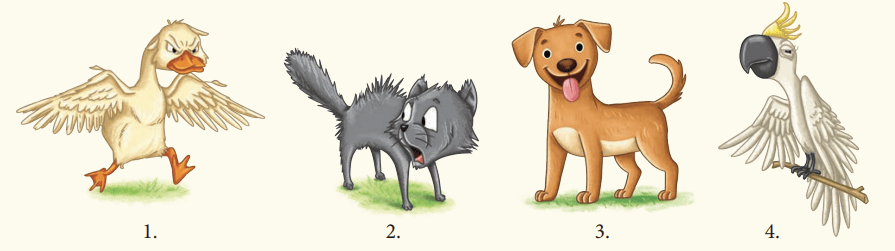
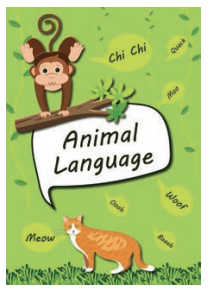
III. If we closely observe the body language of animals and birds, we can understand what they want to tell us. Work in pairs and study the pictures given below. Find out what emotions these animals and birds are trying to convey. Share your observations with your classmates and the teacher.
Let us read
I
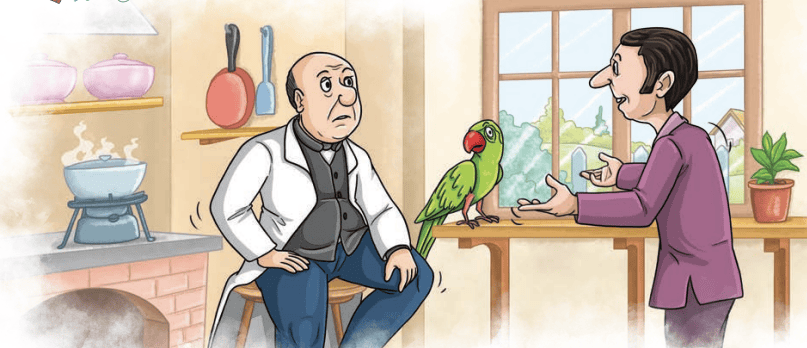
Doctor Dolittle was sitting in his kitchen talking with the Cat’sfood-Man who had come to see him with a stomach-ache.
“Why don’t you give up being a people’s doctor, and be an animal doctor?” asked the Cat’s-food-Man.
The parrot, Polynesia, was sitting in the window looking out at the rain and singing a sailor song to herself. She stopped singing and started to listen.
“You see, Doctor,” the Cat’s-food-Man went on, “you know all about animals—much more than what these vets here do. That book you wrote—about cats, why, it’s wonderful! I can’t read or write myself—my wife, Theodosia, is a scholar, and she read your book to me. You might have been a cat yourself. You know the way they think.”
When the Cat’s-food-Man had gone the parrot flew off the window on to the Doctor’s table and said, “That man’s got sense. That’s what you ought to do. Be an animal doctor. Give the silly people up—if they haven’t brains enough to see you’re the best doctor in the world. Take care of animals instead— they’ll soon find it out. Be an animal doctor.”
“Oh, we parrots can talk in two languages—people’s language and bird language,” said Polynesia proudly. “If I say, ‘Polly wants a cracker’, you understand me. But hear this: Ka-ka oiee, fee-fee?”
“Good Gracious!” cried the Doctor. “What does that mean?”
“That means, ‘Is the porridge hot yet?’—in bird language.”
“My! You don’t say so!” said the Doctor. “You never talked that way to me before.”
“What would have been the good?” said Polynesia, dusting some cracker crumbs off her left wing. “You wouldn’t have understood me if I had.”
“Tell me some more,” said the Doctor, all excited; and he rushed over to the drawer and came back with a book and a pencil. “Now don’t go too fast—and I’ll write it down. This is interesting—very interesting—something quite new. Give me the Birds’ A.B.C. first—slowly now.”
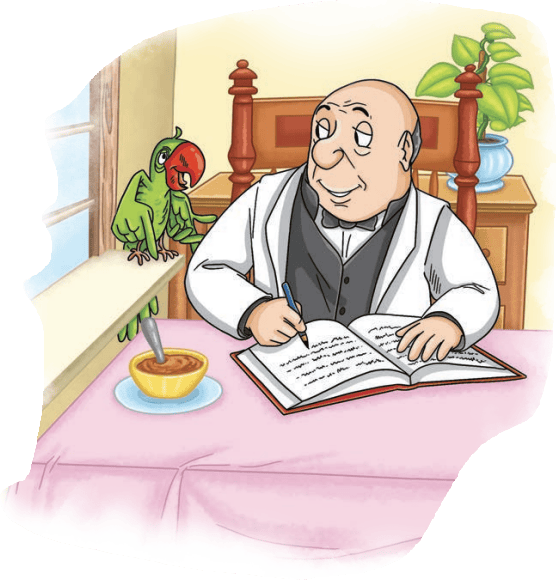
Birds’ A.B.C.: (here) the language that birds speak
So that was the way the Doctor came to know that animals had a language of their own and could talk to one another. And all that afternoon, while it was raining, Polynesia sat on the kitchen table giving him bird words to put down in the book.
At teatime, when the dog, Jip, came in, the parrot said to the Doctor, “See, he’s talking to you.”
“Looks to me as though he were scratching his ear,” said the Doctor.
“But animals don’t always speak with their mouths,” said the parrot in a high voice, raising her eyebrows. “They talk with their ears, with their feet, with their tails—with everything. Sometimes they don’t want to make a noise. Do you see now the way he’s twitching up one side of his nose?”
“What’s that mean?” asked the Doctor.
“That means, ‘Can’t you see that it has stopped raining?’” Polynesia answered. “He is asking you a question. Dogs nearly always use their noses for asking questions.”
After a while, with the parrot’s help, the Doctor got to learn the language of the animals so well that he could talk to them himself and understand everything they said. Then he gave up being a people’s doctor altogether.
Let us discuss
I Complete the following sentence by selecting a suitable reason.
The Cat’s-food-Man suggests to Doctor Dolittle that he should become an animal doctor because he believes that Dolittle __________________________.
- 1. earns less fee by treating human patients
- 2. enjoys the company of animals as they speak less
- 3. dislikes spending time with human patients
- 4. knows more about animals than the local veterinarians
II Fill in the blanks by choosing the suitable option given in the brackets
Doctor Dolittle reacts to Polynesia’s information about animal languages with both excitement and ____________ (certainty/curiosity). He rushes to ____________ (write/memorise) the bird words she provides and is interested in learning more.
III Do you think Doctor Dolittle would be famous as an animal doctor? If yes, why? If not, why not?
II
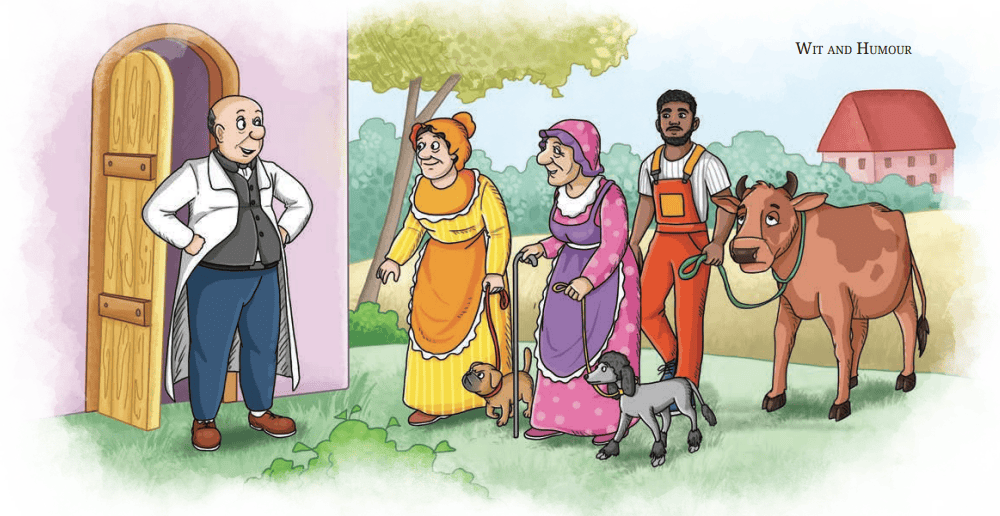
As soon as the Cat’s-food-Man had told everyone that John Dolittle was going to become an animal doctor, old ladies began to bring him their pet pugs and poodles who had eaten too much cake; and farmers came many miles to show him sick cows and sheep.
One day a plough horse was brought to him; and the poor thing was terribly glad to find a man who could talk in horse language.
“You know, Doctor,” said the horse, “that vet over the hill knows nothing at all. He has been treating me six weeks now—for something or the other. What I need is spectacles. I am going blind in one eye. There’s no reason why horses shouldn’t wear glasses, the same as people. But that stupid man over the hill never even looked at my eyes. He kept on giving me big pills. I tried to tell him, but he couldn’t understand a word of horse language. What I need is spectacles.”
“Of course—of course,” said the Doctor. “I’ll get you some at once.”
“I would like a pair like yours,” said the horse—“only green. They’ll keep the Sun out of my eyes while I’m ploughing the field.”
“Certainly,” said the Doctor. “Green ones you shall have.”
“You know, the trouble is, Sir,” said the plough horse as the Doctor opened the front door to let him out—“the trouble is that anybody thinks he can doctor animals—just because the animals don’t complain. As a matter of fact, it takes a much cleverer man to be a really good animal doctor than it does to be a good people’s doctor.”
“Well, well!” said the Doctor.
“When will my glasses be ready?”
“I’ll have them for you next week,” said the Doctor. “Come in again Tuesday—Good morning!”
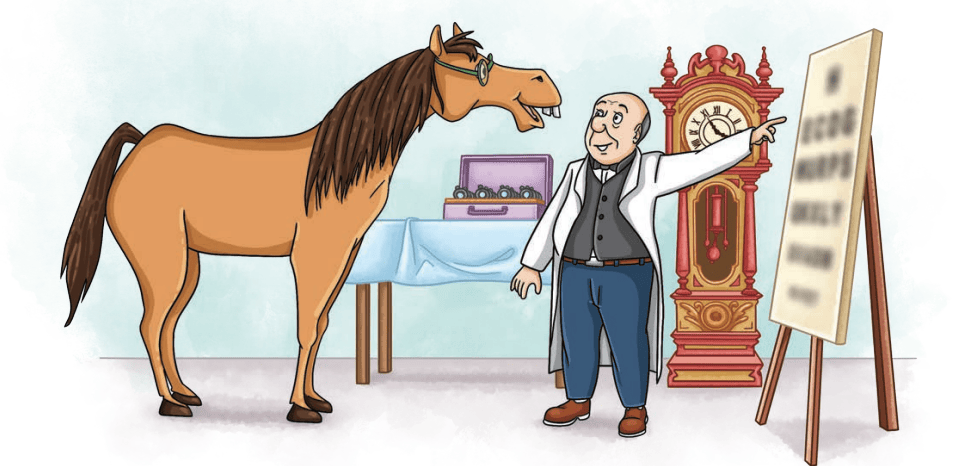
Then John Dolittle got a fine, big pair of green spectacles; and the plough horse stopped going blind in one eye and could see as well as ever.
And soon it became a common sight to see farm animals wearing glasses in the countryside, round Puddleby; and a blind horse was a thing unknown.
And so it was with all the other animals that were brought to him. As soon as they found that he could talk their language, they told him where the pain was and how they felt, and of course it was easy for him to cure them.
Now all these animals went back and told their brothers and friends that there was a doctor in the little house with the big garden who really was a doctor. And whenever any creatures got sick—not only horses and cows and dogs—but all the little things of the fields, like harvest mice, badgers, and bats, all came at once to his house on the edge of the town, so that his big garden was nearly always crowded with animals trying to get in to see him.
There were so many that came that he had to have special doors made for the different kinds. He wrote ‘HORSES’ over the front door, ‘COWS’ over the side door, and ‘SHEEP’ on the kitchen door. Each kind of animal had a separate door—even the mice had a tiny tunnel made for them into the cellar, where they waited patiently in rows for the Doctor to come round to them.
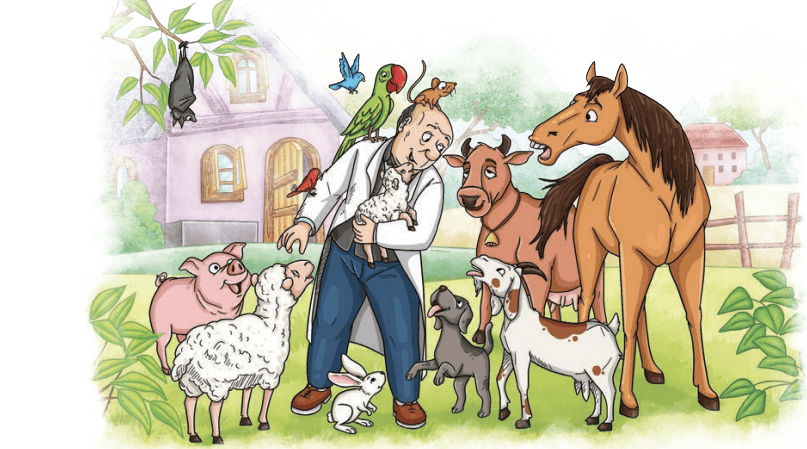
And so, in a few years’ time, every living thing for miles and miles got to know about John Dolittle, M.D. And the birds who flew to other countries in the winter told the animals in foreign lands about Dolittle who could understand their talk and help them in their troubles. In this way he became famous among the animals—all over the world. He was happy and liked his life very much.
HUGH LOFTING
Let us discuss
I What became a common sight in Puddleby after Doctor Dolittle started treating animals?
- 1. Humans talking to farm animals
- 2. Farm animals wearing glasses
- 3. Farm animals learning bird language
- 4. Birds riding atop farm animals
II What challenges do you think Doctor Dolittle might face if more and more animals come to him for help?
- 1. How might he overcome these challenges to ensure that he provides good treatment?
III Arrange the following events in correct order according to the story. Two have been done for you. Share your answers with your classmates and the teacher.
| 1. Doctor Dolittle decides to stop being a doctor for people and becomes a doctor for animals. | |
| 2. Animals from near and far come to Doctor Dolittle for help, crowding his garden. | |
| 3. A man with a stomach-ache visits Doctor Dolittle and suggests he should treat animals instead of people. | (i) |
| 4. Polynesia teaches Doctor Dolittle animal languages, and he starts understanding and communicating with animals. | |
| 5. A plough horse with vision problems visits Doctor Dolittle, who prescribes green spectacles, to improve the horse’s eyesight. | |
| 6. The parrot, Polynesia, encourages Doctor Dolittle to become an animal doctor, revealing that animals can talk. | (ii) |
| 7. Doctor Dolittle installs special doors for different animals to enter his house for treatment. | |
| 8. Doctor Dolittle’s ability to communicate with animals helps him diagnose and treat their illnesses effectively. | |
| 9. Doctor Dolittle gains fame among animals worldwide, and they come to him from various places for his help. | |
| 10. Word spreads, and people start bringing their sick pets and farm animals to Doctor Dolittle for treatment. |
Let us think and reflect
I. Read the extracts given below and answer the questions that follow
1. “If I say, ‘Polly wants a cracker’, you understand me. But hear this: Kaka oi-ee, fee-fee?” “Good Gracious!” cried the Doctor. “What does that mean?” “That means, ‘Is the porridge hot yet?’—in bird language.” “My! You don’t say so!” said the Doctor. “You never talked that way to me before.”“What would have been the good?” said Polynesia, dusting some cracker crumbs off her left wing. “You wouldn’t have understood me if I had.”
- (i) Complete the sentence by choosing the correct option. In the line, “Good Gracious!” cried the Doctor, the expression ‘Good Gracious’ can be replaced by ______________!
- A. bravo
- B. gosh
- C. alas
- D. hurray
- (ii) Why had Polynesia never used bird language with the Doctor earlier?
- (iii) Identify whether the following statement is true or false. Polynesia had been munching on a food item while talking to Doctor Dolittle.
- (iv) How did Doctor Dolittle feel according to the extract?
- A. anxious
- B. surprised
- C. angry
- D. relaxed
2. “I would like a pair like yours,” said the horse—“only green. They’ll keep the Sun out of my eyes while I’m ploughing the field.” “Certainly,” said the Doctor. “Green ones you shall have.” “You know, the trouble is, Sir,” said the plough horse as the Doctor opened the front door to let him out—“the trouble is that anybody thinks he can doctor animals—just because the animals don’t complain. As a matter of fact, it takes a much cleverer man to be a really good animal doctor than it does to be a good people’s doctor.”
- (i) Choose a word from the extract to complete the analogy. digging: flower bed:: ______________: field
- (ii) Choose the correct word to complete the sentence. Doctor Dolittle’s attitude in the extract is ______________.
- A. respectful
- B. sentimental
- C. understanding
- D. careful
- (iii) Complete the sentence with an appropriate reason. Based on the extract, we can conclude that doctors take animals for granted because ______________.
- (iv) Do you agree with the concluding sentence of the extract? Why/why not?
2. “I would like a pair like yours,” said the horse—“only green. They’ll keep the Sun out of my eyes while I’m ploughing the field.” “Certainly,” said the Doctor. “Green ones you shall have.” “You know, the trouble is, Sir,” said the plough horse as the Doctor opened the front door to let him out—“the trouble is that anybody thinks he can doctor animals—just because the animals don’t complain. As a matter of fact, it takes a much cleverer man to be a really good animal doctor than it does to be a good people’s doctor.”
II Answer the following questions.
- 1. How can we say that Polynesia was a good trainer of animal language?
- 2. Explain how Doctor Dolittle gave equal and individual attention to each animal who came to him for treatment.
- 3. How does Doctor Dolittle’s readiness to follow the parrot’s advice highlight the importance of listening to different viewpoints?
- 4. Which qualities of Doctor Dolittle made him famous among the animals? Explain with evidence from the text.
- 5. What changes do you think would happen in the world if people suddenly gained the ability like Doctor Dolittle, to understand and communicate with animals?
Let us learn
I Read the following words from the text.
Cat’s-food-Man, bird language, flowerpots
Are all the words that are combined to form another word written the same way?
Complete the following table correctly by choosing words from the box given below. An example has been done for you.
sailor song
teatime
check-in
plough
horse
harvest
mice
windowsill
well-bred
| Hyphenated Words | Open Compound Words | Closed Compound Words |
| check-in |
II Create compound words from the table given below.
| A | B |
| 1. fun | (i) head |
| 2. high | (ii) birds |
| 3. never | (iii) flying |
| 4. early | (iv) loving |
| 5. song | (v) risers |
| 6. over | (vi) tops |
| 7. tree | (vii) ending |
Now, complete the paragraph with suitable compound words from the table. An example has been done for you
After being treated by Doctor Dolittle, the A. fun-loving dolphins danced playfully in his sanctuary. The B. _______________ chatter of monkeys echoed through the C. _______________, their ailments cured. D. ______________ eagles soared gracefully E. _______________ their health restored. F. _______________ among the G. _______________ chirped joyfully from the branches. All creatures were happy with Doctor Dolittle’s care.
III Underline the names of animals that are hidden in the sentences given below. Clues are given within the brackets. An example has been done for you.
- 1. Dr. Dolittle was eating oatmeal for his breakfast. (a farm animal)
- 2. Old ladies began to bring him their pets. (an insect)
- 3. The author sees the connection between humans and animals. (a farm animal)
- 4. The three baby dinosaurs are from ice age. (field animal)
- 5. The patients who came late didn’t know where to go. (ship of the desert)
IV Read the following sentence from the text. Study the highlighted words.
But that stupid man over the hill never even looked at my eyes
The highlighted words spell and read the same backwards too
Read the sentences below and identify the palindrome words and sentences.
- 1. Step on no pets.
- 2. Naman saw a race car at the show.
- 3. Nitin speaks in Malayalam.
- 4. The engineer used a rotator to check the surface level.
- 5. The pilot relied on the radar to navigate safely.
- 6. Eva can I see bees in a cave?
Now, create your own palindrome and share it with your classmates and the teacher.
V Underline the verbs and identify the tense form in the following sentences from the text.
- 1. He is asking you a question.
- 2. Oh, there are plenty of animal doctors.
- 3. I am going blind in one eye.
- 4. … the trouble is that anybody thinks he can doctor animals.
VI Read the following sentences from the text.
- That man’s (man has) gotsense.
- Can’t you see that it has stopped raining?
In the first sentence the verbs, ‘has got’ denote an action that is relevant at the time of speaking.
In the second sentence, the verbs ‘has stopped’ denote an action that is recently completed.
- a recently completed action
- an action that started in the past and is relevant even at the moment of speaking
- an action in the past where the focus is on the action and not on the time of occurrence (but relevant at the time of speaking)
Fill in the blanks using the correct form of verbs (present perfect) given within brackets.
Since becoming an animal doctor, Doctor Dolittle 1. _________ (learn) to communicate with all animals and birds. He 2. _________ (treat) countless farm animals and pets with care. The parrot, Polynesia, 3. _________ (teach) him bird-language, and he 4. _________ (write) books about his adventures. Many people 5. _________ (bring) their sick animals to his door. Over the years, Dolittle 6. _________ (become) renowned worldwide for his unique abilities.
Let us listen
I You will listen to an announcement. As you listen, state whether the following statement is true or false. (Transcript for the teacher on pg. 88)
Dr. Dolittle’s new clinic presents an offer of free medicines.
II You will listen to the announcement again. As you listen, complete the details given below with one or two exact words you hear.
- 1. The new clinic is located in the town of ______________.
- 2. The address is 12, ______________ Lane.
- 3. The clinic is open Monday to Friday from ______________ a.m. to 5 p.m.
- 4. Special timings for ______________ are on Saturdays from 11 a.m. to 2 p.m.
- 5. Dr. Dolittle will ensure that animals get the ______________.
- 6. All animals—horses, cows, ______________, wild animals, and others are welcome.
Let us speak
Conversation between a doctor and a patient
- Read the information about the problems 1–4.
- Use the cue cards provided to guide your conversation.
- Take turns to play parts of doctor and patient.
Problem 1:Cough and cold
- Solution: Ginger and honey mix
- Additional Advice: Drink warm fluids and rest.

Problem 2:Dry lips
- Solution: Apply ghee
- Additional Advice: Stay hydrated and avoid wetting your lips.

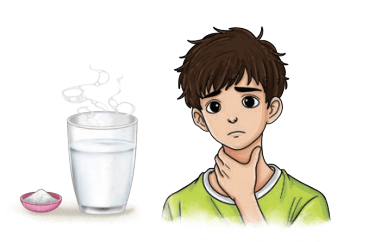
Problem 3:Sore throat
- Solution: Gargle with warm salt water.
- Additional Advice: Drink herbal teas and avoid cold drinks.
Problem 4:Fatigue
- Solution: Ensure adequate sleep and a balanced diet.
- Additional Advice: Take short walks to increase energy levels.

Cue Cards
| Doctor | Patient |
| Greet the patient | Respond to the greeting | |
| Enquire about the problem | Tell your problem | |
| Ask about symptoms | Describe the symptoms | |
| Make a diagnosis and give solution | Ask for clarification | |
| Provide additional advice | Acknowledge the information and ask about the next appointment | |
| Share details of next appointment | Express agreement and thank the doctor |
Let us write
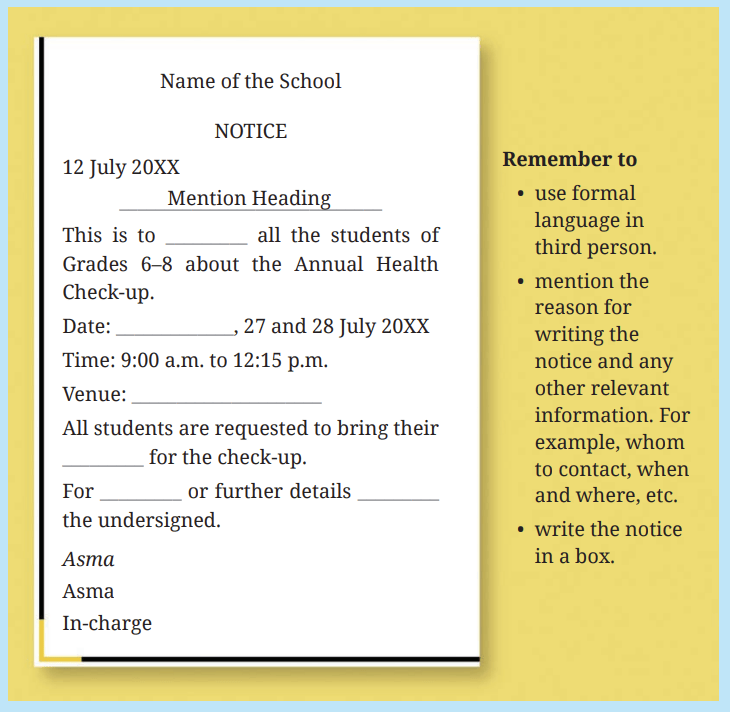
A notice is a means of formal communication for a particular group of persons. It informs them about some important event, such as an invitation to a meeting, an announcement, to give instructions, make appeals, etc.
Write a notice in about 50 words about the Annual Health Check-up for students of Grades 6–8. Remind students to collect their health check-up cards from the class teacher. Include all other necessary details about date, time, and venue.
Complete the draft of the notice by using the words and phrases given in the box below.
inform
queries
health card
health check-up
assembly hall
Grades 6–8
please contact
Thursday and Friday
Let us explore
I The word ‘goshala’ translates to ‘cowshed’ in English. It is a Sanskrit word that is made up of the words ‘go’, which means ‘cow’, and śālā, which means ‘shed’ or ‘hall’.
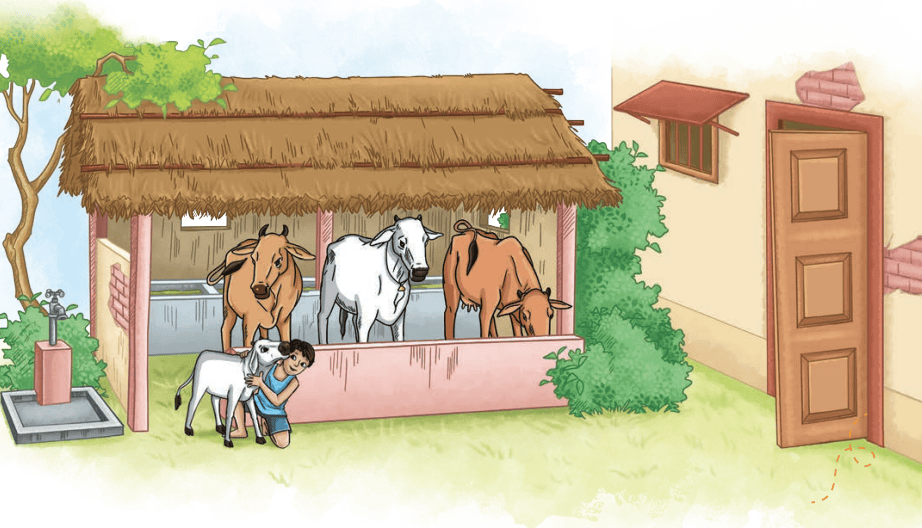
Plan a visit with the teacher to a ‘goshala’ and find out how the cows are looked after.
II Ayurveda is the oldest existing medical system in India. Animals received good medicinal care in ancient India. Indian medical treatises like Charaka Samhita, Sushruta Samhita, and Harita Samhita contain references of care of animals. Find out names of different organisations that work for the welfare of animals with the help of the teacher.
III What is the best way to take care of stray and abandoned animals?
- 1. Provide food and water for the animal
- 2. Take them to an animal shelter
- 3. Adopt them by taking them home
Give reasons for your responses.
A FUNNY MAN
Let us do these activities before we read.
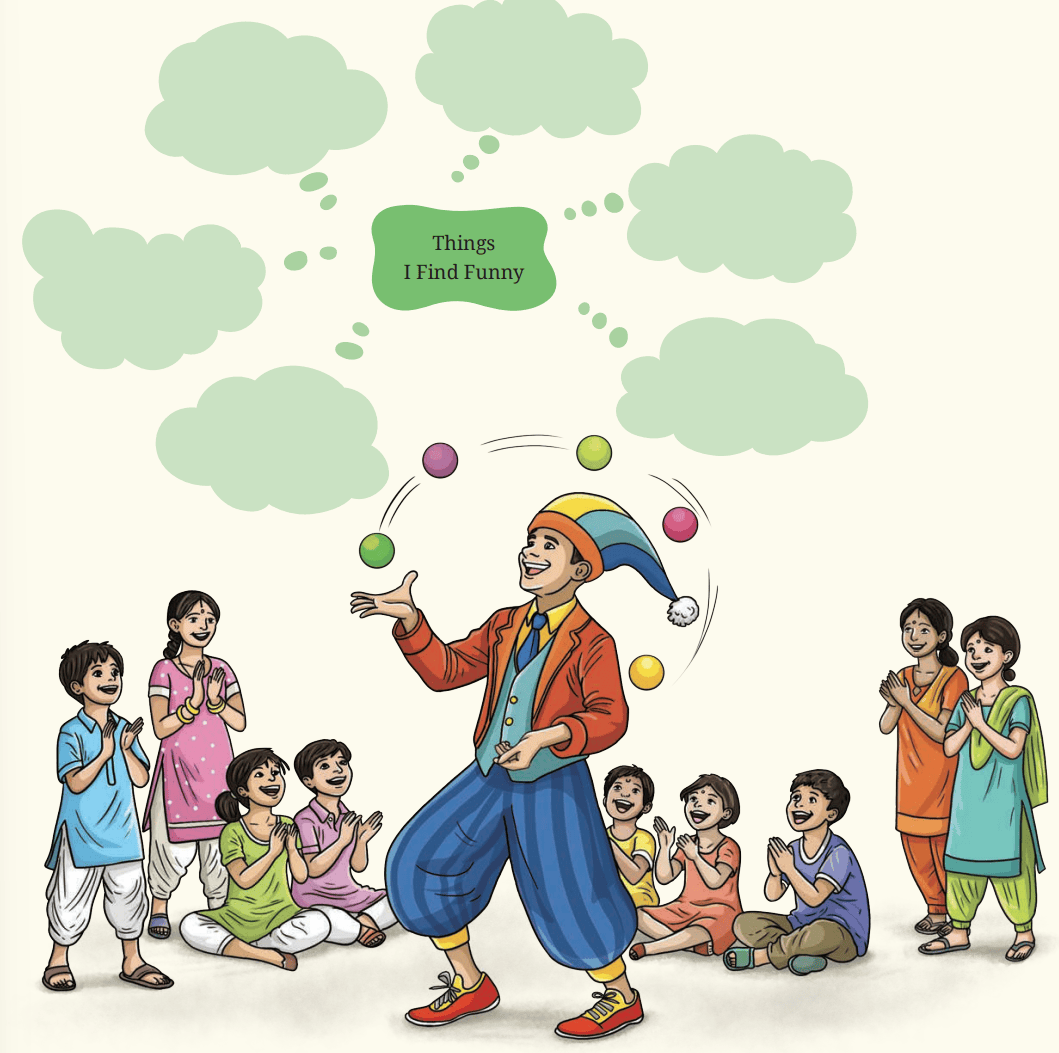
Look around you for things or people that make you laugh. Write them in the bubbles given below. Share the reasons for your answers with your classmates and the teacher.
Let us read
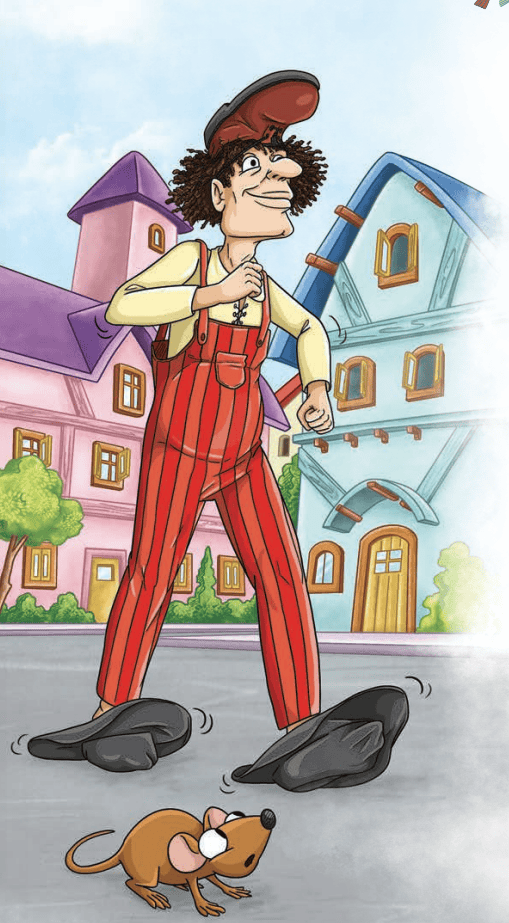
One day a funny kind of man Came walking down this street He wore a shoe upon his head And hats upon his feet.
He raised the shoe and smiled at me, His manners were polite; But never had I seen before Such a funny sounding sight.
He said, “Allow me to present Your Highness with a rose.” And taking out a currant bun He held it to my nose.
I staggered back against the wall And then I answered, “Well! I never saw a rose with such A funny looking smell.”
He then began to sing a song, And sat down on the ground; You never heard in all your life Such a funny feeling sound.
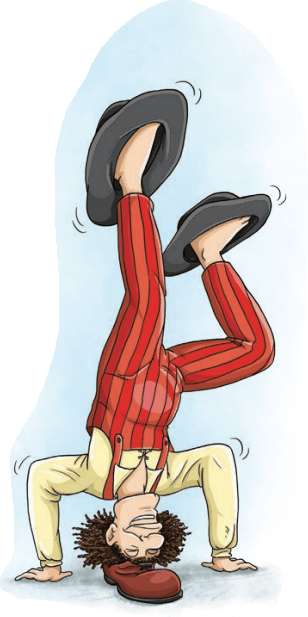
“My friend, why do you wear two hats Upon your feet?” I said. He turned the other way about, And hopped home on his head.
NATALIE JOAN
Let us discuss
i Work in pairs. Identify the true statements. Check your answers with the teacher.
- 1. The poet says that she had never heard such an amusing song.
- 2. The funny man was quite ill-mannered.
- 3. The funny man wore two hats on his feet.
- 4. The funny man hopped on his head to reach home.
- 5. The funny man gave a rose to the poet.
- 6. The funny man smiled at the poet.
II Identify the words from the poem based on the meanings given. Share your answers with your classmates and the teacher.
- 1. a small seedless raisin – C __ R __ __ __ T
- 2. moved unsteadily – S __ __ G G __ __ __ D
III Complete the following sentences with a reason.
- 1. The tone of the poem is ___________ because ___________.
- 2. The rhyme scheme of the poem is ___________; and it gives a ___________ quality to the poem.
- 3. The poet has frequently repeated the word ‘funny’ in order to ___________.
IV Choose the correct answer from the options given in the brackets.
- 1. The poem uses vivid imagery to create a ____________ (humorous and nonsensical/ confusing but thought-provoking) scene.
- 2. The structure of the poem is in ___________ (monologue/ dialogue) form.
- 3. The phrases ‘sounding sight’ and ‘hopped home’ are examples of ___________. (alliteration/simile)
V Rewrite the following line from the poem in the correct order.
1. But never had I seen before Such a funny sounding sight.
2. Why has the poet used phrases like ‘funny sounding sight’ and ‘funny feeling sound’ with reference to the funny man?
VI Can you think of any real-world situations where people do similar things for fun, entertainment, or performance? Share with your classmates and the teacher.
Let us think and reflect
I Read the extracts given below and answer the questions that follow.

1. He said, “Allow me to present Your Highness with a rose.” And taking out a currant bun He held it to my nose.
I staggered back against the wall And then I answered, “Well!”
(i) Why does the funny man address the poet as ‘Your Highness’?
(ii) Choose a phrase from the extract which indicates a polite request.
(iii) Choose the option which shows a ‘currant bun’.




(iv) Complete the sentence with an appropriate reason.
When the poet says, ‘Well!’, it expresses surprise. This was so because _________________.
2. You never heard in all your life
Such a funny feeling sound. “My friend, why do you wear two hats Upon your feet?” I said. He turned the other way about, And hopped home on his head
(i) Choose the line from the extract which tells us that the sound was unique.
(ii) Complete the sentence with an appropriate reason. The poet calls the funny man ‘my friend’ because _____________.
(iii) What does the reaction of the funny man to the poet’s question tell us about him?
(iv) Choose the correct option to complete the sentence. The last line of the extract makes the readers feel _________________.
- A. dreamy
- B. impatient
- C. worried
- D. cheerful
II Answer the following questions.
- 1. Which character trait of the funny man was most appealing to you? Why?
- 2. The funny man does unusual things in the poem. How does it affect the overall mood of the poem?
- 3. What alternative title would you suggest for the poem? Give reason(s) for your choice.
- 4. Why do you think the poet has included dialogues in the poem?
- 5. What does the poet wish to convey by highlighting the unusual behaviour of the funny man?
Let us learn
Read the following phrases from the poem.
- walking down
- taking out
- sat down
I Match the phrasal verbs in Column 1 with their correct meaning in Column 2.
| Column 1 | Column 2 |
| 1. take up | (i) to understand or comprehend something | |
| 2. take after | (ii) to assume control or responsibility for something | |
| 3. take in | (iii) to begin to study, practice, or do something | |
| 4. take over | (iv) to become successful or popular quickly | |
| 5. take off | (v) to resemble or look similar to (usually a family member) |
Now, fill in the blanks with suitable phrasal verbs from the table given in I. You may change the tense of the verb, if required.
- 1. The new technology is set to _________________ traditional methods of communication.
- 2. I tried hard to _________________ what the writer wanted to say but was unsuccessful.
- 3. Arjun decided to _________________ painting as a hobby.
- 4. The smartphone quickly _________________ the sales in the market.
- 5. Sheela _________________ her father; they have the same smile.
II Match the verbs in Column 1 with any suitable adverbs or prepositions in Column 2. Write their meanings in Column 3. An example has been done for you.
| Column 1 | Column 2 | Column 3 |
| 1. look | look after: take care of, | |
| 2. run | ||
| 3.put | after, away, up, for, in, on, into, down, off, out | |
| 4.break | ||
| 5. call |
Now, frame sentences of your own using any five phrasal verbs.
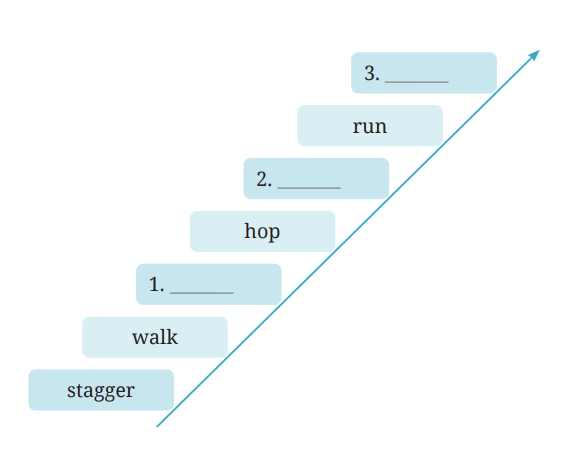
III Read the following words from the poem.
walking, staggered, hopped
The given words denote the different ways of walking. Arrange the words given in the box in increasing order of pace.
Let us listen
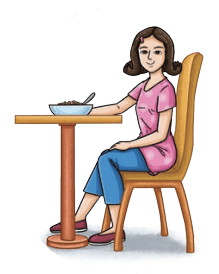
I You will listen to a girl narrate a personal incident. As you listen, select the picture related to the narration. (Transcript for the teacher on pg. 88)



II You will once again listen to the girl narrate a personal incident. As you listen, arrange the events in order of occurrence.
1. Ate lunch
2. Took off shoes
3. Put shoes in the room
4. Laughed at the mistake
5. Placed the plate in the room
6. Prepared for the presentation
7. Put the plate in the kitchen
Let us speak
Read the joke given below.
A man is talking to God.
The man says, “God, how long is a million years?”
God replies, “For me, it’s about a minute.”
The man asks, “How much is a million rupees?”
God smiles and replies, “It’s less than a rupee for me.”
The man quickly requests, “God, may I have a rupee?”
God promptly says, “Wait a minute.”
Work in pairs and take turns to tell the joke.
Remember:
- Narrator’s voice – your own voice (speak in a matter-of-fact manner)
- Man’s voice – change to louder voice (speak with respect)
- God’s voice – deep voice (speak in a pleasant tone)
Now, work in pairs to create a joke and tell it in front of the class.

Let us write
I A limerick is a nonsensical and funny verse consisting of five lines. Study the limerick given below and identify the rhyme scheme.
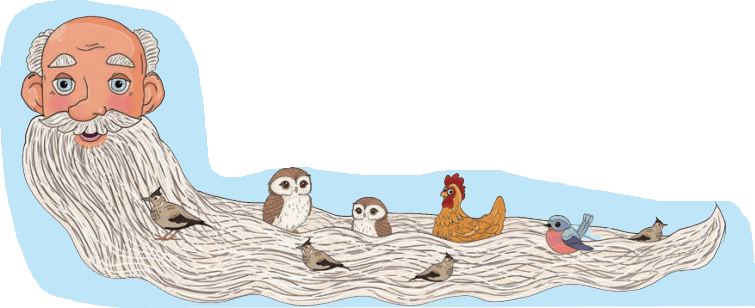
1. There was an Old Man with a beard,
Who said, “It is just as I feared!
Two Owls and a Hen
Four Larks and a Wren,
Have all built their nests in my beard!”
Edward Lear
2. There were two friends in Bengaluru’s lanes,
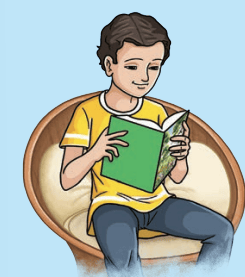
One loved books, the other flew planes.

They’d laugh and they’d play,
In their own unique way,
Creating stories and flying in dreams’ trains.
Remember all limericks have the same rhyme scheme AABBA.
II Follow the structure given below and write a limerick on your own.
Let us explore
I In ancient Indian literature and mythology, there are several humorous or funny characters who play important roles in the stories. These characters often represent wit, humour and mischief while conveying deeper moral lessons. Here are a few well-known funny characters:
Tenali Rama
Birbal
Mullah Nasruddin
King Vikramaditya and Betal
Take any story to read and share it with your classmates and the teacher.
II We can identify the acts of the funny man with certain modernday activities that have playfulness, or unconventional behaviour. For example:
Street Performers or Clowns: Like the funny man in the poem, modernday street performers or clowns often dress in unusual ways and do unexpected acts to entertain people.
Performance Art or Abstract Theatre: The funny man’s actions, such as singing a song and hopping on his head, resemble performance art or abstract theatre, where artists break conventional rules to create thought-provoking, often humorous experiences.
Children’s Entertainment and Comedy Shows: The funny man’s behaviour is reflected in children’s shows to evoke laughter.
In these examples, the common theme is humour, imagination, and defying logic or expectation, which is exactly what the funny man in the poem represents.
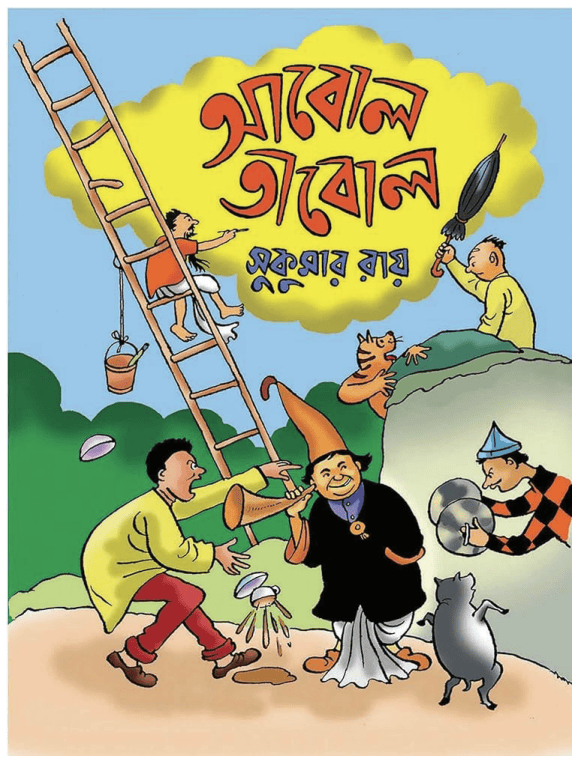
III Sukumar Ray, an Indian poet and illustrator, wrote poems in a similar style in his book Abol Tabol.
You may also share a similar poem from your native language with your classmates and the teacher.
IV Read and enjoy the poem.
MY LOST PENCIL
Oh pencil, dear pencil, where have you gone? I just had you here a minute at dawn! You were sharp and perfect, ready to write, Now you’re missing—gone from sight!
Did you roll off my desk? Did you fall to the floor? Did someone swipe you for sure? It’s always the same, I’ve lost fifty this year, By the end of the month, they just disappear!
Next time, I’ll tie you with tape or a string, Because losing my pencils is a real thing.

SAY THE RIGHT THING
Let us do these activities before we read.
I Work in pairs and discuss.

- 1. What does ‘Athithi Devo Bhava’ mean?
- 2. Why is it important to be polite to guests?
II Choose the statements that display polite behaviour when you have guests at home.
- 1. Offer the guests a glass of water.
- 2. Enquire about the well-being of the guests.
- 3. Ask the guests when they would leave.
- 4. Comment critically about the habits of guests.
- 5. Accompany the guests to the door when they leave.
III Sometimes you find that a few friends in class are rude while disagreeing with each other on certain issues. Work in groups. How would you deal with such a situation? Share at least three ways in which you can do this.
Let us read
This is a humorous play in which a mother advises her daughter to say the right thing at the right time. However, when guests arrive, the daughter hilariously forgets her mother’s guidance.
Read the play to find out how she commits blunders and embarrasses the guests as well as her mother.
Characters
Mary Shaw : a young girl
Mrs. Shaw : Mary’s mother
Mrs. Harding : the wife of Mr. Harding, a wealthy man
Mrs. Lee : Mr. Harding’s married sister
Scene I
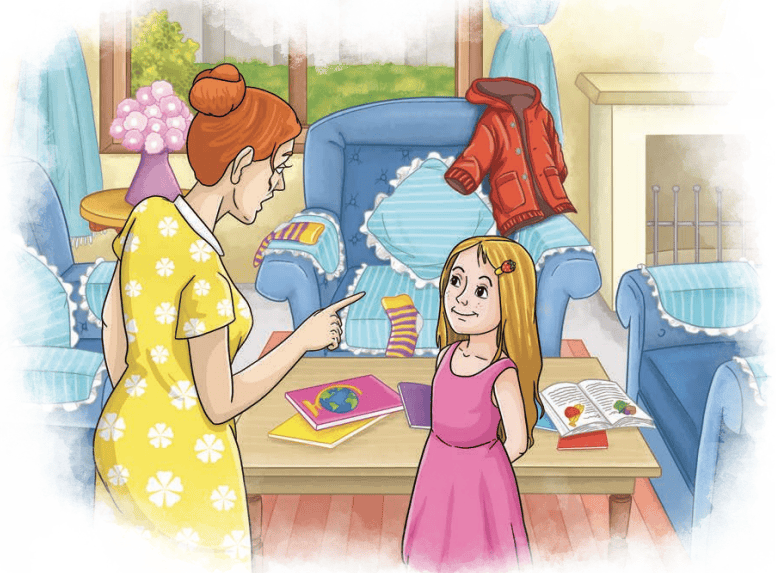
Mrs. Shaw : The room looks cleaner now. Put that coat away in your bedroom. This room isn’t the place for coats. Mrs. Harding and Mrs. Lee will soon be here, and they don’t want to see that.
Mary : You’re always telling me to put things away.
Mrs. Shaw : Yes, I am. You leave your clothes all over the house.
Mary : I’m not a child!
Mrs. Shaw : No, you’re not. So please keep your clothes in your own room.
Mary : Why are those two women coming here? Who’s Mrs. Harding?
Mrs. Shaw : She’s the wife of a wealthy man, Mr. Harding. He has just bought a big house in Lanfield. They lived in London before. She’s coming to have a talk. I met her in a shop and asked her to come.
Mary : Oh, I’ve seen her children. They often come along the road. Who’s Mrs. Lee?
Mrs. Shaw : She’s Mr. Harding’s sister. She has been staying with them for a while.
Mary : What are you going to talk about?
Mrs. Shaw : I don’t know. All kinds of things. One day you’ll have to go to some of these houses yourself and talk to the people there.
Mary : I can talk now. I’ve been able to talk for a long time.
Mrs. Shaw : Yes, that’s true. You always talk too much. But does anyone want to hear the things that you say?
Mary : I can talk very well when I like. I’ll stay with you today and talk to them when they come.
Mrs. Shaw : Oh, I don’t think so. You can go out for a walk. It will be better if you do that.
Mary : Why?
Mrs. Shaw : If you stay with me, you may not say the right thing.
Mary : I know the right things to say: “Good afternoon”, “How are you?” and things like that. Let me stay today. I can do it very well. I’ll show you. Anyone can talk.
Mrs. Shaw : You may stay if you like. But take care. I want to know Mrs. Harding well. I want her to ask me to go to their house. There isn’t much to do here in Lanfield, and I want to know some more people. I want some more friends here. So take care when you say anything.
Mary : Tell me what to say.
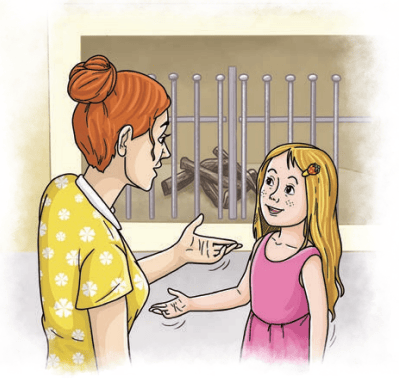
Mrs. Shaw : I can’t tell you everything, but you’ll always be right if you’re kind to people. Say things that will please them. Then they’ll like you. Laugh a lot, and try to make them laugh too. And if everyone stops talking, say something to make them talk again. They don’t want to sit here and look at the floor without speaking. Think of something to say.
Mary : I can do that. There’s always something to say. Must I do anything else?
Mrs. Shaw : When they are ready to leave, don’t jump out of your chair and look gladly at the door. You must look sorry when they want to leave.
Mary : What shall I do when they want to go?
Mrs. Shaw : Ask them to stay a little while longer. Just say, “Must you go? Can’t you stay?” or something like that. You like them and you want them to stay, and you must let them understand that.
Mary : That’s not very hard, is it? I’ll remember that. “Must you go? Can’t you stay? Must you go? Can’t you stay?”
Mrs. Shaw : That’s right. Now take your coat to your room and change into a clean dress. You must look nice when they come. And if everyone stops talking, say something kind to make them talk again. And don’t say anything that will make them angry.
Mary : I will remember. I’ve often done harder things than this.
Let us discuss
I Complete the table given below based on Scene I of the play. An example has been done for you. Share your answers with your classmates and the teacher.
| Speaker | Words of the Speaker | Reason |
| Mrs. Shaw | The room looks cleaner now. Put that coat away in your bedroom. | To instruct Mary to keep the room tidy |
| Mary | You’re always telling me to put things away | |
| I’m not a child! | ||
| Mrs. Shaw | To highlight the importance of being kind as a way to ensure Mary says the appropriate things when guests arrive |
II Do you think Mary will be able to follow her mother’s advice successfully when Mrs. Harding and Mrs. Lee visit? Why or why not?
Scene II
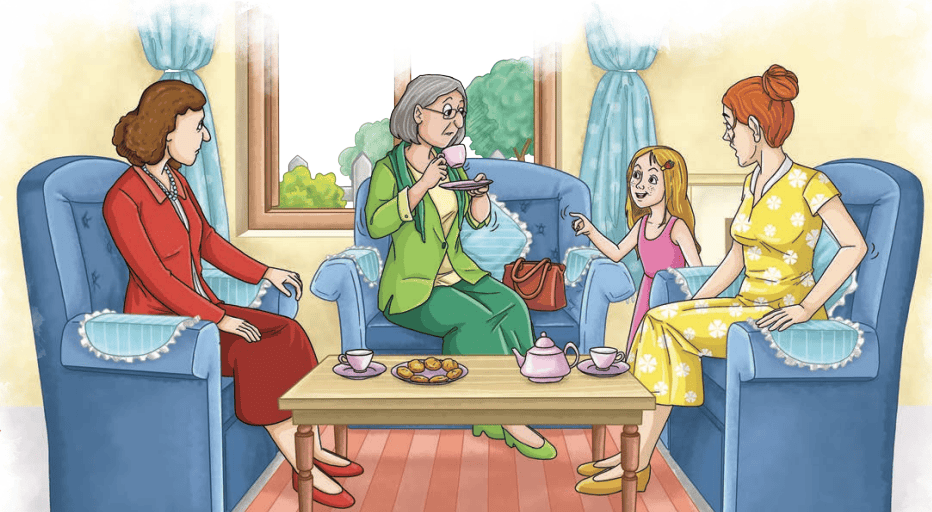
Mrs. Shaw : So you like Lanfield, Mrs. Harding! I’m very glad.
Mrs. Harding : Yes, we like it very much. It’s not the same as London, but there are some very nice people here, and we’ve found a good house. (No one says anything more, and Mrs. Shaw looks at Mary.)
Mary : What beautiful children you have, Mrs. Harding! I’ve often seen them walking along the road.
Mrs. Harding : Oh, I haven’t any children.
Mary : Oh, yes, you have! I’ve seen them: a little boy and a little girl.
Mrs. Harding : (not very pleased) I have no children; believe me.
Mary : Oh!
Mrs. Shaw : (quietly) They must be someone else’s children. Have you met Mr. Best? He’s a nice man. He lives near you.
Mary : Oh, Mr. Best! He lives here and he works in London. He goes all the way to London by train every morning, and then he comes all the way back by train every night. He lives in trains! (she laughs) What kind of life is that? Why do people do things like that? They do not know how to live. And he reads two newspapers in the train every day. He never reads a book. But he’s only a banker, and bankers can’t think.
Mrs. Lee : My brother’s a banker. He goes to London by train every morning and comes back every night. He reads two newspapers in the train in the morning, and another every night.
Mary : Oh, I’m sorry. I didn’t know.
Mrs. Shaw : Bankers always have to read a lot of newspapers. Do you know Mrs. Best? She’s a nice woman. I like her.
Mary : But have you seen her clothes? She goes out in a blue dress with a red coat over it. (she laughs)
Mrs. Harding : I have a blue dress, and I often put on my red coat at the same time.
Mrs. Shaw : (quickly) I like blue dresses and red coats. (No one says anything.)
Mary : I saw Mrs. Cotter this afternoon. I met her in the street. No one sees her in the morning because she always stays in bed then. And she’s always asking the doctor to go to see her. I can’t understand women who stay in bed in the morning. And why must she always ask for the doctor? I’ve never been to a doctor in my life.
Mrs. Harding : I stay in bed in the morning myself.
Mrs. Lee : I often go to the doctor.
Mary : Oh, I’m sorry. (No one speaks.)
Mrs. Shaw : Do you know Mrs. Grantley? She’s one of my best friends.
Mary : But she’s so talkative! Talkative women aren’t very interesting, are they?
Mrs. Lee : My mother’s a very talkative woman.
Mary : Oh, I’m sorry. I didn’t know. (No one says anything.)
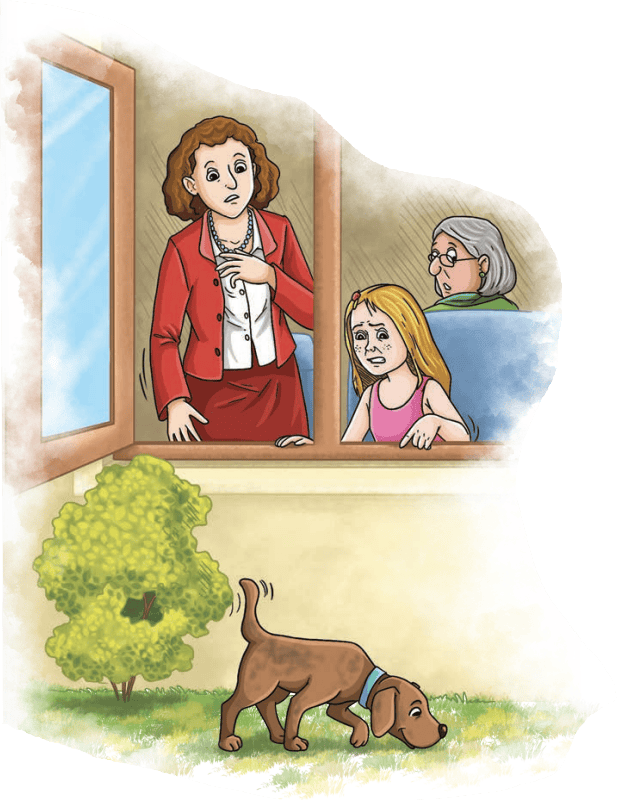
Mary : (looking out of the window): Oh, there’s that dog again! It always looks very dirty. I don’t like dogs, do you? Who wants a dog? That dog’s always near our house. Why do people keep dogs? Who wants a dog? Why doesn’t its owner keep it clean? Have you seen it?
Mrs. Harding : (looking out of the window) Yes, I’ve seen it. That’s Towzer. It’s our dog.
Mary : (with a red face) Oh, I didn’t know! (No one speaks.)
Mary : (still looking out of the window) There’s Mr. Pomeroy on his horse. He’s always talking about horses. He rides a horse every day, and practises shooting. Why must he do that? What have they done to Mr. Pomeroy? Why do some men like horses more than they like people? It’s hard to understand men.
Mrs. Lee : My brother practises shooting when he has the time, and he rides his horse when he can. He sold his house in London and bought a house here because he wanted to ride and practise shooting.
Mrs. Harding : (looking at Mrs. Lee) It’s getting a little late. We must go now, Mrs. Shaw. It has been very nice to have a little talk. (She looks at Mary.)
Mrs. Lee : Very nice. (She looks at Mary.)
Mrs. Shaw : It was very good of you to come to see us. Please stay a little longer.
Mary : (unable to say the right thing even now) Oh, must you stay? Can’t you go?
G.C. Thornley
Let us discuss
I Rectify the false statements given below from Scene II of the play. An example has been done for you. Share your answers with your classmates and the teacher.
1. Mrs. Harding states that they do not like London as it is not the same as Lanfield.
Rectification: Mrs. Harding states that they like Lanfield very much even though it is not the same as London.
2. Mrs. Harding was pleased to know that Mary was familiar with her children.
3. Mrs. Shaw shared that she liked Mrs. Best as she read a lot of newspapers.
4. Mrs. Harding and Mrs. Shaw agree that wearing a blue dress with a red coat is unfashionable.
5. Mary shares that she finds the dog outside the window cute.
Let us think and reflect
I Read the extracts given below and answer the questions that follow.
1. Mary : What are you going to talk about?
Mrs. Shaw : I don’t know. All kinds of things. One day you’ll have to go to some of these houses yourself and talk to the people there.
Mary : I can talk now. I’ve been able to talk for a long time.
Mrs. Shaw : Yes, that’s true. You always talk too much. But does anyone want to hear the things that you say?
Mary : I can talk very well when I like. I’ll stay with you today and talk to them when they come.
Mrs. Shaw : Oh, I don’t think so. You can go out for a walk. It will be better if you do that.

(i) What does Mrs. Shaw imply when she says, “One day you’ll have to go to some of these houses yourself and talk to the people there”?
- A. She believes Mary should start learning about hosting guests then.
- B. She thinks Mary is ready to visit these houses independently.
- C. She wants Mary to develop social skills for the future.
- D. She hopes Mary will avoid these social interactions entirely.
(ii) Complete the following sentence with the correct option from the brackets.
Mrs. Shaw and Mary are discussing how to ______________. (have a polite conversation/ get to know people better)
(iii) Why did Mary insist on staying with her mother when the guests arrived?
(iv) Match the following character traits to the characters in the extract:
- A. eager
- B. inexperienced
- C. cautious
2. Mary : I saw Mrs. Cotter this afternoon. I met her in the street. No one sees her in the morning because she always stays in bed then. And she’s always asking the doctor to go to see her. I can’t understand women who stay in bed in the morning. And why must she always ask for the doctor? I’ve never been to a doctor in my life.
Mrs. Harding : I stay in bed in the morning myself.
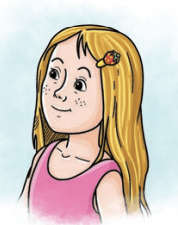
(i) Complete the following sentence suitably. Mary could spot Mrs. Cotter in the street because _________.
(ii) What does Mary’s comment about Mrs. Cotter staying in bed and calling the doctor suggest about her understanding?
- A. She is worried about why Mrs. Cotter stays in bed all morning.
- B. She is unable to understand why people need medical help.
- C. She thinks Mrs. Cotter is scared and lonely for staying in bed.
- D. She believes Mrs. Cotter is right to rest and take care of herself.
(iii) How can we say that Mary enjoyed good health?
(iv) Identify whether the following statement is true or false. Mary migh
II Answer the following questions.
1. What does Mary’s comment about Mr. Best’s routine and profession reveal about her viewpoint on bankers and their way of life?
2. What can we infer about Mary’s understanding of polite conversation based on her interactions with the guests?
3. What do you think the repeated stage direction ‘no one speaks’ indicates about the atmosphere in the room when Mary speaks?
4. How does Mary’s attitude towards the guests change throughout the play?
5. What do Mrs. Harding’s and Mrs. Lee’s responses to Mary’s blunders during their visit reveal about their characters?
6. In what way does the play show the importance of knowing how to engage in polite conversation?
Let us learn
I Study the following words taken from the text.
humorous, hilariously, coming, beautiful
The given words are made by adding word endings like -ous, -ly, -ing, and -ful to the root words humour, hilarious, come, and beauty. Such word endings are called suffixes.
- humour + -ous
- hilarious + -ly
- come + -ing
- beauty + -ful
Now, divide the following words from the text as root words and suffixes. Check your answer with the teacher.
gladly
banker
guidance
quietly
walking
1. Study the words in Column 1. Match the suffixes in Column 2 with their meanings or purpose in Column 3. Write a few examples for each in Column 4. Share your answers with the teacher.
| Column 1 | Column 2 | Column 3 | Column 4 |
| Biology | (i) -logy | A. change to adverb | Sociology |
| tolerance | (ii) -ance | B. change to plural | |
| stopped | (iii) -ed | C. a study of | |
| backward | (iv) -ward | D. change to superlative | |
| courageous | (v) -ous | E. change to past tense | |
| quietly | (vi) -ly | F. change to a noun | |
| toughest | (vii) -est | G. in a certain direction | |
| tomatoes | (viii) -es | H. change to adjective |
2. Fill in the blanks using words given in the brackets by adding suitable suffixes.
To communicate (i) ___________ (effective), choose your words and topics (ii) ___________ (wise). Avoid (iii) ___________ (discuss) things you don’t know much about or that could upset someone. Remember to be (iv) ___________ (respect) towards others, including yourself, and express your (v) ___________ (appreciate). Finally, always be (vi) ___________ (response) by replying promptly to communicate.
II Read the highlighted words in the following sentences from the text.
- But does anyone want to hear the things that you say?
- I can’t tell you everything
Select the correct answer.
Is there a difference in the meanings of ‘say’ and ‘tell’? (Yes/ No)
- ‘Say’ focuses on the message and does not always require a listener.
- ‘Tell’ focuses on who receives the message and always needs a listener.
1. Fill in the blanks with suitable words from the sets of words given in the box below. Make changes in the verb forms (tense), if necessary.
• fetch : go somewhere to get something and bring it back
bring : take something with you to the place you are going
• see : something that we view, whether or not we pay attention
look : focus your eyes in a certain direction by paying attention
• live : permanent place of residence
stay : temporary presence in a location as a guest or visitor
• study : spend time learning something as part of formal education
learn : gain knowledge or skill through study or experience
• speak : express thoughts or ideas aloud, often in formal situations
talk : engage in informal conversation with someone
• hear : perceive sounds unintentionally through the ears
listen : pay attention to sounds or speech intentionally
- (i) I _________ at the photo, but I didn’t _________ anyone familiar.
- (ii) I’d better go and _________ my mother from the station, and then _________ her home.
- (iii) I need to _________ for my mathematics exam this weekend, so I hope to _________ new concepts along the way.
- (iv) I can _________ the music from my neighbour’s house, but I need to _________ to it carefully to understand the lyrics.
- (v) “Could I _________ to Mrs. Kalpana, who is going to _________ to us about gardening,” said Ritu.
- (vi) I _________ in a small town, but I often _________ with my relatives in the city.
III Read the following sentences from the text and underline the verbs.
- They lived in London before.
- I met her in a shop and asked her to come.
As you know, the verbs you have underlined are in simple past tense. (actions that happened in the past or distant past)
Read the following sentence from the text and underline the verb.
She has been staying with them for a while.
The verb you have underlined is in present perfect continuous tense.
We use present perfect continuous (has/have + been + verb + -ing) to indicate:
The duration of an action that started in the past and continues up to the present moment.
• Mrs. Shaw has been preparing the room since the morning for Mrs. Harding and Mrs. Lee’s visit.
An action that was ongoing in the recent past, with its results evident now. The focus is on the ongoing activity rather than its completion.
• Mrs. Shaw has been cleaning the room since the morning. (The room looks spotless now.)
• The students have been practising a play about the story. (They are rehearsed and ready.)
1. Fill in the blanks using the verbs given in brackets in present continuous or present perfect continuous tense.
The students (i) ______________ (organise) a play and setting up the stage. They (ii) ______________ (prepare) for weeks to make everything perfect. The performers (iii) ______________ (rehearse) every day, and their excitement (iv) ______________ (grow). The sound in-charge (v) ______________ (test) the microphones to check the sound quality. Everyone (vi) ______________ (work) hard, and now the place (vii) ______________ (buzz) with energy and excitement.
IV Read the explanation about the kinds of sentences given in the table below.
| Kinds of Sentences | Function | Punctuation | Examples from the text |
| Declarative sentences | to state or convey information | end with a full stop (.) | There’s always something to say. |
| Interrogative sentences | to ask questions | end with a question mark (?) | What shall I do when they want to go? |
| Exclamatory sentences | to express strong feelings or emotions | end with an exclamatory mark (!) | What beautiful children you have, Mrs. Harding! |
| Imperative sentences | to give order, command or request | end with a full stop (.) | Put that coat away in your bedroom. |
1. Identify the kinds of sentences and punctuate them appropriately.
(i) the meeting starts at 10.00 a.m. in the conference room
(ii) what an exciting adventure it was
(iii) how did you solve the problem so quickly
(iv) what is the weather forecast today
(v) how beautiful is the rainbow
(vi) clean up your room before dinner
(vii) the children are planning a surprise party for their mom
(viii) turn off the music
Let us listen
I Mrs. Shaw wanted Mary to learn to say the right thing. You will listen to a conversation between a mother and her son about basic manners. As you listen, fill in the blanks given below by selecting the correct option. (Transcript for the teacher on pg. 89 )
1. How did the son behave in the grocery queue?
- (i) strangely
- (ii) impatiently
- (iii) politely
2. The mother finally refers to her son as a __________________.
- (i) polite young man
- (ii) responsible son
- (iii) grateful person
II You will once again listen to the conversation. As you listen, select four true statements from 1– 7 given below
1. The mother uses the grocery store incident as an opportunity to teach her son about patience and fairness.
2. The son recognises the value of apologising and understands that it shows he notices others.
3. The son is gradually learning the importance of polite words and actions from his mother’s guidance.
4. The mother discourages her son from speaking softly in public, suggesting that people should adjust to his voice level.
5. The son feels that covering his mouth when coughing is only important when he’s at home.
6. The son receives all advice readily while understanding its importance.
7. The mother uses praise to support the polite behaviours she wants her son to continue practising.
Let us speak
As you know
• Intonation is the rise and fall of the pitch of tone while speaking.
Let us learn about sentence stress.
• Sentence stress is laying emphasis on certain word(s) in a sentence.
→ The emphasis on particular words helps to convey the meaning and importance of the sentence.
→ Content words like book, run, beautiful, quickly, etc., are mostly stressed instead of function words like she, in, is, etc., in a sentence.
I Speak the given declarative sentence aloud.
I saw Mrs. Cotter this afternoon.
• Use falling intonation towards end of the sentence as declarative sentences usually have falling intonation.
• Stress the words ‘Mrs. Cotter’.
Remember, stress does not mean to say the word louder than others. It means to say a word with more emphasis than others.
II Speak the following declarative sentences with falling intonation and stress the highlighted words.
1. The room looks cleaner now.
2. You always talk too much.
3. You leave your clothes all over the house.
III Work in pairs and speak the following sentences 1–5 aloud, as Mary. Apply stress and falling intonation. Match each of the sentences to the meaning they convey in (i)–(v).
Sentences
1. I didn’t hurt anyone today
2. I didn’t hurt anyone today.
3. I didn’t hurt anyone today.
4. I didn’t hurt anyone today
5. I didn’t hurt anyone today.
Meaning conveyed
(i) I might have done other things but did not hurt anyone.
(ii) I might cause hurt usually, but not anyone on this day.
(iii) The action of hurting anyone did not occur.
(iv) I, specifically, did not hurt anyone, possibly implying someone else might have.
(v) I may have spoken a lot many things but not a single person was hurt.
IV Now, speak the given declarative sentence with rising intonation towards the end of sentence and stress the highlighted words.
I saw Mrs. Cotter this afternoon.
The rising intonation makes it sound like a question. It asks whether I was the person who actually saw Mrs. Cotter: Did I see Mrs. Cotter this afternoon?
Remember
The way we use stress and intonation in a sentence can change the meaning of what we wish to say if we are not careful.
Let us write
Rewrite the play ‘Say the Right Thing’ as a short story, focusing on Mary’s interactions with her mother and the guests.
• Ensure the story captures the main events, character emotions, and humorous moments effectively.
• Use paragraphs to organise your story and include descriptive language to bring the characters and events to life.
You may refer to the following hints:
• Begin with an introduction: describe Mary and Mrs. Shaw, their relationship and the setting of the story.
• Explain Mrs. Shaw’s instructions to Mary before the guests arrive and Mary’s confidence in handling the situation.
• Narrate the events when Mrs. Harding and Mrs. Lee visit, highlighting Mary’s remarks and the guests’ reactions.
• Include key moments of humour and awkwardness to maintain the tone of the play.
• Conclude by commenting on how the visit ended and Mary’s impact on the situation.
Let us explore
I Work in groups. Enact your favourite part of the play.
Points to remember:
• Allot a specific role to each member in the group. For example: director, narrator, and characters
• Include the actions and expressions as indicated in brackets in the play.
II Find out how people greet guests who visit their homes in different languages. Share it with your classmates and the teacher.
III ‘Vasudhaiva Kuṭumbakaṁ’ (वसुधैव कुटुम्बकम) is a Sanskrit phrase which means the world is one family. Vasudha (वसुधा) means Earth; eva (एव) translates to ‘is thus’ and Kuṭumbakaṁ (कुटुम्बकम) means ‘family’. The phrase originates from ancient Indian texts like the Maha Upanishad and the Hitopadesha.

This saying highlights the interconnectedness of all people, suggesting that humanity is part of a single global family. It encourages unity, cooperation, and treating others with kindness and empathy, regardless of differences in nationality, race, or religion. The message is often used to promote global peace and mutual understanding among diverse cultures and nations. ‘Vasudhaiva Kutumbakam’ was chosen as the theme for the G20 Summit which captured the essence of global unity, common bonds, and shared aspirations for a better future.
TRANSCRIPTS
ANIMALS, BIRDS, AND DR. DOLITTLE
Let us listen(refer to page 55)
I You will listen to an announcement. As you listen, state whether the following statement is true or false.
Greetings and attention everyone!
We are excited to announce the opening of Dr. John Dolittle’s new clinic in the town of Woodstock. The clinic is located at 12, Rose Lane. It will be open Monday to Friday from 9 a.m. to 5 p.m. Special timings for birds are on Saturdays from 11 a.m. to 2 p.m. Dr. Dolittle is renowned for his ability to communicate with animals and shall ensure that they receive the best care possible. All animals are welcome, from horses and cows to pets and wild animals. For the best veterinary care, visit Dr. John Dolittle’s new clinic in Woodstock.
Thank you.
II You will listen to the announcement again. As you listen, complete the details given below with one or two exact words you hear.
A FUNNY MAN
Let us listen(refer to page 65)
I You will listen to a girl narrate a personal incident. As you listen, select the picture related to the narration.
Hello. This is quite a funny incident. One day, I was so preoccupied with preparing for my presentation. After a long day of studying at a friend’s place, I finally came home. Exhausted, I removed my shoes at the door and headed straight to the kitchen for some lunch. I served myself dal-chawal and ate it, still thinking about all the topics I needed to cover.
Once I finished my lunch, I got up to put my shoes away in my room and placed my plate in the kitchen. However, being so preoccupied, I ended up doing the opposite! I walked to my room with my plate in hand and left it on my desk. Then, I took my shoes and placed them in the kitchen!
As I stood there, confused, I realised what I had done. I couldn’t help but laugh at myself. I shook my head, recovered my shoes from the kitchen and kept the plate in the kitchen.
II You will once again listen to the girl narrate a personal incident. As you listen, arrange the events in order of occurrence.
SAY THE RIGHT THING
Let us listen(refer to page 84)
I Mrs. Shaw wanted Mary to learn to say the right thing. You will listen to a conversation between a mother and a son about basic manners. As you listen, fill in the blanks given below by selecting the correct option.
Mother : Why were you getting impatient in the grocery store?
Son : Was I really? I just didn’t like waiting so long.
Mother : I know waiting can be boring, but remember, we always stand in queues and wait for our turn. It’s fair for everyone, right?
Son : Hmm, I guess. Even if it takes a lot of time?
Mother : Well, that’s when we practise patience. And when it’s our turn, what do we say to the shopkeeper?
Son : We say, ‘Thank you’. And ‘Please’ if we ask for something, right?
Mother : Yes! Those are polite words. Why do you think they’re important?
Son : Maybe because they make people feel respected?
Mother : Exactly! It shows gratitude and kindness. And what about yesterday when you bumped into that lady with the blue sari?
Son : Oh, I said sorry right away. You always tell me it’s important to apologise.
Mother : That’s true. Why do you think it’s important to apologise?
Son : Um… so people know I didn’t mean to do it and that I care?
Mother : Yes, it shows you’re responsible. And how about when we’re in places like the library? What kind of voice should we use?
Son : Oh, I know this! We speak softly so we don’t bother others.
Mother : Right again! It’s called using an ‘inside voice’
Son : I know. I also know that we should cover our mouth when we yawn, sneeze or cough in a gathering or a public place.
Mother : Absolutely! You’re getting really good at remembering these things. And when we talk at home or school, what should we do when someone else is speaking?
Son : We wait for our turn. It’s not well-mannered to interrupt.
Mother : You’ve got it, Rohan. You’re becoming a really polite young man.
Son : Thanks, Ma. So, do you think I’ll be ready to handle the grocery queue next time?
Mother : Certainly! And maybe we can get some ice cream as a reward if you do it well.
Son : Deal! And… thank you!
II You will once again listen to the conversation. As you listen, select four true statements from 1–7 given below.