
UNIT 4
TRAVEL AND ADVENTURE
THE TUNNEL
Let us do these activities before we read.
I. What kind of an adventure activity would you like to be a part of? Now, choose the option(s) that best applies to you.
- 1. How would you like to spend your weekends?
- (i) Trying new activities
- (ii) Reading a book
- (iii) Spending time with friends
- (iv) Learning something new
- 2. Which of these places would you prefer to explore?
- (i) Dense forests and clear streams
- (ii) Magical lands with fairies
- (iii) Busy cities with interesting people
- (iv) Quiet places to think and create
- 3. Which one of these activities would you prefer to do?
- (i) Climbing a mountain or exploring a jungle
- (ii) Finding a hidden treasure or discovering a secret world
- (iii) Solving puzzles or guessing riddles with friends
- (iv) Making something creative or building a model
- 4. What do you think about teamwork?
- (i) I love leading the team.
- (ii) I enjoy working with others.
- (iii) I prefer sharing ideas with friends.
- (iv) I like working alone.
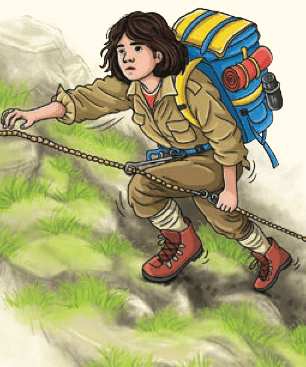
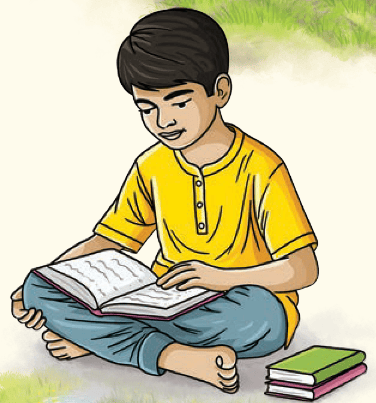
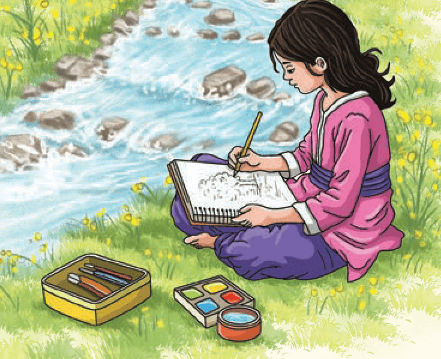
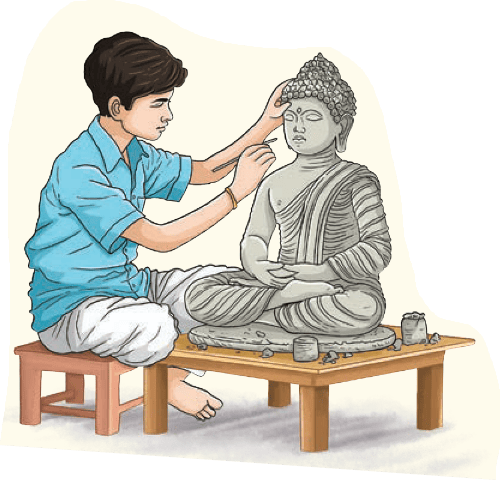
Based on your choices, which of the following do you think applies the best to you? Discuss with your classmates.
- Bold Explorer
- Imaginative Dreamer
- Energetic Planner
- Thoughtful Creator
You may add to the list as per your choices
Let us read
I
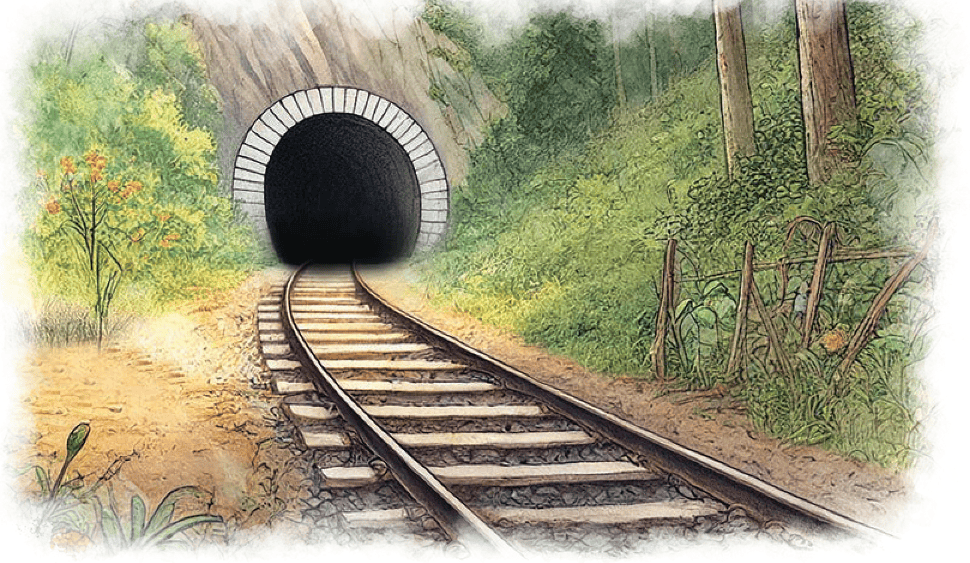
It was almost noon, and the jungle was very still, very silent. Heat waves shimmered along the railway embankment where it cut a path through the tall evergreen trees. The railway lines were two straight black serpents disappearing into the tunnel in the hillside.
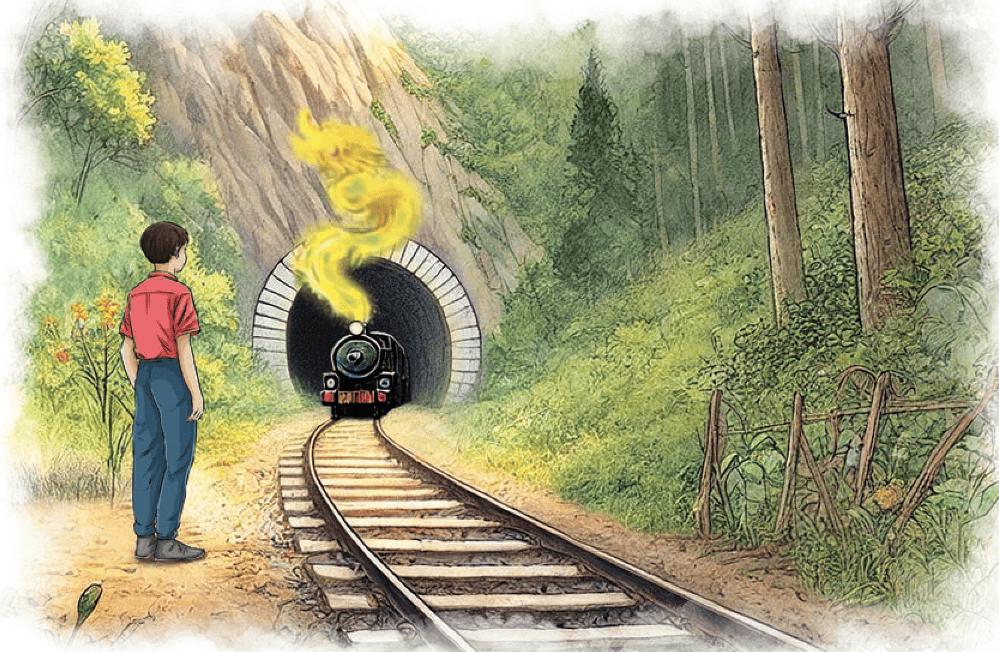
Suraj stood near the cutting, waiting for the midday train. It wasn’t a station, and he wasn’t catching a train. He was waiting so that he could watch the steam engine come roaring out of the tunnel.
He had cycled out of the town and taken the jungle path until he had come to a small village. He had left the cycle there, and walked over a low scrub-covered hill and down to the tunnel exit.
Now he looked up. He had heard, in the distance, the shrill whistle of the engine. He couldn’t see anything, because the train was approaching from the other side of the hill;but presently a sound like distant thunder issued from the tunnel, and he knew the train was coming through.
railway embankment: a stone wall made to carry the railway over low ground
cutting: a narrow valley cut through a hill to make space for a railway line
scrub-covered: covered with short trees and bushes
A second or two later, the steam engine shot out of the tunnel, snorting and puffing like some green, black, and gold dragon, some beautiful monster out of Suraj’s dreams. Showering sparks left and right, it roared a challenge to the jungle.
Instinctively, Suraj stepped back a few paces. Waves of hot steam struck him in the face. Even the trees seemed to flinch from the noise and heat. And then the train had gone, leaving only a plume of smoke to drift lazily over the tall shisham trees.
The jungle was still again. No one moved.
Suraj turned from his contemplation of the drifting smoke and began walking along the embankment towards the tunnel.
The tunnel grew darker as he walked further into it. When he had gone about twenty yards, it became pitch dark. Suraj had to turn and look back at the opening to reassure himself that there was still daylight outside. Ahead of him, the tunnel’s other opening was just a small round circle of light.
The tunnel was still full of smoke from the train, but it would be several hours before another train came through. Till then, the cutting belonged to the jungle again.
flinch: make a quick movement
plume of smoke: long, thin cloud of smoke
shisham: a tree found in northern parts of India
contemplation: deep thought
reassure: comfort, calm
Suraj didn’t stop, because there was nothing to do in the tunnel and nothing to see. He had simply wanted to walk through, so that he would know what the inside of a tunnel was really like. The walls were damp and sticky. A bat flew past. A lizard scuttled between the lines.
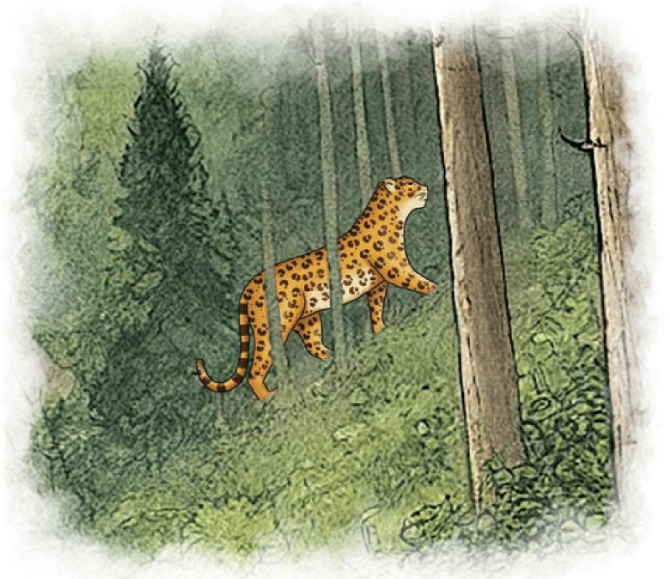
Coming straight from the darkness into the light, Suraj was dazzled by the sudden glare and put a hand up to shade his eyes. He looked up at the tree-covered hillside and thought he saw something moving between the trees.
It was just a flash of orange and gold, and a long swishing tail. It was there between the trees for a second or two, and then it was gone.
dazzled: blinded by bright light
swishing: moving with a brushing sound
About fifteen metres from the entrance to the tunnel stood the watchman’s hut. Marigolds grew in front of the hut, and at the back there was a small vegetable patch. It was the watchman’s duty to inspect the tunnel and keep it clear of obstacles.
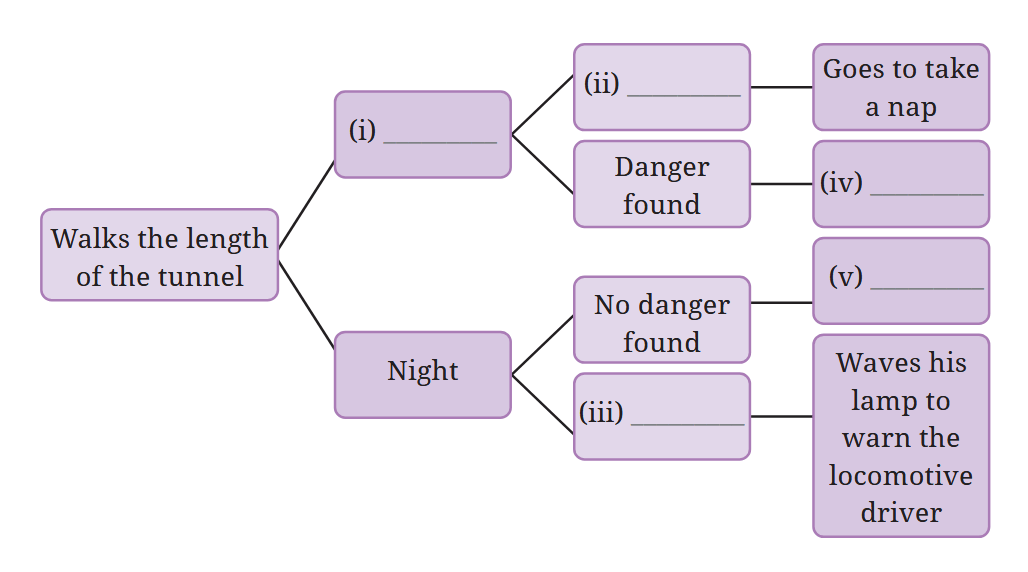
Every day, before the train came through, he would walk the length of the tunnel. If all was well, he would return to his hut and take a nap. If something was wrong, he would walk back up the line and wave a red flag, and the engine driver would slow down. At night, the watchman lit an oil lamp and made a similar inspection of the tunnel. Of course, he would not stop the train if there was a porcupine on the line. But if there was any danger to the train, he’d go back up the line and wave his lamp to the approaching engine. If all was well, he’d hang his lamp at the door of his hut and go to sleep.
He was just settling down on his cot for an afternoon nap when he saw the boy emerge from the tunnel. He waited until Suraj was only a metre or so away and then said, “Welcome, welcome. I don’t often have visitors. Sit down for a while, and tell me why you were inspecting my tunnel.”
“Is it your tunnel?” asked Suraj.
porcupine: a small animal (large rodent) with sharp spikes on its back
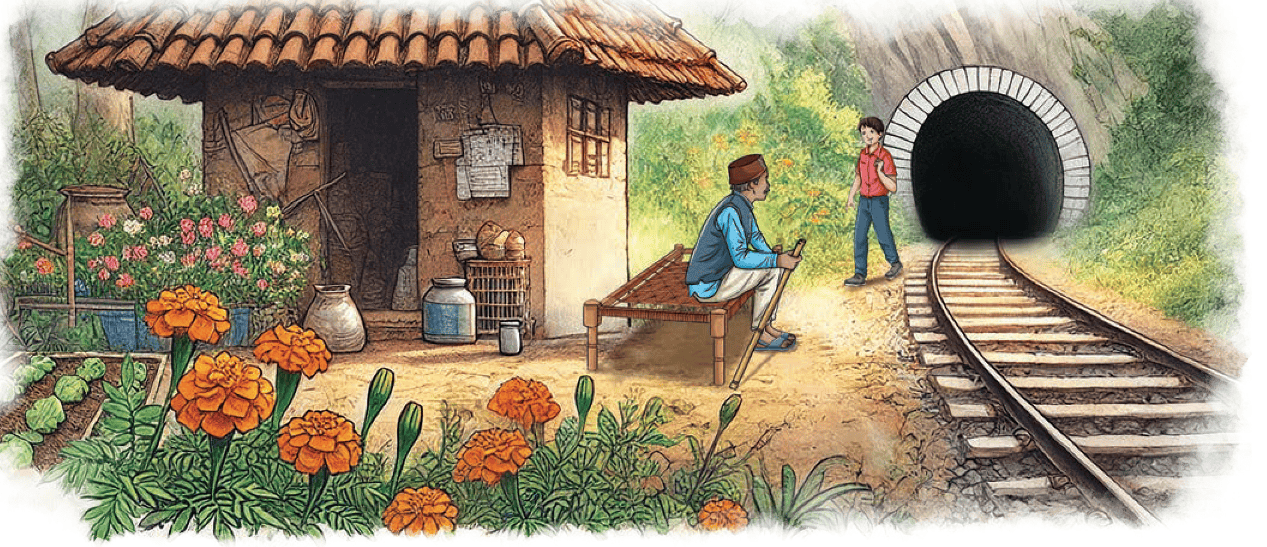
“It is,” said the watchman. “It is truly my tunnel, since no one else will have anything to do with it. I have only lent it to the Government.”
Suraj sat down on the edge of the cot.
“I wanted to see the train come through,” he said. “And then, when it had gone, I thought I’d walk through the tunnel.”
“And what did you find in it?”
“Nothing. It was very dark. But when I came out, I thought I saw an animal—up on the hill—but I’m not sure, it moved off very quickly.”
“It was a leopard you saw,” said the watchman. “My leopard.”
“Do you own a leopard too?”
“I do.”
“And do you lend it to the Government?”
“I do not.”
“Is it dangerous?”
“No, it’s a leopard that minds its own business. It comes to this range for a few days every month.”
“Have you been here a long time?” asked Suraj.
“Many years. My name is Sunder Singh.”
“My name’s Suraj.”
“There is one train during the day. And there is one train during the night. Have you seen the night mail come through the tunnel?”
night mail: a train that runs at night
“No. At what time does it come?”
“About nine o’clock, if it isn’t late. You could come and sit here with me, if you like. And after it has gone, instead of going to sleep I will take you home."
“I’ll ask my parents,” said Suraj. “Will it be safe?”
“Of course. It is safer in the jungle than in the town. Nothing happens to me out here. But last month, when I went into town, I was almost run over by a bus.”
Sunder Singh yawned and stretched himself out on the cot. “And now I am going to take a nap, my friend. It is too hot to be up and about in the afternoon.”
“Everyone goes to sleep in the afternoon,” complained Suraj. “My father lies down as soon as he’s had his lunch.”
“Well, the animals also rest in the heat of the day. It is only the tribe of boys who cannot, or will not, rest.”
Sunder Singh placed a large banana leaf over his face to keep away the flies, and was soon snoring gently. Suraj stood up, looking up and down the railway tracks. Then he began walking back to the village.
Let us discuss
- 1. Suraj compares the train to a magical creature. Pick the phrases that
- convey the meaning.
- 2. Suraj knew that the train was close by because ____________________.
- 3. What did Suraj see inside the tunnel?
- 4. Select the correct option.
- What does Sunder Singh convey about the tunnel?
- He says that ____________________ (it is damp and sticky inside/he has lent it to the Government).
- 5. The watchman has created a system through which he informs the locomotive driver about any danger in the tunnel. The following flow chart shows this system. Refer to the text and complete the flow chart.
II
The following evening, towards dusk, as the flying foxes swooped silently out of the trees, Suraj made his way to the watchman’s hut.
It had been a long hot day, but now the earth was cooling, and a light breeze was moving through the trees. It carried with it the scent of mango blossoms, the promise of rain.
Sunder Singh was waiting for Suraj. He had watered his small garden, and the flowers looked cool and fresh. A kettle was boiling on a small oil stove.
“I am making tea,” he said. “There is nothing like a glass of hot tea while waiting for a train.”
They drank their tea, listening to the sharp notes of the tailorbird and the noisy chatter of the seven sisters.
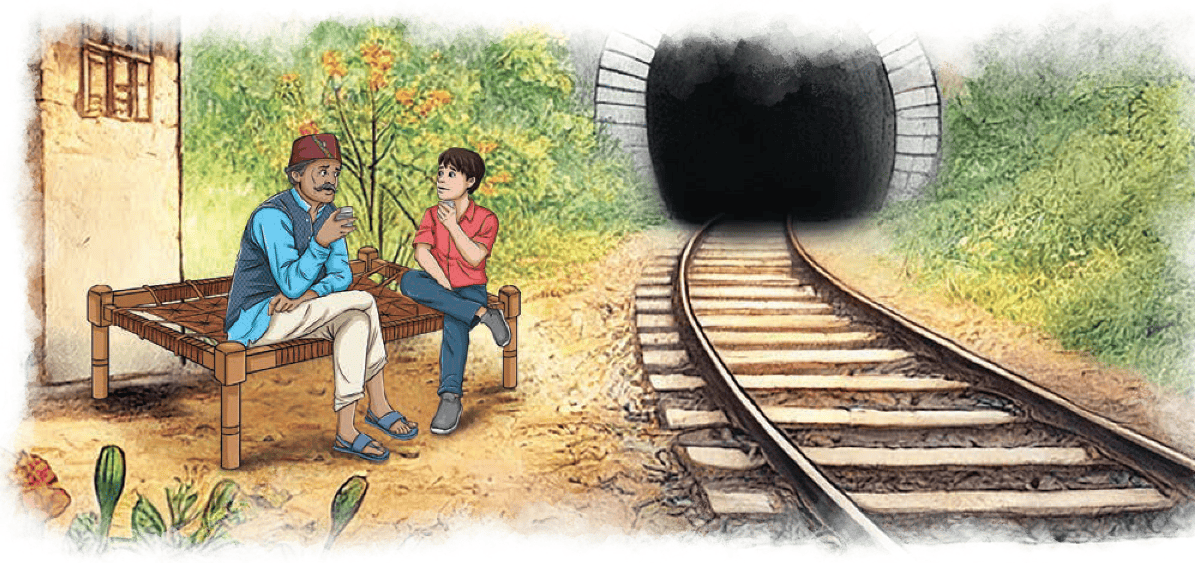
seven sisters: birds, also called jungle babblers and found in groups of six to eight
As the brief twilight faded, most of the birds fell silent. Sunder Singh lit his oil lamp and said it was time for him to inspect the tunnel. He moved off towards the tunnel, while Suraj sat on the cot, sipping his tea. In the dark, the trees seemed to move closer to him. And the nightlife of the forest was conveyed on the breeze—the sharp call of a barking deer, the cry of a fox, the quaint tonk-tonk of a nightjar. There were some sounds that Suraj didn’t recognise—sounds that came from the trees, creakings and whisperings, as though the trees were coming to life, stretching their limbs in the dark, shifting a little, flexing their fingers.
Sunder Singh stood inside the tunnel, trimming his lamp. The night sounds were familiar to him and he did not give them much thought; but something else—a padded footfall, a rustle of dry leaves—made him stand still for a few seconds, peering into the darkness. Then, humming softly to himself, he returned to where Suraj was waiting. Ten minutes remained for the night mail to arrive.
nightjar: a nocturnal bird with a short bill
flexing: bending
trimming: (here) adjusting the wick of the lamp
As Sunder Singh sat down on the cot beside Suraj, a new sound reached both of them quite distinctly—a rhythmic sawing sound, as if someone cutting through the branch of a tree.
“What’s that?” whispered Suraj.
“It’s the leopard,” said Sunder Singh. “I think it’s in the tunnel.”
“The train will soon be here,” said Suraj.
“Yes, my friend. And if we don’t drive the leopard out of the tunnel, it will be run over and killed. I can’t let that happen.”
“But won’t it attack us if we try to drive it out?” asked Suraj, beginning to share the watchman’s concern.
“Not this leopard. It knows me well. We have seen each other many times. It has a weakness for goats and stray dogs, but it will not harm us. Even so, I’ll take my axe with me. You stay here, Suraj.”
“No, I’m coming with you. It will be better than sitting here alone in the dark!”
“All right, but stay close behind me. And remember, there is nothing to fear.”
Raising his lamp, Sunder Singh advanced into the tunnel, shouting at the top of his voice to try and scare away the animal. Suraj followed close behind, but he found he was unable to do any shouting. His throat was quite dry.
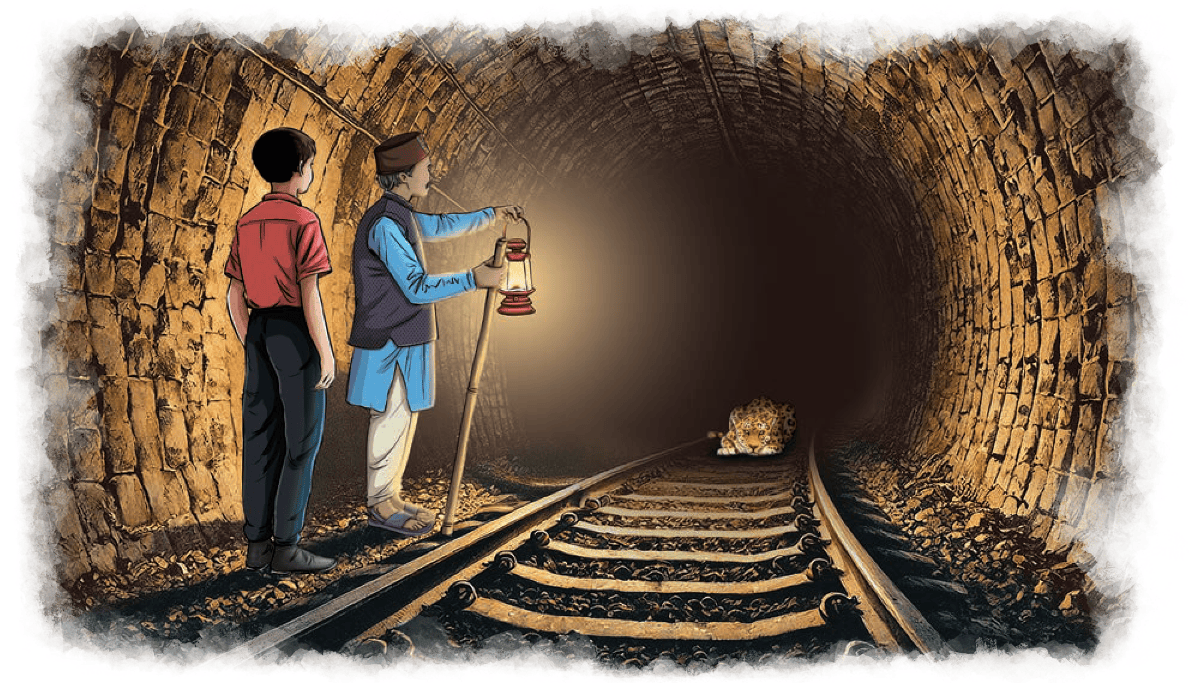
They had gone about twenty paces into the tunnel when the light from the lamp fell upon the leopard. It was crouching between the tracks, only five metres away from them. It was not a very big leopard, but it looked lithe and sinewy. Baring its teeth and snarling, it went down on its belly, tail twitching.
Suraj and Sunder Singh both shouted together. Their voices rang through the tunnel. And the leopard, uncertain as to how many terrifying humans were there in the tunnel with him, turned swiftly and disappeared into the darkness.
To make sure that it had gone, Sunder Singh and Suraj walked the length of the tunnel. When they returned to the entrance, the rails were beginning to hum. They knew the train was coming.
Suraj put his hand to one of the rails and felt its tremor. He heard the distant rumble of the train. And then the engine came round the bend, hissing at them, scattering sparks into the darkness, defying the jungle as it roared through the steep sides of the cutting. It charged straight at the tunnel, and into it, thundering past Suraj like the beautiful dragon of his dreams.
sinewy: lean and muscular
snarling: growling
twitching: a short, sudden movement
defying: opposing
And when it had gone, the silence returned and the forest seemed to breathe, to live again. Only the rails still trembled with the passing of the train.
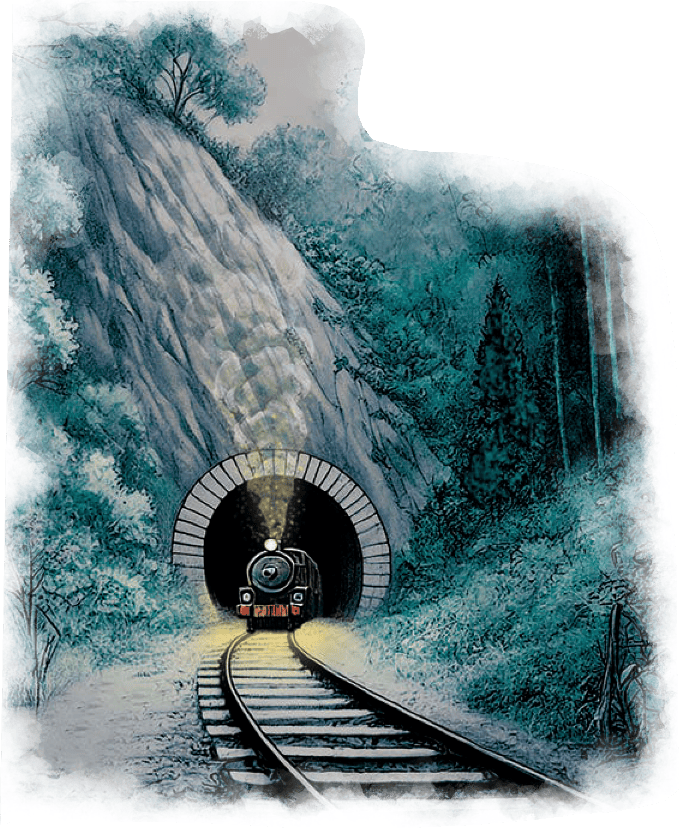
They trembled again to the passing of the same train, almost a week later, when Suraj and his father were both travelling in it.
Suraj’s father was scribbling in a notebook, doing his accounts. Suraj sat at an open window staring out at the darkness. His father was going to Delhi on a business trip and had decided to take the boy along. (“I don’t know where he gets to, most of the time,” he’d complained. “I think it’s time he learnt something about my business.”)
The night mail rushed through the forest with its hundreds of passengers. The carriage wheels beat out a steady rhythm on the rails. Tiny flickering lights came and went, as they passed small villages on the fringe of the jungle.
Suraj heard the rumble as the train passed over a small bridge. It was too dark to see the hut near the cutting, but he knew they must be approaching the tunnel. He strained his eyes looking out into the night; and then, just as the engine let out a shrill whistle, Suraj saw the lamp.
He couldn’t see Sunder Singh, but he saw the lamp, and he knew that his friend was out there.
The train went into the tunnel and out again; it left the jungle behind and thundered across the endless plains.
Suraj stared out at the darkness, thinking of the lonely cutting in the forest and the watchman with the lamp, who would always remain a firefly for those travelling thousands as he lit up the darkness for steam engines and leopards.
fringe: edge
shrill: sharp sound
- RUSKIN BOND
Let us discuss
1. Sunder Singh knew that the leopard was in the tunnel because ____________.
2. Why do you think Suraj was unable to do any shouting in the tunnel in the beginning?
- (i) He was afraid of the leopard.
- (ii) He didn’t want to disturb the leopard.
- (iii) He was trying to listen for the leopard.
- (iv) He didn’t really believe Sunder Singh.
3. What made the leopard disappear into the darkness?
4. How did Suraj know Sunder Singh was at the tunnel?
5. Why did Suraj’s father take him along to Delhi?
Let us think and reflect
I Read the following lines and answer the questions that follow.
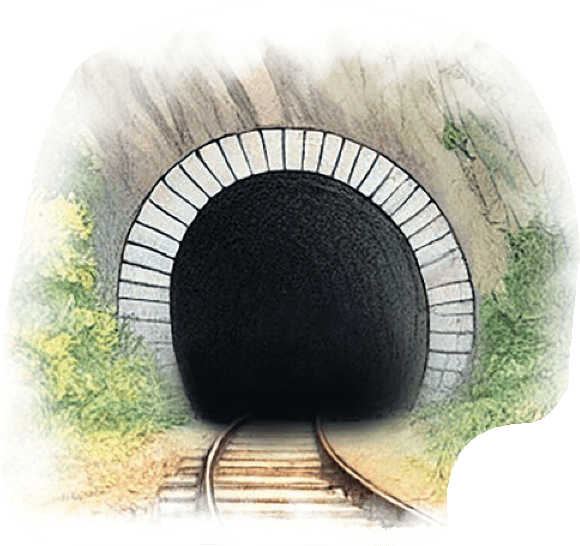
1. Suraj had to turn and look back at the opening to reassure himself that there was still daylight outside. Ahead of him, the tunnel’s other opening was just a small round circle of light.
The tunnel was still full of smoke from the train, but it would be several hours before another train came through. Till then, the cutting belonged to the jungle again.
Suraj didn’t stop, because there was nothing to do in the tunnel and nothing to see. He had simply wanted to walk through, so that he would know what the inside of a tunnel was really like.
- (i) Write whether the following statement is true or false.
- (ii) Choose the correct option to complete the sentence given below.
- A. there was nothing to see in the tunnel
- B. the tunnel was damp and sticky
- C. he was in a hurry to get out of the tunnel
- D. it was time for another train to come
- (iii) What does the sentence ‘Till then, the cutting belonged to the jungle again’ mean?
- (iv) Suraj wanted to know the inside of the tunnel. What character trait of Suraj is highlighted here?
Suraj looked back at the opening of the tunnel to check if the train was coming.
Suraj did not stop anywhere in the tunnel because _____________.
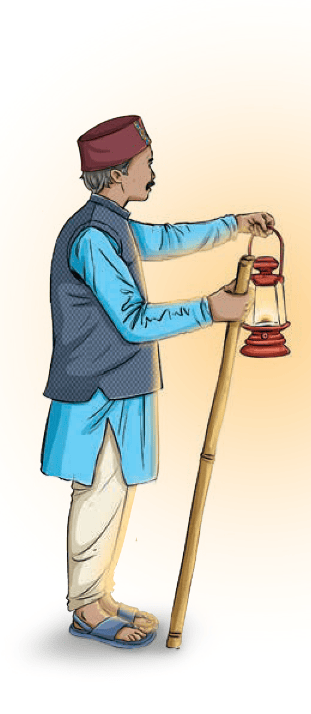
2. “The train will soon be here,” said Suraj.
“Yes, my friend. And if we don’t drive the leopard out of the tunnel, it will be run over and killed. I can’t let that happen.”
“But won’t it attack us if we try to drive it out?” asked Suraj, beginning to share the watchman’s concern.
“Not this leopard. It knows me well. We have seen each other many times. It has a weakness for goats and stray dogs, but it will not harm us. Even so, I’ll take my axe with me. You stay here, Suraj.”
(i) What was the watchman’s concern?
(ii) Complete the sentence with a suitable reason.
Sunder Singh was sure that the leopard in the tunnel would not attack him and Suraj because _____________.
(iii) Select the sentences that are true from those given below.
- A. Suraj wants to see the leopards in the jungle.
- B. Suraj is concerned about Sunder Singh’s safety.
- C. The leopard in the tunnel attacks goats and stray dogs.
- D. Sunder Singh wants to protect Suraj.
- E. Sunder Singh knows all about the animals in the jungle.
(iv) Choose the correct option to complete the sentence.
- A. violent
- B. cautious
- C. bold
- D. afraid
II Answer the following questions.
1. What does Sunder Singh convey by saying that he has lent his tunnel to the Government?
2. According to Sunder Singh, “It is safer in the forest than in the town”. What example does Sunder Singh give to support his opinion? What does this tell us about him?
3. Sunder Singh has become part of the jungle life. Support the view with a suitable reason.
4. Sunder Singh and Suraj form an unlikely friendship. What draws them together?
5. Why is Sunder Singh referred to as a ‘firefly’?
6.Do you think Suraj is an adventure-loving boy? Give reasons.
Let us learn
I Complete the following sentences using the suitable phrases from the text given in the box below.
drifting smoke
approaching engine
sawing sound
flickering lights
1. We could hear the ______________________ of the train long before it came into view at the station.
2. The street was completely dark but the little boy walked to his house guided by the ______________________ from the houses.
3. The ______________________ from the carpenter’s workshop grew louder every hour.
4. From the balcony, she watched the ______________________ from her neighbour’s chimney float across the backyard.
II The text has many ‘sound words’. Some of these words are given in Column 1 and their meanings are given in Column 2. Match the words with their meanings. You can use a dictionary.
| Column 1 | Column 2 |
|---|---|
| 1. creaking | (i) making a noise like a long ‘s’ sound |
| 2. chatter | (ii) making a long low sound when a door or wooden object moves or is moved |
| 3. hissing | (iii) repeated series of short high sounds made by birds or monkeys |
| 4. rustle | (iv) blowing with short, quick blasts, as the wind |
| 5. puffing | (v) a soft low, dry sound made by the movement of things such as leaves, paper, etc. |
Now, complete the sentences given below by filling in the blanks with the correct form of the sound words given in Column 1.
1. The steam engine reached the station __________________ black smoke into the sky.
2. Suddenly the snake raised its hood and made a __________________ noise.
3. When the wind blew, I heard the __________________ of the wooden roof.
4. He heard a __________________ of leaves behind him when he was walking in the woods.
5. I get disturbed by the continuous __________________ of the monkeys in the neighbourhood.
III Read what the watchman Sunder Singh did regularly at the tunnel as part of his duty. Notice the use of ‘would’.
Every day, before the train came through, he would walk the length of the tunnel. If all was well, he would return to his hut and take a nap. If something was wrong, he would walk back up the line and wave a red flag and the engine driver would slow down. At night, the watchman lit an oil lamp and made a similar inspection of the tunnel.
1. Why is the word ‘would’ used here?
- (i) to make a polite request
- (ii) to express a desire
- (iii) to talk about a habit in the past
In these sentences, the word ‘would’ is used to speak about a past habit.
Would and used to both describe something that happened regularly in the past. However, ‘used to’ indicates a past action that doesn’t happen any longer.
• I used to paint when I was in Grade 4.
• Riya used to eat a lot of junk food, but she stopped last year.
2. Complete the sentences using the verb in brackets with the correct form of ‘used to’ or ‘would’. An example has been done for you.
When I was a child we used to live in a village near a forest. Back then, we (i) _____________ (grow) vegetables in our back garden. Every day we (ii) _____________ (get up) early and go for a walk. The weather in summer (iii) _____________ (be) really nice. There was a lake near the house and we (iv) _____________ (go) there every Sunday for a picnic. Winters (v) _____________ (be) rather cold. In the evenings, my father (vi) _____________ (tell) us incredible stories and we (vii) _____________ (listen) with admiration.
IV We use punctuation marks to make our writing clear. You already know how to use full stops and commas. Let us look at three more punctuation marks—brackets, semicolon, and colon.
Colon (:) is used to introduce a list or an explanation.
• You need the following ingredients to make Ela Ada: ghee, coconut, jaggery, and rice flour.
• He has one goal: to win the championship.
Semicolon (;) is used to connect two clauses which are closely related without a conjunction.
• She loves reading; he prefers watching movies.
• Suraj followed close behind; but he found he was unable to do any shouting.
Now, use semicolons and colons to punctuate the following paragraph.
We explored the busy by-lanes of Charminar, the heart of Hyderabad it was an exciting day. We wanted to do a few things buy bangles, taste biryani, and purchase pearl earrings, which are special to this area. As we walked through the lanes, we saw stalls selling spices, clothes, and jewellery the market was full of colours. We visited some famous spots Charminar, Golconda Fort, Salar Jung Museum, and Chowmahalla Palace each place was beautiful.
Let us listen
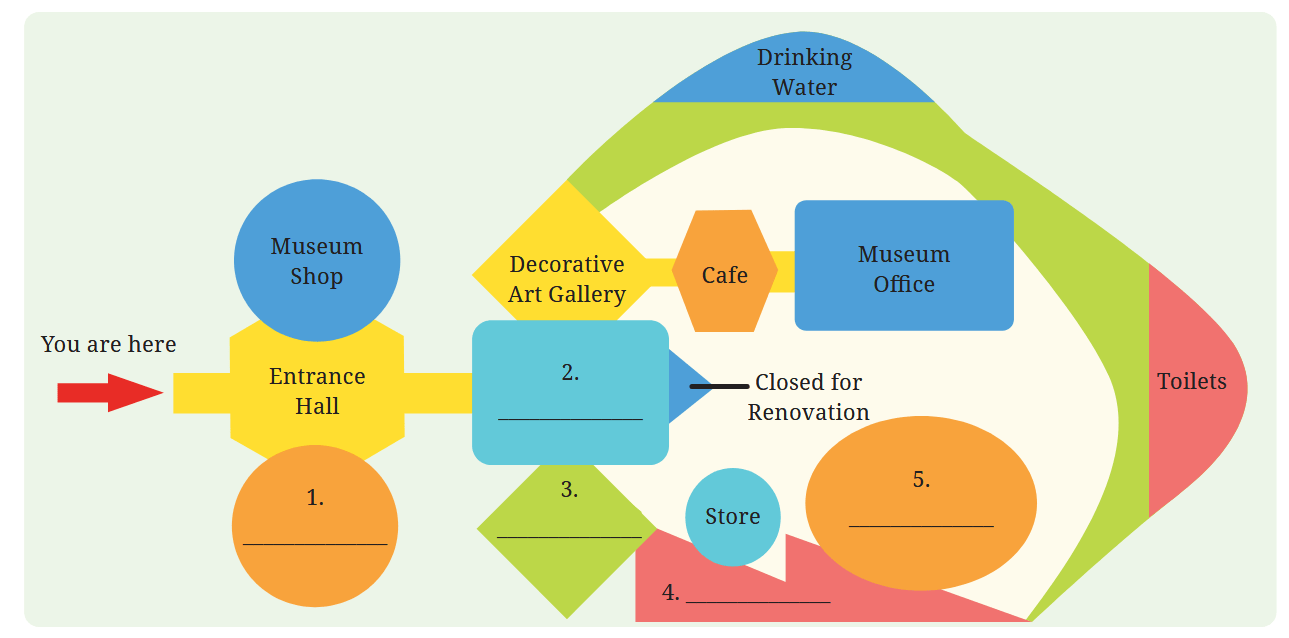
A famous museum in your town is organising a treasure hunt in the museum premises. You and your friends decide to participate in it. Upon arrival, you find that there are many other teams. Each team is given an audio guide (recorded information) and a map to the museum. (Transcript for the teacher on pg. 176)
Listen to the audio recording and as you listen, mark your map with the route to take to find the treasure. To help you, the names of a few rooms in the museum are given below. Now listen to the audio and mark the various rooms.
library
auditorium
weapon room
art gallery
musical instruments hall
Let us speak
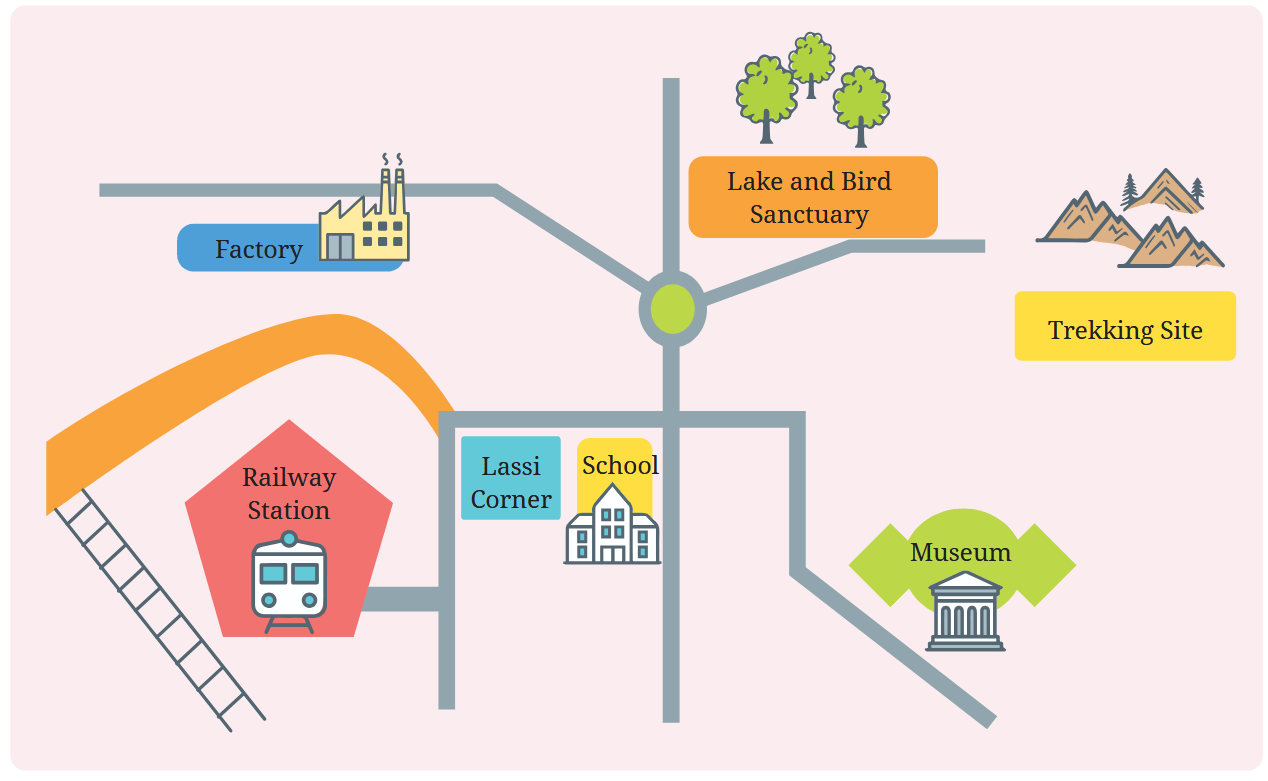
Anju is going on a trekking trip with her family during the summer vacation. They have reached the railway station. Anju calls the tour manager for directions to the trekking site.
Work in pairs and have this conversation. Student A will play the role of Anju and mark the route on the map given below. Student B will play the role of the tour manager. Looking at the map, give directions to reach the trekking site from the railway station. You may use phrases like the ones in the box to help you.
turn left
turn right
keep going straight till...
take the next left
take the next right
take the roundabout
take the second left
start from...
on the opposite side
right around the corner
in front of
next to
Let us write
Write a descriptive paragraph about your experience of a train journey. Describe the sights, sounds, and feelings you experienced during the journey. Include details about the people around you, the scenery outside, and the atmosphere inside the train to make your paragraph vivid and engaging.
You may use the following guidelines to help you create the paragraph.
- Start with how the journey began: boarding the train, finding your seat, and the initial impressions.
- Describe the sounds: the whistle of the train, the chatter of passengers, and the rhythmic clatter of wheels on the tracks.
- Mention the sights: the changing scenery outside the window, the hustle and bustle inside the train, and any interesting moments.
- Reflect on your feelings: Were you excited, relaxed, or curious? How did the journey make you feel overall?
Let us explore
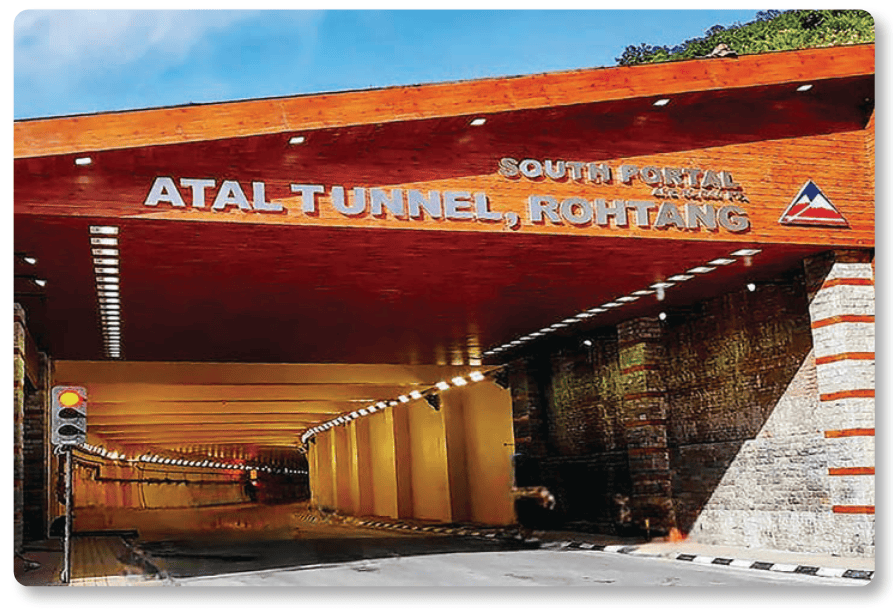
I The Nation’s pride Atal Tunnel is 9.02 kilometres long. It runs under the Rohtang Pass. It was constructed on the Manali–Leh Highway under the challenging conditions of freezing temperatures in extremely difficult terrain. The Atal Tunnel has officially been certified by World Book of Records as the ‘World’s Longest Highway Tunnel above 10,000 Feet’!
II The history of Indian Railways spans over 165 years. On 16 April 1853, the first passenger train ran between Bori Bunder (Mumbai) and Thane, covering 34 kilometres. It was operated by three locomotives named Sahib, Sultan, and Sindh and had thirteen carriages. In 1864, the North received its first station, Delhi Junction, near Chandni Chowk.
You may refer to the given link to know more about Indian Railways.
https://artsandculture.google.com/ story/a-history-of-indian-railways- national-rail-museum/cAVh7RwiKiTtKg?hl=enPAPER BOATS
Let us do these activities before we read.
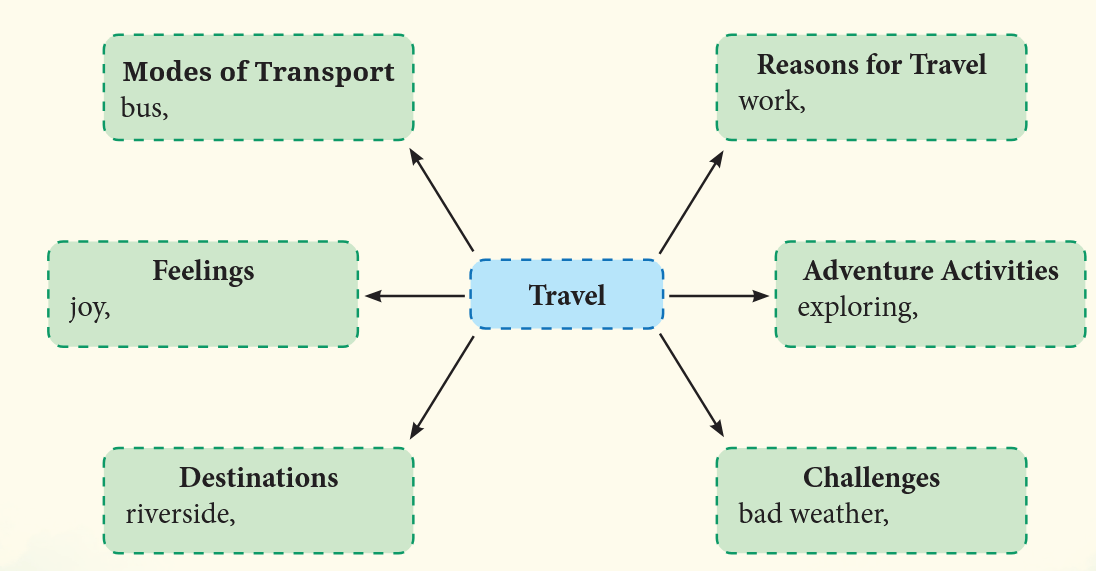
I Complete the following word web on travel.
II You are going on a trip to an adventure camp with your classmates and teacher.
1. How will you travel to the adventure camp?
2. What things will you take along?
3. Why would you like to go there?
4. What are the activities you would like to do with your friends?
5. How much time will it take to complete your adventure trip?
III Discuss in pairs. What might be the reasons that people enjoy train journeys?
Let us read
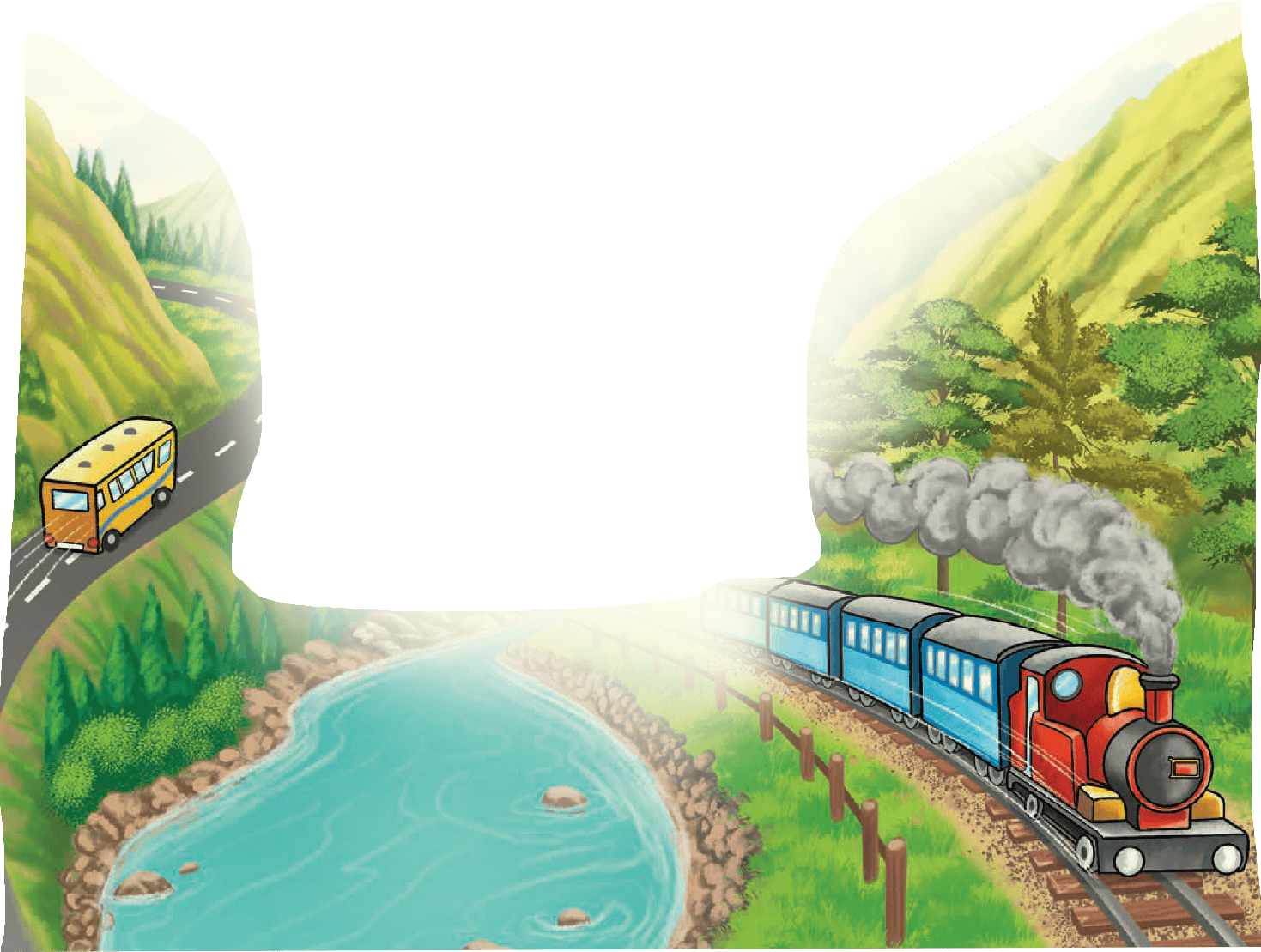
The railroad track is miles away,
And the day is loud with voices speaking,
Yet there isn’t a train goes by all day
But I hear its whistle shrieking.
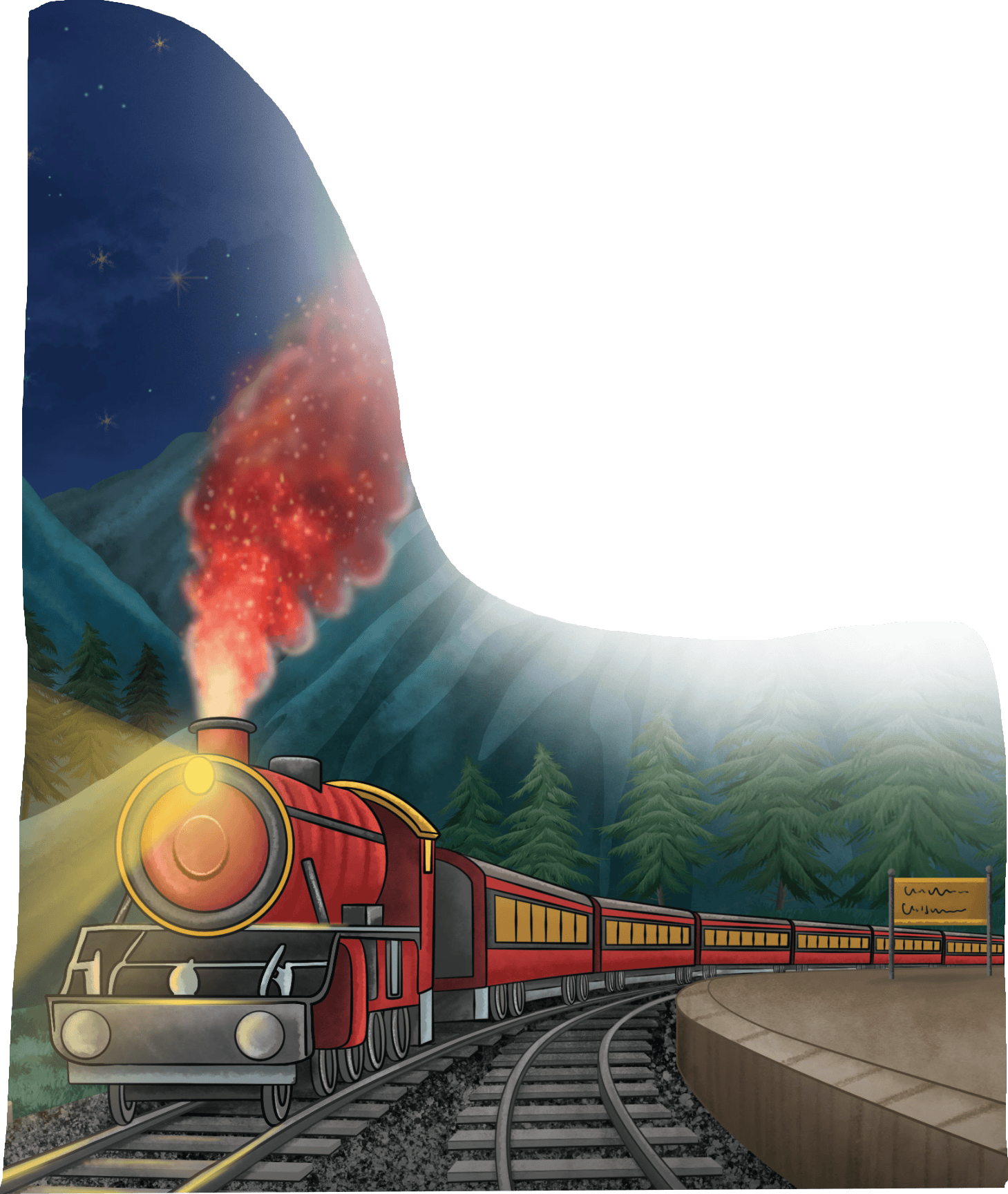
All night there isn’t a train goes by,
Though the night is still for sleep and dreaming,
But I see its cinders red on the sky,
And hear its engine steaming.
My heart is warm with the friends I make,
And better friends I’ll not be knowing;
Yet there isn’t a train I wouldn’t take,
No matter where it’s going.
EDNA ST. VINCENT MILLAY
Let us discuss
I The main ideas of each stanza of the poem are given below. Write the number of the stanza against the matching main idea.
1. At night, the speaker imagines the train and hears its engine in the quiet.
2. The speaker feels a strong desire to take any train, no matter where it goes.
3. The speaker hears the train whistle during the day, even though the train is far away.
II Read the poem and underline the rhyming words in each stanza. Write the rhyming words from each stanza. An example has been done for you.
The theme of the poem is ________.
- 1. Stanza (i): away-day;
- 2. Stanza (ii):
- 3. Stanza (iii):
III Identify the rhyme scheme of the poem from the options given below.
- 1. AABB
- 2. ABCA
- 3. ABAB
- 4. ABBC
IV Identify the word in the poem that personifies the whistle of the train.
V Tone refers to the attitude the poet has about the poem. Which of these words can be used to describe the poet’s tone in this poem?
serious
excited
curious
worried
thoughtful
content
enthusiastic
critical
joyful
VI Select the words that tell us what the train symbolises for the poet.
- 1. education
- 2. adventure
- 3. comfort
- 4. opportunities
VII Complete the following by choosing the correct option from those given in brackets.
The poet repeats the line, ‘...there isn’t a train goes by,’ in all three stanzas to _______. (highlight the speaker’s fascination with the train/suggest that the area has many trains passing through)
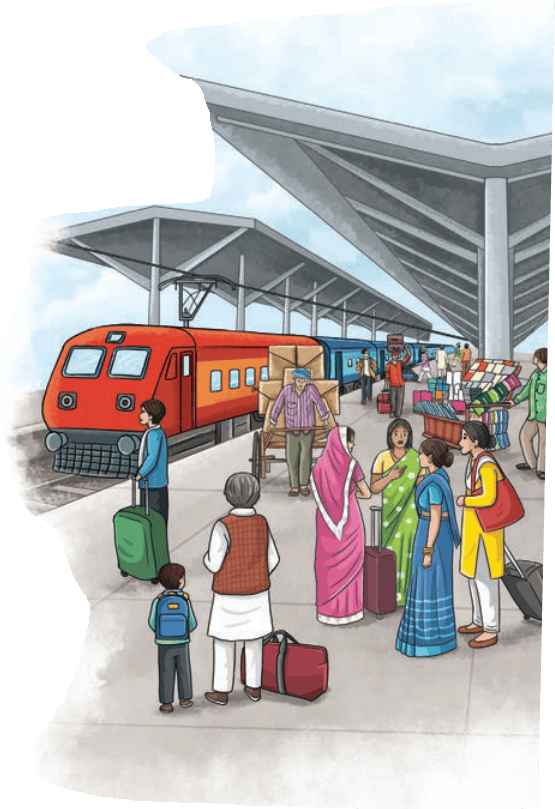
VIII The poem contrasts the busy day with the stillness of the night. What is the common factor in these?
IX Imagery is a literary device that uses descriptive language to create mental pictures and appeal to the reader’s senses (sight, sound, smell, taste and touch). It makes the descriptions more relatable.
Select the phrases from the poem that are examples of imagery. One example is given: day is loud.
Let us think and reflect
I Read the extracts given below and answer the questions that follow.
1. My heart is warm with the friends I make, And better friends I’ll not be knowing...
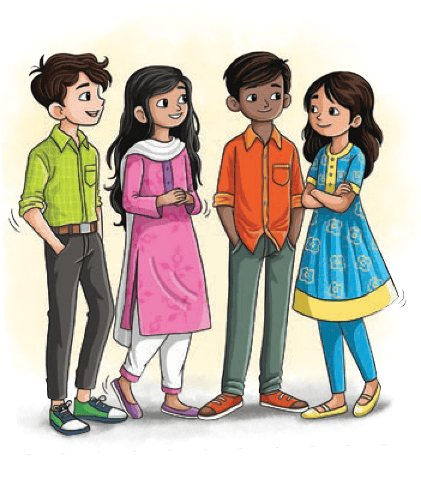
(i) Choose the suitable option to complete the following.
The line ‘My heart is warm’ refers to a heart that is ___.
- A. filled with worries
- B. full of love
- C. feeling upset
- D. experiencing anger
(ii) What does the speaker say about her current friends?
(iii) What does the line ‘better friends I’ll not be knowing’ suggest about the speaker’s feelings toward their current friends?
(iv) Complete the following suitably.
The tone of the speaker in these lines is ______. (grateful/content)
II Answer the following questions.
1. What does the phrase ‘cinders red on the sky’ tell us about the train at night?
2. What is the significance of the repeated references to the train’s whistle?
3. What does the line ‘no matter where it’s going’ reveal about the speaker’s attitude towards travel?
4. Do you think the poet actually sees and hears the train? Why or why not?
Let us learn
I Read the expressions from the poem given in Column 1 and match them with what they indicate in Column 2.
| Column 1 | Column 2 |
|---|---|
| 1. miles away | (i) The speaker’s affection for their friends |
| 2. cinders red | (ii) The fast and powerful movement of the train |
| 3. heart is warm | (iii) The busy and noisy atmosphere during the day |
| 4. day is loud | (iv) The glow of the train’s sparks lighting up the night sky |
| 5. engine steaming | (v) The distance of the train from the speaker |
Now, use the expressions in Column 1 to fill in the following blanks correctly.
1. After meeting her old friend, her ______ with the joy of rekindled memories.
2. As I arrived at the railway station I could hear the ______
3. The marketplace is bustling, and the ______ with the chatter of shoppers and vendors.
4. The bonfire glowed brightly, throwing ______ into the dark night sky.
5. The sound of a train could still be heard _____ as the evening grew quiet.
II The poet uses the word ‘shrieking’ to tell us about the sound of the train’s whistle. There are other words that tell us about different types of related sounds.
Read the meanings of such words in Column 1 and match them with the words in Column 2. You may use a dictionary. Share your answers with your classmates and the teacher.
| Column 1 | Column 2 |
|---|---|
| 1. shouting loudly, often in anger or excitement | (i) wailing |
| 2. crying out in fear or excitemen | (ii) hollering |
| 3. crying loudly with grief or sorrow | (iii) screeching |
| 4. making a high-pitched, piercing sound | (iv) yelling |
| 5. calling out loudly, often in a casual or informal way | (v) whimpering |
| 6. lading | (vi) bawling |
| 7. crying loudly and uncontrollably | (vii) screaming |
Now, complete the following paragraph by using suitable words from Column 2.
The street was filled with a variety of sounds. A shopkeeper was 1. ______ to attract customers, while a child nearby was 2. _______ at his friend to wait for him. From the other side of the road, a toddler was 3. ________ uncontrollably after dropping his ice cream, and his mother tried to calm him as he began 4. _________ softly. In the background, someone’s loud 5. _________ voice added to the bustling noise of the busy evening.
Let us listen
I Listen to this announcement made in the morning assembly about a school trip to the National Science Centre. As you listen, circle the information that is not correct. (Transcript for the teacher on pg. 177)
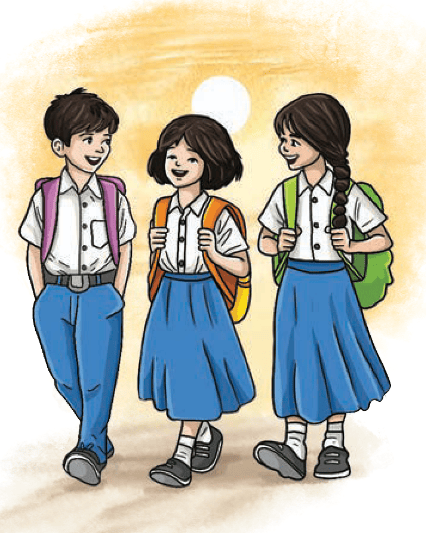
1. The trip to the National Science Centre is organised on 15 September.
2. Students will start from school at 8.00 in the morning and return by 5.00 in the evening
3. Refreshment will not be provided during the trip.
4. Students are permitted to carry a phone, a notebook, and a pen.
5. The permission slip is to be signed by the class teacher.
6. The permission slip is to be submitted to your class teacher by 10 September.
7. Mr. Mukherjee is the Adventure Club in-charge.
II Now, listen to the announcement again and rectify the sentences.
Let us speak
When speaking in English, small differences in pronunciation can change the overall meaning of the words. One such difference is in the pronunciation of the consonant ‘c’.
For example: cat (uses /k/ sound for ‘c’) and city (uses the /s/ sound for ‘c’)
The poem uses the word ‘cinders’, which is pronounced with a /s/ sound.
The letter ‘c’ has two sounds. It can be pronounced as a /k/ or /s/ sound. But which is right depends on the next letters of the words.
- Letter ‘c’ produces /s/ sound if it is followed by the letters ‘e’, ‘i’, or ‘y’. For example, city (‘c’ is followed by ‘i’). This /s/ sound is known as the soft ‘c’ sound.
- Letter ‘c’ produces /k/ sound if it is followed by the letters ‘a’, ‘o’, or ‘u’ or a consonant at the end of the word. For example, cat (‘c’ is followed by ‘a’). This /k/ sound is known as the hard ‘c’ sound.
That is why ‘cinders’ is pronounced with a /s/ sound. The letter ‘c’ is followed by ‘i’!
Now, work in pairs. Pronounce the given words aloud. Keep the rules of the soft and hard ‘c’ pronunciation in mind.
cell
cable
race
cake
decide
receive
concert
circle
bicycle
echo
uncle
Let us write
I A diamante poem is a poem that is shaped like a diamond, which uses specific types of words like adjectives and–ing words. Let us read an example.

Day
Bright, sunny
Dancing, playing, running
Out comes the sun, down goes the sun
Resting, listening, dreaming
Quiet, peaceful
Night
In this example we see how two different ideas—day and night are connected through the poem.
Let us now write a diamante poem that connects ‘reading’ and ‘adventure’.
| Reading | the first topic |
|---|---|
| ___________, ___________ | two adjectives about reading |
| ___________, ___________, ___________ | three -ing words about reading |
| ___________ | four nouns or a short phrase linking your topics |
| ___________, ___________, ___________ | three -ing words about adventure |
| ___________, ___________ | two adjectives about adventure |
| Adventure | the second topic |
Share your poem with your classmates and the teacher.
II We come across many interesting characters while travelling. They become interesting because of their actions, their behaviour, and manner of speaking. Describe one such character that you met. Follow these steps.
1. Choose the character.
2. Create a first draft of your description including the following details.
- (i) What is the name of the character?
- (ii) What does the character look like?
- (iii) What does the character do?
- (iv) What kind of person is she or he?
- (v) Include any line or incident from the text that you like the most.
3. Check your description for any spelling mistakes or errors.
4. Show your classmates your work and ask for suggestions.
5. Rewrite your description including all the changes and suggestions for improvement.
Let us explore
I The Mountain Railways of India are outstanding examples of hill railways and they are designated as a UNESCO World Heritage Site under the name Mountain Railways of India. These three railways are the Darjeeling Himalayan Railway, the Nilgiri Mountain Railway, and the Kalka–Shimla Railway.
The Matheran Hill Railway and Kangra Valley Railway are on the tentative list of UNESCO World Heritage Sites.
They are still fully operational as living examples of the ingenious engineering enterprise of the late nineteenth and early twentieth centuries. The owner of the three properties is the Railway Ministry of the Indian Government.
In groups of four, find out more about these heritage trains and make a presentation in the class.
II As an excellent example of the ‘Make in India’ success story, the Indian Railways launched India’s first indigenous semi-high-speed train, Vande Bharat Express. It has become a symbol of India’s aspirations for modern, efficient, and comfortable rail travel. The first Vande Bharat Express train was flagged off on 15 February 2019, on the New Delhi– Kanpur–Allahabad–Varanasi route, running at a speed of 160 kilometres per hour.
In groups of four, find out more about these heritage trains and make a presentation in the class.
III Some of the underwater rail tunnels are the Thames Tunnel in London, the Seikan Tunnel in Japan and the Channel Tunnel between England and France.
India’s first underwater metro route in Kolkata started in March 2024. A part of this special metro line runs beneath the Hooghly River.
IV Which of these trains do you think would be adventurous to travel in ? Discuss among yourselves.
CONQUERING THE SUMMIT
Let us do these activities before we read.
I Identify the activities represented by the icons given below. Share your answers with your classmates and the teacher.
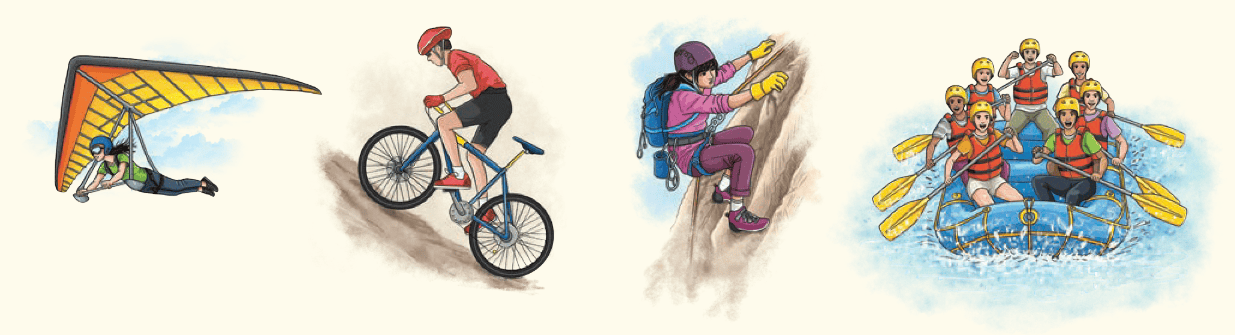
II Work in pairs and discuss the following questions.
- 1. Why do you think people undertake the activities identified above?
- 2. How would they prepare for these activities?
- 3. Which one of them do you find the most exciting? Why?
Share your answers with the teacher.
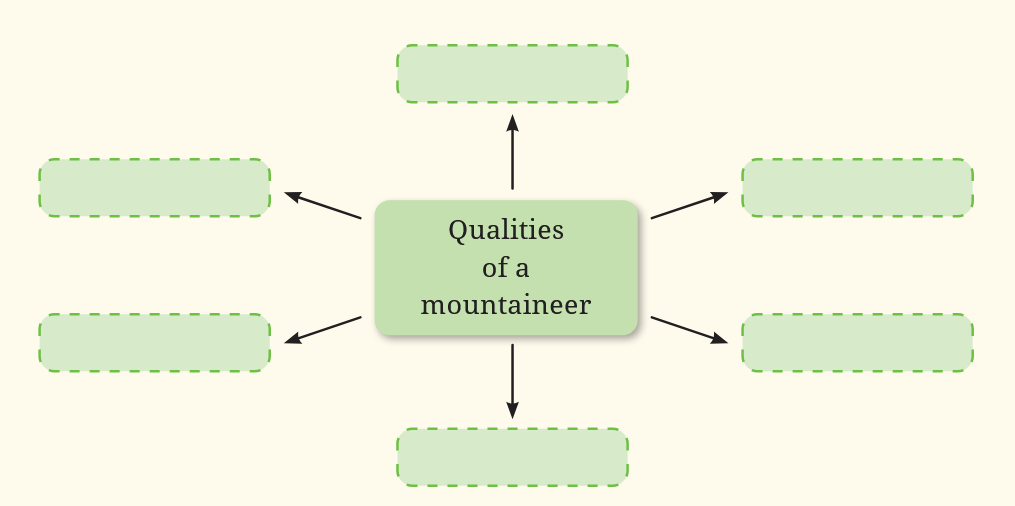
III Work in pairs to complete the word web given below. Share the answers with the teacher.
Let us read
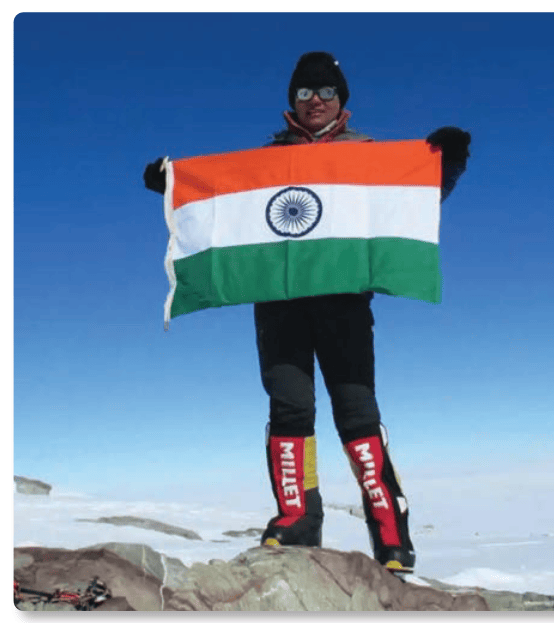
This is a story that narrates the triumph of will, courage, determination, and dedication. Arunima Sinha’s journey from a devastating accident to scaling the highest peak in the world stands as a beacon of hope and resilience. In 2011, at the age of 24, Arunima Sinha, a national-level volleyball player, faced a life-altering event. It challenged her in ways she could never have imagined. As she lay in the hospital bed with one leg amputated, Arunima made a vow that many would deem impossible: not only to walk again with a prosthetic leg but to scale Mount Everest. In 2013, she did just that, becoming the first Indian female amputee to achieve this feat. Hence, in 2015, she was awarded the Padma Shri, the fourth highest civilian award in India. She was also awarded the Tenzing Norgay National Adventure Award and National Award for Best Female Mountaineer.
Arunima hails from Ambedkar Nagar, a small district in Uttar Pradesh. Her father was an army engineer, and her mother worked as a health supervisor. Sports were a significant part of Arunima’s life, with her family having a natural inclination towards athletics. After completing her law degree following her post-graduation, Arunima decided to pursue a job in the paramilitary forces, which would allow her to continue her passion for sports while having a regular income.
On the fateful night of 11 April 2011, she met with a train accident. The hours that followed were harrowing. She never imagined she would survive that night, but survive she did, miraculously, displaying an extraordinary will to live. Arunima received a prosthetic leg and underwent physiotherapy. It was during this period that she made a profound decision. Inspired by an article about Mount Everest, she resolved to conquer the highest peak in the world.
To pursue her ambition, Arunima Sinha completed a
basic mountaineering course at the Nehru Institute of
Mountaineering in Uttarkashi,
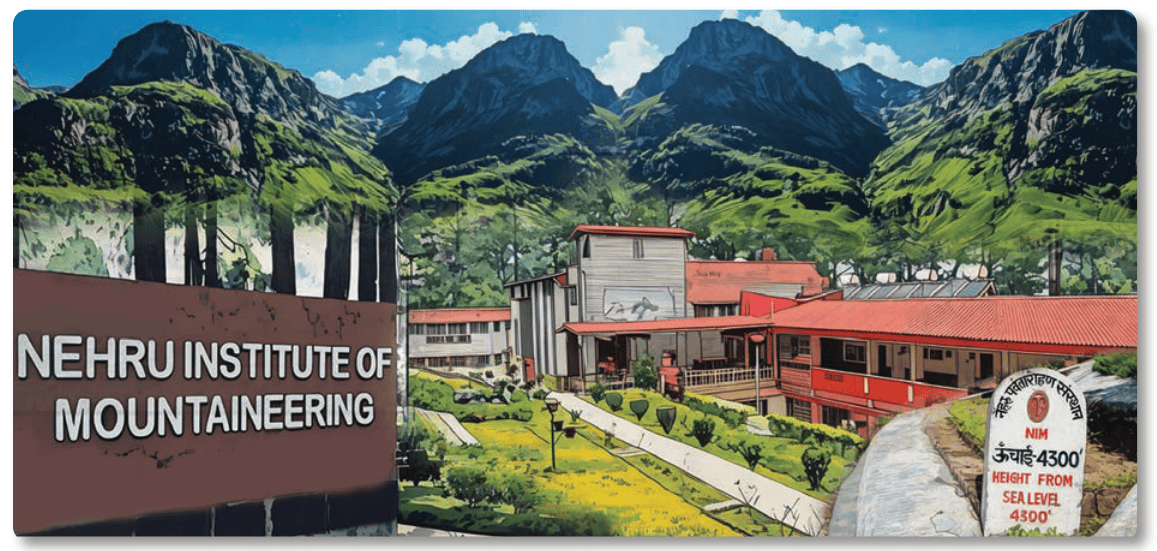 followed by eighteen months
of rigorous training. Arunima approached Bachendri Pal,
the first Indian woman to summit Everest, to guide her in the
endeavour. Bachendri Pal instilled confidence in Arunima
and said, “My child, you decided to climb Mount Everest in
these situations with a prosthetic leg—you have conquered
the Everest within you; the world will realise it later.”
followed by eighteen months
of rigorous training. Arunima approached Bachendri Pal,
the first Indian woman to summit Everest, to guide her in the
endeavour. Bachendri Pal instilled confidence in Arunima
and said, “My child, you decided to climb Mount Everest in
these situations with a prosthetic leg—you have conquered
the Everest within you; the world will realise it later.”
On 21 May 2013, after 52 exhausting days, Arunima Sinha reached the summit of Mount Everest. Standing at the top of the world, she felt a surge of emotions—pride, relief, and an overwhelming sense of achievement. She displayed the Indian flag at the summit and left behind a photograph of her idol, Swami Vivekananda, whose teachings had inspired her throughout her journey.
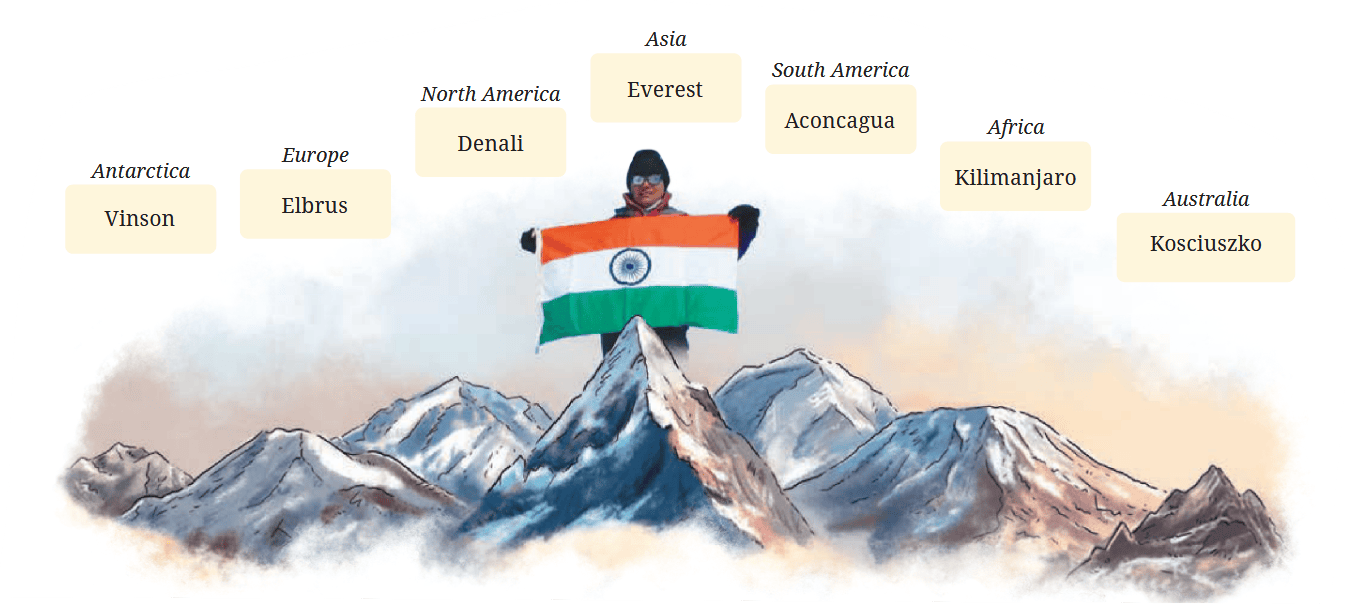
Arunima’s feat did not end with Everest. By July 2016, she had summited seven peaks in Europe, Africa, Australia, South America, North America, and of course, Mount Everest in Asia. In January 2019, she climbed the seventh peak on Antarctica and became world’s first female amputee to climb Mount Vinson. Her goal to complete the Seven Summits was achieved.

Throughout her journey, Arunima has faced numerous challenges and setbacks. Yet, her story is not just about physical endurance but also about mental fortitude and the power of a positive mind set. Her message is simple yet profound: “Never give up and work hard. Always remember your goal and work on it.”
resilience: ability to recover quickly from a difficulty
amputated: cut off a part of the body (here the leg)
prosthetic leg: an artificial leg that helps people to move around easily
feat: achievement
harrowing: extremely disturbing and painful
rigorous: severe
endeavour: an attempt to do something
surge: a sudden and great increase
endurance: (here) ability to continue doing something difficult for a long time
fortitude: courage over a long period
Arunima’s autobiography, Born Again on the Mountain: A Story of Losing Everything and Finding It Back records her incredible journey to the top of the world. It is a story of triumph over adversity, a testament to the human spirit’s capacity to rise above the most challenging circumstances.
She was conferred with the honorary doctorate by the University of Strathclyde, Glasgow, UK. In her words, “Failure is not when we fall short of achieving our goals. It is when we don’t have goals worthy enough. Never forget your goal, respect it, work hard, and you will be the winner.” Dr. Arunima Sinha has not only conquered mountains but has also won people’s hearts the world over, inspiring them to reach their own summits.

testament: proof
conferred: given an official title or honour
Let us discuss
I Read the statements given below and explain each statement in your words.
1. Arunima Sinha is considered a beacon of hope and resilience.
2. Arunima decided to climb Mount Everest despite losing her leg
3. Bachendri Pal’s guidance was crucial in Arunima’s journey to the summit of Mount Everest.
4. Arunima’s achievements go beyond just physical endurance.
5. Arunima’s autobiography inspires readers around the world.
Let us think and reflect
I Read the extracts given below and answer the questions that follow.
Bachendri Pal instilled confidence in Arunima and said, “My child, you decided to climb Mount Everest in these situations with a prosthetic leg— you have conquered the Everest within you; the world will realise it later.”
On 21 May 2013, after 52 exhausting days, Arunima Sinha reached the summit of Mount Everest. Standing at the top of the world, she felt a surge of emotions—pride, relief, and an overwhelming sense of achievement.
1. Complete the sentence with a suitable reason.
Bachendri Pal said that Arunima had conquered the Everest within her because ___________________.
2. How might Arunima have felt after what Bachendri Pal told her?
3. Choose a phrase from the extract which shows that reaching the summit of Mount Everest was tiring.
4. Select the correct option to complete the sentence.
After her success when Arunima felt ‘an overwhelming sense of achievement’, she would have most likely said, “___________________.”
- (i) I am confident of my abilities
- (ii) I will accomplish this soon
- (iii) I am excited to begin this climb
- (iv) I finally realised my dream
II Answer the following questions.
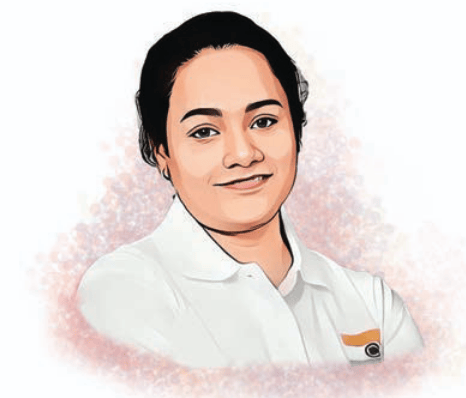
1. What did Arunima do in order to fulfill her ambition of conquering Mount Everest?
2. Arunima is a beacon of hope and resilience. Support this statement with evidence from the text.
3. Arunima’s autobiography is titled Born Again on the Mountain: A Story of Losing Everything and Finding It Back. Why do you think this title is appropriate?
4. Arunima says, “Failure is when we don’t have goals worthy enough.” What would be the most likely impact of this statement on readers?
Let us learn
I Read the underlined phrases in sentences (i)–(v) and match them with their appropriate meanings given in the box below.
- 1. genuine, sincere efforts
- 2. strength of mind
- 3. periods of time filled with tiring and demanding activities
- 4. an incident or experience that significantly changes a person’s life
- 5. a source of inspiration or encouragement
- (i) Nisha was relieved when the final match was over after several exhausting days of practice.
- (ii) Despite several failures, her heartfelt attempts to learn the guitar showed her determination and passion for music.
- (iii) Moving to a new city was a life-altering event for Jagan, as it gave him the chance to make new friends and try different activities.
- (iv) Competing in the marathon requires not just physical strength but also mental fortitude to stay focused and finish the race.
- (v) The lighthouse served as a beacon of hope for the sailors lost at sea.
II Complete the following table by filling in the gaps with correct parts of speech mentioned. An example has been done for you.
| Nouns | Adjectives | Verbs (present) | Adverbs |
|---|---|---|---|
| determination | determined | determine | determinedly |
| relief | relievedly | ||
| inspiring | inspire | ||
| resistance | resistantly | ||
| success | successful |
III Study the highlighted words in the following sentences from the text.
- • Arunima made a vow that many would deem impossible.
- • Her father was an army engineer.
- • Standing at the top of the world, she felt a surge of emotions—pride, relief, and an overwhelming sense of achievement.
- • She planted the Indian flag at the summit and left behind a photograph of her idol, Swami Vivekananda.
- • Arunima Sinha’s journey from a devastating accident to scaling the highest peak in the world stands as a beacon of hope and resilience.
The highlighted words are articles.
‘A’ and ‘an’ are indefinite articles; ‘the’ is the definite article. The choice between ‘a’ and ‘an’ depends on the sound that follows the article, specifically the initial sound of the word that follows.
1. Fill in the blanks with ‘a’, ‘an’, ‘the’. Put an ‘x’ where no article is required.
We planned (i) _______ adventurous trip to (ii) _______ remote island. (iii) _______ island was known for its beautiful landscapes and (iv) _______ diverse wildlife. On (v) _______ first day, we set out to explore (vi) _______ island’s dense jungle. (vii) _______ guide led us through (viii) _______ thick foliage and showed us (ix) _______ hidden waterfall. In (x) _______ evening, we gathered around (xi) _______ campfire to share stories and enjoy (xii) _______ meal we cooked. (xiii) _______ experience was truly unforgettable, and we felt (xiv) _______ connection with (xv) _______ nature.
2. There is an error in each sentence that has been underlined. Correct the error in the following sentences
- (i) We waited for a hour before the bus finally arrived.
- (ii) The guide insisted on an uniform jacket for the group’s safety during the trek.
- (iii) Mount K2 is a second highest peak in the world.
- (iv) A Ganga is a sacred river in India, known for its cultural importance.
- (v) Challenges are faced with courage and determination by a brave.
- (vi) A North Star has guided travellers for centuries.
Let us listen
You will listen to five speakers share their opinion about adventure sports. As you listen match the statements 1–8 with the speakers (i)–(v). There are three extra statements that you do not need. (Transcript for the teacher on pg. 177)
| Statements | Speaker no. |
|---|---|
| 1. Talks about having basic activities in adventure sports | |
| 2. Finds adventure sports thrilling and exciting | |
| 3. Praises the availability of a variety of activities | |
| 4. Expresses concern about the risks in adventure sports | |
| 5. Promotes trekking as a casual sport | |
| 6. Invites applications from first-timers | |
| 7. Focuses on the availability of training and supervision | |
| 8. Finds exposure to risks unnecessary |
Let us speak
In groups of four, select a role from 1–4 given below and speak about the views allotted to each. Use the prompts and vocabulary given. Take turns to express your opinions, agreement, and disagreement.
Role-Specific Prompts
1. School Student: Talk about why you think Physical Education should be included in school activities.
2. Parent: Discuss your concerns or support for your child participating in Physical Education activities.
3. Physical Education Teacher: Share your experiences about Physical Education activities and why you think they are valuable.
4. Sports Camp Organiser: Explain how you ensure safety and why you believe sports are beneficial for participants.
Prompts
- • In my opinion...
- • I believe that...
- • From my point of view...
- • I disagree with...
- • One reason for this is...
- • I agree with the idea that...
- • I disagree with the notion that...
- • I support this perspective because...
- • I find it hard to agree because...
Vocabulary you may use
- precautions
- unique
- experiences
- fun
- safe
- enjoyable
- thrilling
- builds
- confidence
- concern
- explore
- overcome
- fear
- participate
Let us write
Read the various components of a formal letter from the box given below.
- complimentary close
- receiver’s address
- subject
- date
- introduction
- statement of request
- expression of interest
- salutation
- signature line
- sender’s address
1. Now, read the letter given below and write the matching components.
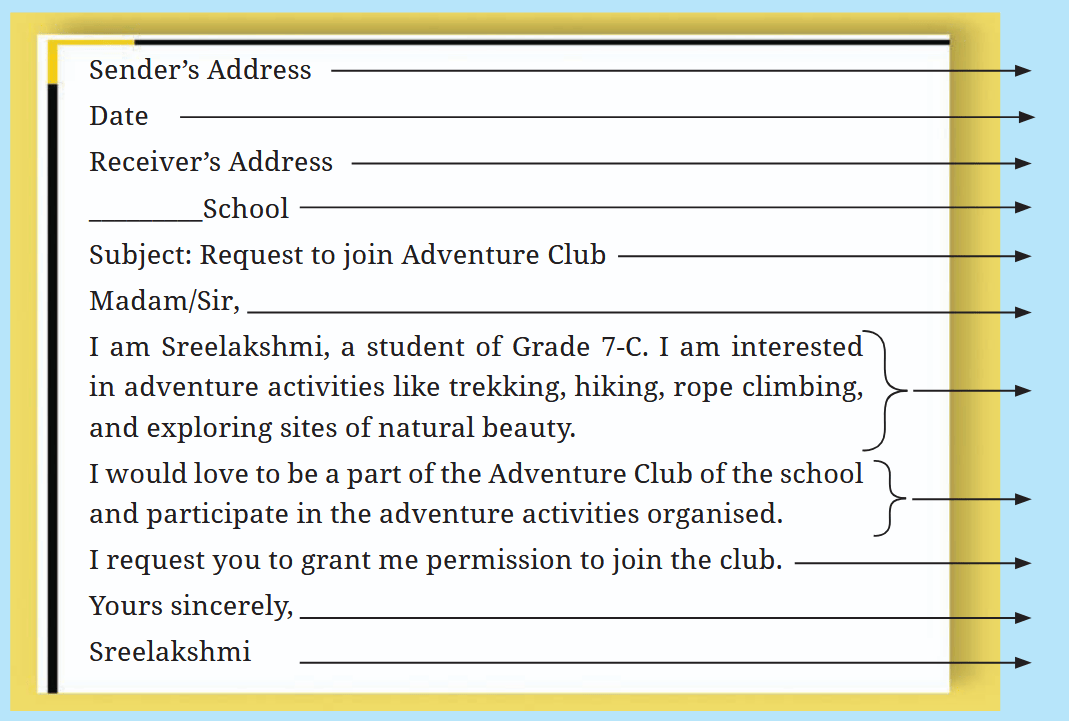
2. Write a letter to the Principal of your school requesting her to organise an excursion to a nearby hill station for Grade 7 students of your school.
Let us explore
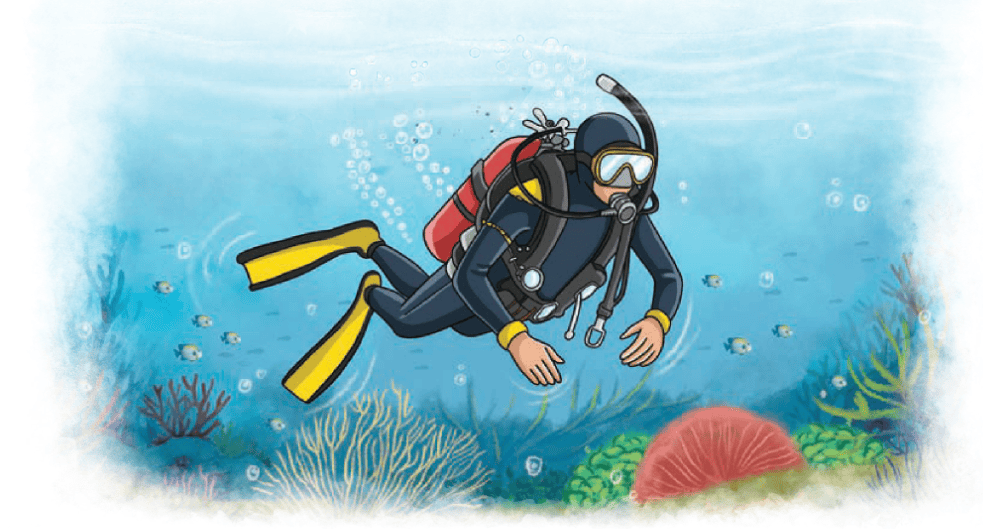
I Find out more information about the following adventure sports in our country and complete the table given below.
| Name | Area | Preferred Time of the Year | Equipment Required |
|---|---|---|---|
| snow skiing | snow- covered hills | skis, ski suit, | |
| trekking | Spring, Autumn,Winter | pole | |
| camping | grassy areas | tent, torch, | |
| river rafting | all year round | ||
| scuba diving | scuba suit,mask, fins, |
II Prepare an information booklet with fact sheets of five Indian mountaineers. Include the following information in the fact sheet.
- 1. name (and photograph, if available)
- 2. place of birth
- 3. profession
- 4. accomplishments—awards or honours
- 5. training received
- 6. sport known for (if any)
TRANSCRIPTS
TUNNEL
Let us listen(refer to page 153)
A famous museum in your town is organising a treasure hunt in the museum premises. You and your friends decide to participate in it. Upon arrival, you find that there are many other teams. Each team is given an audio guide (recorded information) and a map to the museum.
- 1. Look at the map given below. Try and predict what each of the rooms might be.
- 2. Listen to the audio recording and as you listen, mark your map with the route to take to find the treasure. To help you, the names of a few rooms in the museum are given below. Now listen to the audio and mark the various rooms.
Welcome to the City Museum. We start our tour at the entrance hall. Here you will find the information booth and a display devoted to the history of this museum. To the right of the Entrance Hall you will find the (i) library. On the left is the museum shop. Go straight from the Entrance Hall till you reach the (ii) Art Gallery. The gallery is famous for its collection of rare paintings from various parts of India. There are three doors that lead out of the Art Gallery. The first door on the left leads to the Decorative Art Gallery, where you will find items like jewellery, carvings, and textiles from Medieval India. The next door is temporarily closed due to renovation work. The third door on the right leads to the (iii) Weapons Room, where you will find an extensive collection of Indian weapons including bows, swords, shields, and helmets. From the weapons room take a left turn. You will find the world-famous (iv) Musical Instruments Section, where you can find musical instruments from every country in the world. The second room to the left in this gallery will take you to the (v) Auditorium. Hidden here is your treasure! All the best to all. May the best team win!
TRAVEL
Let us listen(refer to page 162)
1. Listen to this announcement made in the morning assembly about a school trip to the National Science Centre. As you listen, circle the words that are not correct.
Good morning students!
I have some very exciting news to share with you all. The much- awaited educational trip to the National Science Centre will be held on 16 September, that is in two weeks! As you know this would be a fantastic opportunity to explore and learn more about the world around us.
We will be starting from school at 8.00 in the morning and return by 5.30 in the evening. All of you must be in proper school uniform. Don’t forget to carry your identity cards. Light refreshments will be provided at the museum. But do carry a water bottle and a packed lunch. You are not permitted to wear any jewellery or carry mobile phones. You may carry a notebook and a pen to make notes. Interested students must bring a permission slip signed by your parent and submit them to their class teachers by 10 September. It is going to be a fun trip so don’t miss out. If you have any more questions, please contact Mr. Mukherjee, the excursion in-charge.
2. Now, listen to the announcement again and rectify the sentences.
CONQUERING THE SUMMIT
Let us listen(refer to page 173)
You will listen to five speakers share their opinion about adventure sports. As you listen match the statements 1–8 with the speakers (i)–(v). There are three extra statements that you do not need.
Speaker (i): As a parent, I fear the risks involved, especially with activities like rock climbing or paragliding. I’m quite worried about the safety risks of adventure sports. It’s important to consider these risks before letting children participate.
Speaker (ii): Adventure sports are thrilling! All my friends agree; it is amazing. It’s not just about fun; it’s about pushing your limits and experiencing something new. I think it’s worth trying, of course, with a trainer.m these trees, is really special. It smells amazing—like a mix of woody and flowery scents. It is one of the rarest and the most expensive woods in the world. People have used it for thousands of years in medicines, perfumes and rituals. It has been described as early as 1400 BCE in the Vedas. The Egyptians are believed to have used agarwood incense as part of their rituals more than 3,000 years ago.
Speaker (iii): As organisers of adventure camps, we take safety very seriously. Our team ensures all equipment is regularly checked and maintained. Participants are given thorough training and are always supervised by professionals. We focus on minimising risks while still providing an exciting experience.
Speaker (iv): At our school, we organise adventure camps with activities like trekking and zip-lining. However, we stick to basic sports that are safe and manageable for students. We always prioritise safety, ensuring that all necessary precautions and measures are in place. Being careful is what we promote.
Speaker (v): In my opinion, sports should be about fitness and enjoyment, like track and field or swimming. Why risk your life for a fleeting moment of thrill just for a feeling of adventure? Traditional sports are safer and just as fulfilling!