
UNIT 5
BRAVEHEARTS
A HOMEAGE TO OUR BRAVE SOLDIERS
Let us do these activities before we read.
I. Homage means ‘something that is said or done to show respect publicly for someone’. Whom should every Indian pay homage to? Share your answers with your classmates and the teacher.
II. Work in pairs to complete the table by writing any three ways in which we can celebrate the victories and honour the sacrifices of the soldiers. An example has been done for you. Share your answers with your classmates and the teacher.
| Celebrating their Victories | Honouring their Sacrifices |
|---|---|
| visiting a war memorial | |
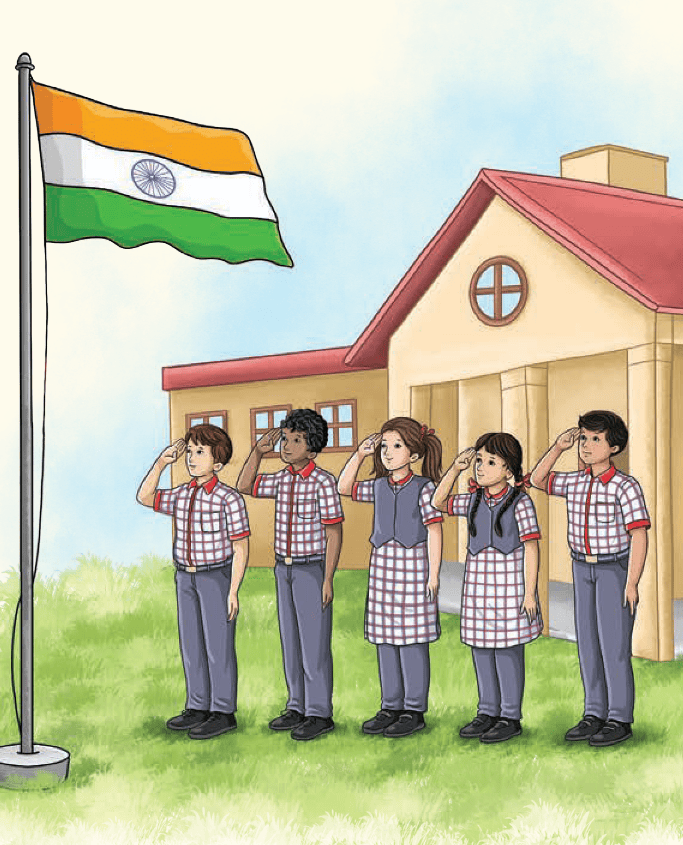
Let us read
Two friends share their feelings about brave soldiers. One of them shares her experience of visiting the National War Memorial that has left a deep impact on her. They exchange letters and share their feelings of gratitude for the freedom they enjoy because of the sacrifices made by the bravehearts of the country. The memorial symbolises the patriotism of Indian soldiers. Which is this memorial?
I
House No…
Jayanagar
Bengaluru
14 April 20XX
Dear Ananda,
Hope you are all doing well!
Do you remember our last conversation about war and the importance of peace? We talked about how India had to struggle for its Independence from the British for many centuries. Post-independence our country has had to fight several wars to protect its borders, territorial integrity, and its people. This made me wonder, who were these brave Indian people? They fought to protect our country and sacrificed their lives so that we could lead our lives in peace. What were their names? Where did they come from? Does anyone remember anything about them?
Last week I got the answers to some of my questions during an educational trip to New Delhi organised by our school. You may recall, I was looking forward to this trip and our visit to many places of historical and educational significance. I learnt several new and interesting things, and I am excited to share them with you.
Let me begin by asking you to guess the name of the monument that I found most inspiring. Let’s see if you can guess. The construction of this monument started in April 2018 and was completed in February 2019. It was envisioned and then inaugurated by India’s Prime Minister Shri Narendra Modi in February 2019. In terms of location and size, it is spreadover 40 acres of land near the iconic India Gate. But more importantly, it is a tribute to some of the bravest Indians. I’m sure you’ve guessed! It’s the ‘National War Memorial’. Won’t you say, a long-desired aspiration was fulfilled?
envisioned: visualised
iconic: celebrated
tribute: showing respect, gratitude
Our visit to the National War Memorial began with our teacher explaining that even after Independence, India has had to fight many wars to protect herself, and the freedom and security we enjoy today is because of the many brave men and women who have served in the Indian Armed Forces over decades. Sadly, she said, war always takes its toll, and therefore, many brave soldiers have had to sacrifice their lives for the country even after our Independence in 1947.
This is what makes monuments like the National War Memorial extremely important, so that we should never forget the cost of freedom. We are aware, always, of the pain and horrors of war. We learnt that each brick of the memorial is called a tablet, and it bears the names of soldiers who fought for India and made the supreme sacrifice in different wars from 1947 till date, including the Indo-China conflict of 1962, the Indo- Pak Wars in 1965 and 1971 and the Kargil War in 1999. There are 29,000 tablets on which more than 26,000 names of fallen soldiers have been etched.
It was heartening to know that our government has recognised the sacrifice of brave soldiers. Our teacher told us about the 21 bravehearts who were awarded the Param Vir Chakra (PVC), India’s highest wartime gallantry medal, for their service to the nation. She also told us about Maha Vir Chakra (MVC), Kirti Chakra (KC), Vir Chakra (VrC), and Shaurya Chakra (SC).
Major Somnath Sharma was posthumously awarded India’s first PVC in the Battle of Badgam in 1947. Later some more PVCs were awarded for exceptional gallantry during the India- China Conflict of 1962, and the India-Pakistan War of 1965. Besides, a PVC was also awarded for service during the UN Peace Keeping Operations in Congo.
In the 1971 war, some of the heroes who were awarded the PVC (posthumously) include Lance Naik Albert Ekka, Flying Officer Nirmal Jit Singh Sekhon, Second Lieutenant Arun Khetarpal, and Major Hoshiar Singh. Some Navy personnel including Captain Mahendra Nath Mulla were also awarded MVC for their exemplary courage and leadership.
Then the teacher shared with us the citation of Param Vir Chakra awardee Lance Naik Albert Ekka. It touched my heart and also motivated me. We were awestruck and humbled by his bravery. I aspire to be courageous like him when I join the army!
posthumously: after death
citation: meritorious performance of duty
awestruck: amazed
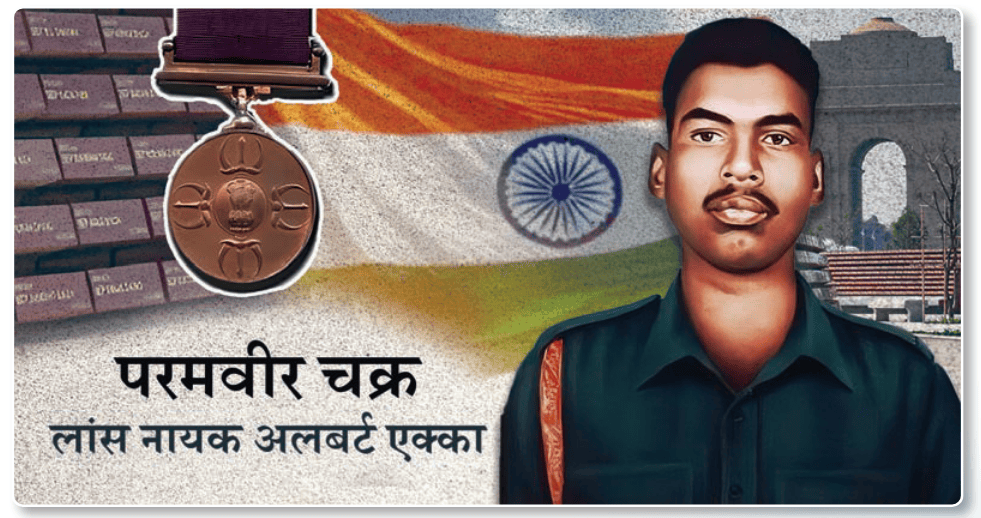
CITATION
Lance Naik Albert Ekka, (No. 4239746), 14 Guards
Lance Naik Albert Ekka was in the left forward company of a Battalion of the Brigade of Guards during their attack on the enemy defence at Gangasagar on the eastern front. This was a well-fortified position held in strength by the enemy. The assaulting troops were subjected to intense shelling and heavy small arms fire, but they charged on to the objective and were locked in bitter hand-to-hand combat. Lance Naik Albert Ekka noticed an enemy Light Machine Gun inflicting heavy casualties on his company. With complete disregard to his personal safety, he charged the enemy bunker, bayoneted two enemy soldiers and silenced the Light Machine Gun. Though seriously wounded in this encounter, he continued to fight alongside his comrades through the mile deep objective, clearing bunker after bunker with undaunted courage. Towards the northern end of the objective, one enemy Medium Machine Gun opened up from the second storey of a well-fortified building inflicting heavy casualties and holding up the attack. Once again, this gallant soldier without worrying about his personal safety, despite his serious injury and the heavy volume of enemy fire, crawled forward till he reached the building and lobbed a grenade through the loophole of the bunker, killing one enemy and injuring the other.
The Medium Machine Gun, however, continued to fire. With outstanding courage and grim determination, Lance Naik Albert Ekka scaled a side wall and entering the bunker, bayoneted the enemy who was still firing and thus silenced the Machine Gun, saving further casualties to his company and ensured the success of the attack.
In this process, however, he received serious injuries and succumbed to them after the capture of the objective. In this action, Lance Naik Albert Ekka displayed the most conspicuous valour, determination and made the supreme sacrifice in the best traditions of the Army. (Gazette of India Notification No. 7– Pres./72)
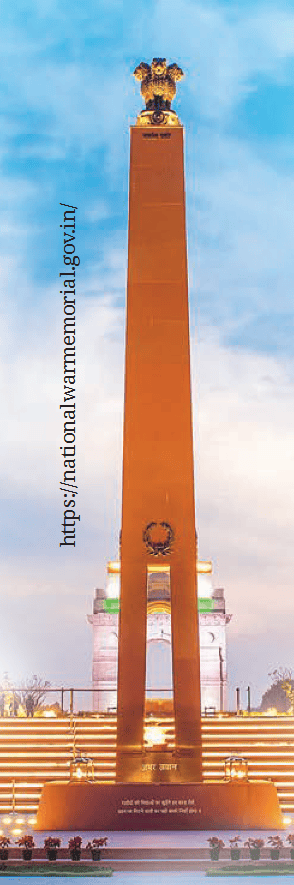
As we continued our visit around the National War Memorial, we came across another important installation called Amar Jawan Jyoti that commemorates our soldiers. The name, as you may have guessed, represents an immortal flame that is kept ablaze all through the day and night to revere the sacrifices of our soldiers. Earlier the Amar Jawan Jyoti, which also displayed a rifle and a helmet, was alighted under the arch of India Gate in January 1972 to commemorate India’s victory in the India-Pakistan War of 1971.
The National War Memorial now includes Amar Jawan Jyoti in the obelisk, which is surrounded by four Chakras. During the inauguration, the Prime Minister lit a new flame to commemorate the fallen heroes. Later, the old flame at India Gate was also merged with the new flame at the National War Memorial. Here is a picture of the new Amar Jawan Jyoti if you haven’t seen it.
 https://www.nationalwarmemorial
.gov.in/
https://www.nationalwarmemorial
.gov.in/
You can see the obelisk surrounded by wreaths that have been placed as a mark of respect. The lighting design is planned in such a way that it transforms the monument’s landscape as sunlight changes from dawn to dusk. It truly is a majestic site that filled me with pride for our nation. I was also overwhelmed by the interminable flame as a metaphor for eternal stories of courage and valour.
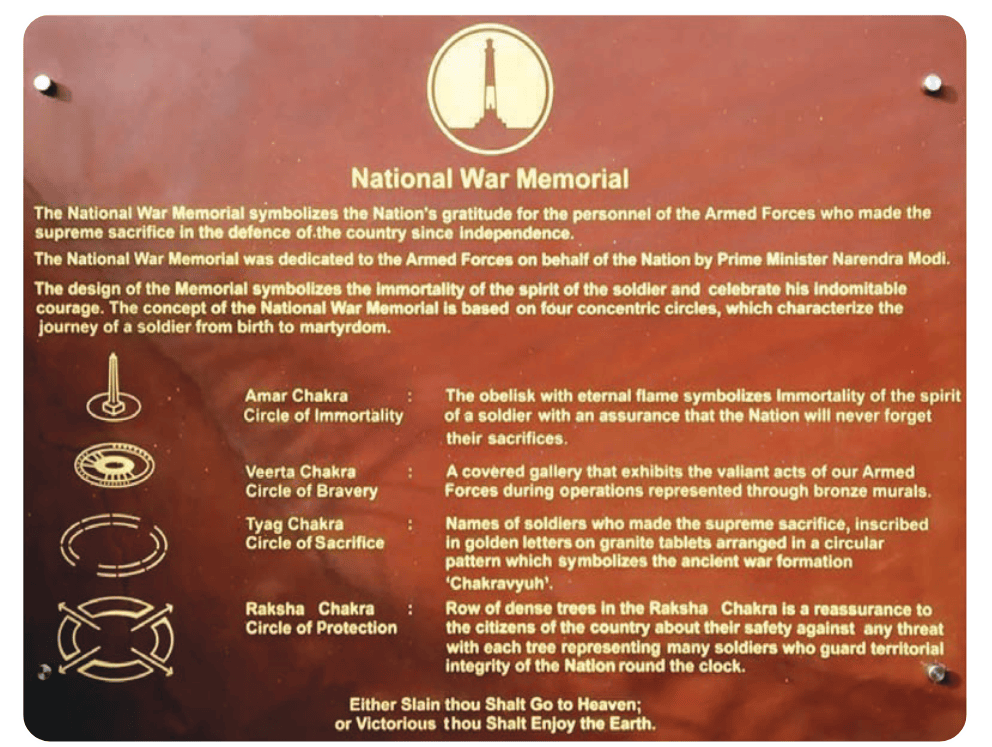
The National War Memorial consists of four concentric circles, which are known as Amar Chakra, Veerta Chakra, Tyag Chakra, and Raksha Chakra around a 15-metre-tall central obelisk with the eternal flame—the Amar Jawan Jyoti. It also houses bronze and stone murals and graphic panels. Isn’t it amazing!
The innermost circle represents the Amar Chakra, also known as the ‘Circle of Immortality’. This has the Obelisk with Eternal Flame. The Amar Jawan Jyoti flame symbolises the immortality of the spirit of fallen soldiers with the assurance that the nation will never forget their sacrifice.
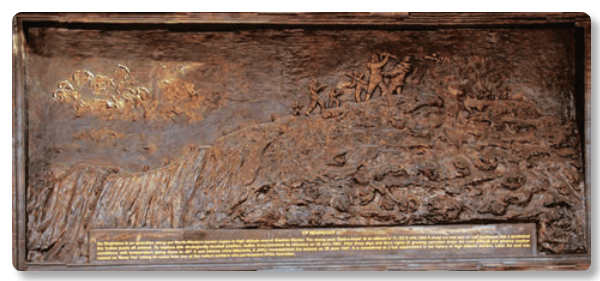
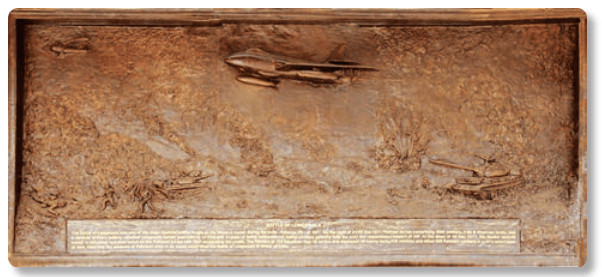
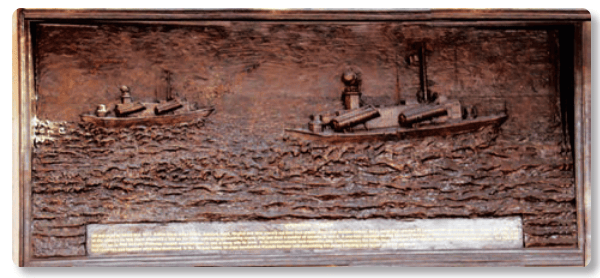
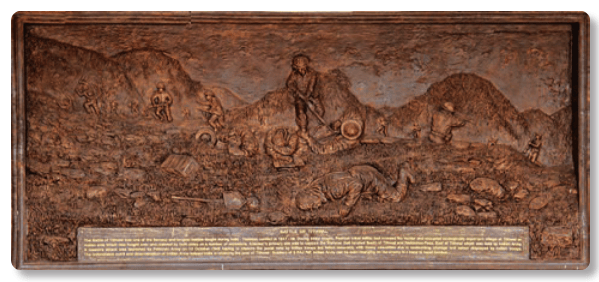
The second circle is called the Veerta Chakra, which is also known as the ‘Circle of Bravery’. There is a covered gallery that exhibits six murals crafted in bronze, depicting valiant battle actions of our Armed Forces.
The third circle represents the Tyag Chakra, also known as the ‘Circle of Sacrifice’. The circular concentric walls of honour symbolise the ancient war formation, which is called Chakravyuh. The walls are covered with granite tablets
 https://www.mygov.in
and individual tablet is solely dedicated to each fallen hero of post- Independent India. Their names are etched in golden letters.
The outermost circle represents the Raksha Chakra, which is also known as the ‘Circle of Protection’. In this chakra the row of trees is a reassurance to the citizens of the country about their safety against any threat. Each tree represents the soldiers who ensure the territorial integrity of the nation.
We spent the whole day, from morning to evening, at the National War Memorial and the surrounding areas, marked by majestic lawns and grand buildings of Kartavyapath. We were immersed in the ambience that was solemn and a reminder of what a free nation could achieve. The overall environment created an emotive experience that was visually inspiring. I felt as if I had developed a bond with the place.
I learnt a lot, but I also have to admit that the various discourses during the day brought tears to my eyes. It was sad to think about the massive devastation and loss of life caused by wars. It motivated me to live a life worthy of the sacrifices of our heroes.
obelisk: tapering stone pillar
wreaths: circular arrangement of flowers used as a respect and remembrance for a person who has died
interminable: everlasting
murals: large paintings on a wall
discourses: serious discussions on different topics
After our visit, the class decided to make presentations on stories of valour of the bravehearts we came across at the National War Memorial. We divided ourselves into five groups. We decided to make presentations depicting the courageous stories of the soldiers. Our teacher has also advised us to share our experience during the school assembly. I am delighted that all the students of our school will get to know about the National War Memorial and the soldiers it commemorates.
I am going to give a presentation on the story of Major Padmapani Acharya, who fought for India in the 1999 Kargil War and was awarded the Maha Vir Chakra.
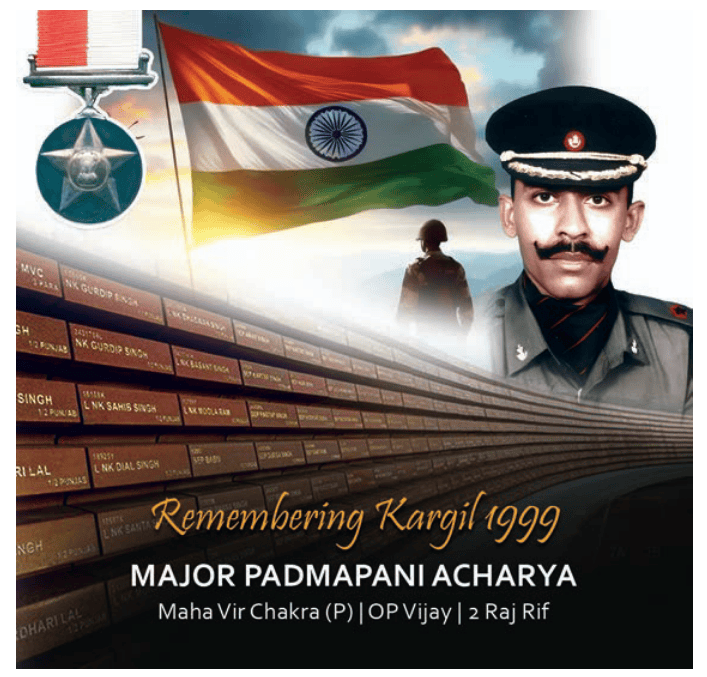
The citation for the Maha Vir Chakra reads as follows:
GAZETTE NOTIFICATION: 17 PRES/2000,15.8.99 OPERATION: OP VIJAY-KARGIL DATE OF WARD: 15 AUG 1999
MAJOR PADMAPANI ACHARYA (IC-55072) 2 RAJPUTANA RIFLES
(POSTHUMOUS)
On 28 June 1999, Major Padmapani Acharya as a Company Commander, was assigned the formidable task of capturing an enemy position which was heavily fortified, strongly held and covered with mines and sweeping machine gun and artillery fire
Success of the battalion and brigade operation hinged on the early capture of this position. However, the company attack almost faltered at the very beginning when the enemy’s artillery fire came down squarely on the leading platoon, inflicting large number of casualties.
With utter disregard to his personal safety, Major Padmapani Acharya took the reserve platoon of his company and led it through raining artillery shells. Even as his men were falling to the murderous enemy fire, he continued to encourage his men and charged at the enemy up the steep rock face with his reserve platoon.
Unmindful of the hail of bullets from the enemy’s position, Major Padmapani Acharya crawled up to the enemy position and lobbed grenades. In this daring assault, Major Acharya was severely injured. Despite being seriously injured and unable to move, he ordered his men to leave him and charge at the enemy while he continued to fire at the enemy. The enemy position was finally over-run and the objective was captured.
After completion of the mission, the officer however, succumbed to his injuries.
Major Padmapani Acharya displayed exceptional courage, leadership and spirit of self-sacrifice in the face of the enemy.
https://www.gallantryawards.gov .in/awardsBefore he went into battle, he wrote a letter to his father that he wasn’t afraid or scared about losing his life while trying to protect the motherland. Quoting Shrimad Bhagavad Gita he went on to say:
हता वा प्राप्स्यसि स्वर्ग जित्वा वा भाक्ष्यस महाम्।
तस्मादत्तिष्ठ कौन्तेय युद्धाय कृतनिश्चयः ।।2.37।।
Hato vā prāpsyasi svargaṃ jitvā vā bhokṣyase mahim Tasmāduttiṣṭha kaunteya yuddhāya kṛtaniścayaḥ
If you fight, you will either be slain on the battlefield and go to the celestial abode, or you will gain victory and enjoy the kingdom on the earth. Therefore, arise O, son of Kunti! Be determined to fight.
Here is the website link for National War Memorial https://www.mygov.in. Share it with your friends to learn more about it.
We reached Bengaluru yesterday. I have written a long letter as I could not help sharing this inspiring experience with you.
Give my regards to your mom and dad. I miss your mom’s chhole bhature. You know I am a foodie! Say hello to Amit.
Your friend,
Soumya
Let us discuss
I Complete the table given below. An example has been done for you. Check your answers with the teacher.
| Name of the War Hero | Contribution and Achievement | Award Given |
|---|---|---|
| Major Somnath Sharma | Battle of Badgam in 1947 | First Param Vir Chakra awarded posthumously |
| Captain Mahendra Nath Mulla | ||
| Lance Naik Albert Ekka | ||
| Major Padmapani Acharya |
II Find the paragraph(s) and sentences in the text that evoke the feelings given below.
- 1. feeling of wonder
- 2. heartening
- 3. sense of motivation
- 4. pride
- 5. visually inspiring
- 6. sadness
- 7. gratitude
- 8. inspiration
III Which is India’s highest gallantry award?
IV How would Ananda feel after reading this letter?
V Do you think Soumya enjoyed writing this letter? Why or why not?
II
House No…
Chandigarh
24 April 20XX
Dear Soumya,
It was such a pleasure to receive your letter. I enjoyed reading your experience of the visit to the National War Memorial in Delhi, as well as your observations and feelings during the visit. You really have an eye for detail, and being the sensitive person that you are, you have been able to capture the essence of the emotions associated with this memorial.
I was happy to hear that you got an opportunity to visit the National War Memorial. I have heard a lot about it. Some people might see a war memorial as just a monument, statue, an edifice to celebrate our war heroes or victory and commemorate those who lost their lives or got injured in the war. In my view, it is also an expression of deep gratitude for the supreme sacrifice made by our brave soldiers defending the sovereignty and integrity of the country. I feel motivated and I am seriously thinking of joining the Armed Forces to serve my motherland.
I also feel it is our duty to periodically visit such places to honour our valiant soldiers, who have made great sacrifices for us. Their sacrifices enable us to walk freely in our country without fear of enemy threats. It is nice of your teacher and school to arrange this visit to give you all a chance to learn about India’s heroes and also pay your respect to them. The idea of your class to make a presentation at the school and make everyone a part of your experience is wonderful! Best of luck for your presentation, I hope it goes well and motivates the school students to join the Indian Armed Forces.
valiant: very brave
Your letter has reminded me of a time when we visited the war memorial in our city. While visiting one of Chandigarh’s gardens, we saw a lot of activity around the Bougainvillea Garden in Sector 3. As we approached the garden, we saw people offering flowers and prayers. We joined the group out of curiosity and quickly realised that they were all there to pay respect to the soldiers at the War Memorial located in the heart of the garden.
When I think back about my visit where everyone was dedicating flowers as a mark of respect to our soldiers, I was reminded of the following poem:
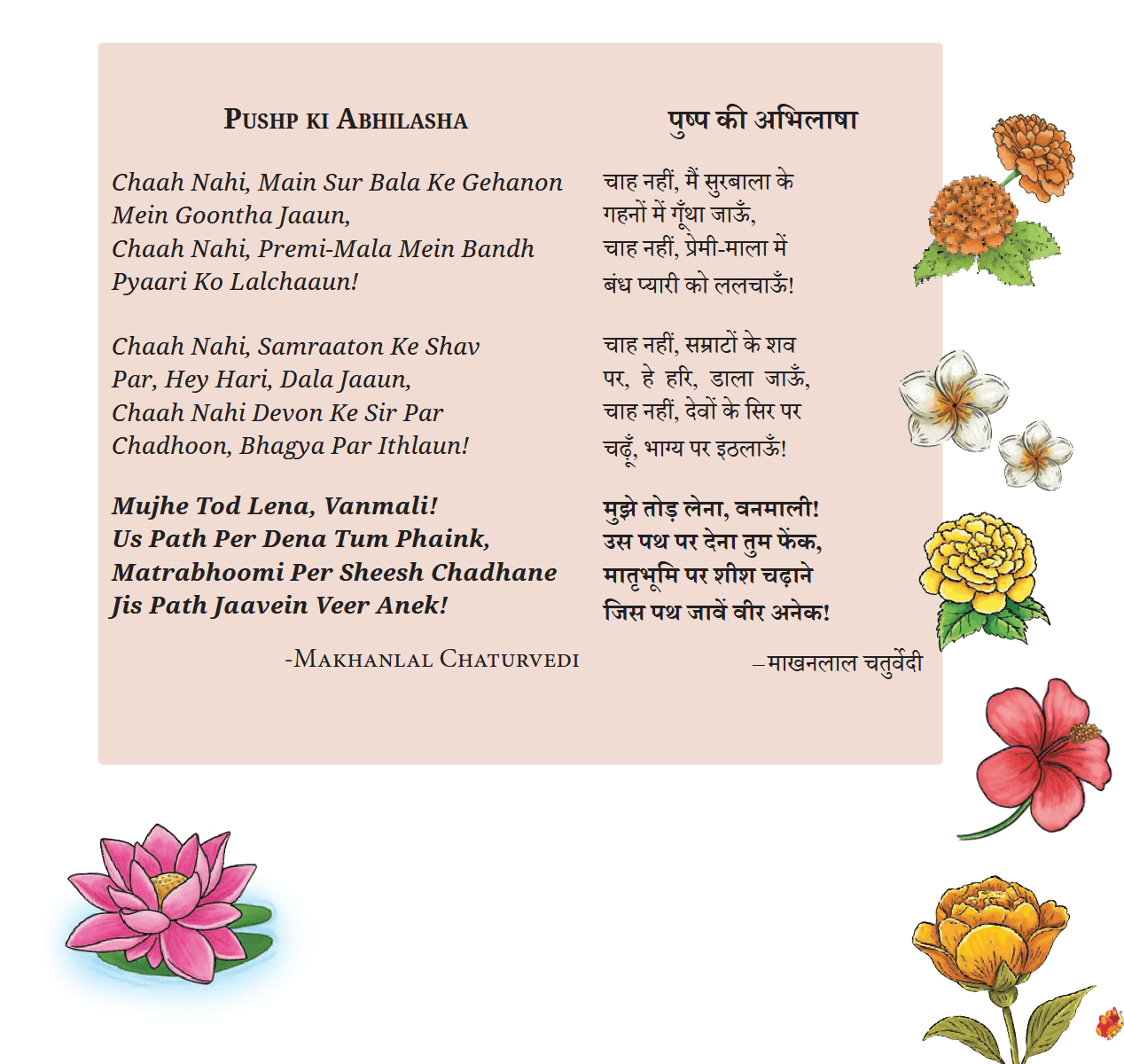
I hope you like the poem. I must say, I was inspired by your idea of presenting the valourous stories of India’s soldiers. There are so many stories of courage, bravery and sacrifice which remind us that many of the challenges we face in our lives are inconsequential. We can enjoy peace in our country and the luxury of exchanging ideas with our friends because our Armed Forces are alert and work hard to create that environment for us.
Very recently, I read in the newspaper that Captain Anuj Nayyar, MVC, an Indian Army officer of the 17 Jat regiment was posthumously awarded the Maha Vir Chakra, India’s second highest gallantry award, for exemplary valour during the Kargil War in 1999. I look forward to learning more about him. Meanwhile, I learnt that his mother Meena Nayyar has written a memoir titled Tiger of Drass– Capt. Anuj Nayyar – 23 – Kargil Hero, which I shall certainly go through. I am sharing with you an excerpt of her interview with IANS.
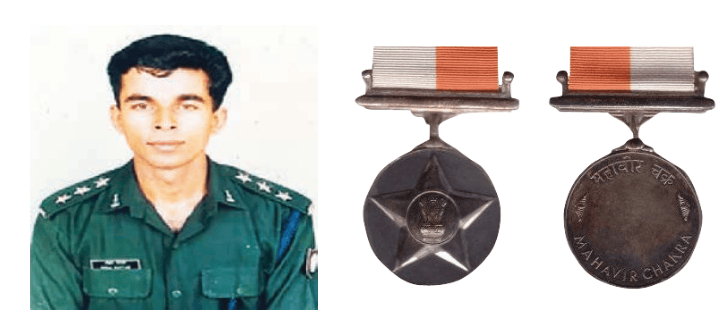
Published on: 13 April 2022, 1:59 p.m.
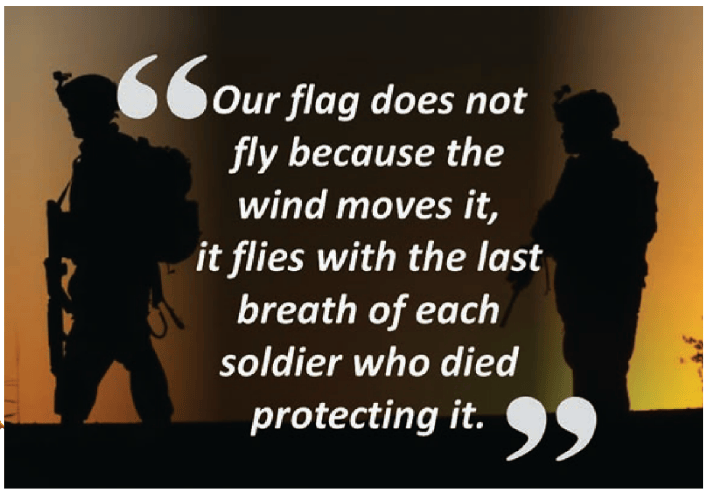
I have shared your experience with many of my friends. We all wish to visit the National War Memorial, Delhi. We have found out a mobile app ‘National War Memorial and Museum’. This app is very interactive and provides answers to our queries in 21 languages. The murals on the walls are enchanting. A great learning experience indeed!
Next week, I am going to share this idea with my classmates and my teacher. I think it would be great to create a collage capturing the lives and stories of people that can inspire us each day.
I know that we can email each other. I really like to receive letters from you, not just because of the ideas that you share but also because the envelope of your letters often comes with beautiful stamps, which make me happy. I don’t know if I ever shared it before, but collecting stamps is one of my favourite hobbies. I’ve been doing it for years. But I learnt recently that the act of collecting stamps is called ‘philately’. This time I received a stamp that celebrates India’s independence, a theme related to your letter.
Okay, that’s all from me for now. But before I conclude, guess what we had for breakfast! Fluffy idlis and we all remembered you. Give my regards to your parents.
I am inspired by your letter!
Hope to hear from you soon about your new adventures and experiences.
Best wishes,
Ananda
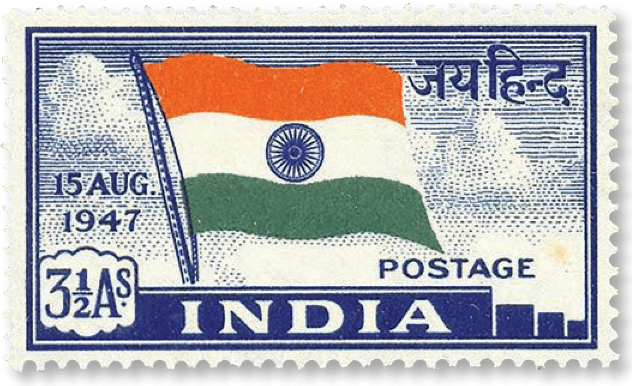
Let us discuss
I Why was Ananda reminded of the poem ‘Pushp ki Abhilasha’?
II How does Soumya’s letter help Ananda in pursuing her hobby?
III Ananda is inspired to act after reading the letter from Soumya. What actions does she intend to take up? Fill in the table citing the sentences from the text.
| 1. | visit | |
| 2. | mobile app | |
| 3. | sharing ideas | |
| 4. | creating a collage | |
| 5. | joining the army | |
| 6. | website |
Let us think and reflect
I Read the extracts given below and answer the questions that follow.
1. You can see the obelisk surrounded by wreaths that have been placed as a mark of respect. The lighting design is planned in such a way that it transforms the monument’s landscape as sunlight changes from dawn to dusk. It truly is a majestic site that filled me with pride for our nation. I was also overwhelmed by the interminable flame as a metaphor for eternal stories of courage and valour.
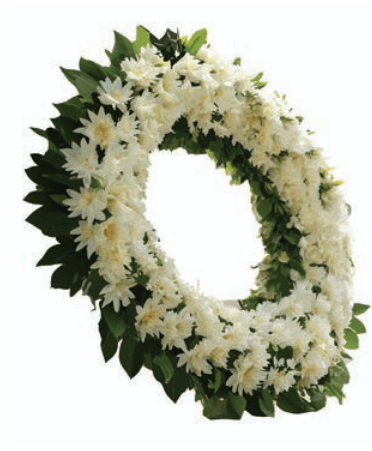
- (i) Complete the analogy with a word from the extract. flame: valour:: wreath: ______________
- (ii) How does the lighting design make the monument visually appealing?
- (iii) State whether the following sentence is a fact or an opinion.
- It truly is a majestic site…
- (iv) What does the everlasting flame suggest?
- (v) Choose the correct option to complete the sentence.
- The tone of the writer in this extract is ______________.
- A. modest
- B. light-hearted
- C. admiring
- D. nostalgic
2. I was happy to hear that you got an opportunity to visit the National War Memorial. I have heard a lot about it. Some people might see a war memorial as just a monument, statue, an edifice to celebrate a war or victory and commemorate those who sacrificed their lives or got injured in the war. In my view, it is also an expression of deep gratitude for the supreme sacrifice made by our brave soldiers defending the sovereignty and integrity of the country.
(i) Choose a line from the extract which shows that Ananda was aware about the National War Memorial.
(ii) What might be the most likely reason for people to consider a war memorial as a monument?
(iii) Fill in the blank with a suitable word from the extract.
We conduct special competitions at school to ______________ our Independence day.
(iv) Select a phrase from the extract showing that Ananda is expressing an opinion.
Complete the sentence with a suitable reason.
Ananda refers to the sacrifice of soldiers as ‘supreme’ sacrifice because ______________.
II Answer the following questions.
1. What does Sunder Singh convey by saying that he has lent his tunnel to the Government?
2. According to Sunder Singh, “It is safer in the forest than in the town”. What example does Sunder Singh give to support his opinion? What does this tell us about him?
3. Sunder Singh has become part of the jungle life. Support the view with a suitable reason.
4. Sunder Singh and Suraj form an unlikely friendship. What draws them together?
5. Why is Sunder Singh referred to as a ‘firefly’?
6.Do you think Suraj is an adventure-loving boy? Give reasons.
Let us learn
Study the following words taken from the text.
disregard, inconsequential, immortal, undaunted
These words are made by adding word beginnings like dis-, in-, im- and un- to the root words regard, consequence, mortal, and daunt respectively. Such word beginnings are called prefixes.
- • dis-+regard
- • in-+consequential
- • im-+mortal
- • un-+daunted
I Match the prefixes with their meanings and the root words to create a new word in the table given below. An example has been done for you.
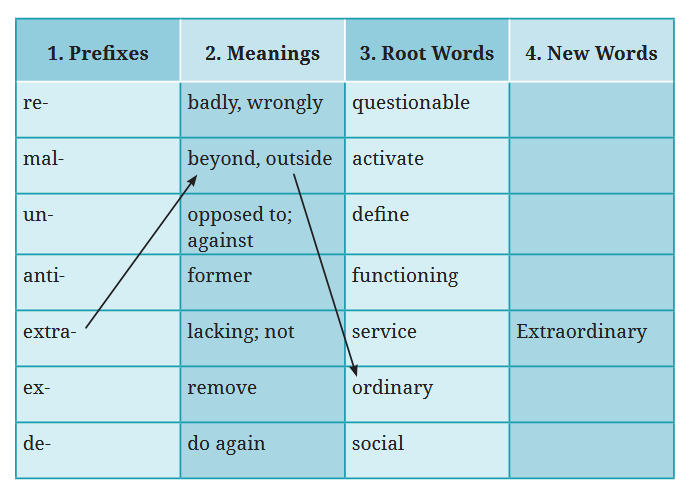
Now, complete the paragraph by using the new words created in the table.
Soldiers undergo (i) extraordinary training to prepare for their challenging duties. They learn to (ii) ____________ explosives and handle (iii) ____________ equipment with precision. They stand as a powerful force against (iv) ____________ elements, displaying (v) ____________ bravery. (vi)________ members often share their experiences to inspire new recruits. Their service can continually (vii) ____________ the essence of commitment and sacrifice.
II Find words associated with ‘brave’ by filling in the missing vowels in the boxes given below.
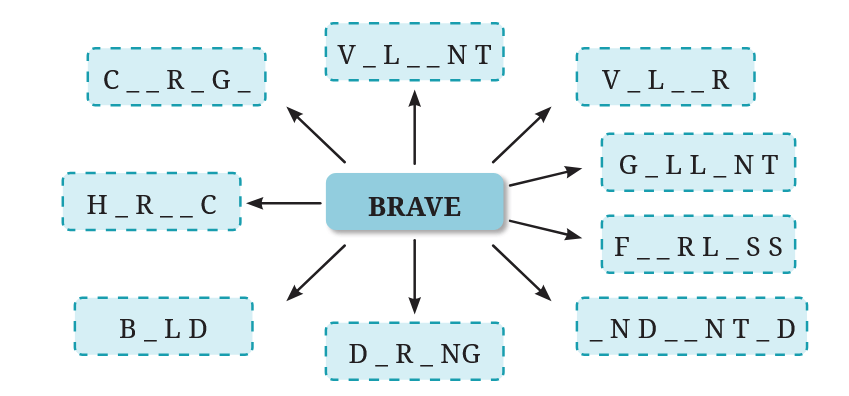
III Fill in the blanks with the correct opposite words of ‘brave’ from the box to complete the following sentences.
1. Ajay’s ____________ refusal to stand up for his friend was disappointing to everyone.
2. The ____________ child hid behind his mother, too scared to meet the new teacher.
3. Anjali’s ____________ of heights prevented her from climbing the tall ladder.
4. Sushma felt ____________ as she entered the dark, abandoned building alone.
fear
cowardly
timid
afraid
IV Read the following sentences from the text and divide them into two parts. An example has been done for you.
- 1. I aspire to be courageous like him when I join the army!
- 2. They exchange letters and share their feelings of gratitude for the freedom they enjoy because of the sacrifices made by the bravehearts of the country.
- 3. Though seriously wounded in this encounter, he continued to fight alongside his comrades.
- 4. The sacrifices of the soldiers make monuments like the National War Memorial extremely important so that we should never forget the cost of freedom.
| Part 1 | Part 2 |
|---|---|
| I aspire to be courageous like him | when I join the army! |
When the part of a sentence conveys complete meaning and is independent, it is called main clause. The part of the sentence which is dependent on the main clause to make complete sense is the subordinate clause.
The words or phrases that connect the two parts of sentences such as, when, because, though, so that─convey a specific meaning─time, reason, contrast, purpose, respectively. Connecting words are called subordinating conjunctions.
V Combine the following pairs of sentences using suitable subordinating conjunctions given in the box below.
- because
- unless
- when
- where
- though
- 1. Wasi burst into tears. He heard the good news.
- 2. Himani was very nervous. She delivered a great presentation.
- 3. This is the place. I was born.
- 4. The students performed very well. They studied diligently.
- 5. Water the plants. They will die.
VI Complete the following sentences with suitable main clause or subordinate clause.
- 1. Farheen was late to work because ________________.
- 2. The dog started barking when ________________.
- 3. She completed the marathon although ________________.
- 4. ________________ while they were hiking in the mountains.
- 5. Abhishek received a promotion after ________________.
- 6. ________________ before the deadline approached.
- 7. We waited in the car until ________________.
- 8. ________________ as the waves rushed to the shore.
Let us listen
You will listen to a girl speak about why she wishes to join the Armed Forces when she grows up. As you listen, answer the questions given below in two–three exact words you hear. (Transcript for the teacher on pg. 223)
- 1. What type of job does Gunjan think the Armed Forces is?
- 2. What feature of the Armed Forces fills Gunjan with pride?
- 3. How does the disciplined life of the Armed Forces impact the body and mind, according to Gunjan?
- 4. List any one aspect about a job in the Armed Forces that Gunjan feels helps someone grow.
- 5. State any two things that Gunjan feels life in the Armed Forces teaches.
Let us speak
1. Work in pairs and identify the different professions displayed in the picture.
2. Imagine that you dream of or wish to pursue some of these professions and vocations. Take turns to express this along with a reason. Do not forget to include what preparation would be required to fulfill the dream. Speak about all the given professions and vocations.
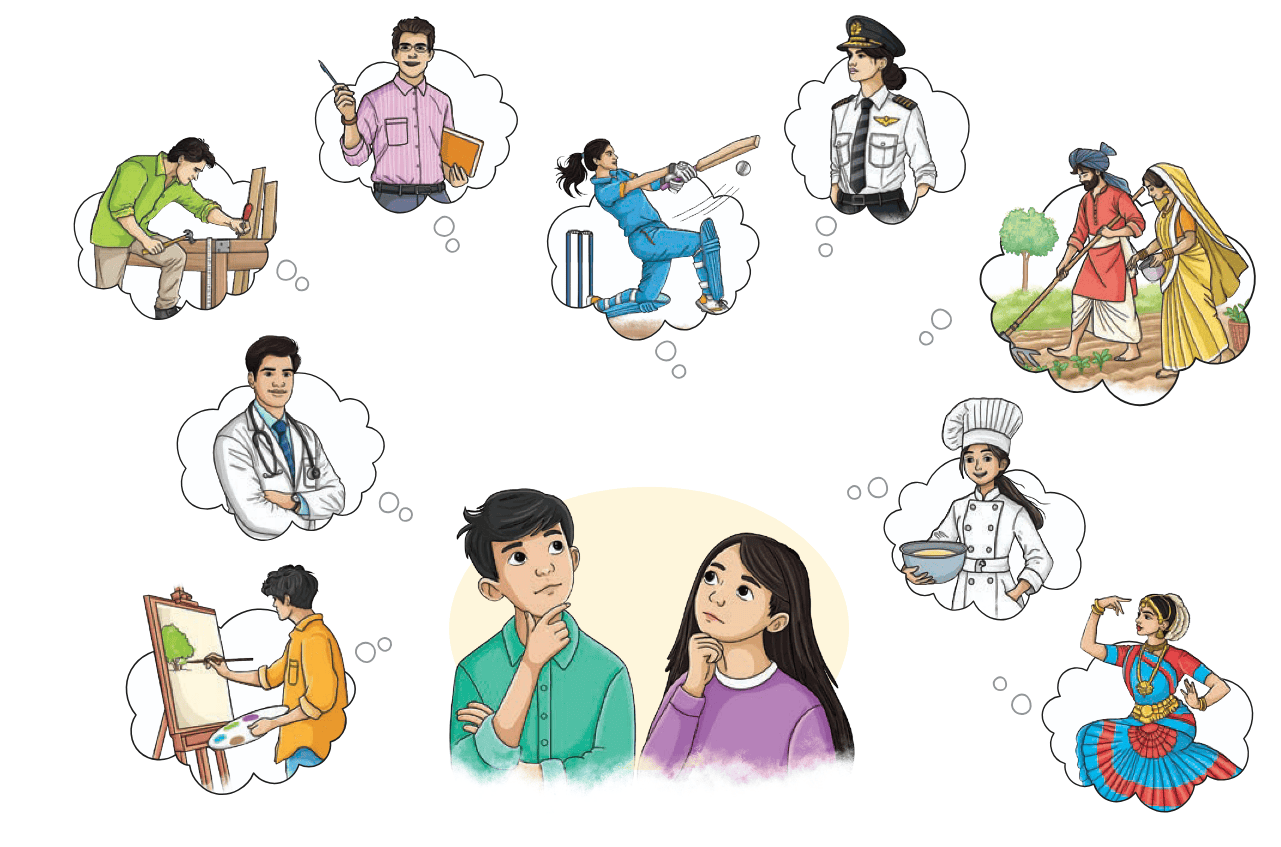
Use the prompts given below.
- • I would like to become... because... For this I would have to first...
- • I dream of working as a... as... This would involve...
- • To become a... has been a childhood dream. This is so because...In order to become a... I would have to...
- • One day, I hope to become... Then I would be able to... However, first I would need to...
- • It would be great if I could work as... as it would let me... For this I would have to...
Let us write
You have read about the sacrifices made by the Armed Forces during war. However, the Armed Forces also play a key role during peace time. Write a letter to your friend sharing how the Armed Forces contribute their services during the times of natural calamities (floods, earthquakes, etc.), infrastructure development (building bridges in remote areas, etc.) and for welfare initiatives (medical camps, establishment of libraries, etc.)
Let us explore
I Every branch of the Armed Forces has a motto. Read the mottos given below.
II India has many other Forces that serve the nation. For example, Central Reserve Police Force (CRPF).
Find out about such Forces and discuss with the teacher.
III Create a collage capturing the lives and stories of people that inspire us. In groups of four, prepare a collage on a chart paper on any such person and present it in the class.
IV Many women have joined the Armed Forces and are serving the nation. Have a discussion in the class with examples.
MY DEAR SOLDIERS
Let us do these activities before we read.
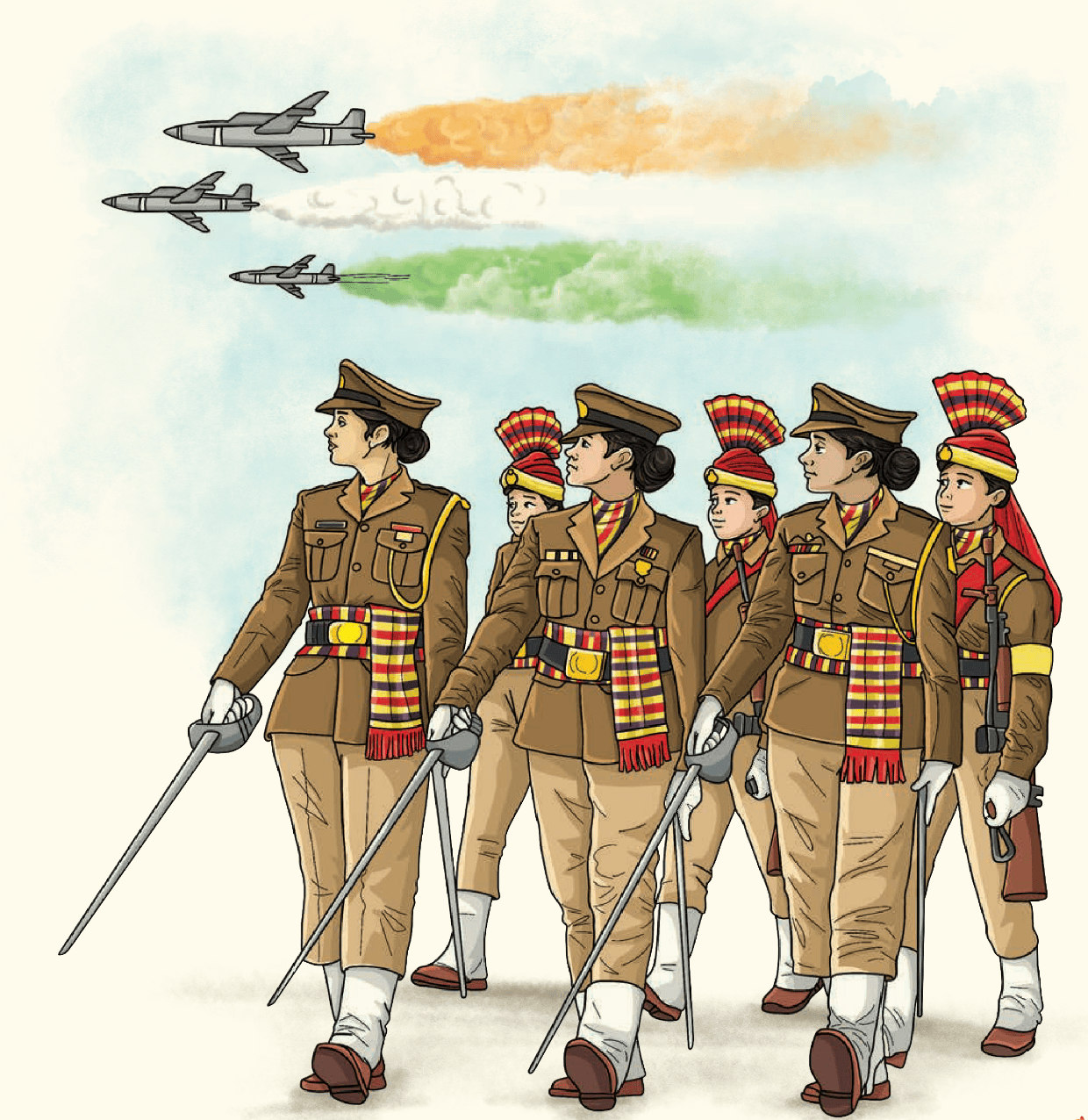
I Look around and identify the people who contribute to your life selflessly with a risk to their own lives. Share your answers with your classmates and the teacher.
II Work in pairs. Discuss at least three questions that you would like to ask the people identified in I.
Let us read
Oh! Defenders of borders
You are great sons of my land
When we are all asleep
You still hold on to your deed
Windy season or snowy days
Or scorching sun’s sweltering rays
You are there guarding all the time awake
Treading the lonely expanses as yogis
Climbing the heights or striding the valleys
Defending the deserts or guarding the marshes
Surveillance in seas and by securing the air
Prime of your youth given to the nation!!
Wind chimes of my land vibrate your feat
We pray for you brave men!!
May the Lord bless you all!!
A.P.J. ABDUL KALAM
Note
When the poet mentions ‘great sons’ he is actually referring to all the soldiers (men and women) serving the nationLet us discuss
I Complete the summary with an exact word from the poem. An example has been done for you. Share your answers with your classmates and the teacher.
The poem is a tribute to the soldiers of the 1. land who defend the 2. _______________ of their country. It highlights their untiring commitment and sacrifices as they guard the nation. The soldiers remain vigilant and dedicated, whether it’s windy, snowy, or 3. _______________ hot. They walk on 4. _______________ stretches of land like the yogis. Their duty takes them to different terrains, including mountains, valleys, 5. _______________, and marshes. The poet acknowledges that they have given a major part of their 6. _______________ to protect the nation. The poet says the wind chimes show their respect to the soldiers’ 7. _______________. The poet concludes with prayers for their well-being and blessings.
II. Select the correct option for the following questions.
1. The theme of the poem is _______.
- (i) patriotism and sacrifice
- (ii) heroism and awareness
- (iii) nature and hardship
- (iv) seasons and terrains
2. The tone of the poem is _______.
- (i) admiring
- (ii) sad
- (iii) respectful
- (iv) grateful
- (v) prayerful
- A. Only (v)
- B. (i) and (iii)
- C. (ii), (iii) and (v)
- D. (i), (iii), (iv) and (v)
III Complete the following sentences by explaining why the poet has used the following poetic devices.
- 1. Imagery because ___________________.
- 2. Simile because the soldiers are likened to ___________________.
- 3. Metaphor because the poet uses wind chimes ____________.
- 4. Repetition of the words ‘you’ and ‘we’ because _________.
- 5. Alliteration such as ‘season or snowy’ and ________ to create _____________.
Let us think and reflect
I Read the extracts given below and answer the questions that follow.
1. When we are all asleep
You still hold on to your deed
Windy season or snowy days
Or scorching sun’s sweltering rays
You are there guarding all the time awake
Treading the lonely expanses as yogis
- 1. Identify a set of opposite words from the extract.
- 2. Complete the sentence appropriately.
- The phrase ‘still hold on to your deed’ refers to the soldier’s attitude of __________.
- 3. Identify whether the following statement is true or false. The soldiers walk across the deserted stretches of land.
- 4. Give evidence from the extract to show that soldiers face harsh weather conditions.
- 5. Which quality of the soldiers is highlighted in this extract?
- (i) modesty
- (ii) optimism
- iii) simplicity
- (iv) dedication
II Answer the following questions.
1. Who is the speaker of this poem? How can you say so?
2. How is the theme of the poem conveyed through imagery? Support your answer with examples from the poem.
3. How does the poet highlight the commitment of the soldiers? Provide examples from the poem to support your answer.
4. What is the significance of the line ‘Prime of your youth given to the nation!!’ with reference to sacrifice and service?
5. The poem ends with a prayer for the soldiers’ well-being and blessings. Why is it important for each one of us to pray for the well- being of soldiers?
Let us learn
I The poem mentions a few terrains (physical features of land)—valleys, deserts, and marshes. Identify the terrains from the box given below. There are two that you do not need.
- ghats
- river
- plateau
- delta
- bay
- peninsula
- mountains
II Study the following phrases from the poem.
- • treading the lonely expanses
- • climbing the heights
- • scorching sun
Such phrases are word pairs that come together in combinations and are called collocations.
Fill in the blanks by choosing the words given in the brackets that collocate appropriately.
- 1. The hikers reached the ____________ (summit/peak) of the mountain after several days of trekking through challenging conditions.
- 2. The ____________ (empty/barren) landscape of the desert made it nearly impossible to find any water sources.
- 3. In the rainforest, the ____________ (heavy/dense) forest provides a habitat for a diverse range of wildlife.
- 4. Chitra is a very ____________ (heroic/adventurous) person and enjoys mountain climbing.
- 5. I’ll try to get back in time, but I'm not ____________ (doing/making) any promises.
Let us listen
I Think and complete the poem titled ‘A Soldier’s Pride’, given below. (Transcript for the teacher on pg. 224)
In fields so vast, our soldiers stand, With hearts so brave, and firm 1. ______________, They guard our land both night and 2. ______________, To keep our fears and foes at bay.
With every dawn and setting 3. ______________, Their duty calls, it must be done, Through 4. ______________ skies and blazing heat, They 5. ______________ along with steady feet.
For love of land, they 6. ______________ and strive, To keep our hopes and 7. ______________ alive, With pride and honour, they defend, Our beloved India, till the very 8. ______________.
II Now, listen to the poem and correct your answers wherever required.
Let us speak
I Work in pairs and practise reciting the poem ‘My Dear Soldiers’. Pause briefly at (/) and emphasise the highlighted words.
My/Dear/Soldiers/by A.P.J. Abdul Kalam
(pause and count 1-2-3 silently before reciting the poem)
Oh! Defenders / of borders /
You are great sons / of my land /
When we are all / asleep /
You still hold on / to your deed /
Windy season / or snowy days /
Or scorching sun’s / sweltering rays /
You are there / guarding all the time / awake /
Treading the lonely expanses / as yogis /
Climbing the heights / or striding the valleys /
Defending the deserts / or guarding the marshes /
Surveillance in seas / and by securing the air /
Prime of your youth / given to the nation!! /
Wind chimes of my land / vibrate your feat /
We pray for you / brave men!! /
May the Lord bless you all!! /
2. Now, recite aloud in groups of 8–10.
Remember—
- • Use volume to add emotion to the poem. For instance, speak more softly for lines that express tenderness or solemnity and louder for lines that convey strength or pride.
- • Maintain a steady pace. Don’t rush through the lines.
- • Use appropriate facial expressions to boost the meaning of the poem. Stand tall with a confident posture to reflect the pride and strength of the soldiers.
Let us write
I An acrostic poem is the one in which the first letter of each line spells out a word, name or phrase when read vertically. Read the example given below and compose your own acrostic poem.
- Proud of motherland S________________
- Always alert I stand O___________
- Time, my concern never L__________
- Respect to her, forever D_________
- In worse times or better I___________
- Our love has no end E______________
- To me, my country is my friend.
R_____________
II We cannot thank our soldiers enough. To express your admiration, draft a note of gratitude for their selfless service to the nation. (Word limit: 50 words)
You may begin this way:
Dear Bravehearts,
I would like to…
Let us explore
I Design a badge of honour for the soldiers. You may make it by hand, with cardboard, paper, and colours, or alternately, design it digitally and take a printout. Remember to include a self-designed logo and a slogan in the badge.
II Find out any poem or story in your mother tongue or regional language about the sacrifices and bravery of soldiers. Make a presentation in the class.
RANI ABBAKKA
Let us do these activities before we read.
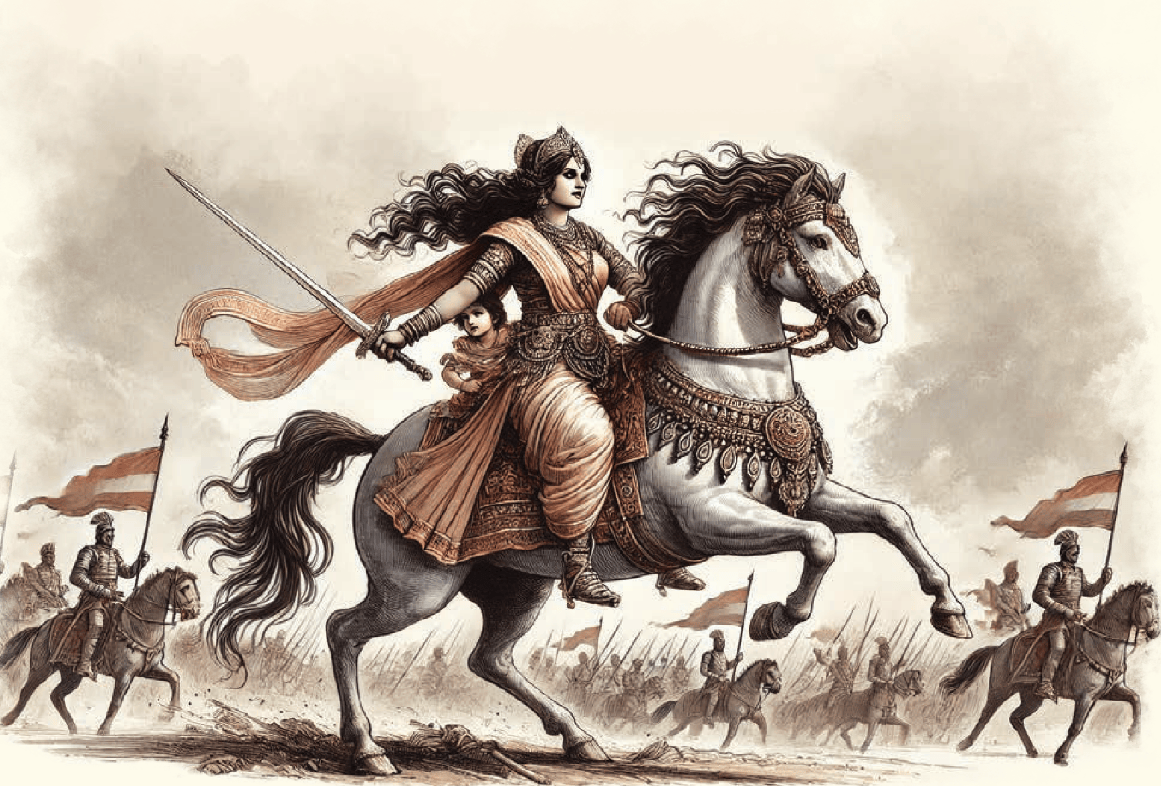
I Solve the riddle given below and share your answer with your classmates and the teacher.
- She was a queen who led the fight,
- She fought for her country and her right.
- With a shining sword in her hand,
- Her son on her back in a cloth band
- Remembered as a warrior grand,
- She died defending her beloved Motherland.
- Who is she?
II Think of any other women warriors who made a significant contribution to India’s struggle for Independence. Share your answers with your classmates and the teacher.
Let us read
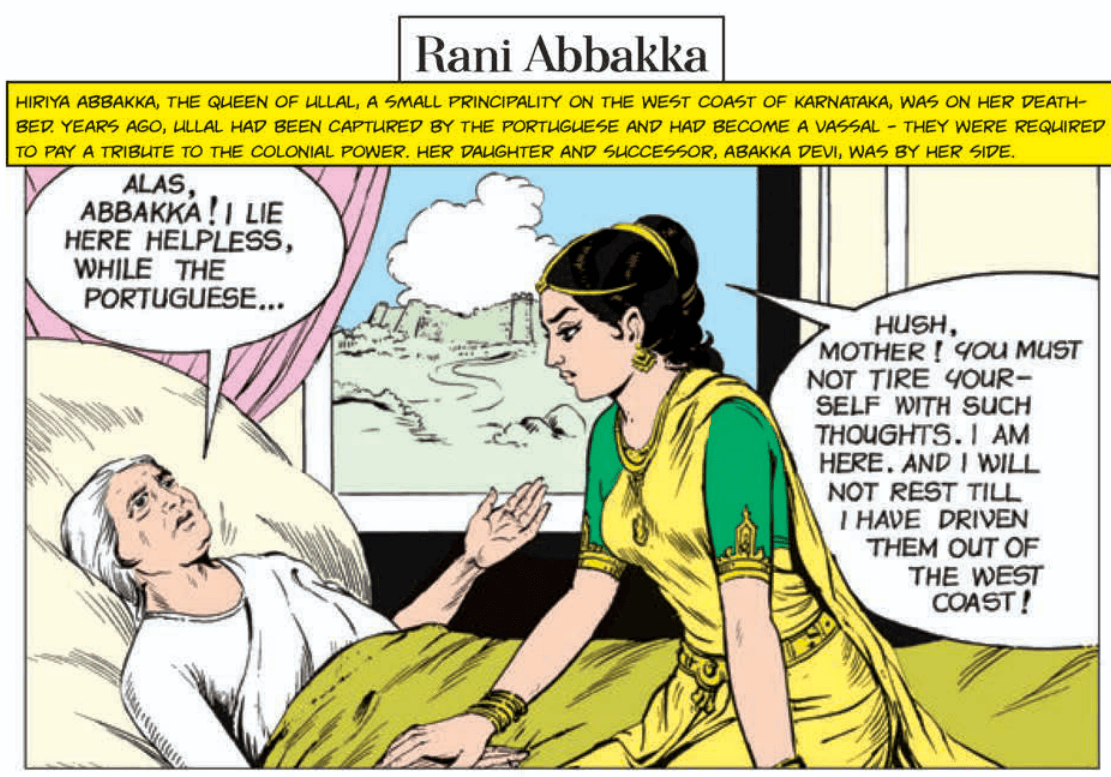
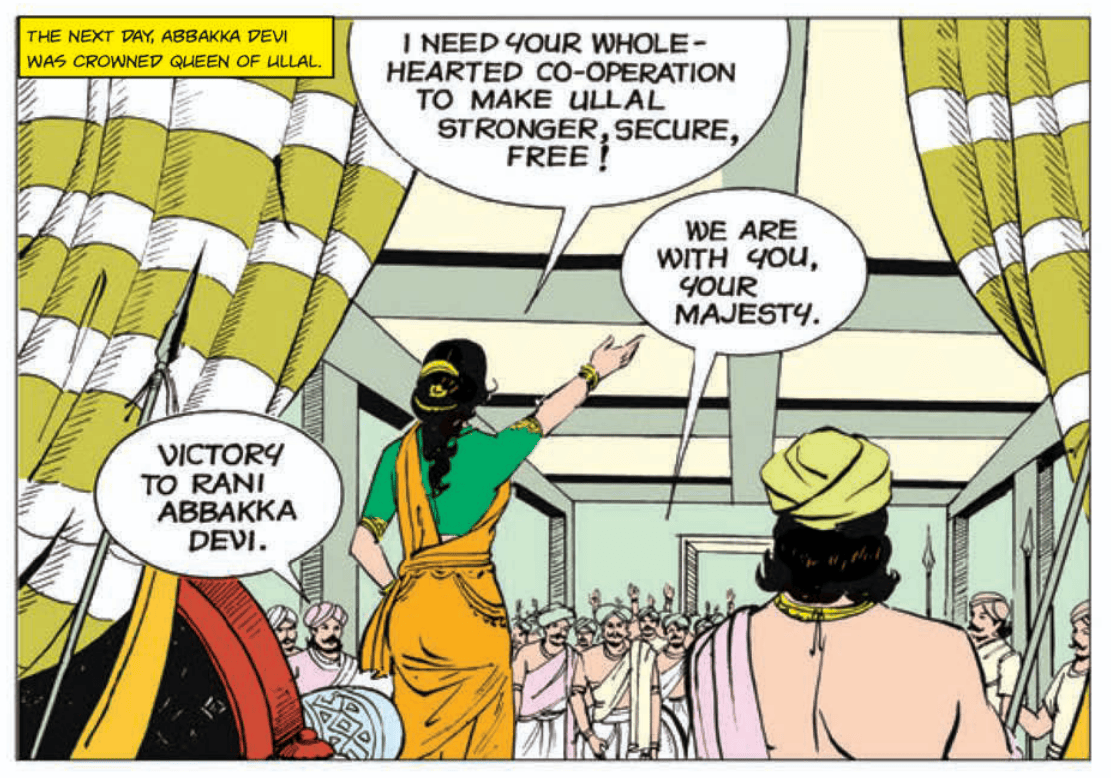
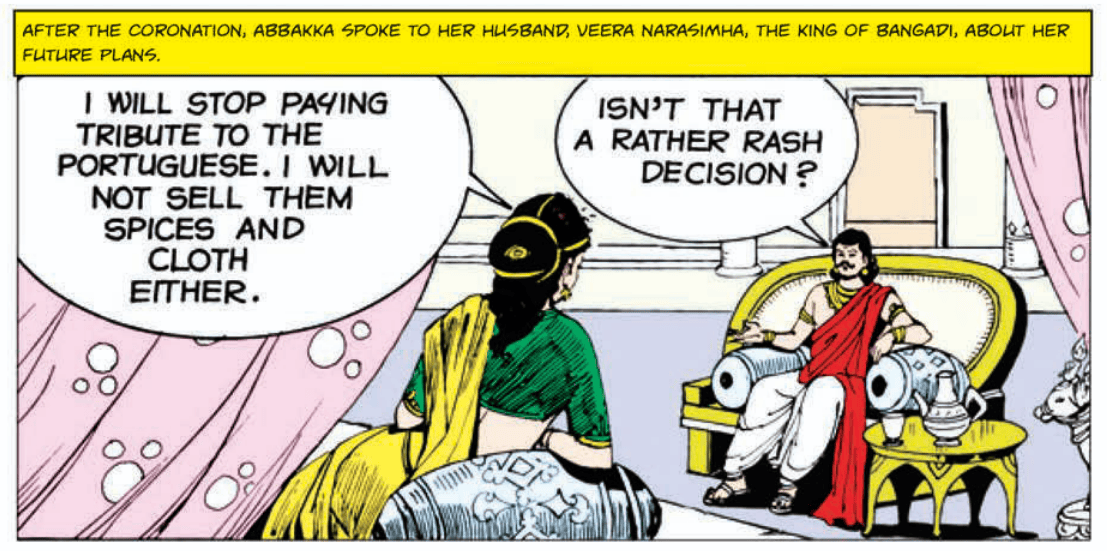
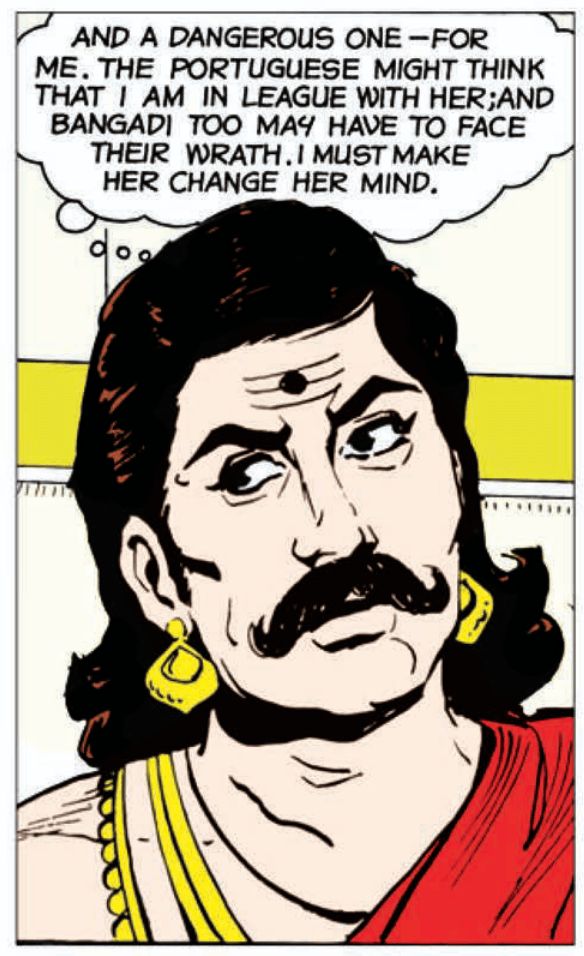
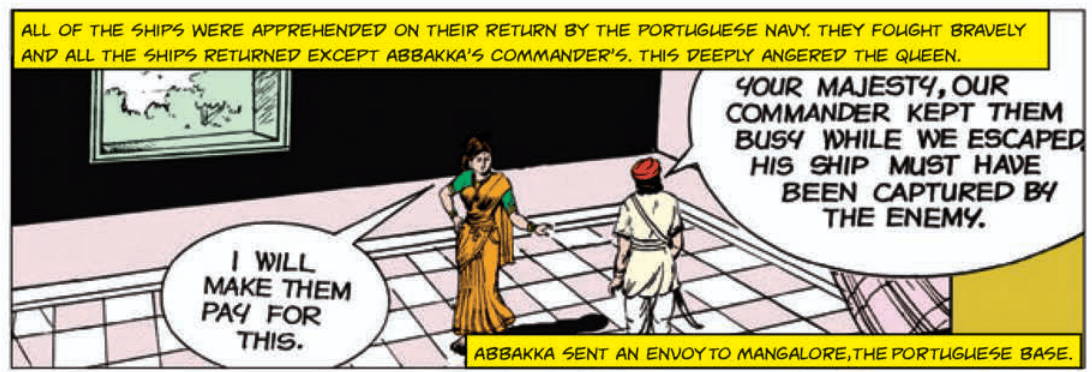
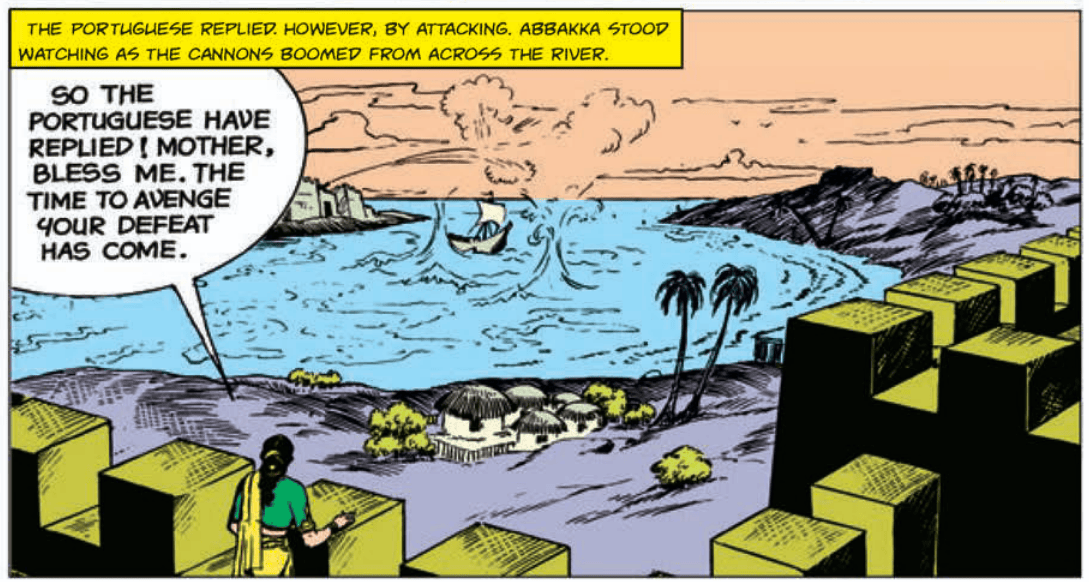
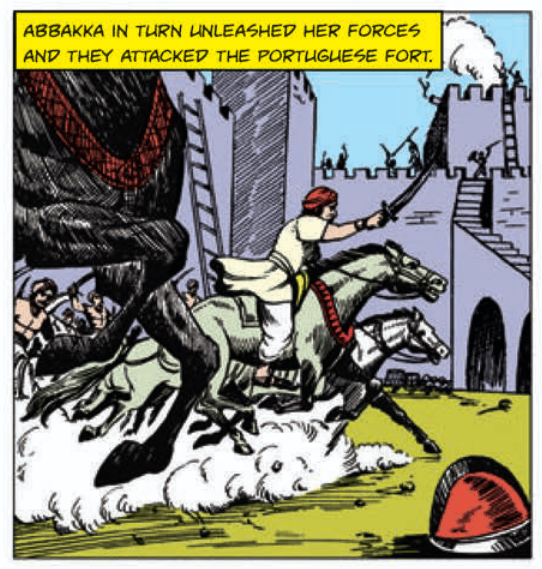
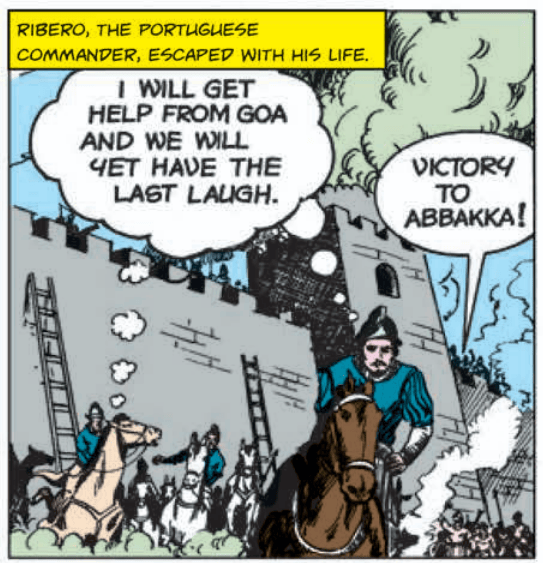
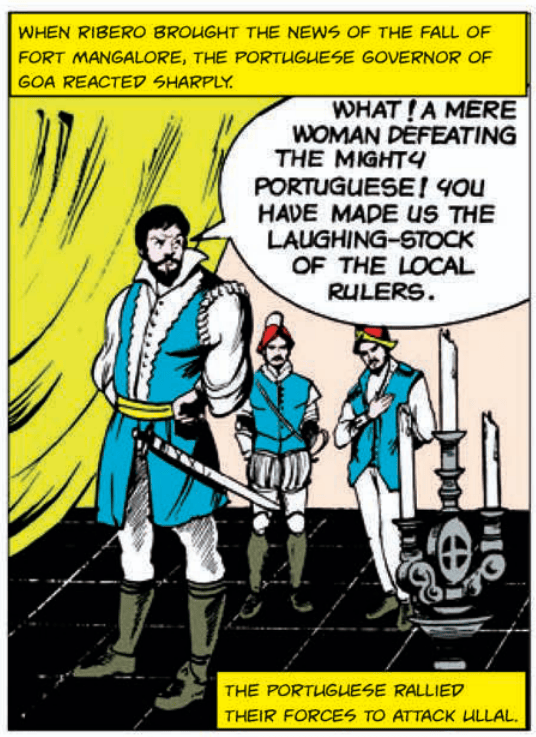
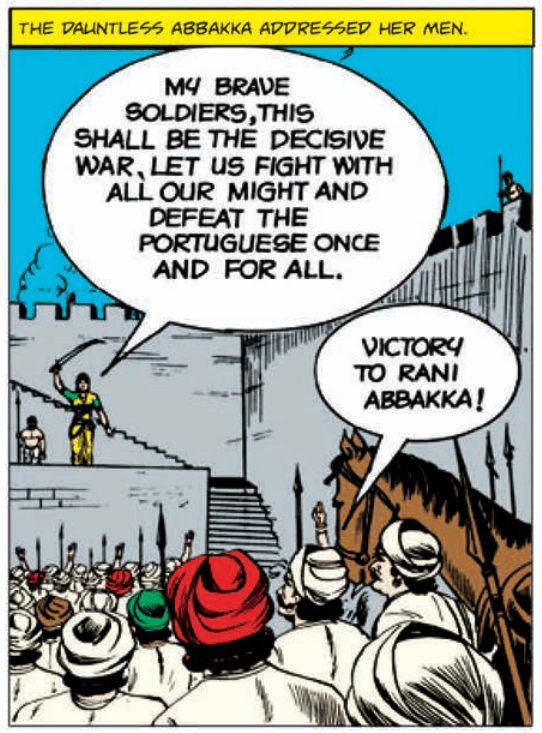
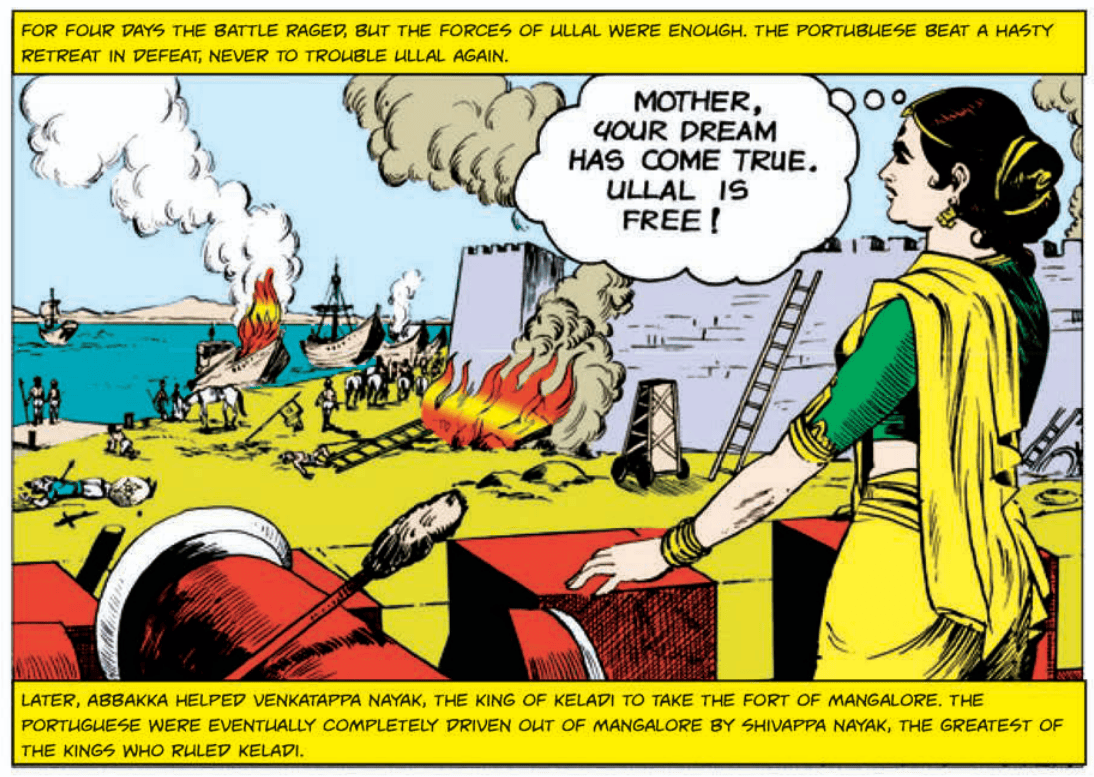
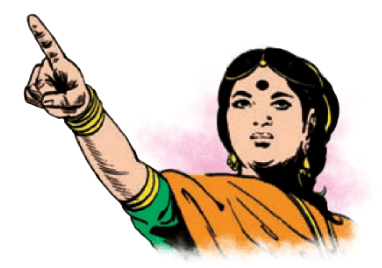
Let us discuss
I Match the words in Column 1 with their meanings in Column 2. Share your answers with your classmates and the teacher.
| Column 1 | Column 2 |
|---|---|
| 1. vassal (n) | (i) extreme anger |
| 2. coronation (n) | (ii) take hold of suddenly or forcibly |
| 3. successor (n) | (iii) happen in a violent way |
| 4. rash (adj.) | (iv) acting or doing something without thinking about the consequences |
| 5. sovereign country (n) | (v) association or partnership |
| 6. league (n) | (vi) a ceremony at which a person is made king or queen |
| 7. wrath (n) | (vii) fearles |
| 8. seize (v) | (viii) capture |
| 9. resolve (n | (ix) a country with a government having complete authority |
| 10. raged (v) | (x) a country/ state that is controlled by a more powerful country and has to pay money when needed |
| 11. decisive (adj.) | (xi) a person who succeeds another |
| 12. apprehended (v) | (xii) take revenge for |
| 13. dauntless (adj) | (xiii) showing the ability to make decisions effectively |
| 14. avenge (v) | (xiv) determination |
II Complete the table given below based on your understanding of the story. An example has been done for you. Share your answers with your classmates and the teacher.
| Cause | Effect |
|---|---|
| 1. Ullal had been captured by the Portuguese. | (i) Ullal had to pay a tribute to the colonial power. |
| 2. | (ii) Rani Abbakka’s husband Veera Narsimha felt it was a hasty decision. |
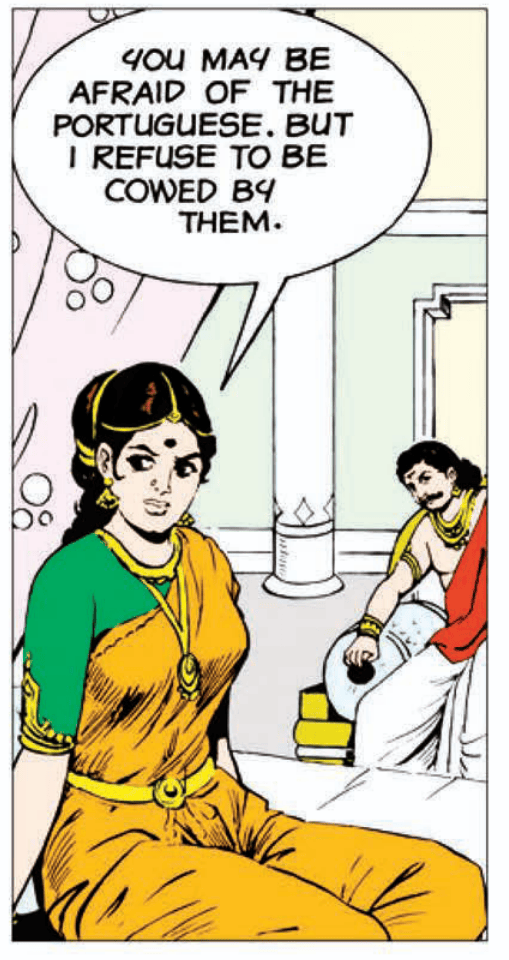
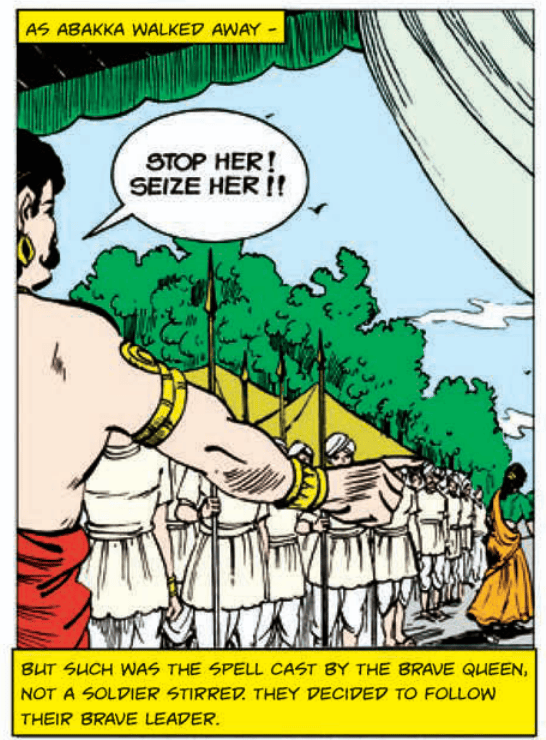
| 3. Veera Narsimha ordered the soldiers to stop Rani Abbakka when she said she would not be frightened by the Portuguese. | |
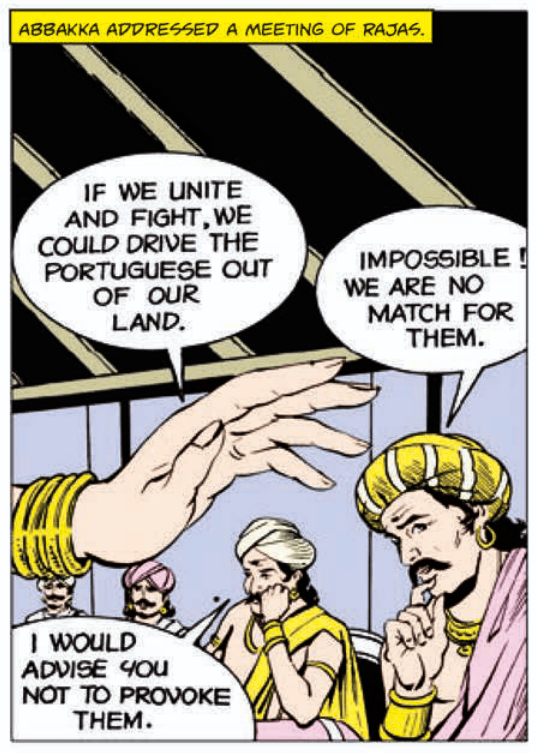
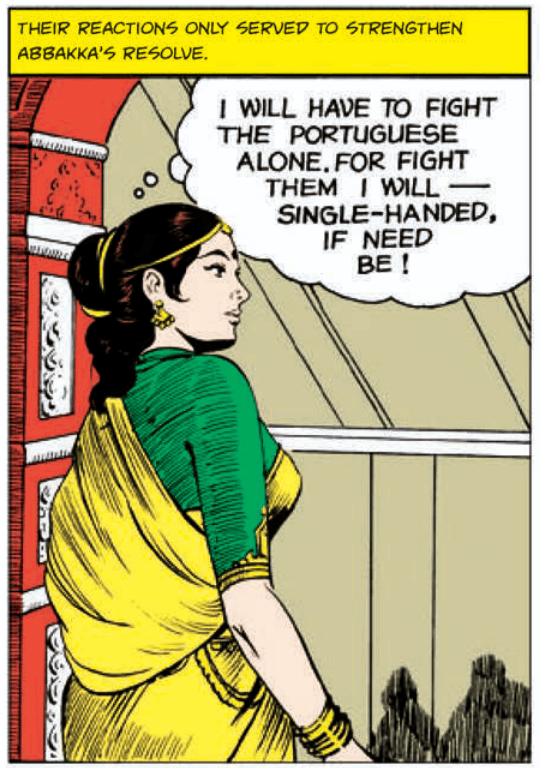
| 4. Rani Abbakka addressed a meeting of rajas for their support, who felt they would be no match for the Portuguese army and their power. | (iv) |
| 5. | (v) Rani Abbakka in turn attacked the Portuguese Fort. |
Let us think and reflect
I Read the extracts given below and answer the questions that follow.
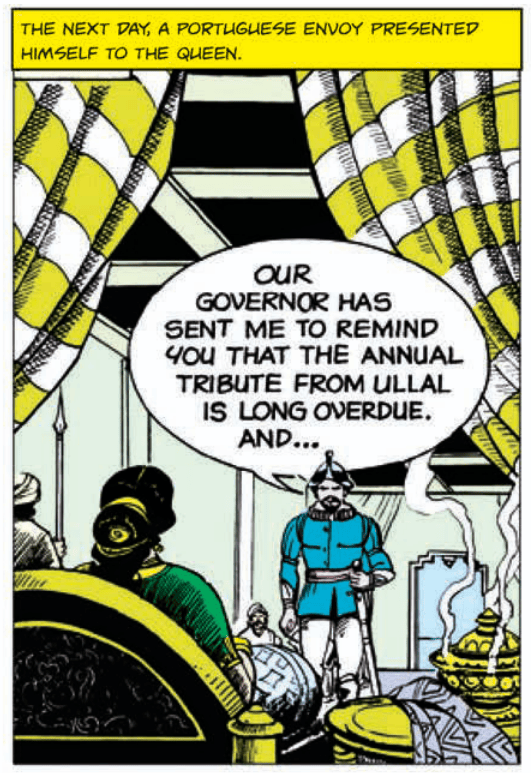
Portuguese envoy: Our Governor has sent me to remind you that the annual tribute from Ullal is long overdue and...
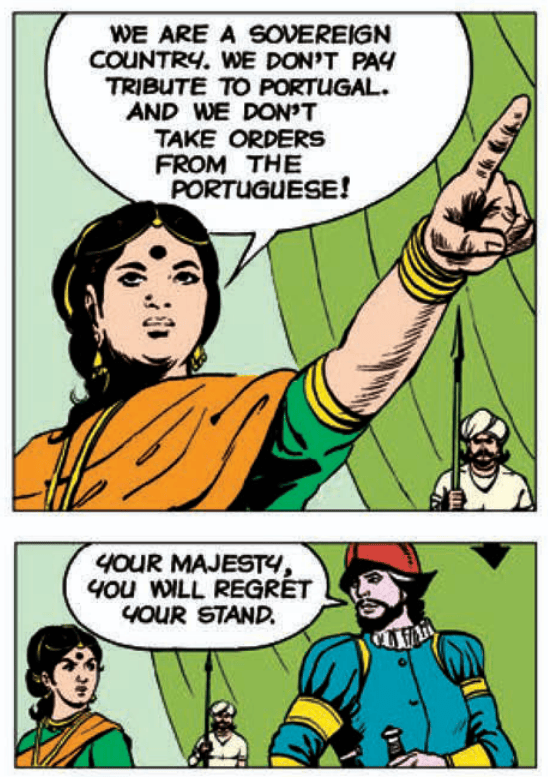
Rani Abbakka: We are a sovereign country. We don’t pay tribute to Portugal. And we don’t take orders from the Portuguese!
Portuguese envoy: Your Majesty, you will regret your stand.
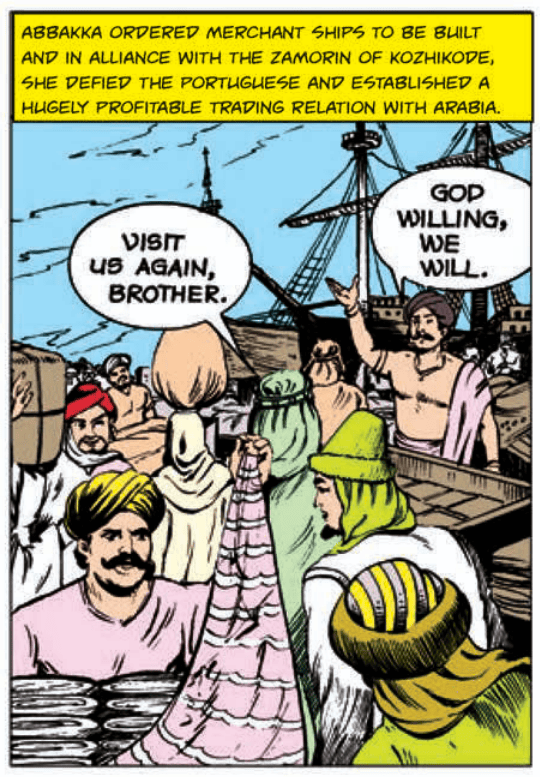
Abbakka ordered merchant ships to be built and in alliance with the Zamorin of Kozhikode, she defied the Portuguese and established a hugely profitable trading relation with Arabia.
1. What does the word ‘tribute’ mean in this context?
2. Complete the sentence with a suitable reason.
Rani Abbakka says, “We are a sovereign country” because __________.
3. Identify whether the following statement is true or false.
The Portuguese envoy threatened Rani Abbakka
4. Choose a word given in brackets to replace the underlined word.
“… she defied the Portuguese and established a hugely profitable trading relation with Arabia.” (defeated/disobeyed)
5. Choose the option that lists the qualities of Rani Abbakka, based on this extract.
- (i) bold
- (ii) thoughtful
- (iii) capable
- (iv) generous
- (v) determined
- A. (i), (ii), and (v)
- B. (ii), (iii), and (iv)
- C. (i), (iii), and (v)
- D. (ii), (iv), and (v)
II Answer the following questions.
1. Rani Abbakka spoke to her mother on her deathbed. How might these words have made her mother feel?
2. What does the support of the people of Ullal and the soldiers for Rani Abbakka suggest about their mindset?
3. How might the people of Ullal have felt when the mighty Portuguese were defeated?
4. Why do you think Rani Abbakka’s victory against the Portuguese would have inspired other rulers to go against a foreign power?
Let us learn
I I Study the following words from the text.
seize, sovereign, their, soldiers
The spelling of the given words have ‘ei’ and ‘ie’ in them.
Spelling tip: ‘i’ before ‘e’ except after ‘c’
For example: receive, deceive
- 1. c___ling
- 2. bel___ve
- 3. th___f
- 4. ach___ve
- 5. perc___ve
- 6. prot___n
- 7. soc___ty
- 8. sh___ld
- 9. w___ght
- 10. fr___nd
II Study the highlighted word in the following sentence from the text.
…; and Bangadi too may have to face their wrath.
Was the initial letter ‘w’ pronounced?
There are many words in the English language where certain letters are not pronounced but are spelt. They are called ‘silent letters’.
For example :
campaign, knowledge, pneumonia, honour, calm
Now, find more words with silent letters.
III Read the following expressions from the text.
laughing stock, last laugh
Use the dictionary page given below to find the meanings of the following.
burst out laughing, don’t make me laugh, laugh until you cry, have a good laugh.
laugh / la:f; NAME laef/ verb, noun
verb 1 (I,T) to make the sounds and movements of your face that show you are happy or think sth is funny: to laugh loudly/ aloud/out loud~ (at/ about sth) You never laugh at my jokes! The show was hilarious-I couldn't stop laughing. She always makes me laugh. laughing). He burst out laughing (= suddenly started She laughed to cover her nervousness. I told him I was worried but he laughed scornfully. + speech 'You're crazy!'she laughed.
2 (1) be laughing (informal) used to say that you are in a very good position, especially because you have done sth successfully: If we win the next game we'll be laughing.
IDM don't make me 'laugh (informal) used to show that you think what sb has just said is impossible or stupid: 'Will your dad lend you the money?' 'Don't make me laugh!' he who laughs, last laughs 'longest (saying) used to tell sb not to be too proud of their present success; in the end another person may be more successful laugh all the way to the 'bank (informal) to make a lot of money easily and feel very pleased about it laugh in sb's 'face to show in a very obvious way that you have no respect for sb laugh like a 'drain (BrE) to laugh very loudly laugh on the other side of your 'face (BrE, informal) to be forced to change from feeling pleased or satisfied to feeling disappointed or annoyed laugh sb/sth out of 'court (BrE, informal) to completely reject an idea, a story, etc. that you think is not worth taking seriously at all laugh till/until you 'cry to laugh so long and hard that there are tears in your eyes laugh up your 'sleeve (at sb/sth) (informal) to be secretly amused about sth laugh your 'head off to laugh very loudly and for a long time not know whether to laugh or 'cry (informal) to be unable to decide how to react to a bad or unfortunate situation you have/you've got to, 'laugh (informal) used to say that you think there is a funny side to a situation: Well, I'm sorry you've lost your shoes, but you've got to laugh, haven't you? more at KILL v., PISS v.
PHR V 'laugh at sb/sth to make sb/sth seem stupid or not serious by making jokes about them/it SYN ridicule: Everybody laughs at my accent. She is not afraid to laugh at herself (= is not too serious about herself). laugh sth 'off (informal) to try to make people think that sth is not serious or important, especially by making a joke about it: He laughed off suggestions that he was going to resign.
noun 1 [C] the sound you make when you are amused or happy: to give a laugh a short/nervous/hearty laugh His first joke got the biggest laugh of the night. see also BELLY LAUGH 2 a laugh [sing.] (informal) an enjoyable and amusing occasion or thing that happens: Come to the karaoke night-it should be a good laugh. And he didn't realize it was you? What a laugh! 3 a laugh [sing.] a person who is amusing and fun to be with: Paula's a good laugh, isn't she?
IDM do sth for a 'laugh/for 'laughs to do sth for fun or as a joke: I just did it for a laugh, but it got out of hand. have a (good) 'laugh (about sth) to find sth amusing: I was angry at the time but we had a good laugh about it afterwards. more at BARREL n., LAST det.
Now, use these expressions in sentences of your own.
IV Read the following dialogues from the text.
- • Rani Abbakka said, “I will make them pay for this.”
- • The merchants said to the Arabians, “Visit us again, brother.”
The given sentences are the direct words of the speaker; hence, they are in direct speech.
The reported forms or indirect forms of speech for the given sentences are:
- • Rani said that she would make them pay for that.
- • The merchants told the Arabian brothers to visit them again.
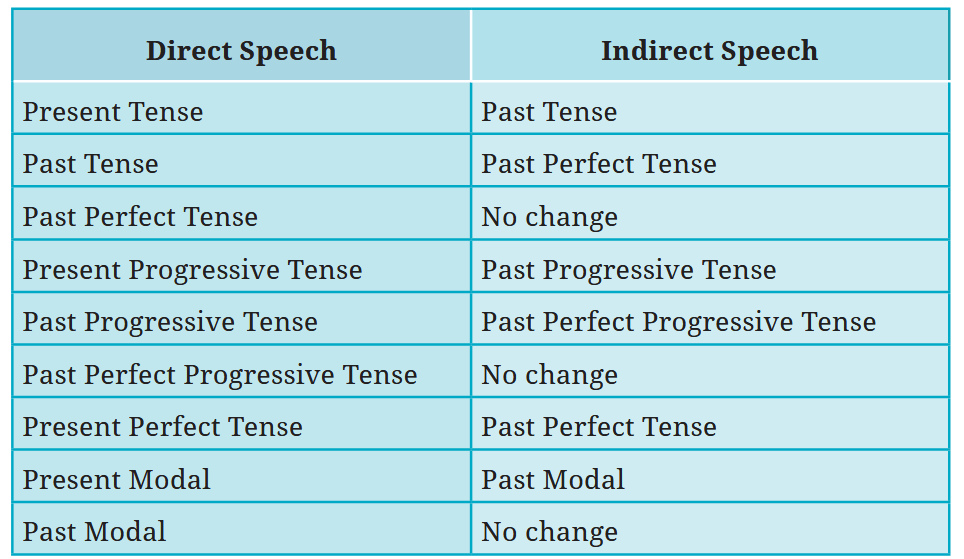
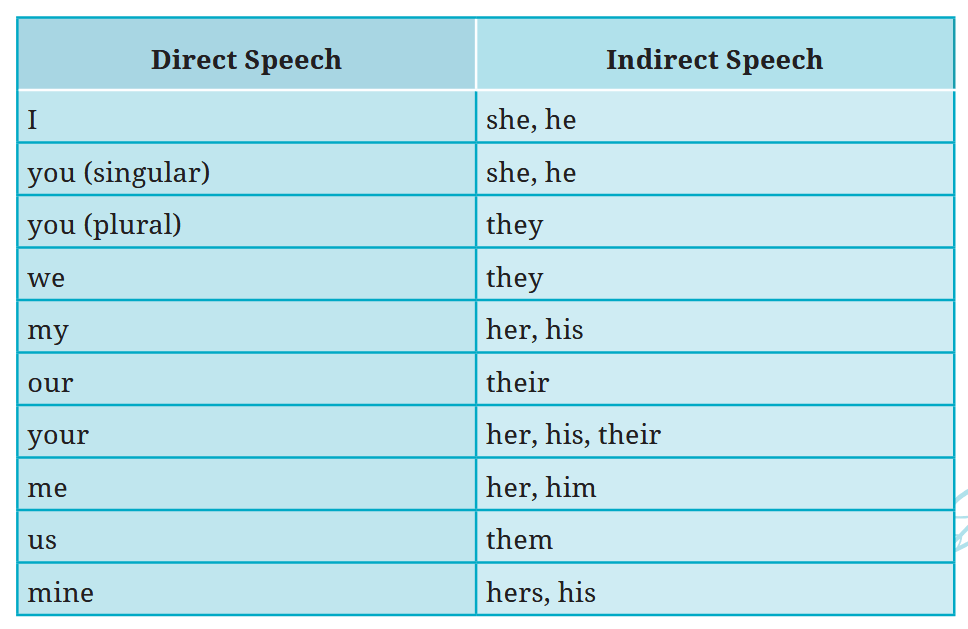
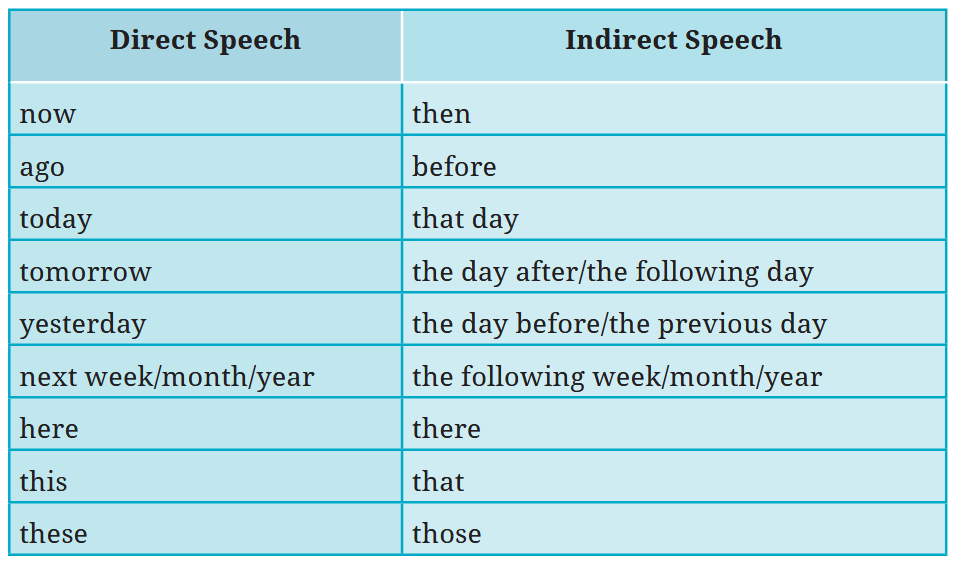
While reporting direct speech to indirect speech, we make certain modifications related to time, place, and person.
- • Time (Tense): Verbs are typically shifted back from a present tense to a past form in reported speech to reflect the change in time.
- • Place (Adverbs of Place): Words indicating place are adjusted to fit the new context.
- • Person: Pronouns and subjects are modified to align with the perspective of the reporter.
Changes made with reference to time (tense)
Changes made in pronouns
Changes in time and place expressions
Rewrite the following sentences in direct speech to indirect speech. Remember to make the necessary changes.
- 1. The teacher said, “Women of valour have made significant contributions throughout history.”
- The teacher remarked that _________________.
- 2. “I enjoy reading historical novels,” said Smitha.
- Smitha shared that _________________.
- 3. The captain said to the coach, “Our team won the championship last year.”
- The captain told the coach that _________________.
- 4. The class teacher said, “Please turn off the lights when you leave.”
- The class teacher requested _________________.
- 5. “Finish the work before dinner,” said mother to Ravi.
- Mother advised _________________.
- 6. The vet said to the pet owner, “Take the dog for a walk.”
- The vet instructed _________________.
V Read the conversation between the Captain and the team.
- Captain: We need to focus on our strategy for the final match.
- Player : I have some ideas on how we can improve our strategy.
- Captain: Make sure to share those ideas with the team during practice.
- Complete the following paragraph by transforming the dialogue in the
- indirect form of speech.
- The Captain remarked that 1. _________________.
- To which one of the players replied that 2. _________________.
- The Captain advised the player to 3. _________________.
Let us listen
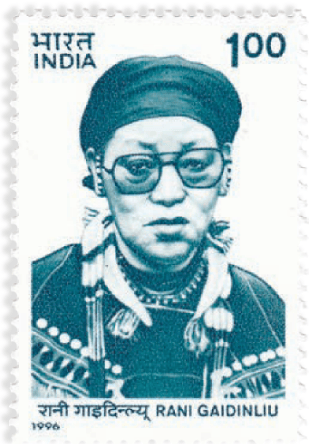
You will listen to the teacher speak about a braveheart. As you listen, complete the bio-table given below. (Transcript for the teacher on pg. 224)
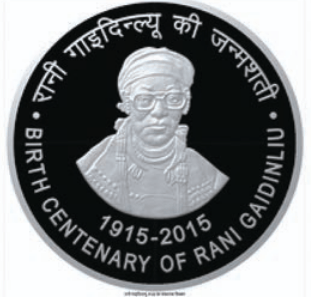
| Information | Details |
|---|---|
| Full Name | Rani Gaidinliu |
| Date of Birth | January 1. ________ 1915 |
| Place of Birth | Tamenglong district, 2. __________ |
| Tribe | Rongmei (Kabui) |
| Age when joined the Hereka Movement | 3. ________ |
| Main aim of Movement | Revival of Naga tribal religion and self-rule (Naga Raj) |
| Year of Arrest | 4. _________ |
| Age of Arrest | 5. _________ |
| Sentence | Life imprisonment |
| Years of Imprisonment | 1932 – 1947 |
| Title Given | ‘Daughter of the Hills’, 6. ‘____________’ |
| Award | 7. ___________________, Birsa Munda Award |
| Year of Death | 1993 |
| Honour in Silchar, Assam | 1993 |
| Postal Stamp Issued | 1996 |
| Commemorative Coin Issued | 9. _________ |
Let us speak
Some of the words from the story ‘Rani Abbakka’ are given in the table below. Work in pairs and pronounce these words by referring to the notes given below. Emphasise the highlighted syllable.
Remember, single syllable (monosyllabic) words do not have any stress.
| Words | Pronunciation | Notes |
|---|---|---|
| 1.vassal (n) | va-sul (two syllables) | The /a/ sound in va is similar to
van. The word vassal rhymes with apple. |
| 2.successor (n) | suhk·seh·suh (three syllables) | The /r/ sound in the end of the word is not pronounced. |
| 3.rash (adj.) | rash (monosyllabic) | The /a/ sound is similar to rat. |
| 4.league (n) | leeg (monosyllabic) | Use the long -ee sound, as in seed. |
| 5.wrath (n) | roth (monosyllabic) | The -w is silent. |
| 6.seize (v) | seez (monosyllabic) | Not to be confused with ‘size’. |
| 7. resolve (n) | ri-zolv (two syllables) | The -s becomes the /z/ sound. |
Let us write
India’s past was heroic, and at present, the pace of her development is inspiring. Women play a significant role in it. These women are around us, inspiring us all the time.
With these thoughts, write a conversation between two students, Pratap and Tarana, discussing the role played by women in forming India’s identity as a strong nation.
You may begin like this:
Pratap : Tarana, I have a lot of respect for women like...
Tarana : I believe in the capabilities of women. Did you...?
Complete the conversation in about six to eight sentences for each of them and share your answers with your classmates and the teacher.
Let us explore
In groups of five, find facts about any one brave woman who we remember because of her achievements and present in class. For example, Rani Chennamma of Kittur, Rani Durgavati, Ahilyabai Holkar, Jhalkari Bai, Captain Lakshmi Sahgal, Kanaklata Barua, Kalpana Chawla, or anyone else.
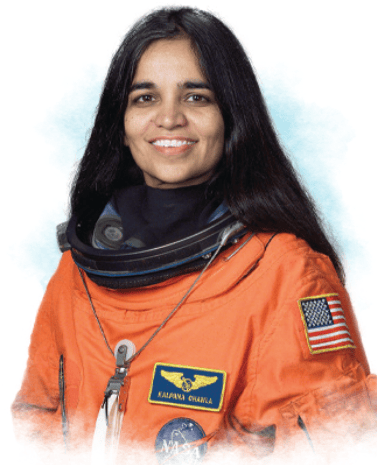
Include the following in your presentation:
- 1. Childhood
- 2. Training / Education
- 3. Achievements
- 4. Contributions
- 5. What you have learnt from her
TRANSCRIPTS
HOMAGE TO OUR BRAVE SOLDIERS
Let us listen(refer to page 196)
You will listen to a girl speak about why she wishes to join the Armed Forces when she grows up. As you listen, answer the questions given below in two–three exact words you hear.
Good morning, respected teachers and my dear friends.
Today, I, Gunjan, of Grade 7-C, stand before you to share why I dream of joining the Indian Armed Forces when I grow up.
Serving our country is the most honourable job one can have. It means protecting and securing our nation, even if it means risking one’s life. The thought of wearing the uniform, which can only be earned through hard work, fills me with pride and a strong desire to serve India.
The Armed Forces teach you to live a disciplined and organised life. This keeps both the mind and body active. Soldiers are always ready to face challenges because of this discipline. Additionally, regular exercise and training keep soldiers physically fit and ready for any situation. This preparation is something I greatly admire and wish to achieve.
Lastly, being a soldier means having new experiences and adventures everyday. Each day brings new challenges, teaching important lessons, and helping one grow. The Armed Forces offer a life filled with honour, self-respect, safety, and security for both the soldier and their families. It is a life that teaches loyalty, duty, service, and honesty.
This is why I want to join the Indian Armed Forces.
Thank you.
TRAVEL
Let us listen(refer to page 203)
I Think and complete the poem titled ‘A Soldier’s Pride’.
II Now, listen to the poem and correct your answers wherever required.
- In fields so vast, our soldiers stand,
- With hearts so brave, and firm command,
- They guard our land both night and day,
- To keep our fears and foes at bay.
- With every dawn and setting sun,
- Their duty calls, it must be done,
- Through stormy skies and blazing heat,
- They march along with steady feet.
- For love of land, they fight and strive,
- To keep our hopes and dreams alive,
- With pride and honour, they defend,
- Our India, till the very end.
RANI ABBAKKA
Let us listen(refer to page 220)
You will listen to the teacher speak about a braveheart. As you listen, complete the bio-table given below.
Hello children, you all have read about Rani Abbakka. Let me share with you some details about one more braveheart. Her name is Rani Gaidinliu.
Gaidinliu was born on 26 January 1915, in the present-day Tamenglong district of Manipur. She was a Naga leader who led an armed uprising against the British in Manipur, Nagaland, and Assam. Gaidinliu belonged to the Rongmei tribe, also known as the Kabui tribe.
In 1927, at the age of 13, Gaidinliu joined the Heraka movement. This movement aimed at the revival of the Naga tribal religion and the establishment of self-rule for the Nagas, ending British rule.
Gaidinliu was arrested in 1932 when she was just 16 and was sentenced to life imprisonment by the British rulers. Between 1932 and 1947, she was kept in several prisons across the Northeast.
After being released in 1947, she continued to work for the betterment of her community. The then Prime Minister described Gaidinliu as the ‘Daughter of the Hills’ and gave her the title ‘Rani’ for her courage. She was also awarded the Padma Bhushan in 1982.
In 1991, Rani Gaidinliu returned to her birthplace, where she died on 17 February 1993 at the age of 78. Rani Gaidinliu was conferred the Birsa Munda Award posthumously.
The State Government has developed a park along with a statue to honour Rani Gaidinliu in Silchar, Assam. Not only that, the Government of India issued a postal stamp in her honour in 1996 and a commemorative coin in 2015.
What a braveheart indeed.
https://amritmahotsav.nic.in /unsung-heroes-detail.htm?56