
12
How Nature Works in Harmony
Probe and ponder
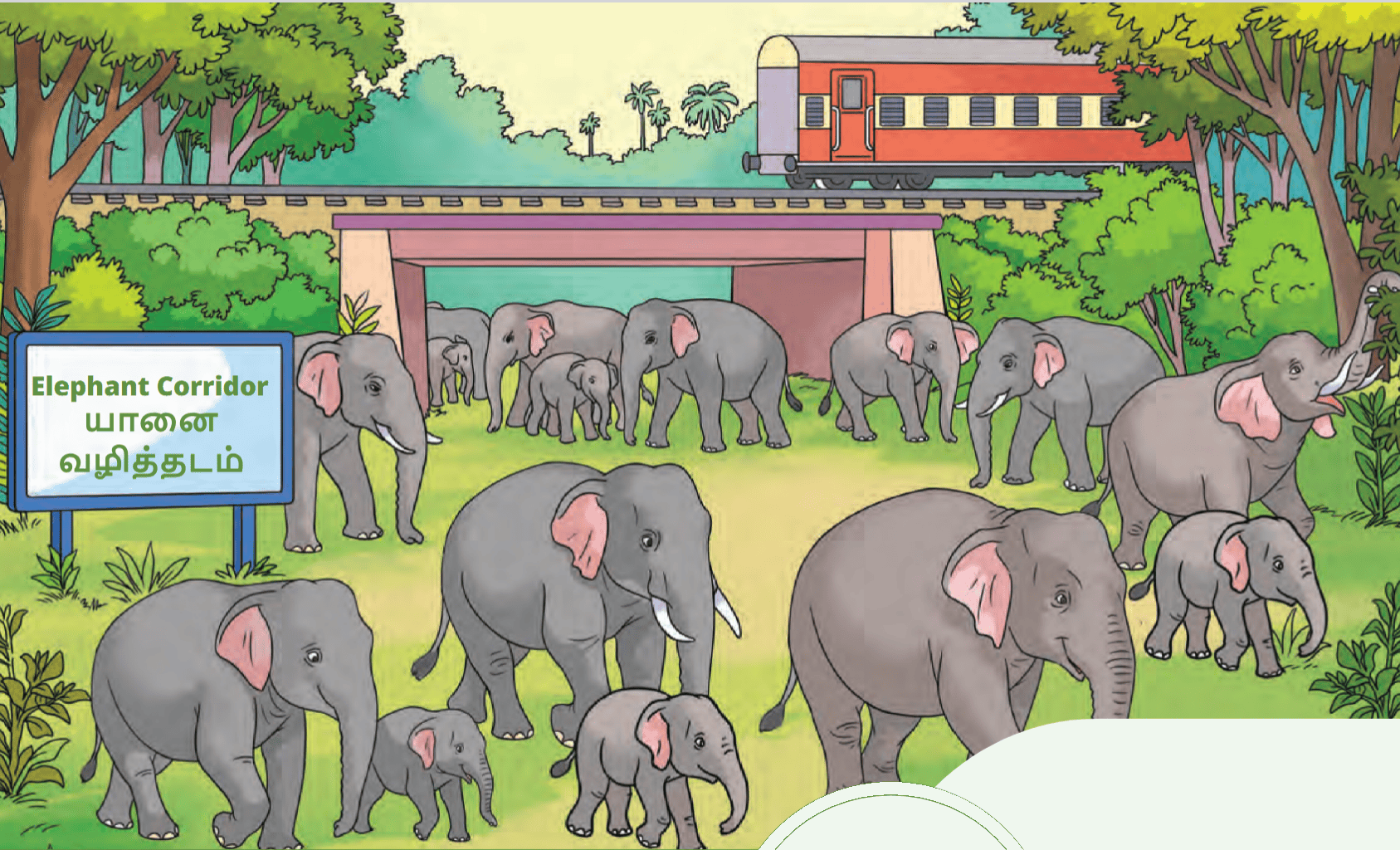
- How might the loss of forest cover and changes in rainfall patterns lead to elephants to enter human farms and villages?
- Imagine you are a tree in a dense forest. What kind of relationship would you have with water, sunlight, other animals, and other components of the forest?
- Do you think the Earth can thrive without humans? Can humans survive without the earth?
- If two kinds of birds compete for the same fruit, how might their way of living change over time?
- Can human actions cause natural disasters?
- Share your questions
In several parts of India, particularly in states like Odisha, Jharkhand, West Bengal, Assam, and Chhattisgarh, elephants often enter farms and villages. When vegetation is scarce and waterholes dry up in their natural habitat, elephants may wander in to nearby farms or plantations in search of food like bananas and sugarcane. This can lead to in crop damage and at times, even harm people and domestic animals.
Changes in rainfall and temperature affect vegetation. Cutting down trees for constructing roads and buildings makes it worse. This leads to the shrinking and drying of forests, the natural home of animals. When forests cannot support wildlife, animals tend to move into human habitats. Elephants are adapted to forest life, but sudden changes make it hard for them to survive. Wildlife ecologists have identified and marked corridors in many parts of the country to allow safe movement of animals. These corridors correct forest habitats, enabling wildlife—such as elephants to travel in need between large forest areas without coming into conflict with human settlements.
This chain of events shows how closely nature’s elements are connected. To understand such interconnections, we must study the components of our environment.
12.1 How Do We Experience and Interpret Our Surroundings?
You have learnt in Curiosity, Grade 6 chapter ‘Diversity in the Living World’ that different habitats have different kinds of plants and animals. A habitat is simply place where an organism lives. It could even be just the bark of a tree. The plants and animals interact with each other and adapt to survive in the surrounding conditions they live in. Explore two nearby habitats and identify both the living organisms and the non-living components in each.
Activity 12.1: Let us explore
Caution: Explore the habitat in groups with your teacher.
- Identify two habitats in your surroundings.
- These could be any two of the following: a pond, a forest, an agricultural farm, or even a large tree like banyan, mango, or pilkhan (white fig) tree.
- List the living beings and non-living things that you observe in these habitats. z
- Record your observations in Table 12.1.
Table 12.1: Different components of two habitats
| Pond | Forest | ||
|---|---|---|---|
| Living beings | Non-living things | Living beings | Non-living things |
| Fish | Water | Plants | Soil |
| Grass | |||
| Trees | |||
| Birds | |||
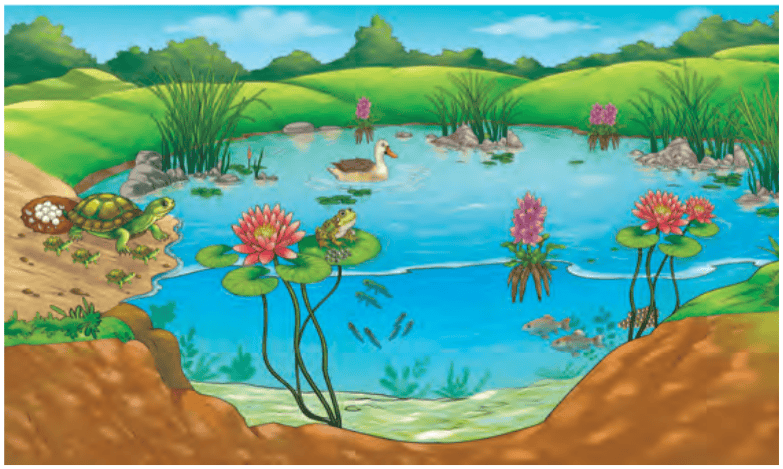
What common characteristics do you observe in the two habitats in Activity 12.1? The similarities are that both habitats have living beings as well as non-living things. However, the types of living beings are different and the non-living things also vary. The living beings you have recorded in Table 12.1 are termed as the biotic components and non-living things as the abiotic components of a habitat. Have you wondered why some organisms live on land while others live in water? Every organism needs specific conditions to survive. From this activity, you can see that different habitats offer different living conditions.
In Activity 12.1, you listed fish as a biotic component of the pond. How do fish survive in a pond? A pond provides food, oxygen, shelter, and space to grow — conditions essential for survival of organisms. Fish obtain their biotic needs, such as food, from small plants and animals, and abiotic needs, such as oxygen, from water.
Other living beings also inhabit the pond, such as frogs, fresh turtles, snakes, dragonflies, mosquitos, snails, and ducks, along with plants like algae, diatoms, duckweeds, and lotus. They all interact with the other living beings and non-living things present in the places where they grow and thrive.
Each habitat has its own biotic components and physical
conditions — air, sunlight, water, temperature, and soil.
Different organisms living in the same habitat may use the
resources in different ways. A forest might be warm during
the day and cool at night. A snake that comes out at night and a
rodent active during the day both live in the same habitat, but they
face different conditions. This is how living organisms coexist in
harmony in the same habitat.
12.2 Who All Live Together in Nature?
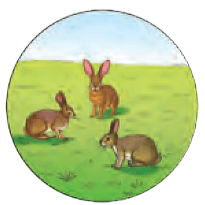
You have observed fish in a pond in Activity 12.1. Did you see only a single fish? Most likely, you may have seen many fish of the same kind. This group of fish of the same kind living together in a pond habitat is called a population of that particular fish. In this way, we can observe and record populations of different kinds of organisms in a single habitat.
Activity 12.2: Let us record
We can understand the population of a particular type of plant by counting them at a given place and time.
- Divide students into four to five groups.
- Each group may identify any two organisms, plant(s) or animal(s).
- Mark an area of 1 m × 1 m in your school garden.
- Identify four organisms in this area, and count their numbers.
- Record the number of the organisms in Table 12.2.
- Compile the data from all groups.
Table 12.2: Number of particular organisms at a given space and time
| Name of organism | Population (Number of individual organisms) |
|---|---|
| Plant 1: | 20 |
| Plant 2 : | 05 |
| Animal 1 : | |
| Animal 2 : |
In the given example, there is a population of 20 ______ plants and is only 5 ______ plants in the same 1 × 1 m2 area.
From Activity 12.2, we can explain that the population is a group of the same type of organisms in a habitat at a given time.
Can a habitat have only one type of living organism? What might happen then? If all organisms are the same, they would have the same requirements — food, water, space — leading to competition and possible scarcity of resources. What else do you think could happen?
In Activities 12.1 and 12.2, you observed that different group of organisms live together in a habitat. A community comprises different populations sharing the same habitat. The biotic components of a habitat, such as the plants, animals, and microorganisms together form the community. These organisms interact and depend on one another for survival.
Ever heard of ...
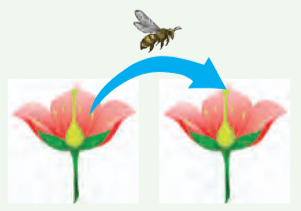
You may have seen brightly coloured flowers blooming around you. Have you ever looked closely at their parts? A flower has a stalk, green leafy structures called sepals, coloured petals and two reproductive parts. Carpels (female) and stamens (male). Stamens burst release yellow dust like pollen grains. Wind, ‘water insects, bats and birds helps carry pollen from the stamens to the carpels of the same and different flowers. This process is called pollination (Fig.12.2). It is essential for the formation of fruits and seeds.
12.3 Does Every Organism in a Community Matter?
Let us find out the role of different organisms in a community.
Activity 12.3: Let us read
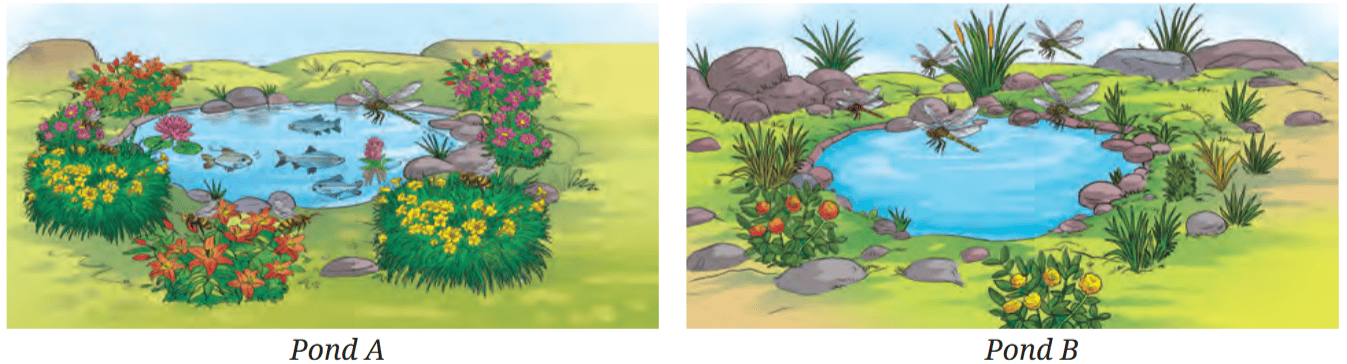
- Researchers conducted a study to see how fish in ponds affect seed production in the plants nearby. They observed two ponds — A with fish and large number of flowering plants around it; B without fish and fewer flowering plants around it (Fig. 12.3). Think of a reason for these observations.
- Compare the number of dragonflies, bees, and butterflies in both the ponds. Do you find any relationship between the number of dragonflies and bees/butterflies? We observed that in Pond A (with fish) the number of dragonflies were less as compared to Pond B. Why?
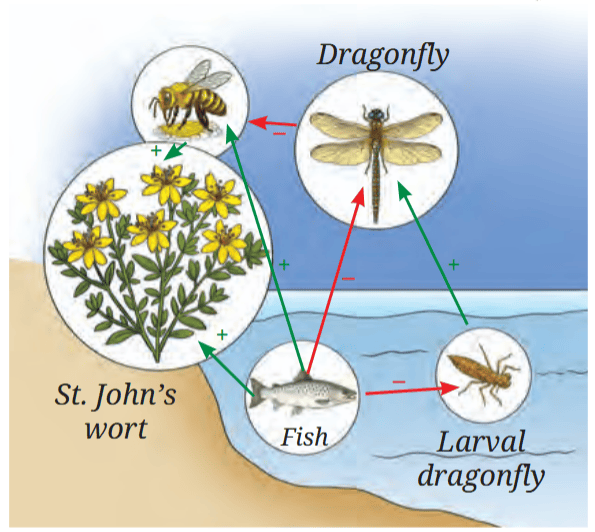
- Fish eat dragonfly larvae, so ponds with fish had fewer dragonflies. Dragonflies usually eat flies, bees and butterflies With fewer dragonflies, more bees, flies, and butterflies were found. These insects help pollinate flowers from nearby areas moving pollen from one flower to another, which helps plants produce seeds. So, flowers near ponds with fish may produce more seeds than those near ponds without fish.
- What does this study show? How does the population of fish in a pond affect the seed production in nearby plants?
- This study shows how biotic components (fish, dragonflies, pollinators, plants) and abiotic components (temperature, water, nutrients) interact with and affect each other (Fig. 12.4). Similarly, can overfishing by humans change this balance? How do you think it may affect the living and non-living parts of the habitat?
12.4 What Are the Different Types of Interactions Among Organisms and their Surroundings?
In Curiosity, Grade 7, you learn about how plants and animals need air, water, soil, and sunlight to grow. Living organisms, or the biotic community, depend on non-living things, that is abiotic components for their survival. Plants and animals also depend on each other for nutrition, respiration, and reproduction. These are interactions among the biotic components. Both types of interactions — among biotic components, and between biotic and abiotic components — are important for survival in any habitat.
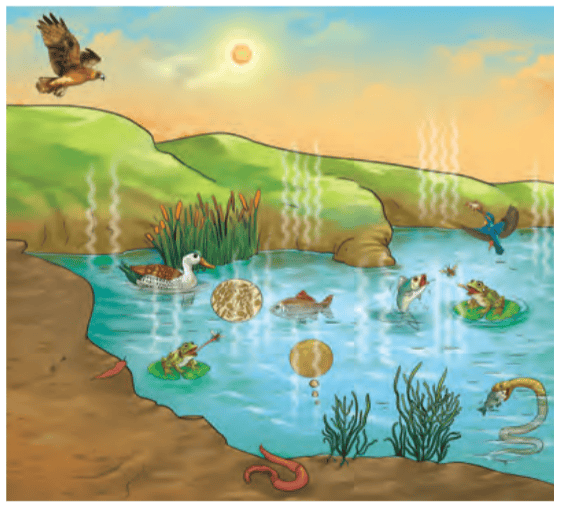
Look at Fig. 12.5, and try to identify interactions among biotic components, and between biotic and abiotic components based on your learnings till now.
Activity 12.4: Let us relate and identify
- Based on the given criteria, identify and describe the interactions between biotic and abiotic components shown in Fig. 12.5.
- Relate your learning with your observations.
- Record your observations in Table 12.3 at the appropriate places. Table 12.3 is filled with examples for your reference.
Criterion 1: Interactions between abiotic and biotic components. These may influence life processes like nutrition, respiration, and reproduction in biotic components.
Criterion 2: Interaction between two abiotic components these may influence the physical characteristics of a habitat.
Criterion 3: Interaction among the biotic components. These may influence the availability of resources needed for life processes like nutrition, respiration, and reproduction.
Table 12.3: Interaction of biotic and abiotic components in a habitat
| Criterion 1: Interactions between biotic and abiotic components | Criterion 2: Interaction between two abiotic components | Criterion 3: Interaction among the biotic components |
|---|---|---|
| Earthworms live in moist soil. | The day temperature is high due to the bright sunlight. | A frog eats insects. |
| Many microbes are present in the pond. | Water is evaporating fast due to the sunlight. | A water snake eats fish. |
| A fish lays eggs in water. | Air current is blowing slowly on the water surface creating gentle waves. | Frogs and fish may compete for small insects larvae. |
| The soil near the pond is moist. | A fish lays eggs in water near vegetation to protect them from other fish or frogs. |
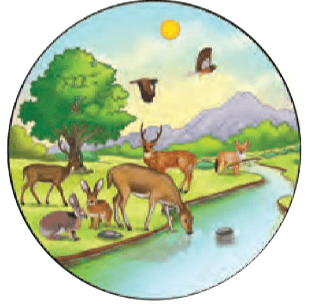
In Activity 12.4, you understood different types of interactions occur within a habitat. From this, you can infer that the biotic components (plants, animals, and microorganisms) and the abiotic components (air, water, soil, sunlight, and temperature) in a habitat interact with each other to form an ecosystem. Organisms in an ecosystem interact with abiotic components for food, shelter, and protection in an ecosystem. Different communities of living organisms interact with abiotic components in an ecosystems. There are two main types of ecosystems in nature. Aquatic ecosystems include ponds, rivers, and lakes while terrestrial ecosystems include forests, farms or even large trees like banyan, mango, or pilkhan. Hence, ecosystems can be large or small. Can you find overlapping ecosystems in Fig. 12.6?
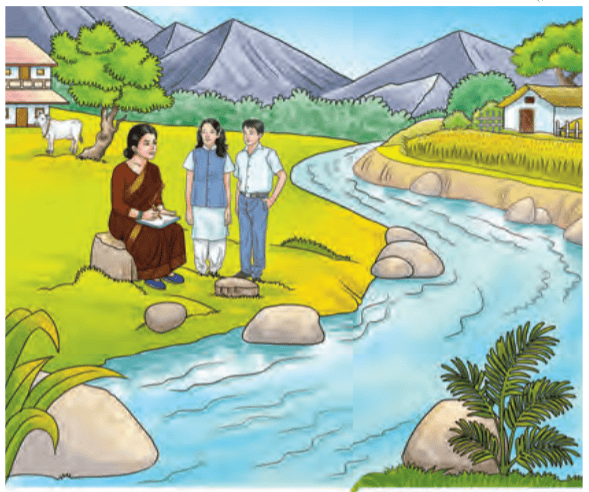
Fig. 12.6: Overlap of terrestrial and aquatic ecosystems
Fig. 12.6 shows an overlap of different terrestrial and aquatic ecosystems. In this figure, you can see a small river (an aquatic ecosystem) along with mountains, forests, grassland, and farmland, which are examples of terrestrial ecosystems. Farmland is a human-made ecosystem. These ecosystems are interacting with each other at any given point.
In Activity 12.4, we have seen the importance of the components and their interactions in an ecosystem. For example, sunlight, carbon dioxide, and water are essential for producing food in plants; soil provides medium and essential nutrients for plant growth; air provides oxygen for respiration in plants as well as animals; water is essential for all living organisms. This shows how living organisms depend on the non-living component of an ecosystem.
Just as biotic components depend on abiotic components, abiotic components also depend on biotic components. For example, plants release oxygen during photosynthesis, roots hold soil in place and prevent erosion, and plants retain soil moisture and help cool the atmosphere.
You can identify and study any ecosystem in your surroundings and observe different types of interactions among the biotic and abiotic components. While studying biotic interactions, notice how organisms depend on each other for food.
Activity 12.5: Let us classify
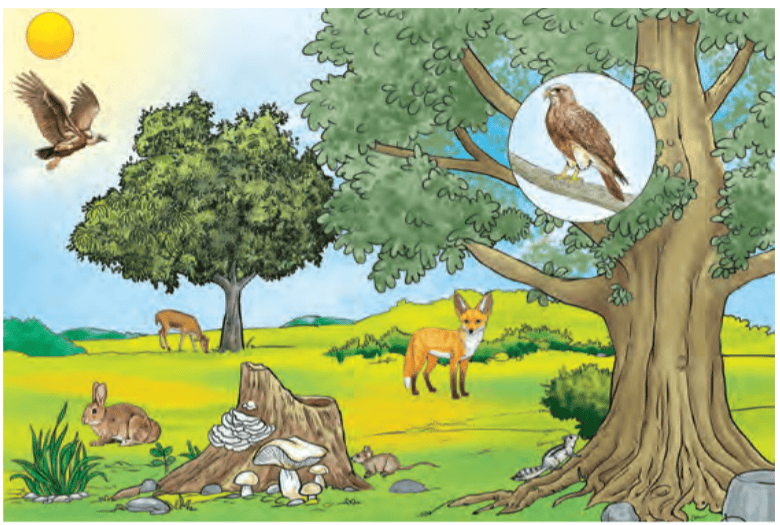
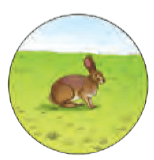
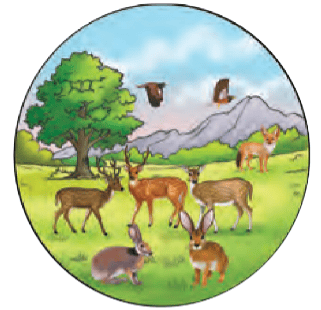
Observe Fig 12.1b, which illustrates a forest ecosystem.
- Study the picture carefully and spot the organisms listed in Table 12.4.
- Using the internet or your school library, find out what do these organisms eat.
- Record your observations in Table 12.4 by identifying whether each organism feeds only on plants and plant products, only on animals, or on both.
Table 12.4: Eating habits of different organisms
| Name of the organism | Performs photosynthesis | Feeds on plants and plant products | Feeds on animals | Feeds on both plants and/or animals |
|---|---|---|---|---|
| Deer | No | Grass and leaves of plants | No | Only on plants |
| Horse | ||||
| Vulture | ||||
| Bengal Fox | ||||
| Bird (Shikra) | ||||
| Squirrel | ||||
| Mouse | ||||
| Mushroom | ||||
| Tree | Yes |
How do plants get their food? As you know, plants make their own food by the process of photosynthesis. Thus, they are called producers or autotrophs (auto=self + troph=food).
Organisms that cannot produce their own food and depend on other organisms for their food are called consumers or heterotrophs (hetero = other + troph = food). List the heterotrophs from Table 12.4.
Organisms that eat only plants are called herbivores, such as deer and hare. Those that eat only animals are carnivores, such as leopard. Organisms that eat both plants and animals are omnivores, such as crows, foxes, and mice.
12.5 Who Eats Whom?
In Activity 12.5, we learn about the feeding relationship among organisms. How can we make linkages with the feeding relationship among organisms in a given ecosystem?
Activity 12.6: Let us link (relate)
- Take an example of a grassland ecosystem.
- Consider the following organisms that we can spot in a grassland ecosystem: grass, frog, hare, fox, grasshopper, snake, and eagle.
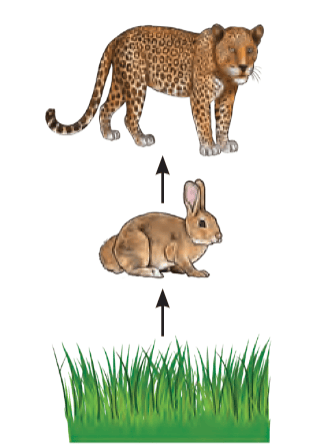
- In Fig. 12.8, a relationship of who eats whom is shown among some of the organisms.
- Draw the feeding relationships for the remaining organisms by adding arrows, similar to those in Fig. 12.8.
In Fig 12.8, you can see that the grass is eaten by the hare and the hare is eaten by the fox. This is a representation of a food chain in a grassland ecosystem. Which is another food chain that can be drawn for the organisms given in this activity? One example may be as follows:
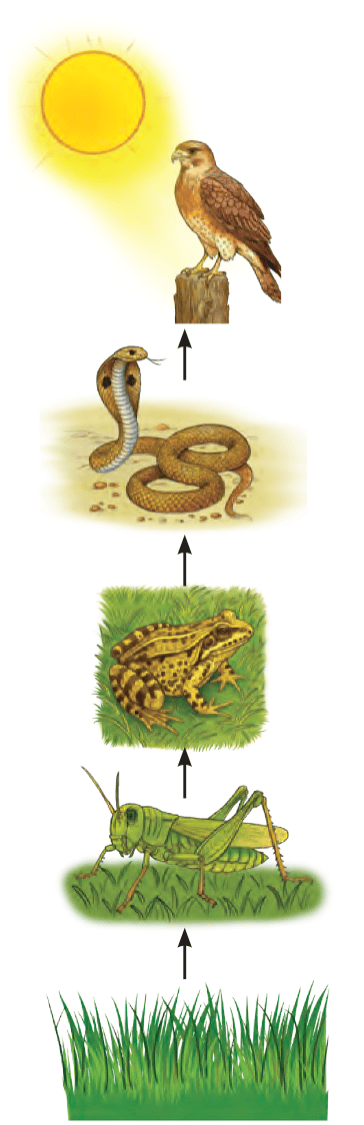
Grass - Grasshopper - Frog - Snake - Eagle
The interactions between biotic components based on feeding relationships can be represented in the form of a linear chain. A food chain is a simple sequence showing ‘who eats whom’ in an ecosystem. One such example is given in Fig. 12.9.
Activity 12.7: Let us draw
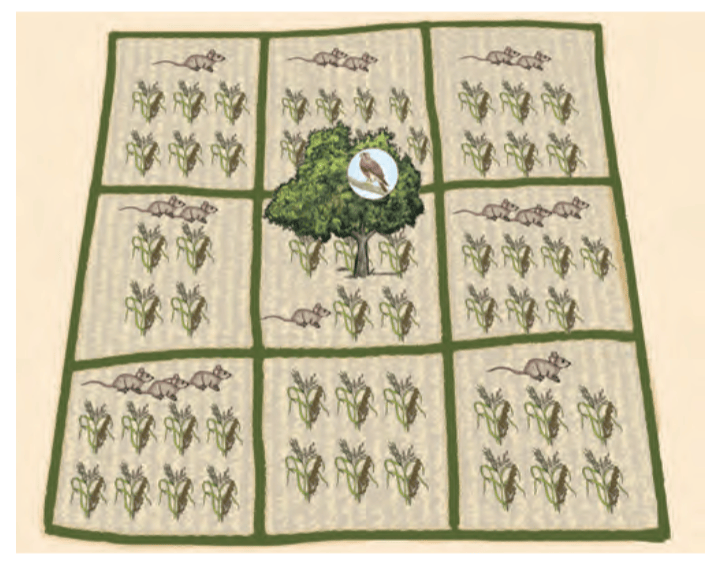
Fig. 12.10a represents a crop field with millets, mouse, and eagle.
- Count the number of each type of organism in Fig. 12.10a.
- Make a table and set a number in the table against each of the organisms.
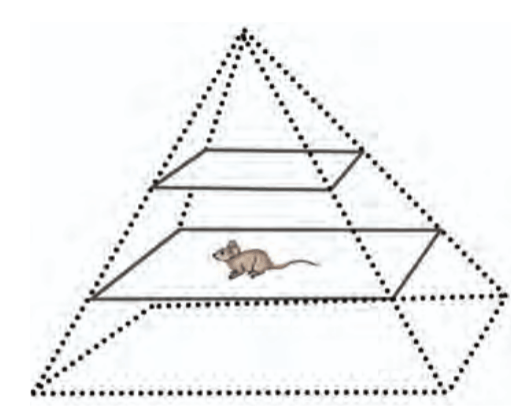
- Arrange the numbers in the ascending order, consider the highest number at the base and the lowest at the top.
- Place the mouse, millet, and eagle appropriately in Fig. 12.10b.
- What figure do you get? It looks like a pyramid. Complete the pyramid in Fig. 12.10b.
Each organism in a food chain has a specific position, called a trophic level (troph = food): - Producers (like green plants) are at the first trophic level.
- Herbivores (like hares and deer) are at the second level.
- Small carnivores (like frogs) are at the third level.
- Large carnivores (like tigers or vultures) occupy the next level.
Activity 12.8: Let us trace and link
- Look at Fig. 12.11.
- Look at the figure and put more arrows for the missing relationship of ‘who eats whom’.
- How many other organisms might be connected to one organism through a feeding relationship in an ecosystem?
Look at Fig. 12.11, and observe the relationship between different food chains in an ecosystem. Are these food chains interlinked? Each of the organisms may be eaten by two or more types of organisms. Thus, in an ecosystem, the food chains are interlinked with each other to form a network, called a food web.
You know that living organisms
grow, perform many functions,
develop, and die. During their life
cycle, organisms produce a lot of
waste, including dead matter and
food waste.
12.6 What Happens to Waste in Nature?
You may have seen small umbrella-like structures, mushrooms, growing on dead plants or trees during the rainy season (Fig. 12.12). These are a type of fungi that grow on dead matter. Microorganisms like fungi and bacteria break down complex substances in dead plants and animals into simpler ones. This process returns important nutrients to the soil. You can also find tiny insects, such as beetles and flies, on animal droppings — like elephant dung— as they help break it down and recycle nutrients, back into the environment. This process is called decomposition and the organisms carrying out the process are called decomposers or saprotrophs (sapro= rotten + trophs = food). Plants grow in soil and many of the nutrients in soil come from the decomposition process. Thus, decomposers play an important role in recycling nutrients. In nature, nothing is wasted — everything is reused. Does nature really waste anything?
Ever heard of ...
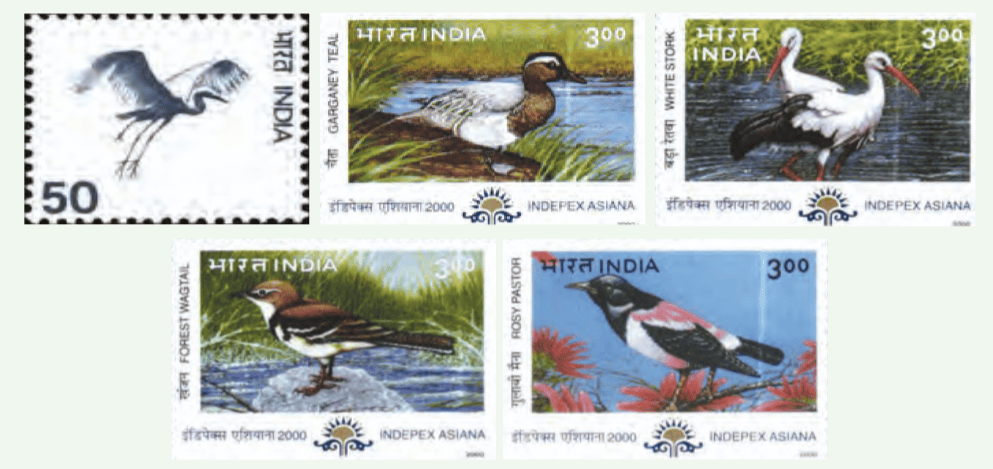
India is a country with diverse habitats and seasons. Many migratory birds fly thousands of miles and reach different habitats in India. They migrate from different parts of the world to avoid harsh climate, and in search for food. Birds not only enhance the aesthetics of those habitats but also play a significant role in keeping the balance in an ecosystem as pollinators or seed dispersers along the path they migrate. This way they link two habitats. These birds are predators of insect pests and help farmers to control pest populations, and indirectly help in healthy crop growth. Migratory birds, Demoiselle Crane visit the water body of Khichan village in Jodhpur district during the winter months. Do you know which birds in your area are seen only during winter? Collect postal stamps and covers of migratory birds released by the Indian Postal Department, and collect information about their place of origin and reasons for their migration to different localities in India and more. Showcase the postal stamps in your science laboratory/school library to popularise migratory birds.
12.7 How Does One Change Lead to Another?
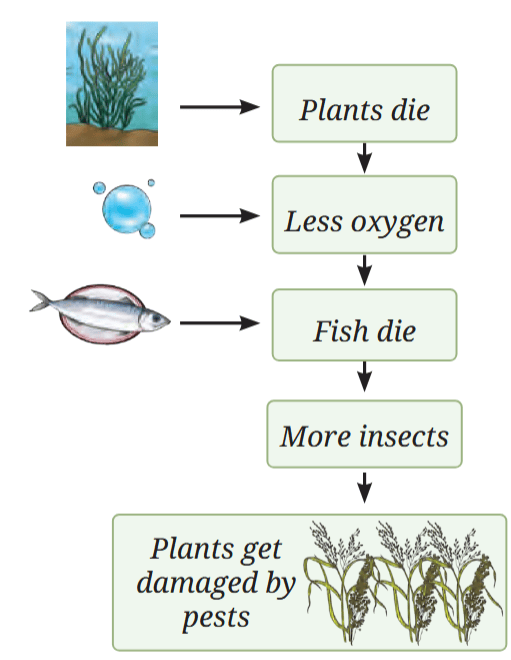
Look at Fig. 12.13. It shows how one small change can lead to many others. For example, many plants in a pond start dying because of pollution. With fewer plants less oxygen will be produced in water which will lead to a drop in the fish population in that water body. Reduction in fish population will have cascading effects and there will be less number of consumers in the pond. As a result, insects will increase in number. These insects will spread to nearby farmlands. This is how farmers will be compelled to use pesticides to grow their crops which may again adversely affect the environment. Further consequences may emerge in the form of other environmental issues.
What happens when we intervene in nature?
Activity 12.9: Let us read
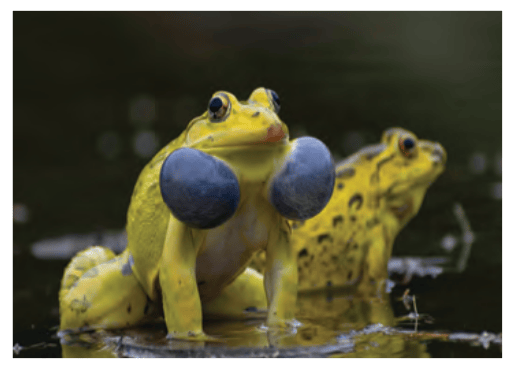
In the 1980s, India was a significant exporter of frog legs, especially of the Indian bullfrog (Hoplobatrachus tigerinus) (Fig. 12.14). This large-scale harvesting led to a decline in frog populations. Since frogs eat insects, their reduced numbers resulted in a rise in agricultural pests. This forced farmers to use more synthetic pesticides, which harmed the environment, soil and water quality, and affected the overall environmental and human health. The Government of India banned the export of frog legs to prevent further ecological damage.
An ecosystem stays in balance when interactions among organisms and their environment keep populations and resources stable. This balance is dynamic, not fixed, and can be disrupted by natural or human-made changes.
12.8 How Do Interactions Maintain Balance in Ecosystems?
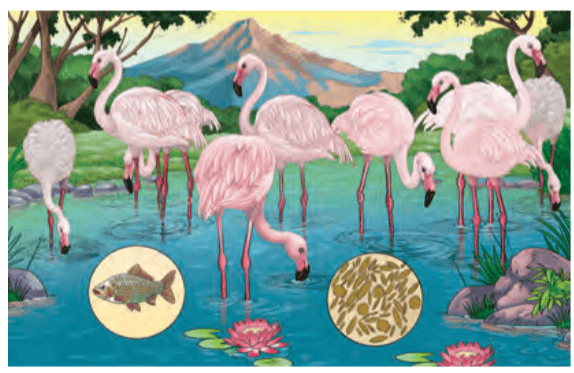
Besides feeding relationships, organisms also compete for common resources like food, water, physical space, or sunlight.
This competition helps control population size and keeps the ecosystem balanced. Without it, one species could multiply too much causing an imbalance in the ecosystem (Fig. 12.15).
There are other types of relationships too. Based on the example given in Fig. 12.16, what do you observe?
- Mutualism: Both organisms benefit. For example: Honeybees and flowers.
- Commensalism: One organism benefits while the other is not affected. For example: Orchids on trees.
- Parasitism: One organism
benefits while the other is
harmed. For example: Ticks on
the body of dogs.
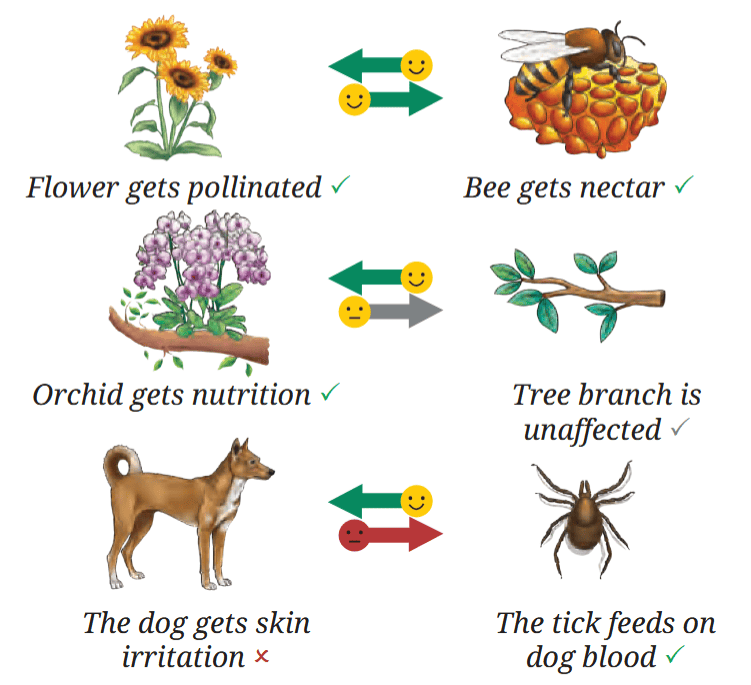
These interactions are all part of the complex web of life in an ecosystem.
Be a scientist
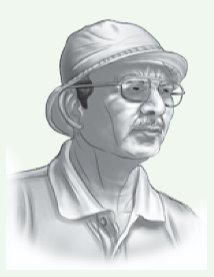
Asir Jawahar Thomas Johnsingh (A.J.T. Johnsingh) was a famous Indian wildlife biologist who helped us understand forest ecosystems through the eyes of animals. He was a pioneer in studying wildlife through modern tracking system. His research showed how predators like tigers and leopards rely on prey, such as deer and wild boar, while he was working in Bandipur National Park, Karnataka. He proved that a healthy prey population is key to predator survival. He inspired many youngsters to study wildlife and protect the forests and biodiversity of India.
12.9 What Are the Benefits of an Ecosystem?
We have learnt that biotic components and abiotic components of an ecosystem depend on each other and support various life processes. Humans also benefit from ecosystems. For example, forests provide fresh air, fertile soil, food, fibres, timber, and medicines. Similarly, aquatic ecosystems provide water and food. Ecosystems also offer aesthetic and recreational value. This benefits and supports our well-being and shows how closely nature and humans are connected. However, when we overuse or misuse natural resources, we disturb the balance in nature.
Now let us look at a real-life example of a threatened ecosystem — the Sundarbans.
The Sundarbans have the largest mangrove forests in the world. Located where the Ganges and Brahmaputra Rivers meet between India and Bangladesh, the Sundarbans’ forests and rivers are home to various flora and fauna, many of which are endangered. The Sundarbans protect us by slowing down strong winds and waves during storms and floods. The trees also absorb carbon dioxide from the air and release oxygen. Because of its importance, The United Nations Educational, Scientific and Cultural Organization (UNESCO) declared the Sundarbans a World Heritage Site in 1987. However, the Sundarbans (Fig. 12.17) are under a serious threat. Mangrove trees are being cut for fuelwood and farming. Illegal hunting and overuse of forest resources are a threat to the wildlife living there. Pollution from industrial waste and untreated sewage in rivers are also damaging the water and habitat. These human activities disrupt the natural way ecosystems work.
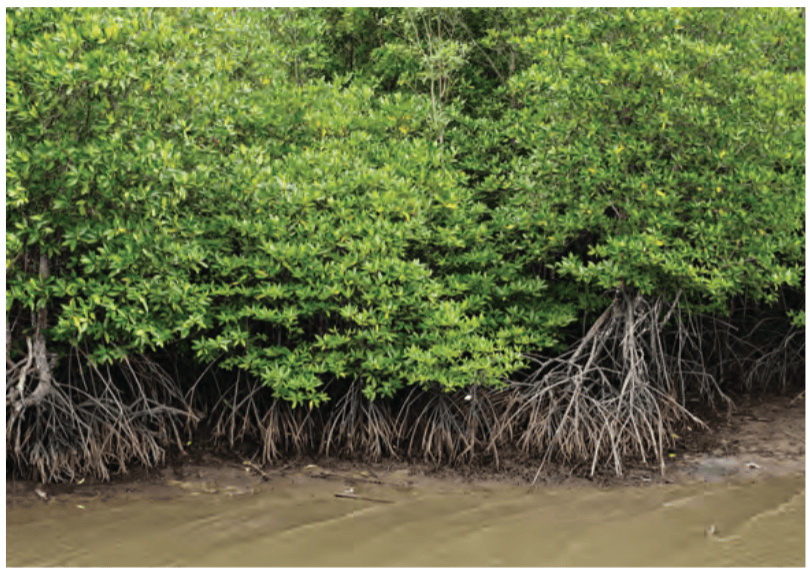
Similarly, other ecosystems across India are also under threat. Problems like deforestation, overuse of natural resources, the spread of invasive species, unsustainable land use, and pollution are damaging forests, rivers, scrublands, wetlands, grasslands, and coastal areas.
How can we stop damaging forests, rivers, and wetlands? Think about what actions you and your community can take to protect these important places.
Our scientific heritage
Protected areas are parts of land or water set aside to conserve wildlife and their habitats. India has many protected areas like national parks, wildlife sanctuaries, biosphere reserves, and community conserved areas. These places help protect entire habitats including endangered animals, birds, and many rare plants. Famous examples include Jim Corbett National Park (Uttarakhand), Manas National Park (Assam), Nilgiri Biosphere Reserve (Western Ghats), Chilika Lake (Odisha), Eaglenest Wildlife Sanctuary (Arunachal Pradesh), Hemis National Park (Leh), Keibul Lamjao National Park (Manipur), Pirotan Island Marine National Park (Gujarat). Protected areas play a big role in saving nature for future generations.
Humans have created artificial ecosystems like fish ponds, farms, and parks to meet their needs. When well designed, these can help reduce pollution, support biodiversity, and provide recreational spaces for people. Unlike natural ecosystems, these need human care and management. Can you name any human made ecosystem in your area?
12.9.2 How do healthy ecosystems serve our farms?Farming, a major livelihood in India, can become unsustainable if not managed well by applying environment friendly farming practices.
Humans have been practising farming for thousands of years to grow food. As the population grew, our dependence on agriculture increased. Between 1950 and 1965, India faced a food crisis due to low crop production. In the mid-20th century, the use of tractors, machines, synthetic fertilisers, and pesticides helped increase food production. This period is known as the Green Revolution. However, these farming methods are now considered unsustainable because of the overuse of synthetic chemicals, excessive groundwater extraction, and growing only one type of crop for commercial gain. How do these practices harm both the environment and human health?
Many scientists believe that overusing pesticides and growing the same type of crop repeatedly on the same land leads to soil degradation. Understanding ecosystems can help us adopt better and more sustainable farming practices.
Activity 12.10: Let us survey
Visit a nearby farm with your parents or teacher/interact with farmers in your community to find out about the farming practices they adopt.
- Prepare a list of questions for farmers to find out the pesticides and other farm inputs they use, and whether they reuse or recycle materials to improve their crops. Here are some sample questions:
- How have your farming practices changed over time? And why?
- What effects do you notice when using synthetic fertilisers and pesticides?
- Have you seen any changes in soil health after using these synthetic fertilisers and pesticides?
- Interact with farmers based on these questions. Based on your findings, prepare a report.
What inference do you draw from your interactions with farmers?
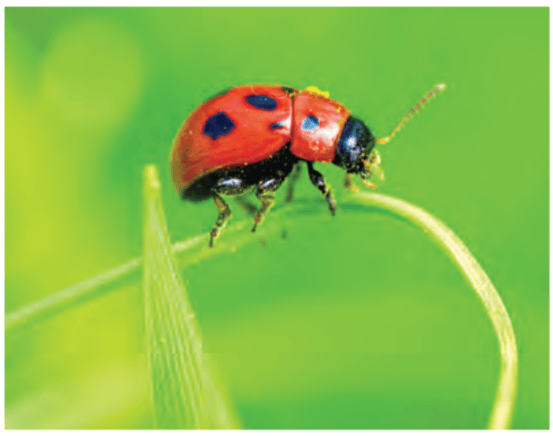
Synthetic fertilisers and pesticides have played a vital role in improving crop production and helped countries like India become food secure. However, their long-term use can affect the environment and soil health. Overuse of synthetic fertilisers may reduce soil fertility by decreasing friendly microorganisms in soil and lowering organic matter (humus), which helps bind soil particles. Without enough humus, soil becomes prone to erosion. Also, it reduces the population of natural predators which ultimately increase the population of pests (Fig. 12.18). Heavy irrigation and repeated ploughing can also disturb soil organisms like earthworms and snails, which are important for maintaining ecological balance.
Some pests may develop resistance to pesticides, making them difficult to control. Growing the same crop repeatedly, known as monoculture, can reduce crop diversity and affect pollinators, which are crucial for food production.
To make farming more sustainable, some farmers are exploring organic and natural farming methods. These aim to reduce the use of synthetic fertilisers and support sustainable farming, with minimal interference in natural ecosystems. Based on your learning, what practices do you think can help farmers protect the soil, the environment, and our food security for the future?
Our scientific heritage
The ancient text Vrikshayurveda emphasises on soil health and nourishment. The text strongly advocates for the continuous nourishment of the soil through organic manure like Kunapa Jala (a liquid fertiliser made from animal and plant waste by the process of fermentation; that breaks complex substances into simpler ones) and other composted materials.
Snapshots
- A habitat is a place that provides the right conditions for an organism to live and grow.
- Habitats have biotic components (plants, animals, microbes) and abiotic components (air, water, soil, temperature).
- The interaction between biotic components and abiotic components in an area forms an ecosystem.
- Ecosystems can be terrestrial (forests, grasslands, deserts) or aquatic (ponds, lakes, sea, oceans).
- Organisms often classified as producers (plants), consumers (herbivores, carnivores, omnivores), and decomposers (bacteria, fungi).
- Producers make their own food, while consumers eat plants or animals. Decomposers break down dead matter and recycle nutrients.
- Food chains depict who eats whom in an ecosystem, and food webs show how these chains are interconnected. The positions that different organisms occupy in a food chain are called trophic levels.
- Some organisms live in relationships, like mutualism (both benefit), commensalism (one benefits, other is unaffected), and parasitism (one benefits, one is harmed).
- The benefits that ecosystems offer are crucial for human survival and well-being. They provide clean air, water, food, medicine, and climate regulation.
- Human activities like pollution, deforestation, habitat loss, climate change, invasive species, and overexploitation of natural resources threaten ecosystems. Protecting them through efforts, such as conservation like national parks and sanctuaries is vital.
Keep the curiosity alive
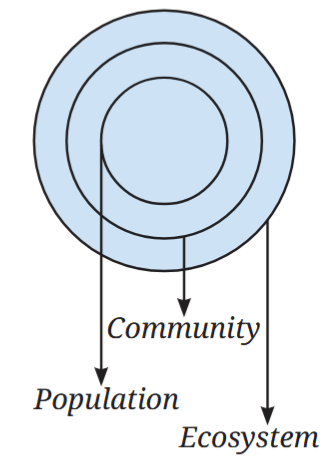
- Refer to the given diagram (Fig. 12.19) and select the wrong
statement.
- (i) A community is larger than a population.
- (ii) A community is smaller than an ecosystem.
- (iii) An ecosystem is part of a community.
- A population is part of a community. If all decomposers suddenly disappear from a forest ecosystem, what changes do you think would occur? Explain why decomposers are essential.
- Selvam from Cuddalore district, Tamil Nadu, shared that his village was less affected by the 2004 Tsunami compared to nearby villages due to the presence of mangrove forests. This surprised Sarita, Shabnam, and Shijo. They wondered if mangroves were protecting the village. Can you help them understand this?
- Look at this food chain: Grass Grasshopper Frog Snake If frogs disappear from this ecosystem, what will happen to the population of grasshoppers and snakes? Why?
- In a school garden, students noticed fewer butterflies the previous season. What could be the possible reasons? What steps can students take to have more butterflies on campus?
- Why is it not possible to have an ecosystem with only producers and no consumers or decomposers?
- Observe two different places near your home or school (e.g., a park and a roadside). List the living and non-living components you see. How are the two ecosystems different?
- ‘Human-made ecosystems like agricultural fields are necessary, but they must be made sustainable.’ Comment on the statement
- If the Indian hare population (Fig. 12.20) drops because of a disease, how would it affect the number of other organisms?
Discover, design, and debate
- Plan a clean-up day at school or a nearby park. Wearing gloves and using bags, collect the litter you find. Discuss the kinds of waste you found. Which was the most common? How can we reduce such waste?
- In Arunachal Pradesh, the Nyishi and Mishmi tribes treat the Tiger as sacred. In Chhattisgarh, the Baiga tribe worships Bagheshwar or Bagesur Dev and believes the Tiger is the protector of the forest. Find out about another Indian tribe that has a special bond with any animal.
- Pick a tree near your home or school. Observe it once a week
for 4 weeks. Note any new leaves, flowers, fruits, or visiting
birds and insects. Record your observations. You may even
upload your findings to www.seasonwatch.in and become a
young citizen scientist.
 Prepare some questions based on your
learnings so far .........................................
Prepare some questions based on your
learnings so far .........................................
......................................
......................................
......................................
......................................
- Interact with farmers and record indigenous practices followed by them for sustainable farming. Create a sustainable herbal garden/natural farm at home or at school. It could be a group activity with students from different grades.
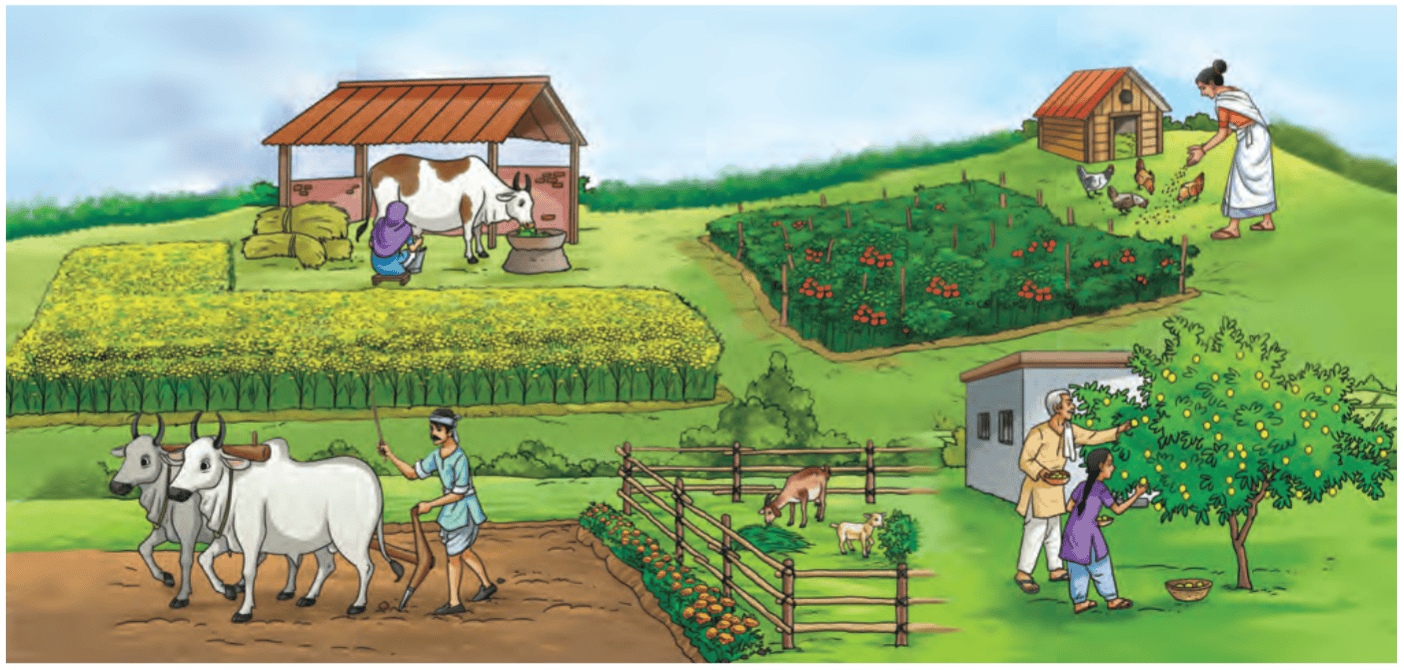
- Look at Fig. 12.21 to understand the different farming
practices adopted by farmers or you may also visit a nearby
farm with an elderly person to observe the same. List a few
suggestions in your notebook to improve farming practices
by adopting eco-friendly and sustainable techniques. You can
also make posters or model and display while participating
in school functions, science fairs or Krishi Mela. The school
may also invite agricultural scientists, farmers, and experts
to discuss the prevalent farming practices with the students.
 Reflect on the questions framed by your
friends and try to answer ...
Reflect on the questions framed by your
friends and try to answer ...