8
INSPIRATION AND IMAGINATION


INSPIRING ARTISTS
We may assume that musicians and artists are born with a natural talent or gift, and that they are lucky to be on stage and perform in front of people. But, many musicians had to overcome a disability or a difficult circumstance in their lives to achieve success.
Ravindra Jain (1944 – 2015)
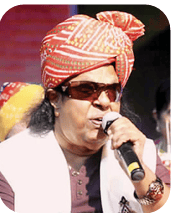
Ravindra Jain was a well-known music composer and songwriter, who mainly worked in Hindi films. Despite being blind, he became one of India’s most loved musicians. He composed music for more than 200 Bollywood films, and also composed music for the popular television series, Ramayan. Ravindra Jain won the Filmfare award for Best Music Director for Ram Teri Ganga Maili (1985), and also performed in hundreds of live and TV shows.
- Do you know about any artist in your community, region or state who is differently-abled, or had to break barriers to pursue their passion?
- Learn about artists like Ghatam Suresh Vaidyanathan and Puttaraj Gawai.
- Find out more about the artist including —
- Where they are from?
- What is the art form they practise?
- How they started learning or pursuing their passion?
- What were the specific challenges they had to overcome?
- Listen to their music and watch videos of their performance or interviews.
Reflect on what you can learn from their lives and share it with your classmates.
MUSICAL MONUMENTS
Many temples and historical buildings have deep connections with music.
Several temple sculptures depict musical instruments being played. Here are a few examples —
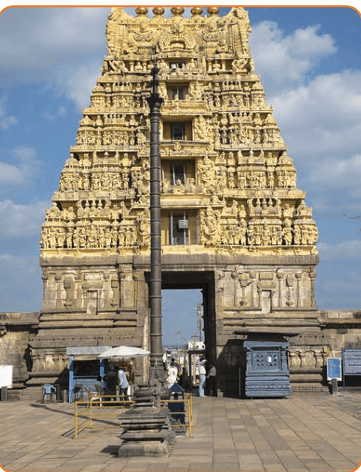 Chennakeshava Temple, Belur, Karnataka
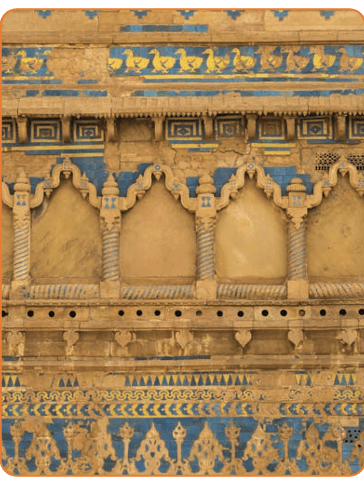 Gwalior Fort, Gwalior, Madhya Pradesh
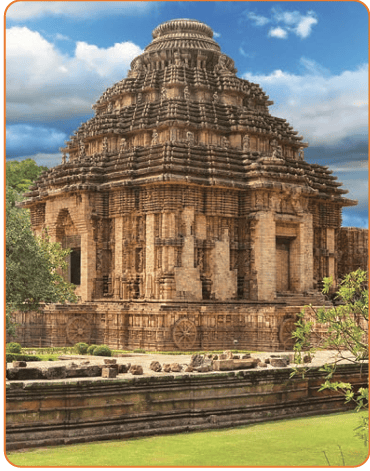 Konark Sun Temple, Konark, Odishas
- Find out more about how each of these heritage monuments are connected to music.
- Write a page about each of them.
- Find out whether music concerts or festivals are conducted in these sites in present times.
MUSICAL PILLARS
Indian temples have a tradition of musical pillars. Due to the material of the stone and the precise carving of the pillar, they produce musical notes when struck, which is indeed a marvelous coming together of music, science and sculpture.
- Vijaya Vittala Temple, Hampi, Karnataka Features: 56 pillars that produce musical notes.
- Airavateshwara temple, Darasuram, Tamil Nadu Features: A stone staircase that produces different notes when tapped.
- Padmanabha Swamy temple, Thiruvananthapuram, Kerala Features: Carved stone, Kerala pillars that produces musical notes when struck.
How do these pillars work?
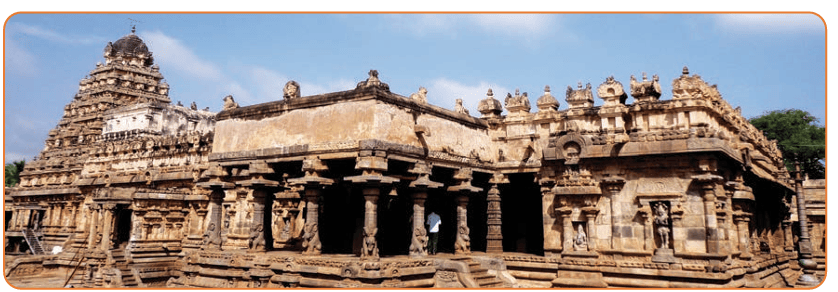 Airavateshwara temple, Kumbakonam, Tamil Nadu
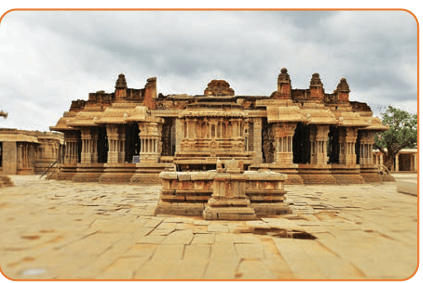 Vijayavitthala temple, Hampi, Karnataka
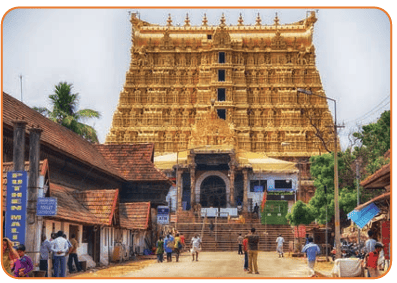 Padmanabha Swamy temple,
Thiruvananthapuram, Kerala
Padmanabha Swamy temple,
Thiruvananthapuram, Kerala
- The pillars are made of resonant stone that vibrate at clearly audible frequencies.
- They are often hollow and have varying densities, allowing different frequencies to be produced.
- Do you know a local music school or venue? If not, try searching online or asking family and friends.
- Find out more about what this institution does . Do they conduct music classes? Do they organise concerts? What other activities take place in that institution?
- If you can, visit there and understand more about their activities.
- You may even discuss with your parents about joining a music class in-person or online.
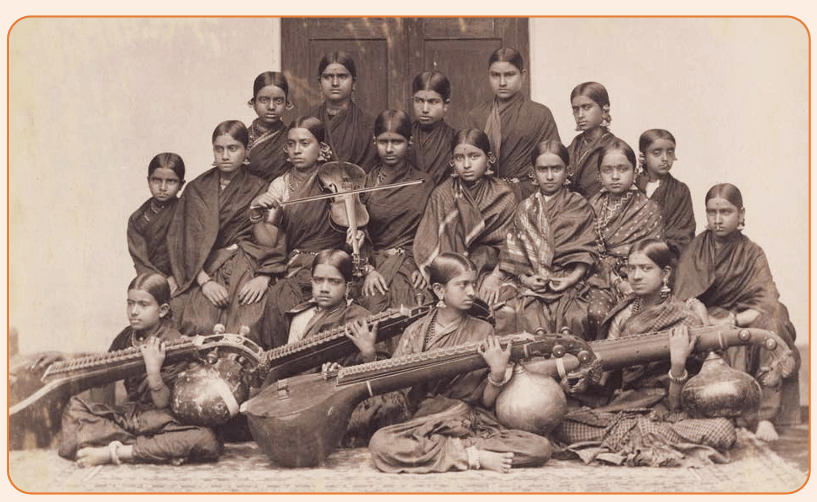 Group of girls attending a music school in Mysore, India (1895)
Note to the Teacher
(1) There may be some music institutions that are in your vicinity. Explore the possibility of taking the students to the institution on a field trip to get a first hand experience of a music environment.
(2) Have you heard of — (i) Shillong Chamber Choir and (ii) Chhatisgarh — Bastar Band or any other traditional indigenous band being played in India. Record how you felt after listening to them. Research on other communities who have orchestral or vocal bands.

IMAGINING MY FUTURE
Over this year, we have explored a lot of different ideas about the elements of music, instruments, songs and emotions. We have also been inspired by the lives of musicians and legends. You can be successful too, with focus and dedication, and contribute to building a stronger nation. Let us spend some time imagining your future.
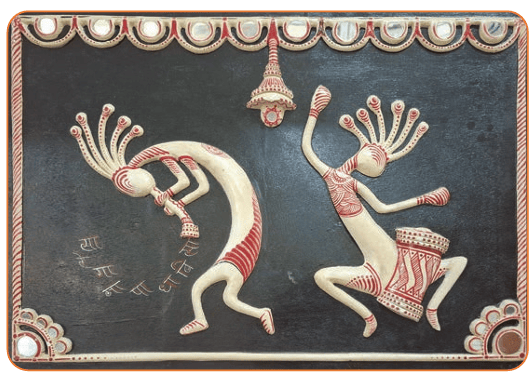 Tribal folk art depicting playing of indigenous
musical instruments
Tribal folk art depicting playing of indigenous
musical instruments
Write a newspaper article about yourself (in the third person point of view), twenty years from now. Before you start writing, think and note down points for the following:
Whatever career you have selected;
- What are some of your major accomplishments?
- Contribution of music or any other art form in your personal life.
- What is the milestone event you would like to report?
- What do you like to do at present?
- Any other interesting details about your personal life.
- Your future dreams
If you need some inspiration, look at the biographies and achievements of the people you admire. Remember, you have the power to make this world a better place.
Create a draft using these points, and then, think of an eye-catching headline. Write a final article of 400–500 words in length, and post it on your class notice board.
Extension activity: Think of how media and reporting may evolve in the future. If you prefer a podcast, a short form video, or a blog to a newspaper article, try one of those formats.
A musical autobiography uses music to tell the story of one’s life. To do this activity, follow these steps: Think about your life so far, and note down some important details you want to share, like where you were born, something about your family, the interesting things you have done, your hobbies, and anything else you want people to know about you. For each of these details, identify a piece of music that represents what you would like to convey. Write a few sentences on why this song is relevant to your autobiography. Share the songs and descriptions with the class.
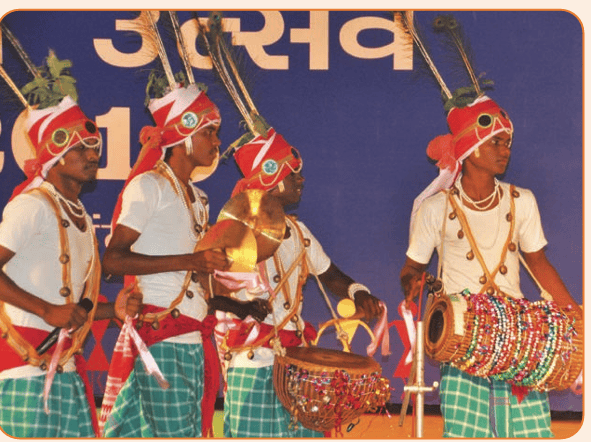 On my way to become a drummer
Extension activity: Take events from your personal history, and write song for your musical autobiography. Think about the lyrics, melody and its arrangement, and how they support the story.
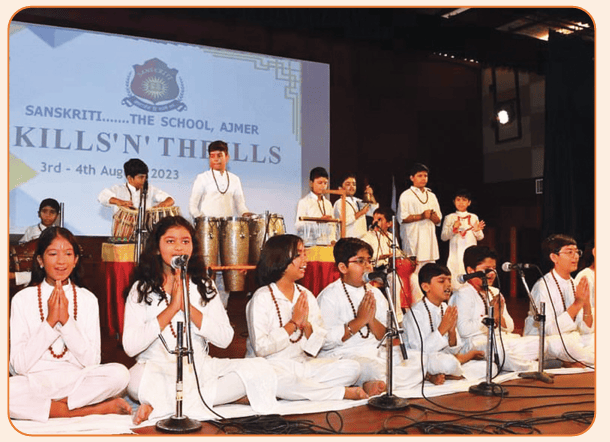 Stepping into the rhythm of an ensemble of orchestra and choir
ASSESSMENT
CHAPTER 8: INSPIRATION AND IMAGINATION
| CG. | C. | Learning Outcomes | Teacher | Self |
|---|---|---|---|---|
| 2 | 2.2 | Ability to use music to tell a personal story. | ||
| 3 | 3.2 | Reflects on a music performance or a visit to a music institution. | ||
| 4 | 4.1 | Engages with music in contemporary genres and by contemporary artists. |