Note to the Teachers
Please provide a spacious hall for students to move and dance. The space must have ample ventilation and adequate lights. Guide the students according to their ability to adapt the principles provided below. Help them to form groups and work as a team.
Pedagogy Principles
- Help students understand the importance of a relaxed body for dance and the importance of breath.
- Understand the concept of a still point and movement emerging and finishing in still point.
- Learn about the cultural diversity of India through its major traditional and various folk dance forms.
- Use of hand gestures as a communicative device.
- Expression of emotions — comfort level in expressing emotions. Encourage students to express both positive and negative emotions to foster emotional well-being.
- Learning concepts of inclusivity and gender sensitisation by role-playing in traditional dances.
- Understanding contemporary Indian dance and its role in popular culture. Exploring creativity with movements.
- Learning and researching notable Indian dance personalities.s
- Understand the importance of teamwork and collaborative effort in dancing.s
- Holistic appreciation of dance and movement, and embracing the importance of nature.s
The Curricular Goals and Competencies are given on next page.
| CG-1 | Develops openness to explore and express themselves through various Art forms. |
| C-1.1 | Expresses confidently their personal and everyday life experiences through a variety of Dance and Movement activities |
| C-1.2 | Demonstrates flexibility in the process of collaboratively developing Dance and Movement practices. |
| CG-2 | Applies their imagination and creativity to explore alternative ideas through the Arts. |
| C-2.1 | Creates and performs Dance and Movement sequences that challenge stereotypes observed in their surroundings (such as gender roles). |
| C-2.2 | Connects elements of Dance and Movement, mudras, gestures, and postures with personal experiences, emotions, and imaginations. |
| CG-3 | Understands and applies artistic elements, processes, and techniques. |
| C-3.1 | Demonstrates stage etiquette, care for stage equipment, props, and costumes; and makes informed choice while using Dance and Movement techniques. |
| C-3.2 | Reworks ideas and expressions used in Dance and Movement from the stage of planning to final performance, and reviews the entire process. |
| CG- 4 | Acquaints themselves with a range of aesthetic sensibilities in regional arts and cultural practices. |
| C-4.1 | Demonstrates familiarity with various local, and regional forms of Dance and Movement. |
| C-4.2 | Describes the life and work of a few local dancers and movement artists in their region and across India. |
10
INNER DYNAMICS OF DANCE


1. Breath in Dance
According to yogic philosophy, the word ‘prāna’ refers to the vital breath of life. The flow of breath that occurs during inhalation and exhalation is known as prānāyama.
Dance is also fuelled by this life force, prāna. Dance movements begin with the equipoise, i.e., a relaxed spine. Breathing helps to relax the body, especially the spine, which enables the body to move with maximum agility and stability. Breathing forms the link between two seamless dance movements.
Breath plays a significant role in physical dance movements and also while conveying emotions.
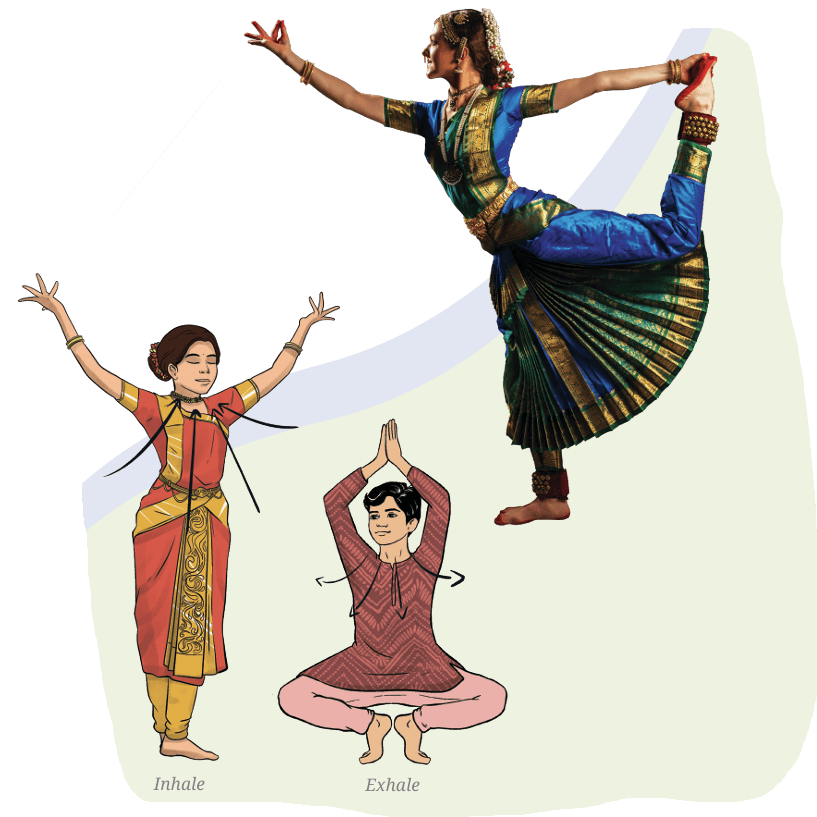
- Divide yourselves into four groups.
- Each group will hold a dance posture practised in earlier classes. Observe the flow of breath through the movement of your spine.
- Then, work out a movement with expansion of the body — for instance, arms outstretched, body bending, elongated movements of the feet while observe how breathing in helps the body.
- Next, shift into another movement where there is body contraction, such as crouching the body in fear or nervousness, and breathe out while doing it.s
- Finish it with another static posture with a relaxed breath.
- Once each group finishes presenting their movement pattern, discuss how breathing worked for both stillness and movements.
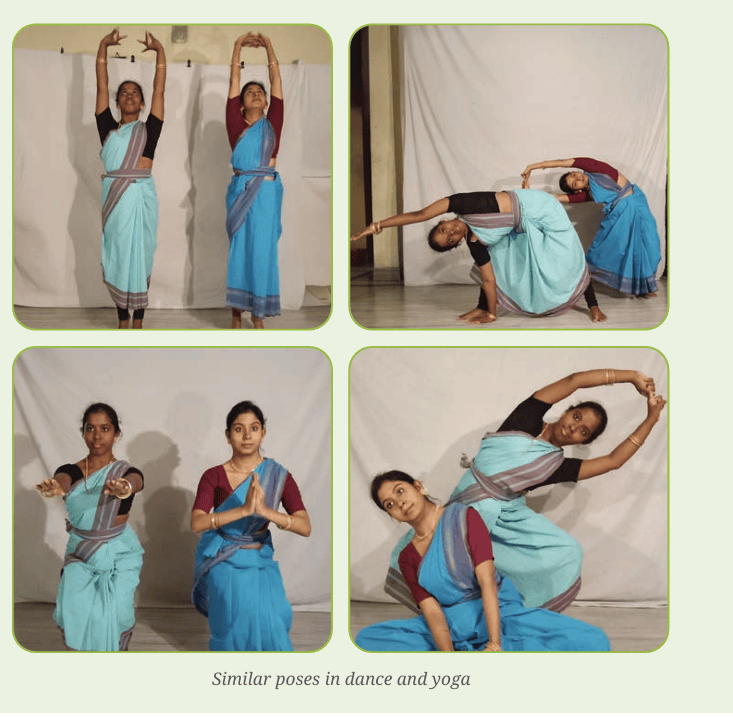
2. Elements of Dance
Dance is a combination of being static and dynamic. There is a moment of stillness in postures and then, there is motion in movement.
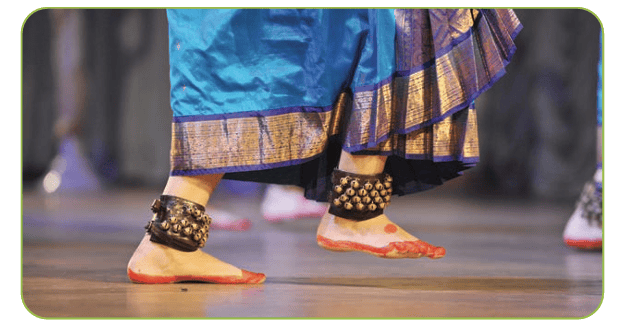
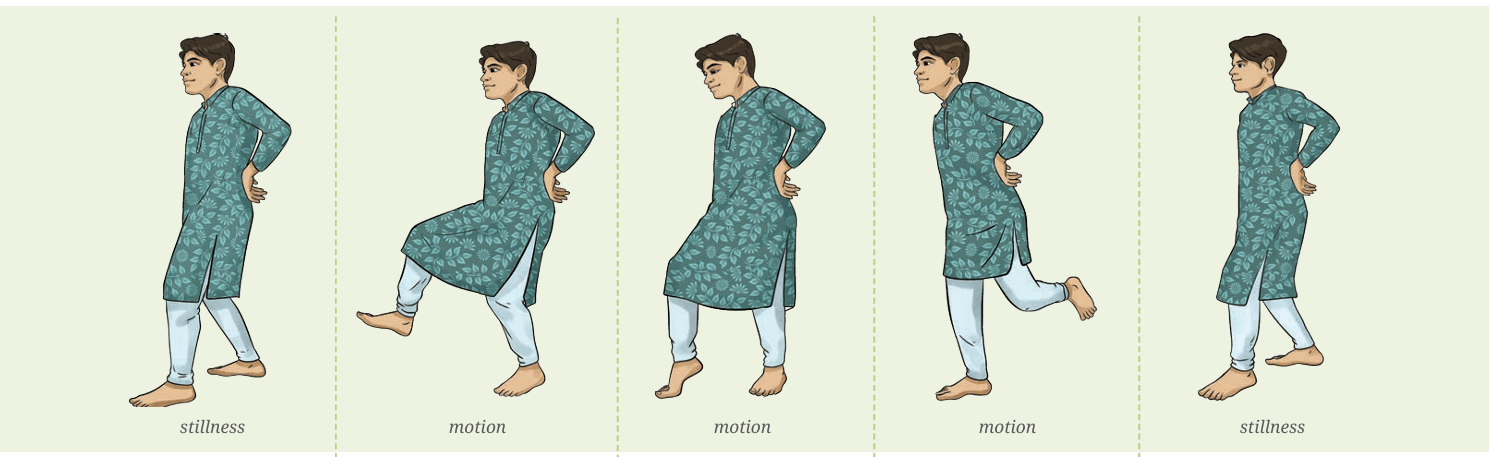
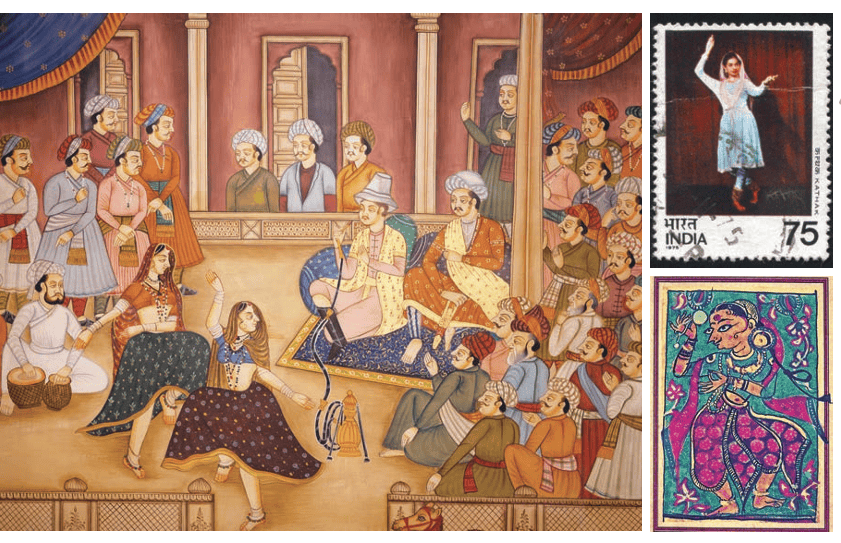
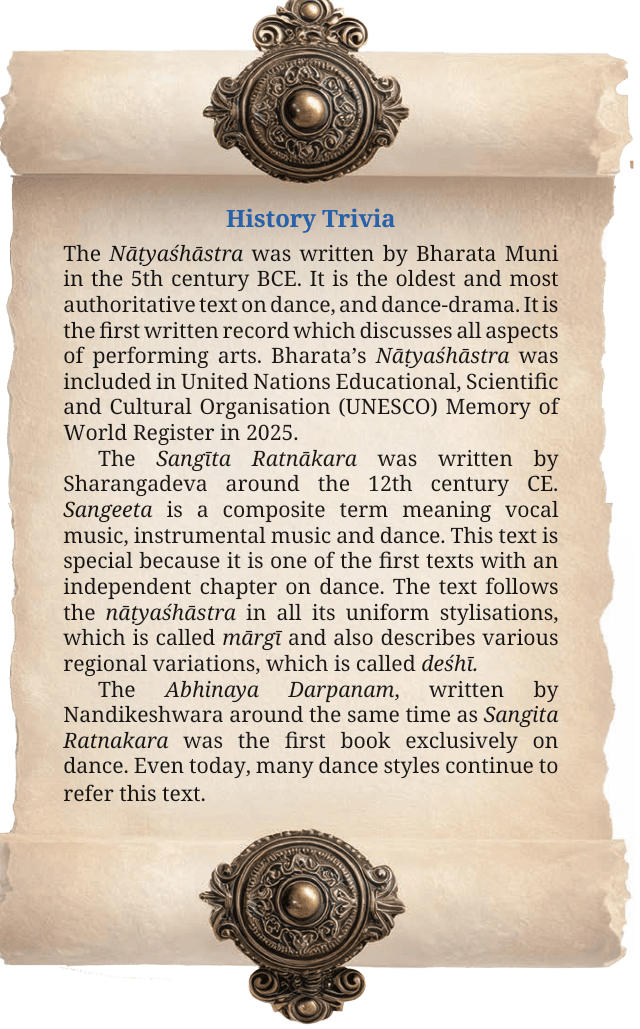
The postures and movements are described in various dance texts, and each dance text offers their unique interpretation and terminology.
The Nāṭyaśhāstra calls postures sthāna and ways of moving as chāri, gati and mandala.
The Sangīta Ratnākara (ocean of sangita) gives us more variations of the same and includes regional variations, deshi.
The Abhinaya Darpaṇam (mirror of gestures) calls postures — sthānaka and mandala, and depict ways of moving as chāri and gati.
3. Postures in Dance
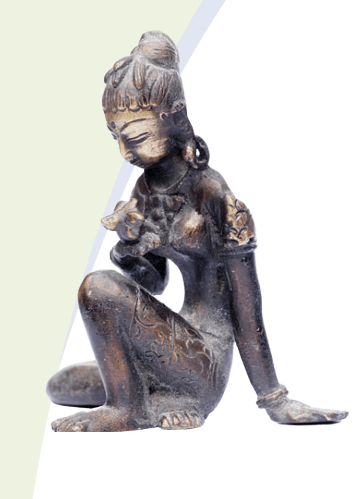
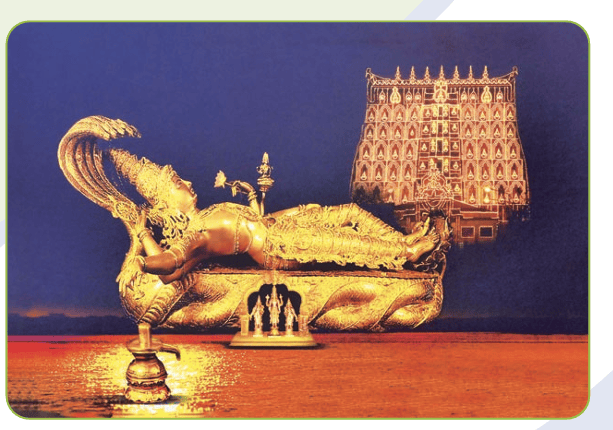
According to Nāṭyaśhāstra, sthānas are of three types — standing, sitting and reclining postures.
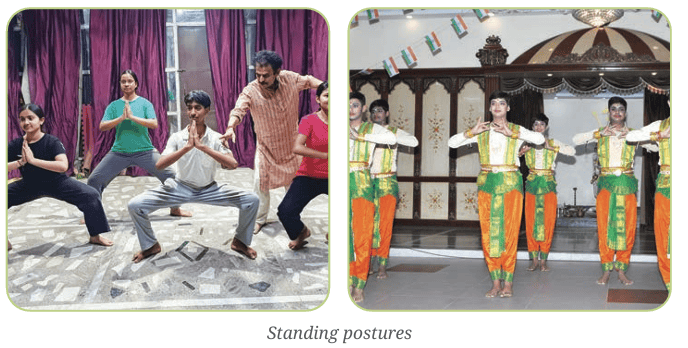
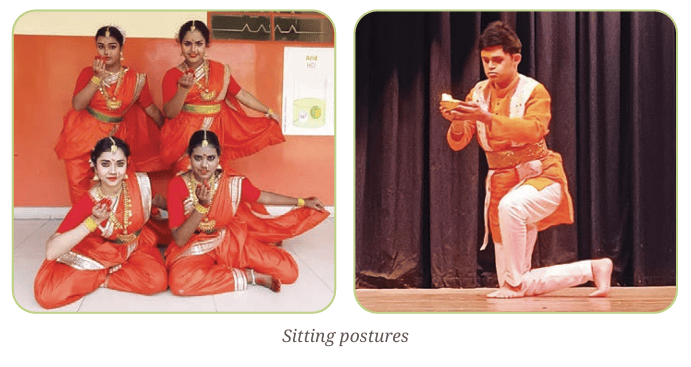
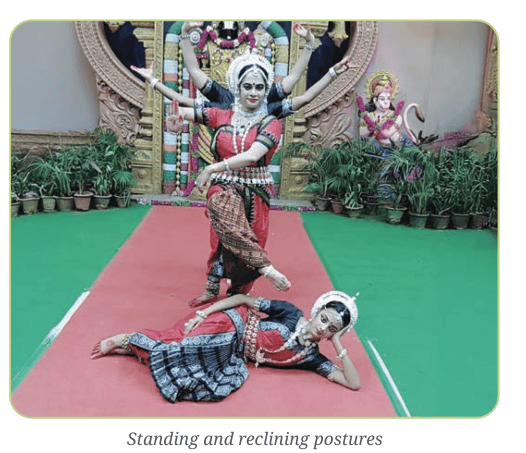
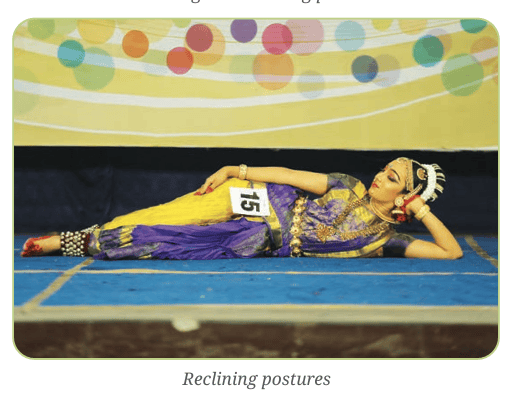
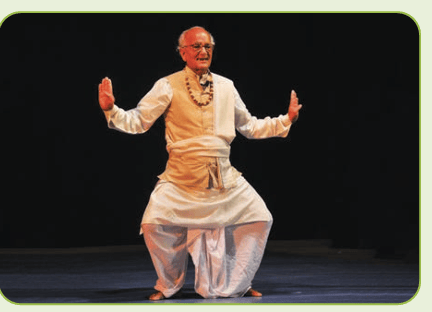
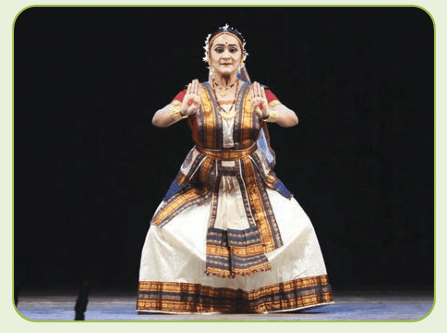
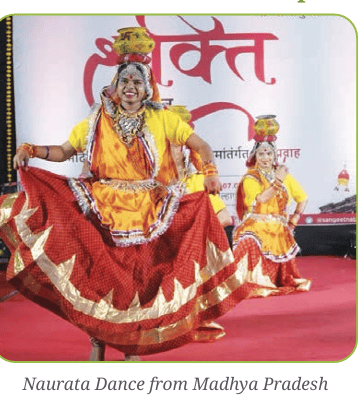
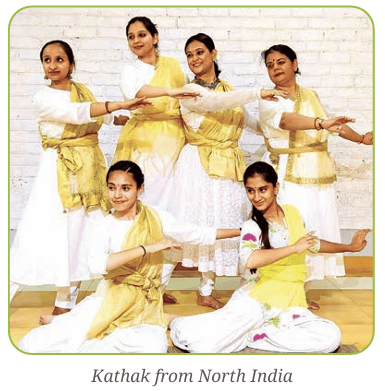
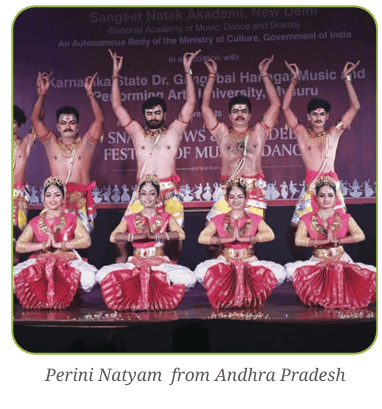
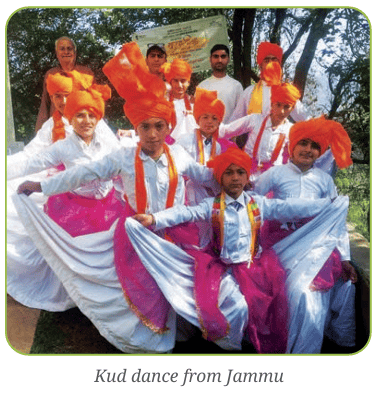
Observe the different postures in different dance forms:
Notice the postures in these beautiful bronze sculptures. Isn’t it wonderful how different arts are connected together?
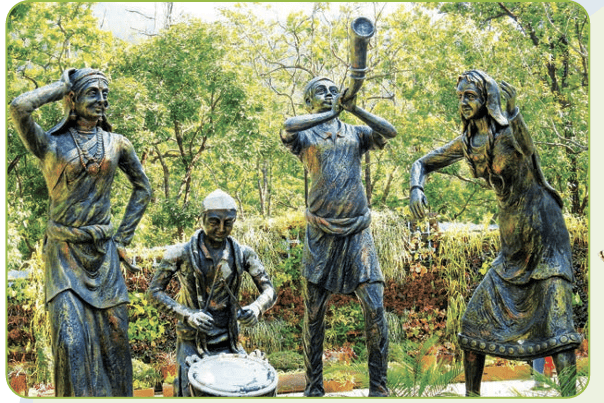
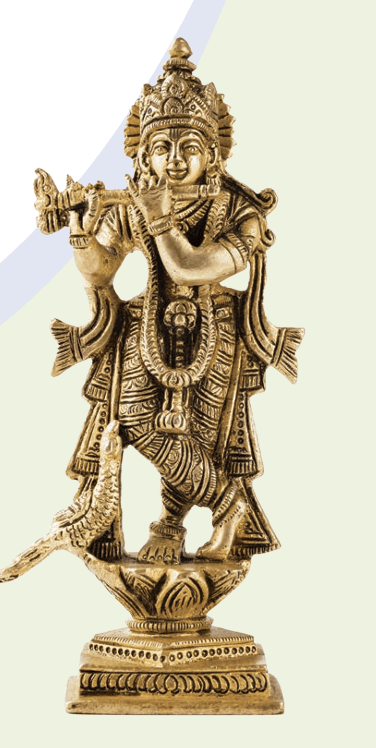
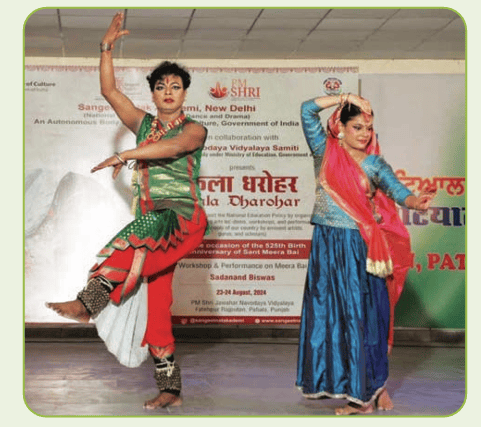
- Begin by trying the sthānas shown in the reference image above.
- Can you identify which postures feel masculine, feminine, or both?s
- Observe postures from regional or traditional dance forms, and try to do some postures they use.
Watch from the QR code and websites from the internet.
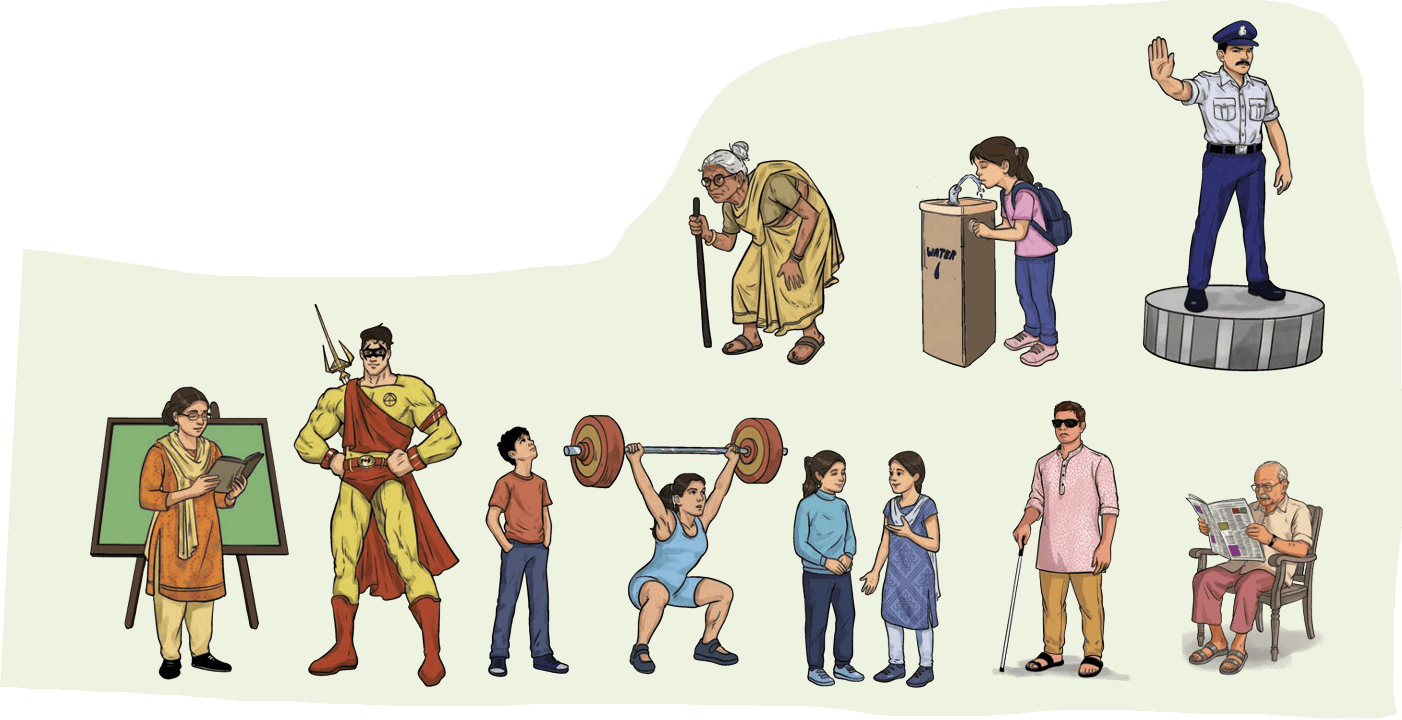
Observe your surroundings, and notice how everyone stands in a unique posture when doing day-to-day activities, like watching a bird fly in the sky, drinking water, reading, chatting with friends, etc.
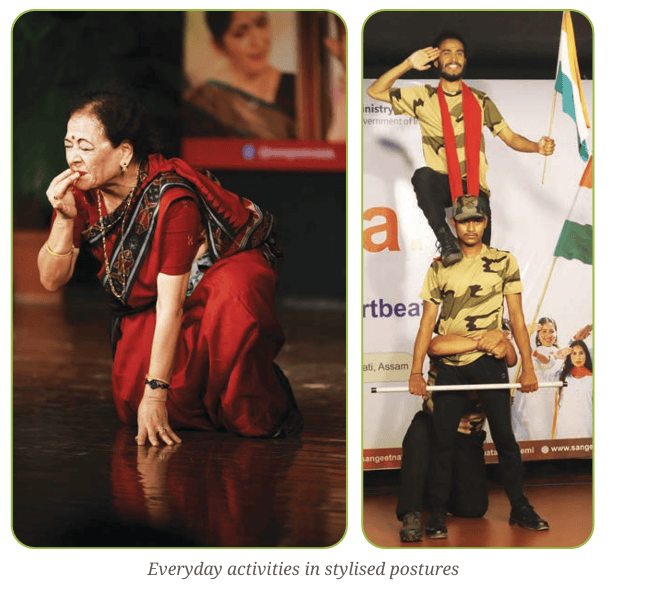
Based on your observation, strike poses as various characters performing different actions to capture a memorable photographic moment.
4. Motion in Dance
Motion in dance is a very exciting concept where one can use various levels of postures, speeds, extensions, leaps and pirouettes to move from one place to another. This can depend on the mood and the feel of the character, the patterns of the choreography (like circular or linear), or the action being shown, etc.
There are innumerable ways of moving in dance. As mentioned earlier, each text gives us many variations.
- According to Nāṭyaśhāstra,
- Chāris are of two types — bhaumi chāris which are earthly movements, where the feet don’t leave the ground; and ākāshi chāris which are aerial movements where the feet leave the ground. A combination of chāris makes a mandala.Think about different ways of moving where your feet are stuck to the ground like dragging your feet, and then think about ways where your feet leave the ground, like leaps, jumps, etc.
- Gati refers to movements and walks suitable for various characters in the play. Think about how different characters walk, like a soldier, a baby, a bear, a monkey.
- According to the Abhinaya Darpanam,
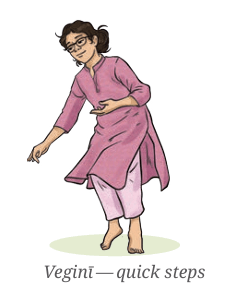
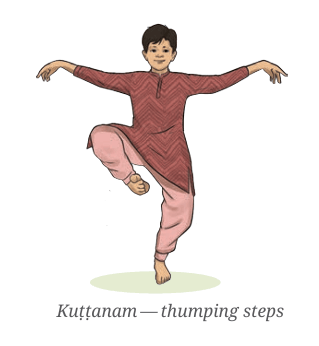
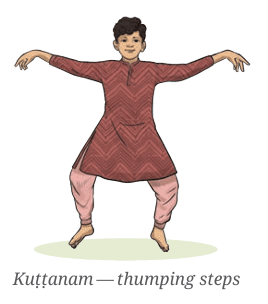
- Chāri refers to different ways of moving or displacing yourself. It is derived from the word ‘chāra,’ which means to move.
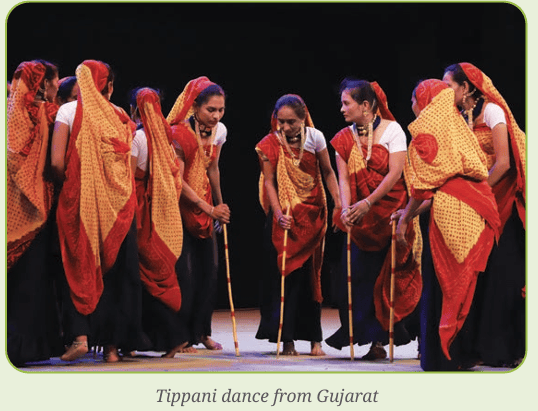
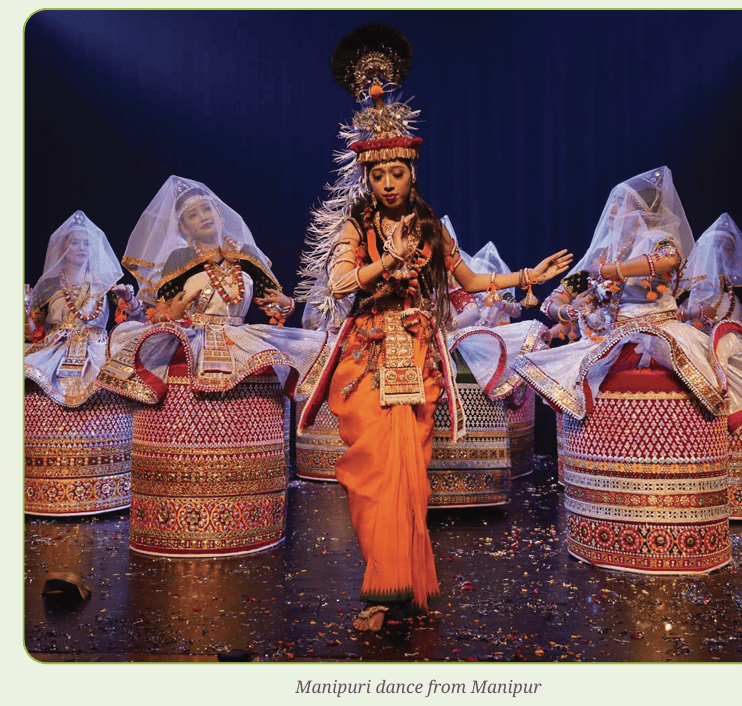
What makes it interesting is that it is not just the dancers who move but the whole group moves together, the sticks move rhythmically, and even the song changes speed, starting slowly and gradually becoming faster.
Examples of chÃri
(from Abhinaya Darpanam)
| 1 | Chalana — simple walking steps |
| 2 | Veginī — quick steps |
| 3 | Saraṇam — wide steps |
| 4 | Kuṭṭanam — thumping steps |
Gati is a characteristic gait like that of an animal. The dancer embodies the way the animal would move. This can either be used to depict the animal or the characteristics of the animal.
Examples of gati
(from Abhinaya Darpanam)
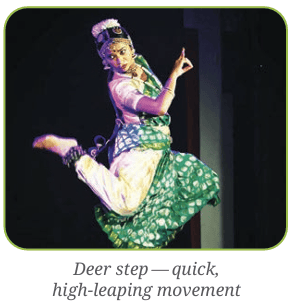
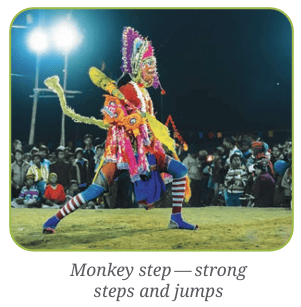
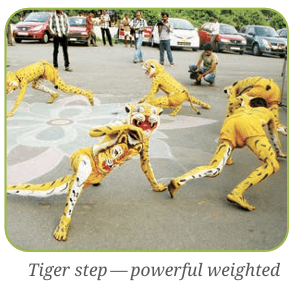
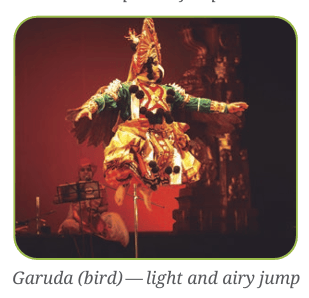
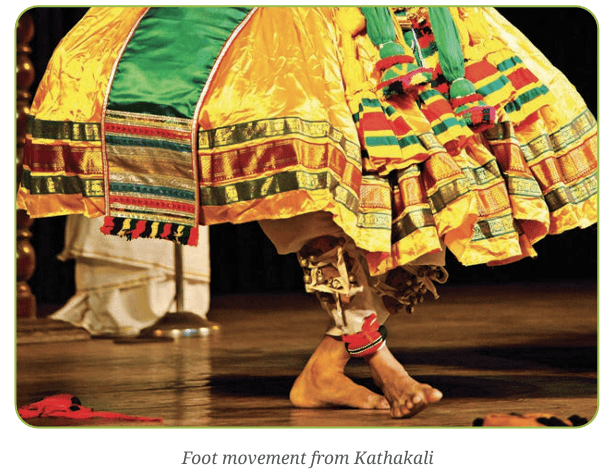
For instance, in Kathakali from Kerala, the sides of the feet are used in a thumping step (chāri).
In Seraikella Chhau from Jharkhand, the dance has many walks inspired by animals, like the lion, peacock, duck, deer, bear, goat, crocodile, etc., (gati). Movements to be watched on QR Code
- Arrange yourselves into two groups.
- One group can take the various human characters like a king, queen, hunter, soldiers, villagers, etc.
- The other group can take the various animal characters like a lion, elephant, deer, peacock, snake, etc.
- While creating your movement, think about the speed, levels of emotions of the character.
- Create through a dance scene, interaction between the human and animal characters and perform it in the class.

Note to the Teacher:
Teacher can play some background music suitable to the storyline.
5. Combination of Postures and Movements
A complete dance movement phrase is created with postures and movements, which are combined with movements of the arms and hand gestures.
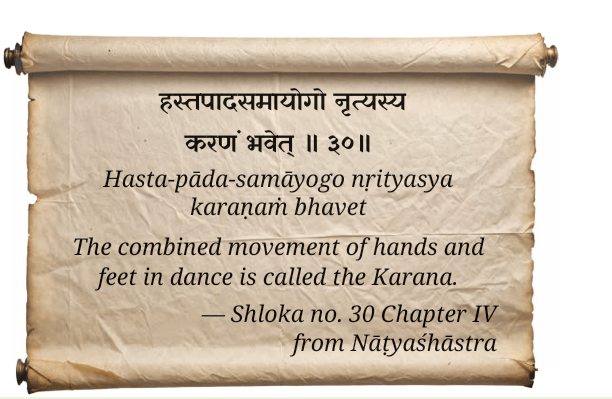
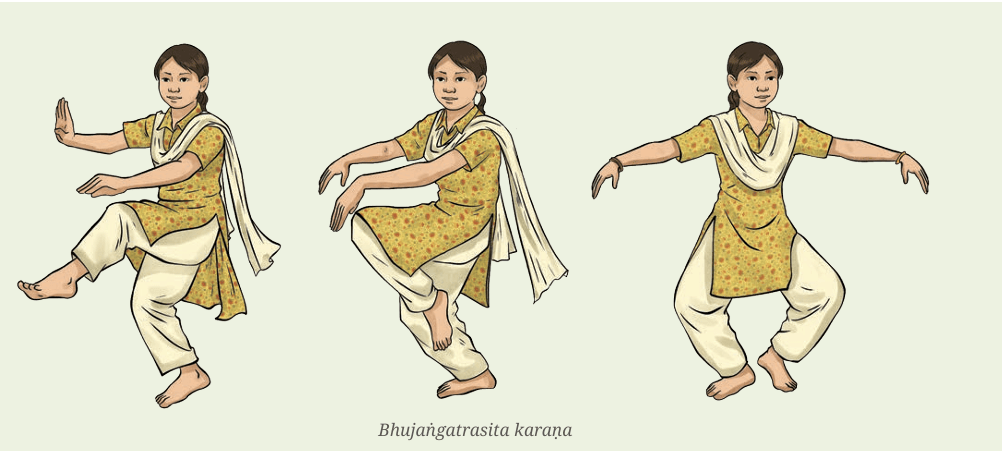
The Nāṭyaśhāstra describes this coordinated movement of hands and feet as a karana, and describes 108 such karanas.
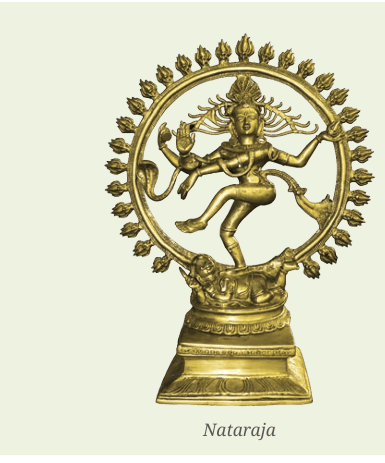
You may have seen some bronze statues of dancing Shiva — the image is one such moment captured from the Bhujaṅgatrasita karaṇa no. 24 from the Nāṭyaśhāstra.
- Arrange yourselves into four groups.
- As a group, create a short sequence
that includes:
One static posture (sthāna), One movement of the lower limbs (chari or gati), Arm movements and hand gestures (hastas).
Optional: Include other body movements, such as from the hips, neck, sides, or head drawing on what you have already learned. Conclude your sequence by returning to a moment of stillness.
- Breath Awareness: As you move, pay attention to your breath. Inhale gently when the body expands or rises. Exhale smoothly as the body releases or grounds. In stillness, let the breath settle — calm, relaxed, and effortless.
- Let your breath guide the rhythm of your movement and return to stillness.
ASSESSMENT
Chapter 10: Inner Dynamics of Dance
| CG. | C | Learning Outcomes | Teacher | Self |
| 1 | 1.1 | Recognises the importance of breath control in both stillness and movement, and its role in enhancing presence and expression in dance. | ||
| 1 | 1.1 | Demonstrates an understanding of the foundational concepts of sthāna (stance), chāri (leg movement), and gati (gait) in dance. | ||
| 1 | 1.1 | Creatively connects sthānas or dance postures with stylized movements observed in everyday life, showcasing an understanding of form and function. | ||
| 1 | 1.1 | Identifies and differentiates between various types of chāris and gatis, and understands their application in choreographic sequences. | ||
| 1 | 1.2 | Displays enthusiasm in choreographing dance compositions that incorporate a range of postures and movements, reflecting creativity and an understanding of dance vocabulary. |