11
PAN INDIAN DANCE FORMS


Dances are a beautiful part of India’s cultural heritage and history!
There are eight major dance forms of India —
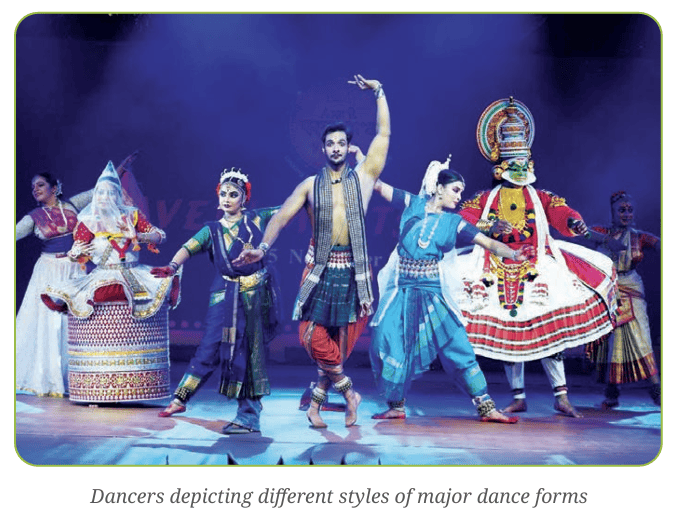
- Bharatanatyam
- Kathaks
- Kathakali
- Kuchipudi s
- Manipuris
- Mohiniyattam
- Odissi
- Sattriya
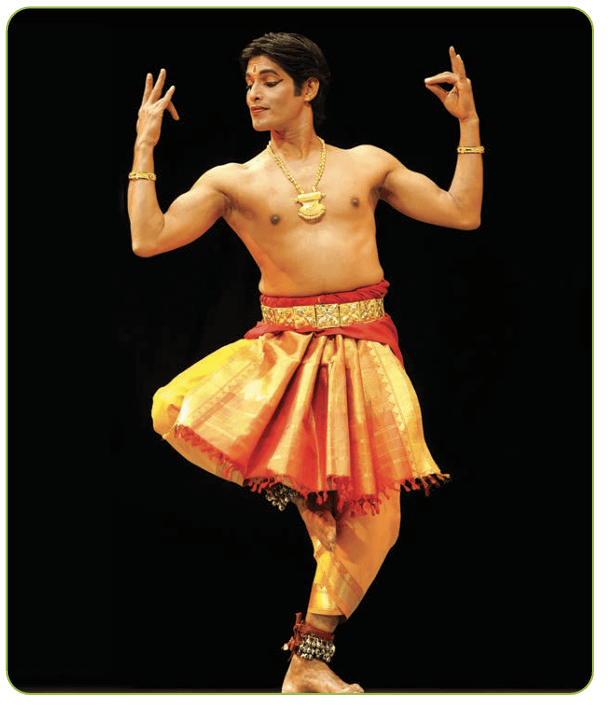
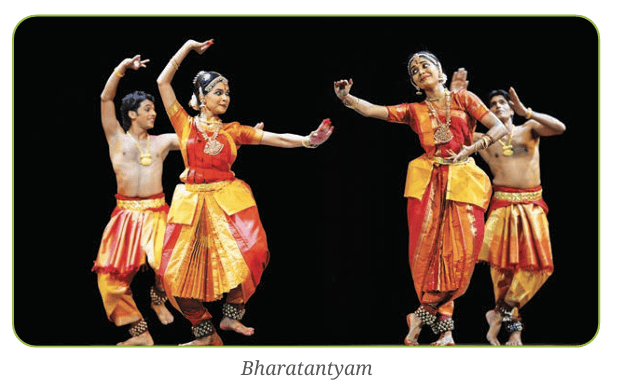
Bharatanatyam
is a dance from Tamil Nadu, in South India. It is known for its geometric and graceful movements, strong footwork, and beautiful hand gestures and facial expressions. The dancers tell stories using emotions, music and rhythm. Among the many traditions (bāṇis) of Bharatanatyam, the Thanjavur, Pandanallur, Vazhuvoor, and Mysuru styles are especially well-known, though numerous other bāṇis also contribute richly to the form. The dancers stand in a special half-sitting position called aramandi or ayatamandala, shaped like a diamond.
They wear colourful silk sarees with pleats in front that spread out beautifully as they dance, along with traditional temple jewellery.
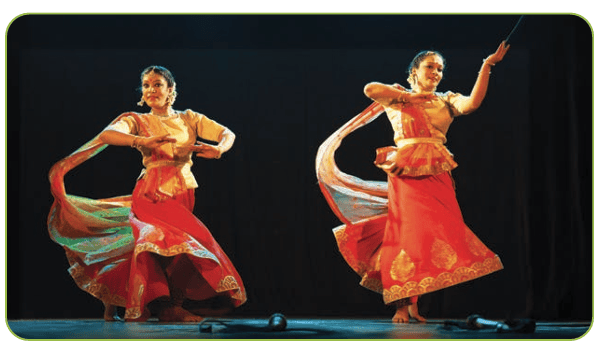
Kathak
which means storytelling, is a dance form from northern India, particularly rooted in the regions of Uttar Pradesh and Rajasthan. Kathak evolved as a form of storytelling through expressive gestures, intricate footwork and graceful movements. Dancers captivate audiences with swift spins, rhythmic foot stamping, delicate hand gestures, and nuanced facial expressions to bring stories to life. Among the many gharanas of kathak the Lucknow, Jaipur, Banaras, Raigarh styles are particularly renowned though several other gharanas have also shaped and enriched the form. They stand tall in a posture called sama sthana, with feet together or in a slight v-shape. The costumes are usually long, flowing dresses like anarkalis or lehengas, with dupattas made from fabrics typical to northern India.
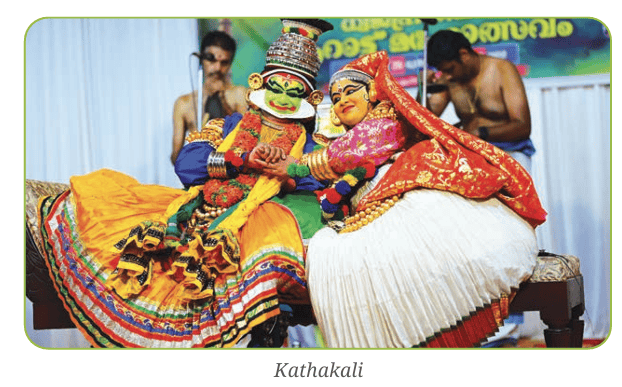
Kathakali
Kathakali is a traditional dance from Kerala,
primarily performed by men. It is like a colourful
play, where dancers act out stories from Indian epics
using stylised facial expressions, hand gestures and
body movements. There are two styles the northern
style known as vadakkan and the southern style
known as thekkan. The basic stance in kathakali is
atimandala — a deep, grounded posture with knees
bent outward and feet placed on the side-foot firmly
planted apart. The dancers wear bright costumes, big
crowns, and heavy makeup. Their faces are painted
in colours that match their characters, like green for
heroes, red for villains, etc. Every part of the face is
used to convey emotion, while the dance is full of
powerful poses and eye movements. 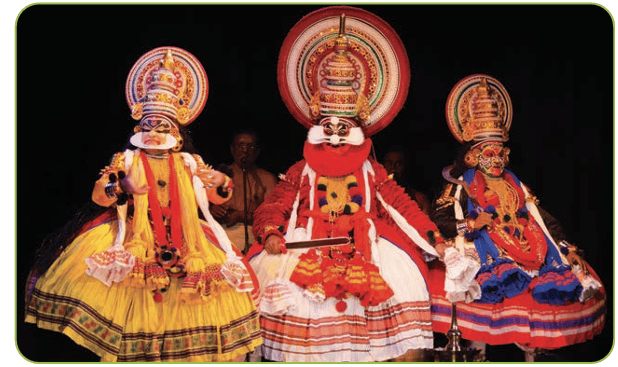
Kuchipudi
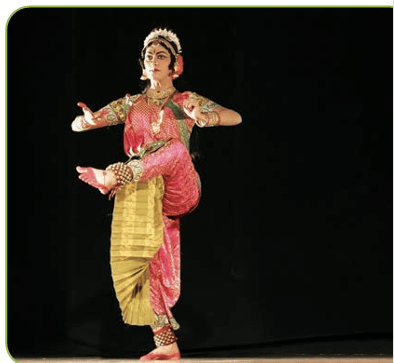
Kuchipudi, from Andhra Pradesh and Telangana, derives its name from the village of Kuchipudi, which remains home to several traditional dance families even today, such as the Vempati, Vedantam, Bhagavatula of Pasumarthy, among others, who have preserved and passed down this rich legacy through generations. It follows a rich dance-drama tradition and is distinctive for its integration of vachika abhinaya (spoken word) along with an expressive dance. Often theatrical in nature, it includes elements of acting; and at times, dancers perform intricate sequences on a brass plate, showcasing remarkable balance and skill.
Traditionally, it was performed exclusively by men, who often portrayed both male and female roles in the dance-dramas. The basic stance is similar to Bharatanatyam’s aramandi, but is less deep. The dance is distinctive for its quick footedness, hip movements, leaps, sculpturesque poses and speed. The dancers wear silk fabrics stitched for easy movement, with a special drape called gochi kattu. They also wear traditional temple jewellery.
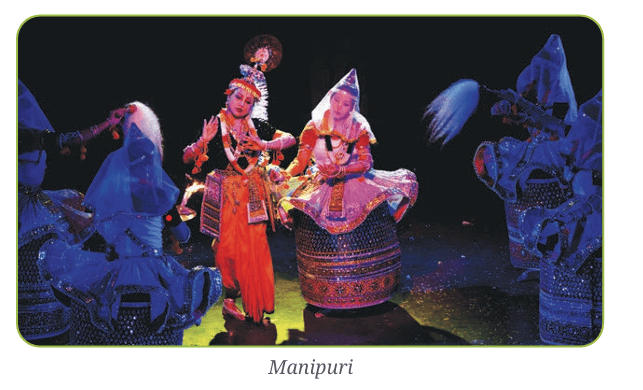
Manipuri
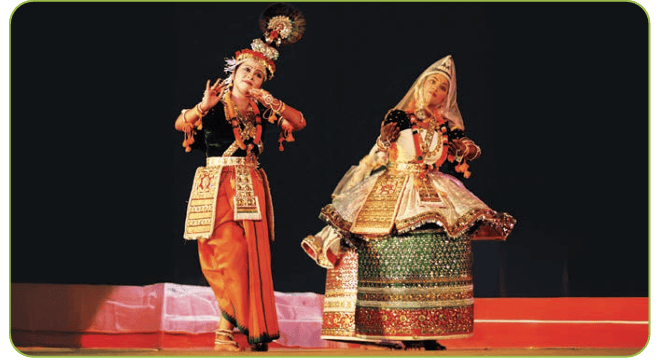
Manipuri is a classical dance from Manipur in North East India. This dance form is soft, gentle and flowing. The movements are smooth and round, almost like gliding. The dancers always look calm and peaceful. The dance includes raas leela (stories of Krishna) and traditional movements from Lai Haraoba. Manipuri dance also includes Sankirtan, a devotional music and dance form performed with cymbals and drums, often as part of temple rituals. A special dance called pung cholom involves playing a drum while dancing, showing excellent skill and coordination. Dancers usually keep their feet together and move circularly with no hard stamping. The famous costume is the poloi dress — a stiff, colourful skirt with a veil and elegant jewellery. The men wear white dhotis and turbans, especially during pung cholom or raas performances.
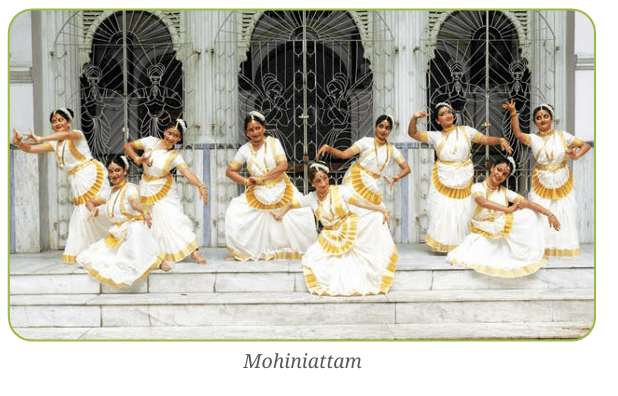
Mohiniyattam
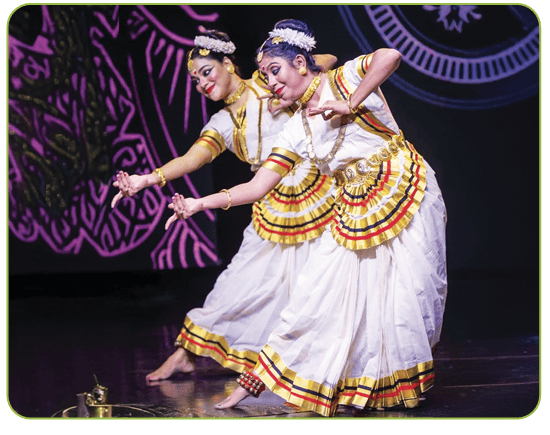
Mohiniyattam is a graceful dance from Kerala that was originally performed only by women. It is soft, flowing, and full of expression and devotion. The dance uses gentle movements of the upper body, and delicate steps to create a graceful and lyrical style. There are two major dance traditions, kalamandalam and kalyanikutty amma. Dancers change levels between the low and medium positions like aramandala, chaturmandala and atimandala. They wear beautiful white or cream sarees with golden borders called kasavu, and traditional jewellery.
Odissi,
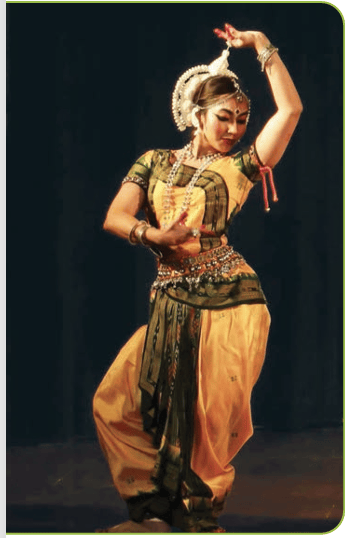
dance form originates from Odisha in eastern India. Various sculptural postures from the temples of Odisha are depicted in this dance form. The dance is smooth and flowing, with slow turns and graceful steps. This form has been derived from Maharis ― Devadasis of Odisha and Gotipua ― group of boy dancers, dressed as girls who dance for Lord Vishnu. A special feature is the tribhanga pose, where the body bends in three places the head, torso, and hip. Dancers often stand in a square-shaped and half-sitting pose called chauka. Costumes are made from traditional fabrics called pattasari (silk) with step fan shaped pleats and beautiful silver filigree jewellery and a flower like headpiece called tahiya.
Sattriya
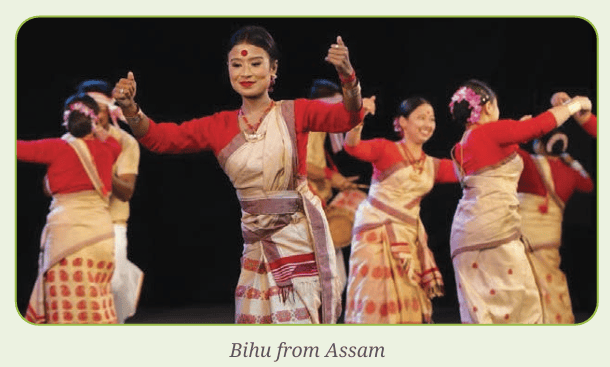
comes from Assam and was first performed in monasteries called sattras. It combines strong and gentle movements, and tells stories through realistic actions, like eating, fighting or showing love. Dancers use their upper body for expression and the lower body for rhythm. It was originally performed by male monks called bhokots, but was later opened to women and the general public. The dance includes group patterns like sarpa and performances, such as the sutradhari dance and gopir nach. Dancers train in sixty-four basic exercises called mati-akhora. Costumes are made from Assamese silk called pat, with traditional local designs and ornaments often with a dhoti or skirt, similar to what monks used to wear. There are two main postures — purusha (male) and prakriti (female).
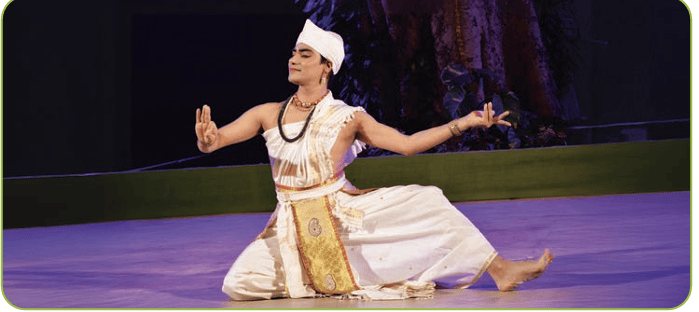
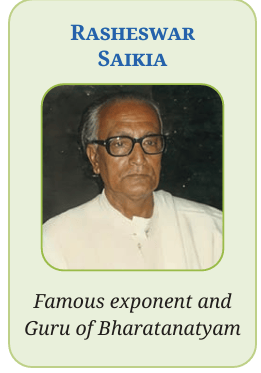
Some eminent personalities in India’s eight major classical dance forms.
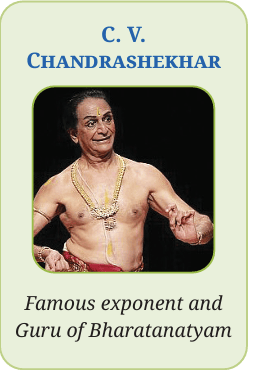
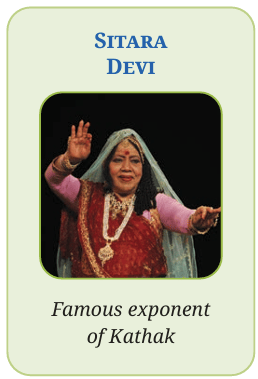
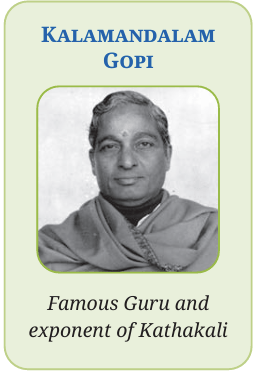
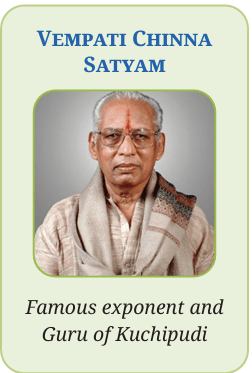
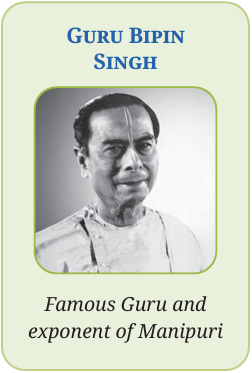
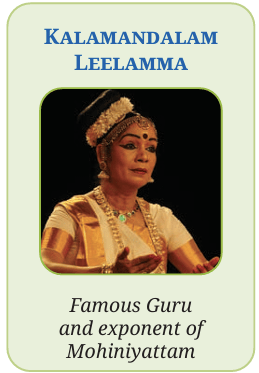
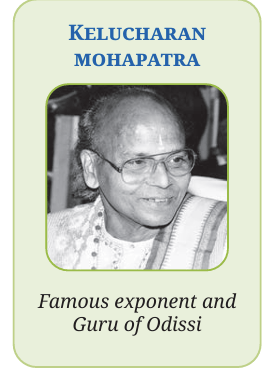
Watch live or recorded performances whenever you can
| Dance Style | Where is it from | Basic Postures | Footworks | Specialities | Costumes | Music |
|---|---|---|---|---|---|---|
| Bharatanatyam | ||||||
| Kathak | ||||||
| Kathakali | ||||||
| Kuchipudi | ||||||
| Manipuri | ||||||
| Mohiniyattam | ||||||
| Odissi | ||||||
| Sattriya |
Other Dance Traditions
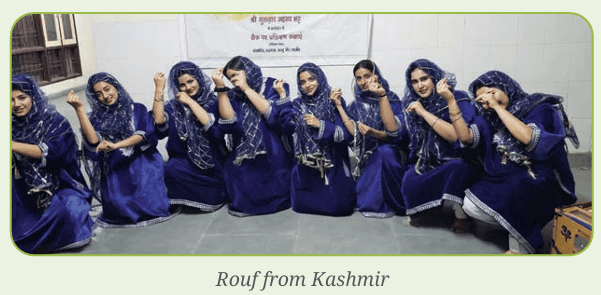
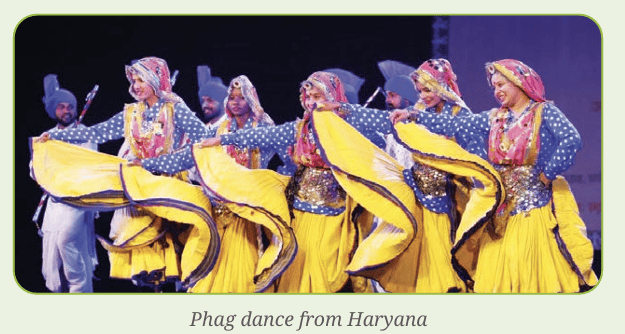
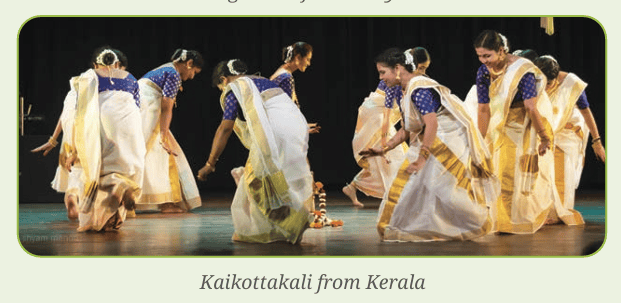
Apart from the eight major dance forms, there are various other folk dance forms across India. Beliefs, rituals, performing arts, and the symbolism of communities take root in specific social contexts and locations. They bring colour into the monotonous activities of daily life. Born and nurtured in a specific mangkotepsu. The Sumi tribe performs the energetic Sumi war dance to celebrate victory in battle, while the Lotha women perform the mungyanta, a harvest dance during the Tokhu Emone festival. Nagaland is home to around 30 traditional dances, including the Sangtam War Dance, Hornbill Dance, Chang Lo and socio-cultural context, each artistic form has its own myth and history. Though folk traditions have changed over time, their basic elasticity has helped adapt to industrialisations and urbanisations.
Dance forms from two regions — Nagaland and Chattisgarh, and their important personalities are given below.
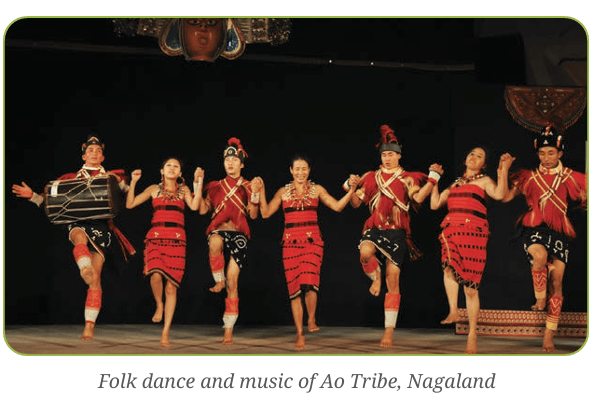
Folk Dance from Ao Tribe, Nagaland
The Ao Naga tribe from the northeastern part of Nagaland celebrates the Moatsu Mong festival as a time of recreation and joy, after the hard work of clearing fields, burning jungles, and sowing seeds. It is marked by vibrant songs, dances and merrymaking. Another major festival, Tsungrem Mong, is observed on the eve of the harvest to offer gratitude to the Supreme Power, with colourful costumes, songs and dances. The Ao Naga have a rich tradition of clothing that distinguishes between commoners and warriors, with the Ao warrior known as mangkotepsu. The Sumi tribe performs the energetic Sumi war dance to celebrate victory in battle, while the Lotha women perform the mungyanta, a harvest dance during the Tokhu Emone festival. Nagaland is home to around 30 traditional dances, including the Sangtam War Dance, Hornbill Dance, Chang Lo and Butterfly Dance, each reflecting the cultural richness of its many indigenous communities.
One of the important persons who has contributed a lot to the dances of the community is Sangyusang Pongen of the Ao community. He received the Sangeet Natak Akademi Award for his contribution.
Traditional Dances of Chhattisgarh
This region of Bharat has a vibrant culture, with diverse dances that reflect its unique heritage and close connection to nature. These dances are typically performed during festivals, harvests and rituals. The panthi dance, popular among the Satnami community of Chhattisgarh, features groups of men dancing in formations to the beats of the mandar drum and jhanjh. The gaud maria dance, from the Bison Horn Maria community in the Bastar plateau, is performed by both men and women, during occasions like births and marriages. Other notable dances include the Karma dance, performed to honour Karma Devi during the harvest; the suwa danda or parrot dance, performed by women during harvest and Diwali; and the gedi dance of the Gond people, performed on bamboo stilts. The region boasts many vibrant dance forms and musical traditions.
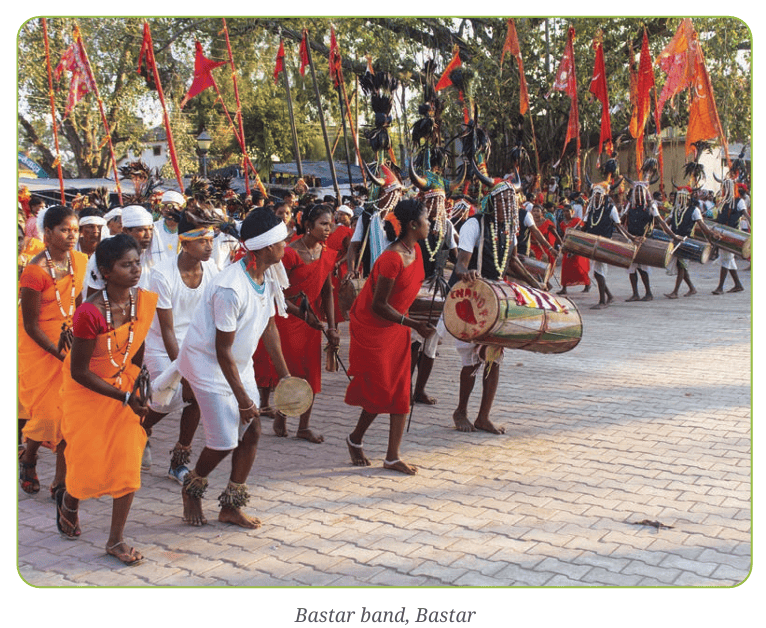
Mamta Chandrakar, a Sangeet Natak Akademi Awardee, is a prominent figure in preserving and promoting the indigenous dances of Chhattisgarh. She is also the recepient of Padma Shri.
- Learn about the important personalities that are mentioned above. Also, find out about some young dancers who are performing professionally.
- Identify a dancer from your region and invite them to share a short performance and conduct a workshop with you. Discuss the nr̥ tta and the nr̥ tya elements that you saw in their performance and also try to learn it.
ASSESSMENT
Chapter 11: Pan Indian Dance Forms
| CG. | C | Learning Outcomes | Teacher | Self |
| 2 | 2.2 | Identifies and distinguishes between nṛtta (pure dance) and nṛtya (expressive dance) elements in a performance, demonstrating an understanding of their unique characteristics and purposes. | ||
| 4 | 4.1 | Demonstrates eagerness to learn about the eight major dance forms of India, as well as other regional and traditional dance forms. | ||
| 4 | 4.2 | Shows curiosity and interest in learning about notable dance personalities and their contributions to the field of dance. |