13
INNOVATION, INCLUSIVITY AND INSPIRING CHANGE


1. Innovation in Dance
The deeper the roots of a tree, the higher the branches reach. Similarly, the more knowledge and depth you have of your dance traditions, the more you can create and innovate.
If you look around, you will find movement and rhythm everywhere. The flutter of birds, the quivering of leaves, the sway of the grass, the sweeping of the broom, the picking of tea leaves — they are all movements. If you pick any such activity, you can create your own movement based on it, with all the material you have learnt.
Every dancer brings the potential for new innovation in dance. A strong foundation in dance, along with observations, experiences and your original thoughts, bring uniqueness to your dance.
Integration of Other Allied Forms
A step ahead in innovation is the inclusion of other allied forms in dance, like martial arts.
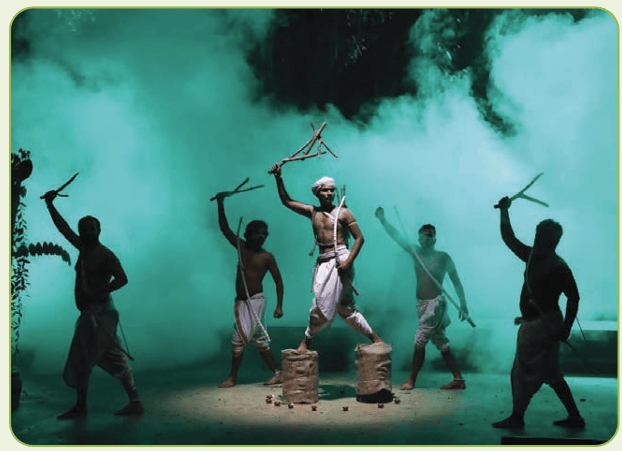
There are some traditional sports and martial arts traditions of India that have movement sequences in their training, that have been creatively incorporated into dance by many artists. You have learnt about Chhau, which has developed with martial arts traditions of phari khanda.
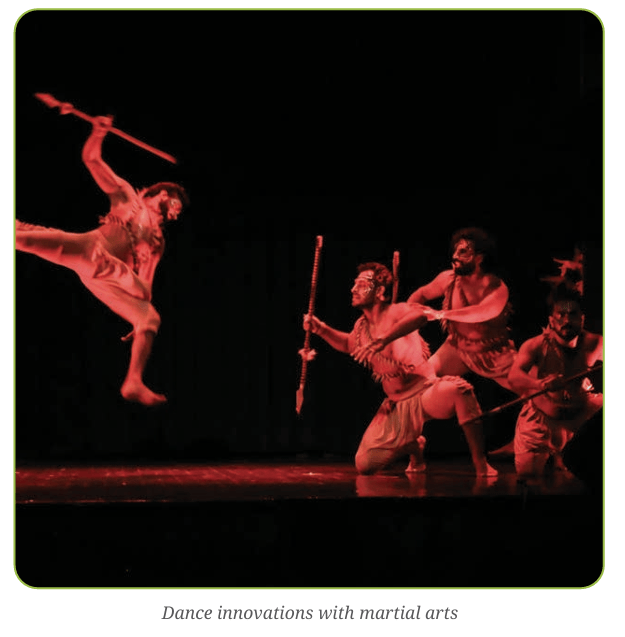
You will now learn about two other forms of martial arts, which are being creatively used in present-day development of dance.
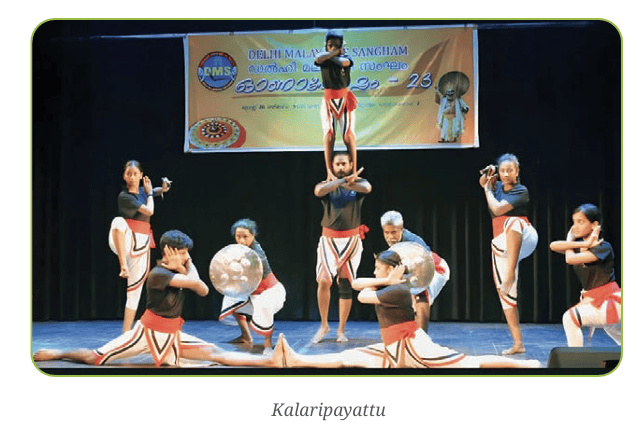
1 Kalaripayattu :A practice of Kerala, it is considered one of the oldest forms of martial arts worldwide. Legend says that it originates from Parashurama, the great sage, who is deemed to have been the creator of Kerala. Recent researches connect it to the Sangam Period, 600 – 300 BCE. Developed as a self-defence mechanism, the training is based on the scientific marma knowledge of Ayurveda and has movement phrases which are based on animal stances and movements.
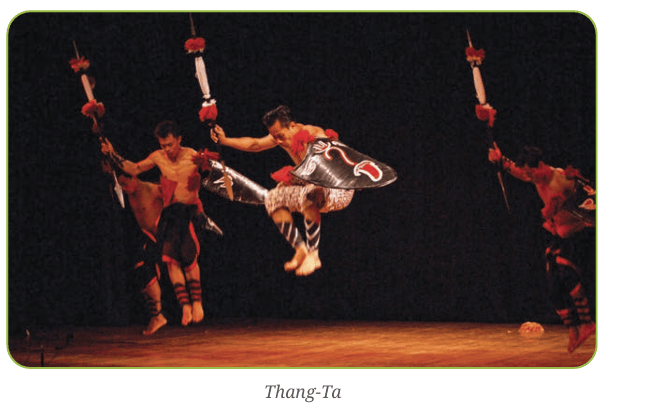
2. Thang-Ta: A martial arts practice from Manipur, the word means the ‘Art of Sword and Spear’. It harmonises the inner energies with outer actions, expressing various kinds of movements with rhythmic breath control. It is also ritualistic in practice. It is believed that all movements of the Meitei people have originated from Thang-Ta
Advisable to
do this in small groups.

Examples of Innovation
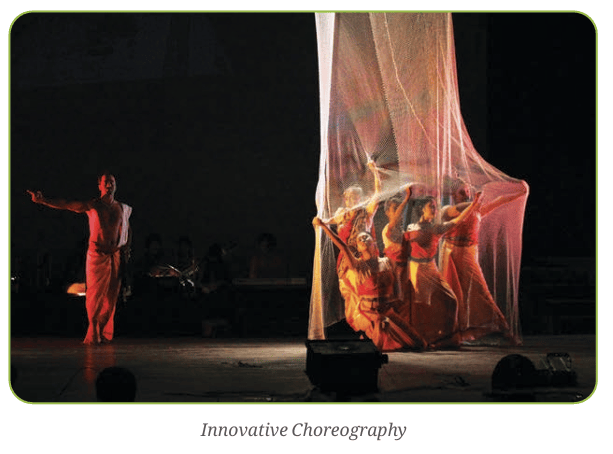
Many dance artists have experimented with their dance forms to tell contemporary stories and showcase current scenarios. You have learnt about two pioneers of the modern dance development in India in Grade 7. In continuation, there are many other dance practitioners and institutions that have been instrumental in developing choreographies using creative movements as well as using traditional dance vocabulary to depict stories of today through dance.
The following are a few among many such artists who have made significant contributions. Each of them has been honoured with the Sangeet Natak Akademi Award for creative choreography.
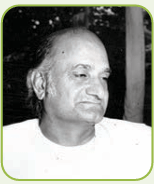
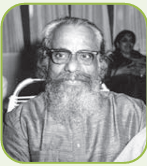
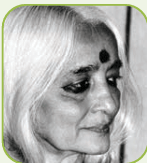 Chandralekha was one of the earliest dancers who
dramatically brought changes in traditional forms
and synchronised various Indian dance, yoga and
kalaripayattu with philosophy, and literature also.
In her production Angika, she presented traditional
Bharatanatyam vocabulary of dance based on the
principles of Abhinaya Darpana and integrated Kalaripayattu with
it. Lilavati was based on Bhaskacharya’s mathematics treatise which
she choreographed in dance using numbers, nature and imagination.
Prana was based on yoga and breath in dance. She has also worked
with modern dancers and actors from the West in experimental
productions. She has made films on dance and written on the subject.
Among her films are The Myth of Woman (1976) and Hasta (1984).
Chandralekha was one of the earliest dancers who
dramatically brought changes in traditional forms
and synchronised various Indian dance, yoga and
kalaripayattu with philosophy, and literature also.
In her production Angika, she presented traditional
Bharatanatyam vocabulary of dance based on the
principles of Abhinaya Darpana and integrated Kalaripayattu with
it. Lilavati was based on Bhaskacharya’s mathematics treatise which
she choreographed in dance using numbers, nature and imagination.
Prana was based on yoga and breath in dance. She has also worked
with modern dancers and actors from the West in experimental
productions. She has made films on dance and written on the subject.
Among her films are The Myth of Woman (1976) and Hasta (1984).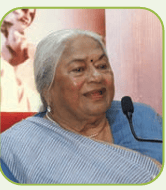 Kumudini Lakhia,
the famous kathak
dancer, was one
of the pioneers
in bringing a
fresh outlook to
a form. She was
a pioneering kathak dancer and
choreographer who revolutionised
the traditional solo format of kathak
by introducing group choreography
and contemporary themes. Going
beyond the traditional repertoire, she
asked, “Where do I go from here?”.
Thus, her first groundbreaking
choreography, Atah Kim, was born.
Other creative dance productions
were Dhabkar (Pulse), The Coat,
Feathered Cloth
(Hagoromo)
among many
others. Her dance
choreographies
integrated the
abstract and
narratives, often
addressing
contemporary
themes.
Kumudini Lakhia,
the famous kathak
dancer, was one
of the pioneers
in bringing a
fresh outlook to
a form. She was
a pioneering kathak dancer and
choreographer who revolutionised
the traditional solo format of kathak
by introducing group choreography
and contemporary themes. Going
beyond the traditional repertoire, she
asked, “Where do I go from here?”.
Thus, her first groundbreaking
choreography, Atah Kim, was born.
Other creative dance productions
were Dhabkar (Pulse), The Coat,
Feathered Cloth
(Hagoromo)
among many
others. Her dance
choreographies
integrated the
abstract and
narratives, often
addressing
contemporary
themes.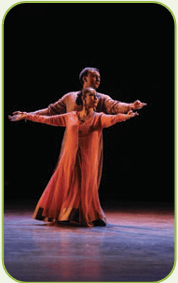
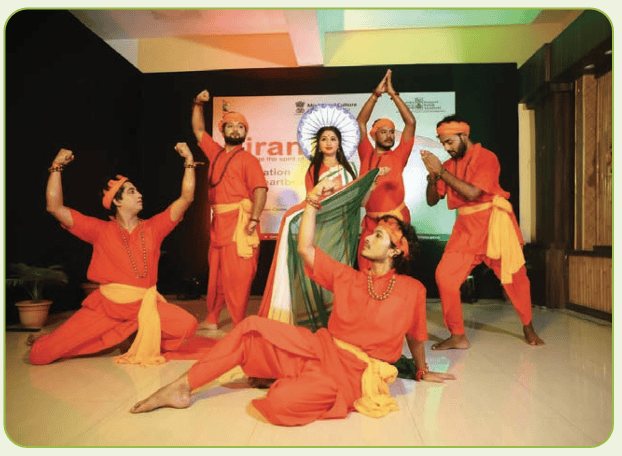
Suggest a song that is from the region or one that the students are familiar with.
2. Inclusivity in Dance
Inclusivity in dance is an essential aspect of today’s society.
More and more dancers are creating work that is accessible to all, including those who are differently abled. Dance teachers work with people of all ages and abilities, bringing the joy of dance to all without barriers and inhibitions. Even on national television and important platforms, you see representation of dance performances by the differently-abled.
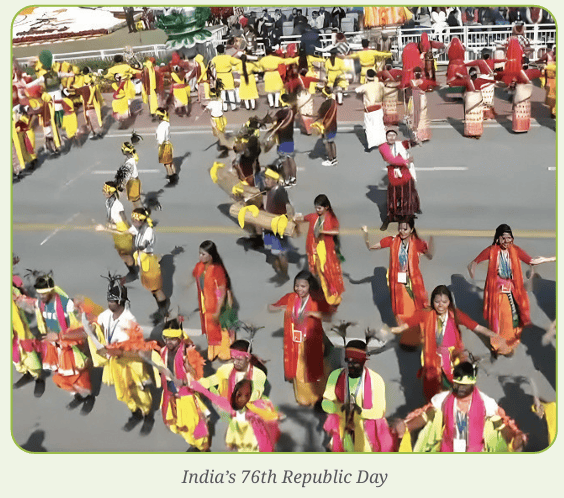
Dance is also beyond gender. Dance traditions predominantly performed by male artists have also opened their doors to female artists. Most folk traditions have men and women dancing alongside each other. There is no gender bias.
The beauty of dance is in its ability to bring people together. This is inclusivity.
What does inclusivity mean to you?
Dance empowers
During India’s freedom movement, song and dance inspired everyone. From gender discrimination to climate change, dance has been used to convey complex topics and initiate thought-provoking conversations effectively.
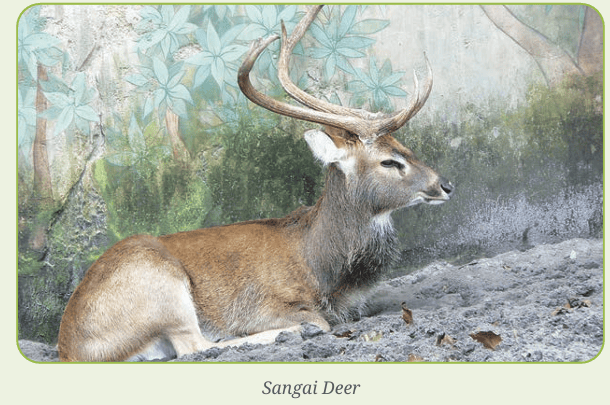
For instance, JNMDA, the premier institution for Manipuri in Imphal, premiered their choreography Keibul Lamjao in 1985 based on the environmentalism of M. K. Binodini Devi’s script, which shows the conservation of the Sangai Deer.
Dance prompts you to think differently, to think out of the box, and view the world with more compassion and love.
What changes can you prompt with your dance?
ASSESSMENT
Chapter 13: Innovation, Inclusivity and Inspiring Change
| CG. | C | Learning Outcomes | Teacher | Self |
| 2 | 2.1 | Demonstrates an understanding of how allied forms such as martial arts can be integrated into dance, and articulates how this enhances the expressive and physical dimensions of a dance performance. | ||
| 2 | 2.1 | Investigates contemporary social or cultural issues and interprets them through thematic dance compositions that reflect personal insight and critical thinking. | ||
| 2 | 2.1 | Displays curiosity and openness in exploring how inclusivity is being integrated into diverse dance practices across various fields and communities. | ||
| 3 | 3.1 | Exhibits curiosity about innovative choreography and actively experiments with original and creative movement vocabulary in their own choreographic work. | ||
| 4 | 4.2 | Conducts independent research and presents a journal or case study on a transgender dance artist, critically analysing their contribution to the field and their role in promoting diversity in dance. |