14
A PRESENTATION OF DANCE AND CHOREOGRAPHY


You are familiar with the Nāṭyaśhāstra and the Abhinaya Darpaṇam now. In ancient times, when they were written, dance was usually called nr̥ tta and nr̥ itya or nartana, whereas dance-drama was called nāṭya. Have you ever wondered how dance originated?
If you refer to your Grade 6 Arts textbook (Theatre), you will recall an interesting story about the birth of the performing arts. Similarly, you will learn about the birth of dance from the Abhinaya Darpanam.
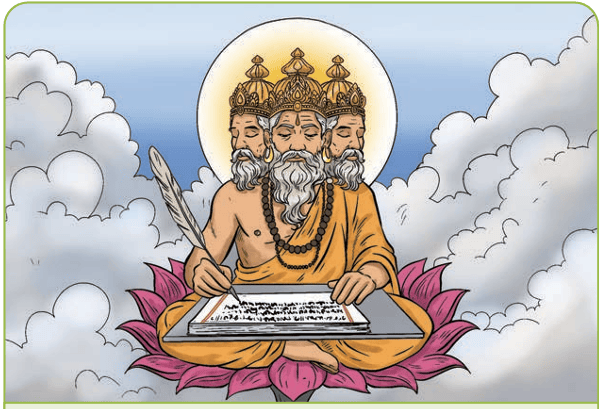 Brahma Deva, derived from all four Vedas, is said
to have created the Nāṭya Veda, often referred to
as called the fifth Veda.
Brahma Deva, derived from all four Vedas, is said
to have created the Nāṭya Veda, often referred to
as called the fifth Veda. 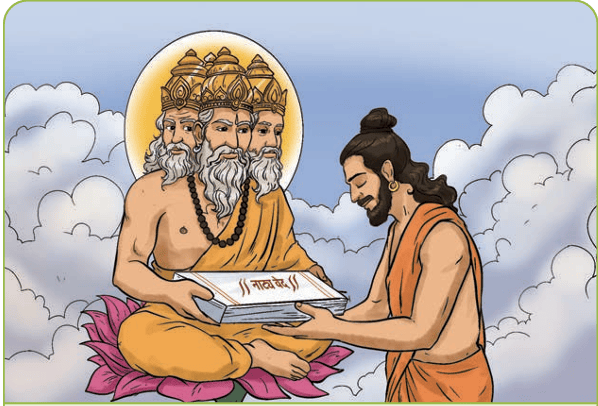 Brahma Deva gave Nāṭya Veda to a Rishi, Bharata
Muni, who studied and mastered all three aspects
of nr̥ tta, nr̥ itya and nāṭya.
Brahma Deva gave Nāṭya Veda to a Rishi, Bharata
Muni, who studied and mastered all three aspects
of nr̥ tta, nr̥ itya and nāṭya. 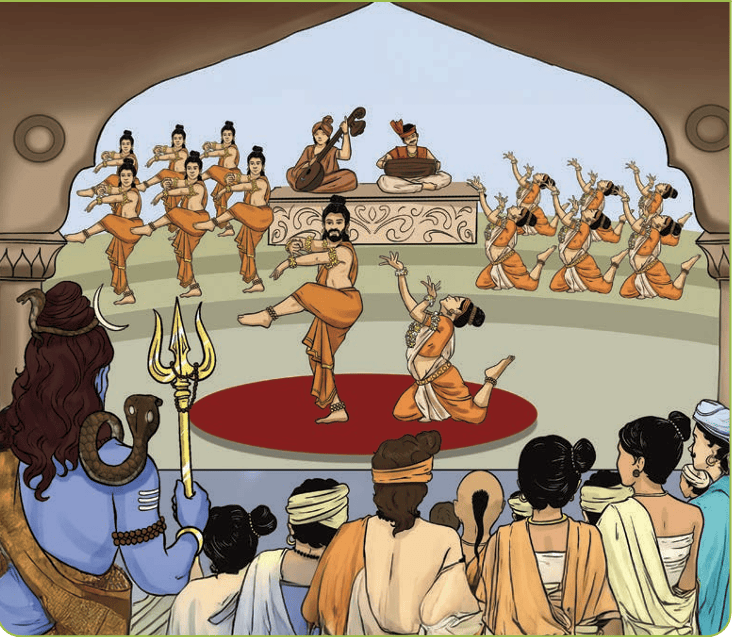 Bharata Muni along with his group of Gandharvas (heavenly
musicians) and Apsarās (heavenly dancers) presented their
f
irst performance.
At the time, the great dancer Mahadeva was also in the
audience.
Bharata Muni along with his group of Gandharvas (heavenly
musicians) and Apsarās (heavenly dancers) presented their
f
irst performance.
At the time, the great dancer Mahadeva was also in the
audience.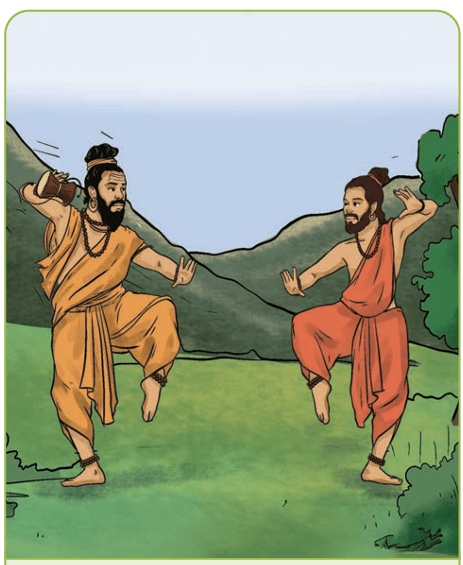 He was so pleased to see the
performance that he offered Bharata
Muni special lessons with his best
ganas (attendants) in the rigorous
form of dancing called tandava.
Mahadeva’s gana, Tandu taught
tandava to the sages who taught it to
the humans.
He was so pleased to see the
performance that he offered Bharata
Muni special lessons with his best
ganas (attendants) in the rigorous
form of dancing called tandava.
Mahadeva’s gana, Tandu taught
tandava to the sages who taught it to
the humans. 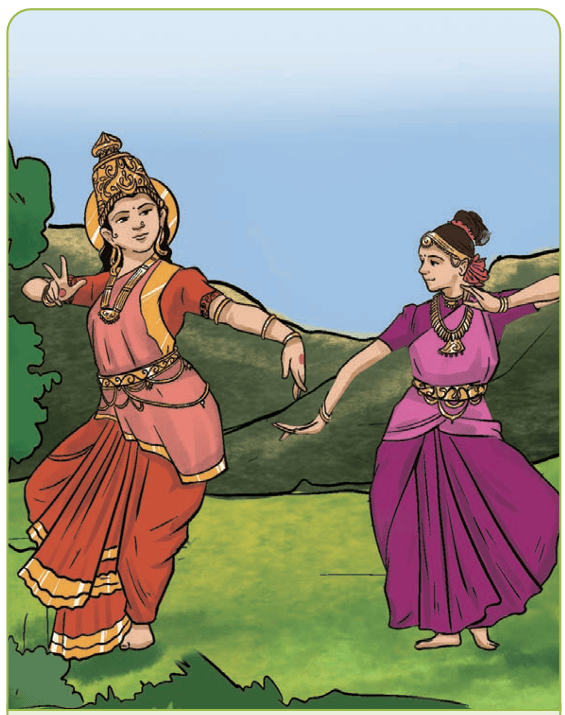 On the other hand, Devi Parvati trained
Bharata Muni in the more graceful form of
dance called lasya.
On the other hand, Devi Parvati trained
Bharata Muni in the more graceful form of
dance called lasya.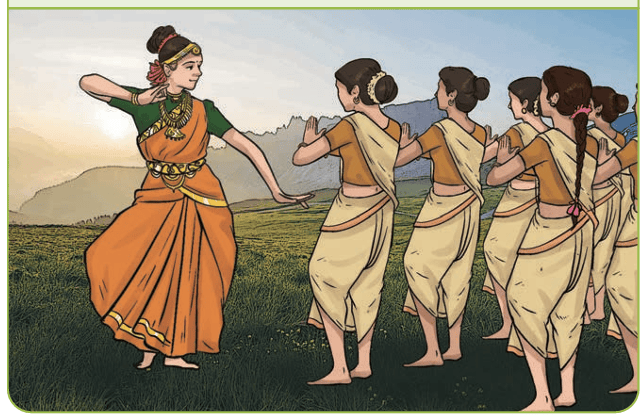
Legends are a rich source for storytelling in the Indian dance forms. Stories from the Puranas, Jataka Tales, Panchatantra, etc., offer narratives that make for beautiful visual spectacles and have a deep moral message.
These stories are relevant even today when interpreted according to the present times.
You have learnt about the descent of Ganga from heaven to Earth in Visual Arts. It is a powerful tale of the importance of rivers in nourishing life on earth. But if you read it more closely, you will realise that it has a deeper meaning and teaches values.
The story showcases:
- The strength and resolve of a woman, in this case, Devi Ganga.
- How different elements of nature, including Gods, have to work together to make good things happen, for instance, how Mahadeva helped Ganga in controlling her force before descending to Earth.
- King Bhagirath as a great example of unwavering faith and perseverance.
- The present day plight of rivers and how they are polluted.
- How rivers must be respected and kept clean and pure.
What if you were to bring this story into a dance production?
Once Upon A Dance… Creating your Dance Production
Think of a legend or historical tale that you can bring to the contemporary world. Interpret it in present times and plan a dance production to perform the story.
Phase 1: Planning and Pre-Production
Time for brainstorming ideas!
1. Theme and Storyline
- What is your production about?
- Choose a myth, legend or historical story and give it a twist to fit today’s world.
- Will you write a script or use an existing one?
- Will each dance tell part of the story?
- How many dances will you include?
2. Style of Dance and Groups
- What style or styles of dance would you include? Make sure it fits the theme.
- How many dance groups will you have, and how many people per group?
- Would you like to use any props?
3. Music Selection
- Pick music that suits your theme and dance styles.
- You can use recorded tracks, compose your own or even include live music performed by students.
4. Roles and Responsibilities
- Choreographer: Designs the dances, leads rehearsals.
- Performers: Dancers and actors.
- Director or Co-ordinator: Keeps everything running smoothly.
- Script writer: Writes dialogues and narration.
- Music Director: Creates or chooses music and effects.
- Set and Prop Designer: Designs backdrops and props.
- Lighting and Tech Crew: Manages lights, sounds, and tech.
- Costume and Make-Up Designer: Plans the look of characters
- Marketing Team: Spreads the word about your show!
5. Use your learning from other subjects!
- Theatre: For scriptwriting, acting and dialogue.
- Visual Arts: For set design, costume, make-up and props.
- Music: For live instruments, songs, and background score.
- Maths and Computing: To plan budgets, timing, or lighting cues.
6. Venue and Dates
- Where will the show be? (School hall, stage, outdoors)
- Set your rehearsal schedule and performance date.
Phase 2: Choreography and Rehearsals
1. Choreographic Stages
- Break your story into scenes or moments.
- Explore movements and emotions for each character or scene.
- Use elements from your dance form sthānas, chāris, hastas and add creative touches.
- Think about breath, rhythm, silence; they're all part of the story!
2. Rehearsals and Teaching Choreography
- Schedule regular rehearsals with clear goals
- Teach the dances group by group.
- Try interesting formations and group patterns.
- Keep entrances and exits smooth and connected.
- Watch, review and tweak the dances as needed.
3. Production Design
- Finalise props, costumes, lights and sounds.
- Do a dress rehearsal with full costume and music.
- Have a technical rehearsal to practise all the backstage elements.
A lot of this work in Phase 2 can happen simultaneously. But remember, planning and pre-production are crucial before venturing into any creation. Similar to a construction site, you first take the time to dig a deep foundation. If your foundation is set, then it is easier to build a structure and you can work on all the raw materials at different times before assembling them together.
Phase 3: Performance
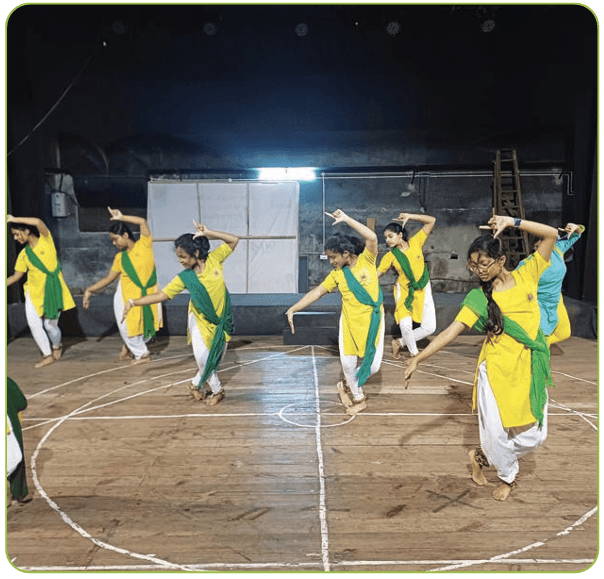
- Grand Rehearsal: This is a critical rehearsal, just like a whole show on the main stage that you will perform. Invite a few people to give feedback and make notes of anything that went wrong (although by this point there should be no mistakes).
- Final Performance: Enjoy the show!
- Reflections: Post-show feedback.
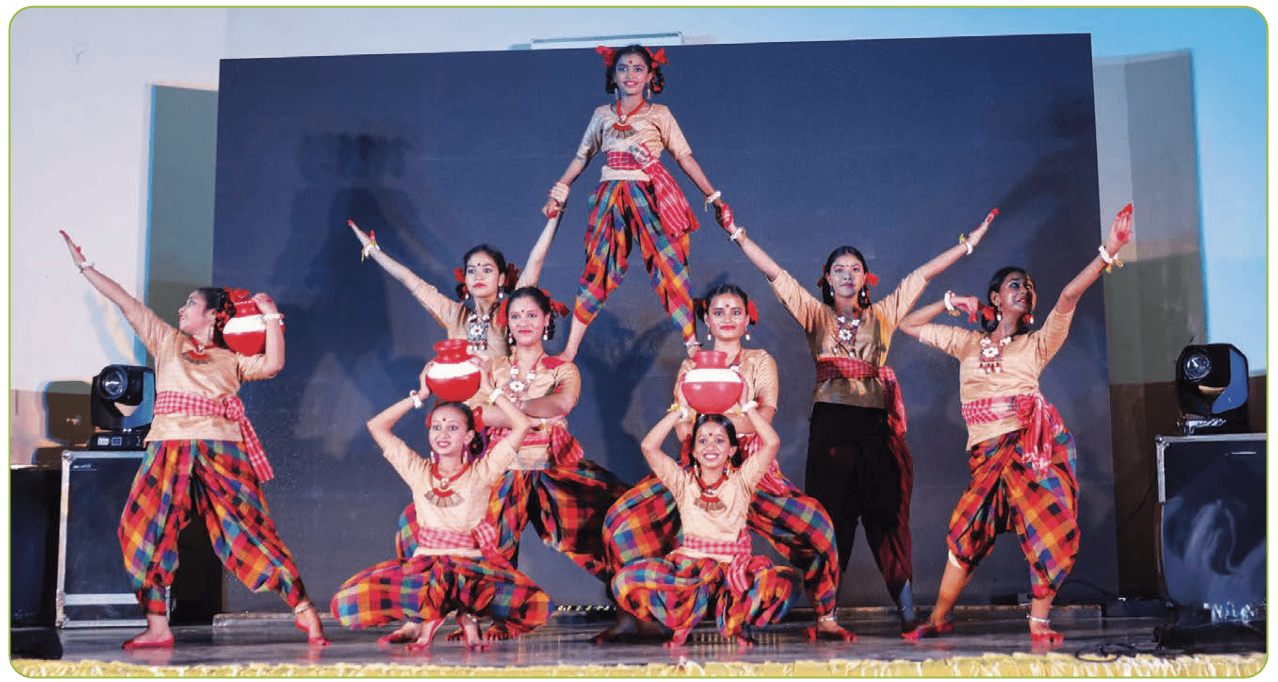
Now that you've learned so much about this beautiful art, even created your magical performance and shared it joyfully, it is time to take a bow, smile brightly and let your heart dance on!
ASSESSMENT
Chapter 14: A Presentation of Dance and Choreography
| CG. | C | Learning Outcomes | Teacher | Self |
| 1 | 1.2 | Engages in collaborative work with enthusiasm, sharing ideas and supporting peers throughout the creative process. | ||
| 3 | 3.1 | Actively participates in all stages of a dance production, including:
|
||
| 3 | 3.2 | Demonstrates an understanding of the mythological and cultural narratives surrounding the origin of dance. | ||
| 3 | 3.2 | Applies imagination and creativity in utilising all elements of performance — movement, music, costume, space, and expression — to enhance the final presentation. |
Teacher’s Comments and Student’s Observations
Summative ASSESSMENT
| Examples of Assessment | Criteria for Assessment | |
|---|---|---|
|
|
|
| Group of 3 or 4 |
|
|