NOTE TO THE TEACHERS
Dear Teacher,
As our students complete another stage of school education this year, let us add more colours to their academic journey with the learning of visual arts. The chapters in this section would strengthen their knowledge of visual fundamentals while also developing their artistic skills and cultural awareness. You can modify the activities to suit your local context and the specific needs of your students.
To create the best learning experience for every student, here are some points that need to be kept in mind.
The visual arts classroom would require
- Adequate space for students to work comfortably.
- Sufficient light and ventilation.
- Organised storage and easy access to art materials, tools, basic stationery, and audio-visual facilities.
- Space for showcasing and exhibiting artwork periodically.
Visual arts pedagogy would need to
- Use storytelling and everyday examples to introduce concepts, and processes.
- Encourage students to freely express their original ideas, imaginations, emotions and curiosities in their artwork.s
- Motivate students to create original artwork inspired by their observations of everyday life and experiences, rather than copying images from other sources.
- Allow the students to explore, investigate, experiment, collaborate and have dialogues in the classroom.s
- Include outdoor activities and field trips to observe the life, and culture around them.
- Organise visits to museums, heritage monuments and melas.
- Invite local artists and craftspersons for interactive sessions, and workshops for hands-on experience.
- Inculcate simple habits of cleaning after working, putting back materials that have been used and maintaining materials with care.
- Encourage the students’ participation and decision-making in selecting artwork for classroom display or exhibitions.
Visual Arts assessment should be based on the following competencies for the middle stage.
| C-1.1 | Expresses their personal and everyday life experiences confidently through various visual art forms. |
| C-1.2 | Demonstrates flexibility in the process of collaboratively developing visual arts practice.s |
| C-2.1 | Creates visual artwork based on situations or stories that challenge stereotypes observed in their surroundings (such as gender roles) |
| C-2.2 | Connects visual imagery, symbols, and visual metaphors with personal experiences, emotions and imaginations |
| C-3.1 | Demonstrates care and makes informed choices, while using various materials, tools, and techniques in visual arts. |
| C-3.2 | Refines ideas and techniques of visual expression from the stage of planning to the final presentation, and reviewing the entire process. |
| C-4.1 | Demonstrates familiarity with various local and regional forms of art. |
| C-4.2 | Describes the life and work of a few local artists in their region and across India. |
Activities marked by a star symbol can be facilitated by any teacher, even in schools with limited resources.
| Learning Outcomes that can be assessed across chapters | ||||
|---|---|---|---|---|
| CG. | C | Learning Outcomes | Teacher | Self |
| 1 | 1.1 | Exhibits artworks, and confidently shares ideas, feelings and processes | ||
| 1 | 1.2 | Cooperates and contributes in decision-making processes | ||
| 2 | 2.1 | Addresses stereotypes while thinking about and making the artwork | ||
| 3 | 3.1 | Carefully uses, cleans and stores art materials in an organised way | ||
| 4 | 4.1 | Discusses art and its connection with everyday experiences | ||
| 4 | 4.2 | Uses art terminology while discussing or writing about artwork | ||
| Overall participation in classroom activities | ||||
15
ELEMENTS AND PRINCIPLES OF VISUAL ART AND DESIGN


Elements of visual art and design are similar to the ingredients of a recipe. For example, halwā can be prepared by cooking a combination of flour, sugar, ghee and water.
Similarly, a visual can be made by combining elements, such as point,line, shape or form, colour, value, texture and space.
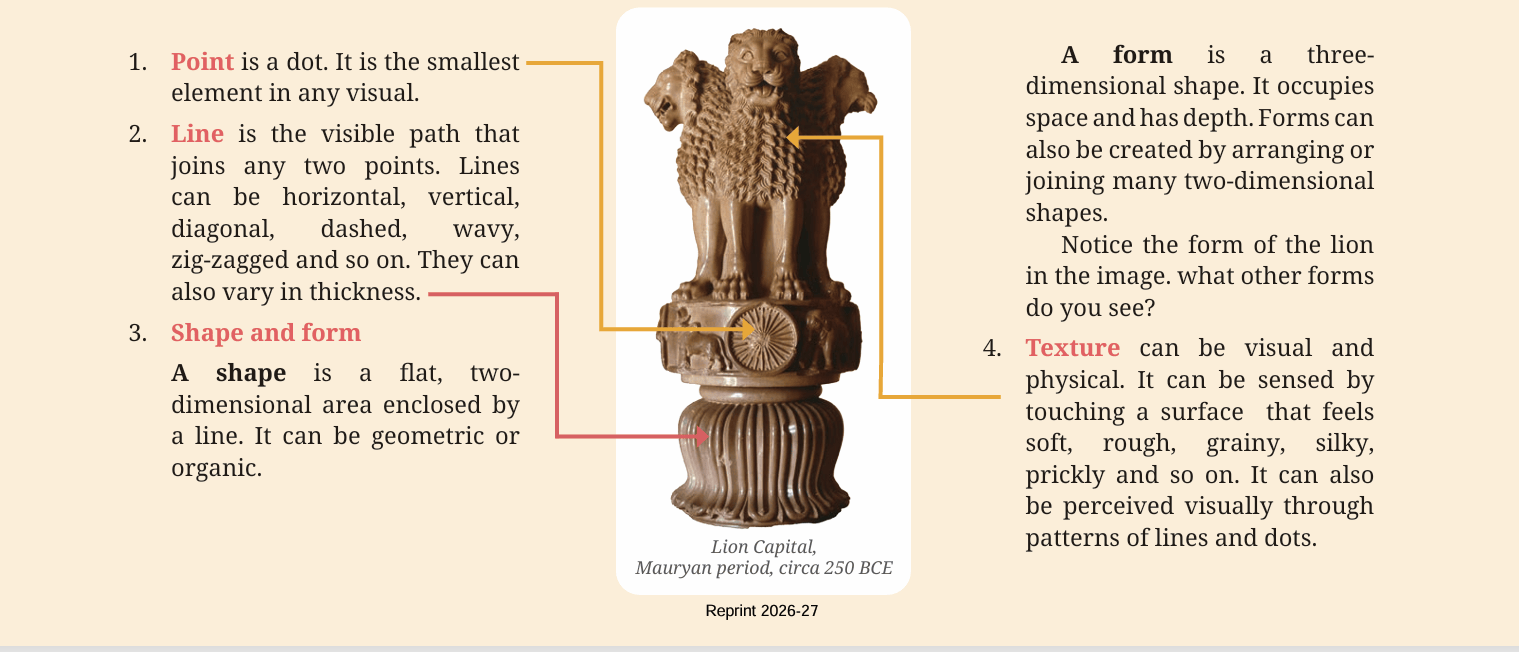
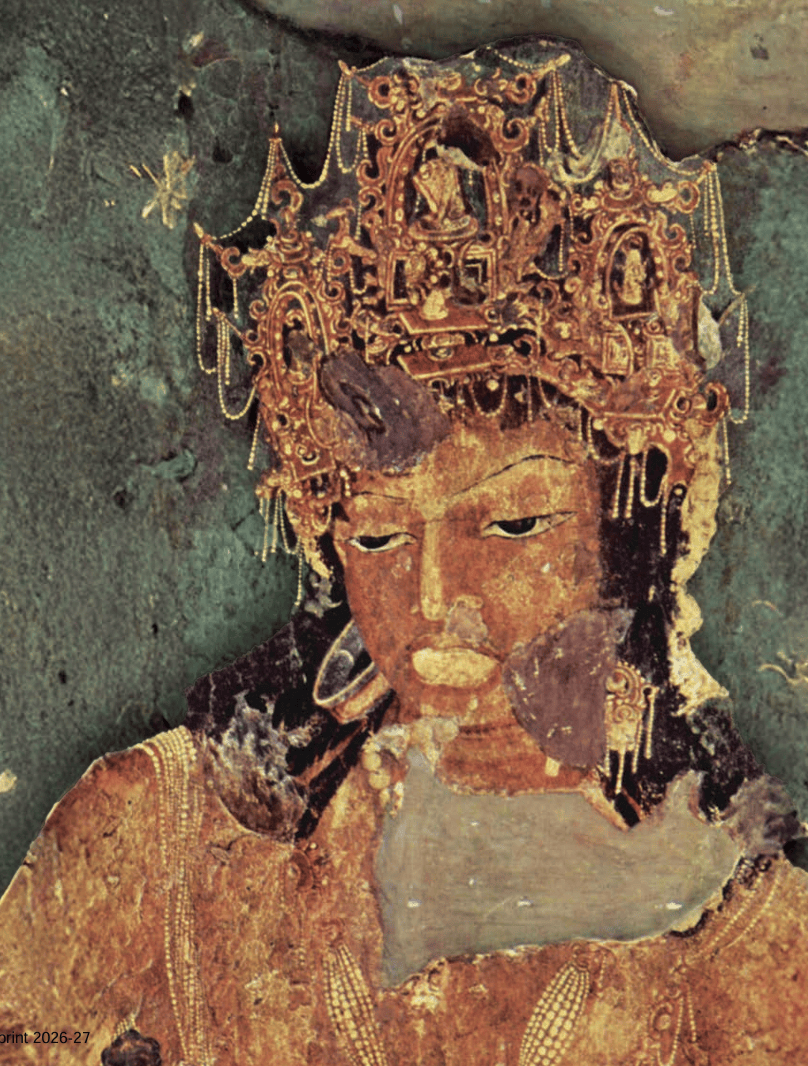
Examine the artworks on this page and note down your observations of the visual elements.
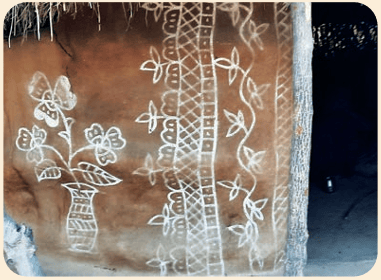
Describe the lines and shapes that are painted in this maandana on the wall of this hut. Which other elements do you see?
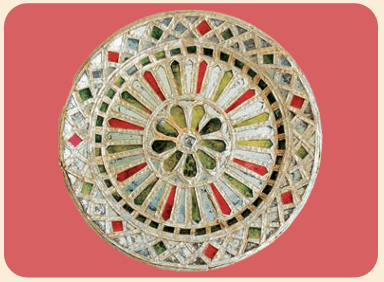
What kind of lines and texture does this plate, crafted in the thanjavur style have? Which other element would you associate with this object?
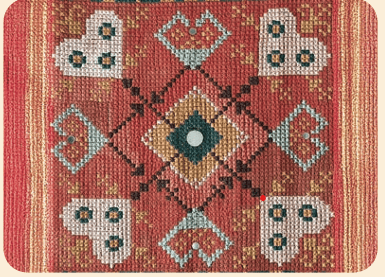
What are the prominent visual elements in this embroidered tapestry?
Artists constantly experiment with the visual elements while creating artwork.
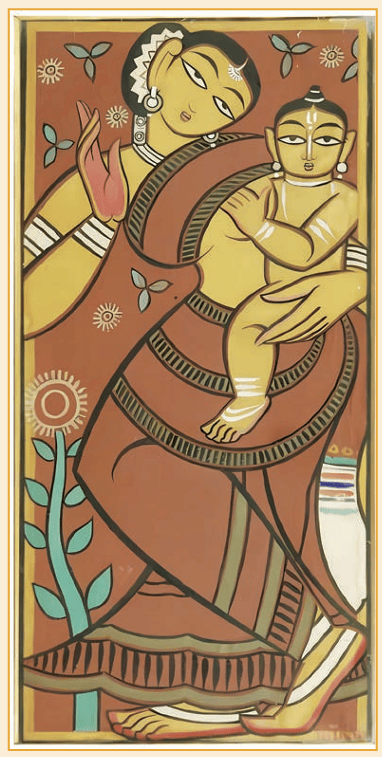
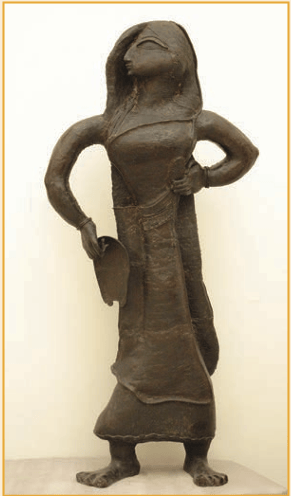
Let us explore these in the works of three modern Indian artists, who were inspired by the Indian art traditions. List the visual elements seen in each artwork.
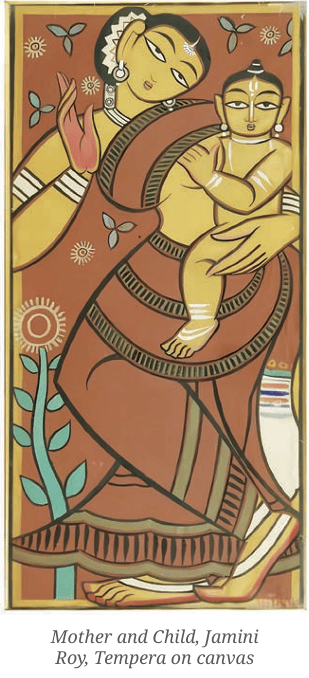
Title: Mother and Child
Artist: Jamini Roy (1887 – 1972)
Medium: Tempera on canvas
Inspirations: East Asian calligraphy, terracotta temple friezes, folk arts and crafts
Visual Elements in this Artwork:

Note to the Teacher:
Find out more about the medium mentioned for each artwork, and introduce students to the related techniques and processes.Title: Spirit of Daily Work
Artist: Meera Mukherjee
Medium: Bronze
Inspiration:Dhokra metal work
Visual Elements in this Artwork:
Untitled
Artist: Syed Haider Raza
Medium: Aquatint
Inspiration: Indian forest landscapes and the concept of Bindu (point or dot) from the Indian philosophy
Visual Elements in this artwork:
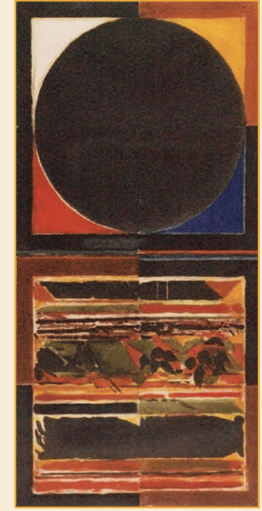
Share these with your friends and discuss your observations with your teacher.
SHADANGA
Shadanga refers to the six limbs of an art. This has been codified in the ancient Indian text of Vishnu dharmottara Purana. This text provides guidance on how to combine the visual elements in an aesthetic or tasteful way, while making an artwork. Just like how food tastes good when the ingredients are combined in the correct proportions and cooked at the right temperature.
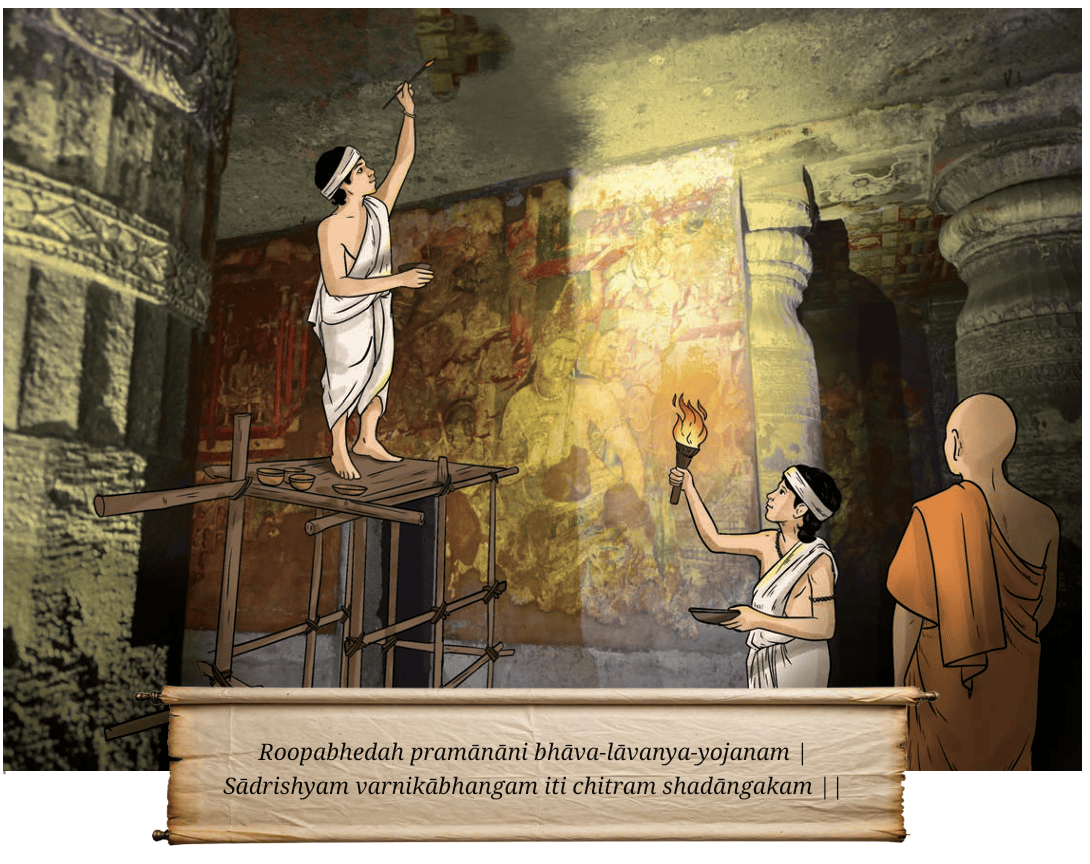
- Roopabhedah — Difference between forms
- Pramānāni — Measurement and structures
- Bhāva — Expression and emotion
- Lāvanya Yojanam — Aesthetic composition and grace in art
- Sādrishyam — Similitude and resemblance
- Varnikabhangam — Use of tools and colours
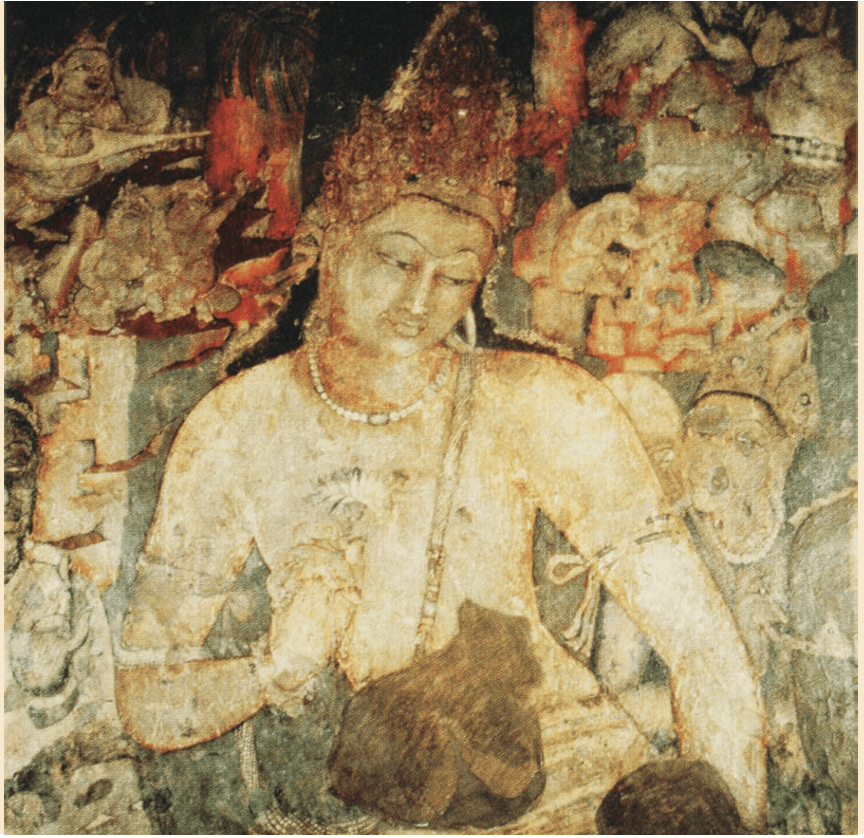
PRINCIPLES OF VISUAL ART AND DESIGN
Well-composed visuals communicate ideas and emotions effectively because they follow the principles of art and design. Read about each of the principles and connect them with the painting on this page.
- Unity and Harmony are created by bringing elements together in a way that is pleasing to the eye. Observe the combination and distribution of colours used in the painting.
- Balance gives visual stability. For example, if one half of an artwork has a large image, it can be balanced in the other half. Symmetrically, either by a similar and large image or asymmetrically, by many small images. Observe the visual balance in the Tribhanga posture of the mother, and the position of the child.
- Rhythm and Movement guide our eyes from one part to another in an appealing manner. They are created through pattern and repetition.Observe the plant stem next to the mother and other lines on her clothes.
- Emphasis is created by making any one of the visual element stand out. Observe the coloured palm of the mother’s hand, holding the flower.
- Proportion is the relationship between the sizes of different visual elements. It contributes to the beauty, while also expressing the ideas and emotions. Observe the size of the baby in relation to the mother in this painting.
- Hierarchy is the order of importance in a visual. Observe that the mother is given maximum space in the painting. After that, focus on the child, followed by other details of the surroundings.
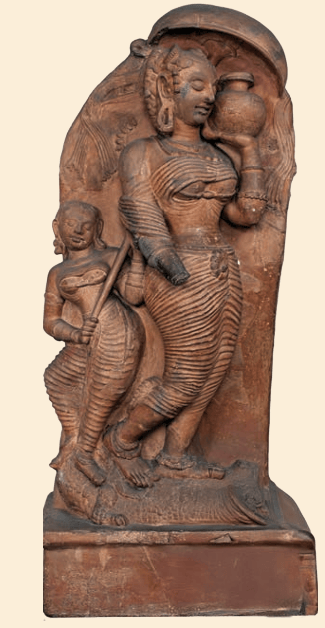
1. Ganga Sculpture, 5th Century Terracotta sculpture Example: Rhythm and movement — created by the position of the legs and the patterns on the cloth, resembling water.
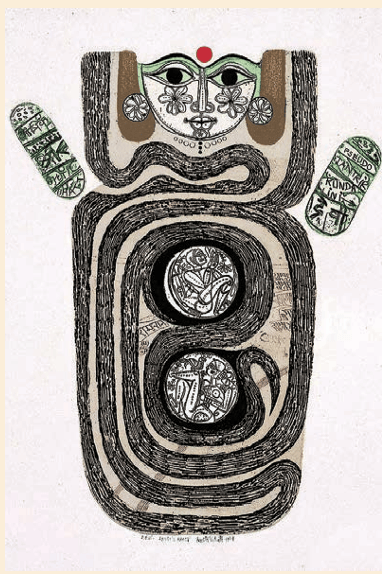
2. ‘Devi’ by Jyoti Bhatt, Etching Example: Emphasis is created by the red bindi on the forehead.
Take inspiration from nature, surrounding objects, letters or even create your own using points, lines and shapes.
Keep your design simple.
MAKE MULTIPLE ITERATIONS
- Work through the suggestions below to see how the visual principles alter your design.
- Use symmetry or asymmetry to achieve balance
- Repeat an element that creates pattern or movement
- Note the proportion of small parts to the whole motif.
- Emphasise one part of it.
- Create a hierarchy by modifying elements like size, thickness, colour and tonality to different parts based on their importance.
- Bring it all together to create harmony.s
ASSESSMENT
| CHAPTER 15: ELEMENTS AND PRINCIPLES OF VISUAL ART AND DESIGN | ||||
|---|---|---|---|---|
| CG. | C | Learning Outcomes | Teacher | Self |
| 1 | 1.1 | Observes visual elements around them and visually records them in a journal | ||
| 2 | 2.2 | Identifies and applies visual principles in artworks | ||
| 3 | 3.1 | Use a variety of materials for journalling | ||
| Overall participation | ||||