18
ARTS OF THE PEOPLE, WITH THE PEOPLE, FOR THE PEOPLE


Art has been a part of human life since prehistoric times. Every artefact carries the voice and touch of other humans, forging a connection between them and us across the time. Just as innovations in materials, tools and technology influence arts processes; changes in social values, ideas and behaviour influence creative thoughts and expressions. It is fascinating to learn about the lives and work of artists. They take us into their world of imagination, trigger many different emotions that make us reflect on our lives and actions.
Art is a part of our everyday life. From the clothes we wear to the plate we eat from, all is a piece of art. In this chapter, you will be introduced to a variety of art practices that primarily use everyday materials like thread, paper and cloth to create beautiful objects, and artwork. You will learn how these materials are crafted using specific techniques, and in the process, you will be able to appreciate the hard work, patience and dedication of hundreds of artists, who have kept these traditions alive.
Nature has fascinating networks that connect all living beings to one another.
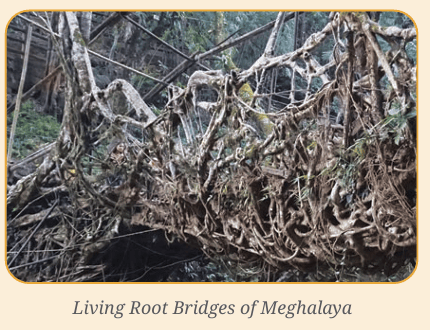
Even though you don’t usually see the roots of plants and trees, you know that they sustain life. Some trees like the banyan have roots that grow out of their branches above the ground.
In Meghalaya, the Indian rubber tree has very strong secondary roots that grow above the ground. The people of the region have trained these living roots to form long bridges across streams and rivers.
It takes a lot of time for these bridges to form. They are gently twisted onto one another and tied in different places for support. The bridges get stronger over time as the roots grow.
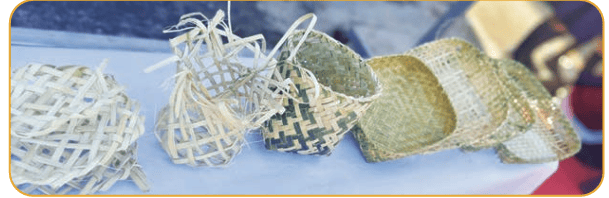
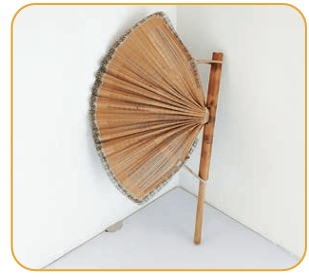
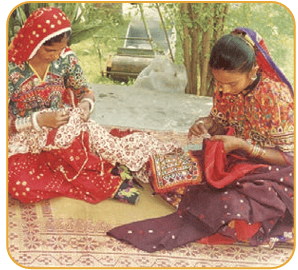
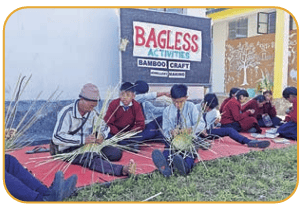
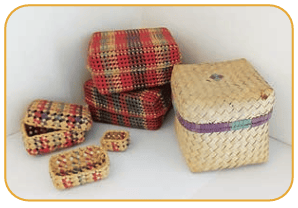
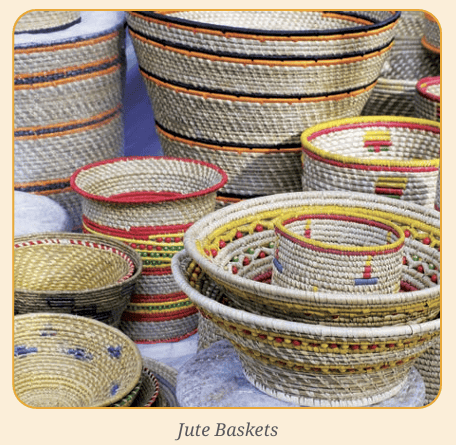
Twisting, knotting, crocheting, knitting and weaving are some techniques used by artists in different parts of our country. Baskets, handloom fabric, fans and even charpoy are created using these techniques. These are everyday objects created for daily use by the people, for the people.
Find ropes made of cotton, jute or any other natural fibre that is easily available in your region and create a small artwork yourself.
Note to the Teacher:
Highlight the connection that human societies have with nature and the importance of sustainable choices across art practices.
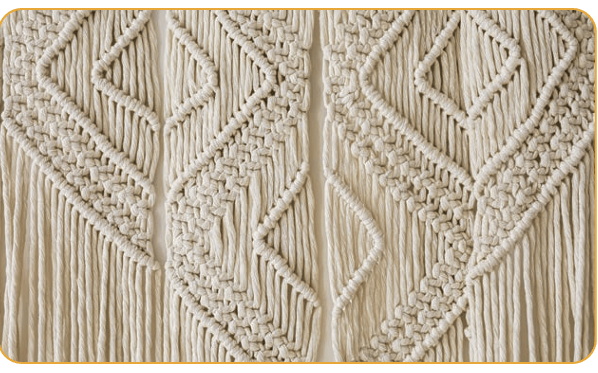
LEARN THE ART OF KNOTTING
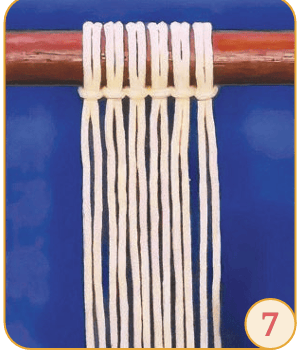
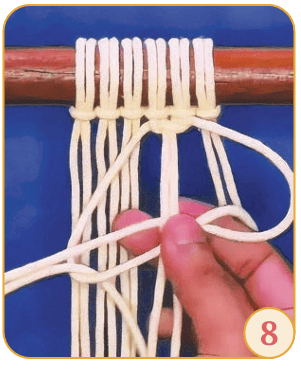
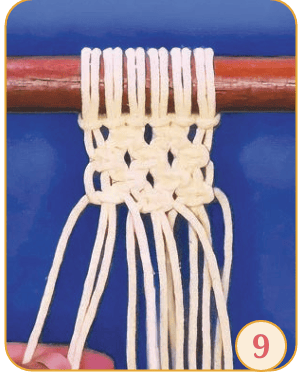
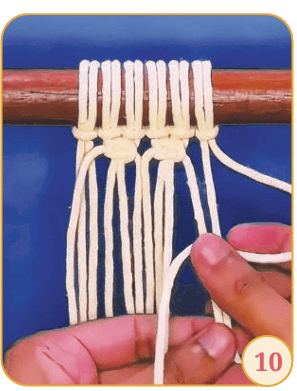
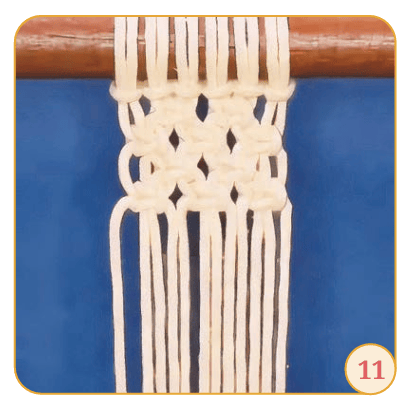
Work in small groups for this activity. Follow these steps to learn basic knots. Knots can be confusing. So, look around and help one another as you work. You can add coloured beads or other decorations, or make it in tricolour.
Follow Steps 1 to 6 to create a friendship band, wrist band or rakhi and send it to our soldiers to show your appreciation.
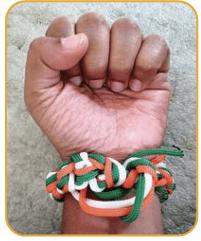
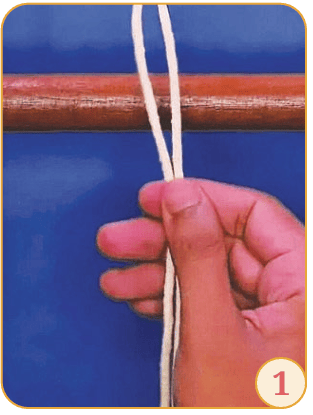
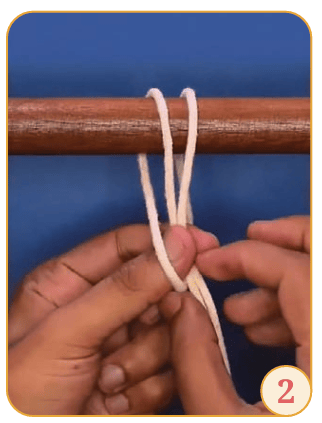
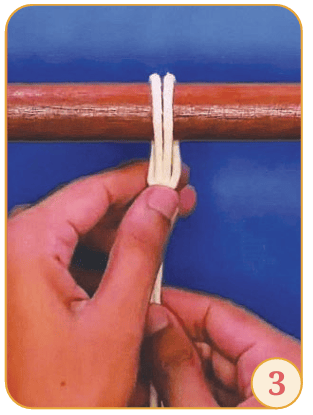
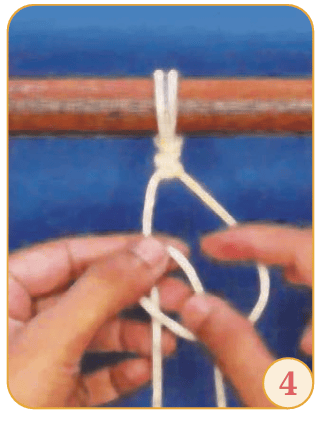
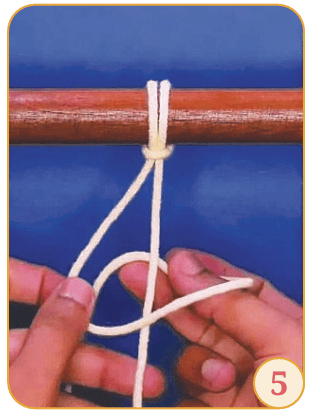
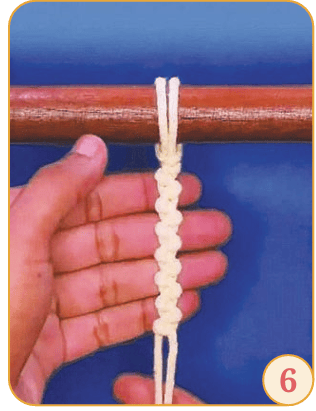
Work in groups and continue through Step 11 to create larger pieces like wall hangings, torans, and so on.
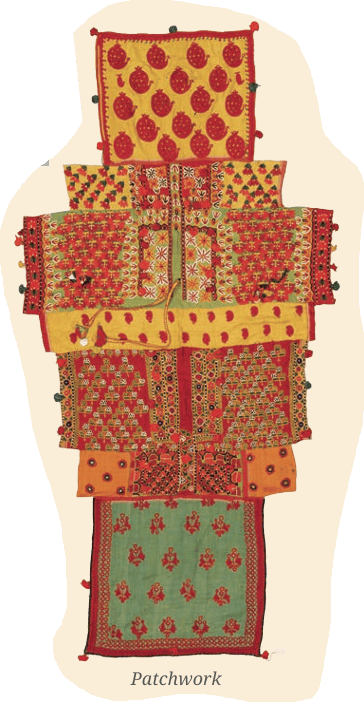
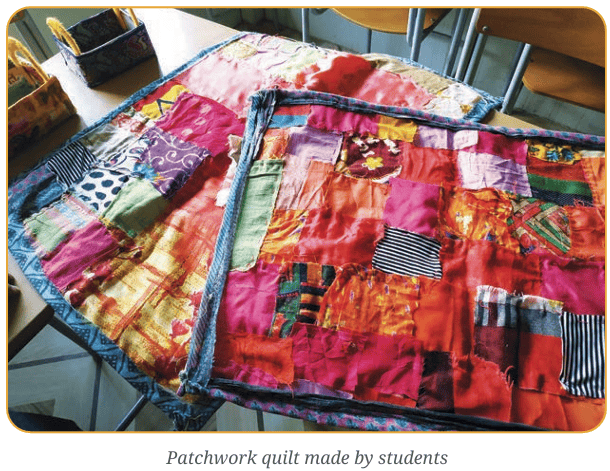
Fabrics have a long life. Patchwork is a technique used in many parts of the world, where small pieces of fabric are joined and sewn together to create a large piece of fabric. They are made into blankets, cradles, bags, cushion covers, table mats, dhurries, and so on. In many parts of India, women bring fragments of old fabric that each of them collect and quilt it together.
These patchwork quilts are like the symbols of shared memories.
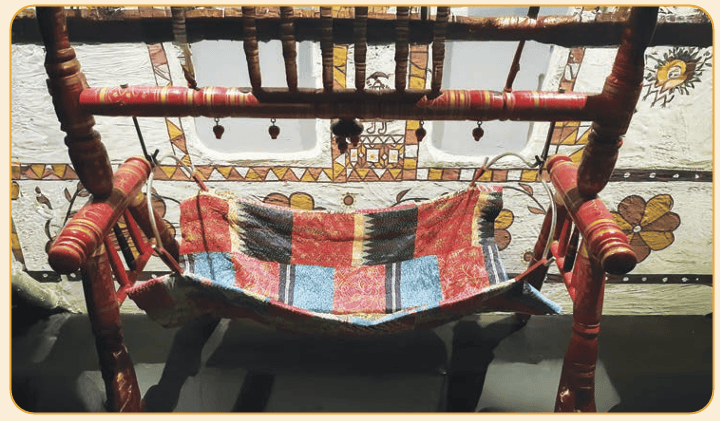
Imagine our society as a patchwork quilt. Each individual plays an equally important role in creating the overall picture. Anything one person does or creates has the power to change the picture of their entire society.
LEARN TO SEW PATCHES
Work in small groups for this activity.
Step 1: Collect old fabric from your homes that are not in use anymore. Go around and check in your school as well.
Step 2: Find a large piece that is minimum 30 cm × 30 cm to use as your base.
Step 3: Gather the other pieces you have collected and cut them into squares or rectangles of approximately 5 – 6 cm.
Step 4: Spread your base fabric and place the smaller pieces over it in a pattern you find visually interesting.
Step 5: Join and sew the individual pieces together along their edges on the reverse side. This will ensure that the stitches are not seen when you flip them over.
Step 6: After joining all the small pieces, place the patchwork on the base cloth and sew it using many lines of running stitches over the patches. You can create interesting patterns and use coloured threads for the lines of running stitches.
Step 7: Complete your quilt by closing up the edges with another piece of cloth or by folding and stitching.
Note on safety: Take precautions while using sharp objects like the scissors and needles. Use a sponge or a dedicated piece of thick cloth to store your needles so that they do not get misplaced and cause harm to others.
What do you do with old newspapers?
When certain kinds of soft paper like newspaper and tissue are mixed with water and glue, they become very strong.
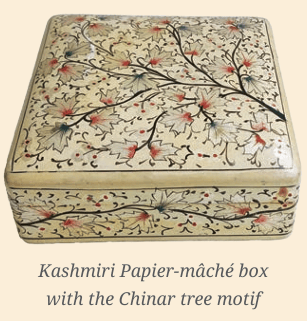
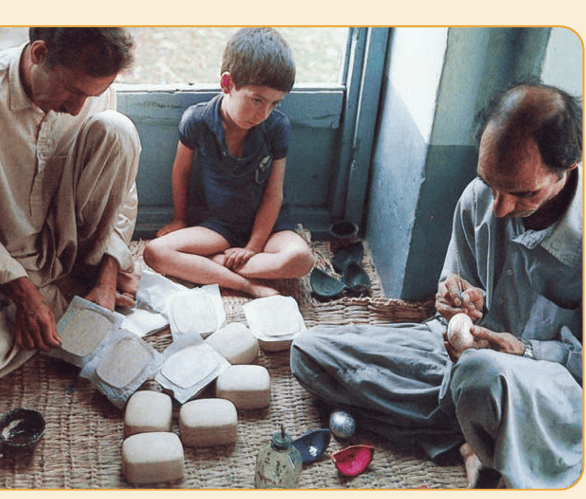
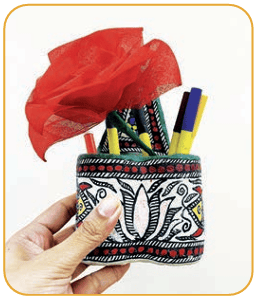
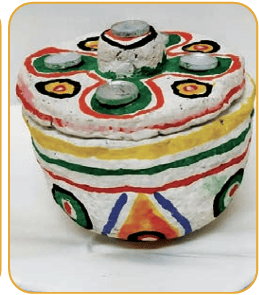
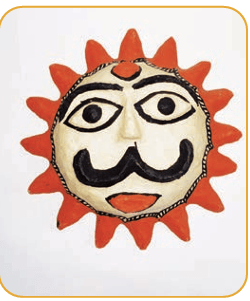
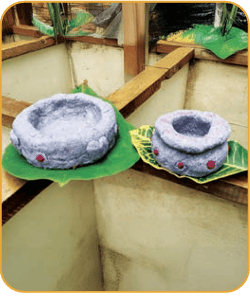
Papier-mâché is a technique through which this mixture of paper, water and glue are molded into a three-dimensional form.
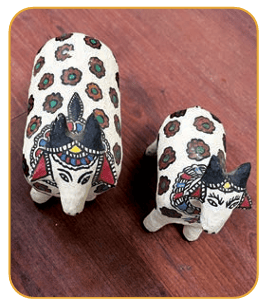
These forms are inspired by the artist’s environment and their culture. They are then painted using pigments available in the region. Even though artists use the same base of papier-mâché, the motifs and patterns vary from region to region.
Everyday material like paper can be transformed into beautiful artworks. Papier-mâché is widely practised in many parts of our country. How do you think these practices have travelled from one part of the country to another?
Note to the Teacher:
The process of making paper pulp involves careful observation of the material consistency at every stage. Connect this activity with science concepts, and skills to analyse changes in the property of paper caused by water and glue.
LEARN TO MAKE PAPIER-MÂCHÉ
Work in small groups for this activity. Follow this process to create a small form using papier-mâché.
Step 1: Cut old newspapers into small pieces or thin strips and soak them in water for a few days in a large tub or container.
Step 2: Take out the soaked paper and squeeze out the excess water from it.
Step 3: Crush, mash or grind the paper into a pulp. You can also use a mortar and pestle to grind it by hand.
Step 4: Add a little glue to the paper pulp and mix it well.
Step 5: Take a small bowl or any other shallow object as your mould and coat its outer surface with any greasy substance like petroleum jelly or a thick oil.
Step 6: Turn the object upside down. Take thin strips of damp newspaper and overlap them over the object evenly till the entire surface is covered. Apply the pulp thickly and evenly over the entire object. Allow it to dry completely for a few days.
Step 7: When dry, turn the object over and gently release the mould.
Step 8: Neaten up your papier-mâché artwork by using a fine sandpaper, and add colour and decorations to it.
ASSESSMENT
| CHAPTER 18: ARTS OF THE PEOPLE, WITH THE PEOPLE, FOR THE PEOPLE | ||||
|---|---|---|---|---|
| CG. | C | Learning Outcomes | Teacher | Self |
| 1 | 1.2 | Creates artworks in groups and recognises the value of making collectively | ||
| 4 | 4.1 | Demonstrates awareness of everyday materials used in art practices from different parts of India | ||
| 4 | 4.2 | Demonstrates familiarity with artists and art practices of their region | ||
| Overall participation | ||||