19
CAMPAIGN FOR ART AWARENESS

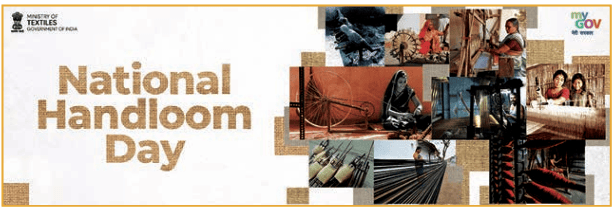
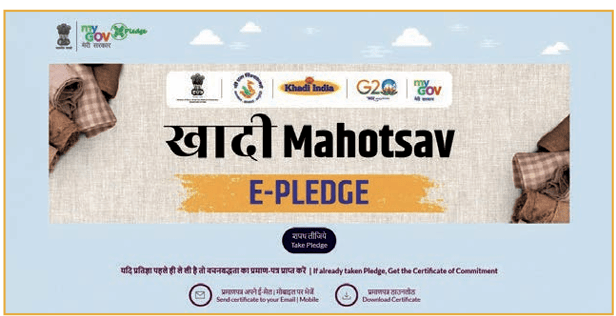
An awareness campaign helps communicate a particular message and brings focus to important issues. This message could be about a new service, or discount on a product, it could be a public announcement like the campaign about wearing masks during the pandemic or a message about voter registration. The arts are often used in awareness campaigns related to health, hygiene, environment, justice, and so on.
Posters, fliers, banners, hoardings, handouts and brochures are designed to help communicate these messages. Each of these are carefully crafted with words and visuals to grab people’s attention, and bring their focus to your message. You might have seen or created posters, banners, fliers and handouts for a variety of causes, and programmes in school.
Do you think it is important to create awareness about the arts? In this chapter, you will create an awareness campaign to inspire others to participate, support and appreciate a variety of art forms, and cultural artefacts.
Creating a campaign involves many steps like collecting material, researching, choosing a format, writing your main message and making visuals. You will undertake all of these steps to create awareness about arts.
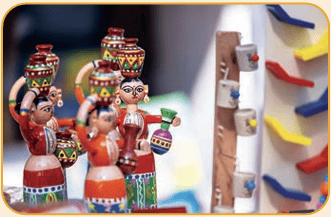
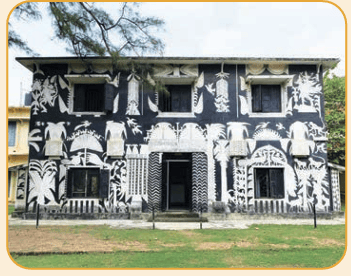
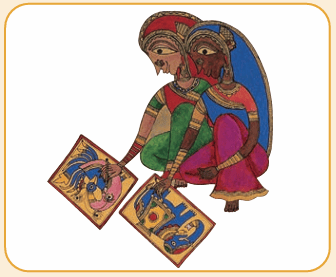
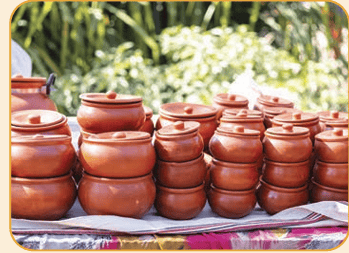
For your campaign, begin by choosing a subject. You can work with an artist who may be a painter, sculptor, designer or photographer. You can also choose a community that is keeping an art and craft tradition alive, like you studied in the previous chapter or a school production, or even a project of your own.
Make small groups of 4 to 5 students each and think about a subject for your campaign together. Here are some prompts —
- Do you know any artists and art practices from your region?
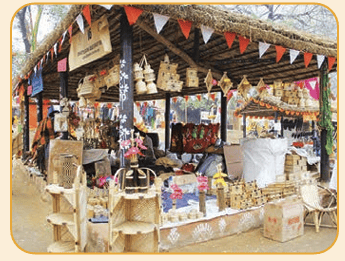
- Is there an upcoming festival, local crafts fair in your locality where you are likely to meet artists?
- Are there any art and design schools in your region?
- Is there an art museum or gallery near you? What kind of artworks do they exhibit?
There are so many artists and art practices that you may not know about. Choose the one you can relate to and discuss it with your teacher.
- Talk to teachers, friends and family members.
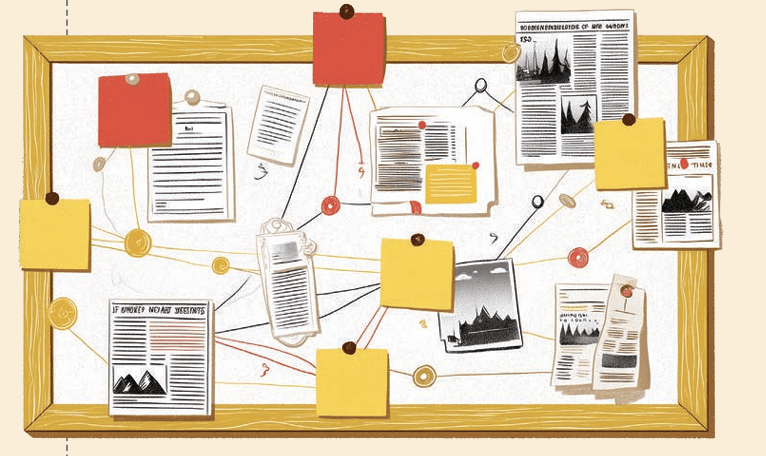
- Visit the library, refer to the local newspapers and your textbooks from previous years.
- Visit artists and their studios, or workplaces.
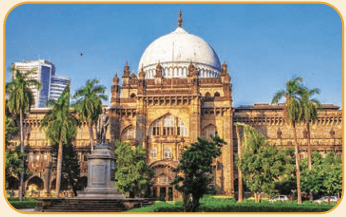
- Visit a gallery, museum, art fair or haats.
- Use the internet under adult supervision to get more information.
Maintain notes of the information you have find. Collect visual and text pieces. Try and look for the following pieces of information —
- What contribution does this artist or artwork have on the society?
- What is the story behind the artist and artwork?
- What do you find the most special about this artist, artwork or art practice?
- What is the inspiration behind the artwork?
- Are there any specific materials or techniques used?
- What are the social, economic or environmental challenges did they face?
Note to the Teacher:
It is important for students to present the information as interesting stories with visuals rather than dates and chronology from their biography. Support and guide students in finding, visuals and relate it to the information they gather about the artists.
- Think of the main message you want to communicate with your campaign.
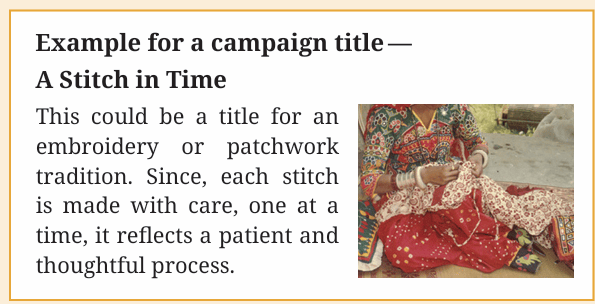
- Create a catchy title for your campaign. The title should not be more than 5 to 7 words and reflect your message clearly.
- If you are creating a campaign for your own dance and theatre performance, then your title, and main message should inspire people to come, and see your production.
- Go through the information that you have collected.
- Organise the information under different headings like —
- Introduction
- Process of Making
- Background Information
- Visual Gallery
These may vary based on your chosen topic.
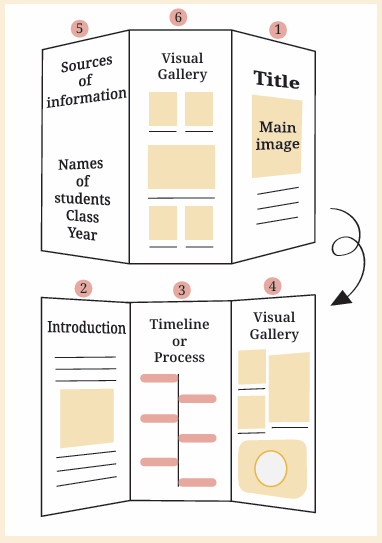
STEPS FOR MAKING A BROCHURE
- Fold an A4 sheet of paper into three equal parts.
- Decide the sequence of pages and the flow of information.
- Assign the six sides to a section of the information —
- Cover Page: Put your title and main message on the first page.
- Introduction: Tell the reader what this brochure is about in a few words and visuals.
- Process: Share the background information about how an artwork is created or create a timeline with important works of an artist.
- Gallery: Create a gallery of visuals which could include photos and drawings of the artist, their work, materials and tools.
- Sources: Don’t forget to mention the sources where you took the information from. Your readers may want to find out more themselves!
Experiment with techniques like collage and printmaking. Look closely at the material used by the artist and art practice. Can you take inspiration from it?
ASSESSMENT
| CHAPTER 19: CAMPAIGN FOR ART AWARENESS | ||||
|---|---|---|---|---|
| CG. | C | Learning Outcomes | Teacher | Self |
| 2 | 2.2 | Use of visual elements to highlight the important information in a brochure | ||
| 3 | 3.2 | Undertakes a sequential process while making a brochure | ||
| 4 | 4.2 | Chooses a locally relevant artist or art practice to create an awareness campaign | ||
| Overall participation | ||||
Teacher’s Comments and Student’s Observations
SUMMATIVE ASSESSMENT
| Activity for Assessment (Example) | Criteria for Assessment | |
|---|---|---|
| Individual | Make your Portfolio Presentation.
Choose 5 artworks that reflect your learning milestones, which can include:
|
Pay attention to
|
| Group |
|
|