
UNIT 1
Foundations of Physical Education and Well-being
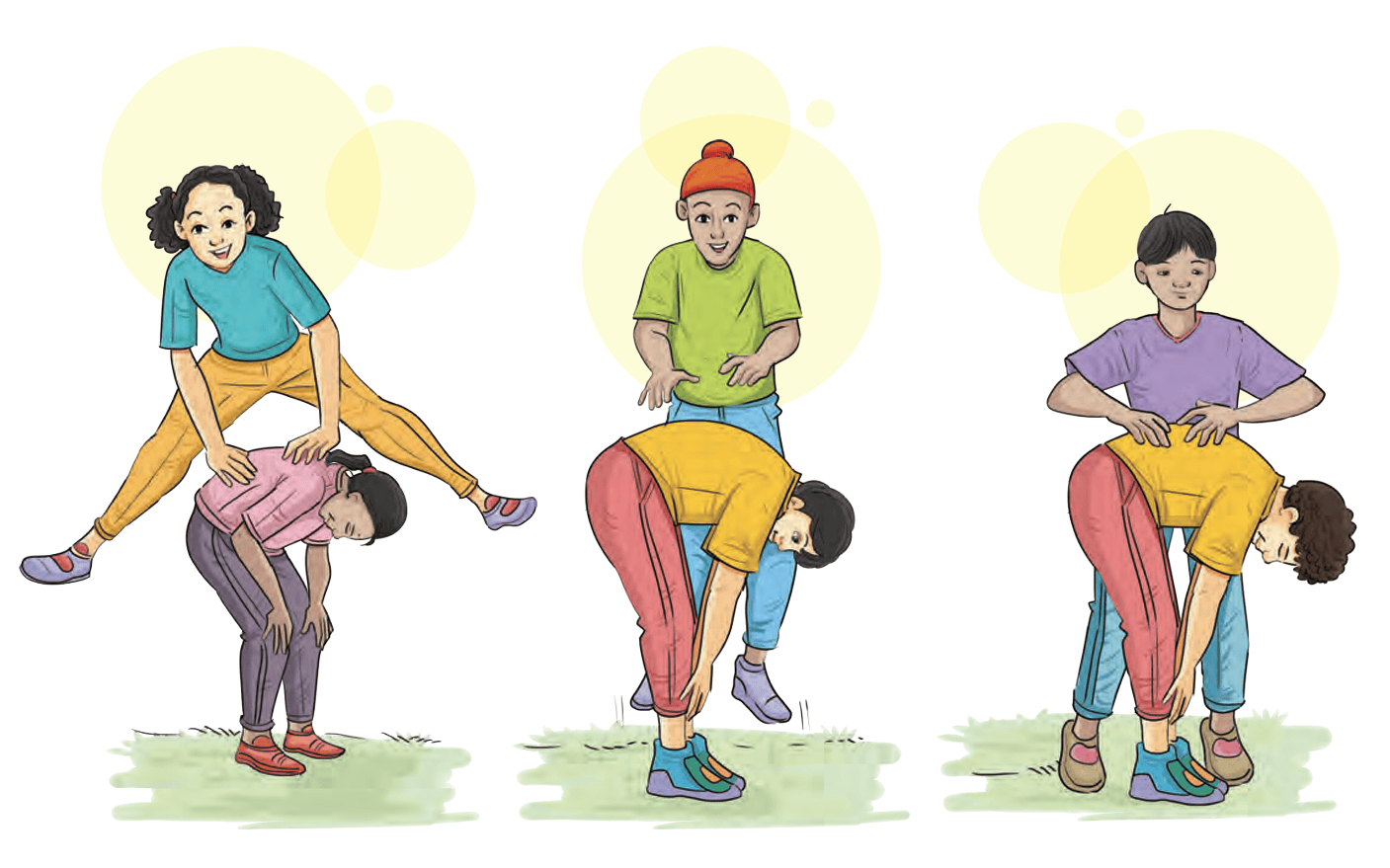
Horse Vault Race is a unique athletic competition in which participants vault over each other to complete the race.

How to play?
- Make pairs of students that are of almost similar height and weight.
- Among each pair, one student will play the 'horse' by bending over, with their chin touching their sternum (chest bone) and squatting on all fours (as shown in the figure), keeping all the safety measures and degrees of difficulty in mind.
- The other student will carefully jump over the horse (played by the first student).
- As the activity continues, the pair will alternately jump and take on the role of horse.
- The game is won by the pair that crosses the finish line first.
Variations
- Sideways jumps may be included at a later stage.
Circle time — Good technique
- Compare techniques with other students on how they crossed the vault. Discuss whose jump was more efficient and why?
- Discuss how better balance can be maintained by students while in the vault position.
- Discuss how improving our own skills gives us a feeling of holistic happiness.
Progressive Mass Drill involves a series of coordinated movements that will be performed together in sync on a count of eight. They’re made to be enjoyable while helping students in developing their strength, flexibility, and rhythmic movement.

How to play?
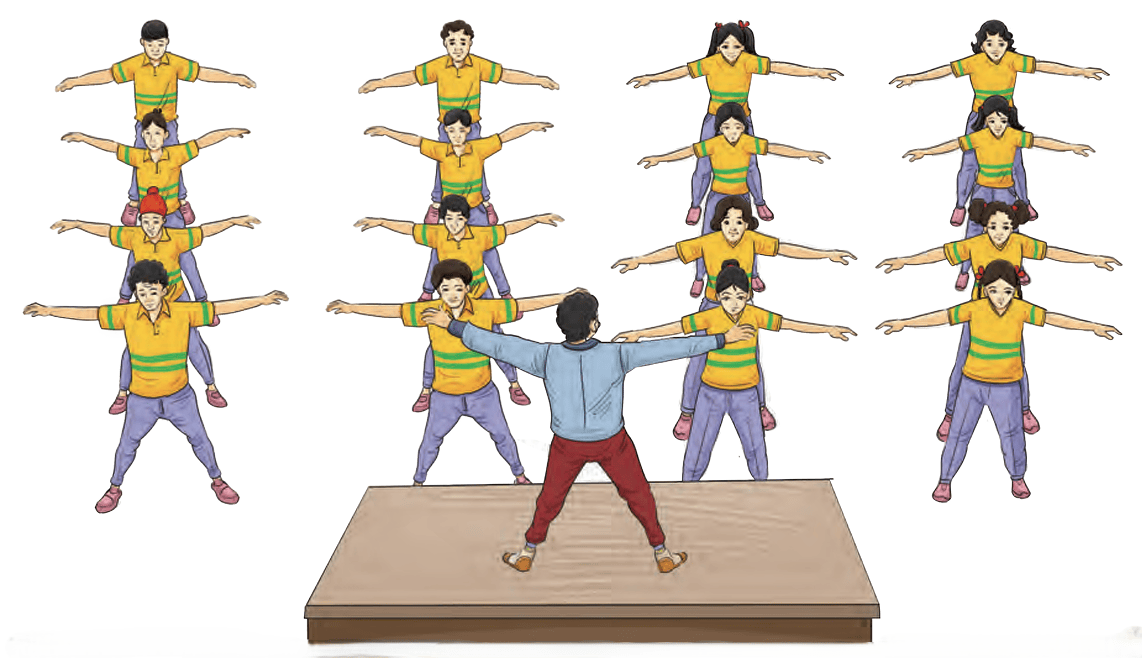
- Students will be arranged in rows, with one arm's distance between them.
- Students will perform freehand activities.
- The teacher will count out loud from one to eight and the demonstrator will perform the exercises from a raised platform facing the students, as shown in the figure on the next page.
- Other students will imitate the demonstrator's movements in sync, on the counts.
- The difficulty level of the drill can be increased by the suggested variations.
Variations
- Drum beats can be used for the counts.
- Free hand activities can be replaced by holding any objects (stick, dumbbell, ball, umbrella, rope, hoops, ribbon, etc).
Note for the teacher
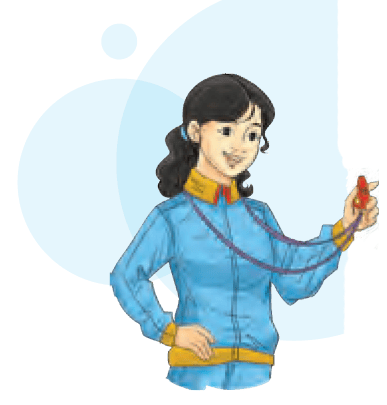
The teacher will help the students in identifying the names of the major muscles in their arms and legs.
Circle time — Major muscles
- Feel the muscles that are involved while doing the activities. Discuss how the activities can be performed in different ways and how the muscles might feel different then.
- Think about how synchronising actions with vocal commands or music and maintaining coordination with peers gives us a feeling of holistic pleasure.
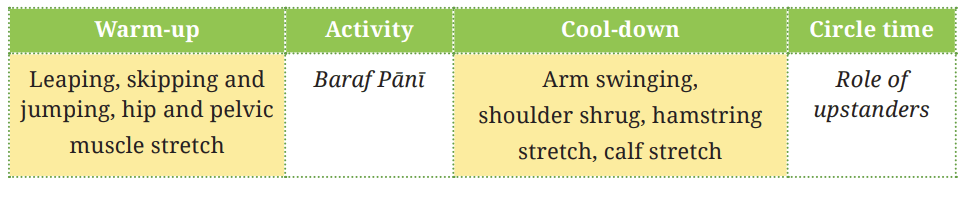
Baraf Pānī is an effective activity for learning about the illeffects of bullying and encouraging upstanders to reduce the impacts of bullying. Students may explore various viewpoints — those of the bully, the victim, the bystanders and the upstanders.
How to play?
- Bully – the one doing the act of bullying.
- The target – the victim of bullying.
- Bystanders – individuals who observe bullying.
- Upstander – a bystander who chooses to take action.
- One student will be the Bully and another will be the Upstander.
- The others in the group are Bystanders and Victims.
- All the Victims and the Bystanders will be running away from the Bully.
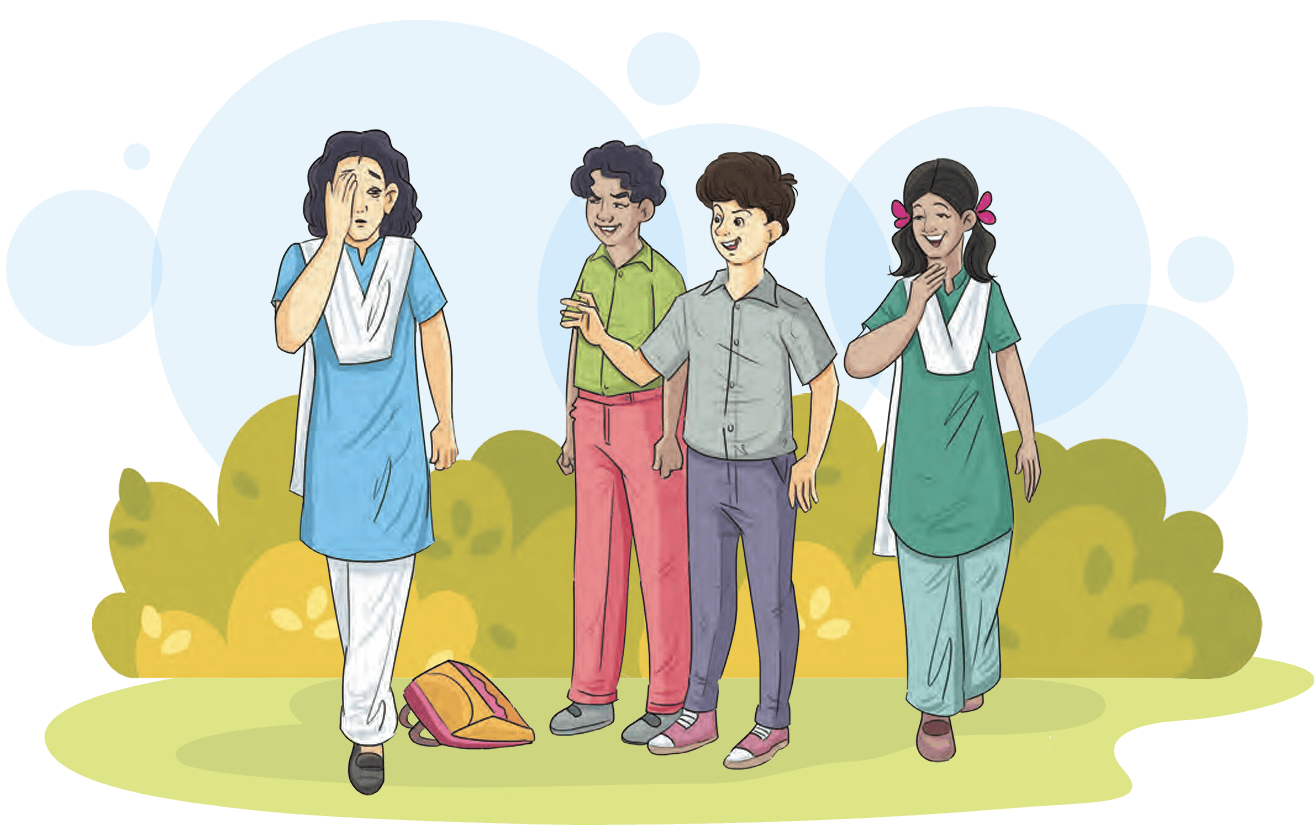
- The Bully will try to chase all the students while saving themself from the Upstander.
- When the Bully tags the Victim, they should not move and hold the position that they are in.
- Bystanders can tap Victims to unfreeze them but they have to use a reassuring remark, such as “You're not alone!” or “I am with you” while tapping.
- The Bully can be stopped by the Upstander if they tag them and say, “Stop, that's not okay!”
- Keep switching roles among students to make sure that everyone gets an opportunity to play each role.
Circle time — Role of upstanders
- Discuss how you felt while playing each role.
- Discuss how, upstanders can help stop bullying in real life.
Chār Tālī is a game to build students’ alertness and make them understand the importance of society’s role in stopping harassment.

How to play?
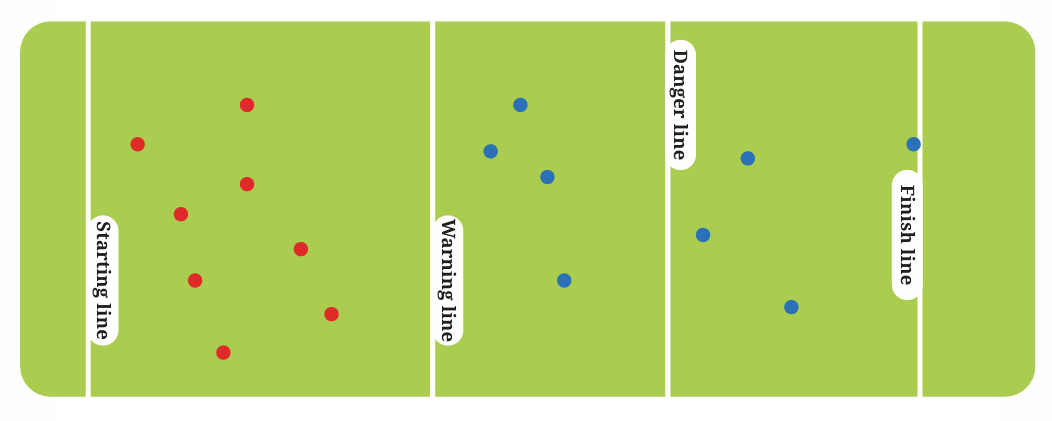
- Mark four lines on the ground. Line one is the ‘starting line’, the second line will be ‘the warning line’, the third line will be ‘the danger line’ and the last line will be ‘the finish line’.
- Make two groups of 7–8 students each. One group will be the ‘Aggressor’ and another group will be the ‘Society’.
- One member of Society will be the victim and they will stand on the finish line with their back towards the group.
- The rest of the members of Society will distribute themselves equally at the warning and the danger zones. In case the members of Society are uneven, then the distribution should be such that there are less number of people in the danger zone as compared to those in the warning zone.
- Aggressor will stand behind the starting line and move towards the finish line while the victim is not looking at them. The victim then claps four times.
- As soon as the victim performs ‘four claps’, they turn around to see if they can identify any aggressor moving.
- The members of Society can help by trying to make the aggressors move without touching them, so that the victims can identify them.
- If any of the aggressor moves, then they are out. Otherwise, the victim will turn back and clap again four times.
- If any student of Aggressor reaches the warning line, all the members of Society in the warning zone will be considered out and in the same way if any student of Aggressor reaches the danger line then all the members of Society in the danger zone will be considered out.
- The target of Aggressor is to reach the finish line without being caught by the victim and the target of Society is to stop the aggressor from reaching the finish line and helping the victim.
Circle time — Role of society
- Discuss how Society can help the victims from the aggressors.
- Discuss how it felt as a society member to fail in helping the victim.
The Conduction Relay is to help students understand conduction through an interactive relay race, while also demonstrating how heat transfer happens when they move their bodies and come in contact with objects.

How to play?
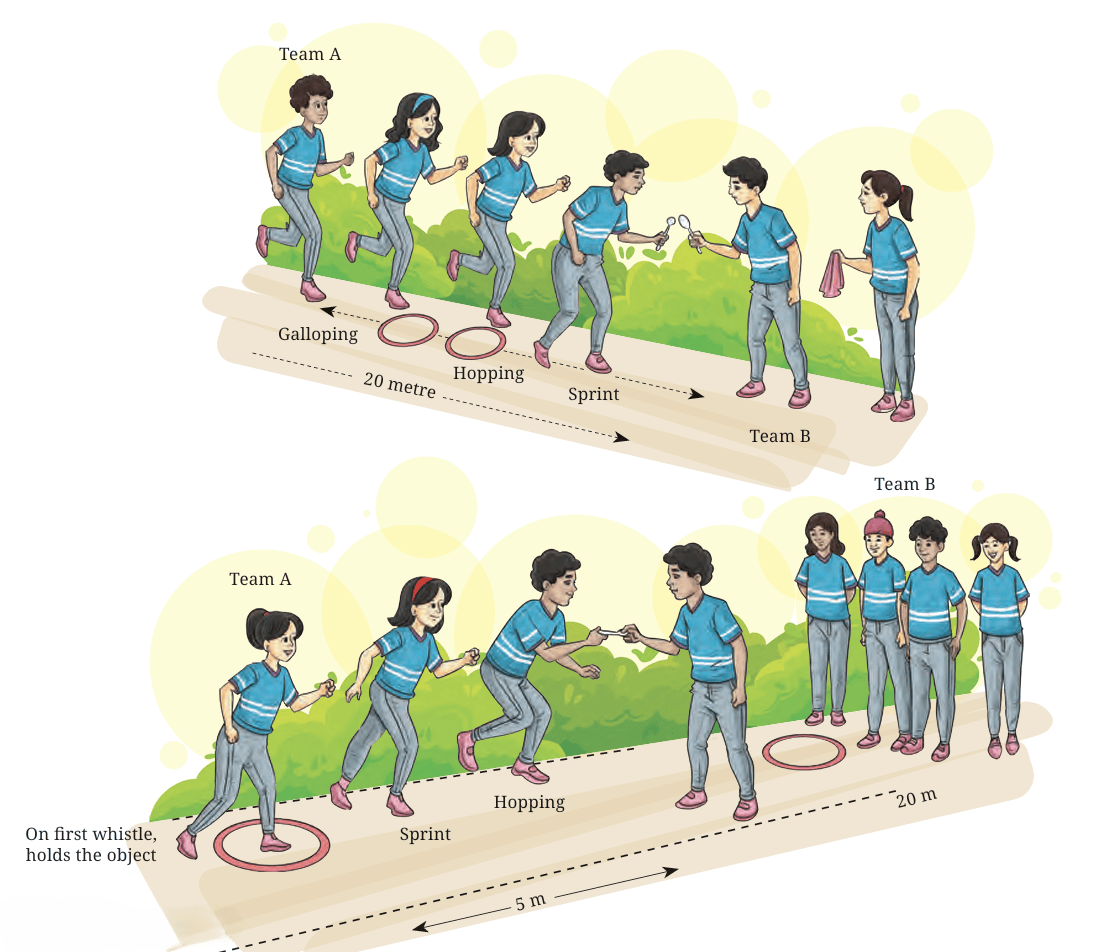
- Make two teams of 5 to 6 students each, standing 20 metre apart.
- Each student will be standing as shown in the figure.
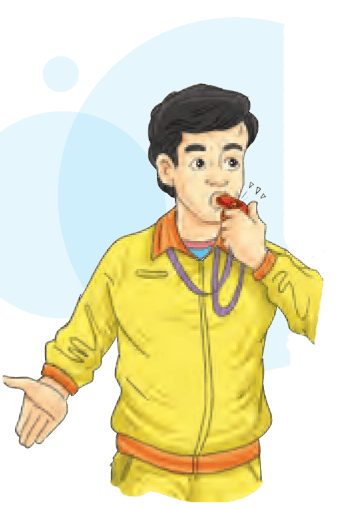
- On the first sound of the whistle, the students of team A will hold the object.
- On the second sound of the whistle, the students will perform galloping for the first 5 metres followed by hopping for the next 5 metres, duck walk for another 5 metres, sprinting for the last 5 metres and then they will finally transfer the object to the adjacent student of team B.
- The students of Team B will feel the heat of the object.
- Team B will later grip the same object but with a handkerchief or towel and perform the same activity.
Variations
- Different activities can be introduced by the teacher.
- Objects of different materials such as, wooden, plastic or metal can also be used to understand the concept.
- Perform activities during different times of the day.
Note for the teacher
- Discuss the concept of conduction among the students.
- Ensure the safety of the students.
Circle time — Heat transfer: conduction
Disuss what happened at each station and how heat was transferred (or was not transferred) when objects were wrapped in towels or exposed directly to the skin.
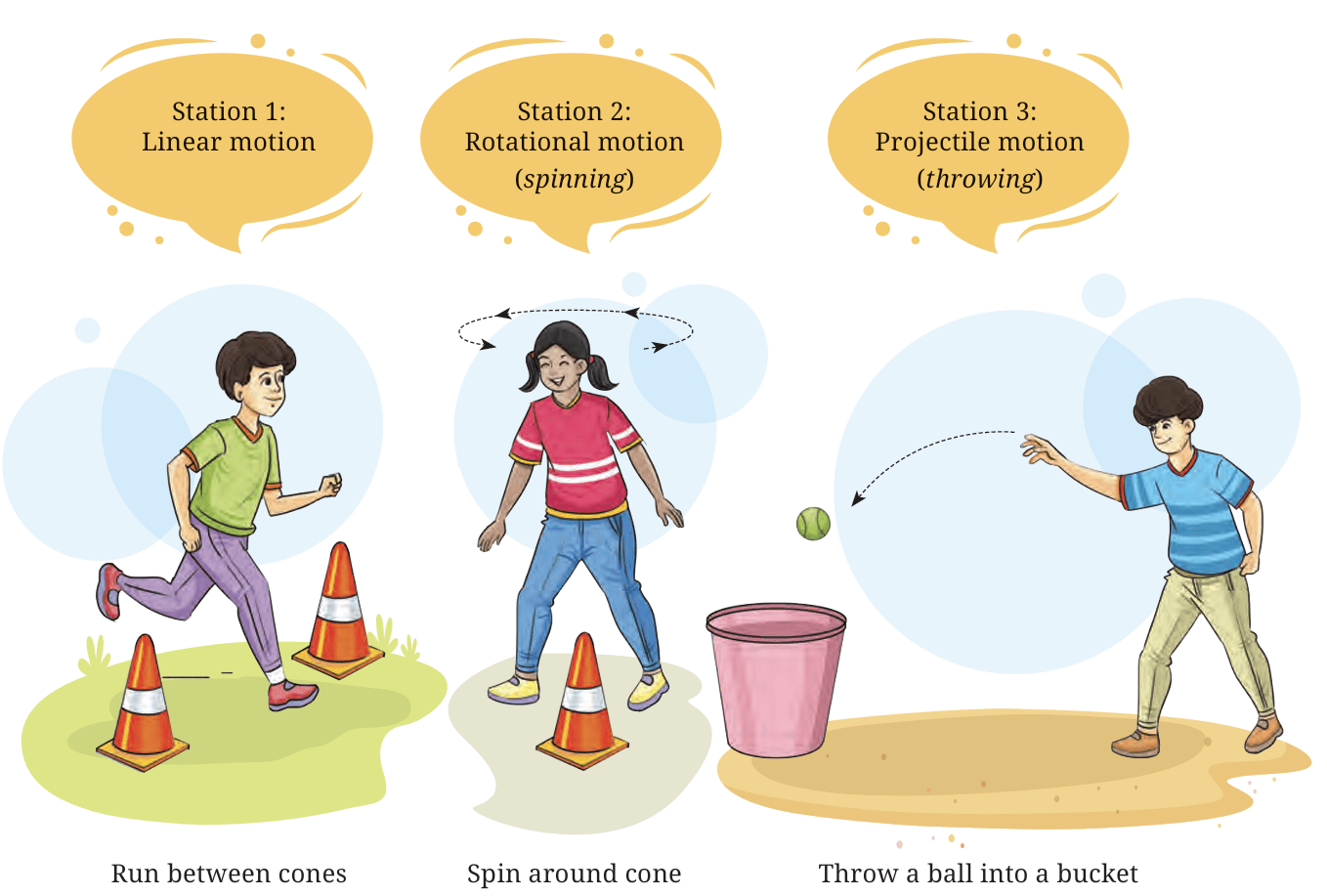
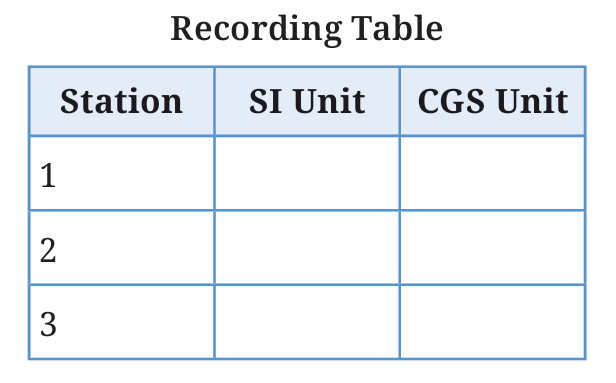
The Motion-in-Action Relay is to help students understand and experience linear motion, rotational motion, and projectile motion through a relay-style activity. Students will measure time (for linear and rotational motion) and distance (for projectile motion) in both SI (International System of Units—metres, seconds) and CGS units (centimetres, gram- seconds).

How to play?
- Divide the class into 4–5 teams (depending on the class strength).
- Each team will rotate through the stations.
- Station 1: Linear motion (running)
- Mark a straight path, say 20 metres for the students to run.
- Have each team member run along the path. Note the time taken by them to cover the distance.
- Station 2: Rotational motion (spinning)
- Mark a small cone in the center for the students to spin around.
- Each student will spin 3 times around the cone, then sprint to the next station. This demonstrates rotational motion.
- Station 3: Projectile motion (throwing)
- Set up a target (a large bucket or marked area) to throw the ball at.
- Students will throw a softball towards the target, and the distance the ball travels in the air will be measured.
- After completing each station, students will record the following measurements:
- Linear motion (station 1): Record the time taken to run the distance (in both SI and CGS units).
- SI Unit: Time in seconds (s).
- CGS Unit: Time in seconds (s) (no change here as seconds remain the same in both units).
- Rotational motion (station 2): Record the time taken to spin 3 times and then sprint to the next station.
- SI Unit: Time in seconds (s).
- CGS Unit: Time in seconds (s).
- Projectile motion (station 3): Measure the distance the ball travels.
- SI Unit: Distance in metres (m).
- CGS Unit: Distance in centimetres (cm).
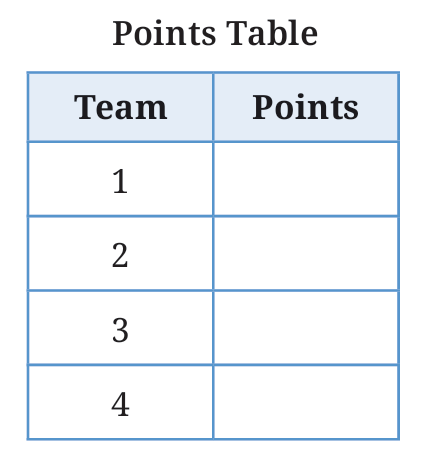
- In all the activities, the team which finishes first at any station gets 5 points, the second gets 3 points, and the last gets 1 point.
- After the teams finish, add the points gained from each station.
- The team with the highest total score wins.
Variations
Note for the teacher
- Gather the students and discuss the measurements calculated in the activity in SI and CGS units.
- Emphasise how different types of motion (linear, rotational, and projectile) occur in sports and real-life activities.
- Help them understand the role of force in projectiles, speed in linear motion, and centripetal force in rotational motion.
Circle time — Motion, unit system and gravity
- How did your speed affect the time you took to run?
- Did you feel dizzy? Discuss among yourselves about the reasons for dizziness.
- How did your spinning speed affect your time?
- How far did the ball go?
- How did the angle of your throw affect the distance?
Breathing in Action is to engage students in a fun and educational physical activity to understand how breathing adapts to physical exertion and relate it to oxygen supply for energy production.

How to play?
- Divide the students into teams of 4–5 members each.
- Set up three activity zones representing different levels of intensity:
- Zone 1: Low Intensity (walking in place, slow jogging).
- Zone 2: Medium Intensity (moderate jumping jacks, fast jogging).
- Zone 3: High Intensity (sprinting or burpees).
- Part 1: Baseline Measurement
- Before starting, students sit quietly for 1 minute.
- Each student measures their resting breathing rate and pulse rate in the following way –
- For calculating breathing rate – Count breaths for 60 seconds.
- For calculating pulse rate—Count heartbeat for 60 seconds.
- Finally, record the data in a chart.
- Part 2: Physical Challenge
- Zone 1 (Low Intensity)
- Students walk in place or jog lightly for 2 minutes.
- Afterwards, they measure and record their breathing and pulse rates.
- Zone 2 (Medium Intensity)
- Students perform moderate jumping jacks or fast jogging for 1 minute.
- Then, they record breathing and pulse rates.
- Zone 3 (High Intensity)
- Students sprint for 30 metres or do burpees for 30 seconds.
- Immediately after, they measure and record their breathing and pulse rates.
- Part 3: Recovery Observation
- After completing all zones, students sit quietly for 3 minutes.
- They measure their pulse rates every 30 seconds to monitor recovery.
- Record recovery time for all participants.
- Teams track how quickly breathing and pulse rates return to baseline after Zone 3.
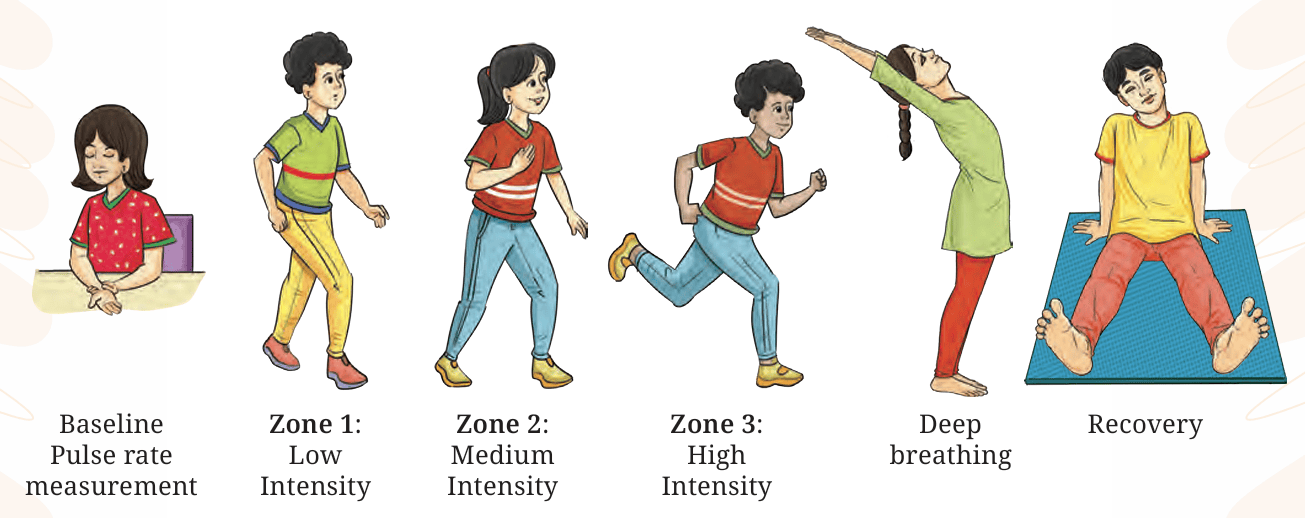
• Sample Chart
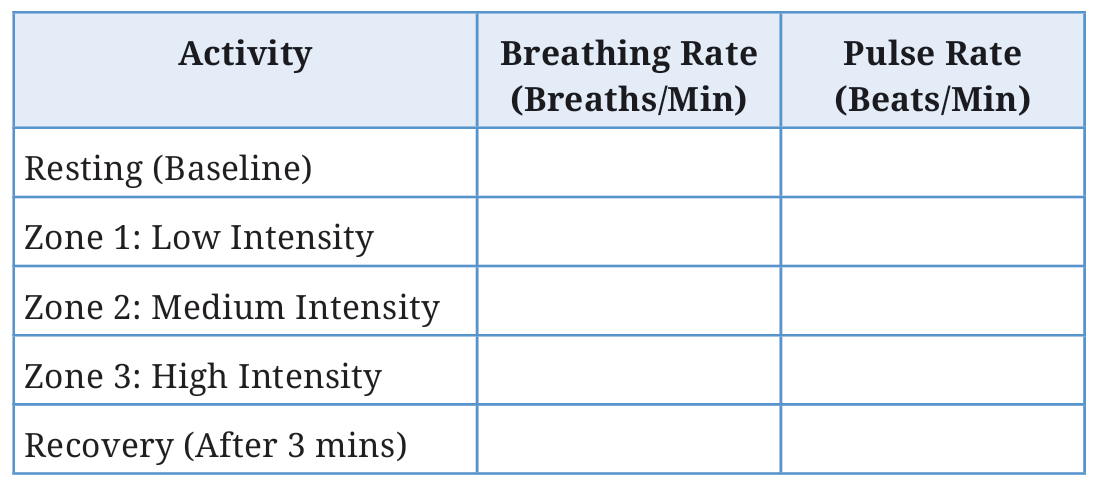
Variations
- Include fun elements like crawling under a rope or balancing on one foot for a few seconds during each zone.
- Include breathing control exercises (breathing in for 3 seconds, exhaling for 5) to practice efficient breathing.
Note for the teacher
- The teacher will demonstrate how to check pulse from the radial artery as shown in the figure.
- Ensure that each student has a role to play so that everyone participates.
- Ensure that each student fills up the chart.
Circle time — Breathing, energy production and teamwork
Discuss and relate how breathing pattern changes according to different activities like running, swimming, or playing different sports.The Flex and React Challenge is to help students understand the concept of neuromuscular control—how the brain and muscles work together to produce movement—and its relationship with flexibility through a fun and hands-on activity.
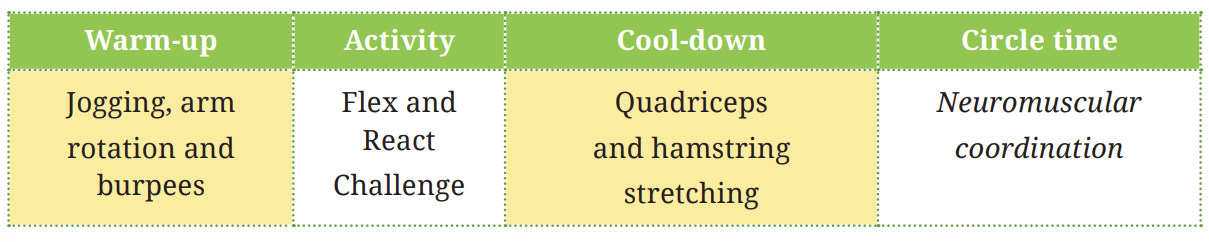
How to play?
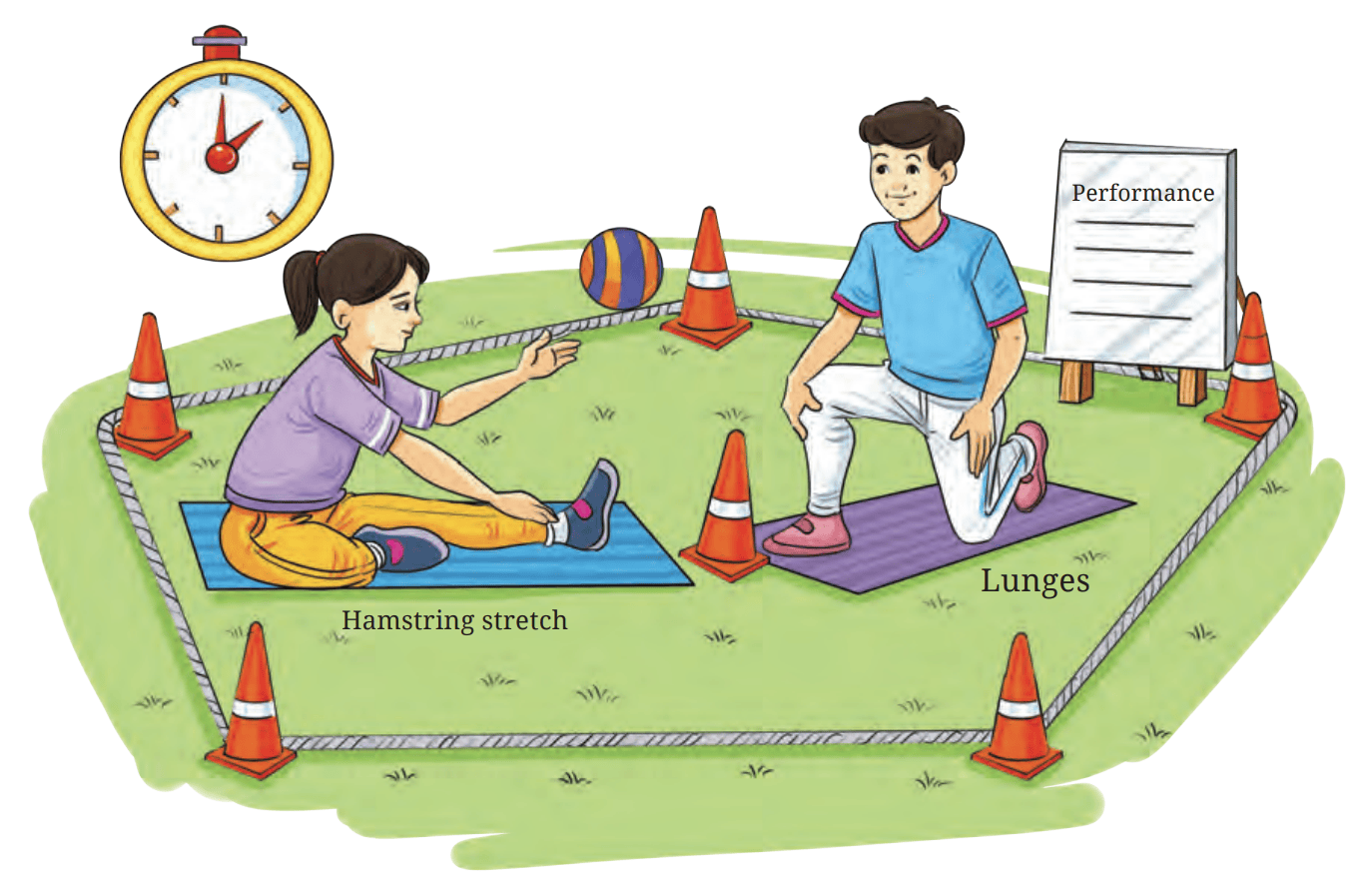
- Students perform stretches while following the given instructions:
- While in a hamstring stretch, they must catch a ball thrown lightly toward them.
- While in a lunge stretch, they must touch a cone on command.
- Points for achieving good flexibility in stretches (1 point).
- Points for correct and quick responses to instructions (1 point).
- Bonus points for smoothly integrating flexibility with reaction (3 points).
- The team with the maximum number of points will be the winner.
Variations
- Add more complex movements like balancing on one foot or performing a quick lunge on command.
- Measure flexibility improvements after regular practice over a few weeks.
- Pairs of students will signal movements or stretches for each other, promoting teamwork and observation skills.
Note for the teacher
Emphasise the importance of proper form during stretches to avoid injury.Circle time — Neuromuscular coordination
Discuss how human bodies rely on neuromuscular control in sports as well as in activities of daily living.Move Like a Machine activity is to help students understand how the musculoskeletal system (bones, muscles, and joints) works to support movement and physical activity.

How to play?
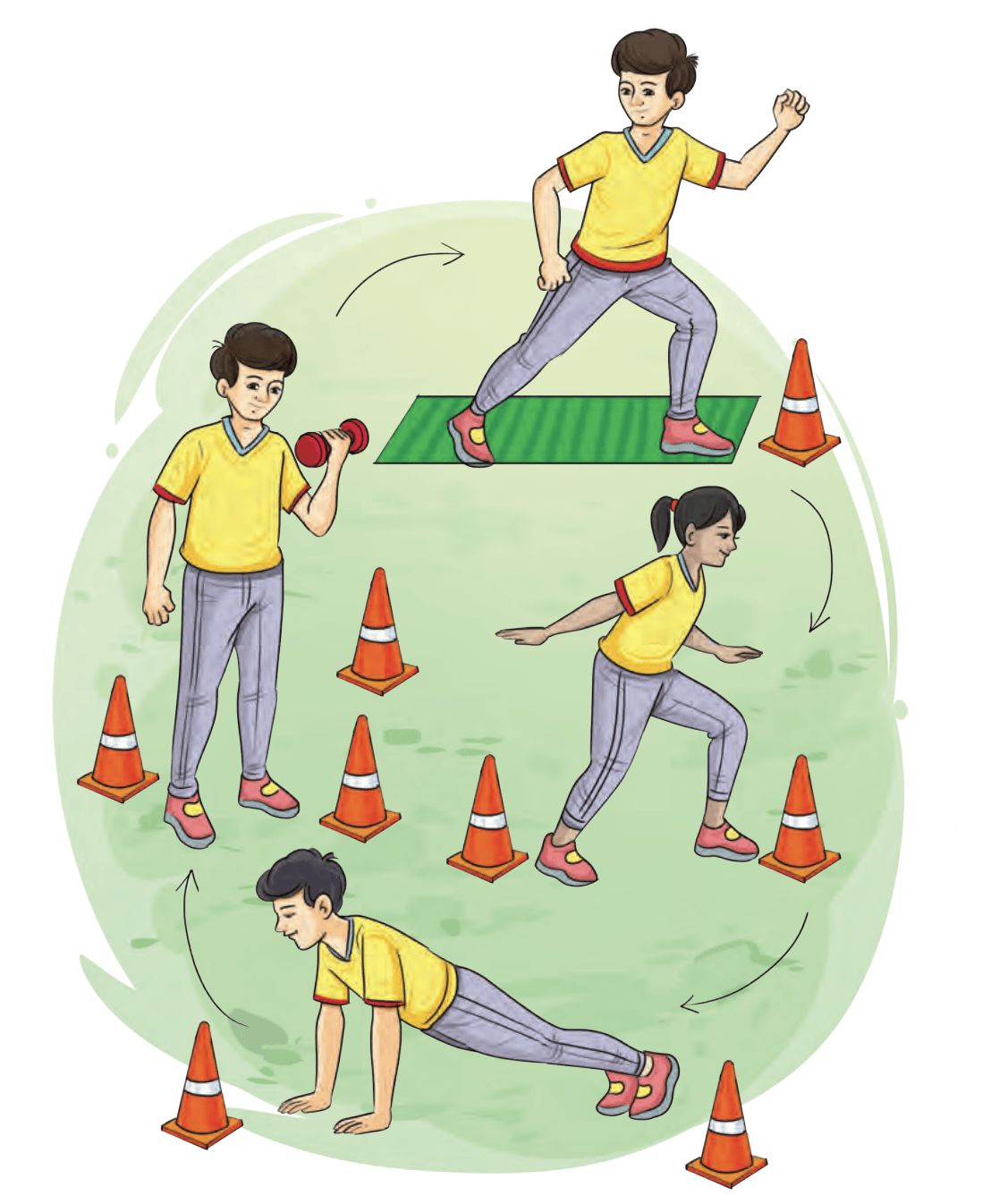
- Set up the stations in the following order —
- Station 1: Flexion and extension (bicep curls).
- Station 2: Jumping and landing (squat jumps).
- Station 3: Push-and-pull motions (push-ups or resistance band pulls).
- Station 4: Balancing (one-leg balance).
- Arrange the stations in a circular course.
- Divide the class into teams of 4–6 students each.
- Start with a brief warm-up to activate the musculoskeletal system which may include –
- Light jogging, arm circles, and stretches, focusing on major muscle groups.
- The relay activity steps are as follows:
- Station 1: Flexion and Extension
- Students perform bicep curls with resistance bands, similar type of equipment or mimic the motion without equipment.
- Station 2: Jumping and Landing
- Students perform squat jumps.
- Station 3: Push-and-Pull Motions
- Students perform push-ups or use resistance bands to pull.
- Station 4: Balancing
- Students balance on one foot or on a soft surface.
- Teams move from one station to the next in sequence, performing the tasks as quickly and as accurately as possible.
- The fastest team to complete all stations gain 3 points.
- One point is given for proper form and execution of tasks (1 point).
- One bonus point is given for smooth collaboration and mutual encouragement.
- The team with the maximum number of points will be the winner.
Variations
Note for the teacher
- Provide clear instructions on proper form to avoid strain or injury.
- Reinforce connections between the musculoskeletal system and everyday activities or sports.
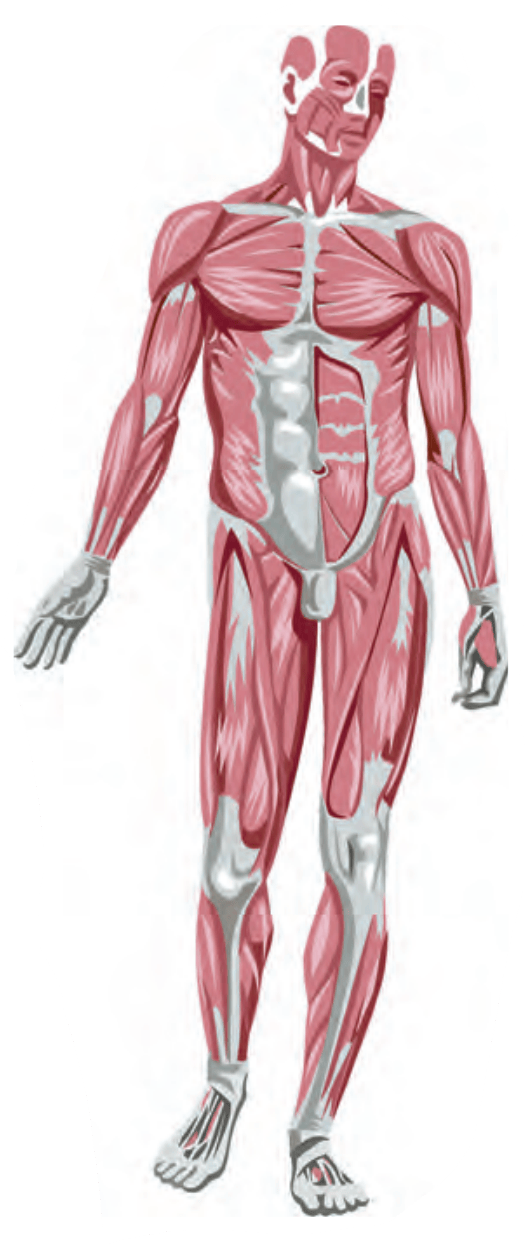
Circle time — Musculoskeletal system
Discuss how human bodies rely on neuromuscular control in sports as well as in activities of daily living.The Adapt and Achieve activity is to demonstrate how the musculoskeletal system adapts to different types of physical activities, such as strength, endurance, and flexibility training.

How to play?
- Set up the stations in the following order —
- Strength: Focus on muscle and bone strengthening exercises.
- Endurance: Highlight muscle stamina.
- Flexibility: Demonstrate joint range of motion.
- Recovery: Simulate how rest helps muscles adapt and grow.
- Divide the class into small teams.
- Each team rotates through the stations, spending 5 minutes at each station.
- Station 1: Strength: Students perform bodyweight exercises like push-ups, squats, or resistance band pulls.
- Station 2: Endurance: Students perform timed cardio activities like jumping jacks, running in one place, or rope skipping.
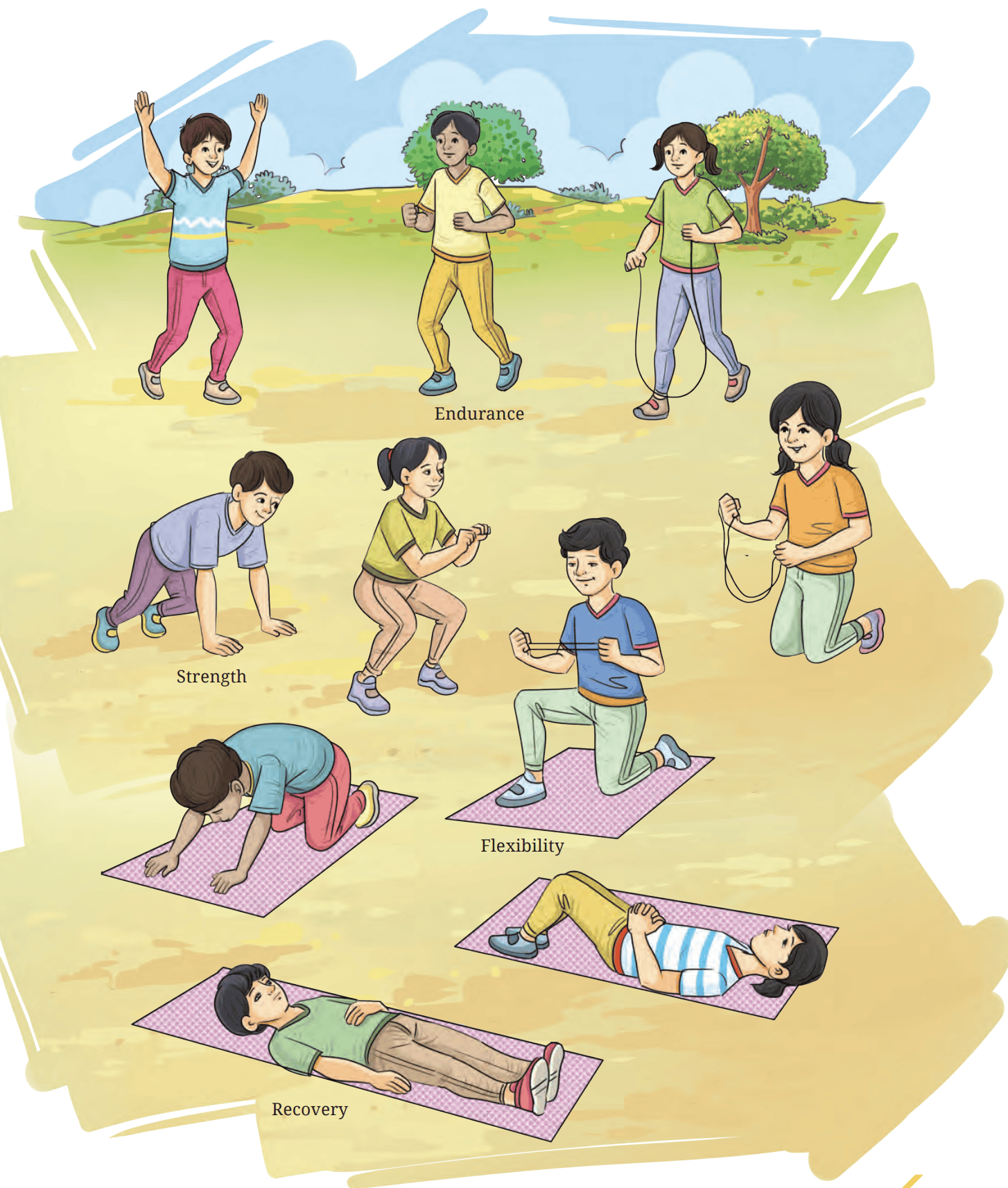
- Station 3: Flexibility: Students perform stretches like forward bends, lunges, or shoulder reaches.
- Station 4: Recovery: Students lie down and perform deep breathing or light stretching.
Variations
Note for the teacher
- Ensure that there is no competition. Instead, students will focus on participation and effort.
- Provide recognition in the form of awards for effort at each station (“Best Strength Performance” or “Flexibility Star”).
- Encourage students to improve their personal bests over time.
- Briefly explain how the musculoskeletal system adapts to different activities:
- Bones and muscles become stronger with resistance.
- Muscles adapt to sustain repeated activity.
- Joints and muscles stretch to increase muscle flexibility.
- Rest allows muscles to repair and grow.
Circle time — Musculoskeletal adaptations
- Discuss and understand how the musculoskeletal system adapts to strength, endurance, and flexibility training.
- Discuss and relate the adaptations to daily life (carrying groceries for strength, walking long distances for endurance, etc.).
Self-Assessment
Read the statements and tick the most suitable response for you.
APPRECIATION FOR TEAMMATES
| 1 | 2 | 3 | 4 | 5 |
|---|---|---|---|---|
| I can identify the strengths and weaknesses of my teammates. | I encourage my teammates to overcome their weaknesses. | I appreciate my teammates when they overcome their weaknesses. | I understand that all the members of my team are different with specific set of skills. | I believe that team members should be distinct as well as similar for better functioning of the team. |
OVERCOME BULLYING
| 1 | 2 | 3 | 4 | 5 |
|---|---|---|---|---|
| I stand up against bullying but sometimes ignore it. | I stand against bullying but hesitate in some situations. | I stand against bullying confidently and assertively. | I stand against bullying confidently and assertively and actively seek help from trusted individuals if I see it happening. | I stand against bullying despite any challenges because I feel bad about the victim. |
OVERCOME HARASSMENT
| 1 | 2 | 3 | 4 | 5 |
|---|---|---|---|---|
| I stand up against harassment but sometimes ignore it. | I stand against harassment but hesitate in some situations. | I stand against harassment confidently and assertively. | I stand against harassment confidently and assertively and actively seek help from trusted individuals if I see it happening. | I stand against harassment despite any challenges because I feel bad about the victim. |
CONCEPTS OF PHYSICS IN PHYSICAL EDUCATION
| 1 | 2 | 3 | 4 | 5 |
|---|---|---|---|---|
| I can identify the concepts of physics which are involved in the activity. | I can understand the concepts of physics which are involved in the activity but struggle with application. | I can use force, pressure and many other concepts of physics. | I can use force, pressure and many other concepts of physics while playing to enhance my efficiency. | I respect the opinions of others, actively listen, and try to make contribution to group discussions on scientific topics. |
CONCEPT OF BIOLOGY IN PHYSICAL EDUCATION
| 1 | 2 | 3 | 4 | 5 |
|---|---|---|---|---|
| I am able to demonstrate a deep understanding and accurate application of biological principles. | I am able to grasp biological concepts correctly with minor errors. | I show a basic understanding but struggle with application. | I have limited understanding and often apply concepts incorrectly. | I respect the opinions of others, actively listen, and try to contribute to group discussions on scientific topics. |
UNDERSTANDING MUSCLES
| 1 | 2 | 3 | 4 | 5 |
|---|---|---|---|---|
| I am able to identify the major muscles involved in the activity with minor mistakes. | I am able to identify major muscles involved in the activity correctly. | I am able to identify major muscles involved in the activity and note down some of the muscles. | I am able to distinguish the muscles which are involved in the activity and identify their position in the body. | I am able to recognise muscle-related difficulties of my classmates and report it to the teacher. |