
UNIT 4
Fundamental Skills of Sports
Table Tennis
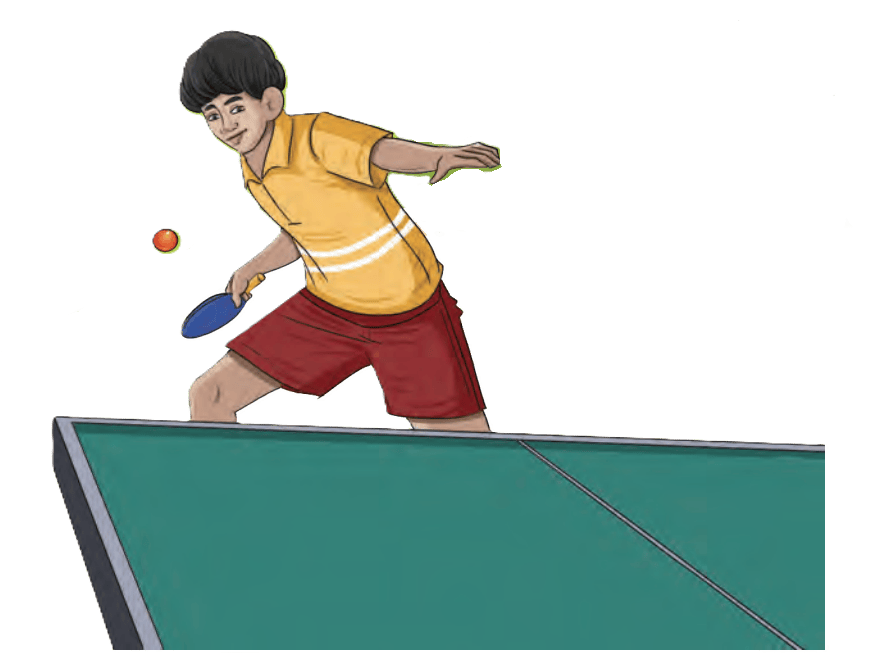
To understand table tennis better we will learn about speed, strength, quick reaction time and its combination, as well as physical, mental, social, emotional and spiritual skills which enable players to play, sustain, and live a holistic life.
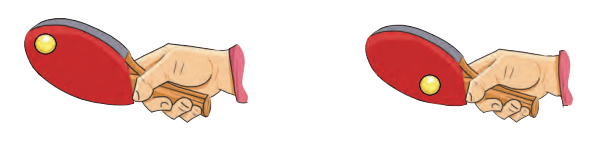
In any racquet sport, including table tennis, Grip is the first and foremost requirement to foster the skill of the sport. Grip is a technique to hold the racquet by which a player strikes the ball.
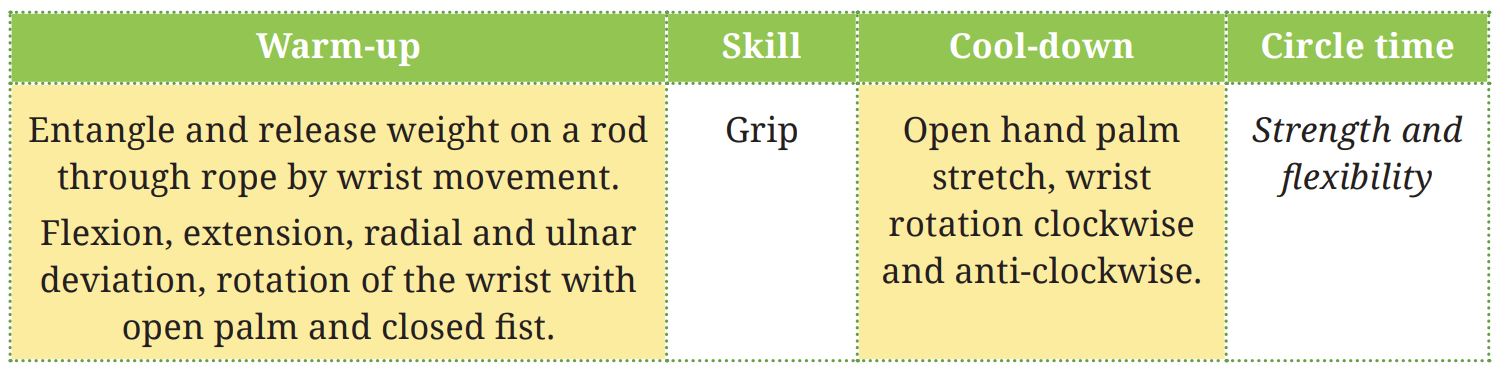
Grip
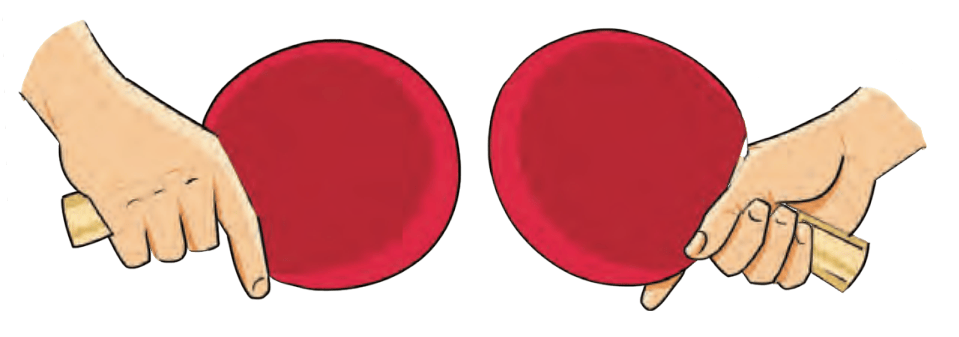
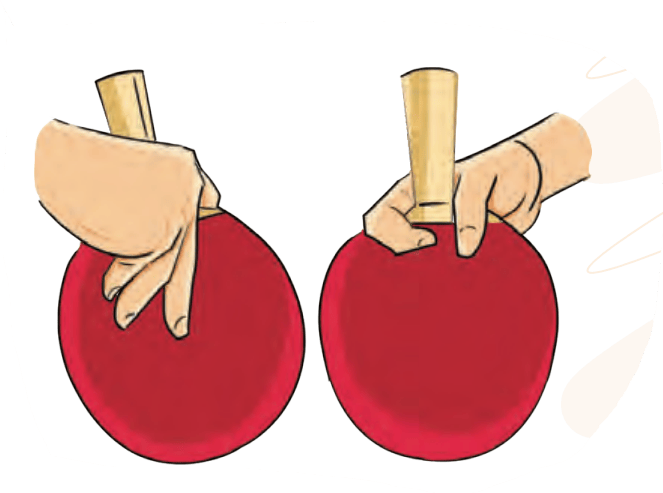
A grip is of two types:
1. SHAKEHAND GRIP
- Shake the hand with the slant racquet and hold it in the palm.
- Place the thumb and index finger parallel to the straight edge of the rubber.
- Wrap the remaining three fingers around the handle.
- Ensure that the grip is loose as this will give more readiness, flexibility and strength for better rotation and stability.
2. SET POSITION
- At “set”, the runners raise their hips by lifting the knee of the rear leg off the ground.
- The body weight is distributed almost evenly over the four supporting areas.
- The head remains in a natural, relaxed position.
- The ‘set’ position conveys to the runner’s body the preliminary tension necessary for a powerful start from the blocks.
- In order to achieve a high initial speed, the angles of both legs are of particular importance. An angle of about 90° at the front knee and of about 110° to 130° at the rear knee is appropriate.
Tapping the Ball (Standing)
- Forehand tapping: Players will bounce the ball on the racquet using the forehand side (the side of the thumb/thumb facing side).
- Backhand tapping: Ask the player to bounce the ball on the racquet using the backhand side (index finger facing up).
- Combination tapping: The player will tap the ball on the forehand and backhand side of the racquet alternately.
- Time duration: Two minutes for each activity and players will count the number of balls tapped.
Note for the teacher
The teachers should observe the coordinative ability of players such as, eye-hand, hand-sound and eye-sound coordination and ensure that they enjoy the session.
Variations
- The same can be done while walking or running straight, around the table or in a zig-zag way.
- This fun activity can be conducted outdoors. In case it is windy, a corridor is a good option.
Circle time — Strength and flexibility
- Identify, while holding the racquet, which muscles are involved and which joints allow the rotation of the hand while performing the alternate backhand and forehand tapping of the ball on the racquet. How did you manage to balance the knock on the ball from the centre of your paddle while walking or running?
- Discuss how you felt after completing the desired number of knocks on the ball by forehand and backhand.
Did You Know
Table Tennis is both an individual and team sport, featured in various tournament formats such as the New Swaythling Cup, Corbillon Cup, and Olympic patterns.
Footwork is one of the most important aspects of table tennis, in order to return a ball at marked 1.525 m wide endline and its imaginary extention on both sides. The key principle of an efficient return is returning the ball in front of the body’s medial line in the backhand grip and comfortable lateral movement in the forehand grip. Also, a quick and proper placement of the foot, sideways, backwards and forwards with a balanced weight, is necessary while returning to make it comfortable. Footwork helps players move efficiently to position themselves for the best possible execution of skills. Proper footwork allows for quick reactions, better balance, and smoother transitions between strokes.

Footwork
Types of footwork:
There are various types of footwork in table tennis namely:
- Side-to-Side footwork (Shuffling or Sliding step)
- In-and-Out footwork (Front-Back movement)
- Pivot footwork
- Crossover step
- One-Step footwork
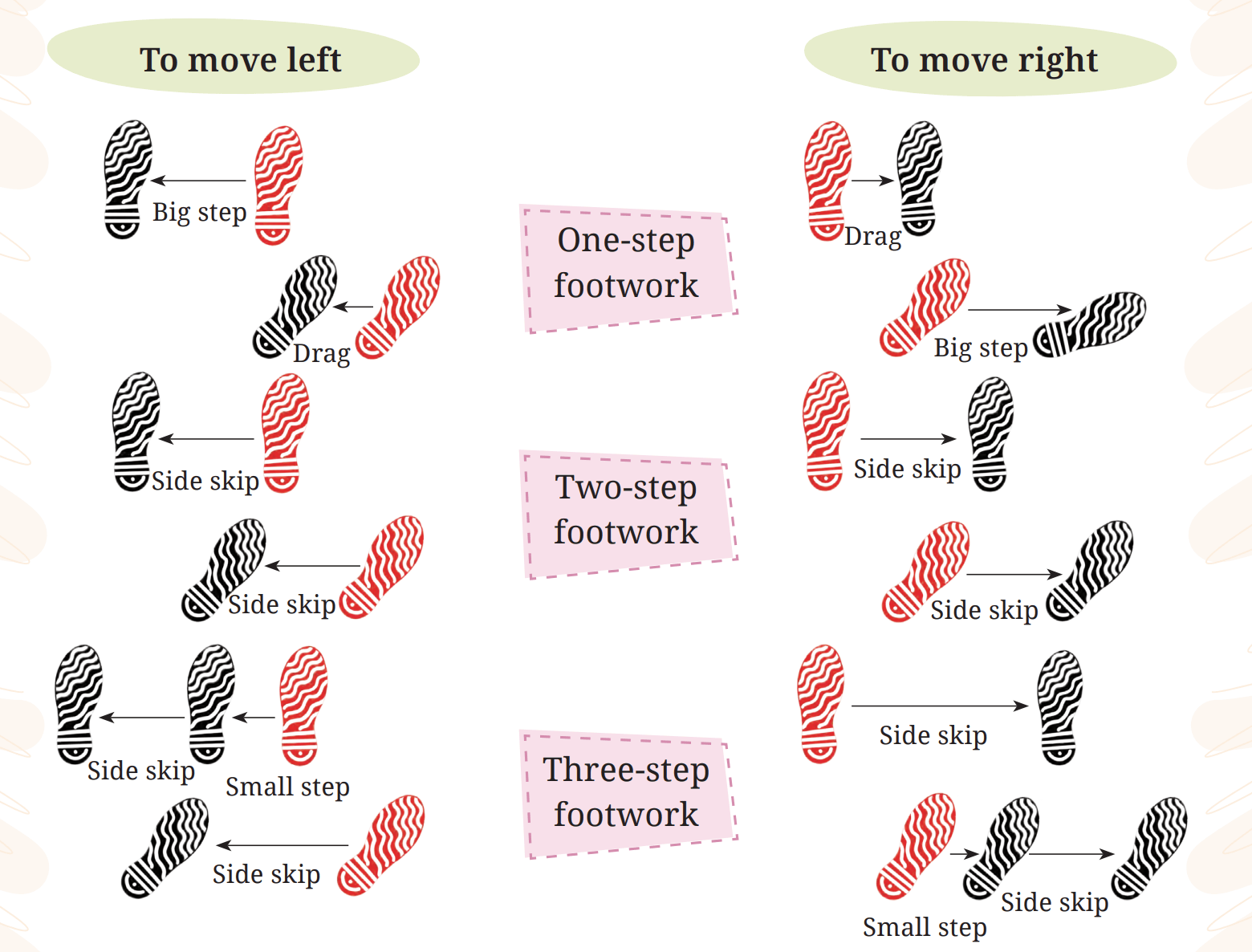
Descriptions
Basic Footwork comprises the following:
1. STANCE
- Stand with feet shoulder-width apart.
- Keep knees slightly bent and body leaning forwards.
- Stay on the balls of your feet to enable quick movement.
2. SIDE-TO-SIDE MOVEMENT
- Push off with one foot to move laterally.
- Maintain balance while gliding smoothly.
- Keep the racquet in a neutral position, ready for the next stroke.
3. FORWARD MOVEMENT
- Step forward with the leading foot when attacking.
- Transfer your weight onto the front foot.
- Stay low to maintain stability.
4. BACKWARD MOVEMENT
- Push off the front foot to move backward.
- Keep the body centered and balanced.
- Stay ready to return to the table quickly
5. FOLLOW-THROUGH
- After each shot, return to ready stance.
- Stay light on your feet to adjust for the next movement.
Players will stand on one side of the table, while the teacher or feeder calls out random directions such as, “Left!”, “Right!”, “Forward!”, or “Back!”. Players must move according to the instructions, as fast as possible while maintaining their balance.
- If a player moves in the wrong direction or is too slow, they receive a point against them.
- The first player to get 5 points against them, loses, and the winner advances to the next round.
- To add to the level of difficulty, the teacher or feeder can introduce a ball hitting requirement, where players must move to the correct position and hit a shot at the same time.

Note for the teacher
Use visual and verbal cues to help players react faster.
Variations
- Set up cones or ladders in different positions, and players must move between them quickly while maintaining proper balance.
- The coach throws multiple balls in different areas, and the player must adjust their footwork to hit each ball correctly.
- Two players compete to see who can shuffle from side to side the fastest without losing balance.
Circle time — Eye-hand-ear coordination
How can visual and verbal cues to help improve footwork and what are some effective cues to enhance speed, balance, and positioning?
Did You Know
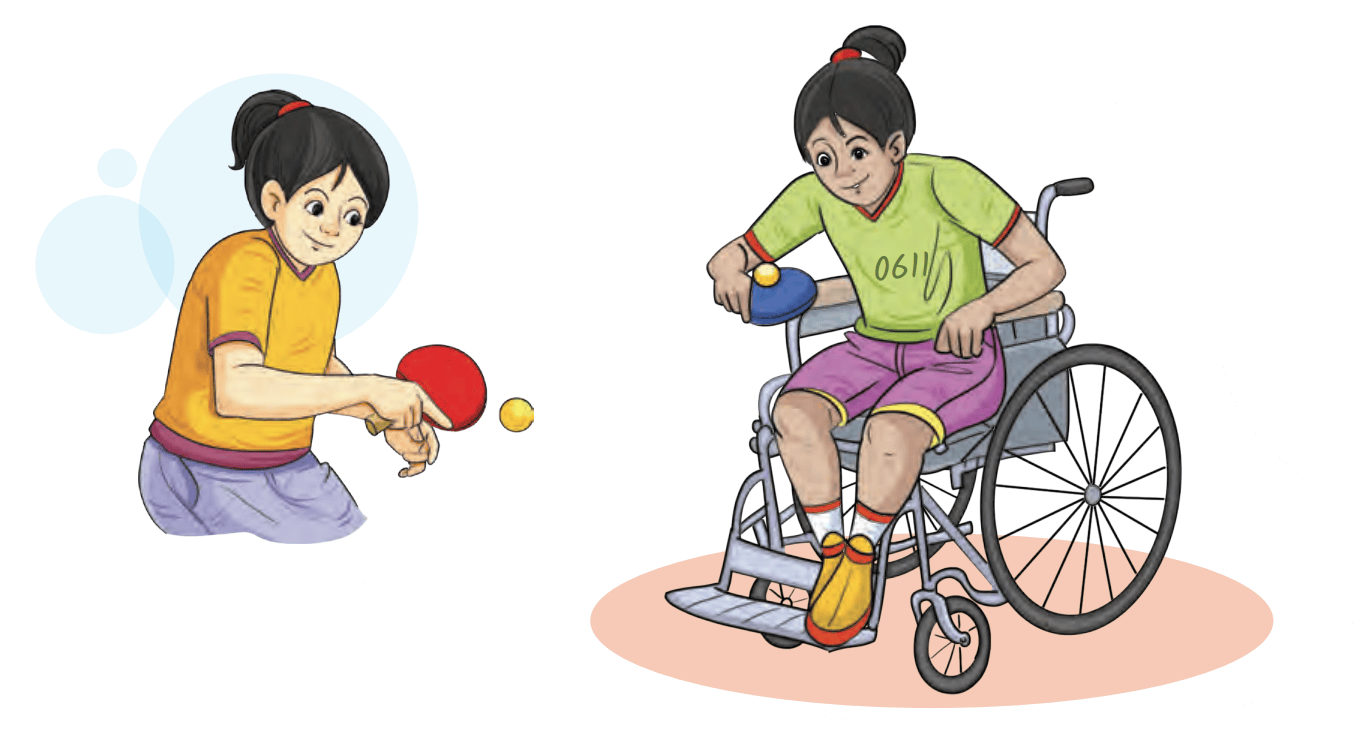
There are 11 classifications in the paralympic event of table tennis, Class 1 to 5 are for wheelchair play Class 6 to 10 for standing disabilities and Class 11 for intellectually challenged players.
The Forehand Push is a defensive stroke in table tennis used to return short and low balls with backspin. It helps to maintain control in rallies by preventing opponents from attacking aggressively.
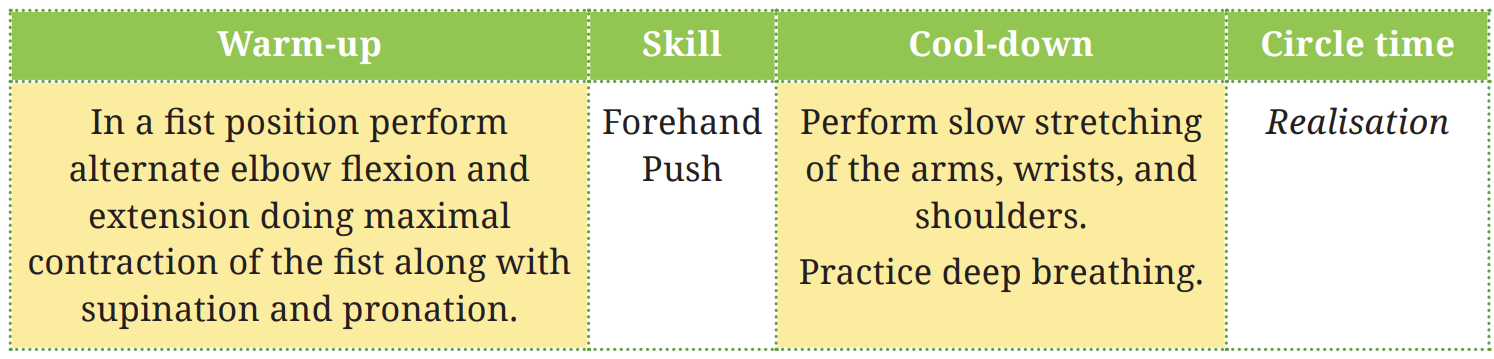
Forehand Push
The Forehand Push comprises the following:
1. STANCE
- Stand with feet shoulder-width apart.
- Keep knees bent and lean slightly forward.
- Position the left foot slightly ahead.
- Hold the racquet at table height in front of the body.
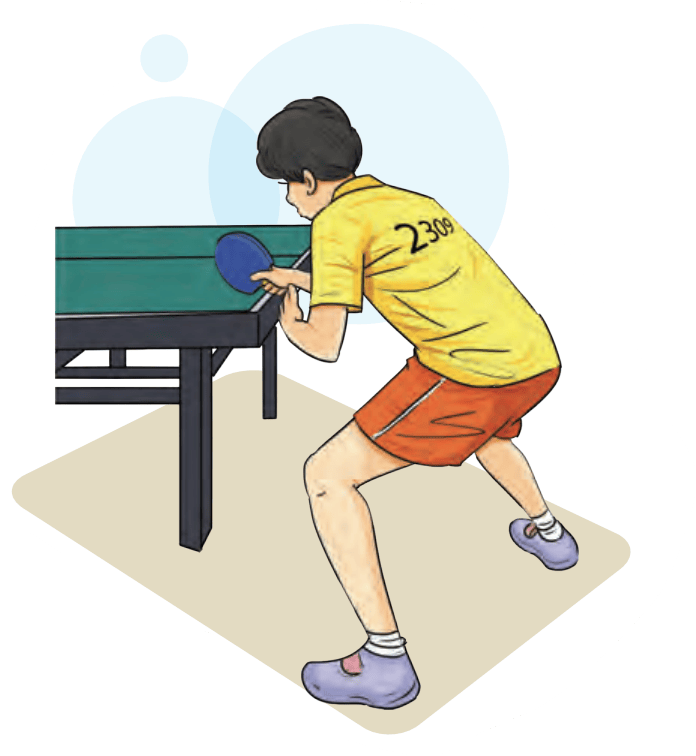
Some players prefer to stand parallel to the end line of the table.
2. BACKSWING
- Move the right foot back into a side-on stance.
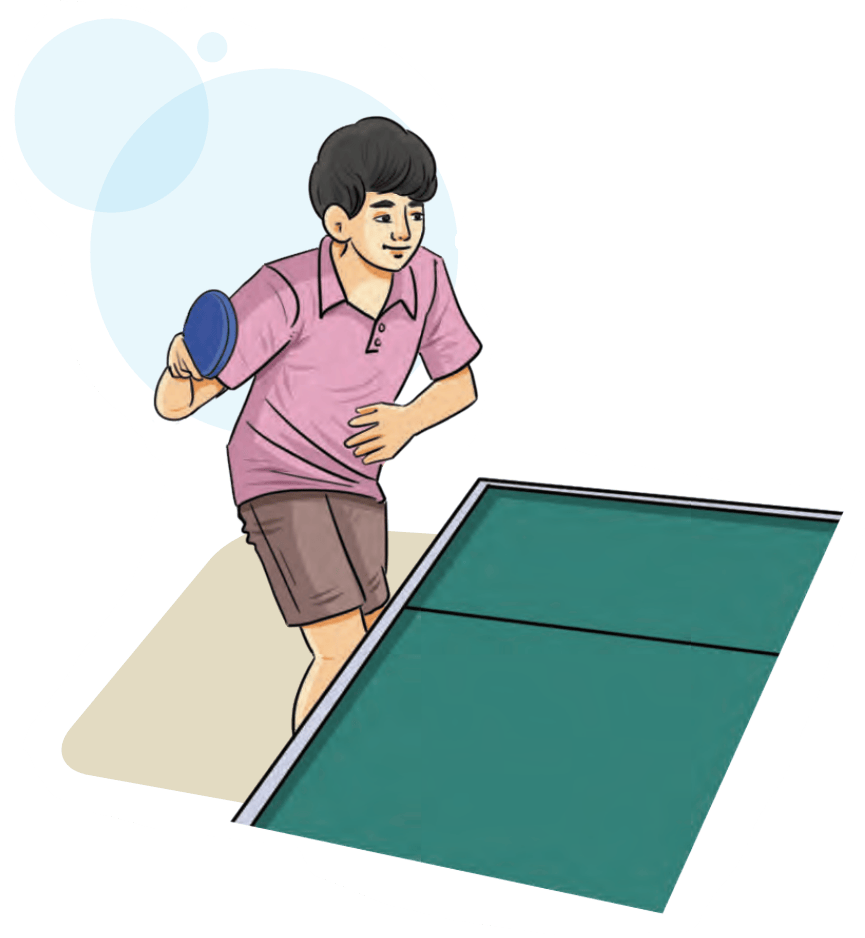
- Adjust the left foot to maintain the side-on position.
- Move the arm back and slightly upwards, pivoting at the elbow.
- Angle the wrist backwards.
3. STRIKE
- Make contact underneath the ball in front of the body, placing backspin on the ball.
- Snap the wrist at the moment of contact of the ball and the racquet.
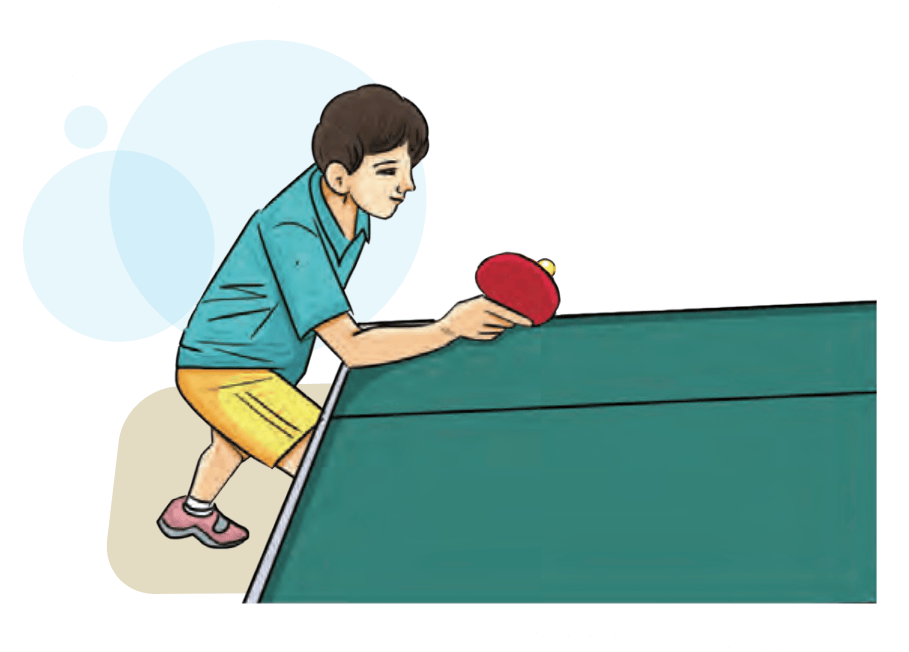
4. FOLLOW-THROUGH
- Continue the racquet movement forwards and downwards.
- Return to ready position.
Players will pair up and rally using only the forehand push, trying to keep the ball on the table. If a player makes an error (hits into the net, off the table, obstructs the ball or lifts the ball too high), the opponent earns one point. The first player to win five points wins the round, while the loser switches to play with a different player.
Teachers can introduce a target accuracy challenge, where players aim to push the ball into marked zones on the table for bonus points.
Note for the teacher
- Teachers should demonstrate the proper technique first, focusing on racquet angle, ball contact, and follow-through.
- Players should practice slow, controlled pushes before increasing speed and spin.
- Teachers should provide individual feedback, emphasising accuracy over power.
Variations
A deeper push that forces the opponent away from the table, disrupting their position.
Circle time — Realisation
Discuss how the ball moved when you hit it from different positions; for example, when your weight was on your rear leg, middle line, or on your forwards leg. How did each position change the power, control, and accuracy of your shot?
The Backhand Push is a defensive stroke in table tennis used to return short, low balls with or without backspin. It is an essential skill for controlling rallies, returning serves, and preventing aggressive attacks from opponents.
Backhand Push
The Backhand Push comprises the following:
1. STANCE
- Stand with your feet shoulder-width apart.
- Keep knees bent and lean slightly forward.
- Position the left foot slightly ahead.
- Hold the racquet in front of the body.
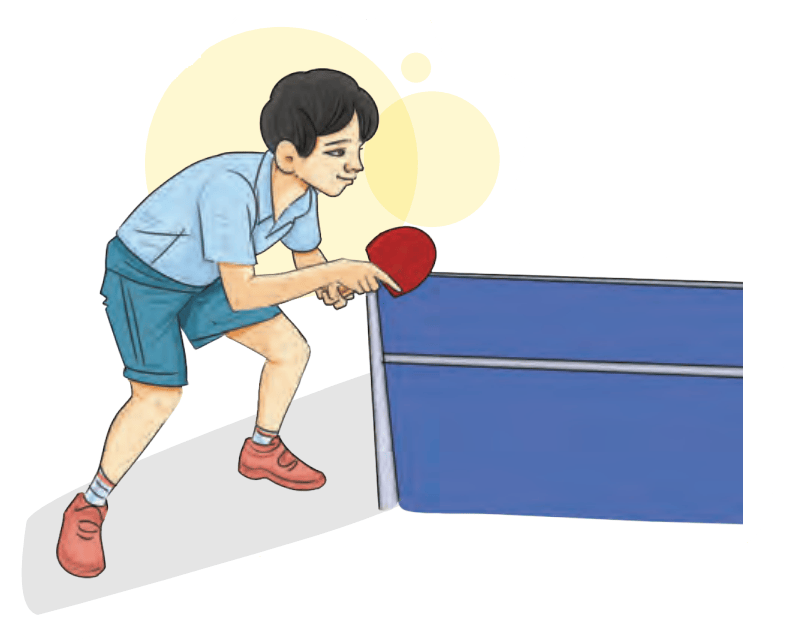
Some players prefer to stand parallel to the end line of the table.
2. BACKSWING
- Push off with one foot to move laterally.
- Maintain balance while gliding smoothly.
- Keep the racquet in a neutral position, ready for the next stroke.
3. STRIKE
- Make contact underneath or at the back of the ball directly in front of the body or in front ofthe middle line to return or to generate backspin.
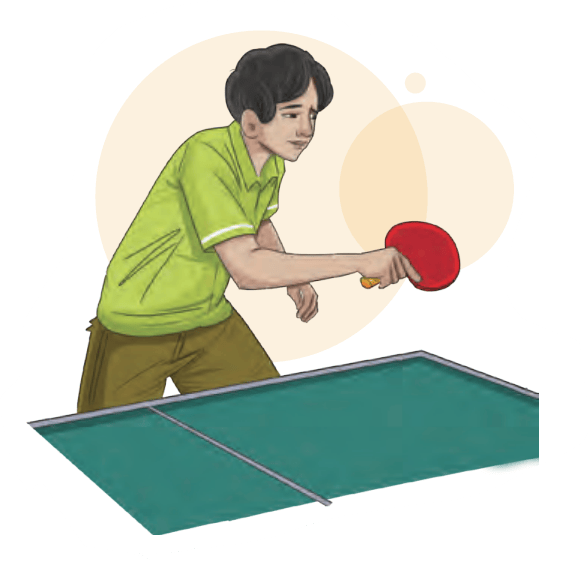
4. FOLLOW-THROUGH
- Continue the racquet movement forwards and downwards.
- Return to the ready position.
Players will pair up and rally using only the backhand push, aiming to keep the ball on the table. If a player makes an error (hits into the net, off the table, or lifts the ball too high), the opponent earns one point. The first player to win five points wins the round, while the loser switches to play with a new opponent.
To increase the difficulty, the teachers can introduce a target zone challenge, where players earn extra points for landing the ball in specific marked areas on the table.
A thread can be tied across the table, through the net clamps four inches above the net, and players may be asked to pass the ball in between through the thread and the net.
Note for the teacher
- The teachers should first demonstrate the correct backhand push technique, focusing on grip, ball contact, and followthrough.
- Players should start with slow, controlled pushes before increasing the speed and spin.
- Teachers should provide individual feedback and emphasise consistency over power.
Variations
- A soft push with a heavy backspin to keep the ball short, making it harder for the opponent to attack.
- A deeper push that forces the opponent away from the table, disrupting their position.
Circle time — Feel the muscles
Discuss and compare the body parts or muscles that were engaged while performing this skill with those that were used in other skills. Highlight the similarities and differences in movement and effort. Also, try to count the constant returns and increase the numbers.
In table tennis most of the players score a point within the first 40 to 50 seconds and the major cause is the effectiveness of the service. It is an important skill that a player should develop first. The key focus for beginners is to develop a legal and consistent serve by following the correct technique and laws.
Basic Service
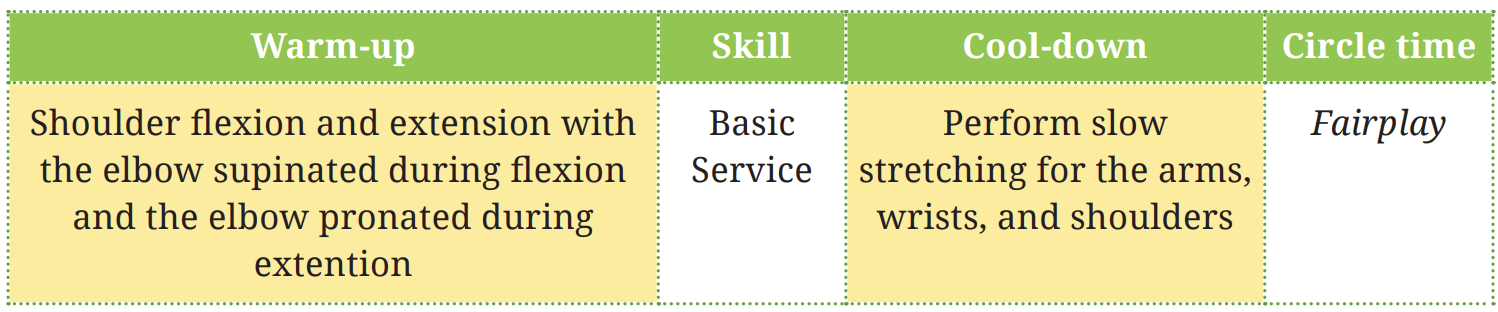
A Basic Service comprises the following:
1. STANCE
- The ball shall be resting on an open and stationary palm.
- Hold the ball on a flat palm to ensure a legal serve.
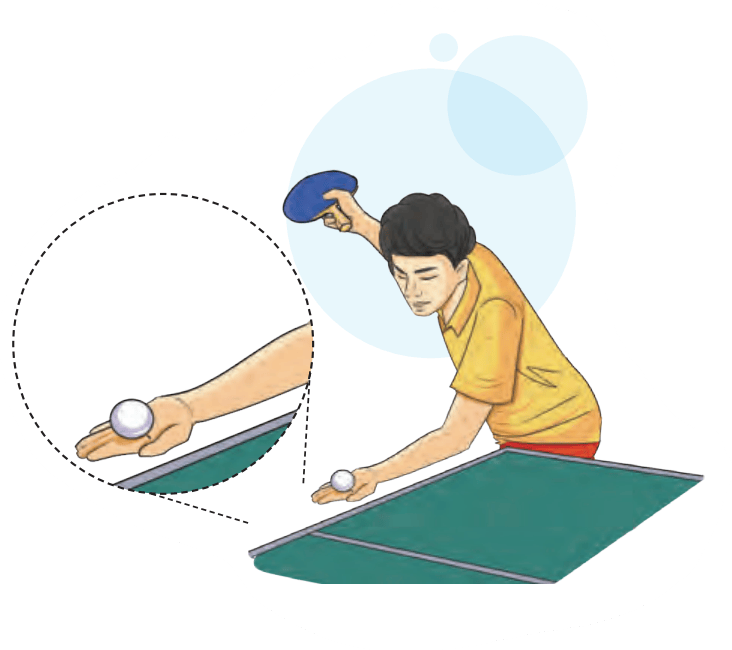
- The racquet should be behind and above the end line of the table.
- Stand with feet shoulder-width apart and the knees slightly bent for balance.
2. BACKSWING
- Toss the ball at least 16 cm (6 inches) near vertical from the hand.
- Simultaneously, move the racquet back to prepare for contact.
- Keep a relaxed grip on the racquet for better control.
3. STRIKE
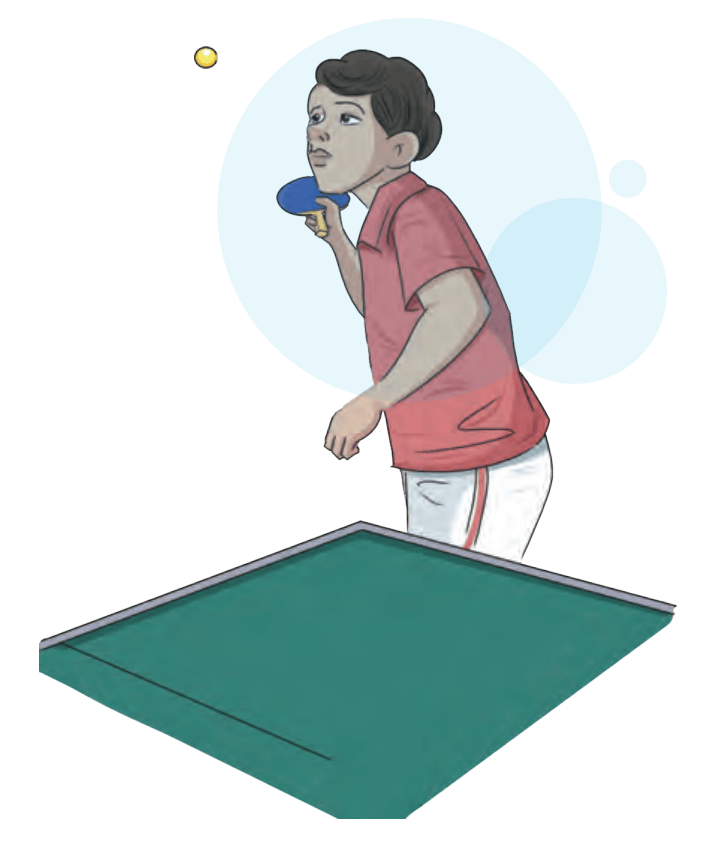
- Swing the racquet forwards.
- Make contact with the ball while it is coming down.
- Strike the ball so that it first touches your side of the table and then crossing over the net to the opposite side.
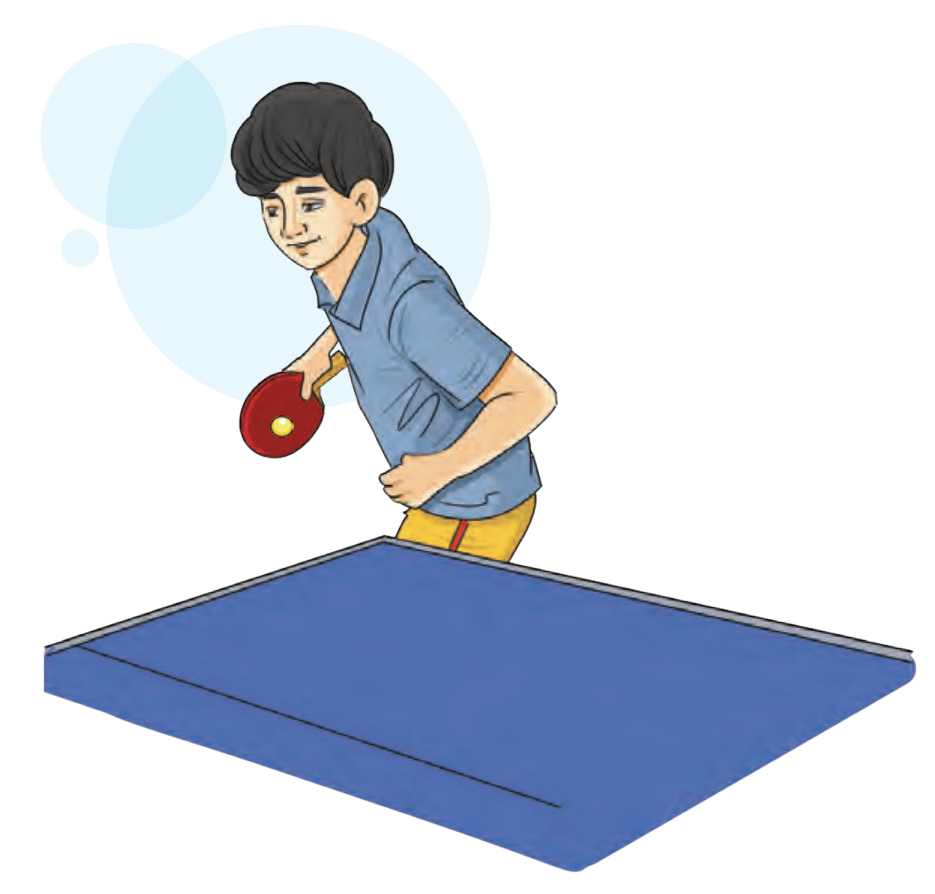
4. FOLLOW-THROUGH
- Continue the racquet movement forwards and upwards.
- Prepare to strike the returned ball from the opponent.
Keep a small tub at the centre of the opponent’s side of the table. Ensure that players take turns to service five times and aim to land the ball inside the tub, placed as the target. If the ball lands inside the target, the player earns a point. The player with the most points wins, while the player with the least points loses, abiding by proper service techniques.
Note for the teacher
The teachers should focus on ensuring that players toss the ball vertically (at least 16 cm near vertical) and strike it while it has started falling down, making sure that the ball is not hidden by any body part or partner (in case of doubles or a pair activity).
Variations
- If a soft serve by a player bounces twice or more on the opponent’s side, the player will lose a point.
- A faster serve can be introduced that reaches the opponent’s side deep and close to the endline.
- A serve directed towards the corners of the table can be introduced to force the opponent to move.
Circle time — Fairplay
Discuss the importance offair play in sports and how it promotes respect and integrity. If you notice a teammate engaging in foul play, how would you address the situation while maintaining team spirit?
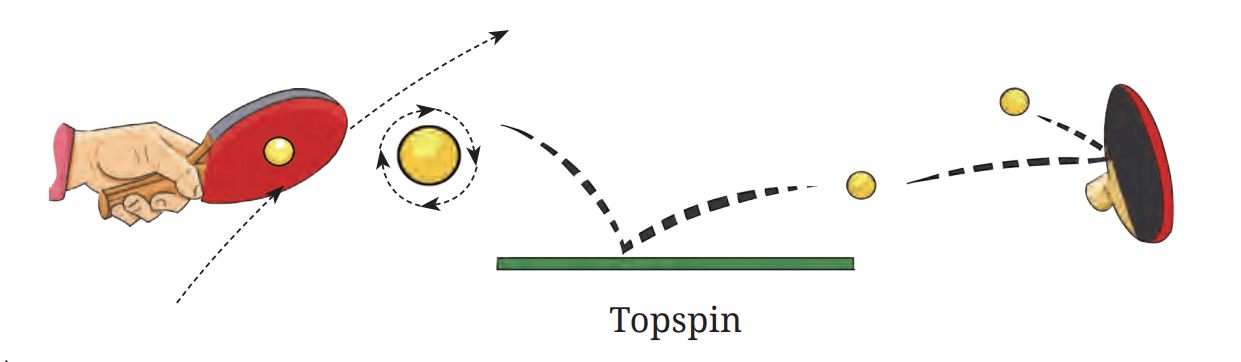
A Topspin Service in table tennis is an attacking serve that makes the ball spin forwards, causing it to dip quickly and bounce aggressively towards the opponent.

Topspin Service
The Topspin Service comprises the following:
1. STANCE
- The ball shall be resting on an open and stationary palm.
- Keep the racquet and free hand above and behind the end line of the table.
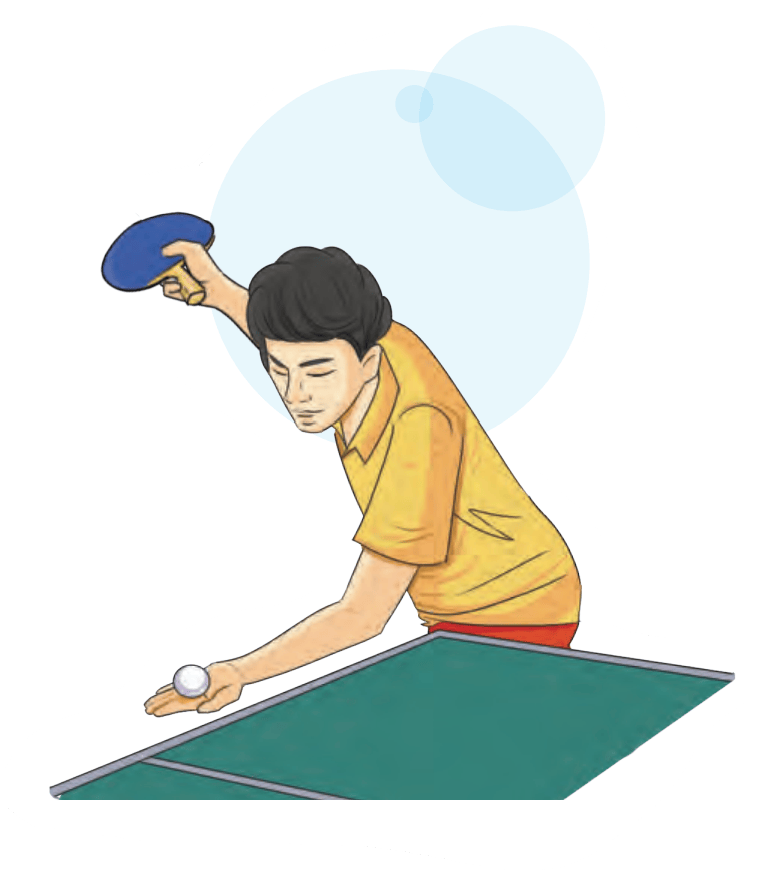
2. BACKSWING
- Toss the ball at least 16 cm vertically.
- Move the racquet backwards behind the ball.
- Angle the racquet slightly closed for a topspin service.
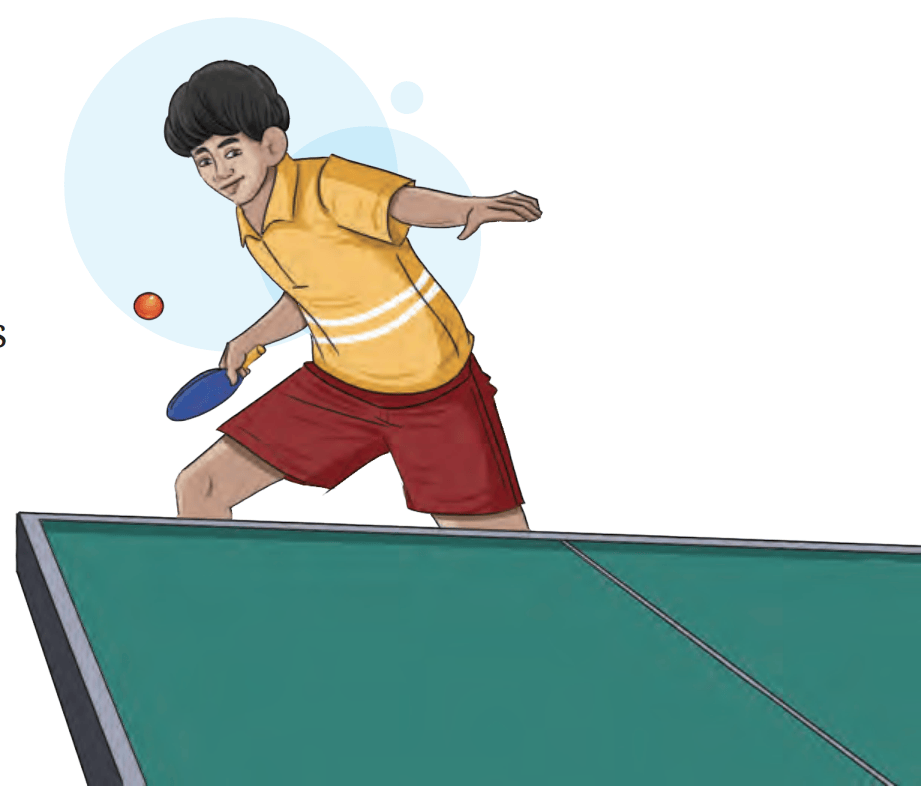
3. STRIKE
- Swing the racquet forwards and a little upwards.
- Make contact with the ball squarely, brushing it downwards up.
- Strike the top of the ball for the topspin.
4. FOLLOW-THROUGH
- Continue the racquet movement forwards and upwards for the topspin.
- Prepare to recover for the next shot.
Players will participate in pairs. Each player takes turns serving with a topspin motion, aiming to land the ball on the opponent’s side consistently. If a service bounces twice or forces the opponent into a weak return, then the service is considered successful, and the player earns one point. If the serve goes out or into the net, the service is unsuccessful, and the opponent earns the point. The first player to reach five points wins the round, while the loser switches to challenge a different opponent.
To increase the difficulty, the ‘target accuracy challenge’ can be introduced, where specific areas on the table are marked, and players earn extra points for landing their service in those zones. Another variation is the ‘spin challenge’, where players must apply more spin with each service, making it harder for their opponent to return the ball.
Note for the teacher
- The teachers should first demonstrate the correct topspin service technique, highlighting grip, body position, and the brushing motion needed to generate spin.
- Player should practice the service against a wall or with partners, receiving individual feedback on their form.
Variations
- The ball is hit softly with a brushing motion so it bounces twice on the opponent’s side, making it difficult to return the ball.
- The ball is hit with more power and spin, causing it to land deep in the opponent’s court and forcing a quick reaction.
Circle time — Ball trajectory
Discuss the significance of the ball trajectory. How does the topspin affect the ball’s movement and the opponent’s return?
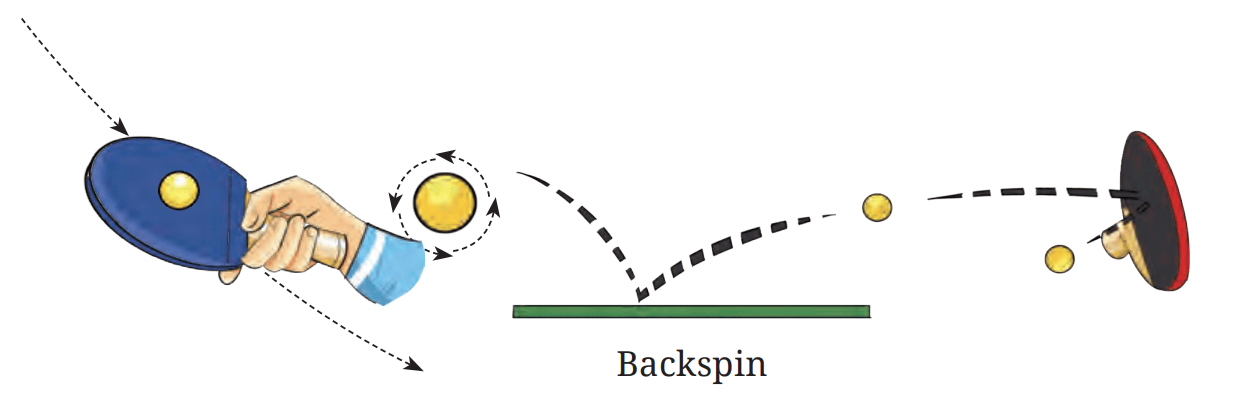
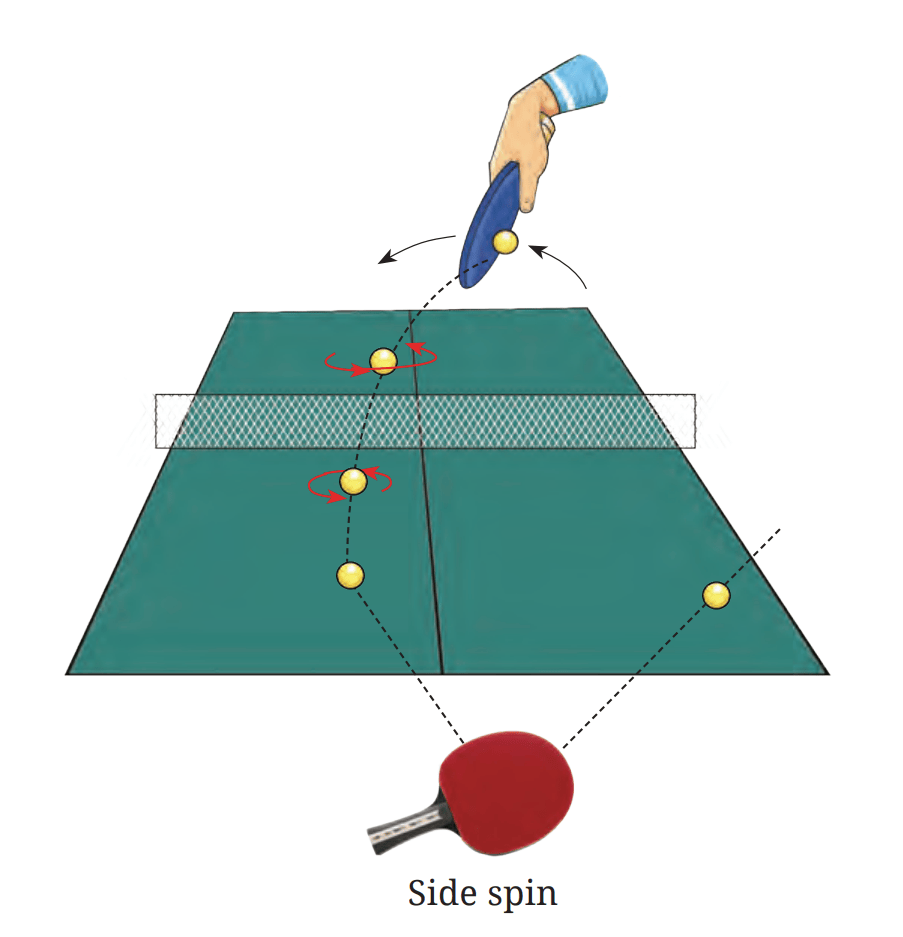
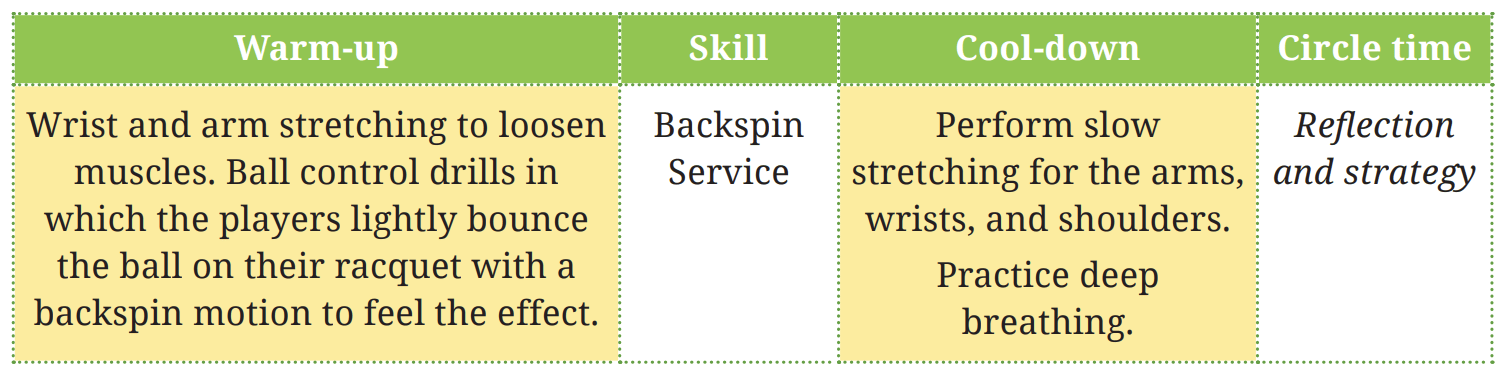
A Backspin Service in table tennis is a defensive serve that makes the ball spin backwards, causing it to slow down after bouncing and making it harder for the opponent to attack.
Backspin Service
The Backspin Service comprises the following:
1. STANCE
- The ball shall be resting on an open and stationary palm.
- Keep the racquet and free hand above and behind the end line of the table.
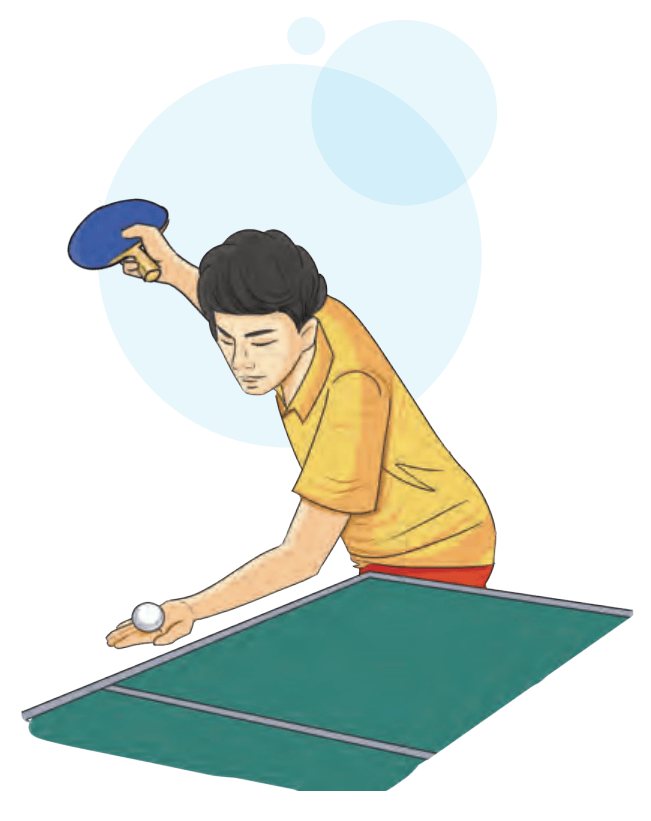
2. BACKSWING
- Toss the ball at least 16 cm (6 inch) vertically.
- Move the racquet backwards behind the ball.
- Open the racquet angle for the backspin service.
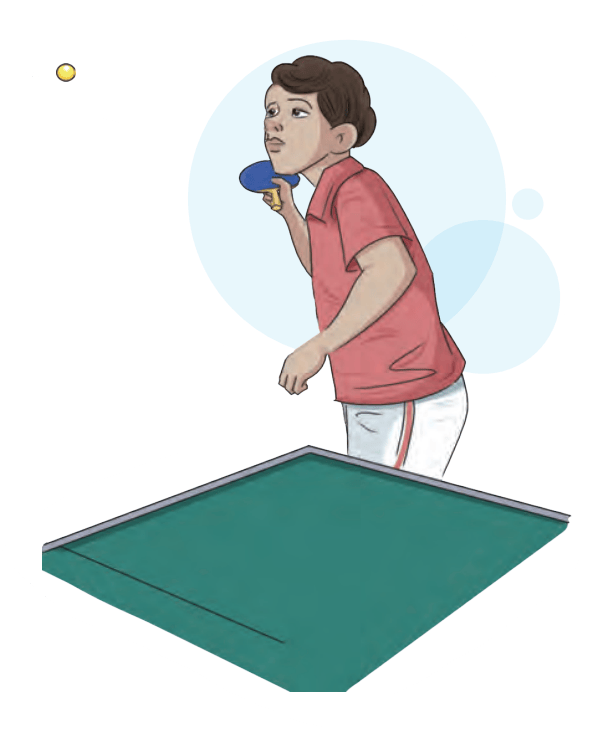
3. STRIKE
- Swing the racquet forwards.
- Make contact with the ball squarely.
- Strike the bottom ofthe ballto create backspin.
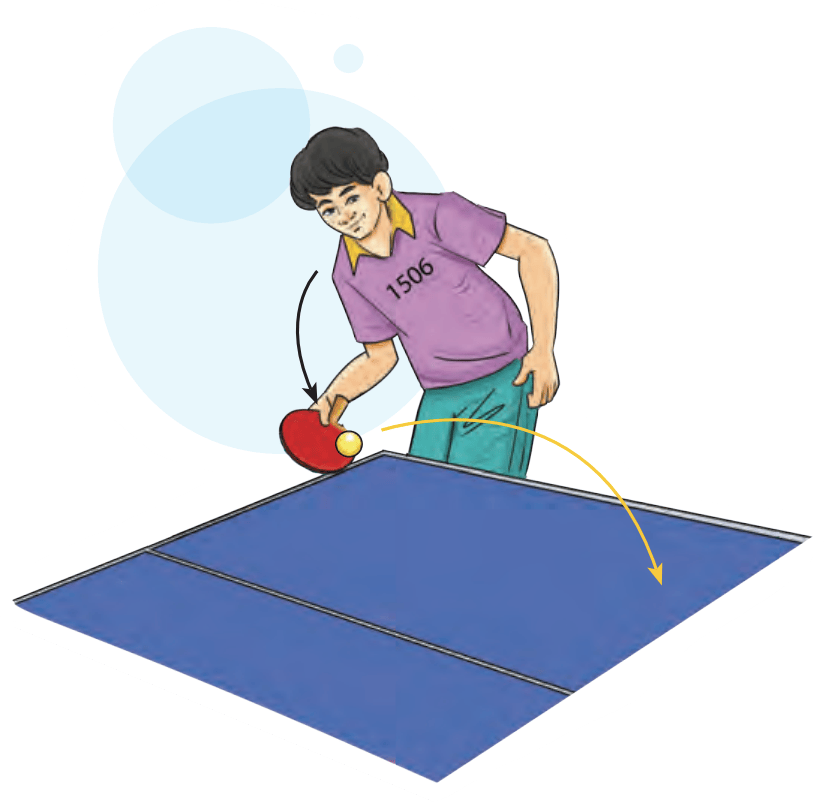
4. FOLLOW-THROUGH
- Follow through forwards and go deep downwards for the backspin.
- Get ready to recover to return the next ball.
Players will participate in pairs. Each player takes turns serving with the backspin motion, aiming to land the ball on the opponent’s side successfully. If the service is executed correctly by the player, and it forces the opponent into a weak return or a mistake, the player earns one point. If the service goes into the net or off the table, it is considered unsuccessful, then the opponent earns the point. The first player to reach five points wins the round, while the loser switches to face a new opponent.
To increase the difficulty level, a ‘spin effect challenge’ can be introduced. The players must serve the ball in such a way that after it bounces or touches the opponent’s court, it returns back to the net due to the heavy backspin. The more the ball spins backwards, the better the service. Another variation is the ‘target zone challenge’, in which players aim to land their backspin service in specific marked areas on the table for extra points.
Note for the teacher
- The teachers should first demonstrate the correct backspin service technique, highlighting grip, ball contact, and followthrough.
- Players should start with slow, controlled serves, focusing on proper spin before increasing speed and variation.
- The teachers should give individual feedback and emphasise consistency over speed, spin and power.
Variations
- The ball is hit softly, causing it to bounce twice on the opponent’s side, making it difficult to attack.
- The ball is hit with more speed while still applying backspin, making it harder for the opponent to return with power.
Circle time — Reflection and strategy
- What was the most challenging part of executing the backspin service?
- How does backspin affect the ball’s movement and the opponent’s return?
- When would you use a backspin service in a match situation?
The Forehand Drive is an attacking stroke used in table tennis to hit the ball with speed and control. It is played with a forward and slightly upward motion, creating a light topspin.
Forehand Drive
The Forehand Drive comprises the following:
1. STANCE
- Stand with feet shoulder-width apart.
- Keep knees bent and lean slightly forwards.
- Position the left foot slightly ahead.
- Hold the racquet at table height in front of the body.
2. BACKSWING
- Move the right foot back into a side-on stance.
- Adjust the left foot to maintain the side-on position.
- Rotate the waist and hips backwards.
- Bend the elbow and move the arm slightly downwards.
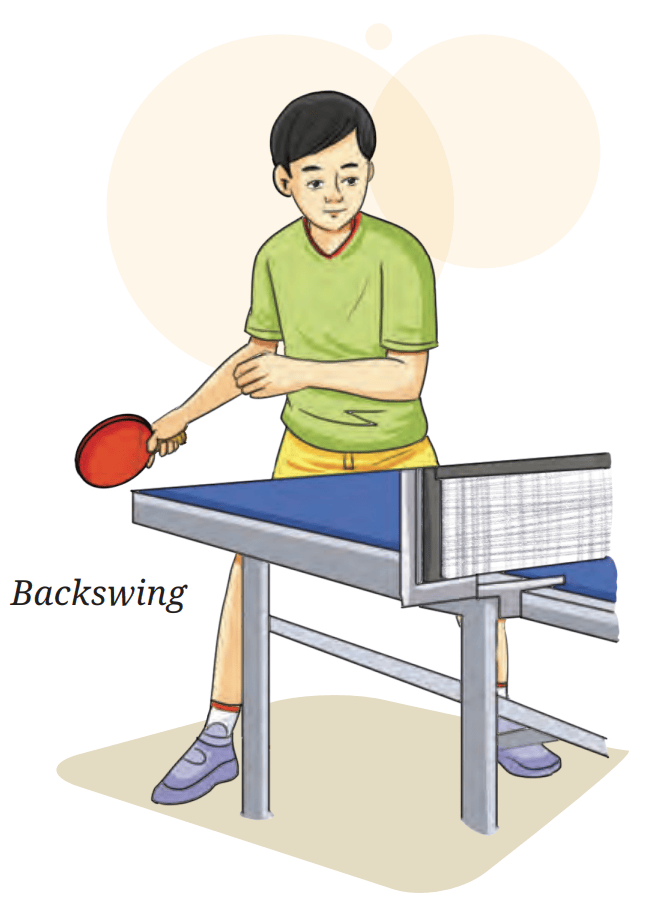
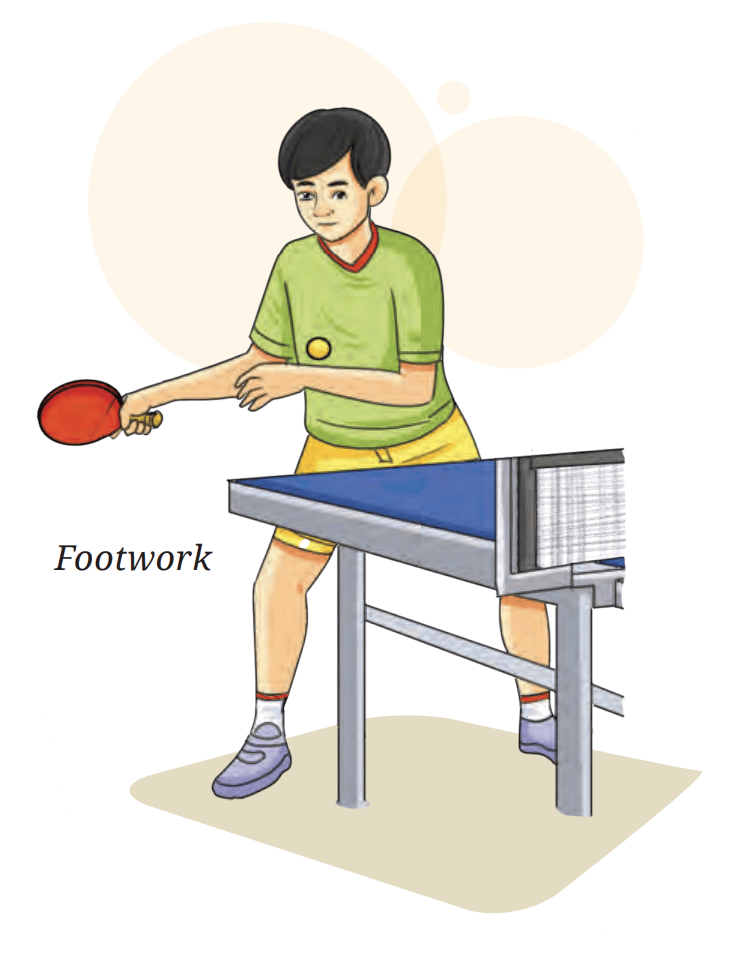
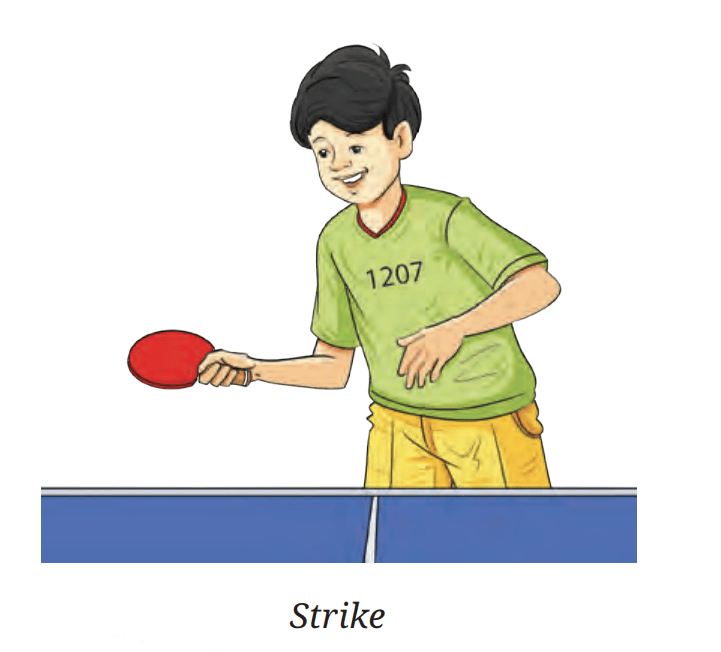
3. STRIKE
- Shift your weight onto the front foot.
- Swing the arm forwards and upwards.
- Make contact with the ball ahead of the body.
- Rotate the hips and waist forwards.
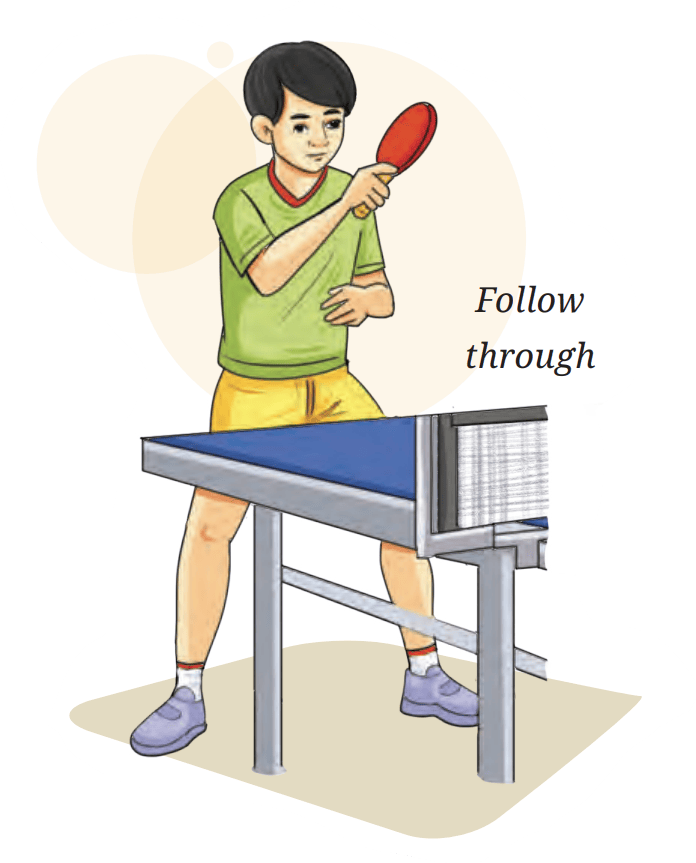
4. FOLLOW-THROUGH
- Continue the racquet movement forwards and upwards.
- Return to ready position.
Place or hang the hula hoop so that the hoop is of the same height as the player’s upper body, or if there is a group of three have one player hold the hoop. In pairs, play a game wherein players must hit the ball through the hoop, with a point scored for each successful hit.
Note for the teacher
- Show players the correct technique, focusing on grip, stance, and swing.
- Allow players to practice in pairs or against the wall, giving individual feedback.
Variations
- Keep the ball low and close to the net.
- Players practice by placing the ball at different areas of the table (left, right, centre) to improve control.
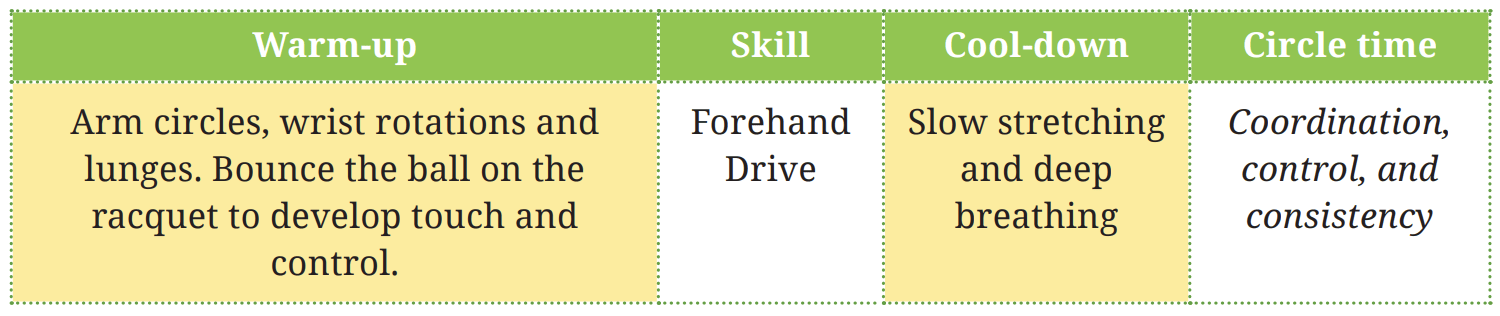
Circle time — Coordination, control, and consistency
- How did controlling the ball help in the game?
- What adjustments did you make to improve your accuracy?
The Backhand Drive is an attacking stroke in table tennis that allows players to hit the ball with speed and control using the backhand side of the racquet.
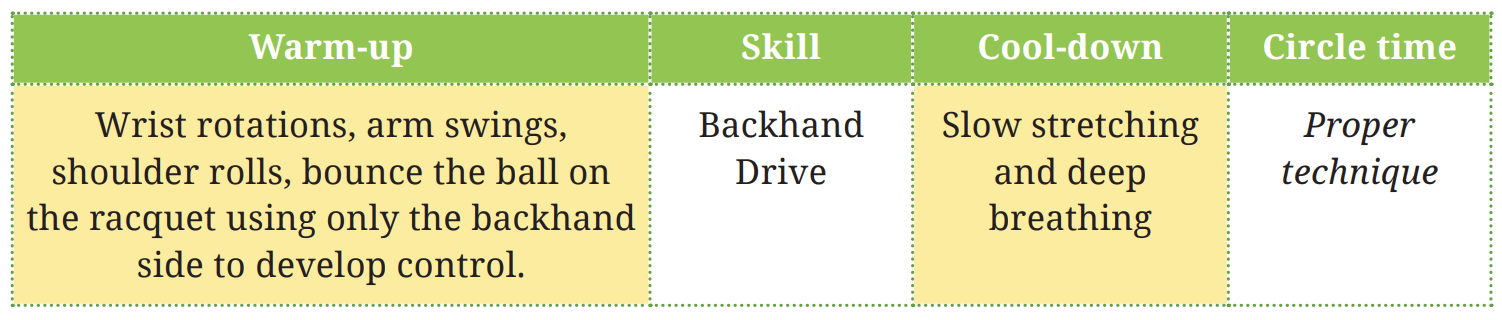
Backhand Drive
The Backhand drive comprises the following:
1. STANCE
- Stand with feet shoulder-width apart parallel to the end line of the table.
- Keep knees bent and lean slightly forward.
- Position the left foot slightly ahead.
- Hold the racquet at table height in front of the body.
2. BACKSWING
- Move the racquet back a little sideways, towards the waist.
- Angle the wrist backwards and inwards.
- Rotate the waist and hips backward.
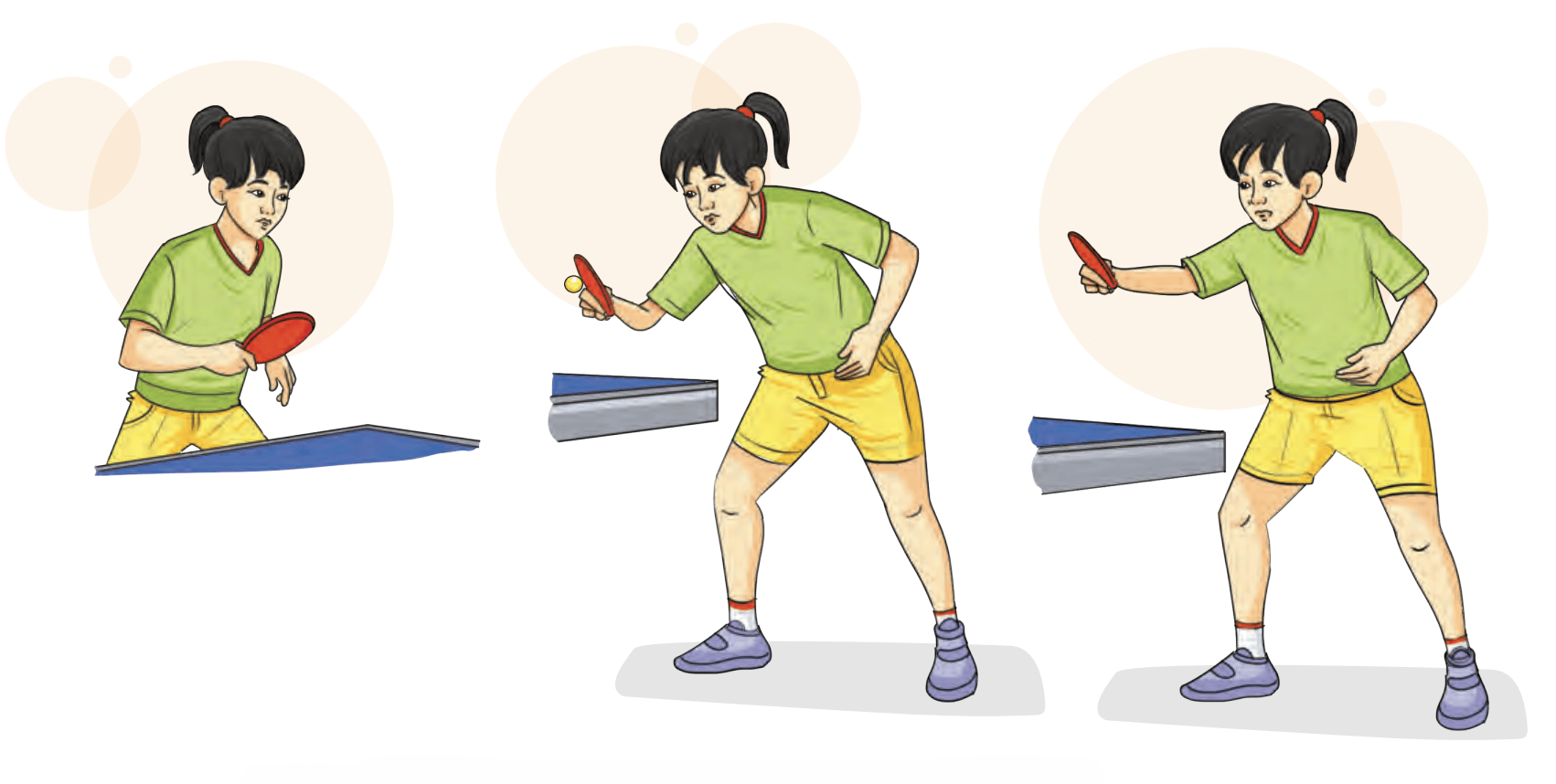
3. STRIKE
- Swing the racquet straight and forward.
- Move the opening elbow slightly forward.
- Make contact at the front of the body, slightly to the left.
- Close the wrist over the ball at contact.
4. FOLLOW-THROUGH
- Guide the racquet in the ball’s direction with a little upwards and forwards motion.
- Return to the ready position for the next stroke.
Players will compete in pairs. Each player will rally using only the backhand drive, aiming to keep the ball on the table. The rally continues until one player makes a mistake, such as hitting the ball off the table or into the net. The player who wins the rally earns one point, while the losing player switches and faces a new opponent. The first player to reach five points is declared the winner of the round.
To increase the difficulty level, different variations can be introduced. In the ‘target challenge’, specific zones on the opponent’s side of the table are marked, and players earn an extra point if they land their drive in those areas. In the timed rally, the goal is to maintain the longest backhand drive rally without making an error, and the player achieving the longest streak is declared the winner. For a more competitive round, a knockout game can be added in which any player who loses three rallies in a row must perform a quick exercise, such as five jumping jacks, before rejoining the game.
Note for the teacher
- Show the correct backhand drive technique, focusing on grip, stance, and follow-through.
- Allow players to practice individually, against the wall, or with partners while providing corrective feedback to them.
Variations
- Keep the ball low and close to the net.
- Players practice hitting at different areas of the table (left, right and center) to improve their control.
Circle time — Proper technique
Discuss the significance of proper technique and phases during practice.
The Forehand Topspin is an attacking stroke in table tennis that generates forward spin, making the ball dip and accelerate after bouncing.

Forehand Topspin
The Forehand Topspin comprises the following:
1. STANCE
- Stand with the feet shoulderwidth apart.
- Keep the knees bent and lean slightly forwards.
- Position the left foot slightly ahead.
- Hold the racquet in front of the body.
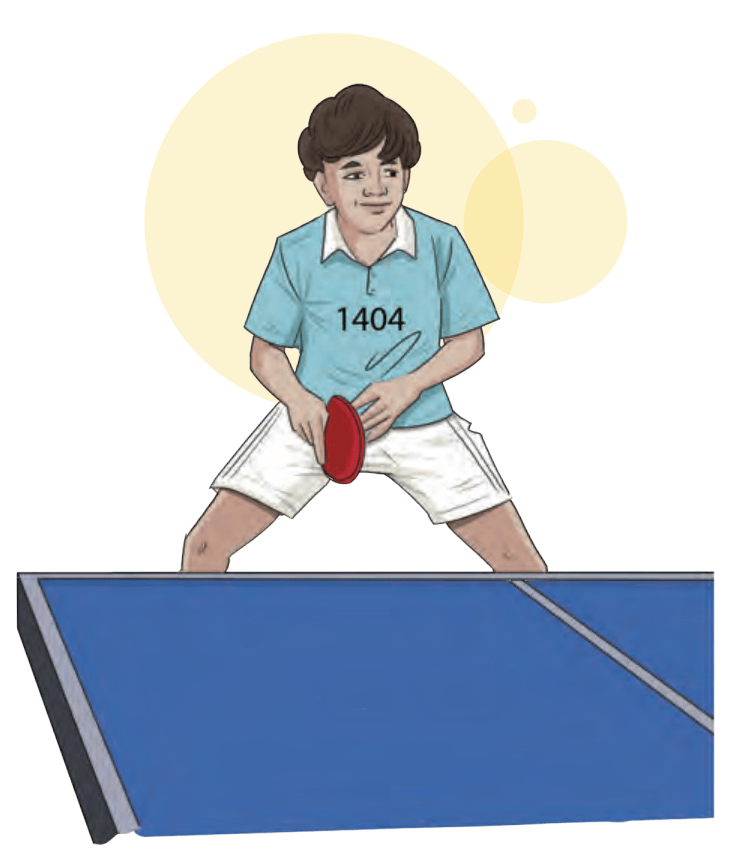
2. BACKSWING
- Move the right foot back into a side-on position.
- Rotate the upper body backward and downward going right at the shoulders, waist and hips.
- Angle the left knee towards the right knee and keep the right knee well bent.
- Lower the racquet head downwards and the arm moving towards the floor.
- Shift your weight onto the back foot.
- Angle the wrist backward to impart spin.
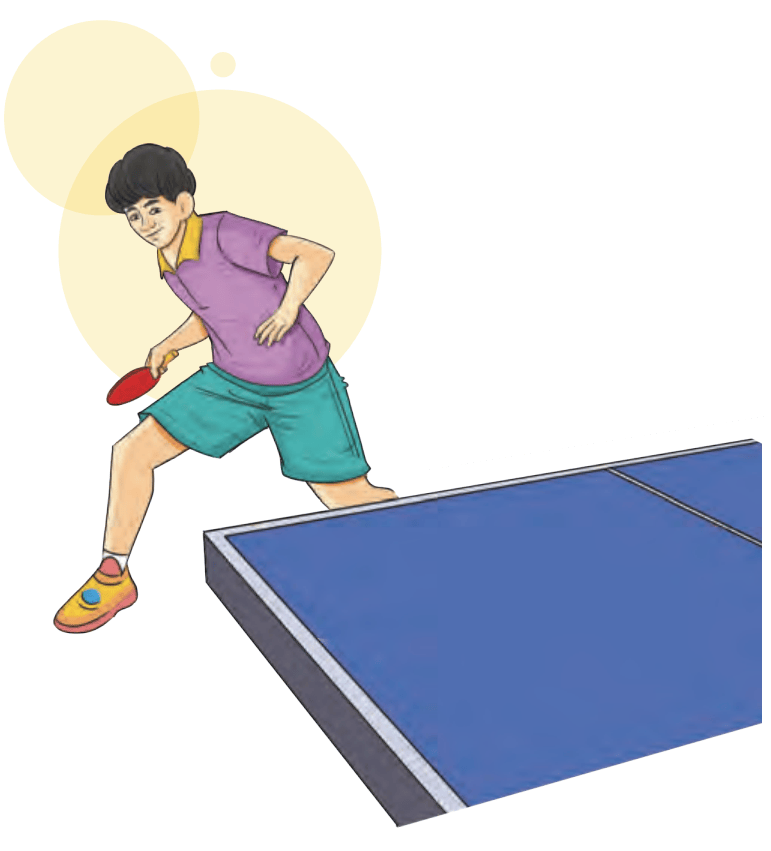
3. STRIKE
- Rotate the hips, waist, and shoulders upwards and forwards.
- Quickly close the elbow angle.
- Transfer the weight onto the front foot.
- Snap the wrist at the moment of contact.
- Brush the top of the ball to generate topspin.
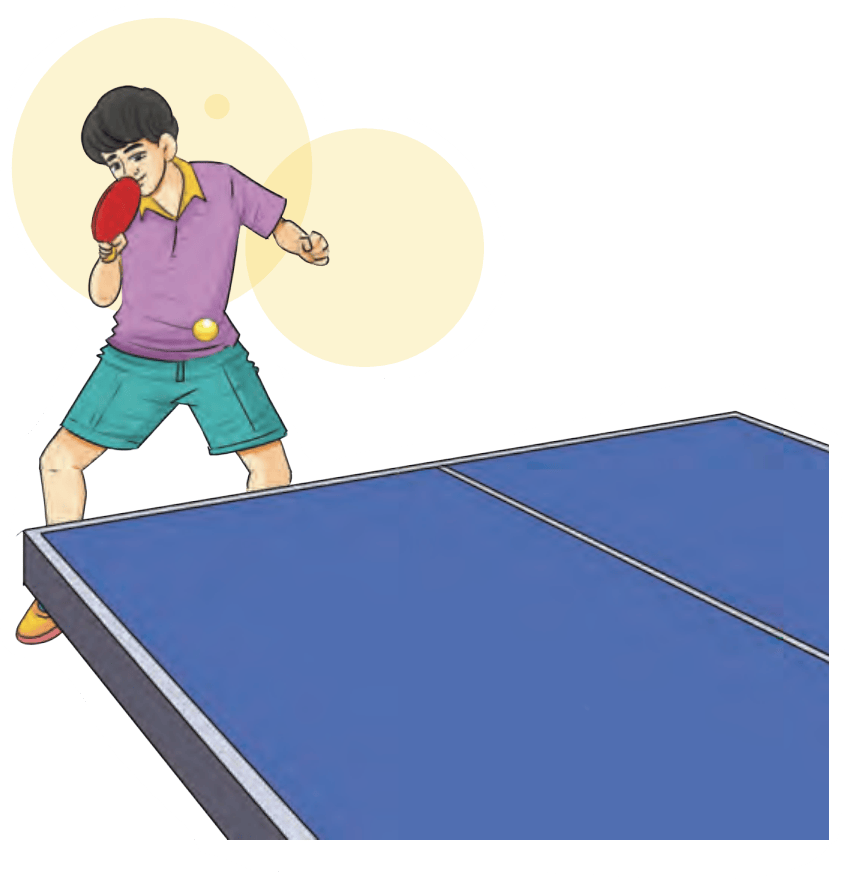
4. FOLLOW-THROUGH
- Continue the racquet movement forward and upward.
- Return to ready position for the next topspin.
Players will pair up and rally using only the forehand topspin, trying to keep the ball on the table. If a player misses a topspin (hits into the net, off the table, or fails to generate topspin), their opponent earns one point. The first to reach five points wins the round, while the loser switches to play a new opponent. The players try to increase the speed of their topspin strokes while maintaining control and consistency. They aim to land their shots in the marked areas along with the spin on the table for bonus points.
Note for the teacher
- The teachers should start by demonstrating the correct forehand topspin technique, emphasising grip, footwork, ball contact and movement of elbow, waist, hip and foot rotation.
- Players should begin with slow and controlled topspins before increasing power and speed.
Variations
- Techniques given in this chapter needs to be clearly explained that is useful for countering backspin.
- A faster shot with less arc and more forwards speed, making it aggressive and difficult to return as the ball dips down and spins.
Circle time — Spin
How does the spin affect the speed, bounce, and control of the ball in a forehand topspin, and why is it an important skill?
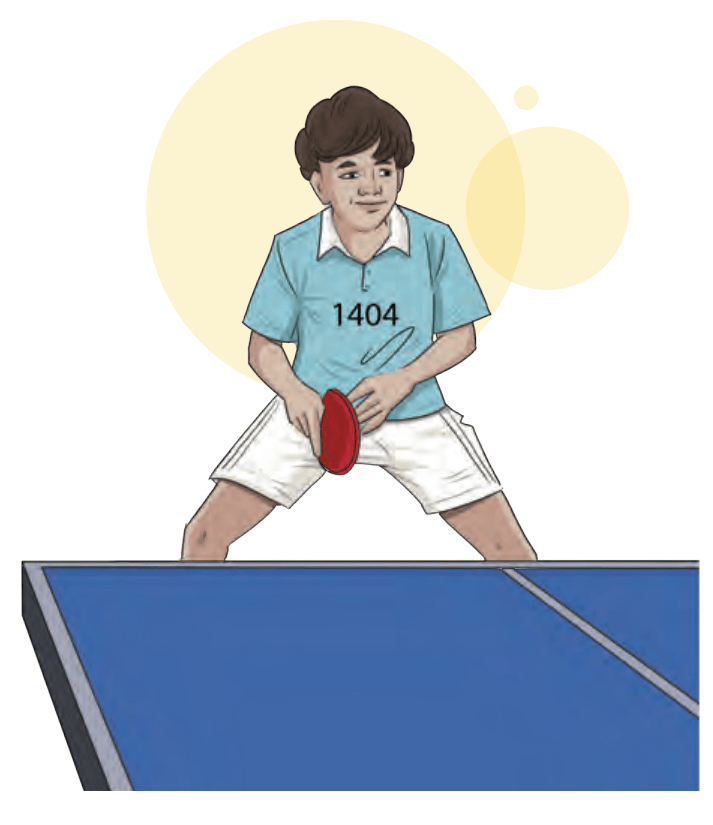
The Backhand Topspin is an attacking stroke used to generate forwards spin, making the ball dip quickly and accelerate after bouncing.

Backhand Topspin
The Backhand Topspin comprises the following:
1. STANCE
- Stand with feet shoulder-width apart, square to the table.
- Keep knees bent and lean slightly forwards.
- Hold the racquet in front of the body
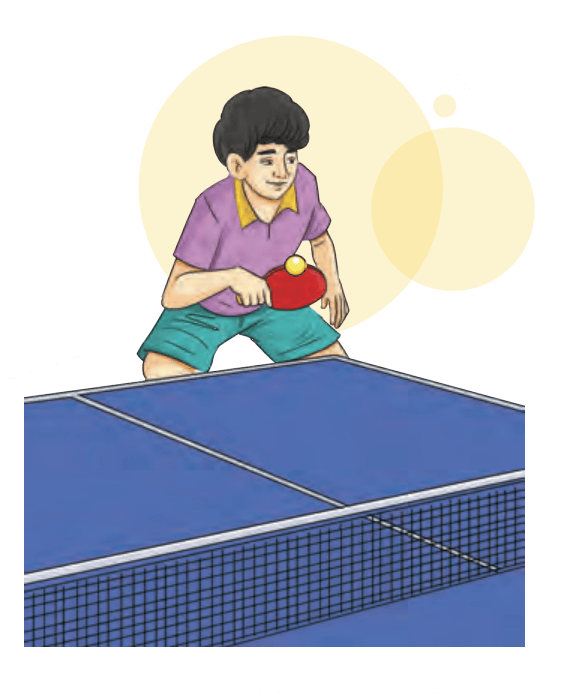
2. BACKSWING
- Rotate the hips, knees, shoulders, and waist to the left and downwards.
- Move the racquet back toward the left thigh area.
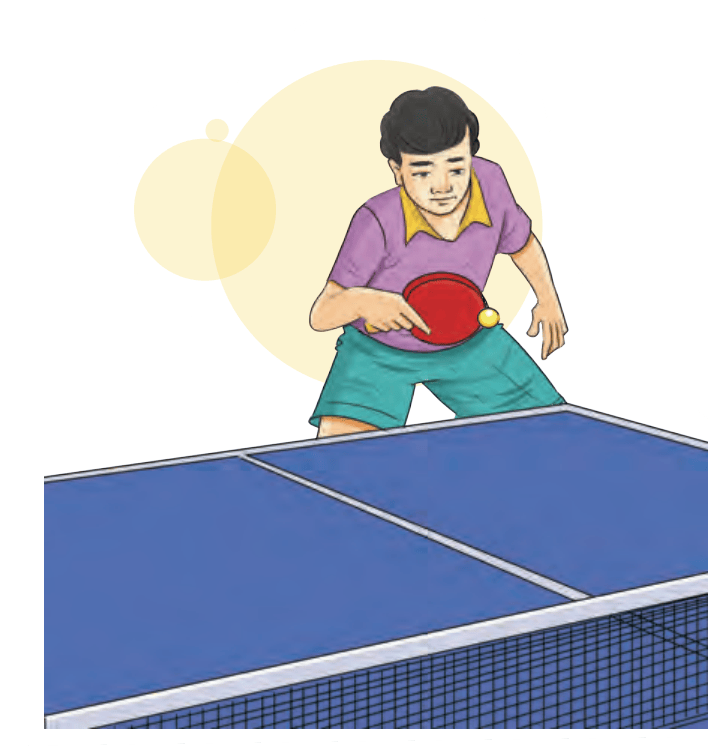
3. STRIKE
- Rotate forwards and upwards using the legs.
- Rotate the hips and waist forwards.
- Swing the racquet forwards and upwards.
- Snap the wrist at contact.
- Accelerate through the stroke for more spin and power.
4. FOLLOW-THROUGH
- Continue the racquet movement forwards and upwards.
- Return to ready position for the next topspin.
Players will rally using only the backhand topspin, keeping the ball on the table. If a player misses a shot (by hitting into the net, off the table, of failing to generate a topspin), their opponent earns one point. The first player to achieve five points wins, and the loser switches to play with a new opponent. Players aim to generate maximum topspin, ensuring the ball dips quickly after bouncing. Players must land their topspin shots in marked areas for bonus points.
Note for the teacher
- Teachers should start by demonstrating the correct backhand topspin technique, focusing on grip, foot positioning, and ball contact.
- Players should begin with slow, controlled topspins before increasing spin, power and speed to the stroke.
Variations
- A slow but high-arching shot with heavy topspin, ideal for a countering backspin.
- A quicker, lower shot with less arc and more forward speed, used for aggressive attacking.
Circle time — Spin
- How does the angle of the racket affect the spin, speed, and control of the ball in a backhand topspin shot? Why is adjusting the racket angle important?
- Discuss the variation of the racquet angle between the slow but high arching shots and of the lower shots with a less arc.
Did You Know
Table tennis is played under fifteen basic laws developed by the International Table Tennis Federation. Discuss some of them with your friends.
The Smash is one of the most powerful strokes in table tennis. It is used to score a point with a fast and aggressive play. It is played when the opponent returns a high ball, allowing the player to hit it forcefully and with variation in placement on the table.
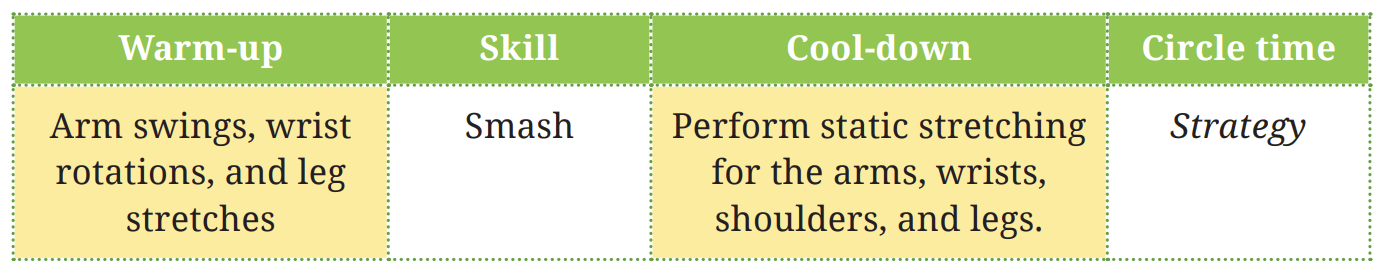
Smash
The Smash comprises the following:
1. STANCE
- Stand ‘side-on’ to the table.
- Position yourself slightly back from the table.
2. BACKSWING
- Bring the arm straight back, aligning it directly behind the ball.
- Rotate the body backwards, shifting your weight onto the back foot.
3. STRIKE
- Move forwards with your body weight, transferring your weight onto the front leg.
- Make contact with the ball ahead of the body.
4. FOLLOW-THROUGH
- Follow through forward focusing on body positioning (shifting the body weight).
- Return to the ready position.
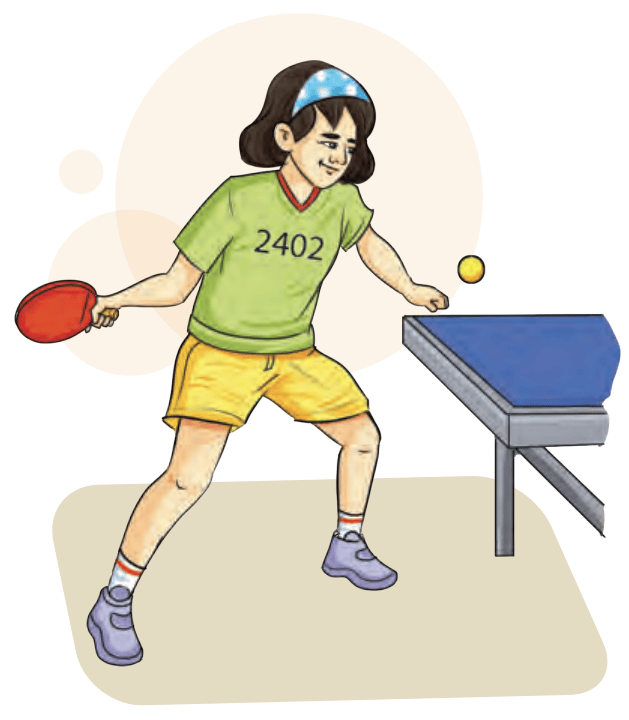
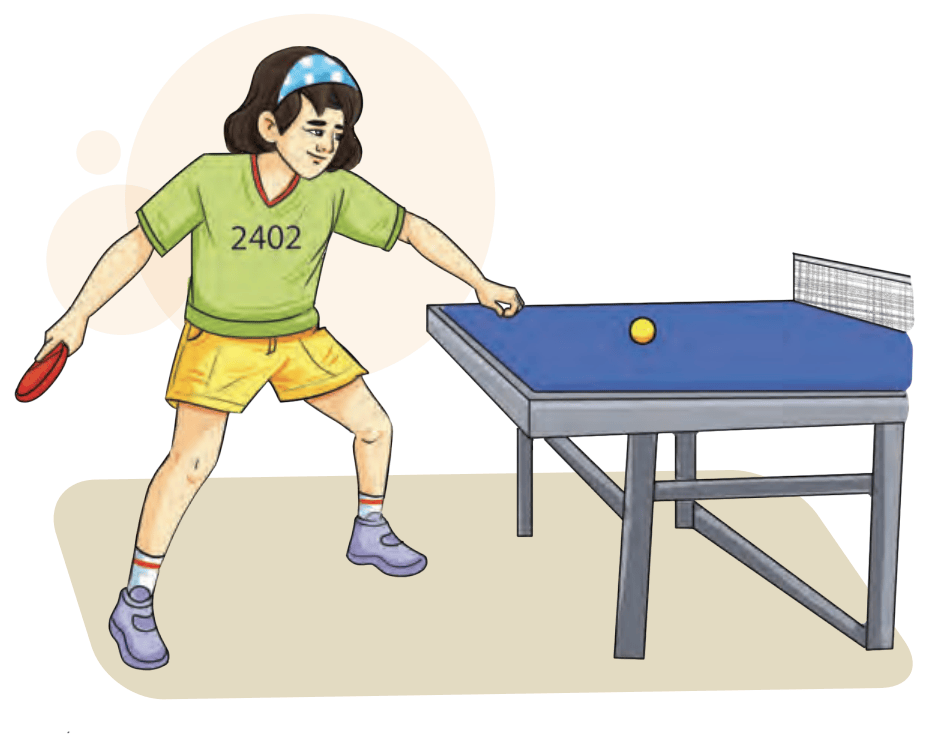
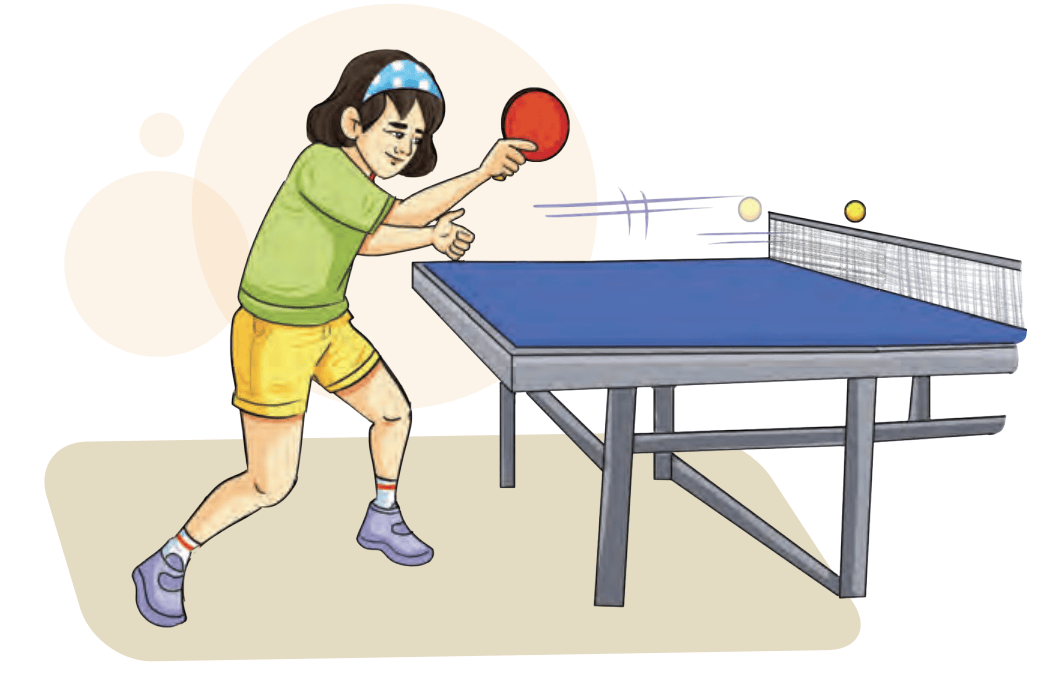
One player tosses the ball high for their opponent to smash. If the smash lands on the table and the opponent fails to return it, the player who used the smash technique earns one point. Ifthe player misses or the opponent returns the ball successfully, the opponent gains the point. Players must aim for marked target zones when smashing. The opponent must try to return the smash while the player focuses on the placement of the smash.
Note for the teacher
Teachers should start by demonstrating the proper smash technique, focusing on positioning, shoulder, arm movement, and follow-through.
Variations
- Used when the ball is on the forehand and backhand side, requiring a strong wrist snap for power.
- The most common and powerful smash, hit with full-body rotation for maximum force.
- A deceptive smash played with less power, placing the ball short to catch the opponent off guard.
Circle time — Strategy
When should you use a smash instead of a topspin? How can you position yourself for a smash and what adjustments are needed against different opponents?

How to play?
- There will be a game of five points which will consist of all the skills you have learned.
- Whenever a player wins a rally, they earn a point.
- The game is won by the first player to score five points.
- In a situation in which Player A serves and wins the rally, they advance to serve with a 1-0 lead.
- If Player B wins the subsequent rally, Player B receives the chance to serve and the score is tied at one. Players keep serving and rallying throughout the game until one person reaches five points.
- Another player can be involved to count the score.
Circle time — Enjoy
- How did you gather your focus when you started losing on points?
- Identify the rallies, shots, and moments in the games when you enjoyed the most irrespective of who scored the points.
Self-Assessment
GRIP (SHAKEHAND AND PENHOLD)
| 1 | 2 | 3 | 4 | 5 |
|---|---|---|---|---|
| The student needs more practice of grips to comfortably maintain it. | The student is able to demonstrate both shakehand and penhold grip. | The student is able to correctly perform either shakehand or penhold grip. | The student is able to change the grips rapidly as per the requirement of the game. | The student is able to correctly grip the racquet even under pressure. |
| 1 | 2 | 3 | 4 | 5 |
|---|---|---|---|---|
| The student needs more practice of push to comfortably use it in the game. | The student is able to demonstrate both forehand and backhand push. | The student is able to correctly perform either forehand or backhand push. | The student is able to use both forehand or backhand push according to the requirement of the game. | The student is able to assess and appreciate a good defence using push by the opponent. |
| 1 | 2 | 3 | 4 | 5 |
|---|---|---|---|---|
| The student needs more practice of serves to comfortably use it in the game. | The student is able to demonstrate all basic, topspin and backspin service. | The student is able to correctly perform either basic spin, topspin or backspin service. | The student is able to decide which type of the serve should be used for next rally. | The student is able to assess and appreciate a good serve of the opponent. |
| 1 | 2 | 3 | 4 | 5 |
|---|---|---|---|---|
| The student needs more practice of Drive to comfortably use it in the game. | The student is able to demonstrate both forehand and backhand drive. | The student is able to correctly perform either forehand or backhand drive. | The student is able to decide which type of the drive should be used while playing the rally. | The student is able to confidently executes and strong, accurate drives and intelligently employ them throughout rallies. |
| 1 | 2 | 3 | 4 | 5 |
|---|---|---|---|---|
| The students needs more practice of Topspin to comfortably use it in the game. | The students is able to demonstrate both forehand and backhand topspin. | The students is able to correctly perform either forehand or backhand topspin. | The students is able to decide which type of the topspin should be used while playing the rally. | The students is able to confidently executes strong, accurate top spins and intelligently employ them throughout rallies. |
| 1 | 2 | 3 | 4 | 5 |
|---|---|---|---|---|
| The students needs more practice of smash to comfortably use it in the game. | The students is able to demonstrate smash in the game. | The students is able to correctly perform smash in the game. | The students is able to executes strong and accurate smash and intelligently use it throughout rallies. | The students is able to assess and appreciate a good smash of the opponent. |
| 1 | 2 | 3 | 4 | 5 |
|---|---|---|---|---|
| The students reacts emotionally or impulsively without attempting to reduce distress. | The students struggles to solve problems and avoids self-reflection. | The students makes simple attempts to think and solve problems, but with little success. | The students tries to think issues thoroughly and find solutions, but occasionally reacts emotionally. | The students learns from upsetting experiences and approaches problems with composure. |
Explore
Some of the back numbers of players shown in the illustration depict the birthdays of some famous sportspersons. Try and find out their names and the laurels they have brought for our country.