
UNIT 3MYSTERY AND MAGIC
THE CASE OF THE FIFTH WORD
Let us do these activities before we read.
I. Work in pairs. Solve the crossword puzzle given below with the clues in the form of anagrams.
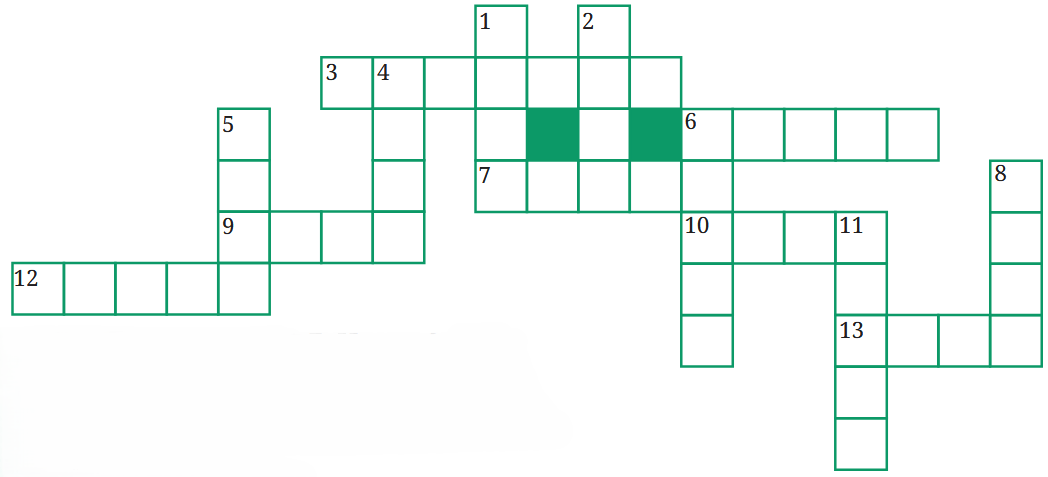
Across: 3. Declare 6. Tucks 7. Heart 9. Felt
10. Sown 12. Sword 13. Evil
Down: 1. Aces 2. Read 4. Tool 5. Alps 6. Hooks
8. Mane 11. Loves
II. Work in pairs. Match the different meanings of ‘case’ in Column 2 with the correct usage in the sentences in Column 1. Share your answers with your classmates and teacher.
| Column 1 | Column 2 |
| 1. Lalit said that he could not sing but that was not the case as he sang melodiously later. | (i) writing format |
| 2. The lawyer was waiting for the case to be taken up in court. | (ii) container |
| 3. My pencil case is a gift from my grandmother. | (iii) situation |
| 4. The subject of a formal letter is written in title case. | (iv) matter |
Now, read the following text and find out which ‘case’ the title refers to.
Let us read
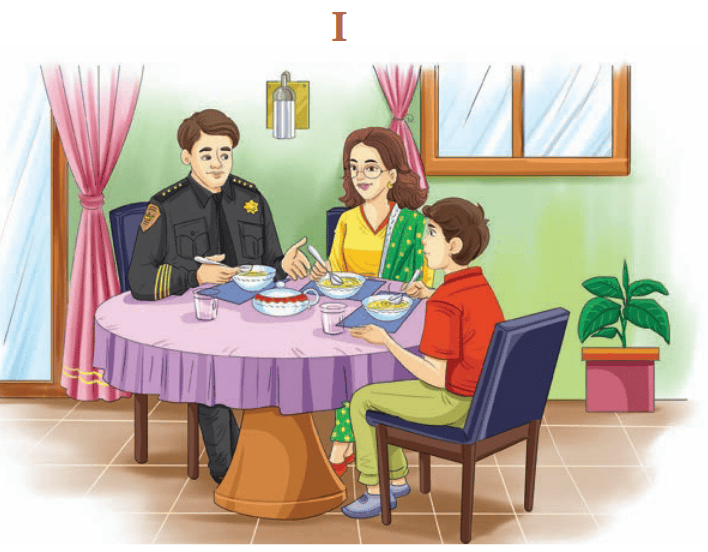
Encyclopedia Brown is a young boy who lives in Idaville, USA. His father is the Chief of Police. In spite of being so young he often helps his father solve mysteries that even the police find difficult to solve. Their discussions are generally held at the dining table. Read this story to find out how the boy wonder solves a case that has been troubling his father…
Encyclopedia’s father was Chief of Police. Everyone thought that he must be the smartest police chief in the country. Chief Brown was smart and quick. He didn’t sit around and worry. When he came up against a case he couldn’t solve, he acted at once. He cleared his desk, put on his hat, and went home to dinner. Encyclopedia solved the case for him before dinner was over.
Chief Brown would have liked to tell everyone about his only child. But who would believe him? Who would believe that the best detective alive was an eighth grader? So, he said nothing.
Encyclopedia never spoke of the help he gave his father. He didn’t want to seem different from other boys. But there was nothing he could do about his nickname. He was stuck with it.
Only his parents and teachers called him by his real name, Leroy. Everyone else called him Encyclopedia.
An encyclopedia is a book or set of books filled with facts from A to Z. So was Encyclopedia’s head. He read more books than anyone in Idaville, and he never forgot a fact. His pals said he was like a library and computer rolled into one, and more user-friendly.
in a matter-offact manner: without showing much emotion
hold-ups: robberies conducted with the use of threat or violence
nursery: a place where young plants and trees are grown for sale
At the dinner table on Tuesday night, Chief Brown stared at his cream-of-mushroom soup. Encyclopedia and his mother knew what that meant. He had a mystery he could not solve.
“Tim Nolan died yesterday,” he announced in a matter-of-fact manner.
“That name is familiar,” Mrs. Brown said. “Wasn’t he mixed up in a jewellery robbery a few years ago?”
“Five years ago,” Chief Brown replied. “Two masked men held up the Diamond Mart on Sixth Avenue. They got away with a million dollars worth of jewellery.”
“I thought Tim Nolan was arrested,” Mrs. Brown said.
“He was questioned, not arrested,” Chief Brown corrected.
“I always believed that Nolan and a friend, a man named Daniel Davenport, pulled the hold-ups. There wasn’t any proof, though.”
Encyclopedia sat quietly. He knew his mother and father were discussing the case for his benefit.
His father filled in the facts.
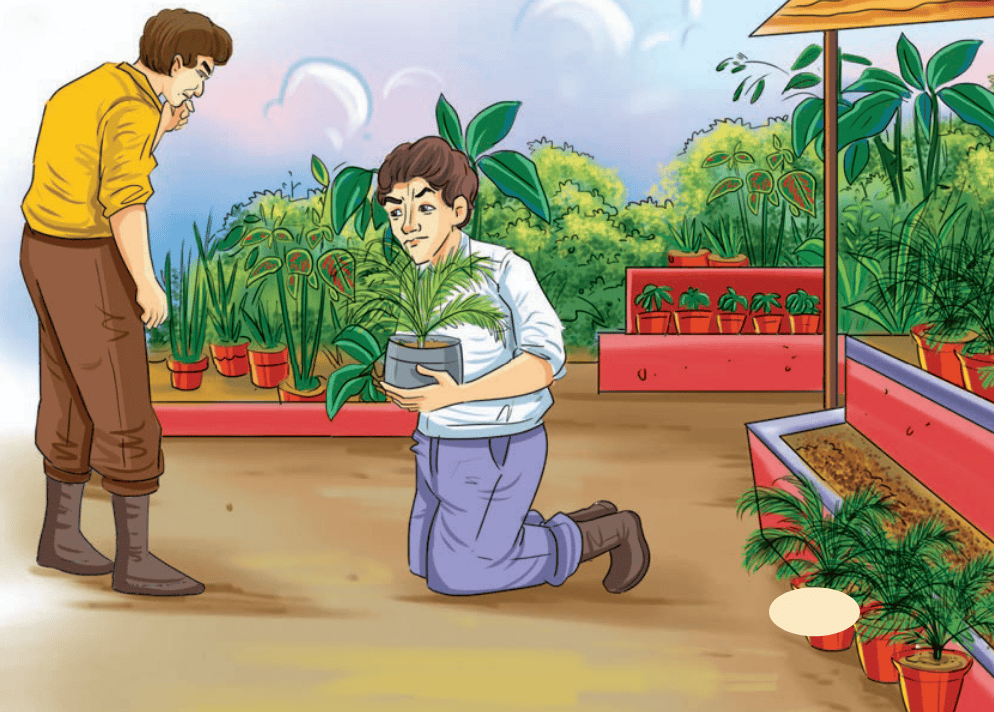
“Nolan and Davenport had met,” Chief Brown said, “while both were in prison in South Carolina. They became friendly because of shared interests. Nolan was let out first. He settled in Idaville and started a small palm-tree nursery. It barely yielded him a living.”
“Davenport came to live with Nolan a week before the jewellery store hold-up. During the hold-up, one gunman’s mask slipped. A clerk thought she recognised Nolan. But she wasn’t absolutely sure.”
testify: make a statement in court to prove that something is true
hunch: a strong feeling about something loot: stolen goods
stroke: a sudden serious illness causing inability to move
“I remember now,” Mrs. Brown said. “The clerk refused to testify against him, and no trace of the stolen jewellery ever turned up.”
“Davenport hasn’t been seen since the hold-up,” Chief Brown said. “My hunch is that he and Nolan decided to hide the loot until things cooled down.”
“Didn’t you search Nolan’s house, dear?”
“I got a court order this morning,” Chief Brown said. “Officers Lewis and Maloney just about took Nolan’s house apart. They didn’t find one piece of the stolen jewellery.”
“Is there some mystery about Nolan’s death yesterday?” Mrs. Brown inquired.
“Yes and no,” Chief Brown answered. “Nolan suffered from a bad heart for many years. Yesterday morning he had a stroke. He must have realised he was dying. With his last strength, he managed to put his will on the kitchen table. It leaves everything he owns, including his palm-tree nursery to Davenport.”
Let us discuss
I. Complete the following statements with suitable reasons. Share your answers with your classmates and teacher.
- Leroy’s nickname was Encyclopedia and everyone called him by that name because ______________.
- At the dinner table on Tuesday night, Chief Brown stared at his cream-of-mushroom soup as ______________.
- Encyclopedia sat quietly at the dinner table because ______________.
- Nolan put the will on the kitchen table because ______________.
II. Do you think Chief Brown would need Leroy’s help to solve this case? If yes, why? If no, why not?

II
“What’s suspicious about that?” Mrs. Brown asked. “Nothing about the will itself—just about a sheet from his desk calendar. It was clipped to the will,” said Chief Brown. He took out his pocket notebook and leafed through the pages.
“I copied what Nolan wrote on the sheet,” he said. “Here it is.”
He handed the notebook to Mrs. Brown.
will: (here) a legal document that says what is to happen to somebody’s money and property after their death
leafed through: quickly turned (the pages)
She read what he had copied. “It has Davenport’s name and address,” she said, “and a few words I don’t understand.”
She handed the notebook to Encyclopedia.
“What do you make of the four words, Leroy?”
Encyclopedia read the four words below Davenport’s name and address: Nom Utes Sweden Hurts.
Mrs. Brown looked at him hopefully. Usually he needed to ask only one question to solve a case before dessert.
They were still on the soup.
Encyclopedia leaned back and closed his eyes when he did his hardest thinking.
After several seconds, he opened his eyes and asked his question. “Is there a young fir tree in Mr. Nolan’s palm-tree nursery?” Chief Brown thought a moment. “Yes, there is… one. On the south side of the house. How did you know?”
“The four words say so,” Encyclopedia answered.
“They do?” said Chief Brown.
“See for yourself,” Encyclopedia urged.
Chief Brown studied the four words: Nom Utes Sweden Hurts. He shook his head and passed the notebook to Mrs. Brown again. “Can you figure it out?”
“Nom is a shortening of nominative, a grammatical term,” stated Mrs. Brown, who had taught English and other subjects in high school. “Utes are an American Indian tribe. Sweden is a country in northern Europe. Hurts is hurts.”
She lifted her gaze to Encyclopedia and shook her head.
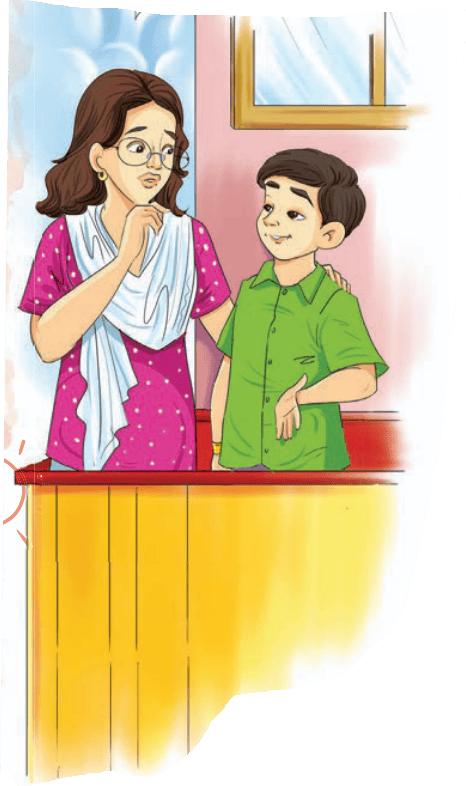
“I can’t figure it out,” she confessed.
“Davenport disappeared right after the hold-up,” Encyclopedia reminded her.
“As Dad said, Davenport and Nolan must have hidden the stolen jewellery. Probably not a week or so ago, Nolan changed the hiding place.”
“You think that he tried to tell Davenport by phone and failed to reach him?” Mrs. Brown asked. “So he wrote the four words as he was dying?”
Chief Brown nodded. “We’ll find Davenport now that we know his address.”
“He’ll learn he has been left the palm-tree nursery,” Mrs. Brown said. “And the four words will tell him where the jewellery is hidden!”
“Right,” Encyclopedia said. “The code is simple, especially as it’s written on a sheet from a calendar. Davenport will understand it easily. Still, it wouldn’t make much sense to someone who isn’t looking for a hiding place.”
“Leroy!” Mrs. Brown exclaimed. “What do the four words mean?”

“You already guessed, Mom. They tell where the jewellery is hidden.”
Mrs. Brown looked ready to explode with impatience, “Where?”
Encyclopedia smiled.
“Why, under the fifth word,” he said.
What Was The Fifth Word?
To tell Davenport where he had hidden the stolen jewellery, Nolan wrote a four-word code.
As the key to the code, he wrote the four words on a sheet from a desk calendar.
The four words stood for days of the week. Nolan dropped the letters d-a-y. Then he used the other letters to form words.
So, Nom = Monday, Utes = Tuesday, Sweden = Wednesday and Hurts = Thursday.
The unwritten fifth word was Fir, or Friday.
The jewellery was found inside a twenty-gallon jug of earth from which grew the young fir tree in Nolan’s nursery—just as Encyclopedia had foreseen.
Donald J. Sobol
(ADAPTED)
Let us discuss
I. A fact is something that can be proven true or false. A fact is not based on people’s beliefs. An opinion on the other hand is a belief, feeling, or judgement, and can vary from one person to another. An opinion cannot be proven.
Identify which of the following statements from part I and II of the story are facts or opinions. One example has been done for you. Share your answers with your classmates and teacher.
- Encyclopedia’s father was the Chief of Police. Fact
- Everyone thought that Chief Brown must be the smartest police chief in the country.
- An encyclopedia is a book or set of books filled with facts from A to Z.
- Leroy’s friends said that he was like a library and computer rolled into one, and more user-friendly.
- Two masked men held up the Diamond Mart on Sixth Avenue.
- Nolan and Davenport had met while both were in prison in South Carolina.
- Chief Brown’s hunch was that Davenport and Nolan decided to hide the loot until things cooled down.
- Nolan wrote a four words code to tell Davenport where he had hidden the stolen jewellery.
II. Complete the table by choosing the character traits of Leroy given in the box below. There is an extra word that you do not need. One example has been done for you.
listener gentle humble
| Textual Evidences | Traits |
| 1. He read more books than anyone in Idaville, and he never forgot a fact. | knowledgeable |
| 2. Encyclopedia never spoke of the help he gave his father. He didn’t want to seem different from other boys. | |
| 3. Encyclopedia sat quietly. He knew his mother and father were discussing the case for his benefit. | |
| 4. Usually, he needed to ask only one question to solve a case before dessert. |
Let us think and reflect
I. Read the given extracts and answer the questions that follow.
1. Chief Brown would have liked to tell everyone about his only child. But who would believe him? Who would believe that the best detective alive was an eighth grader? So, he said nothing.
Encyclopedia never spoke of the help he gave his father. He didn’t want to seem different from other boys. But there was nothing he could do about his nickname. He was stuck with it.
Only his parents and teachers called him by his real name, Leroy. Everyone else called him Encyclopedia.
- (i) Complete the following sentence with a suitable reason.
Chief Brown’s dilemma can be called unique because_____. - (ii) What can be inferred about why Encyclopedia never spoke of the help he gave his father?
- A. He is shy and lacks confidence in his abilities to share his insights.
- B. He wants to avoid the jealousy others might feel about his skills.
- C. He desires to blend with the other boys to prevent seeming different.
- D. He is embarrassed about being smarter than most adults around him.
- (iii) The parents choose not to call their son ‘Encyclopedia’. Select the reason that is false.
- A. For them he is more than his unique abilities; he is their child, with a personal identity.
- B. Calling him by his real name reflects their affection and the desire to acknowledge him as an ordinary boy.
- C. They want him to be remembered as different from the others around.
- (iv) What does the writer mean by the fact that Leroy was ‘stuck with’ the name Encyclopedia?

2. Chief Brown studied the four words: Nom Utes Sweden Hurts. He shook his head and passed the notebook to Mrs. Brown again. “Can you figure it out?”
“Nom is a shortening of nominative, a grammatical term,” stated Mrs. Brown, who had taught English and other subjects in high school. “Utes is an American Indian tribe. Sweden is a country in northern Europe. Hurts is hurts.”
She lifted her gaze to Encyclopedia and shook her head.
“I can’t figure it out,” she confessed.
“Davenport disappeared right after the hold-up,” Encyclopedia reminded her.
- (i) What does Chief Brown’s reaction of shaking his head suggest about his understanding of the four words?
- A. He is confident that the words are a clue.
- B. He is confused, unable to make sense of the words.
- C. He believes the words are random and meaningless.
- D. He thinks the words are unrelated to the case.
- (ii) Identify whether the given statement is true or false.
- (iii) What does Mrs. Brown’s inability to decode the words suggest about the message?
- (iv) Complete the following sentence suitably.
Mrs. Brown explained the actual meanings of the individual words rather than decoding the hidden message behind them.
The purpose of Encyclopedia’s reminder in the last line of the extract was to __________. (refocus the discussion on the context of the crime/suggest that the coded message was meant for Davenport/imply that the message was likely a clue about the location of the stolen jewellery)
II. Answer the following questions.
- Nolan and Davenport were very close. Support this statement with evidence from the text.
- Why did Davenport disappear right after the jewellery hold-up? What might his plans have been if, Nolan had not died?
- What does Mrs. Brown’s interest in the case tell us about her?
- Explain why Chief Brown was proud of his son.
- Why were Chief Brown’s suspicions regarding Nolan and Davenport justified, even when there was a lack of concrete proof?
- Analyse the role of the four-word coded message in the story.
- Write a character sketch on Leroy with the help of the character traits table given in ‘Let us discuss’ section.
You may begin it like this:
Encyclopedia was a knowledgeable eighth grader who never forgot a fact that he read.
Let us learn
I. Match the phrasal verbs from the text given in Column 1 with their meanings in Column 2. You may refer to a dictionary.
| Column 1 | Column 2 |
| 1. put on | (i) appeared, been discovered |
| 2. cooled down | (ii) solve a problem |
| 3. turned up | (iii) became normal or calmed |
| 4. make of | (iv) wear (clothes, hat, etc.) |
| 5. figure out | (v) escaped without being punished |
| 6. got away with | (vi) have an idea or understanding of something |
Now, fill in the blanks with the phrasal verbs given in Column 1.
- A. Finally, some important evidence about the case has _______________.
- B. After I _______________, I understood that I had made a big mistake.
- C. I couldn’t _______________ why he was angry with me.
- D. He _______________ his special coat and went to his friend’s birthday party.
- E. Ravi forgets to do his homework but he _______________ it as teacher didn’t ask for it that day.
- F. I do not know what to _______________ his behaviour.
II. Fill in the blanks in the following sentences by choosing the correct word pairs from the box given below.
peace/piece break/brake
- After running for 50 kilometres last _________________, I felt _________________ for two days.
- When the committee met yesterday, they brought _________________ local cases to the _________________.
- While learning to drive, Rina used too much force on the _________________, causing the car to _________________ down.
- He has composed a beautiful _________________ of music in order to bring _________________ to thousands of people.
- She was busy _________________ her hair not caring about the _________________ flowers in her garden.
III. Leroy solved the mystery of the missing fifth word with his critical thinking abilities. Work in pairs to solve the puzzles given in the illustrations below and infer what they say. One example has been done for you.
SECRET ←
SECRET
SECRET
Answer: Top secret
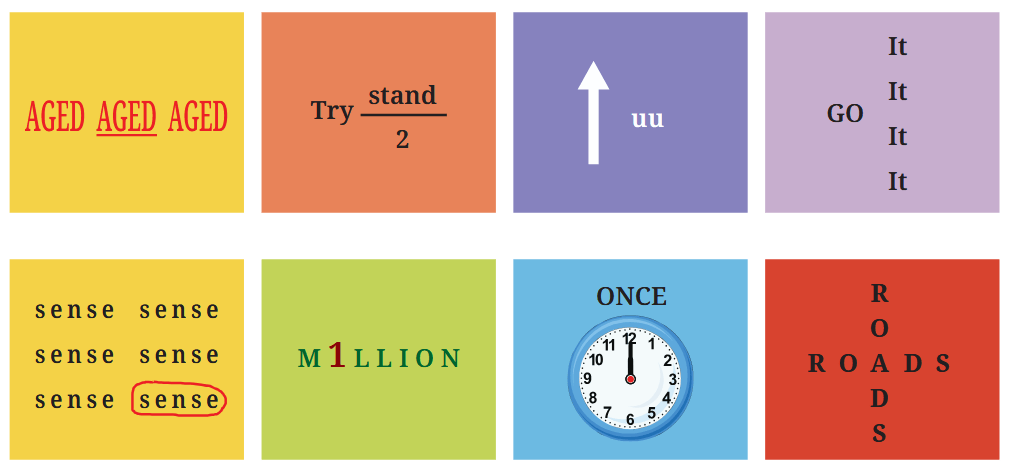
sense sense
sense sense
IV. Spoonerism is a mistake made when speaking, where the first sounds of the words in a phrase or a sentence are exchanged with each other. This usually gives a funny meaning.
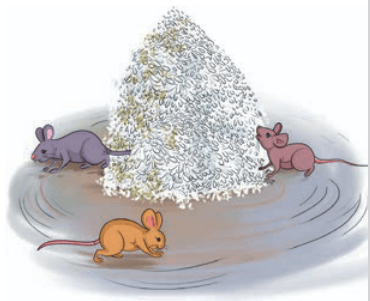
Some examples of spoonerism are saying ‘wrong load’ instead of ‘long road’, ‘round of mice’ instead of ‘mound of rice’.
Find the correct order for the following spoonerisms.
- knowing sits
- it’s roaring with pain.
- plaster man
- blarm wanket
- tars and crucks
- shake a tower
- bead a rook
- mardon me padam
V. Read the following sentences from the text and study the highlighted words.
- Everyone thought that he must be the smartest police chief in the country.
- She read what he had copied.
- They tell where the jewellery is hidden.
- “Nom is a shortening of nominative, a grammatical term,” stated Mrs. Brown, who had taught English and other subjects in high school.
- “Nolan and Davenport had met,” Chief Brown said, “while both were in prison in South Carolina.”
- When he came up against a case he couldn’t solve, he acted at once.
- The code is simple, especially as it’s written on a sheet from a calendar.
- They became friendly because of shared interests.
- Encyclopedia solved the case for him before dinner was over.

Now, fill in the blanks with the words in the box given below to complete the following sentences. There are two extra words that you do not need.
when because whose if how
Detective stories are exciting, keeping readers guessing (i) ____________ the real culprit is. They take place in settings (ii) ____________ clues are hidden carefully. (iii) ____________ the mystery seems tricky, a clever detective always finds answers. Readers often wonder (iv) ____________ criminals leave small but important clues. The challenge is to decide (v) ____________ suspect is guilty. (vi) ____________ the truth is revealed, everything makes sense. But one may wonder (vii) ____________ they could have solved it themselves. These stories are fun (viii) ____________ they make readers think till the very end.
VI. Combine the following pairs of sentences using the word given in brackets. One example has been done for you.
- We gave him the signal.He was waiting for the signal.(that)
Answer: We gave him the signal that he was waiting for. - We went to a place. The incident occurred there. (where)
- Teacher said she would retire soon. She is now nearly sixty.(who)
- It was the day. Half the class was absent. (when)
VII. Read the following sentences from the text.
- “What’s suspicious about that?” Mrs. Brown asked.
- “What do you make of the four words, Leroy?”
- “Wasn’t he mixed up in a jewellery robbery a few years ago?”
- “Didn’t you search Nolan’s house, dear?”
- “Is there a young fir tree in Mr. Nolan’s palm-tree nursery?”
The given sentences are the direct words of the speaker, hence, they are in direct speech.
While reporting these direct words to someone else at some other time and some other place, we make certain modifications in person, tense, and adverbs of place and time.
- Present → Past
- Past → Past Perfect
- Past Perfect → No change
- Present Progressive →
Past Progressi
- Past Progressive → Past
Perfect Progressive - Present Perfect → Past Perfect
- Present Modal (e.g., will)→
Past Modal (e.g., would) - Past Modal → No change
- I → she/he
- you (singular) → she/he
- you (plural) → us
- we → they
- my → her/his
- our → their
- your → her/his/their
- me → her/him
- us → them
- mine → hers/his
- ours → theirs
- yours → hers/his/theirs
- now → then
- ago → before
- today → that day
- tomorrow → the following day
- yesterday → the day before
- next week/month/year → the following week/month/year
- here → there
- this → that
- these → those
There are two types of Interrogative sentences. They are Wh– questions and Yes/No questions.
Steps for Reporting Wh– questions and Yes/No questions
- Replace the reporting verb ‘said’ with words like ‘asked’, ‘inquired’ ‘interrogated’, or ‘questioned’.
- Convert the interrogative sentence into a declarative one.
- Apply the appropriate tense shift as per the rules of tense changes.
- Remove quotation marks and the question mark.
- Omit the conjunction ‘that’ in the reported speech.
- In Wh– questions, place the Wh– word immediately after the reporting verb in the reported speech.
- In Yes/No questions, use ‘if’ or ‘whether’ immediately after the reporting verb in the reported speech.
Now, follow these steps to transform the sentences given as examples from direct speech to indirect speech.
Indirect Speech
- (i) Mrs. Brown asked ______________________.
- (ii) Mrs. Brown questioned Leroy _______________.
- (iii) Mrs. Brown inquired ______________________.
- (iv) Mrs. Brown asked Chief Brown _______________________.
- (v) Mrs. Brown inquired ______________________.
VIII. Rewrite the following sentences in Reported Speech.
- “Why did you stop talking to me?” asked Rohan.
Rohan questioned _______________________. - “Did you enjoy the family gathering yesterday?” asked my aunt.
My aunt asked ______________________. - “When will you visit us again?” asked my grandmother.
My grandmother inquired _____________________. - Madavi said to Ravi, “Will you come with me to meet our old teacher
tomorrow?” asked Madavi.
Madavi asked Ravi _____________________. - My friend said, “What gift are you planning to give your brother?”
My friend inquired ______________________. - “Shall I carry these notebooks to the staffroom, Ma’am?” asked Veenu.
Veenu asked her teacher _____________________.
IX. Read the conversation between Aditi and Rahul.
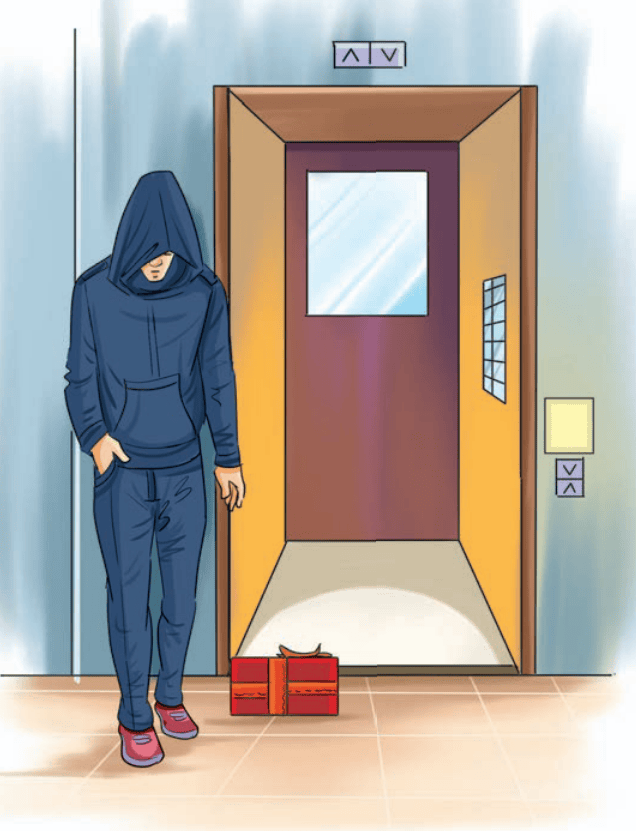
ADITI: Did you see anyone leave a package near the lift?
RAHUL: I noticed a man wearing a blue jacket drop it off.
ADITI: What time did you see this happen?
RAHUL: It was around 6:45 p.m.
ADITI: Were you able to see his face?
RAHUL: He wore a hood and so I couldn’t see his face.
Complete the following paragraph by transforming the dialogue in indirect speech.
Aditi asked Rahul 1. _______________________.
Rahul replied that he had noticed a man wearing a blue jacket drop it off.
Aditi asked Rahul 2. ________________________.
Rahul replied that it had been around 6.45 p.m.
Aditi further inquired 3. ____________________.
Rahul said that he had worn a hood, so he couldn’t see his face.
Let us Listen
I. You will listen to a podcast about ways of improving observation skills. As you listen, mark the statements 1–4 as true or false. (Transcript for teacher on page 151)

- Observation skills help improve your common sense.
- Rushing through tasks helps you focus better and observe more.
- Taking notes or making sketches helps with what you observe.
- Incorporating tips on observation skills will soon lead to success.
II. You will once again listen to the podcast. As you listen, complete the given sentences by filling in the blanks with one to three exact words you hear.
- It is important to slow down and ___________________ to notice several aspects around you more clearly.
- The more senses like hearing and smelling you use, the more ___________________ you absorb.
- People who are ___________________ tend to be better observers because they seek to understand what they notice.
- When you make a note of things, it helps reinforce the ________________ in your memory.
- Practising mindfulness helps a person stay ___________________ with their surroundings.
Let us Speak
I. Read the following words from the text loudly with the help of pronunciation guide given in brackets.
Now, practise reading the following words.
II. Work in groups of five or six. Conduct a group discussion on the topic, ‘The Interesting Aspects of a Mystery Story’.
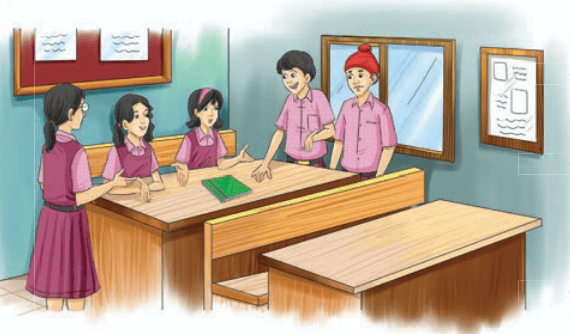
Guidelines
- The moderator initiates the discussion inviting the speakers to share their views on the subject.
- The speakers take turns to put forth their viewpoint using polite expressions to agree or disagree.
- The speakers may interrupt by raising their hands to add or clarify a point.
- The moderator ensures equal participation of all the members in the group, consolidates views, and calls upon other speakers to respond.
- The moderator sums up the points of discussion, suggests guidelines for future action and thanks the members of the group.
Note: Choose a moderator. Decide upon the duration of the discussion.
Phrases for Turn-taking
- If I may say something…
- May I draw the attention of this group…
- If I may interrupt…
- Sorry for this interruption…
- I would like to add to what (speaker) mentioned a few minutes ago…
Phrases for Expressing Agreement
- I’m totally in agreement with that...
- That’s absolutely true.
- There’s no question about that…
- I fully agree…
- I am with (speak
Phrases for Expressing Disagreement
- I’m afraid I don’t agree…
- Not quite so...
- I’m sorry, but I don’t quite agree…
- Maybe I’m wrong…
- If you look at it this way, then…
Let us Write
I A report is written for an event that has already occurred. The purpose of a report is to provide first-hand details of an incident or event. It presents the information in a proper sequence.
Read the sample report written about the ‘Inter-school Football Tournament’ organised by your Vidyalaya.
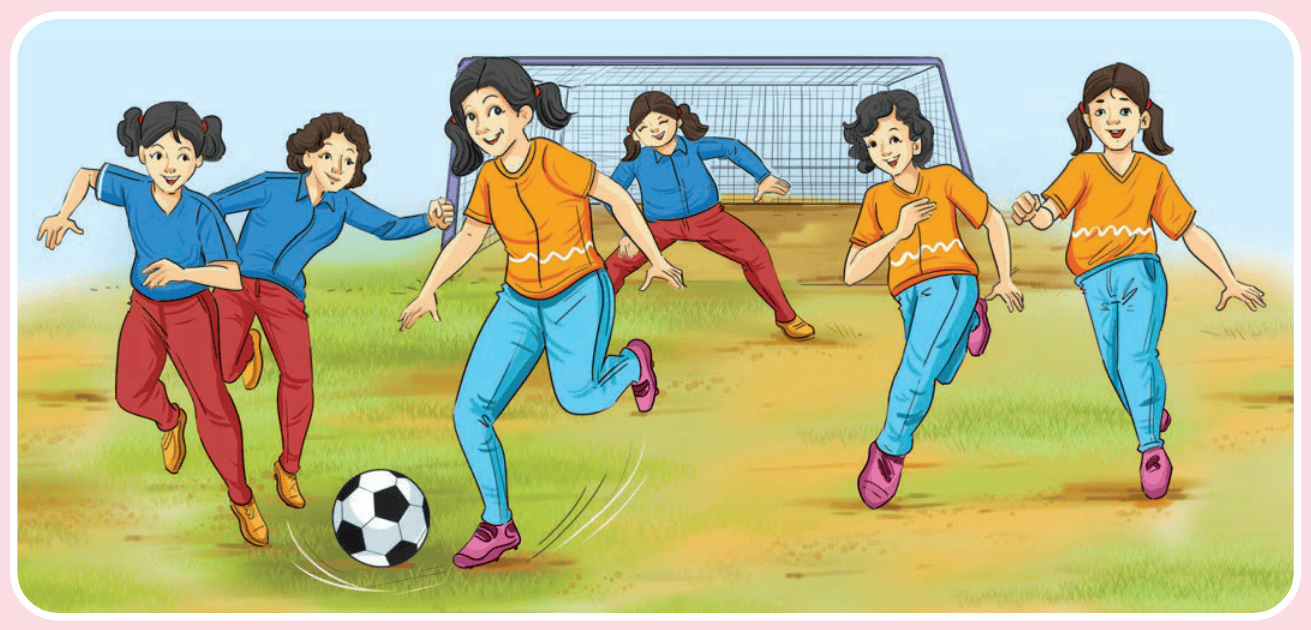
Note the format, content, and language used.
| Inter-school Football Tournament by __________________________ | Title—Byline (Reporter’s Name and Class) |
| An Inter-school Football Tournament was organised by our Vidyalaya from 21 April 20XX to 24 April 20XX at Motinagar Football Ground. Ten teams participated in the tournament. | Paragraph 1:
|
| The tournament was declared open by the
Chief Guest, Dr. Singh, Honorary Sports
Secretary of the State, on Wednesday, 21 April
20XX in the presence of all the teams and
spectators from the participating schools. The
matches were held from 8:30 a.m. to 11:30 a.m.
on all the days of the tournament. Following a
tough competition, the teams from ABC Senior
Secondary School and XYZ Senior Secondary
School emerged as the finalists. For the final match, players from both these teams were cheered by students from their respective schools. After an exciting match, the score was tied at 3–3. Subsequently, a penalty shootout was used as tie breaker by the referee to decide the winner. Finally, the team from ABC Senior Secondary School won the penalty shootout and was declared the winner. |
Paragraphs 2 and 3: • Description of the event in detail Note:
|
| The winning team was awarded with a trophy, medals, and certificates by the Chief Guest. Addressing thestudents,hesaid,“Allofyoumust take up a sport to keep yourself healthy.” The inter-school football tournament was a great success, showcasing exceptional talent, teamwork, and sportsmanship among the participating teams. | Paragraph 4:
|
Now, asamember of the Art and Craft Club,writeareport on an ‘Inter-school Art Exhibition’ organised by your school. Include the necessary details.
Let us explore
I. Work in pairs. Read the words and observe the images given below. Check if your answers match. Share your answers with your classmates and teacher.
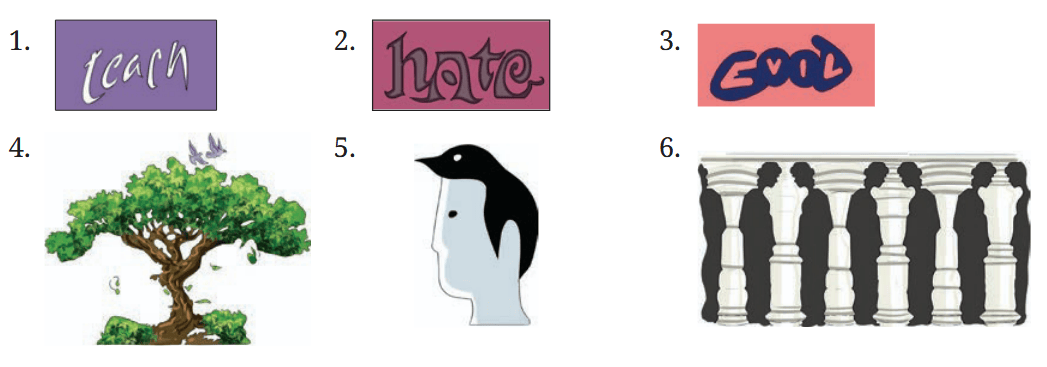
These are optical illusions which may trick the eye and make you think that you can see two different things.
II Read the steps to play a language game—Name the Mystery Object.
- Divide the class into teams.
- Each team chooses an object and prepares three hints to enable the other teams to name the object.
- Each team takes turns to name the object given by the other team.
- If a team names the object with the first hint, they get 20 points, with the second hint 10 points, and with the third hint 5 points.
One example with three hints:
- (i) I display information for all to share, with a swipe I’m clean and bare.
- (ii) I am rectangular or a square, whom neither teacher nor student can spare.
- (iii) I am mostly black, sometimes green, now in white too I am seen.
III. Visit the library and look for an encyclopedia. What is it? Check how it is different from a dictionary. Share your answers with your classmates and teacher.
IV. A thesaurus is a reference book or digital tool that provides a collection of words with similar meanings, allowing users to find alternative words or phrases to express the same idea. Choose any five words and find out their alternative words from the thesaurus.
THE MAGIC BRUSH OF DREAMS
Let us do these activities before we read.
I. Work in pairs. Discuss the following questions. Share your answers with your classmates and teacher.
- Mention a magical object that you would like to have. Give a reason for your choice.
- What would you draw for yourself, if you had a magic paint brush? Why?
- Would you use the magic paint brush to draw for someone else? If yes, why? If no, why not?
II. Work in pairs. Discuss instances of acts of kindness that you have heard, read, or experienced. Share your answers with your classmates and teacher.
III. Work in pairs and guess the meanings of the words given below and draw pictures depicting their meanings. Share with your classmates and teacher.
winding twig bows drawing cold
Now, arrange these words into different categories as given below.
Things:........................
Actions:.......................
Emotions.......................

Let us read
“Go and gather wild beans, Gopi,
Go and fetch some rice.
Go and pluck the mangoes
And bring home something nice.”
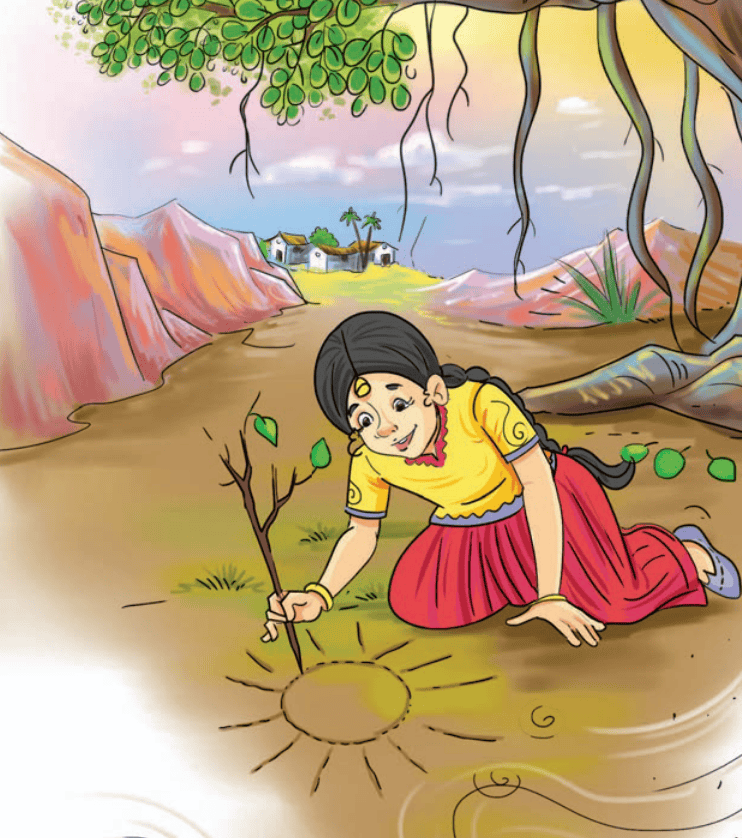
Gopi sits beneath the banyan,
A twig is in her hand.
She sits there drawing pictures,
Pictures in the sand.
The winds blow by and sweeps away
The pictures in the sand.
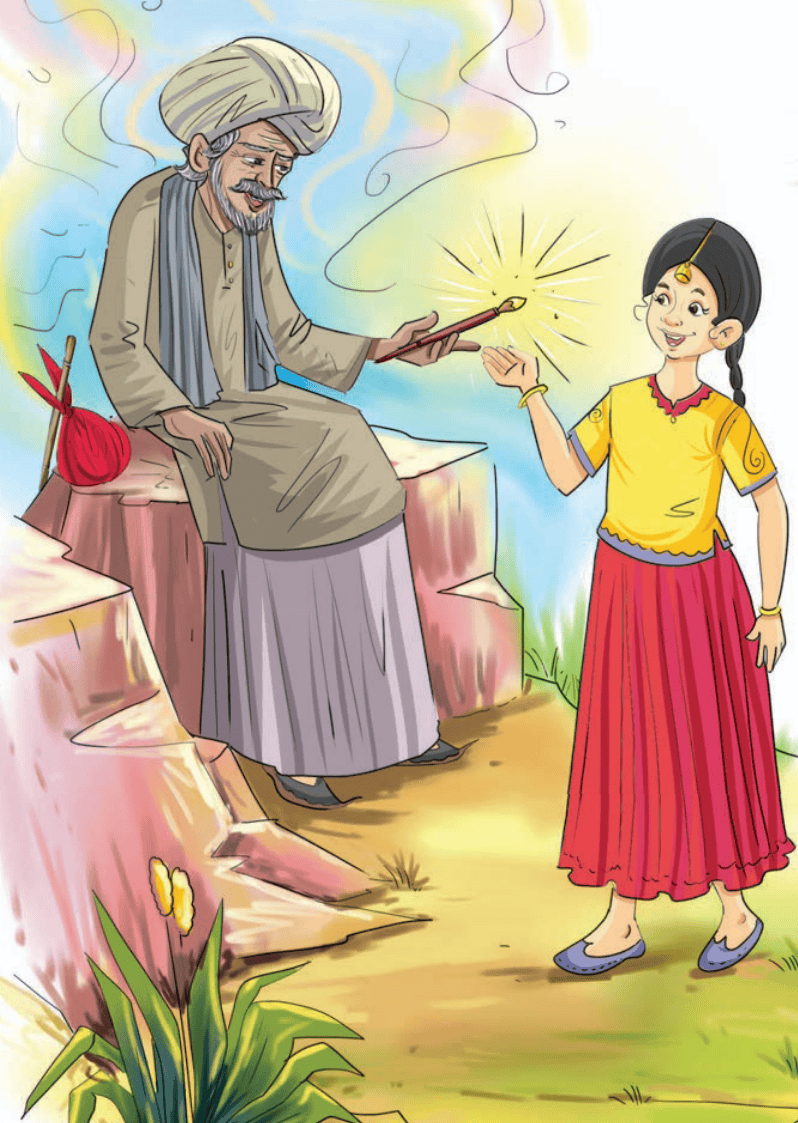
But on a stone there sits a man,
A brush is in his hand.
He looks around. He calls to Gopi.
“Come here!” he whispers. “Hush!
We mustn’t let the village know
About this magic brush.”
He slips the brush into her hand
And tells her to be sure,
“Paint not for the wealthy ones,
But only for the poor.”
“Did you gather wild beans, Gopi?
Did you fetch some rice?
Did you pluck the mangoes
And bring home something nice?”
“No beans, no rice, no mangoes!”
Gopi grins and runs inside.
She paints a bowl of khichdi
and waits,
Until the paint has dried.
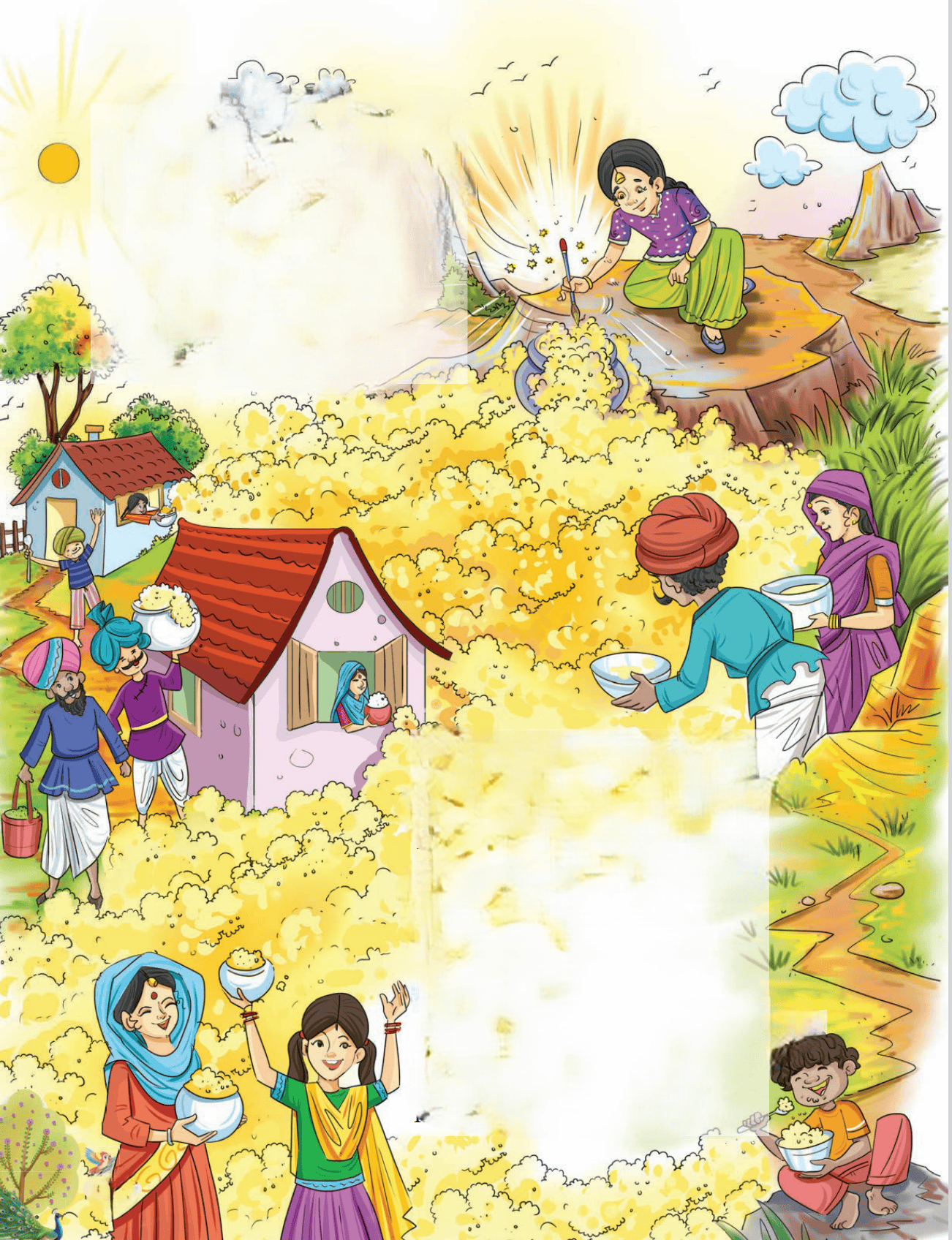
“The bowl is full of khichdi, Gopi!”
Into the house the villagers streamed
The young and old all wish to see
The magic brush of dreams.
She paints a muffler for a farmer,
A plough for another man,
A shawl for a grandmother,
And for a girl, a fan.
And soon the news spreads far and wide,
Through forests, fields, and plains,
Until the Zamindar himself
Hears of these magic gains.
“I order you to paint for me,
A fortress tall and grand.
Paint treasures, jewels, and riches rare,
Enough to rule this land.”
Gopi bows and shakes her head.
“My lord, I can’t comply.
I swore to use this magic brush
To help the needy by.”
The Zamindar roars and stamps his foot.
He bellows to his men,
“Seize this brush and seize the girl.
Throw her in the pen!”
Now Gopi waits inside the cell,
Upon a cold mud floor.
Until the Zamindar returns
And shouts through the door.
He holds the brush. He thunders loud,
“Paint my fortress tall!
Paint gold and rubies, emeralds bright,
And you shall leave this hall!”
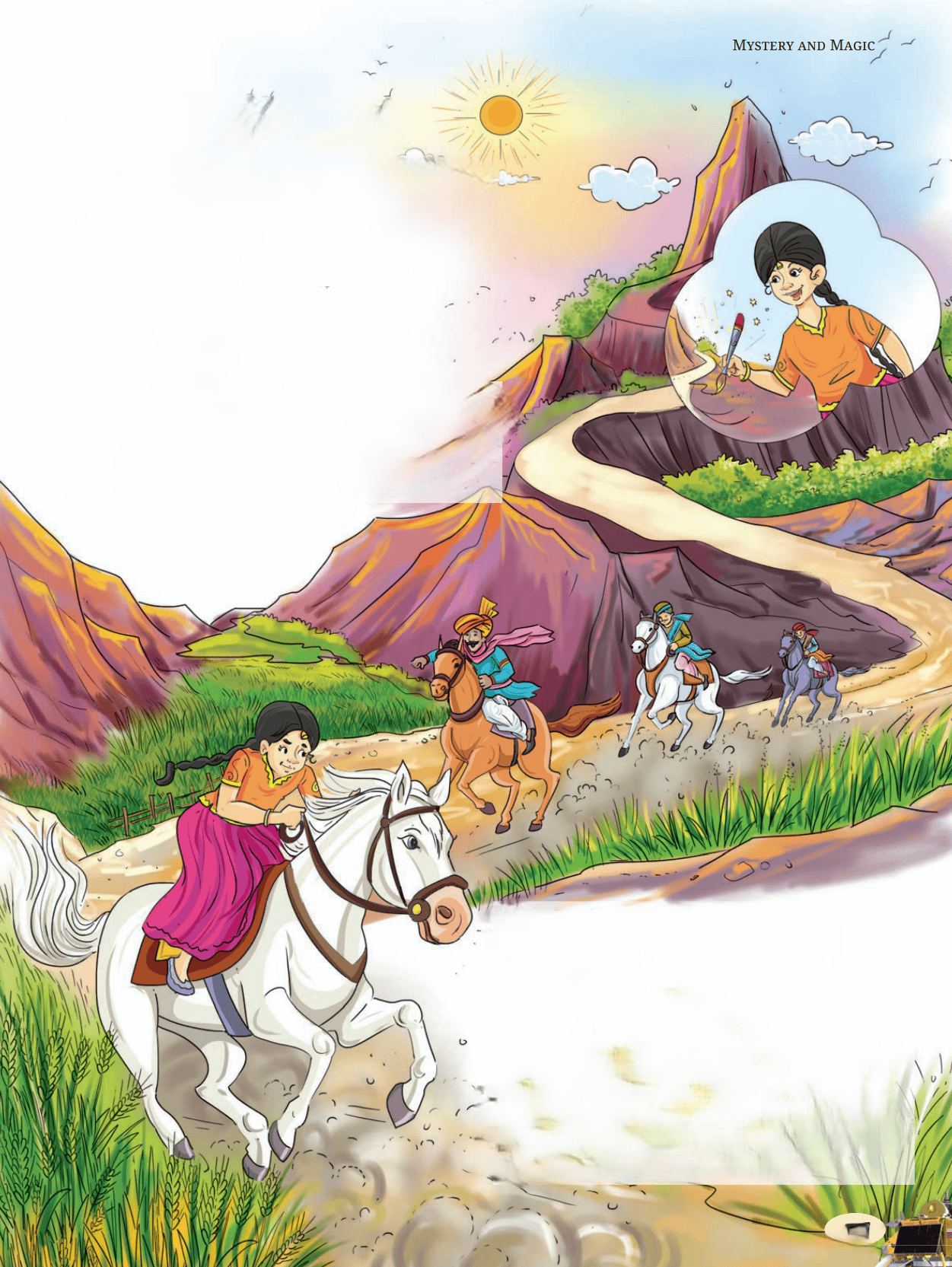
That night the Zamindar lies in bed,
Dreaming of his gold,
While Gopi paints a winding road,
A horse both strong and bold.
The road leads out of prison gates.
The horse, she swiftly urges
Gopi leaps on and gallops fast,
Through fields and many villages.
“It’s Gopi! It’s Gopi! She’s back again!”
Say the villagers, merry and kind.
But Gopi keeps on painting still,
With the Zamindar’s men following
behind.
She paints a mighty river wide,
Its currents fast and deep.
The Zamindar and all his men
Stop short and cannot leap.
“Now should I paint a beast
To leap and chase you through?
Stop this chase or it will feast
On you, and you and you!”
The Zamindar cries, “No, no, no more!
I’ll leave, I’ll go away!”
He turns and flees; his men behind
Dare not choose to stay.
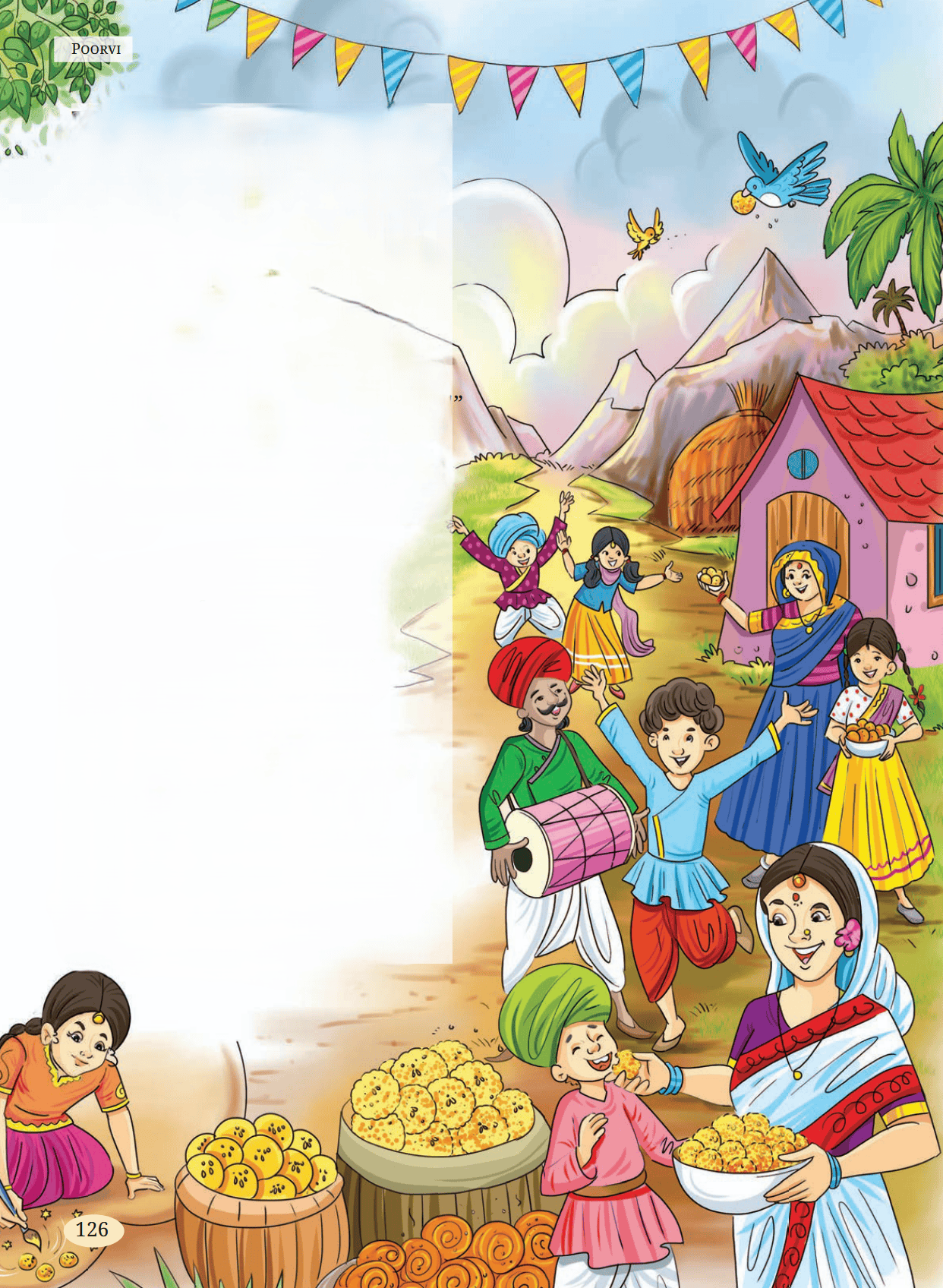
Now Gopi paints for the village folk,
A feast of sweets and tea.
A courtyard bright, a band to play,
And songs of victory.
Adapted from a Folk Tale
Let us discuss
I. Arrange the events in order of occurrence in the poem. The last one has been marked for you. Share your answers with your classmates and teacher.
| 1. Gopi paints a bowl of khichdi, which becomes real and amazes the villagers | |
| 2. The Zamindar orders Gopi to paint treasures for him. | |
| 3. Gopi is told to gather food but instead sits drawing pictures in the sand. | |
| 4. Gopi returns to the village with the Zamindar and his men chasing her. | |
| 5. The Zamindar throws Gopi into prison. | |
| 6. Gopi paints a road and a horse to escape. | |
| 7. Gopi uses the magic brush to paint useful items for the villagers. | |
| 8. Gopi paints a wide river, stopping the Zamindar and his men. | |
| 9. A man gives a magic brush to Gopi to paint only for the poor. | |
| 10. Gopi scares the Zamindar away, and celebrates with the villagers. | 10 |
II. Fill in the blanks by choosing the correct answer from the box given below.
playful and innocent
The tone of the poem shifts throughout, reflecting the different moods of the story. Initially, the tone is 1. _________________ as Gopi uses her imagination to draw in the sand, and later when the Zamindar enters the story, the tone shifts to one of 2. _________________. In the final part of the poem, the tone becomes 3. _________________ as Gopi escapes, the Zamindar is defeated, and the villagers rejoice.
III. Fill in the blanks by choosing the correct option from within the brackets.
- The poem mostly follows a simple rhyme scheme, _________________,which adds a rhythmic flow. (ABCB, ABBA, ABAB)
- This poem belongs to the _________________ poetry genre, which tells a story through verse. (descriptive, narrative or ballad,free style)
IV. Give examples from the poem for the following explanations.
- The poem is rich in imagery, creating clear pictures in the reader’s mind. For example, ___________________.
- What is the effect of repetition in the line—‘On you, and you and you!’?
V. Match the phrases from the poem in Column 1 with what they symbolise in Column 2.
| Column 1 | Column 2 |
| 1. The magic paintbrush | (i) greed and the desire for wealth |
| 2. The grand fortress | (ii) barriers to protect Gopi from the Zamindar’s anger |
| 3. The river and the beast | (iii) the power of art and imagination to change the world |
VI. Identify whether the following statement is true or false.
While Gopi uses the magic brush to help others, the Zamindar wants to use it for personal gain. This contrast drives the moral of the story.
Let us think and reflect

I. Read the given extracts and answer the questions that follow.
1. But on a stone there sits a man,
A brush is in his hand.
He looks around. He calls to Gopi.
“Come here!” he whispers. “Hush!
We mustn’t let the village know
About this magic brush.”
He slips the brush into her hand
And tells her to be sure,
“Paint not for the wealthy ones,
But only for the poor.”
- Fill in the blank by selecting the correct option from those given in the brackets.
- What is the significance of the man slipping the brush into Gopi’s hand?
- Complete the following sentence with a suitable reason.
- Select the most appropriate title for the extract from the two given below.
- A. The Magic Brush’s Secret
- B. Gopi’s Special Gift
The man is whispering and telling Gopi to keep the brush a secret reflects his _______________________ (careful and secretive/magical and delightful) nature.
The most likely reason the man instructs Gopi to ‘Paint not for wealthy ones but only for the poor’ is because he _______________________.
2. And soon the news spreads far and wide,
Through forests, fields, and plains,
Until the Zamindar himself
Hears of these magic gains.
“I order you to paint for me,
A fortress tall and grand.
Paint treasures, jewels, and riches rare,
Enough to rule this land.”
- Complete the following sentence with the correct reason.
- Why does the poet refer to things painted by Gopi’s paintbrush as ‘magic gains’?
- Which of the following statements given below is false? Rectify the false statement.
- Gopi’s magic brush draws the attention of the powerful Zamindar.
- The Zamindar requests Gopi to paint a grand fortress and jewels.
- What does the Zamindar’s demand for a grand fortress and jewels reveal about his character?
The news of Gopi’s magic brush spreads ‘through forests, fields, and plains’ because of its _______________________.
II. Answer the following questions.
- Explain why Gopi made the right decision by refusing to paint for the Zamindar.
- Gopi threatens to draw a beast to scare away the Zamindar. Justify her action. How would you have dealt with the situation differently?
- What is the significance of Gopi celebrating with the villagers at the end of the poem?
- Compare Gopi’s use of the magic brush to how the Zamindar would have used it.
- What can be inferred about Gopi’s character based on her refusal to follow the Zamindar’s orders?
- Justify the appropriateness of the title of the poem.
- If you had the magic brush, how would you use it in today’s world?
Let us learn
I. The verb ‘draw’ has different meanings in different contexts. Match the sentences in Column 1 with their appropriate meanings in Column 2.
| Column 1 | Column 2 |
| 1. His speech drew loud applause from the audience. | (i) opened |
| 2. The event will draw huge crowds from all neighbouring places. | (ii) pulled out |
| 3. Plants draw water from the soil. | (iii) got a reaction |
| 4. I reached the station when the train was drawing into the station. | (iv) attract |
| 5. The room was dark, so she drew the curtains to let the sunlight in. | (v) moving |
| 6. He drew a piece of paper from the folder. | (vi) absorb |
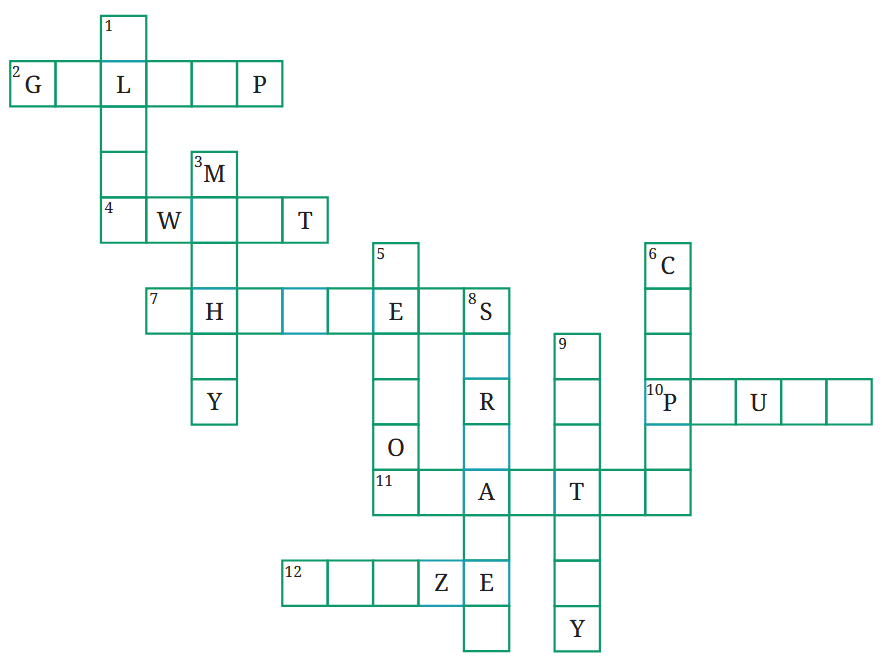
II. Fill in the crossword. Clues have been given below. You will find the words in the poem.
| Across | Down |
| 2. the fastest pace of a horse 4. happen fast 7. speaks very softly 10. take hold of (something) and quickly remove it from its place 11. having a lot of money; rich 12. take hold of something suddenly and forcibly |
1. runs away from a place 3. possessing a great deal of strength or power 5. a deep loud shout in pain or anger 6. to act according to rules 8. moved in a continuous flow in a specified direction 9. a win after overcoming an enemy |
III. There are certain expressions that convey a sudden feeling or reaction.
They can be used to express a variety of emotions and thoughts.
Example: ... he whispers. “Hush!”
(‘Hush’ denotes the act of silencing someone)
Now, match the expressions in Column 1 with what emotions or reactions
they convey, in Column 2.
| Column 1 | Column 2 |
| 1. Phew! | (i) surprise |
| 2. Eek! | (ii) pain |
| 3. Ouch! | (iii) mistake |
| 4. Yippee! | (iv) attract attention |
| 5. Whoa! | (v) relief |
| 6. Oops! | (vi) delight |
| 7. Hey! | (vii) alarm |
Now, create sentences using any five expressions from Column 1.
Let us Listen
I. You will listen to five speakers speak about a magical power they wish for. As you listen, match statements 1–7 with speakers (i)–(v). There are two statements you do not need. (Transcript for teacher on page 152 )
| Statments | Speaker No. |
| 1. Power of healing ailments | |
| 2. Ability to end poverty in the world | |
| 3. Power to control the weather as per need | |
| 4. Ability to make wise business decisions | |
| 5. Power to predict one’s own future clearly | |
| 6. Ability to remember information quickly | |
| 7. Power to move around without using vehicles |
Let us Speak
Intonation is the rise and fall of the pitch of tone while speaking.
The ‘falling’ tone is the fall in the pitch of the voice from a high level to a low level. It is marked [↘]. The falling tone is generally used in imperative sentences. Such sentences are used in speech for different communicative purposes— to express a command or an instruction, to ask for a favour or to give a warning.
Read the following sentences from the text with the falling tone.
- Come here!↘
- Seize this magic brush…↘
- Paint my fortress tall!↘
- Go and fetch some rice.↘
II. Work in pairs. Take turns to make requests for the following formal and informal situations.
Formal Requests
| Situation 1 | Situation 2 | Situation 3 |
| You request your teacher to organise a class picnic. | You request your class teacher for an extra sports period, since you missed it last week. | You request your Activity incharge teacher to include you in the upcoming inter-school event. |
Informal Requests
| Situation 1 | Situation 2 | Situation 3 |
| You request your sibling to help you with the completion of your project. | You request your mother to enroll you in a dance class. | You request your cousin to come over to spend the weekend with you. |
You may use the following phrases when you make the request.
| Formal | Informal |
|
|
Let us Write
I. Imaginative essay is a type of creative writing where the writers use their imagination. An imaginative essay can be based on real-life events, observation, or experiences. It is usually a descriptive piece or a personal reflection.
Read the sample of an imaginative essay.
My Life as EcoFlash

Imagine an ordinary 13-year-old student who is also a secret superhero protecting the environment. That’s my life as EcoFlash! By day, I’m Meenu, an ordinary Grade 8 student. By evening, I use my powers to keep my neighbourhood green and clean.
As EcoFlash, I have the ability to grow plants, purify water, and clean polluted air with a wave of my hand. I wear a green suit with a glowing leaf symbol and carry a small seed pouch that holds magic seeds to restore damaged areas. My mission is to fight pollution, save trees, and educate people about taking care of our planet. My friends wonder why I’m always carrying a plant in my bag or why my shoes are muddy, but I can never tell them the truth.
Once, my little brother saw me turning a garbage dump into a beautiful garden and almost spilled my secret to our parents. I had to convince him it was a magic trick!
Being EcoFlash is not just about powers but also responsibility. Every time I see clean streets, blooming flowers, and children playing in green parks, I feel proud. I know that even small changes can make a big difference, and that’s what keeps me going.
II. Complete the given checklist based on your observations and understanding of what an imaginative essay includes. Share the answers with your classmates and teacher.
- Title — A relevant title
- Introduction
- • Captivating opening sentence to catch the reader’s attention
- • Clear statement of the setting, situation, or main idea
- • Establishes the tone (e.g., playful, serious, and adventurous)
- • Introduces the narrator briefly (if applicable)
- Setting and Context
- Description of the setting to create a mental picture
- Clear time frame (past, present, or future)
- Brief explanation of any unique or imaginative elements (e.g., powers, fantasy world)
- Characters
- • Main character introduced with unique traits
- • Supporting characters briefly described (if relevant)
- Central Idea
- • Clear focus on a single powerful idea or narrative
- • Logical flow of events, even if the story involves imagination or fantasy
- Language and Style
- • Use of sensory details (sight, sound, touch, smell, and taste) to enhance the narrative
- • Creative metaphors or similes to enrich descriptions
- Resolution
- • Key turning point or moment of realisation
- • Resolution of the main idea
- • Clear takeaway message
- Conclusion
- •Ends on a reflective or thought-provoking note
- •Summarises the main message or leaves the reader with a strong final impression
III. Write an imaginative essay on any one of the following.
- Imagine you were a scarf that flew away from a clothesline. Describe the places you travelled to and how you came back. Also write about what you thought was the most valuable experience.
- Imagine you stumbled upon a magical book in the library. The book transported you to a different time period. Describe your experience and an important learning.
Let us explore

I. Have you heard of India’s famous magician, P. C. Sorcar Sr.? He is known as one of the ‘World’s Greatest Magician’ and performed live magic shows in front of audiences and on television, internationally.
He was awarded Padma Shri on 26 January 1964 for his contribution to the world of magic.
II. Words can also play tricks. Read the riddles about things that seem to be unreal and find what they refer to.
- I can fill a room, but I take up no space. I’m often heard, but never seen. What am I?
- The more you take, the more you leave behind. What am I?
- I have cities but no houses, I have forests but no trees. What am I?
- I’m tall when I’m young and short when I’m old, in a dark room, my story is told.
III. You are asked to create a magical object. What object would you create? Make a drawing with all its details and mention its special quality on the same sheet. Put up the sheet on the display board.
SPECTACULAR WONDERS
Let us do these activities before we read.
I. Look at the pictures given below and sort them into natural and man-made wonders.
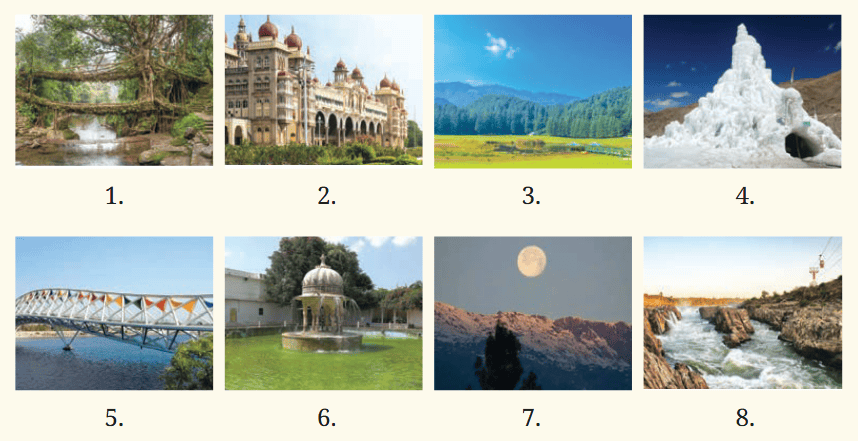
Natural: ______, ______, ______, and ______
Man-made: ______, ______, ______, and ______
II. Which of these wonders—man-made or natural—are more appealing and why? Share your answers with your classmates and teacher.
III. Work in pairs. Write down two wonders of nature that have amazed you. Discuss what makes them impressive. Share your answers with your classmates and teacher.
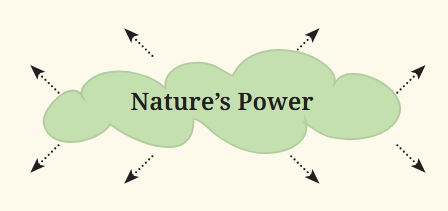
IV. Work in groups of four. Complete the web chart given below with words that you associate with the phrase, ‘Nature’s Power’. Share your answers with your classmates and teacher.
Let us read
India is home to some of the most mystifying natural phenomena that surprise and spark our imagination.
1. THE VALLEY OF FLOWERS, UTTARAKHAND
mystifying: strange or impossible to explain
spectacle: an unusual sight that attracts interest
exotic: uncommon
botanical: relating to plants
feats: tasks difficult to achieve, especially those involving a lot of skill
indigenous: native
tangible: noticeable
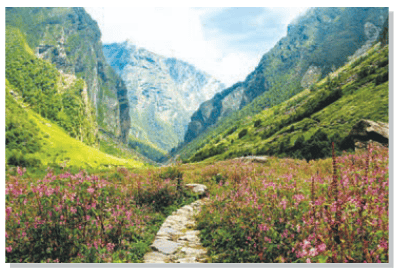
The Valley of Flowers is an eyecatching spectacle with around 600 species of exotic flowers, including orchids, poppies, primulas, marigold, daisies, and anemones. It is a place where nature blooms in its full glory offering an attractive view.
The trek to the valley offers spectacular views of beautiful waterfalls and wild streams. The valley is also home to rare wildlife species like the grey langur, flying squirrel, red fox, lime butterfly, and snow leopard, to name a few.
With a stunning backdrop of the mighty Himalayan ranges, the Valley of Flowers National Park presents an unforgettable experience for visitors. Spread over a huge area in the Chamoli district, the Valley of Flowers National Park is a UNESCOWorld Heritage Site. Between the months of May and October, this area turns into a botanical wonderland!
2. THE LIVING ROOT BRIDGES, MEGHALAYA
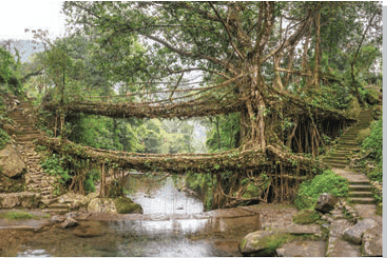
Imagine building a bridge without the use of cement, stones, concrete, etc. Is it possible? The living root bridges are incredible feats of engineering built by the indigenous people of Meghalaya. The living root bridges are one of Meghalaya’s most beautiful tangible UNESCO world heritage sites.
Crossing the many waterways without bridges was difficult for people in the past, during monsoons.
futile: useless
intertwined: twisted together
persist: continue to exist
whopping: huge
nestled: situated in a half-hidden or sheltered position
colossal: extremely large
cradles: holds
rugged: rough
terrestrial: on or related to earth
allure: attraction
Attempts to use bamboo or wooden bridges across these waterways proved futile as these bridges could not last long in the heavy rains and strong waters. Living root bridges are an innovative and indigenous solution to solve this age-old problem.
They are made of intertwined roots which are a sort of magic, but they aren’t imaginary. These bridges have been built for centuries by the indigenous people of the land. It is a naturally built ecosystem of local flora. It also symbolises the relationship and knowledge that the local people have over their region and the cultural significance that it holds for them. Under ideal conditions, a root bridge is thought to be able to persist for hundreds of years. These bridges frequently rise 50 to 100 feet in the air. The state’s longest living root bridge is said to be a whopping 175 feet in length. There are approximately 100 or so known living root bridges across different villages.
3. THE LONAR CRATER LAKE, MAHARASHTRA
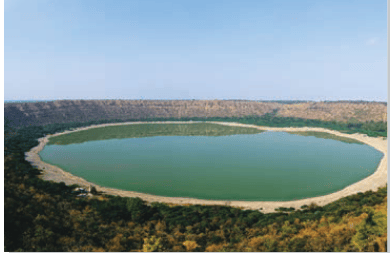
The Lonar Crater Lake is a geological wonder, nestled in the town of Lonar in Buldhana district, Maharashtra. It is believed to have been formed thousands of years ago. This ancient landform, consisting of a giant hole, came into existence when a colossal meteorite, blazing at an extremely high speed, crashed into the Earth, leaving behind a stunning mark. It is the only crater in India formed in basaltic rock by a meteorite impact and ranks as the third largest in the world, placing it among the top five largest craters globally.
The crater’s perfectly circular depression cradles a unique saline lake at its core, creating a striking visual contrast against the surrounding rugged terrain. This site is a rare and extraordinary blend of celestial impact and terrestrial beauty. The rim of the meteor crater offers a breath-taking spectacle of nature’s power and the enduring allure of our planet’s ancient past.
4. MAGNETIC HILLS IN LEH DISTRICT, LADAKH
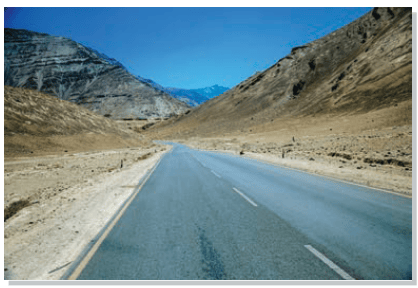
In the travels around Leh-Ladakh, is a fascinating sight which arouses curiosity to no end—the Magnetic Hill, a place where gravity takes a backseat!
optical illusion: something that tricks your eyes and makes you see it differently from how it really is
serene: calm
backwaters: a part of a river where the water does not flow
bioluminescence: light produced inside the body of a living organism by a chemical reaction
eco-tourism: tourism that is responsible towards preserving the environment
acquaint: to become familiar with something
Lying at a distance of around 30 km from Leh, the Magnetic Hill is marked by a yellow signboard which reads ‘The Phenomenon That Defies Gravity’. It also instructs visitors to park vehicles in the box marked with a white point on the road, which is known as the Magnetic Road. When the vehicles are parked at the indicated spot, they begin moving forward at a speed of almost 20km/h. This unusual place creates an optical illusion where vehicles appear to roll uphill, a sight that has left tourists in disbelief for years, caused by the peculiar alignment of surrounding slopes and the horizon line.
5. GLOWING WATERS OF KERALA

Situated 15 kms from Kerala’s Kochi town, Kumbalangi is a beautiful village with vast green vegetation. In the serene backwaters of Kumbalangi village, one can see magically glowing waters in the night.
This phenomenon is called bioluminescence, and is caused by a high concentration of micro-planktons in the sea, which are small organisms found in marine and freshwater. This beautiful sight has captured the attention of locals as well as tourists, making Kumbalangi an eco-tourism village in India. One can experience the village life in all its beauty and simplicity, and acquaint oneself to their cuisine and culture.
6. THE SUNDARBANS
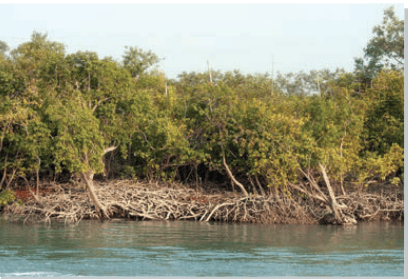
Can a forest exist in a coastal zone? Yes, they are called mangrove forests, where trees take root under water in the low-oxygen soil. The roots slow down the movement of tidal waters, stabilising the coastline and reducing erosion. The Sundarbans is one such mangrove forest spread over 1,400 kms in West Bengal, lying in the delta of rivers, such as the Ganga, the Brahmaputra, and the Meghna. The name is derived from sundari trees that are plentiful in the area.
estuarine: living in an estuary (an area where a freshwater river meets the ocean)
retreats: goes backwards
ebb tide: period of time when water flows away from the shore
The area is also populated by an extensive range of flora and fauna, including many bird species, the majestic Bengal tiger, and other threatened species, such as the estuarine crocodile and the Indian python.
7. THE INVISIBLE CHANDIPUR BEACH, ODISHA
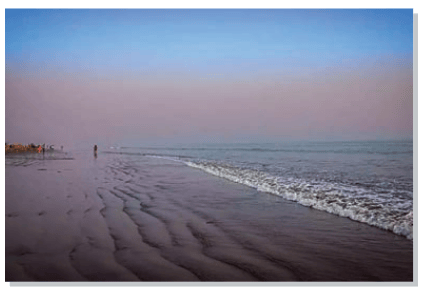
Have you seen things disappearing in front of your eyes? Well, such things happen at times, when we keep things at some place, and just forget where we have kept them. But, what if there’s a sea that disappears?
This happens in Odisha. It is a beach in the Balasore district where one can witness the sea disappearing mysteriously—the Chandipur Beach which is known for its unique feature of playing hide-and-seek with its visitors.
The sea can actually be witnessed disappearing and reappearing. This is because the sea water moves. It retreats by 2–5 km during ebb tide, the duration between the high tide and low tide, and comes back to the shore at the time of high tide. This unusual natural phenomenon keeps on happening daily, where one can actually see the sea, and then watch it disappear in front of their eyes!
mystique: mystery
enigmatic: puzzling
intrigue: interest
These awe-inspiring natural wonders of India highlight the mystique of the country’s landscapes, each phenomenon telling its own story of nature’s artistic flair and enigmatic charm. They challenge our understanding of the natural world and captivate our senses. They serve as a reminder of the extraordinary forces that shape our environment, blending scientific intrigue with the magic of folklore.
Let us discuss
I. Complete the information in the table given below. One example has been done for you. Share your answers with your classmates and teacher.
| Amazing Natural Phenomena | Location | One Unique Feature |
| 1. The Valley of Flowers | Chamoli district, Uttarakhand | Around 600 species of exotic flowers |
| 2. The Living Root Bridges | ||
| 3. | Buldhana district, Maharashtra | |
| 4. Magnetic Hills | ||
| 5. Glowing Waters | ||
| 6. | West Bengal | |
| 7. | Balasore district, Odisha |
Let us think and reflect
I. Read the given extracts and answer the questions that follow.
1. India is home to some of the most mystifying natural phenomena that surprise and spark our imagination.
- Replace the underlined phrase with one from the extract.
India is the birthplace of several rare species of flora and fauna that thrive in its diverse ecosystems. - What does the phrase ‘nature’s unusual side’ suggest about the phenomena described?
- Complete the similarity by choosing the correct option.
spark: imagination : : ______________ : ______________.- inspiration; creativity
- Bwonder; amazement
- effort; reward
- knowledge; books
- Identify whether the following statement is true or false.
Some natural phenomena can surprise people.
2. Have you seen things disappearing in front of your eyes? Well, such things happen at times, when we keep things at some place, and just forget where we have kept them. But, what if there’s a sea that disappears?
This happens in Odisha. It is a beach in the Balasore district where one can witness the sea disappearing mysteriously—the Chandipur Beach which is known for its unique feature of playing hide-and-seek with its visitors.
- Complete the following sentence with a suitable reason.
- Select the option that is correct for both Assertion (A) and Reason (R). (A): Chandipur Beach in Odisha is known for its unique feature of the sea disappearing.
- Both (A) and (R) are true, and (R) is the correct explanation of (A).
- Both (A) and (R) are true, but (R) is not the correct explanation of (A).
- (A) is true, but (R) is false.
- (A) is false, but (R) is true.
- What does the term ‘unique’ suggest about the beach in Balasore?
- very popular
- one of its kind
- ancient place
- far from city
- What does the writer want to convey with the use of the phrase ‘playing hide-and-seek with its visitors’?
The writer’s most likely purpose to introduce the information about the Chandipur Beach phenomenon with a question is to ____________________. (engage the reader’s curiosity and create a sense of suspense/draw the reader to learn more about the unusual phenomenon/set the tone for the surprising nature of the content that follows)
(R): The tides retreat drastically, exposing the Chandipur beach.
II. Answer the following questions.
- How are the living root bridges a boon for the local people of Meghalaya?
- Why is the Lonar Crater Lake considered a remarkable and rare site?
- What might be the writer’s purpose of highlighting the awe-inspiring natural wonders of India?
- The writer uses descriptive language and introductory questions for some of the natural phenomena. What impact does it have on the readers?
- Which of these unusual phenomena did you find the most interesting and why?
Let us learn
I. Fill in the blanks with the correct expressions from the text given in the box below.
in disbelief to name a few age-old problem
- I have read many stories _____________________.
- Do you know when this little town _____________________?
- His hard work has helped him _____________________.
- There are no simple solutions to the _____________________ of traffic jams.
- He opened the ancient wooden box and stared at the treasure _____________________.
- The garden is _____________________ in spring with lots of beautiful flowers in bloom.
II. Select the correct synonyms from the box given below that match the list of words in 1–5. You may refer to a thesaurus
enigmatic spectacular
- mysterious, puzzling, baffling
- mighty, gigantic, huge
- breath-taking, stunning, awe-inspiring
- peaceful, calm, tranquil
- unusual, peculiar, foreign
III. The expressions ‘hide-and-seek’ and ‘flora and fauna’ are used in the text. These are called binomials—a pair of fixed words joined by ‘and’ or ‘or’. The binomials are mostly synonyms, antonyms, rhyming words, same sound words (alliterations), etc.
Match the binomials in Column 1 with their meanings in Column 2. You may refer to a dictionary.
| Column 1 | Column 2 |
| 1. odds and ends | (i) put different things together to get a range of possibilities |
| 2. on and of | (ii) complete part of or belong to |
| 3. mix and match | (iii) choose only the best (things, people, etc.) |
| 4. all or nothing | (iv) at some time in the future |
| 5. part and parcel | (v) sometimes, occasionally |
| 6. pick and choose | (vi) increase or develop very quickly |
| 7. sooner or later | (vii) small, unimportant things |
| 8. leaps and bounds | (viii) something to be done completely or not at all |
Use the binomials given in Column 1 in sentences of your own.
IV. Study the highlighted words in the following sentences from the text.
- The living root bridges are one of Meghalaya’s most beautiful…
- …creating a striking visual contrast against the surrounding rugged terrain.
In the given sentences, the highlighted words ‘living’, ‘striking’, and ‘rugged’ are examples of verbs used as adjectives. Such verbs are called participles.
Participles are verb forms that can function as adjectives, and they
come in two types: present participles (‘living’ and ‘striking’) usually
ending in –ing, and past participles (‘rugged’) usually ending in -ed,
-d, -t, -en, or –n. (though irregular verbs may vary)
Present participles are used to describe ongoing or continuous actions.
For example,
People have seen these lights moving quickly in random directions
but often hanging out in one spot for a while before fading.
Past participles usually describe actions that have already been
completed.
For example,
When the vehicles are parked at the indicated spot, they begin moving
forward at a speed of almost 20km/h.
Now, fill in the blanks using present participle or past participle form of the verbs in the box given below.
- The _______________ marble monument looks even more spectacular in the moonlight.
- The _______________ view of the Himalayas from Darjeeling attracts visitors from all over the world.
- The Sun Temple in Konark features intricately _______________ stone wheels and walls.
- _______________ at a height of 182 m, the Statue of Unity is dedicated to Sardar Vallabhbhai Patel.
- The _______________ islands of the Andaman and Nicobar offer some of the cleanest beaches in India.
V. Study the highlighted word in the following sentence from the text.
Crossing the many waterways without bridges was difficult for people in the past, during monsoons.
In the given sentence, the highlighted word ‘crossing’, is one example of a verb used as a noun. Such a verb is called gerund.
Gerunds are verb forms that can function as nouns and they end in
–ing. They can serve as the subject, complement, or object in a
sentence, as well as the object of a preposition.
For example,
- Subject of a sentence: Swimming is my favourite hobby.
- Subject complement: Her passion is painting.
- Object of a verb: I enjoy reading books in my free time.
- Object of a preposition: She is interested in learning new languages.
- After certain verbs: Shekar avoided talking about his weekend plans.
Underline the gerunds and participles in the following sentences. Write ‘G’ for gerunds and ‘P’ for participles in the space provided. One example has been done for you.
- Dancing is a great way to express emotions. G
- Travelling can broaden your perspective.
- The falling leaves signalled the arrival of autumn.
- She enjoys cooking new recipes for her family.
- Reading helps improve your vocabulary.
- He watched the shimmering stars in the night sky.
- Forgetting the keys inside, Kanchan locked the door.
VI. Combine the following pairs of sentences using participles or gerunds. You may use the clues given in brackets. One example has been done for you.
- Nitesh entered the room. He saw his friend sitting in the corner.(participle) Entering the room, Nitesh saw his friend sitting in the corner.
- Smitha walked carelessly. She slipped on the doormat. (participle)
- Sleep for eight hours. It is good for health. (gerund)
- Ranjith felt happy about the result. He called his parents. (participle)
- Father encouraged Meena. Meena joined the course. (gerund)
Let us Listen
I. You will listen to a brother and sister discuss a natural phenomenon. As you listen, mark the four true statements from 1–6 given below. (Transcript for teacher on page 153)

- The brother was taken aback to see the posted pictures.
- The brother admitted to not knowing about his sister’s favourite picture.
- The sister stated that the rainbow mountain was like any other mountain.
- The brother was aware of the reason for the formation of colours on the mountain.
- The brother was surprised to learn about the mountain being covered with snow till recently.
- The sister understood nature’s role in the beauty of the mountain.
Let us Speak
I. Work in groups of four. Make a presentation on a place of interest in and around your region that people like to visit. You may use the following guidelines to make your presentation.
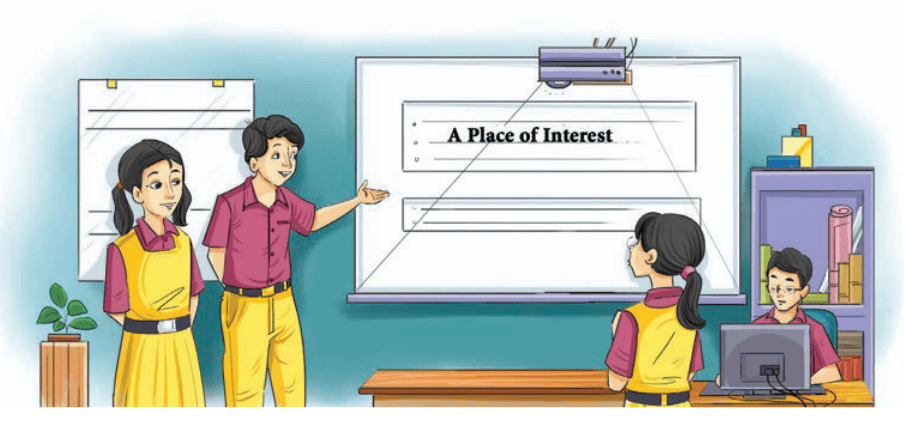
Guidelines:
- Slides 1–2: Choose any popular place of interest in your region.
- Slides 3–4: Mention where it is located and how to reach there.
- Slides 5–6: Describe the attractions of the place, why it is popular and explain its historical importance, if any.
- Slides 7–8: List out weather conditions, local food, customs, and language.
- Slides 9–10: Suggest the best time of the year to visit and why you recommend this place.
Let us Write
I. You just read vivid descriptions of the natural wonders of our country. Write a descriptive essay for your school magazine describing anything from nature that attracted your attention. It may be an object, a place, or an event experienced by you. Remember to give a title to your essay.
Use proper format and content organisation—begin with a title, include introduction (one paragraph), body (two to three paragraphs), and conclusion (one paragraph).
Let us explore
I. Man-made Wonders
1. Kallanai Dam (The Grand Anaicut) in Tamil Nadu is one of the world’s oldest dams and is still in use. The Kallanai Dam represents a significant achievement in ancient Indian hydraulic engineering. It was built by the Chola King Karikala around 150 CE.
2. Another spectacular legacy of ancient wisdom that we have is the world’s first residential university at Nalanda in Bihar. Nalanda was established much before any European university, providing higher education to thousands of students. It was declared as a UNESCO heritage site in 1980.
You may visit the site given below to know more about this.
http://nalandauniv.edu.in/about-nalanda/history-and-revival/
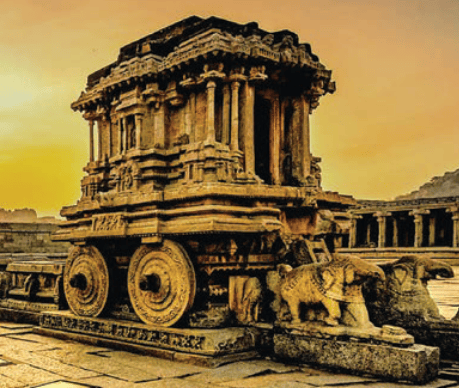
3. Hampi, a town in Karnataka, is also a UNESCO World Heritage Site. The Vittala Temple in Hampi was built in the 15th century. This temple has 56 special pillars known as the SaReGaMa pillars. When these pillars are tapped, they produce musical notes that can be heard clearly.
4. Some of the man-made wonders of modern India include the Bandra–Worli Sea Link in Mumbai; Statue of Unity in Gujarat; Bhupen Hazarika Setu (The Dhola-Sadiya Bridge) in Assam; and many more.
II. Some micro-planktons in the sea are bioluminescent. Have you seen any other life form that has this quality? Identify the insect given below and find out what it is called in your language. Look out for it when you visit a field or a place with a wetland.

TRANSCRIPTS
THE CASE OF THE FIFTH WORD
Let us Listen(refer to page 117)
I. You will listen to a podcast about ways of improving observation skills. As you listen, mark true or false for the statements 1–4.
Hello everyone! In today’s episode, we’ll be discussing some simple but effective ways to improve our observation skills. Being observant isn’t just about seeing, it’s about truly noticing details in the world around us. Whether it’s in daily life or in the workplace, observation skills can help us become more aware, make better decisions, and even improve memory. Let’s get started!
First, slow down and take your time. Rushing through tasks often leads to missed details. When you take time to focus on what’s in front of you, you’re more likely to notice features you might otherwise overlook. When you pause and observe, the details become clearer.
Another effectivemethod is to engage all your senses. Observation isn’t just about seeing; it’s also about hearing, smelling, touching, and even tasting. The more senses you engage, the more information you absorb. For example, when you’re in a new environment, don’t just look around—pay attention to sounds, smells, and textures too.
A third tip is to ask questions. Curious people tend to be better observers because they actively try to understand what they’re noticing. Asking questions about what you see, like “Why is this here?” or “What purpose does it serve?” forces your brain to think critically about what you’re observing.
Next, take notes or make sketches. Writing down what you observe can help reinforce details in your memory. Even quick sketches of an object or place can strengthen your understanding of its features.
Finally, it’s important to practise mindfulness. Mindfulness helps you stay present in the moment and fully engage with your surroundings. When you’re mindful, you’re not distracted by anything, this leads to improved observation skills.
Start incorporating these techniques into your daily routine, and soon you’ll be observing things you never noticed before!
II. You will once again listen to the podcast. As you listen, complete the given sentences by filling in the blanks with one to three exact words you hear.
THE MAGIC BRUSH OF DREAMS
Let us Listen(refer to page 132)
I. You will listen to five speakers speak about a magical power they wish for. As you listen, match statements 1–7 with speakers (i)–(v). There are two statements you do not need.
Speaker (i) : If I could have any magical power, I’d choose the ability to predict the future. Imagine being able to see profits and losses before time. I could make better savings and secure my business. Plus, I’d use it to help others make wise financial decisions as well.
Speaker (ii) : I think having the power to learn instantly would be amazing! Exams would be easy, and I’d have more time for activities I enjoy, like playing cricket. If I could remember everything, it would make life so much easier!
Speaker (iii) : I would want the power of flying. Imagine being able to see the world from up above clearly. I would be able to go from one place to another quickly without using any means of transport. It would be a dream come true.
Speaker (iv) : At my age, I’d love to have the power of healing. There are so many aches and pains that come with growing old, but it’s not just for me. If I could heal others too, I’d help my family stay healthy and happy.
Speaker (v) : If I had a magical power, I’d want control over the weather. We depend so much on the rains. With this power, I could ensure that crops always get the right amount of rain and sunshine.
SPECTACULAR WONDERS
Let us Listen(refer to page 148)
I. You will listen to a brother and sister discuss a natural phenomenon. As you listen, mark the four true statements from 1–6 given below.
Brother : I liked the pictures Uncle Dileep posted yesterday from the Republic of Peru. Can you guess which was my favourite?
Sister : I know it was the Rainbow Mountain. I say that because it was certainly my favourite.
Brother : Really! I didn’t know it was your favourite too. Can you imagine the creativity in Nature? What a marvellous natural phenomenon!
Sister : I could not believe my eyes when I saw that picture. There are so many colours there. Do you know how it’s formed?
Brother : Of course! It’s actually quite amazing. The mountain gets its colours from layers of minerals like clay, limestone, and sandstone that got deposited millions of years ago.
Sister : Wow, I read that too. I think each colour is due to a different mineral. Like, the green comes from copper, and the red from clay. It’s like nature painted the mountain!
Brother : I cannot believe the fact that it was all buried under snow until recently.
Sister : Oh! The melting snow must have made it visible again. That’s why it looks so fresh and bright today.
Brother : Those layers of minerals were actually deposited by water from ancient seas and lakes.
Sister : Each colour represents a different time in history. That’s why it’s called the rainbow mountain.