
UNIT 5
Sports
This unit introduces students to the wide and exciting world of sports and physical activities, highlighting their importance in maintaining a healthy and active lifestyle. It begins by focusing on India’s rich heritage of indigenous martial arts such as Thang-Ta, which combines body movements, breathing techniques, and weapon skills to develop physical control and mental balance. These traditional practices reflect cultural values and promote discipline and self-defence.
The unit further explores various traditional Indian sport and martial arts like Mallakhamb, Gatka, and Kalaripayattu. These activities not only improve strength, flexibility, and coordination but also teach focus, courage, and respect. They serve as an important link between physical training and cultural traditions, helping students understand the significance of India’s historical sporting practices.
In addition, the unit covers modern and international sports, including combat sports like Judo, Wrestling, Taekwondo, and Boxing, as well as popular games like Hockey, Basketball, and Cricket. It also introduces individual sports like Archery, Tennis, explaining their fundamental skills.
Overall, this unit aims to develop awareness about the role of sports in building physical fitness, mental strength, teamwork, and sportsmanship. It encourages students to actively participate in different sports and appreciate their value in personal development, cultural understanding, and leading a balanced and healthy life.
This unit commences with introduction to gymnastics and swimming which is considered as the foundation of multiple sports.
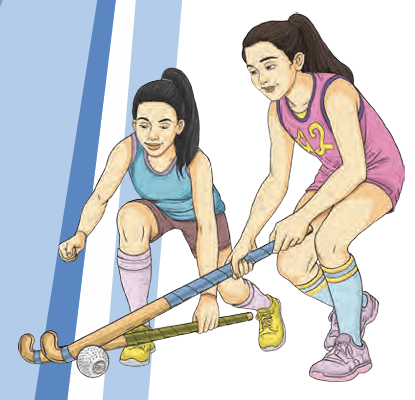
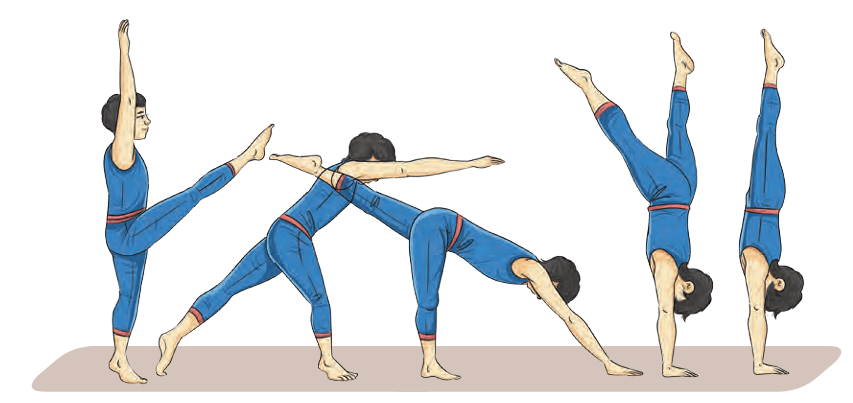
Gymnastics
The word gymnastics has been derived from the Greek word Gymnos meaning “naked art”. In ancient Greek, the word Gymnastics was used to denote the exercise done with the naked body. Friedrich GutsMuths, is known as the Grand Father of Modern Gymnastics and Friedrich Ludwig Jahn is known as the Father of Gymnastics. Modern gymnastics is regulated by the Federation International de Gymnastique (FIG) which was founded in 1881. Gymnastics was included in the Modern Olympic Games in 1896 and women’s gymnastics was introduced in Olympic Games in 1928. The first gymnastics World Cup was organised in 1975. At present, gymnastics as an event can be seen in almost all prominent multi sports meets.
Types of Gymnastics
Broadly gymnastics has been classified in seven types:
• Artistic Gymnastics
• Parkour Gymnastics
• Rhythmic Gymnastics
• Tumbling Gymnastics
• Trampoline Gymnastics
• Aerobics Gymnastics
• Acrobatic Gymnastics
This chapter deals with artistic gymnastics which is a popular discipline of gymnastics. Artistic gymnastics apparatus for men are floor exercise, pommel horse, roman rings, vaulting table, parallel bars, and horizontal bar. For women, the apparatus are vaulting table, uneven bars, balancing beam and floor exercises.
Swimming
Swimming is a sport where a person propels their body through the water with their arms, called strokes, and legs kick and move progressively through water. It is sometimes used for physical rehabilitation of people recovering from injuries because it is a
non-weight bearing exercise. It is also a good recreational activity. Swimming was included in the first modern Olympic Games at Athens in 1896. Diving events were added in 1904. The women’s competitions were recognised in 1912. Federation Internationale de Natations Aquatics (FINA) was formed at London Olympic Games in 1908.
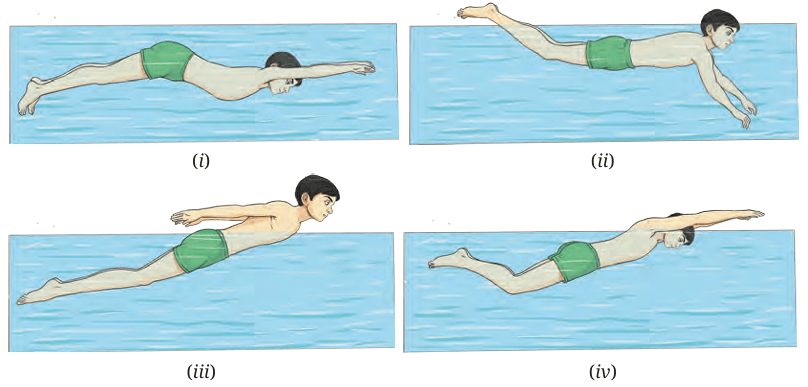
|
Types of Strokes |
|
Front Stroke/ Freestyle |
|
Back Stroke |
|
Breast Stroke |
|
Butterfly Stroke |
The following should be kept in mind before and after swimming
• Take bath before and after swim.
• Wipe your body after shower with a clean towel.
• Swim under the presence of a lifeguard and proper safety equipment.
• Do not go into deep water if you are not confident.
• Warm up before swimming.
• Stretching and mobility exercises should be done before and after swimming.

Chapter 18
Indigenious Martial Arts and Sport
IndigenIous MartIal arts
Thang-Ta
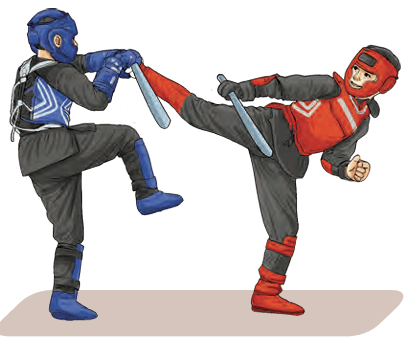
A fine combination of body, breath and blade is an indigenous martial art of Manipur in Northeast India, where thang stands for sword and ta stands for spear. Various external weapons are integrated in this skill i.e. the sword, spear, dagger, etc. — it’s a manifestation of physical control through soft movements coordinated with the rhythms of breathing. It is an elaborate system of physical culture that involves breathing methods, meditations, and traditions. The other name for Thang-Ta is Huyen Lallong (method of safe-defense). Any individual all alone or with a partner can practice various sword drills for learning and training fundamental strokes and footwork.
Skills
Basic Stance – Stand with feet shoulder width apart.
Footwork – Turn to the left, pivoting on the balls of both feet. The feet should form an approximately forty-five degree angle. The body will bend in front until the toes of the left foot are aligned with the knee and the chin. The body of the player should form a straight line from the back of the head down to the right heel. This is also called the Singh Mudrā or Lion’s Posture.
Another skill of thang ta which is played without any armory is known as Sarik Sarat it is taught after competence in weapons was gained. It uses the foot and hand as a form of weapon.
Gatka
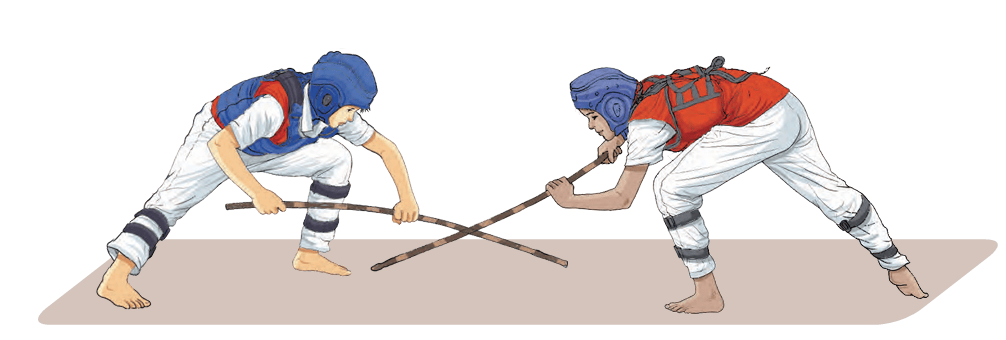
Derived from the Sikh history, Gatka (refers to a wooden stick whose traditional name is Soti intended to simulate a sword) is an ancient Indian martial art which remained an integral part of the traditional Guru Parampara in Sikh Shastra Vidhya (skill to use weapon). During the 16th century the Sixth Guru Hargobind sahib Ji (1595–1644) initiated this historical art of self-defense. Later in the 17th century, Guru Gobind Singh ji, known as master of weaponry, developed it further and made it a compulsory part of the Sikh tradition. The word Gatka is of Indian origin and refers to a defensive weapon technique. Mahan Kosh edited by Bhai Kahan Singh Nabha, explains; Gatka a three-hand span stick, used to teach the initially of club fighting. Gatka associated with the Sikh Gurus, is now being recognised as a sport nationwide. Gatka is a combative sport between two or more players. RASMI (symbolic and traditional) and KHEL (competitive sport) are the two ways to enjoy this traditional art of sport reformed in the beginning of 19th century. International Rules for Gatka games are formulated by the World Gatka Federation. Gatka equipment used in demonstrations and competitions are stick and farri, chakra and chain, dhaal and kripaan, khanda and kataar, talwar and mace, teer and dang, etc.
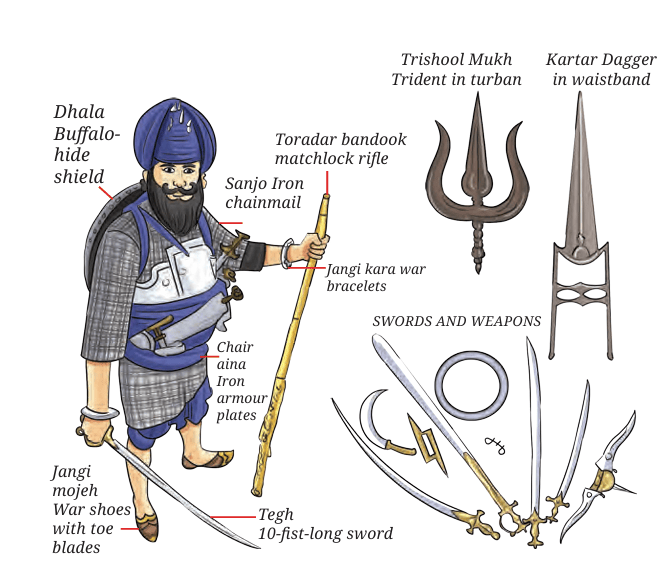
The concept of soul teaching in Gatka training reflects in our day-to-day living. Realising the importance of time, taking quick and right decisions at the time of real need, not intruding in anyone’s rights, not surrendering against evil deeds, living a simple and a principled life are qualities that come easily in a Gatkabaj.
Kalaripayattu
Kalari means a space where one gets training and Payattu means practising. References cited in the Vedas prove that Kalaripayattu has existed for 3,000 years, with deep roots in the social and cultural life of Keralam. Like yoga āsanas, Kalaripayattu is also inspired by the movements and stances of animals such as boar, lion, raptors, elephants, etc., and was primarily developed to counter wildlife. The British banned the practice, fearing it might make Indian citizens physically strong, emotionally balanced and mentally stable. Despite such restrictions, a few dedicated masters safeguarded this ancient art by practising it in isolation and secrecy, and it was resurrected after independence.
With strong principles at its foundation, Kalaripayattu develops balance and flexibility of mind and body, emphasising speed, agility, co-ordination and discipline. It also aids in reducing psychological disorders like stress, anxiety, and tension.
Traditionally, advanced students of Kalaripayattu are imparted knowledge of marma-sthānam — the vital points of the body, which include muscular, vascular, ligamentous, bone and joint-related locations. This deepens their understanding of the body’s functioning and is complemented by medicinal and therapeutic practices that are integral to the training.
IndiGenious sport
Mallakhamb
Mallakhamb is a Indian traditional game that beautifully blends strength, flexibility, balance, and concentration. The term comes from two Sanskrit words — Malla meaning wrestler, and Khamb meaning pole — thus translating to “Wrestler’s Pole”. Originating in ancient India, Mallakhamb was an essential part of the Gurukul-era physical training system, designed to build strength, focus, and discipline among students. It served as a vital link between Yoga, martial arts, and wrestling, combining physical mastery with spiritual growth. Practiced in Gurukuls and Akharas, it helped warriors and wrestlers enhance agility, endurance, and coordination while promoting inner balance and mental control.
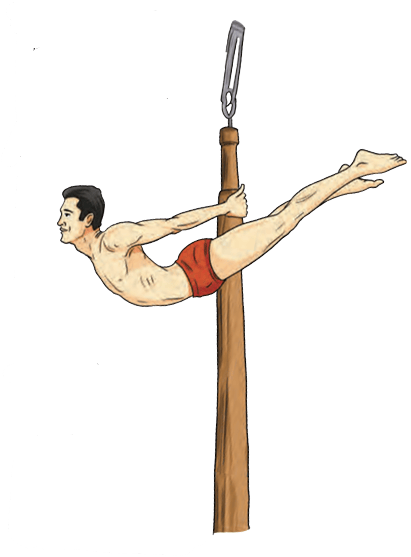
Historically, Mallakhamb finds mention in ancient Sanskrit texts such as Manasollasa (12th century AD) and Vyayam Dipika, highlighting its deep cultural roots. It was revived during the reign of Bajirao Peshwa II (1796–1818) by his court gymnast Balambhat Dada Deodhar, to train soldiers for battle. During the early 20th century, stalwarts like R. V. Bhogle, K. B. Boksekar, and Pt. Babasaheb Natu popularised it across India.
Today, Mallakhamb has evolved into a modern competitive and artistic sport, performed by both men and women on wooden poles, ropes, or hanging apparatuses, where yogic and acrobatic postures are displayed with rhythm and grace. Mallakhamb helps in the
all-round development of the body and mind. It improves muscular strength and endurance, balance and co-ordination, flexibility and agility, concentration and self-control, courage and confidence.
Mallakhamb has gained official recognition — declared the State Sport of Madhya Pradesh (2013) and featured in the Khelo India Games and 36th National Games (2022). Today, it has spread globally to countries like Germany, the USA, Japan, Italy, and the UK, symbolising India’s ancient wisdom in a modern athletic form with minimum cost.

Chapter 19
Combat Sports
Judo
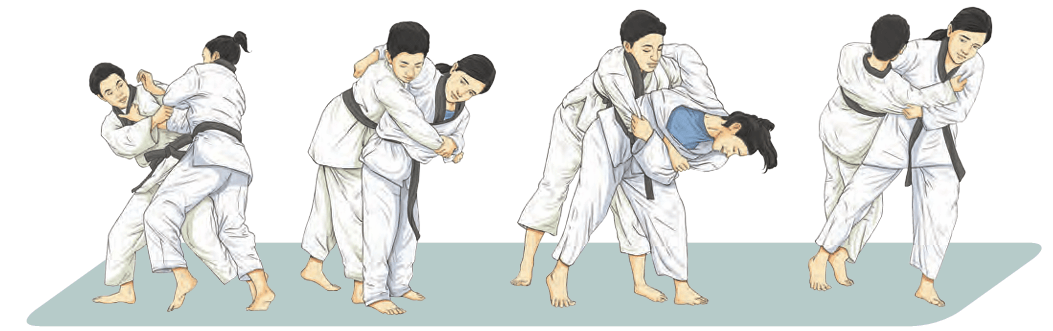
Judo has its origin in the ancient Japanese art of (Jiu-Jitsu) (gentle art), a system of hand-to-hand combat. It is a sport of Asian origin which was included in Tokyo Olympic Games in 1964. The first school of Judo was started by Professor Jigoro Kano in 1882 at Eishoji (a Buddhist temple) in Tokyo, Japan. As a player progresses through the ranks (grading reflected by the color of the belt of the Judo player) and the very nature of the grading system ensures that the next goal is always realistic and achievable with effort.
The Judo bouts are played in different weight categories for equality and to avoid injuries because body weight has direct relation with body inertia, mass and strength (force) of an individual. Competitions are held in sub-junior boys/girls, junior boys/girls and senior men/women with different weight categories.
|
Following are the weight categories in Olympic events |
|
|
Men |
-60 kg | -66 kg | -73 kg | -81 kg | -90 kg | -100 kg | +100 kg |
|
Women |
-48 kg | -52 kg | -57 kg | -63 kg | -70 kg | -78 kg | +78 kg |
Wrestling
There are two Olympic styles of wrestling, Freestyle and GrecoRoman. With one key exception, the rules of the two styles are identical.
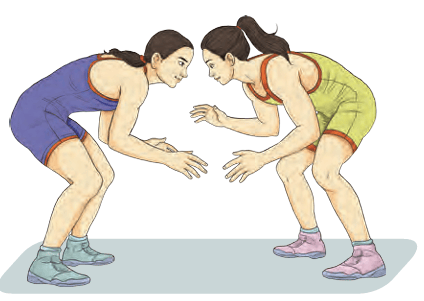
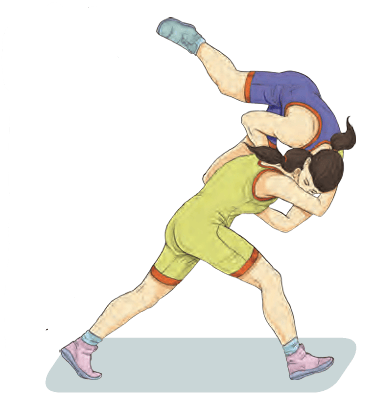
In Greco-Roman, a wrestler may not attack his opponent’s legs, nor use his own legs to trip, lift or execute other moves. In freestyle, both the arms and legs may be used to execute holds or to defend against attack.
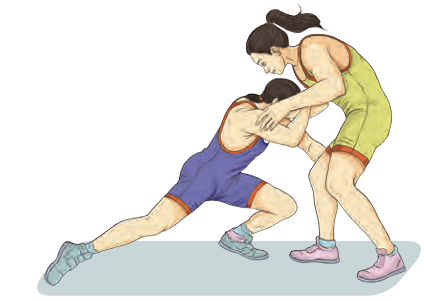
Greco-Roman style was introduced in the first modern Olympic (Athens, 1896), while Freestyle wrestling was introduced in 1904 at St. Louis Olympic Games. After a century, women free style wrestling was introduced in the Athens Olympics in 2004.
In addition to the above one more style of wrestling is played in India which is called the Indian style of wrestling or popularly called Pehlwani or Kushti. This kind of wrestling takes place in a clay or a mud pit (Akhada). Traditional Indian wrestling isn’t just a sport, it’s an ancient sub-culture where wrestlers live and train together.
|
Following are the weight categories in Olympic events |
|
|
Men’s Freestyle |
57kg, 65kg, 74kg, 86kg, 97kg, 125kg |
|
Women’s Freestyle |
50kg, 53kg, 57kg, 62kg, 68kg, 76kg |
|
Greco-Roman (Men’s) |
60kg, 67kg, 77kg, 87kg, 97kg, 130kg |
Taekwondo
Taekwondo is a Korean martial-arts-turned-olympic-sport practiced globally. Through consistent practice, this discipline helps people improve their spirit and quality of life by strengthening both the body and the mind. The deeper meaning of Taekwondo is reflected in the term itself: Tae means foot or to step on, Kwon means fist or fight, and Do means the way or discipline. When combined, they symbolise the skill of using one's fists and feet in a controlled way to promote self-control and peace as opposed to violence. Fundamentally, Taekwondo teaches that harmony and peace are the ultimate aims of both martial and human development.
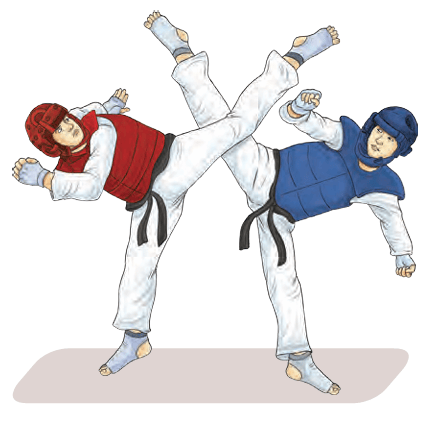
Taekwondo, originally called Subak or Taekkyon, originated in Korea and was used as a physical training and self-defence technique. Later, during the Koguryo kingdom, it evolved into Sunbae, and during the Shilla period, it joined Hwarangdo, which concentrated on creating honourable leaders for the country. Taekwondo evolved during 1940s and 1950s in Korea from ancient Korean martial arts practiced during the Three-Kingdom era and was formalised through the establishment of the World Taekwondo Federation (WTF) in 1973 later renamed as World Taekwondo (WT).
|
Following are the Taekwondo categories in Olympic events |
|
|
Men’s Taekwondo |
Women’s Taekwondo |
|
Flyweight (58kg/128 lbs) |
Flyweight (49kg/108 lbs) |
|
Featherweight (68kg/150 lbs) |
Featherweight (57kg/126 lbs) |
|
Welterweight (80kg/176 lbs) |
Welterweight (67kg/148 lbs) |
|
Heavyweight (80+kg/176+ lbs) |
Heavyweight (67+kg/148+ lbs) |
Boxing
Boxing is a combat sport of skill, strategy, and athleticism. It is one of the world's oldest sports, with ancient roots in civilisations like Greece and Rome. Modern boxing developed in England with the establishment of the Marquess of Queensberry Rules in 1867, which introduced gloves and rounds. The sport is contested between two opponents in a ring, aiming to land punches on the opponent while avoiding their attacks. India has a rich boxing tradition, with legends like Mary Kom, a six-time world champion and Olympic bronze medalist, Vijender Singh, who won India's first Olympic boxing medal (bronze) in 2008, and Lovlina Borgohain, who clinched a bronze medal at the 2020 Tokyo Olympics, cementing India's place in world boxing.
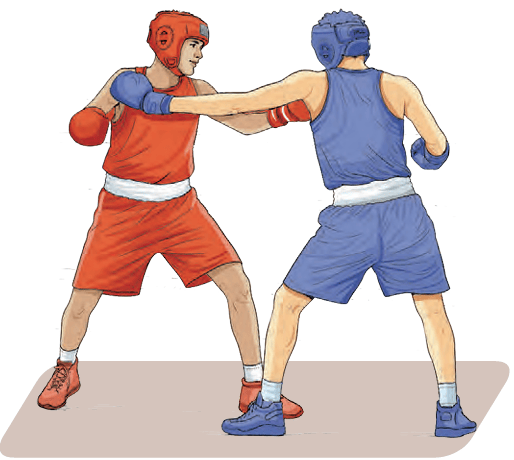
|
Following are the Boxing categories in Olympic events |
|
|
Men’s |
Women’s |
|
Flyweight (52kg) |
Flyweight (51kg) |
|
Featherweight (57kg) |
Featherweight (57kg) |
|
Lightweight (63kg) |
Lightweight (60kg) |
|
Welterweight (69kg) |
Welterweight (69kg) |
|
Middleweight (75kg) |
Middleweight (75kg) |
|
Light heavyweight (81kg) |
|
|
Heavyweight (91kg) |
|
|
Super heavyweight (+91kg) |
|

Chapter 20
Outdoor Sports
Hockey
Do you know what Indian Hockey players were doing on 7 November 2025?
Whole Indian Hockey Players and some sports enthusiast celebrated the completion of 100 glorious years of Indian Hockey which has brought accolade for Indian sports fraternity many a times by conquering medals in olympics, world championship, asian championship, asian games, commonwealth games, etc. Infact not only our mens but our women team also scripted the story of success at global platform in the hockey. Lets us learn about the hockey.
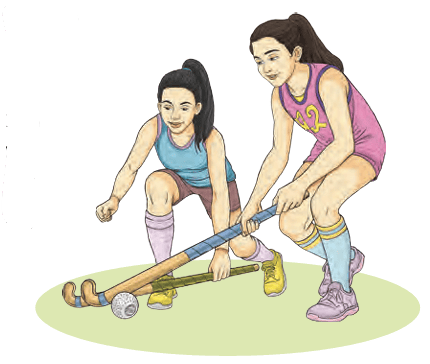
The first Hockey club was formed in Kolkata in 1885. The Hockey Association was founded in 1886. The first international tournament took place in 1895 and the International Rules Board was founded in 1900. The International Hockey Federation is the global governing body of field hockey founded on 7 January 1924 in Paris. India won all five Olympic Games from 1928 until 1956 and then again won in 1964 and 1980. In 1976 Montreal Olympics, artificial turf was used for the first time and that resulted in development of new tactics and techniques and also modification in rules.
|
Chronology of Indian Gold Medals in Olympic Hockey (Men's category) |
|
|
Olympics |
Captain |
|
Amsterdam 1928 |
Jaipal Singh Munda |
|
Los Angeles 1932 |
Lal Shah Bokhari |
|
Berlin 1936 |
Dhyan Chand |
|
London 1948 |
Kishan Lal |
|
Helsinki 1952 |
K.D. Singh |
|
Melbourne 1956 |
Balbir Singh Sr |
|
Tokyo 1964 |
Charanjit Singh |
|
Moscow 1980 |
Vasudevan Baskaran |
Basketball
Basketball is a fast, free-flowing, high-scoring team game. The players shoot a ball through a basket to score points while following a set of rules. They play on a marked rectangular court with a basket fixed on each end. Basketball is one of the world’s most popular games. The rules allow all players to move freely around the court and occupy any position. All players have an equal opportunity to score a Basket. To play basketball, students should learn and practice the basic skills of dribbling, passing, receiving and shooting.
The game of basketball originated at the Springfield College of Physical Education, Massachusetts, USA in 1891, invented by Dr. James Naismith. In 1894, Naismith fixed the first 13 rules which still form the basis of modern basketball. In India, the Young Men’s Christian Association (YMCA) at Kolkata introduced basketball for the first time. Later the YMCA established at Madras in 1920 played an important role in the development of this game. Today basketball is one of the most favourite games in many schools and colleges. The game is played by both men and women of all ages and ability. In order to promote Basketball at national and international levels the Basketball Federation of India was set up in 1950. The first National Basketball Tournament was held in Delhi in 1934 and thereafter it was organised every two years until 1951. After that it started being organised annually.
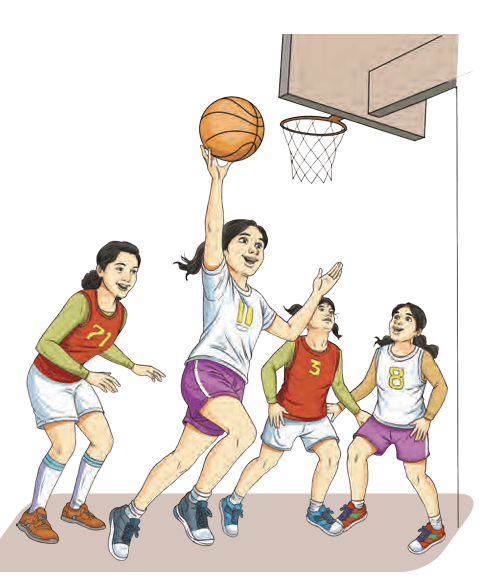
|
Duration of the match (total 4 Quarters) |
|||||||
|
Quarter 1 |
Rest |
Quarter 2 |
Half time |
Quarter 3 |
Rest |
Quarter 4 |
Extra time |
|
10 min |
2 min |
10 min |
15 min |
10 min |
2 min |
10 min |
|
Cricket
Cricket is a bat and ball game played between two teams on a field. In the centre of the field is a rectangular pitch. One team bats, trying to defend the wicket and scoring as many runs as possible. The other team bowls and fields, trying to dismiss the batter and thus limiting the runs scored by the batting team. Run can be scored by the striking batter hitting the ball with the bat, running to the opposite end of the pitch and touching the crease there without being dismissed. The teams switch between batting and fielding at the end of an inning.
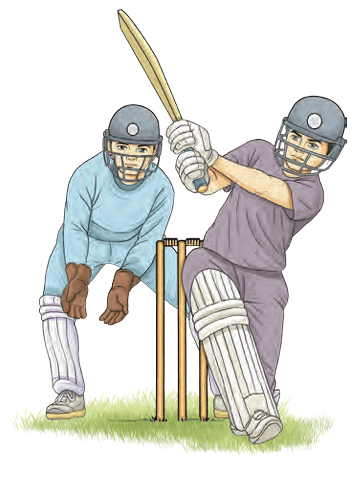
The name of Imperial Cricket Conference was changed to International Cricket Conference (later, Council) to enable countries outside the Commonwealth to become its members. Earlier only test matches were played where each team played two innings in five or lesser days. First One day International match was played in 1971 with limitations of overs per inning. The governing International Cricket Council (ICC) saw its potential and staged the first limited over Cricket World Cup in 1975. In the 21st century, a new limited over form, Twenty-20 and more recently IPL (Indian Premier League), has made an immediate impact. Cricket was brought to India by the British. An England team toured India in 1902-03. An All-India team went on a tour of England in 1911 under Maharaja Bhupinder Singh of Patiala. The came into being towards the end of 1928. India entered the international arena and played its first official Test against England in 1932. Meanwhile Prince Ranjit Singh of Nawanagar who had gone to England for further studies, made a remarkable name for himself in the game of cricket. He will always be remembered through the National Cricket Championship known as Ranji Trophy.
Archery
One of the oldest sports still being played is archery. This section will take you on a journey through human history as well as the development of archery. All around the world, there is evidence of archery being practiced in one form or the other.
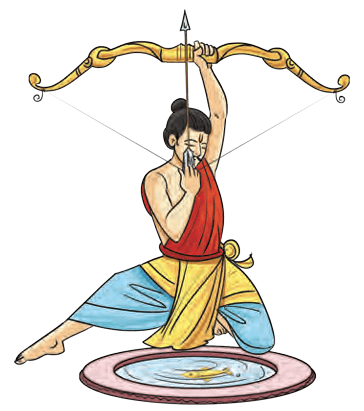
Throughout ancient India, archery was revered and considered a sacred, secret, and mysterious art form. The sheer mention of archery makes Indians feel proud, as it is closely associated with our illustrious history and national honour. It is popular and widely practiced, whether as a part of religious celebrations or as a sport and form of entertainment. The creativity and perfection attained by Indian archers centuries ago are extensively described in the two great epics of India, the Ramayana and the Mahabharata.
In context with the modern olympic movement, Archery first appeared in the Olympic Games in 1900, was contested again in 1904, 1908, and 1920, then again—after an absence of 52 years—from 1972 to the present.
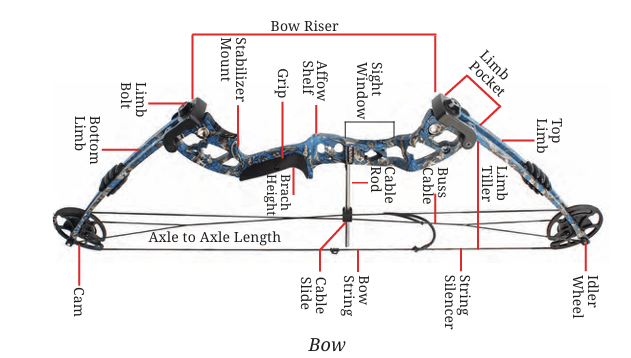
Modern competitive archery
The International Olympic Committee recognises the World Archery Federation (WA), which was originally known as FITA (Fédération Internationale de Tir à l'Arc) and is made up of 156 national federations and other archery bodies. There are numerous additional organisations with distinct regulations.
Softball
Softball is said to have begun — indoors, actually — in 1887 on Thanksgiving Day in Chicago. A group of men had gathered together at Chicago’s Farragut Boat Club. During the merriment a reporter from the Chicago Board of Trade, George Hancock, tied up a boxing glove (with its own strings) into a sphere, took a broomstick handle, and marked lines on the floor using chalk. That night 80 runs were scored in the game that took place and thus the sport was born. The first rulebook is said to have been issued (by Hancock) in 1889.
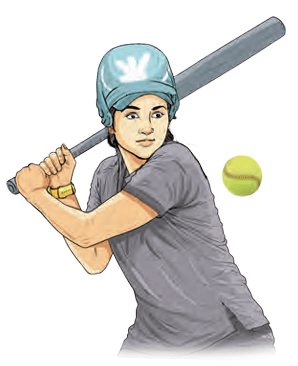
In 1895, Lewis Rober Sr. moved the game to a vacant lot outside the Minneapolis, Minnesota firehouse he worked at, so that the firefighters could get some exercise while waiting for an alarm. It was known at that time as ‘kitten league ball,’ which was later shortened to ‘kitten ball.’ In 1922 the name ‘kitten ball’ was first changed to ‘diamond ball.’ In 1926 the term ‘softball’ was used, when Walter Hakanson of the YMCA (Young Men’s Christian Association) of Denver, Colorado conceived it while attending a meeting to form the Colorado Amateur Softball Association. In 1933 the first-ever national amateur softball tournament took place in conjunction with Chicago World’s Fair and soon after, the reporter who wrote about the event, Leo Fischer, helped establish the Amateur Softball Association (ASA). In 1952 the first meeting was held for the International Softball Federation (ISF), which would govern the sport around the world, and the first world championship took place in 1965, when women’s teams from five countries competed in Australia. One year later, the first Men’s World Championship was played in Mexico.
|
Major Tournaments and Events |
|
• Olympic Games: Women’s softball featured in 1996, 2000, 2004, 2008, 2020. • Women’s College World Series (WCWS): Top U.S. college championship. • ISF World Championship: Held every four years. • National Pro Fastpitch (NPF): Premier U.S. professional league. |
Tennis
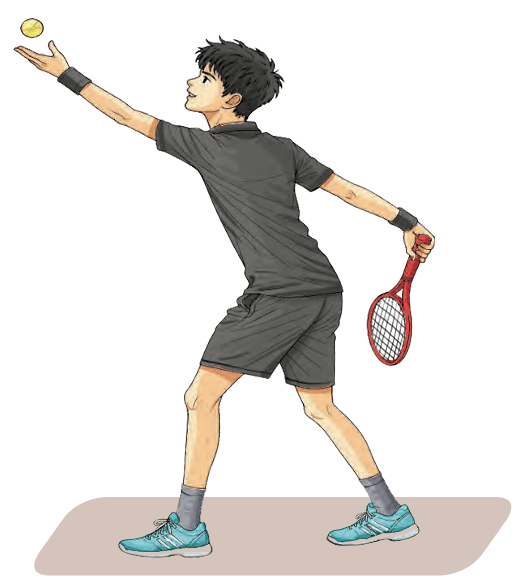
Tennis is a dynamic and strategic sport, blending physical endurance with mental agility, where India has a growing tennis legacy, with stars like Leander Paes, Mahesh Bhupathi, Sania Mirza, Rohan Bopanna, and Sumit Nagal putting the country on the global map through multiple Grand Slam doubles titles, Olympic medals, and strong performances in the Davis Cup. Tennis is a racket sport played by two players (singles) or four (doubles) on a rectangular court divided by a net. The objective is to hit a felt-covered rubber ball over the net into the opponent’s court, ensuring it bounces once (or is volleyed) and the opponent cannot return it legally. Players use strung rackets to deliver shots like groundstrokes, volleys, and overheads. Lawn tennis is traditionally played on grass courts, but modern variations include clay and hard surfaces for diverse play styles.
|
Four major Grand Slam Tennis Tournaments |
|||
|
Tournament |
Location |
Surface |
Held In |
|
Australian Open |
Melbourne, Australia |
Hard (Plexicushion) |
January |
|
French Open |
Paris, France |
Clay (Red Clay) |
May–June |
|
Wimbledon |
London, UK |
Grass |
June–July |
|
US Open |
New York, USA |
Hard (Decoturf) |
Aug–Sept |