Unit I
Work with Life Forms
Work with Life Forms involves working with plants and animals. Humans have always depended on plants and animals, from early hunting and gathering to the cultivation of different crops and animal husbandry, not only to survive but also to create surplus for a better life. Work with Life Forms is, therefore, fundamental to human survival and growth.
Work in this form is mostly related to food production and the supply of raw materials. It involves the cultivation of crops (pulses, wheat, cotton, spices, etc.), rearing livestock, harvesting produce from forests and other natural habitats, seaweed cultivation, and so on. In addition, raw materials are supplied to various industries, for example, cotton, jute, leather, wood, rubber, oil, tea, coffee and so on. The agricultural sector is often referred to as the ‘mother of all production’, since it is not only the primary source for the sustenance of human civilisation but also the provider of raw materials for almost all human activities.
Food security means that all people, at all times, have reliable access to a sufficient quantity of affordable and healthy food.
In modern times, the world of work is undergoing a lot of changes. However, agriculture remains far ahead of all other sectors as a provider of employment and will continue to remain so in the future. It will undergo transformation to ensure food security for all in the face of challenges, like depletion of natural resources, reduction of land for farming and climate change. Already, various technologies are being used in farming to address these challenges, for example, precision farming technologies to deliver exact amounts of water and fertiliser, sensors to alert farmers to any requirements, solar pumps for irrigation, mobile apps for weather forecasting, market prices and government schemes. At the same time, traditional practices like natural farming are also being used more frequently, combining traditional wisdom with modern technology.
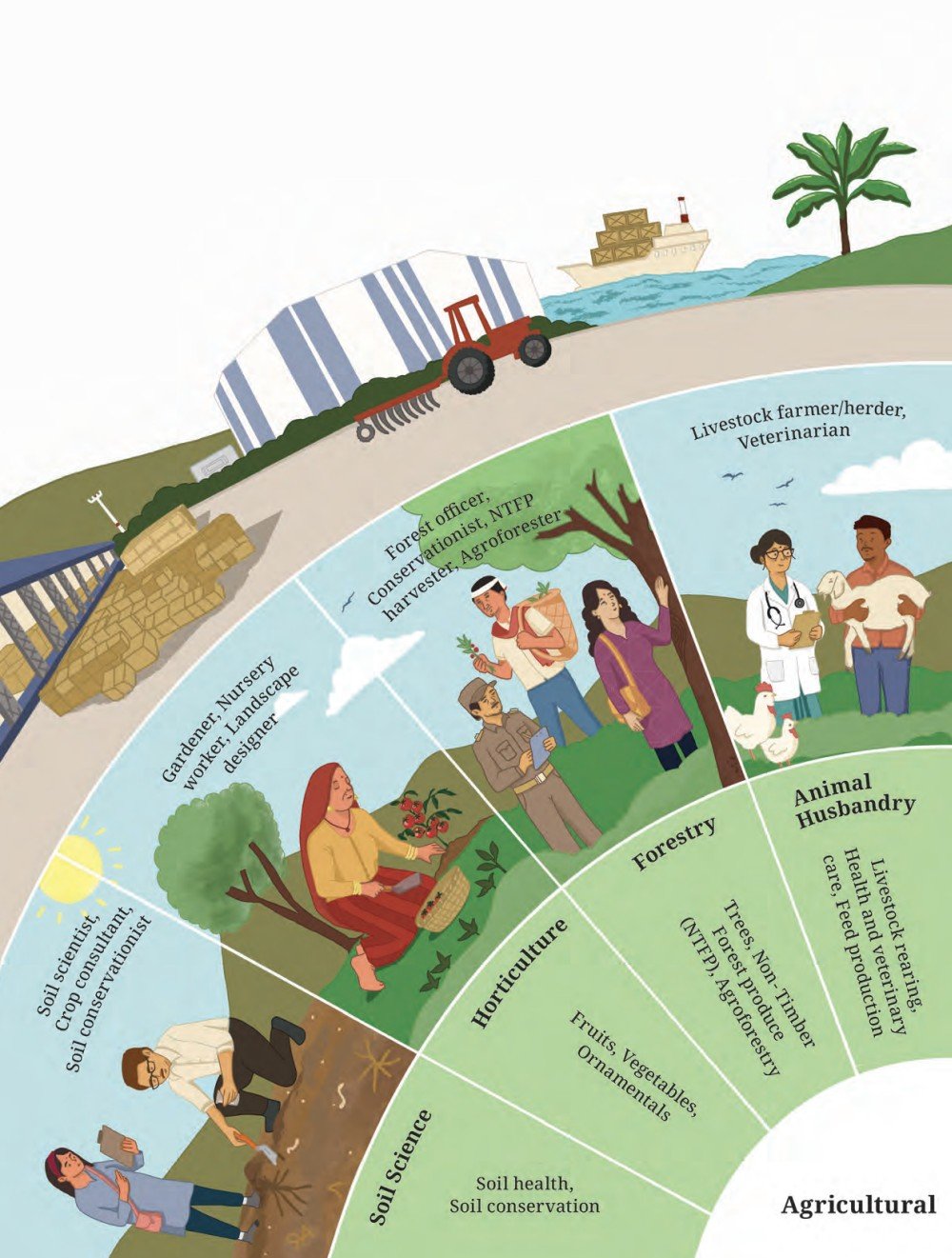
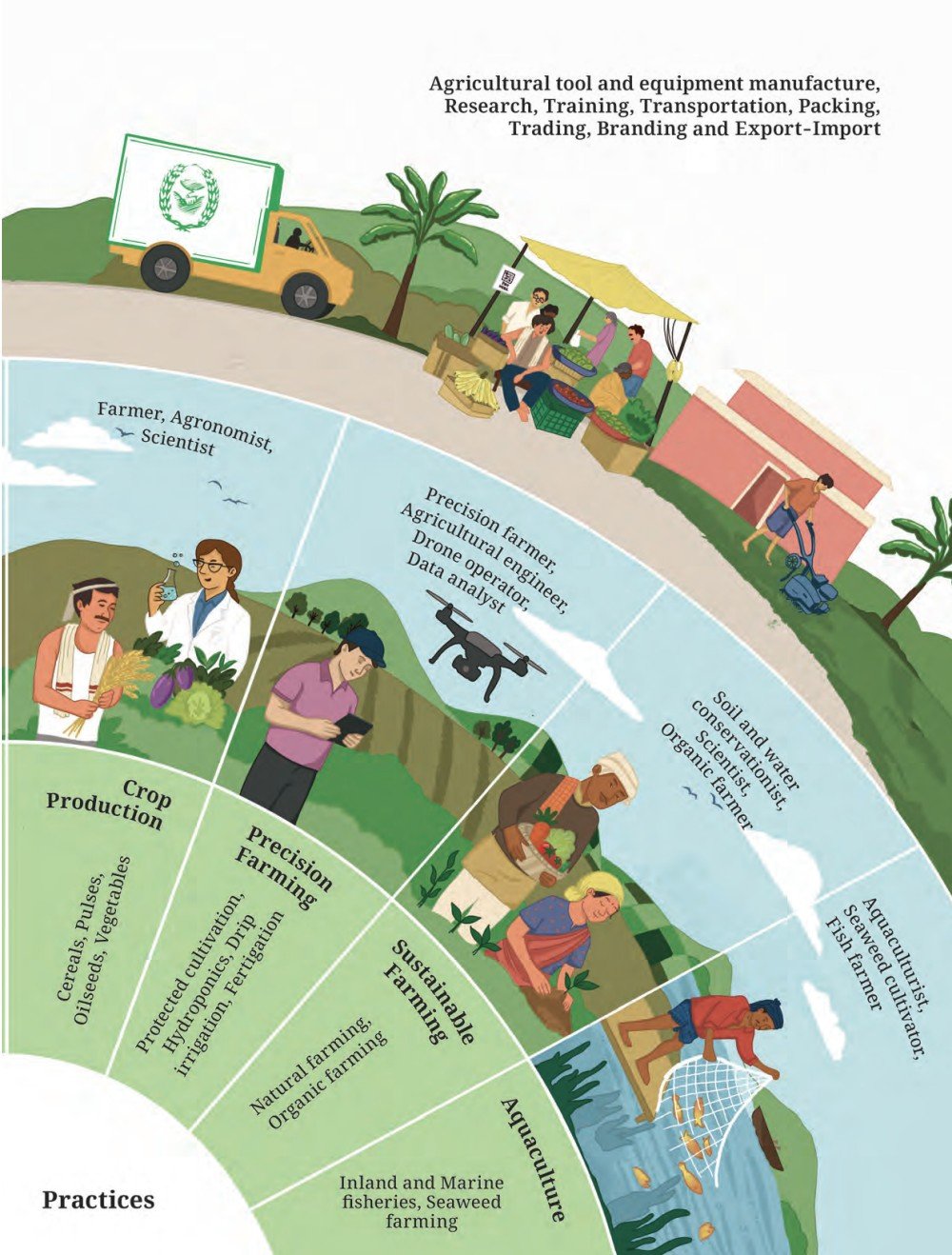
The figure overleaf depicts the agricultural livelihood ecosystem. A livelihood ecosystem is an interconnected network of resources, people, institutions, activities and environmental factors that enable individuals to earn a living, while contributing to society and the nation. For instance, the livelihood ecosystem in different geographies will vary depending on resources (for example, type of soil, and availability of water, materials and tools), support (for example, agricultural experts), access to markets (for example, transportation), and demand at local, national and global levels. Further, this implies that no work is done in isolation—different kinds of work are deeply connected. For example, if demand for a particular kind of produce reduces, then the farmer will not be the only one affected. Slowly, the requirement for transport, production of agricultural equipment and experts will also decrease. As you can see in the figure, there are many opportunities in agriculture. Besides crop cultivation and animal rearing, the area includes research, storage, transport, trade and so on; the list is long. Each level in the figure provides details of the kind of work that can be done in this area. The last level indicates the interlinkages between the work of the farmer or livestock owner, and various other allied work that enable agricultural practices and ensure that society benefits from them.
This unit will give you the opportunity to do work related to agricultural practices. You can choose the work you will do either from options in the unit or you can identify some other kind of work related to agricultural practices. This unit offers illustrations of seven vocations, as explained in the paragraphs below.
Chapter 1 introduces key concepts and processes that are common across a range of work related to agriculture. This chapter is mandatory for you.
Chapters 2 to 4 use common concepts and processes to help you understand how to do specific work. At the same time, they also introduce additional concepts and processes that you can learn while doing. Chapters 2 and 3 detail work related to rooftop gardening and precision farming, respectively. Chapter 4 contains guidelines for mushroom cultivation, aquaponics, pisciculture, backyard poultry and non-timber forest produce.
To reiterate, you can choose to do work related to any of these seven vocations or you can select something related to agricultural practices that is entirely different. Remember to consult your teacher and/or an expert for guidance at all points. Work is to be done in groups. Remember—a big part of work is doing it together.
CHAPTER 1
Introduction to Agricultural Practices

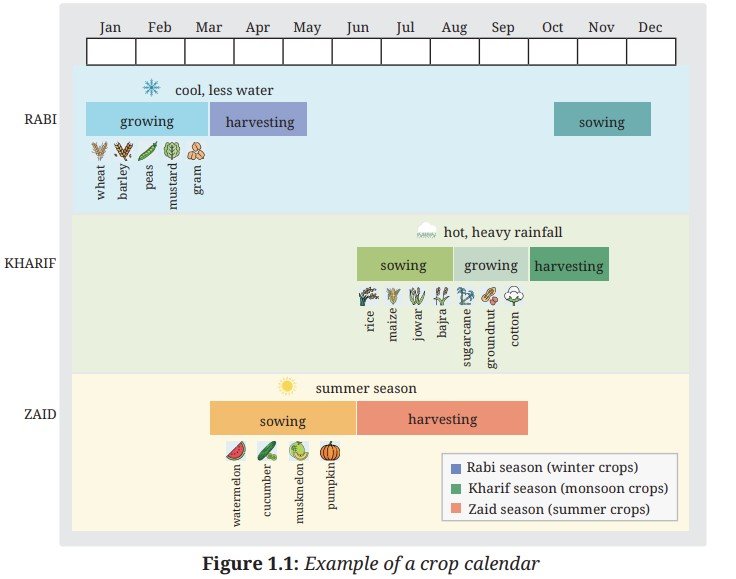
Figure 1.1 is an example of a crop calendar that provides a structured schedule for farming activities, so that farmers can make decisions related to planting, maintenance and harvesting based on local weather and soil conditions. You may have studied this calendar in your Grade 9 Social Science textbook. These calendars are created by agricultural organisations, researchers and sometimes by the farmers themselves.
In this chapter, you will
| Understand the importance of agricultural practices | Understand agro-climate relationship | Set up a meteorological observatory |
| Test and improve soil quality | Test and treat seeds | Identify key processes related to agricultural practices |
| Explore vocations related to agricultural practices | Identify quality criteria related to agricultural practices | |
Importance of
work
1.1 Introduction
We are one of the oldest agricultural civilisations in the world and among the world leaders in overall farm outputs. India leads in production of vegetables, fruits, milk, eggs and fish. Growing plants and caring for animals not only help us with a better understanding of agriculture but also help in acquiring many life skills. The agriculture sector also has opportunities for different jobs and entrepreneurship opportunities with new technology applications, like drones, robotics, biotechnology and Artificial Intelligence (AI).
The Krishi-parāshara provides a detailed account of traditional agricultural techniques, including soil preparation, crop selection, irrigation techniques, seasonal planning and pest management. It blends scientific observations and ecology to present natural methods that are relevant today to address issues, like soil degradation, climate unpredictability and the overuse of chemical fertilisers.
Agriculture has shaped India’s socio-cultural life over centuries by influencing its traditions and rural lifestyles, and strengthened communities with practices like farming festivals. This sector has played an important role in strengthening the nation. According to the Economic Survey of India 2024–25, published by the Ministry of Finance, the agriculture sector contributed 16 per cent to India’s Gross Domestic Product (GDP) and employed 46.1 per cent of the workforce.
Value chain
Have you ever thought why the price of vegetables changes depending on where you buy them from? Did you know that the cost of vegetables bought in a supermarket can be 300–400 per cent higher than that of vegetables bought in a mandi? The cost of any agricultural produce increases as it travels further or is processed further, or even packaged differently.
Value increases at each step due to costs of additional processes, like storage (for example, refrigeration, rent or maintenance of warehouses) and processing (for example, grinding wheat, rice, etc., to make flour or extract oil), cleaning, pasteurisation, etc. Profits, cost of transport and so on must also be factored in (Figure 1.2). Additionally, in cases where hybrid seeds are used, the price increases further for the consumer.
It is important to understand the value chain, since this knowledge helps us make informed choices, for example, comparing cost of travelling to farms or mandis instead of buying produce from supermarkets.
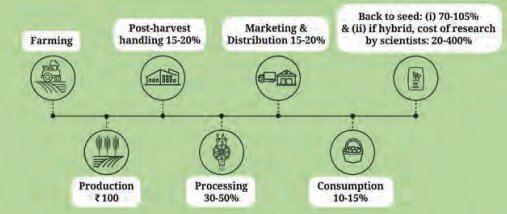
Figure 1.2 shows the percentage increase in the cost of produce from a farm as it moves up the chain value. If the cost of producing harvest is ₹100, then value keeps getting added. Post-harvest handling adds 15–20 per cent to the initial investment of ₹100. Next, processing adds 30–50 per cent to the additional value and so on. In case hybrid seeds are used, the initial cost also increases. Cost of research also needs to be factored in.
PORTFOLIO
Select any product that you can trace back to agricultural practices. Find out (you can do an Internet search or ask different stakeholders, including vegetable sellers) the price of the raw product/produce sold by a farmer and the cost at which it is sold. What is the price difference? Find out why the value of the raw product/produce has increased.
1.2 Agro-climatic relationship
One critical factor related to agricultural practices is the climate. As you have studied in Social Science, India is a country with diverse agro-climatic regions. From the Himalayas to the coast of Kerala, the cropping patterns change from region to region. On the basis of climatic conditions, some parts of the country grow rice, some parts are known for wheat, cotton, soyabean, sugarcane, millets, etc., and yet others for fruits.
The India Meteorological Department (IMD) plays a vital role in recording meteorological observations and providing Agrotechnological Advisory Services (AAS). The weather forecast and advisories help farmers in planning their crops in kharif, rabi and summer seasons. Besides warning about rainfall or snow, IMD meteorological data and forecasts also help other agencies predict outbreaks of livestock diseases, allowing for timely action for prevention or treatment.
TECHNOLOGY AND ARTIFICIAL INTELLIGENCE
India has one of the most extensive public weather information systems. IMD provides district- and block-level weather forecasts through SMS alerts, All India Radio, Doordarshan, community radio, mobile apps, Kisan Portal and Krishi Vikas Kendra (KVK). Apps like Bharat-VISTAAR, developed by the Government of India, offer a range of services to farmers, including agro-climatic data.
Panchayat-level meteorological data, including temperature, rainfall, soil moisture and wind direction are available on digital platforms/apps like the Gramin Krishi Mausam Sewa (GKMS).
CASELET
Weather keepers of Ladakh
Students of Government High School decided to do a project on agriculture in Ladakh. Extracts from their report are given below.
Ladakh is a cold desert and receives very little rainfall; most precipitation is in the form of snow. Irrigation is mostly dependent on glacial meltwater. Temperatures range from 25 to 30°C in summer and –25 to –8°C in winter. There is a very small period when farmers can sow barley and potatoes, and harvest apricots from trees. However, weather here is unpredictable—icy winds, sudden frost or unexpected rains can spoil a crop without warning, destroying weeks of hard labour.
Livestock rearing is also impacted by the climate of Ladakh—goats, double-humped camels, yaks and horses, though hardy, get affected by the weather.
Use of meteorological data
Searches on the Internet and a video call with a scientist at the Regional Research Centre of the Indian Council of Agricultural Research at Leh led to the following conclusions (Table 1.1).
| Meteorological parameter | Relevance for farmers and livestock owners |
|---|---|
| Duration of summer/winter | As Ladakh is a cold desert, a very short period is available for farming (May to September). Thus, any change in weather negatively affects agricultural activities. |
| Precipitation (rainfall and snowfall) | Ladakh receives maximum rainfall from July to September. This period is when most of the crops are grown. If it rains very heavily, crops may be lost due to floods, while if it rains poorly there will be water scarcity. |
| Temperature | From June to August, temperatures are highest during the day (20 to 30°C) and above freezing (0 to 5°C) during the night. This temperature range is best for farming activities. |
| Humidity | The average humidity in Ladakh ranges from 70 to 74 per cent between May and September. Very low humidity leads to higher evaporation losses from leaves and dryness of soil. |
| Wind direction and speed | Strong winds, especially in open fields, can cause physical damage to crops and lead to soil erosion. |
CHECK YOUR UNDERSTANDING
Find out what kind of data farmers use in the region your school is located in. Why is this useful for them?
TASK
Make your own Meteorological Lab
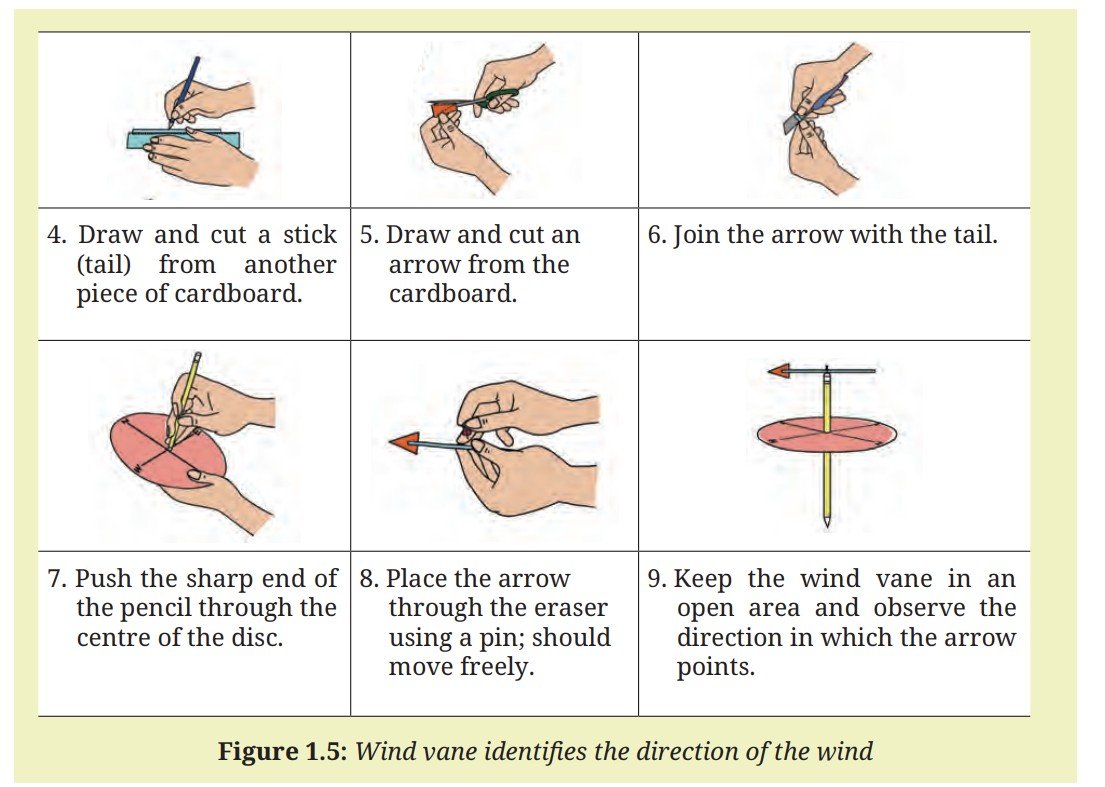
Build a simple meteorology observatory in your school with a (i) simple rain gauge, (ii) dry-wet bulb thermometer and (iii) wind vane. Follow the steps in Figures 1.3–1.5 using the materials suggested. You can always substitute the materials if you wish; please consult your teacher/an expert before doing so.
| 1. Take an empty plastic bottle (transparent) with a flat and stable bottom (so it does not fall over in the wind). | 2. With the help of scissors, cut off 1/3rd part of the top of the bottle (this part can now be used as a funnel). | |
| 3. Put the funnel upside down inside the bottle. Remember, the funnel should cover the entire mouth of the bottle, so rain can only enter through the funnel. | 4. Then place a ruler outside the bottle using a tape. | 5. Now place the entire setup in an open area where rain can fall directly into it. It should be placed at a height. |
| 6. After it rains, check the water level against the scale. | 7. Note the rainfall and compare it to the one measured by an app. |
Measuring temperature and humidity of air
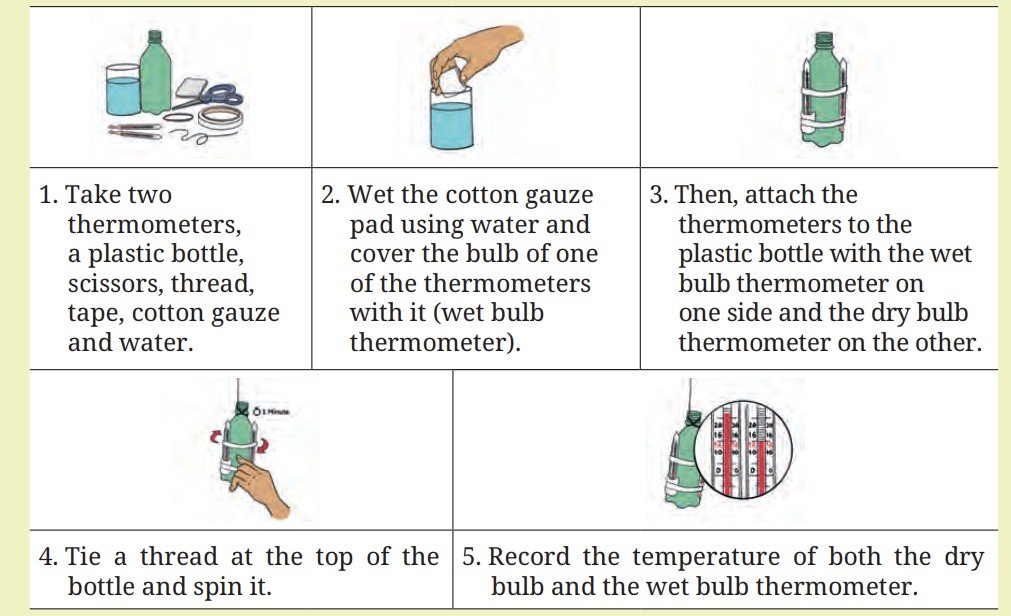
Figure 1.4: Dry-wet bulb thermometer measures temperature and humidity
The dry bulb thermometer shows the actual air temperature, while the wet bulb thermometer shows a lower temperature because water evaporates from the wet cotton and cause it to cool.
The difference between the dry bulb and wet bulb readings helps us find the humidity in the air. If the difference is small, it means the air is humid, and if the difference is high then the air is dry. Please note that to get an accurate reading, a psychrometric chart for humidity is used. You can ask your teacher or an expert to help you use the chart.
Identifying the direction of the wind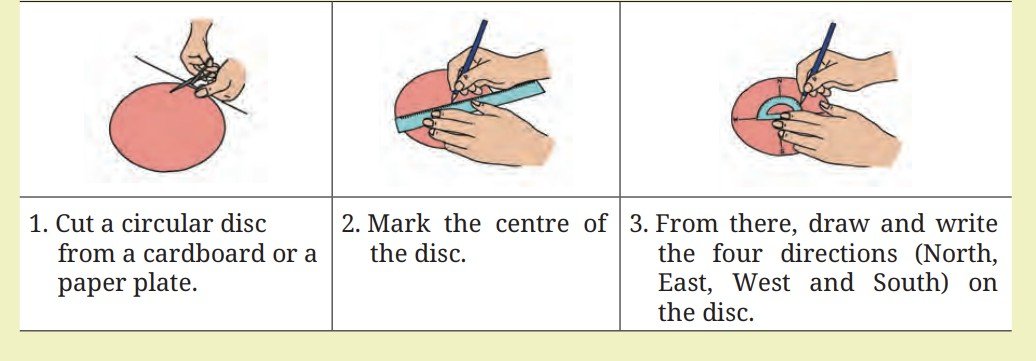
 PORTFOLIO
Keep a record of data you have collected over a period of time with your DIY meteorological laboratory and share it with a farmer/gardener. Record their feedback.
QUALITYTwo key processes in ensuring the quality of inputs while working with plants are detailed in the section below. The first is to ensure the quality of the soil, while the other is to ensure the quality of the seeds.
1.3 Processes related to agricultural practices
1.3.1 Soil testing and amendment
Testing of soil health is important for maintaining soil fertility. Soil testing helps in understanding soil health parameters—physical (soil texture, water holding capacity, etc.), chemical (pH, nutrients, organic matter, etc.), and biological (presence of microbes).
TASK
Soil sample collection
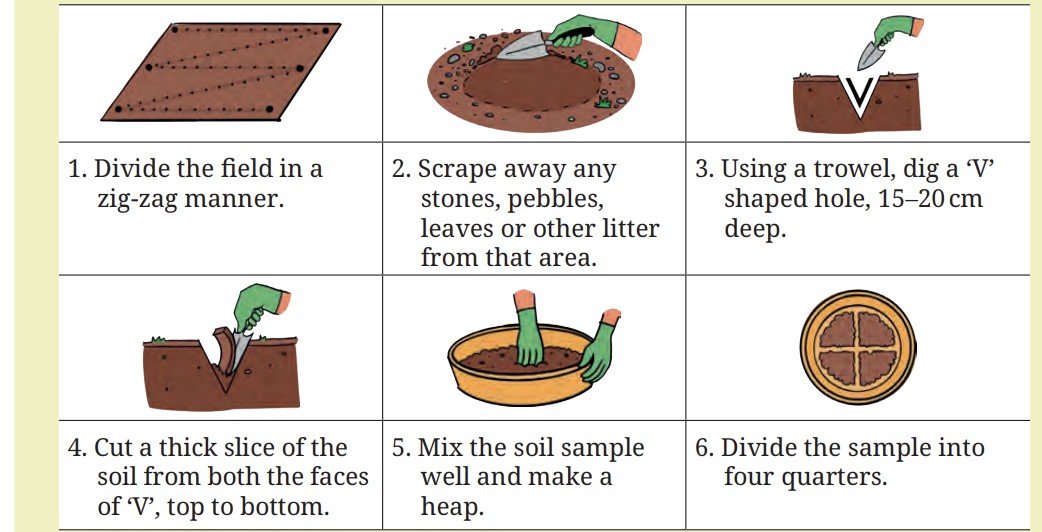
To carry out these tests, soil can be collected from your own garden or nearby fields. The process of sample collection is very important to get good results. Take soil from different spots, for example, from a sandy area, organic pit and water channel, and mix the samples, as soil quality can vary even within a small area. Avoid shady areas (like under trees) and places where fertilisers are stored in the field.
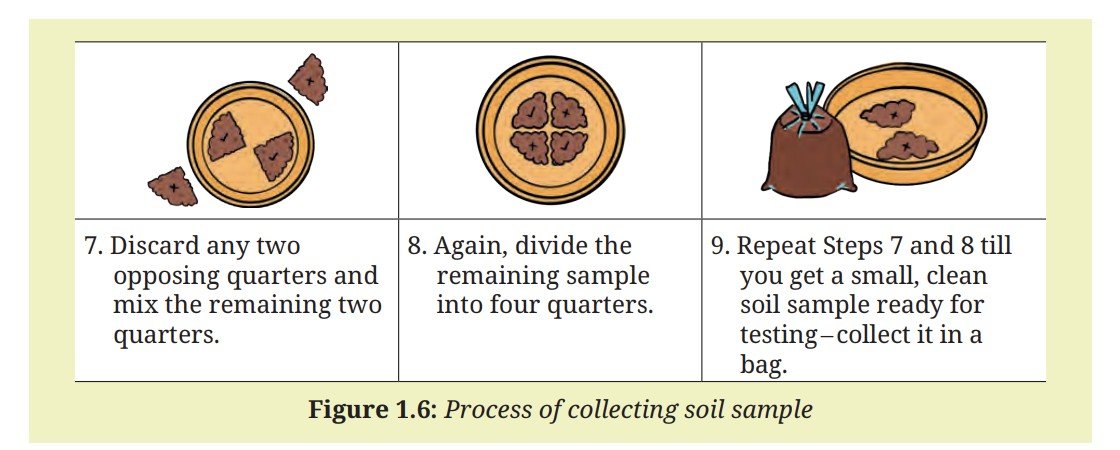
Remove stones, leaves and other debris. Dry the soil in sunlight for a few hours. Crush clumps and sieve the mixture to get fine soil suitable for testing. Label each sample carefully, for example, date of collection, whether the previous crop was grown, and use it for both mason jar texture tests and pH testing. Figure 1.6 will help you collect the soil samples.
 DID YOU KNOW?
Soil composition is a dynamic mix of four main parts: about 45 per cent minerals (sand, silt and clay), 5 per cent organic matter (humus and living organisms), 20–30 per cent water and 20–30 per cent air, filling the pore spaces.
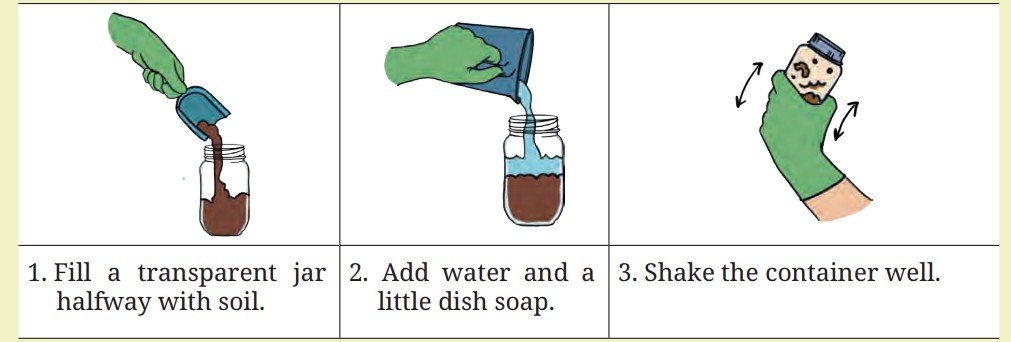
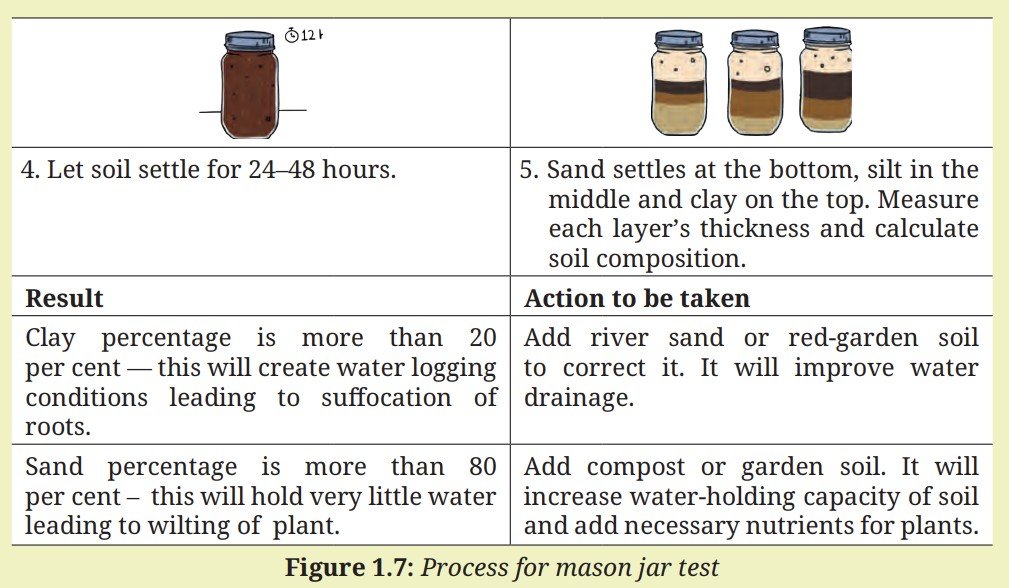
TASK Testing soil for its clay and sand percentage (mason jar test)Understanding soil texture and pH is another crucial step in evaluating soil health. Soil texture is determined by the amount of sand (largest particles), silt (medium–sized particles) and clay (smallest particles). Soil texture affects how well the soil holds water, nutrients and how easily roots can grow in it. You can assess soil texture through a mason jar test. Figure 1.7 shows the process for the mason jar test.
 pH test and amendment
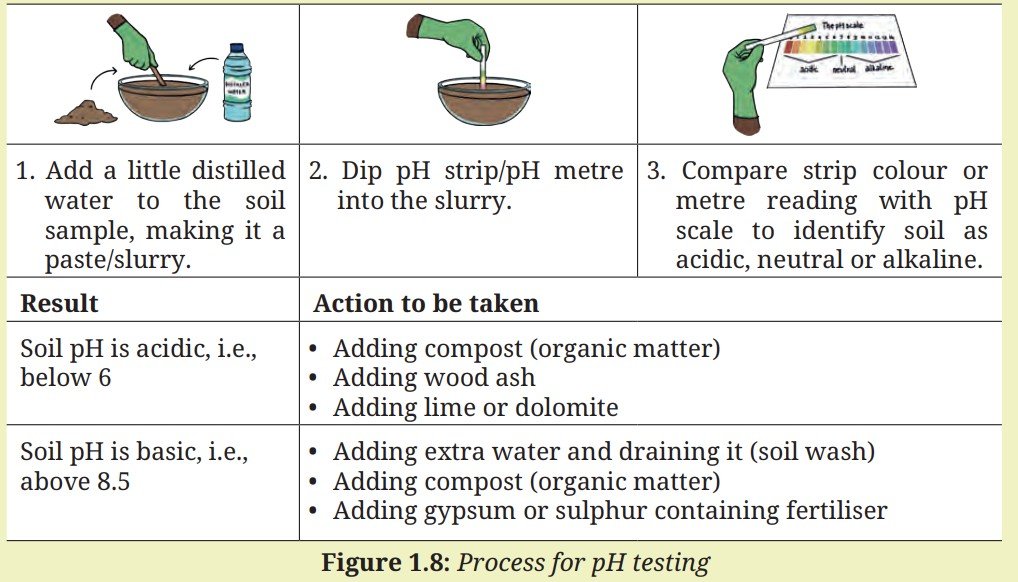
Soil pH testing helps determine whether the soil is acidic, neutral or alkaline. Most plants grow in slightly acidic to neutral soils (pH 6–7). Acidic soil can make it difficult for plants to absorb certain nutrients, while alkaline soils may prevent other nutrients from reaching the plant, leading to deficiencies. Figure 1.8 shows the process of pH testing
 SAFETY
Follow the steps carefully while performing tests. Do not taste chemicals and handle glass containers carefully.
CHECK YOUR UNDERSTANDING- Which test did you do?
- What were the results of the test?
- What steps did you take to improve the quality of the soil?
1.3.2 Seed selection
Once you have ensured that the soil selected is of good quality, you need to focus on the seeds you will be using. If the seed is weak or unhealthy, the plant that grows from it will also be weak, no matter how fertile the soil is. The germination test that you may have done in Grade 7 Kaushal Bodh book will help you estimate the percentage of seeds that will actually sprout, thereby giving you an idea of how many seeds to plant.
Before sowing, seeds are treated to increase their germination rate, and to protect them from insects and diseases. Let us learn a simple seed treatment, using common salt (NaCl). This method of treatment is commonly used for cereal crops, like wheat and rice. The addition of salt in water increases the density of water (thereby making water heavier), so that damaged or hollow seeds float. Through this process, we can easily identify non-germinating seeds. Salt water also helps in removing any microbial infections on the seed coat. (Figure 1.9).
Seed dormancySeed dormancy is a natural condition where seeds remain alive but do not germinate. This adaptation prevents seeds from sprouting in unsuitable conditions, increasing their chances of survival in adverse environments. Sometimes we need to treat seeds to break their dormancy (for example, soaking rice seeds in hot water for few hours), while in some seeds, dormancy is induced through specific processes to prevent germination during storage.
TASK Floating method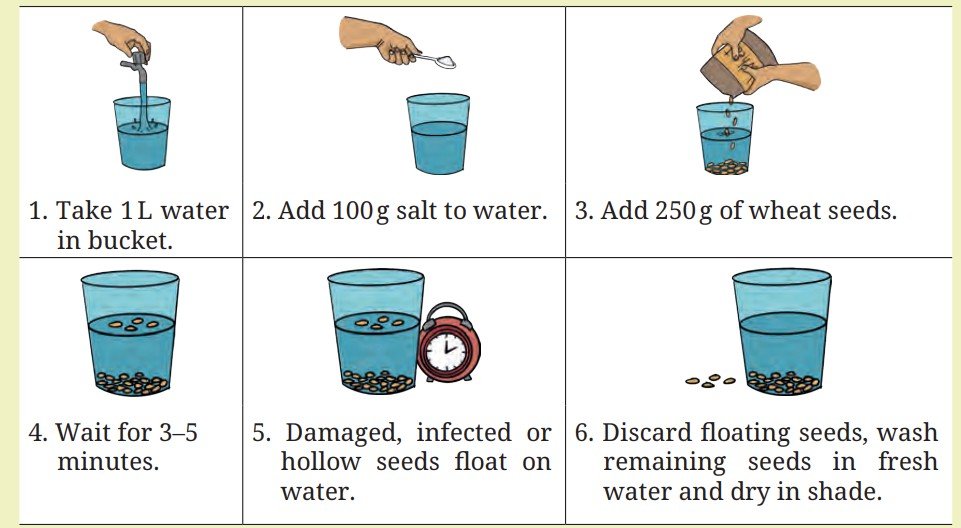
Figure 1.9: Floating method to identify germinating and non-germinating seeds
1.3.3 Preparing organic fertilisers and pesticides
You may have prepared organic fertilisers and pesticides in the Middle Stage. Refer to Kaushal Bodh of Grade 6 for preparation of vermicompost and Kaushal Bodh of Grade 7 for preparation of liquid compost. The Grade 6 book also contains directions for preparation of pesticide. The caselet shows how students of Government High School did the work.
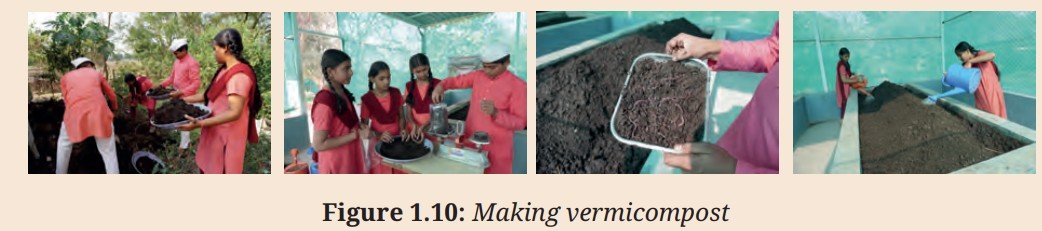
CASELET Students making vermicompostStudents of Government High School collected 50kg of agro waste and 50kg of cow dung. They filled the agro waste and cow dung in the composting bed, layer by layer, in a pit dug under a green shade-net. Worms were introduced and the pit was watered to keep it moist. They covered the pit with a gunny bag to maintain the moisture within it. After six days, the vermicompost was ready to harvest. After harvesting, the students sieved it and packed it into 1kg bags for use (Figure 1.10).
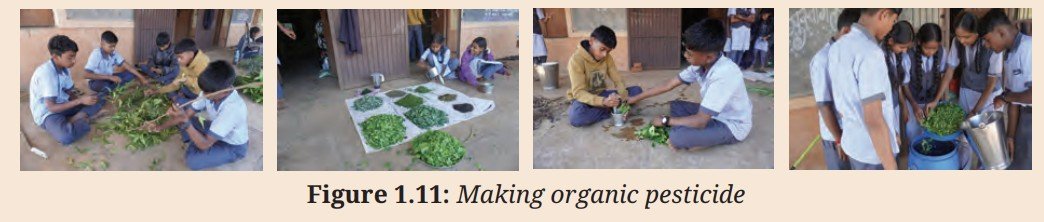
Students also learnt to make an organic pesticide, Daśhaparṇī arka. As the name suggests it is an organic pesticide made with ten different materials–plant leaves, cow-dung and cow-urine. They also used locally available plant leaves like neem, karanj, custard apple, papaya, castor, marigold, lantana, bael, tulsi and hibiscus. They first removed the leaves from their stem and carefully weighed 200g of leaves. These were added to a bucket of 20L capacity along with 220g cow-dung and 500ml cow-urine. After adding 15L water to the bucket, they stirred it and kept it aside for fermentation (30–40 days). Once it was ready, they used it for spraying in a ratio of 15mL per 1L of water (Figure 1.11).
1.4 Selection of vocation
This section will help you decide the vocation that you will take up related to working with life forms. The textbook provides details of rooftop gardening and precision farming, as well as guidelines for mushroom cultivation, aquaponics, pisciculture, backyard poultry and non-timber forest produce. But before that, you need to explore vocations around yourself.
TASK Exploring vocations around us Look around you and answer the following questions:- What kind of work related to agricultural practices do you observe around yourself? You can use different sources of information, for example, experts, site visits, libraries, online resources, specific government sites or reports.
- Briefly describe what the work involves–what are the inputs, what are the key processes and what are the outcomes.
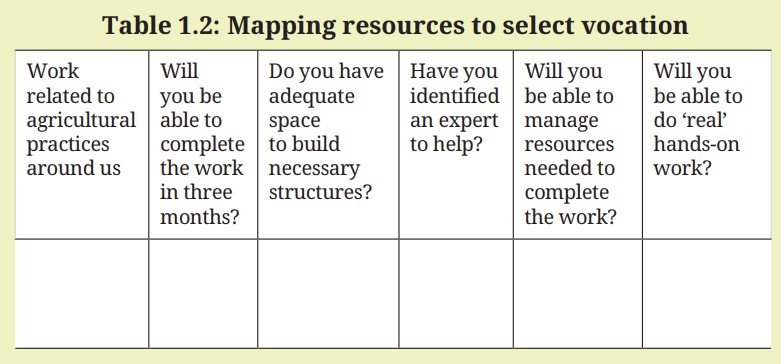
Mapping resources Do you think it is possible for you to do the work in school? Discuss in a group why/why not. Table 1.2 will help you decide.
 PORTFOLIO
Which vocation have you chosen and why?
1.5 While doing work related to agriculture
- Always handle tools and materials as per the instructions of the teacher/expert, or as specified on packet labels or in manuals.
- Using tools like a rain gauge, dry-wet bulb thermometer and wind vane to monitor local weather helps take decisions related to the selection of plants, sowing, harvesting and irrigation.
- Testing soil health helps assess vital parameters, such as soil texture and pH, and take simple steps to improve soil quality.
- Healthy seeds can be identified using the ‘floating method’ in salt water. Damaged or hollow seeds float, while healthy seeds benefit from coating with salt.
- Agro waste and cow dung can be used for vermicompost, while organic pesticides such as Daśhaparṇī arka made from local leaves, like neem and papaya, can be used for pest management.