नादेन व्यज्यते वर्णः पदं वर्णात्पदाद्वचः ।
वचसो व्यवहारोऽयं नादाधीनमतो जगत् ॥२॥
Nādena vyajyate varṇaḥ padam varņāt padād vachaḥ |
Vachaso vyavahāro'yam nādādhīnamato jagat ||2||
- Sangītaratnākara, Svarādhyāya, || 2 ||
Meaning: Nāda manifests the letters (of the alphabet), letters constitute the word, and words make a sentence. So, the entire business of life is carried on through language, and therefore, the whole phenomenon (that is, the world) is based on nāda.
Note to the Teacher
You have been our associate since the Preparatory and Middle stages for all transactions in the classroom. Let us move ahead to Grade 9 for further experiences in Music. Over the course of this year, this textbook will be a companion for you and all your students to go deeper in your exploration of music. By now, your students have experienced the wide array of expressions in music which cover multiple dimensions. Chanting, patriotism, devotion, storytelling, people's lives and occupations, environment, etc., can all be expressed through varied styles of rendition. Moving further, let us find out about different communities, regions, and people who have contributed to this vast ocean of genres/ vidhā.
In the previous class, the science of music was discussed. Did your students understand the intimate relationship that music has with science? We would like to take this a step further as well. This year let us apprise the learners about the anatomy of voice production and the science behind the production of sound from different musical instruments. Do experiment these theories in your class and help your students learn by practising.
Rāgas and rhythmic cycles can help them understand concepts in mathematics. Find out more about such multidisciplinary aspects of music. Collaborate with different teachers in your institution.
The classical music section will enable the learning of rāgas. Let the learners explore the concept of the number of notes that vary in these rāgas creating unique tunes due to the patterns known as jātis.
Musicologists such as V.N. Bhatkhande and Venkatmakhi have given classical music a systematic, scientific, developed understanding. Do let the learners delve deeper to understand the contribution of these stalwarts.
Also, we are certain they will be excited about Global Music. Make them understand how various popular styles prevalent in India have impacted International Music. We have given them some examples. Let them find out what are the styles incorporated in a fusion. We wish you sing and enjoy with your students and make this world a better place for all.
Also, it would be of great value to you if all their experiences in singing and research can be documented in a journal
The assessment in Music should be based on the following competencies for the Secondary Stage:
C–1.1 Evaluate own interest in music by considering its scope of practice and application (performance, composing, production, sound arts and design, recording, music research, and management).
C–1.2 Initiate discussions and takes steps to find more information and resources to pursue their interest in Music
C–2.1 Apply the elements and principles of Music into their musical work and incorporates these into their routine life
C–2.2 Analyse the development of musical expression across a series of musical projects
C–3.1 Extend explorations and refine techniques in Music through regular practice and rehearsals
C–3.2 Incorporate ideas and elements from various genres of Indian Music (traditional, popular, contemporary) into their own musical work
C–4.1 Analyse commonalities and differences among diverse forms of Music, cultures, and their aesthetic sensibilities in India and the rest of the world
C–4.2 Evaluate musical work based on creative expression, artistry, and social context
| Learning Outcomes That Can Be Assessed | ||
|---|---|---|
| Chapter 6: Music and Us | ||
| Curricular Goals | Competencies | Learning Outcomes |
| 1 | C–1.1, C–1.2 | Information about traditional music practices of communities. The points of research would be the type of music they practice, which would include both vocal and instrumental music, the themes, the traditions, and rituals. |
| 2 | C–2.1 | Learn some compositions and present on different platforms |
| 2 | C–2.2 | Development of musical expression across a series of projects |
| 3 | C–3.1 | Explorations, refinement of techniques, rehearsals and regular implementation |
| 3 | C–3.2 | Incorporate ideas and elements from various genres of Indian Music (traditional, popular, contemporary) into their own musical work |
| 4 | C–4.2 | Evaluate musical work based on creative expression, artistry, and social context |
| Chapter 7: The Science of Music | ||
| Curricular Goals | Competencies | Learning Outcomes |
| 1 | C–1.2 | Initiate discussions to find information about curricular connections to pursue their interest in Music |
| 3 | C–3.1 | Extend explorations in Music |
| Chapter 8: Rāga and Tāla | ||
| Curricular Goals | Competencies | Learning Outcomes |
| 2 | C–2.1 | Understand and learn the principles of Music Correlation of rāgas and tālas |
| 3 | C–3.1 | Understanding practice and application of rāgas in different forms |
| 4 | C–4.2 | Evaluate musical work based on creative expression, artistry |
| Chapter 9: Music Travels Around the World | ||
| Curricular Goals | Competencies | Learning Outcomes |
| 4 | C–4.1 |
Analyse commonalities and differences among diverse forms of
Music, cultures
Comprehend the aesthetics of musical forms in India and the rest of the world |

06
Music and Us
Can you imagine a world without music, where a mother does not
sing lullabies, a wedding does not have songs, and no one hums a
tune while going about their daily lives? Seems quite dull, doesn’t it?
Music is an important part of our lives in many ways. We all have
songs and styles of music that we love and identify with. Music can
tell us a lot about who we are, and where we come from. It connects
us to our deepest emotions. Let us take a closer look at how music
can be explored, so that we understand ourselves, our traditions,
and our country better.
Forms and Styles of Music
Music reflects variations in geography, language, and culture. As Indians, we can take great pride in having one of the most diverse musical cultures in the world. In order to make sense of the diversity of music, we can classify it in many ways.
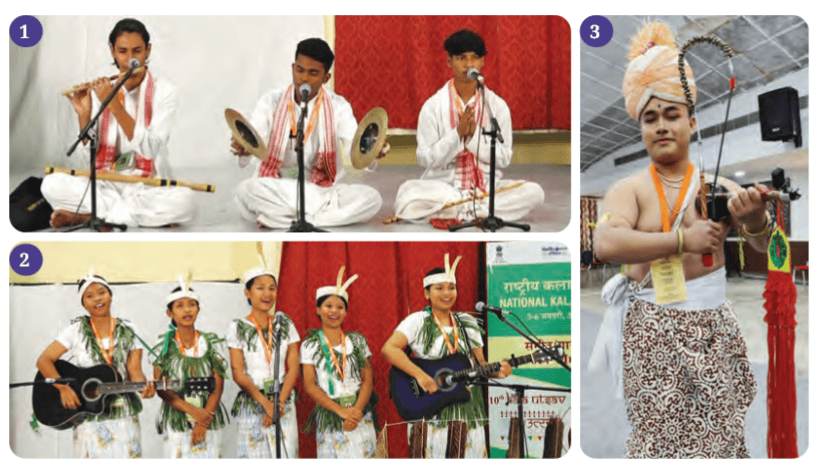
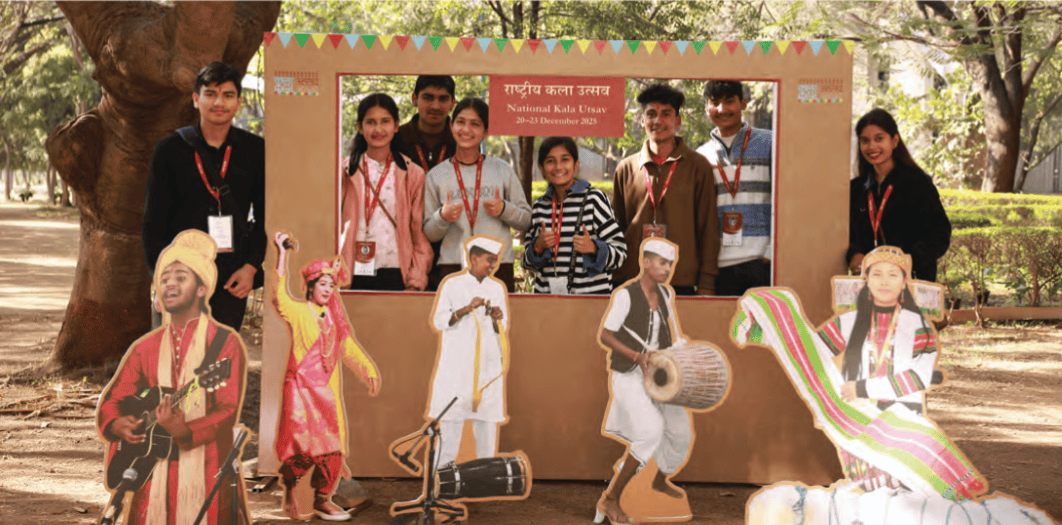
Fig. 6.1. Participants of Kala Utsav (1) Students from Assam playing the flute and bhortāl; (2) Students from Goa singing with the accompaniment of guitar; (3) A student from Manipur playing the penā
What is a genre?
A genre (also referred to as form or vidhā) is a category of music that has characteristic features and sounds. Śhailī refers to a style of presentation within that category. A genre is defined by the instruments it uses, the style of singing, its rhythms, and even where it is from. Identifying genres helps us classify music and understand it better.
Do you know?
Learning by listening
By the time he was 12 years old, the renowned musician Kumar Gandharva was known to imitate and exactly reproduce records of the legends like Abdul Karim Khan and Fayyaz Khan. At the age of 23, he fell seriously ill with tuberculosis and lost his voice. Confined to bed for years, he listened to folk songs of the village drifting through the windows, to temple bells, birds, and wind. When he finally sang again, his voice had changed, but his music was deeper, fearless, and unforgettable. By listening, he discovered a whole new world of music.
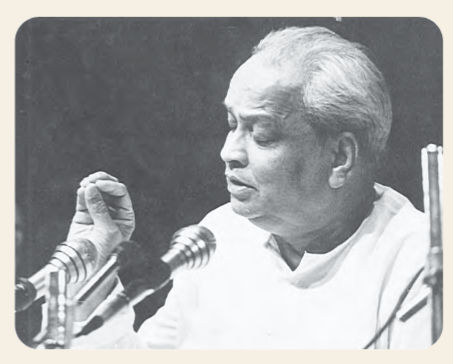
Fig. 6.2. Kumar Gandharva
Let us recall
You were introduced to active listening in Grade 7, where you learnt to carefully listen to and analyse a piece of music. The more you listen to a wide range of music, the more you start to pick up on different styles, structures, and techniques that you might not have noticed at first.
Activity 6.1
My Music Journal
Keep a journal dedicated to music, which you will maintain over Grades 9 and 10. In this journal, you will chronicle the songs that you listen to, learn, and create. You will also use it to document the various creative exercises you do. Musical texts and treatises often have creative names. What would you like to name your journal? Write your journal name in a decorative manner on the cover page.
Note to the teacher:
At the beginning of every class, select a song/ piece of music and play it in the classroom. Ensure that the students listen to it quietly and attentively. You can also ask a student or group of students to bring a piece of music or suggest a song to play in each class. The song could be of 3–5 minutes in duration and can be from an album, a film, or a classical rendition. Students may be encouraged to reflect on this in their music journals.
Activity 6.2
Listening to Various Genres
When you listen to a piece of music, write the name of the song and tick the genre. By the end of the year, try and listen to various genres of music.
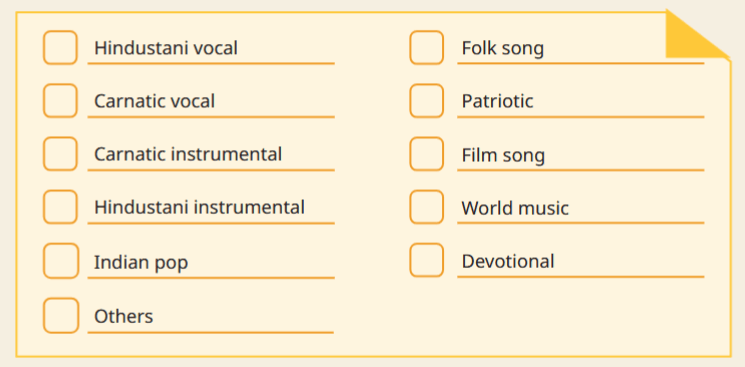
Hindustani Vocal
Carnatic Vocal
Indian Pop
Carnatic instrumental
Hindustani instrumental
Indian pop
Others
Patriotic
Film Song
World Music
Devotional
Activity 6.3
Identify the genre of music
Listen to the song played by your teacher in class.
Discuss the points given below.
Write the details of the song in your journal.
� Identify its genre. Which of its features helped you identify it?
� Identify the musical instruments in this piece of music. Try and describe the sound of that instrument in words.
� Identify the musicians who are singing or playing on this track. Is there something characteristic about their voice or style of singing/ playing?
� Try and describe how listening to the song made you feel.
� If you could change something about the song, what would it be, and why?
Discussion circle
When you listen to a piece of music, you may notice that it has an underlying structure. For example, a devotional song will have a chorus (pallavī or sthāyī) followed by two or more verses (charaṇas or antarās). A contemporary song sometimes starts with an introduction before the chorus. Discuss the structure of the song that you just listened to, and any of its unique features.
While there are many types of music in India, most music can broadly be categorised into three areas, as below:
| Type of Music | Characteristics |
|---|---|
| Classical / Semi-Classical Music | Ancient and living traditions, rāga-based melodic system, variety of tālas (rhythm cycles), emphasis on improvisation |
| Folk / Indigenous / Regional | Community-based musical expressions, rooted in regional life, language, and customs; transmitted orally across generations; closely linked to everyday activities, rituals, festivals |
| Popular / Film Music | Hybrid in nature and borrows from a variety of Indian and global influences, reflects contemporary themes and trends |
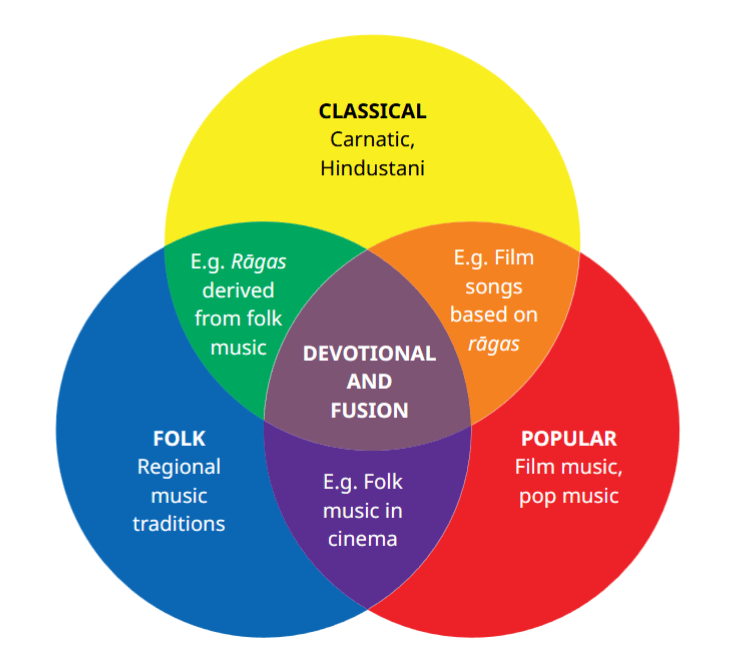
Fig. 6.3. Genres of Indian Music– Genres are not watertight compartments. They often interact and overlap giving rise to sub-categories.
Let us explore
Based on the above, where would you place devotional forms of music or music of contemporary folk-rock bands? Music genres often overlap due to interactions and are not watertight compartments. Can you think of songs that have influences from multiple genres?
Music and Emotion
When you listen to various kinds of music, some forms of music may appeal more than others to you. Have you wondered why? It may partly be due to the style of music being something you are familiar with, or in a language that you can understand. Maybe the music has a rhythm that energises you or a melody that soothes you.
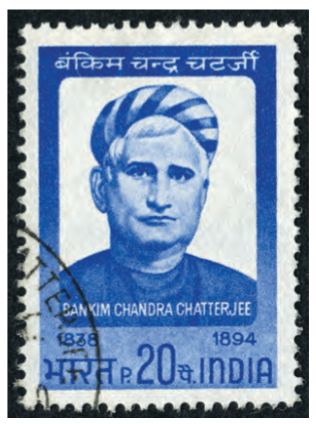
Fig. 6.4. Bankim Chandra Chatterjee
Music and patriotism
Songs can invoke a deep sense of love for the country. During India’s freedom struggle, songs like Vande Mātaram ignited the spirit of patriotism in the hearts of millions of Indians. In 2025, we celebrated the 150th anniversary of this evergreen song. Listen to it and sing it in class while focusing on the emotions and the imagery it creates.
Music, mood, and navarasa
Indian treatises describe the navarasa [nine emotions: Śhṛiṅgāra (love), vīra (courage), karuṇa (compassion), hāsya (joy), raudra (anger), bhayānaka (fear), bībhatsa (disgust), adbhuta (wonder), and Śhānta (peace)]. Music has the power to awaken these rasas within us. A calm piece of music can lead us to Śhānta rasa, while a powerful rhythm can inspire vīra rasa. By choosing what we listen to, we gently guide our emotions.
Do you know?
Music therapy is the use of music — such as rhythms, melodies, and sounds — to improve mental health and overall well-being. It plays an important role in reducing stress, anxiety, and physical tension.
Note to the teacher:
Ideas from music therapy can be used to make the classroom more inclusive. Refer to the Note to the Teacher at the beginning of the Music section for more details.
Activity 6.4
Creating My Playlist
A playlist is a group of songs that are put together for a reason, either by a listener, an artist, or a music platform. Playlists can be based on the theme of the song, like ‘songs about rain’, the type of music, like ‘Indipop playlist’, or even the reason they are listened to, like ‘music while studying’. A playlist is not just a collection of songs, but can also be a tool to mirror and balance our emotions.
In your journal, create a playlist of around five songs. Give your playlist a name, she has ‘My mood uplifter’, or ‘Songs to make me calm’. For each song, mention the following:
1. Name of the song
2. Genre
3. Rāga and tāla (if a classical song)
4. Composer and lyricist
5. Artists: Singer/ instrumentalists/ band name
6. Why I like the song
7. I listen to this song when I am feeling
Folk Songs and Traditional Knowledge
While all forms of music reflect their culture and environment, folk music, in particular, is intimately related to community traditions and practices. In fact, in many cases, folk songs serve as a storehouse of traditional knowledge.
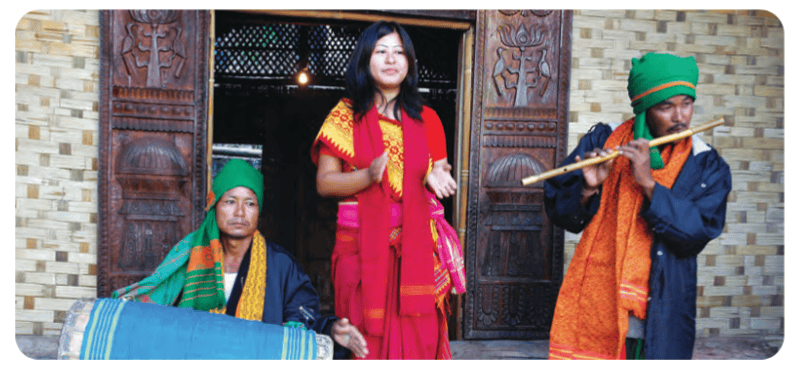
Fig. 6.5. Musicians from Nagaland
A folk song from Nagaland
Hashei Bu Bu-Ow
OH… ola baü ü Yingli Phomjat
labaü ü
OH…. obü denka aivang bü hi
ba den ka
OH….. lemphü om ngoi
hanshing metpai phongling
peih
OH….. Ketnyü len vamküjü
kahdü shapham nyieh
OH…… Yimnyü owhap loihan
tap ve-ei touh nyeih
OH…… Hah li dongle mükoh
ongjük shei-ei tem
OH…… Vongli vanlang shemtu
panglo hongma bam
OH……. Vang ngaihan long
man vai vangyu bu den ka
OH……. Pungmei leknung pha-
shei man vai vangyiu nyeih
OH…… Hepong vong nyeih
dungbu pongli enyu shong
OH……. Nukoi nuhem beyu
vei-yong phamnyü lak
OH……. Manvai kahsho lei-ao
vamnyaü yiu ying
OH……. Nulen bu kahsho yu
panglak langi non
OH……. Odai mao nya
humlong nyu ngau dai mao
nya
OH…….. Phong jan tapnyu
nongma humlongnyu ngau
mei.
Seed Sowing Song
Oh we are the damsels of Yingli
Phom tribe
Oh please pause for a moment,
lend us your ears,
Even as we unfold to you the
song of joy and woes of the
farmers;
Come Ketnyiü month
(December), it’s time to prepare
our forest and
Clear the shrubs to prepare for
the new jhum land.
We erect altar and call the
name of God, for we want good
harvest!
When our field is burnt, we
know it’s time to build our farm
house,
Then we prepare the seeds of
paddy, yam, maize, cucumber,
and pumpkin. Ceremonial
bamboos are to be erected and
prayers are to be offered
Invoking bountiful harvest;
To beat the heat of the sun we
shelter ourselves with bamboo
shields;
Like the creeping cane and huge
banyan, we stand firm to
Cultivate and nurture our fields.
We relish ourselves with best
rice brew;
We sing as we fight with the
weeds;
The songs of happy maidens are
heard even from distant land;
The beautiful song from the
farm hearths enchants even over
yonder land.
Activity 6.5
Songs and Traditional Knowledge
� Find recordings of these songs online, listen to them and sing along. You can also invite a group of musicians in your vicinity and let the children learn the song.
� What are the community traditions and practices that are documented in this song?
� Can you think of a similar song from your region? Compare it with the song given on the preceding page.
Note to the teacher:
You can use a similar song from your region that describes traditional practices. Also, revisit the folk songs learnt in previous years, emphasising the traditional knowledge contained in them.
Activity 6.6
Mapping Regional Music Traditions
� Draw a map of our country in your journal.
� Recall the various folk music forms that you have heard or learnt previously.
� Mark the various folk music forms in the region they are found in.
Fig. 6.6. Map of India
This will help you understand how every region has different genres and communities which practice a variety of musical traditons.
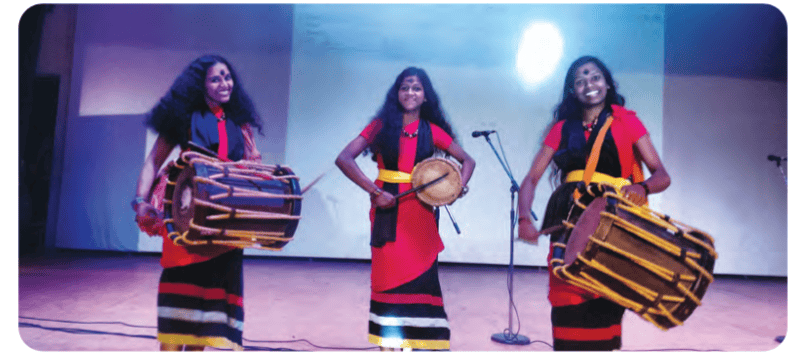
Fig. 6.7. Students playing traditional percussion instruments of Kerala
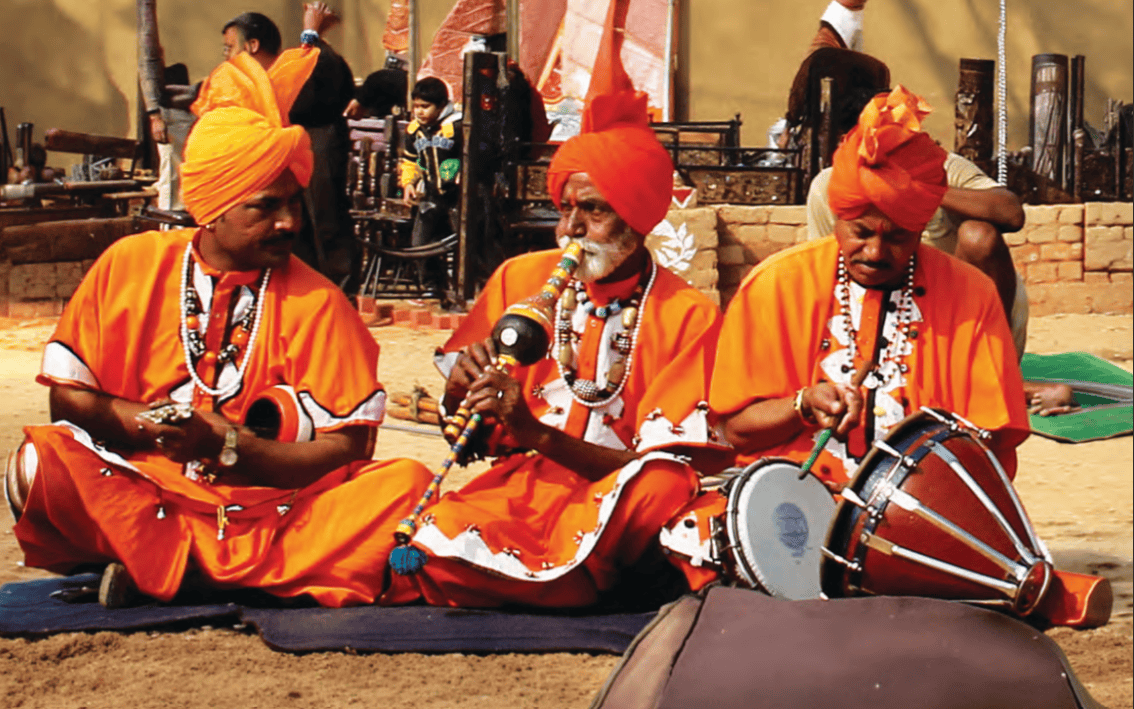
Fig. 6.8. Snake charmers of Haryana playing been, tasha, gapchu
Activity 6.7
My Family Tradition
Families often have traditions relating to festivals, rituals, recipes, etc., that are shared across generations.
� Speak to your parents, grandparents, or elders and ask them about your family traditions or recipes.
� Pick one tradition or family recipe that you would like to conserve.
� Write the lyrics of a song based on the information. Take inspiration from the various song structures that you observed in Activity 6.3.
� Once you have written your song, sing it in a tune of your choice.
You now have your own family song! Share it with your family during the next festival or gathering.
Note to the teacher:
Where possible, invite a folk musician to the class. Request them to share some music and also to speak about the role music plays in preserving traditional knowledge and practices.
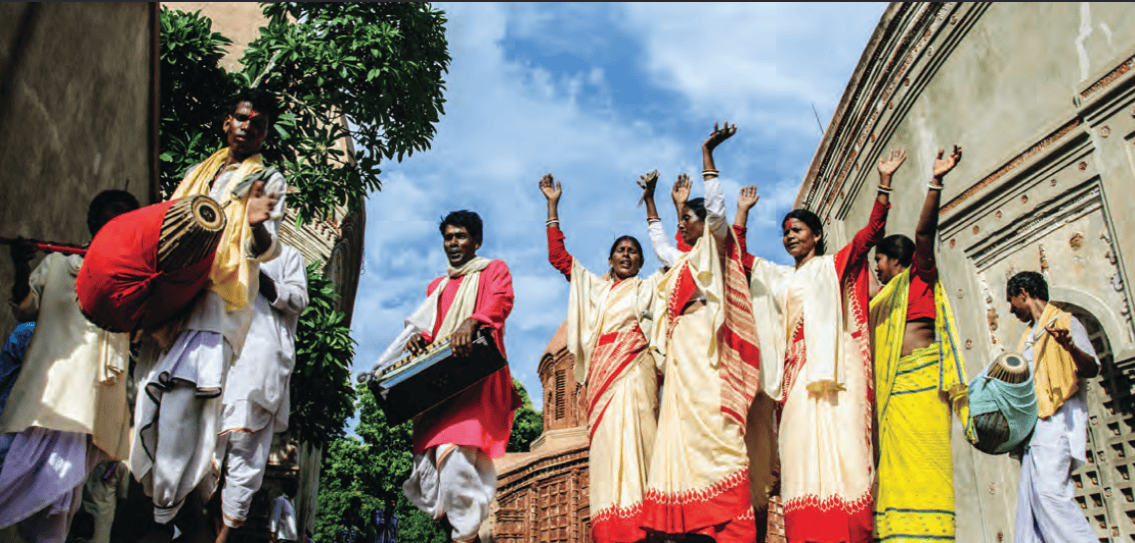
Fig. 6.9. Devotional song with dance in a temple in West Bengal
Kala Utsav is an annual festival of arts that showcases the talent of students who study at the secondary level under the aegis of Ministry of Education, Government of India, organised by NCERT. On the PM e-Vidya Channel #33, watch videos about musical forms, dance traditions, theatre, and forms of visual art.
Exercises
Q1. Sing a song sung during festivals. Write a few existing song lyrics from the song, and explain its theme and emotion.
Q2. Name two songs, along with its respective genres (vidhā). What were the features of music that helped you identify it?
Q3. Research and write about any two music personalities and their contributions to music. You may refer to any national or international awardees.
Q4. Listen to a composition played in the class and identify which is the sthāyīl pallavi/ chorus and which is the antaral charaņa/verse. How did you identify the parts of the song?
Q5. Find a song related to an occupation in your region or language. Write its lyrics, identify the occupation mentioned in the composition, and briefly describe the meaning/summary of the song.
Q6. Justify the statements given below with an explanation and examples: i. Film songs have the influence of many genres. ii. Folk songs provide information about the region they are from.
Q7. Why do you think both Classical Music and Folk Music are considered traditional? How are they different from each other?
Q8. Create the lyric of a song about a family tradition which has a sthāyīl pallavī and at least one antaral charana.
Q9. Match the following
i. Folk Music a. Emotions
ii. Classical Music b. Belongs to a particular region
iii. Genre/Vidhā c. Is a structured form with rules for composition and improvisation
iv. Navarasa is connected to d. Style of music
Q10. Listen to the songs performed by popular bands in our country and identify the genres that have influenced the song.