08
Rāga and Tāla
8 Rāga and Tāla
Let us recall
Śhruti: A sound that is heard clearly and can be recognised as distinct from another
Svara: A note in music. There are seven notes in Indian music— S R G M P D N
Saptak/Sthāyī: An octave or register in music. Musicians usually perform in Mandra (lower), Madhya (middle) and Tāra (higher) saptak/octaves.
Svara
Let us revisit some of the basic building blocks of melody in classical music.
- There are 7 notes (svaras) of music.
- S and P are the invariant notes known as achala-svara/ prakṛiti-svara.
- The remaining 5 notes (R G M D N) have higher and lower variants and known as chala-svaras/vikṛiti-svaras.
- So, the total number of notes (svara-sthānas) comprise 2 prakṛiti-svaras or achala-svaras (S and P), and 2 variants of the remaining 5 notes (R G M D N), bringing the total number of note positions to 12.
In a keyboard or a harmonium, you can see the arrangement of notes in an octave, and how the same note positions repeat, across different octaves.
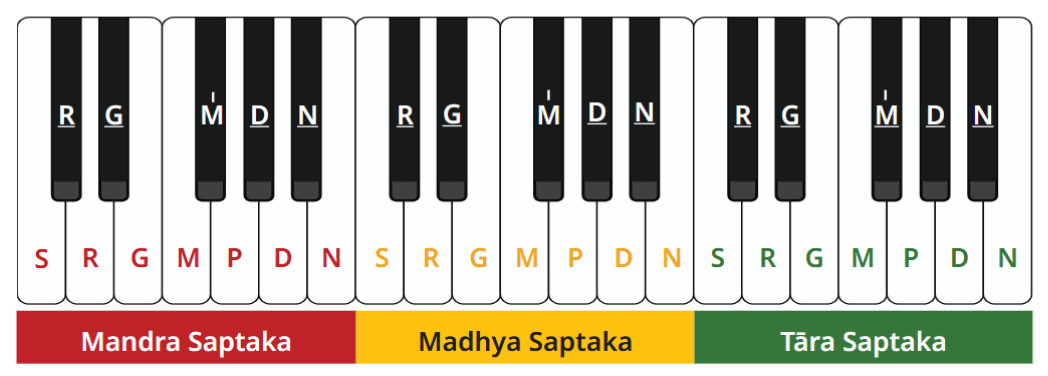
Fig. 8.1. The arrangement of svaras and octaves on a keyboard
It is important to know that the 7 notes and 12 note positions are the same in both Hindustani and Carnatic Music, but the variants are known by different names.
Note to the teacher:
If you have access to a keyboard or a harmonium, use it to introduce the concepts of 7 notes, 12 note positions, and octaves.Table 8.1. Svara-sthānās in Hindustani and Carnatic Music
| Svar | Name | Note Position | Variant Names (Hindustani) | Variant Names (Carnatic) |
|---|---|---|---|---|
| S | Shadja | No variant | No variant | |
| R | Rishabha | Lower Higher |
Komala Shuddha |
Shuddha Chatuḥśhruti |
| G | Gāndhāra | Lower Higher |
Komala Shuddha |
Sādhāraṇa Antara |
| M | Madhyama | Lower Higher |
Shuddha Tīvra |
Shuddha Prati |
| P | Pañchama | No variant | No variant | |
| D | Dhaivata | Lower Higher |
Komala Shuddha |
Shuddha Chatuḥśhruti |
| N | Nishāda | Lower Higher |
Komala Shuddha |
Kaiśhikī Kākali |
Do you know?
The 7 notes and 12 note positions are found in most music systems around the world!
Rāga
A rāga is a melodic framework in Indian Classical Music and comprises a set of notes. The rāga system is one of the reasons why Indian Classical Music is one of the most sophisticated, complex, and scientific music systems in the world. So, how do we group and classify these hundreds of rāgas? Just like you would have studied the classification of plants and animals into different groups and families, rāgas are also classified and grouped according to their characteristics so that we can understand them better.
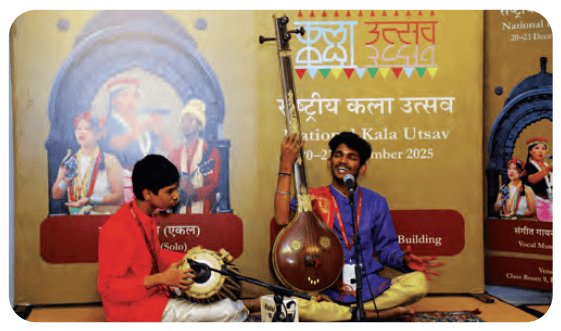
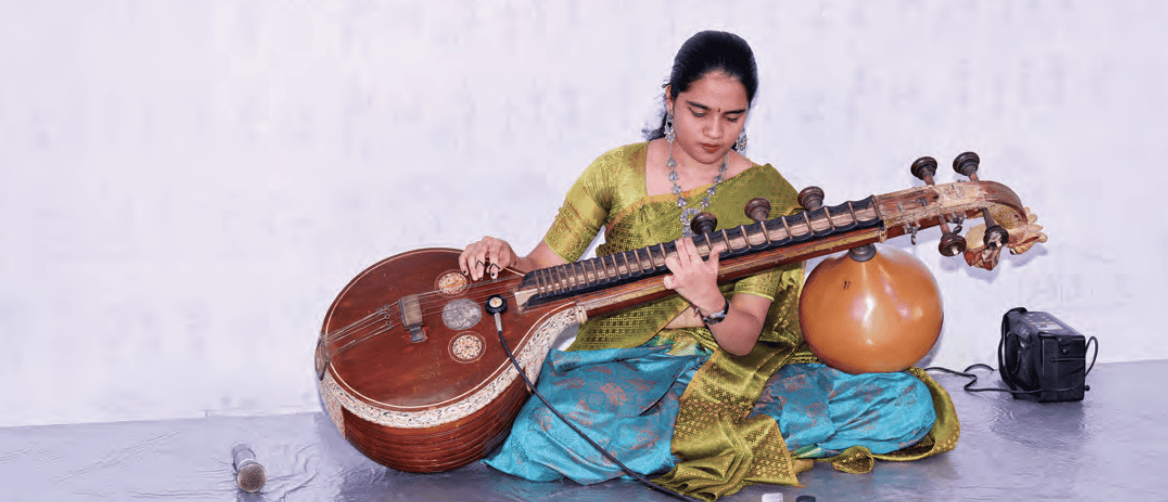
Fig. 8.2. Students performing Carnatic Classical Music (Kala Utsav 2025)
Classification based on number of svaras
In both Hindustani and Carnatic traditions, one way of classifying rāgas is based on how many notes are used in the arohana (ascending scale) and avarohaņa (descending scale).
In Hindustani Music, this classification of rāgas based on the number of notes in the scale is called the Rāga-jāti.
Table 8.2. Rāga-jāti and Examples
| No. of Svaras | Name | Example in Hindustani | Example in Carnatic |
|---|---|---|---|
| 7 | Saṁpūrṇa | Alhaiyā Bilāval, Yaman | Śhaṅkaraṁbharaṇaṁ |
| 6 | Śhāḍava | Gurjarī Todī | Śhrīraṁjjanī |
| 5 | Auḍava | Bhūpālī | Haṁsadhvani |
Rāgas can also have different numbers of notes in the aroha/ārohaņa and avaroha/avarohaņa.
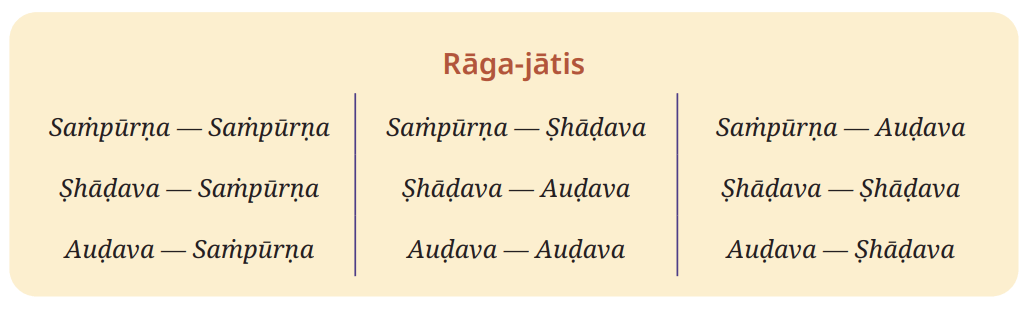 Rāga-jātis
Sampūrņa - Sampūrņa |
Sampūrņa - Şhādava |
Sampūrņa - Audava |
Şhādava - Sampūrṇa |
Şhādava - Audava |
Şhādava - Shādava |
Audava - Sampūrņa |
Audava - Audava |
Audava - Şhādava
Rāga-jātis
Sampūrņa - Sampūrņa |
Sampūrņa - Şhādava |
Sampūrņa - Audava |
Şhādava - Sampūrṇa |
Şhādava - Audava |
Şhādava - Shādava |
Audava - Sampūrņa |
Audava - Audava |
Audava - Şhādava
Activity 8.1
Write any Auḍava Rāga scale ________________
Write any Shāḍava Rāga scale ________________
Write any Auḍava-Shāḍava scale ________________
Tänsen and the rāga of fire
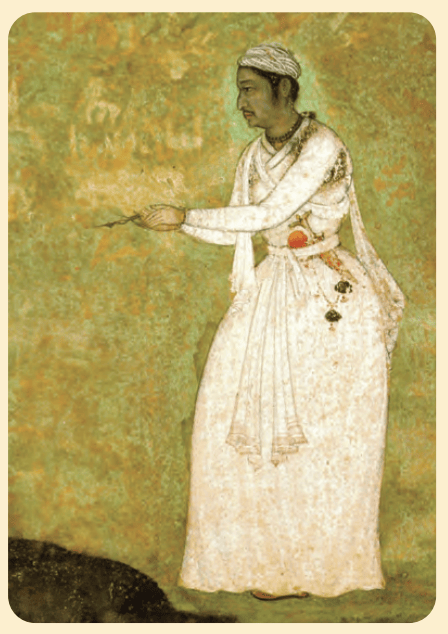
Fig. 8.3. Portrait of Tānsen c. 1585-90, National Museum, New Delhi
Legend says that Tansen, Akbar's favourite singer, was tricked by jealous courtiers into singing Rāga Dīpaka, believed to create deadly heat. Knowing only Rāga Megha could save him, he trained his daughter Sarasvati and her friend Rūpavatī. As the heat rose during his performance, the girls sang Rāga Megha, bringing rain and saving Tänsen.
Discussion circle
If you could name a rāga what would it be? Describe how you would like the rāga to make a listener feel. _________________________________Classification based on the svara-sthānas
Rāgas in both Carnatic and Hindustani Music have also been traditionally classified into various families, based on their note positions (svara-sthānas). In this case, the systems of classification in Carnatic and Hindustani Music are different. Let us look at each one below.
Carnatic 72 Melakartā System
The 72 melakartās form the basic scale system of Carnatic Music. Each melakartā rāga uses all seven svaras in both the arohaņa (ascending) and avarohaņa (descending) order. In all, 72 different scales are created by systematically combining the lower and higher variants of the svaras R, G, M, D, and N.
Do you know?
The system of mathematically deriving 72 melakartā scales based on the permutation and combination of svara-sthānas was established by Venkatamakhi in his treatise Chaturdandi-Prakāśhikā, which was published in the eighteenth century.
Janaka Janya Rāgas
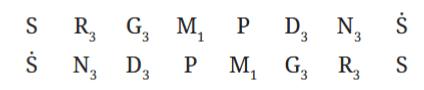
These 72 melakartās can also be referred to as Janaka (parent) rāgas. Many janya rāgas are derived from each janaka by eliminating notes or changing the order of the notes. For example, the Melakartā/janaka Rāga Śhańkarābharaņam has the scale:
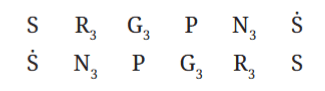
 In Rāga Hamsadhvani, the M and D svaras are removed from Śhankarābharaņam to give rise to a 5 note (audava) scale
Hindustani Thāt System
The that system is a method used to group rāgas based on the notes that are used in the raga. A that is a musical scale consisting of 7 svaras (SRGMPDN) arranged in order. Each of the notes - RGMD, and N have two variants. Based on different combinations of these variants, there are 10 different thāts, and all rāgas belong to one of these 10 thāts.
Eg: The Kalyān Thāt has the scale: SRGM'PDNS
Do you know?
The that system was developed by musicologist Pandit Vishnu Narayan Bhatkhande in the early twentieth century to make the study of rāgas easier and more structured.
Two rāgas belonging to the Kalyān Thāt are:
1. Yaman
N R G M D N S S N D P M G R S
2. Shuddha Kalyān
S R G P D S S N D P M G R S
Compositions
Let's look at compositions in both Carnatic and Hindustani Music. In both systems, we will deal with a similar rāga - Śhankarābharaņam in Carnatic and Alhaiyā Bilāval in Hindustani.
Carnatic Music — Rāga Śhaṅkarābharaṇam
| Feature | Details |
|---|---|
| Melakarta Number | 29 |
| Classification (Jāti) | Saṃpūrṇa |
| Western Equivalent | Major Scale |
| Ārohaṇam (Ascent) | S R₂ G₃ M₁ P D₂ N₃ Ś |
| Avaroḥaṇam (Descent) | Ś N₃ D₂ P M₁ G₃ R₂ S |
| Famous Composition | ‘Enduku Peddala’ by Tyāgarāja |
| Significance | One of the first rāgas students learn due to the simplicity of its scale |
Let's learn two compositions that are in janya rāgas of Śhańkarābharaņam.
Jatisvaram
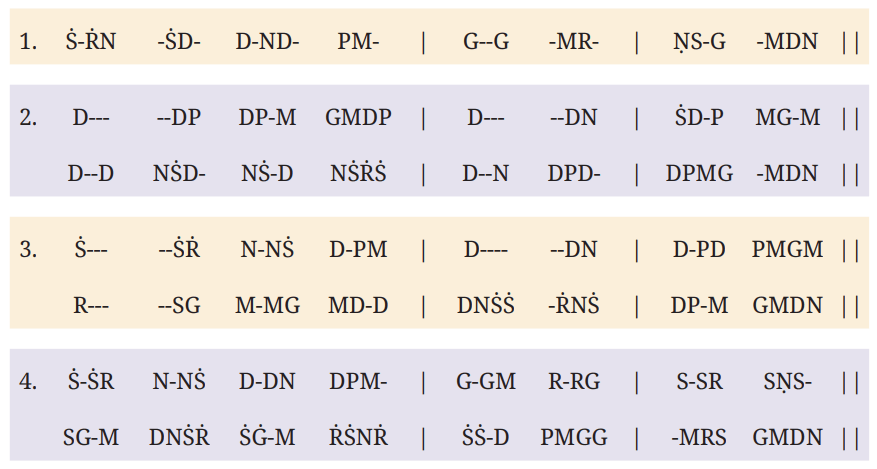
It is a Carnatic Music composition that has svaras (musical notes) and optionally rhythmic syllables (jatis) to create a lively musical piece. It generally has no lyrics or sāhitya.
Rāga: Kaņņadā
Tāla: Ādi
Composer: Veena Padmanābhayya
Avaroḥaṇa: Ś N₃ Ś D₂ P M₁ G₃ M₁ R₂ S
Pallavi

Chitte-svara
Svarajati
It is a Carnatic Music composition that combines simple lyrics (sāhitya) with musical notes (svaras) and optionally, rhythmic patterns (jati).
Rāga: Hamsadhvani Tāla: Adi
Avaroḥaṇa: S N₃ P G₃ R₂ S
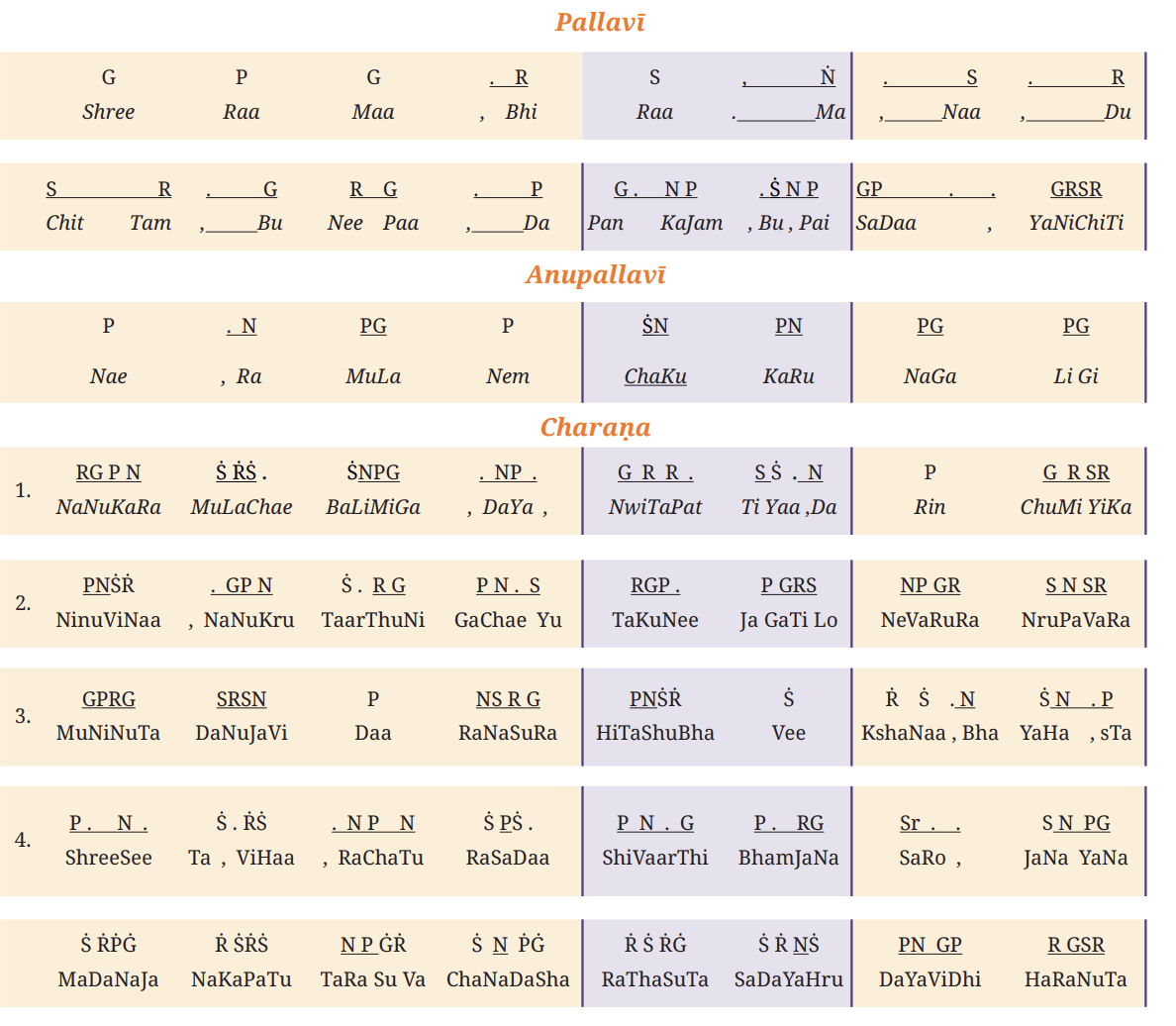
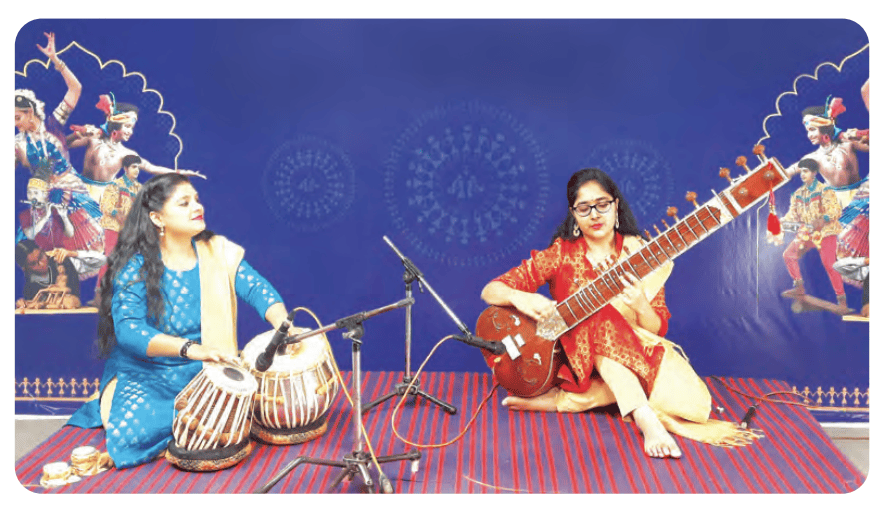
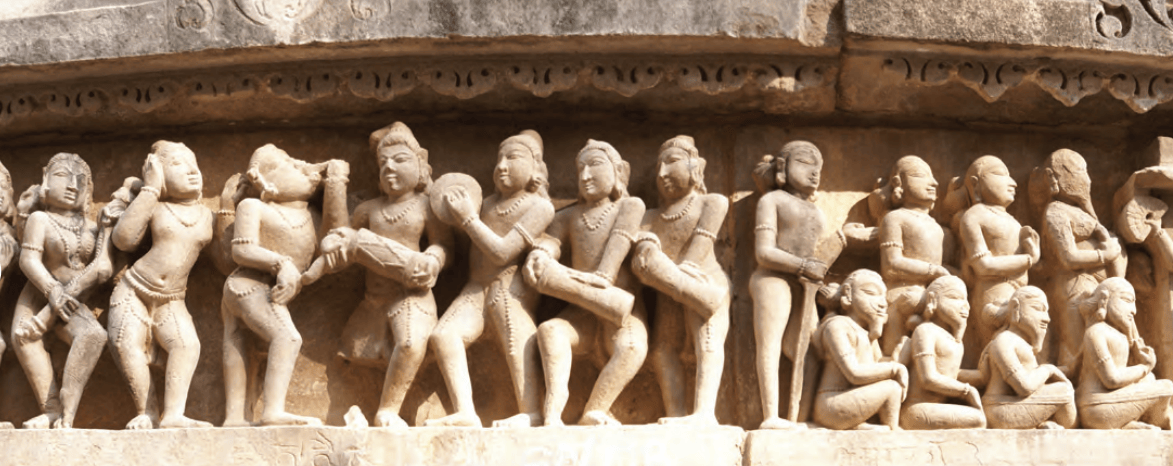
Fig. 8.4. Kala Utsav participants playing the sitar and tabla
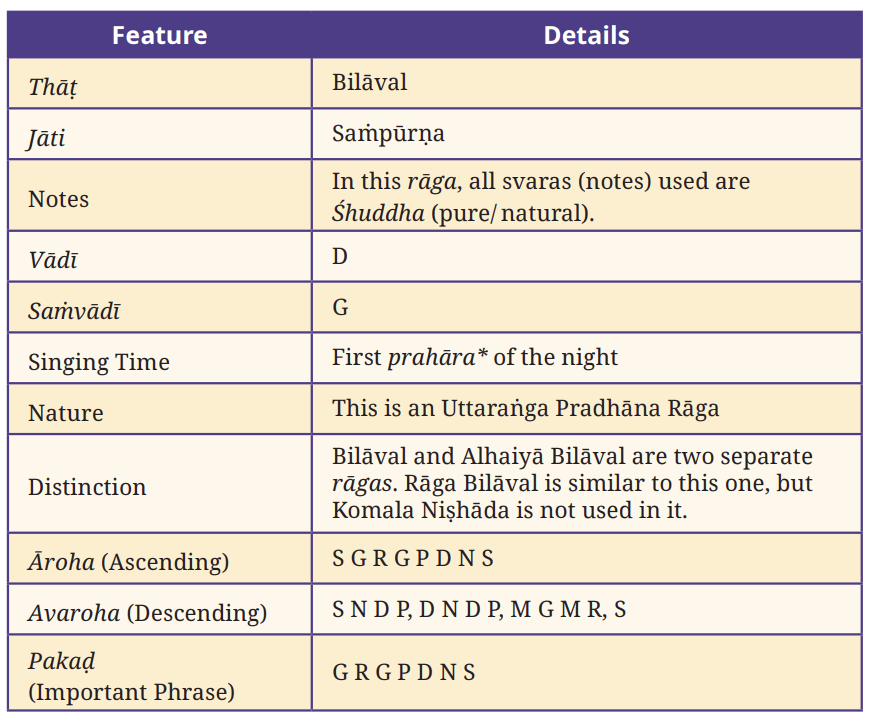
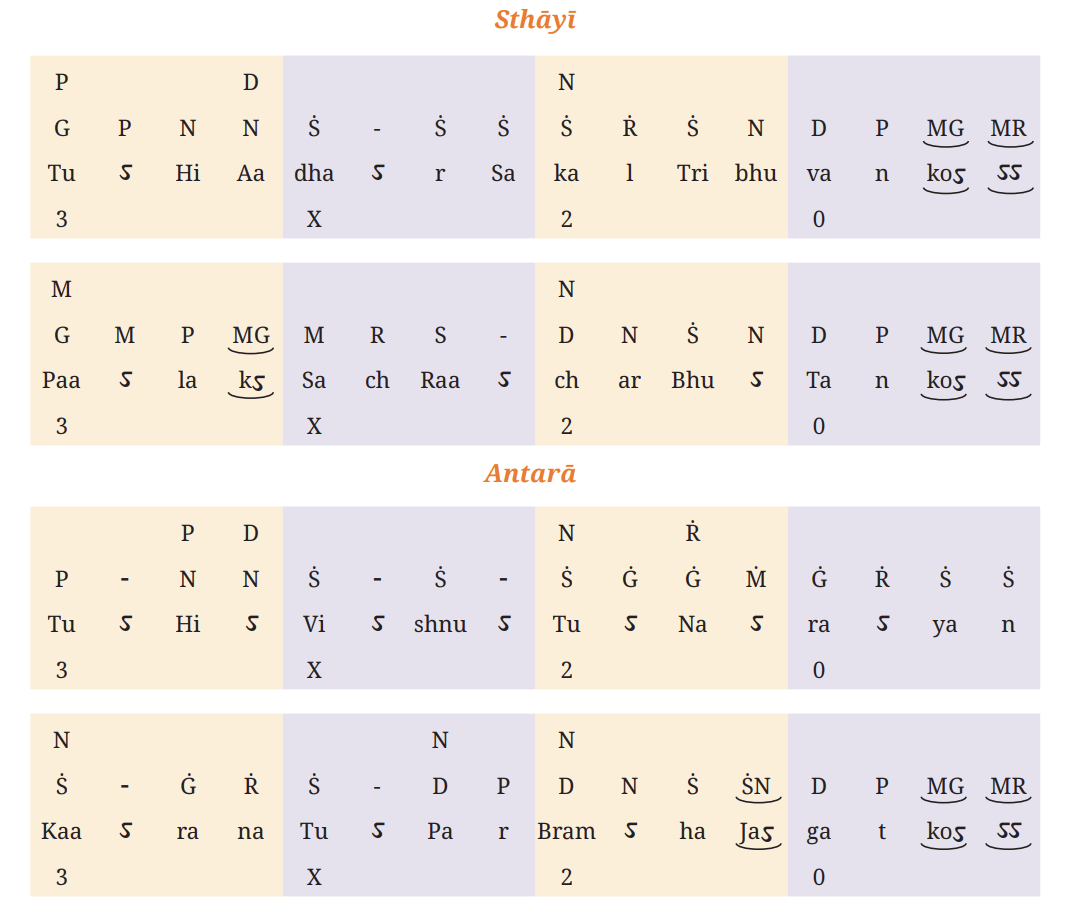
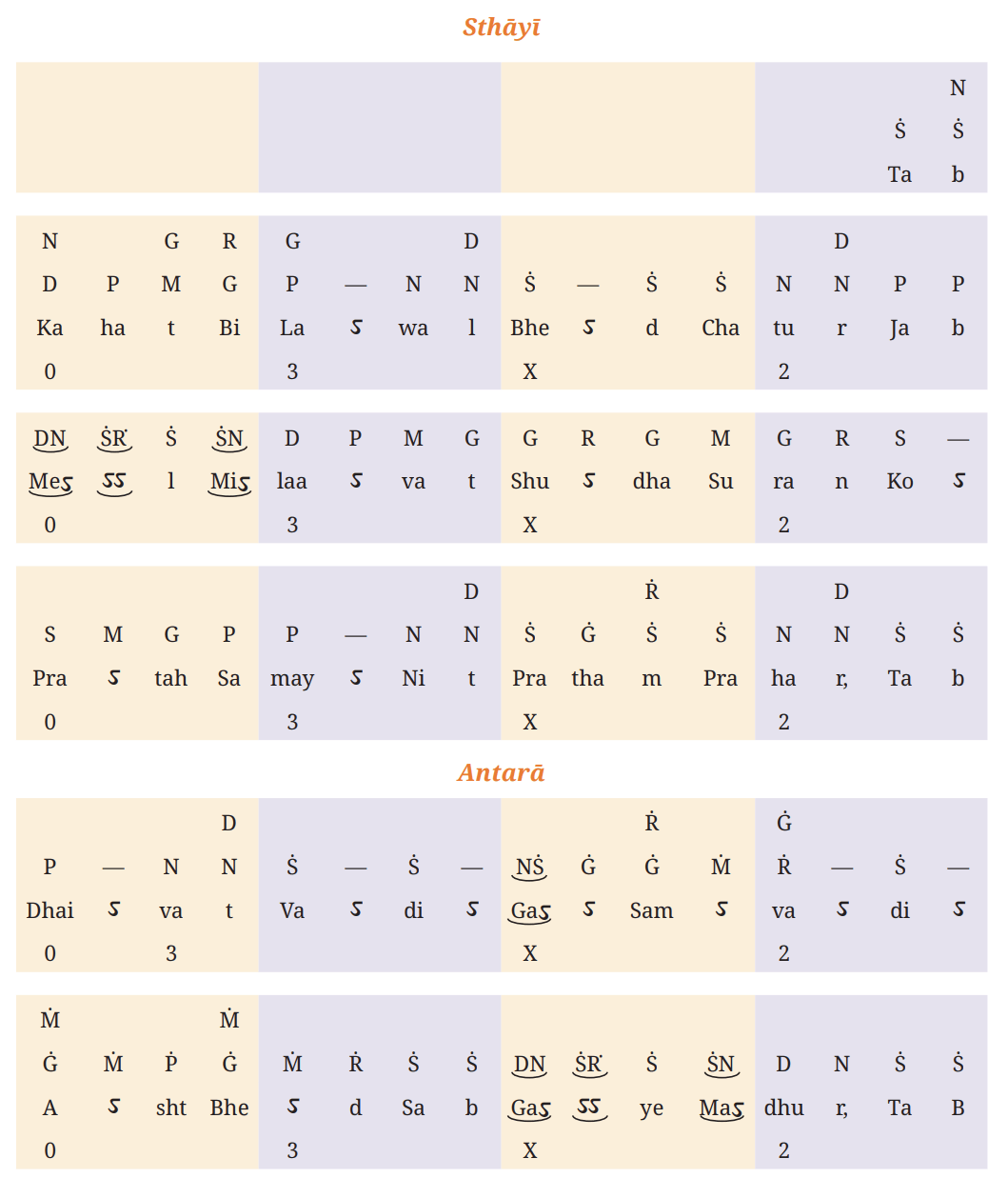
Hindustani Music — Rāga Alhaiyā Bilāval
 Bandish
Tāla: Teen Tāla Kramik Pustak Malika - Bhāg 2
Sthāyī: Tù Hī Ādhār Sakala Tribhuvana Ko Pālaka Sacharāchar Bhūtan Ko Tū Hĩ Vişhņu Tū Nārāyaņa Kāraņa Tū Parabrahma Jagat Ko
 Lakshaņa-Gīta
Tāla: Teen Tāla (Madhya Laya) Kramik Pustak Malika - Bhāg 2
Sthāyī: Taba Kahata Bilāval Bheda Chatura Jaba Mela Milāvata Śhuddha Surana Ko Prātaḥ Samaya Nit Prathama Prahara Dhaivata Vādī Gā Samvādī Aşhța Bheda Saba Gaye Madhura
Tāla
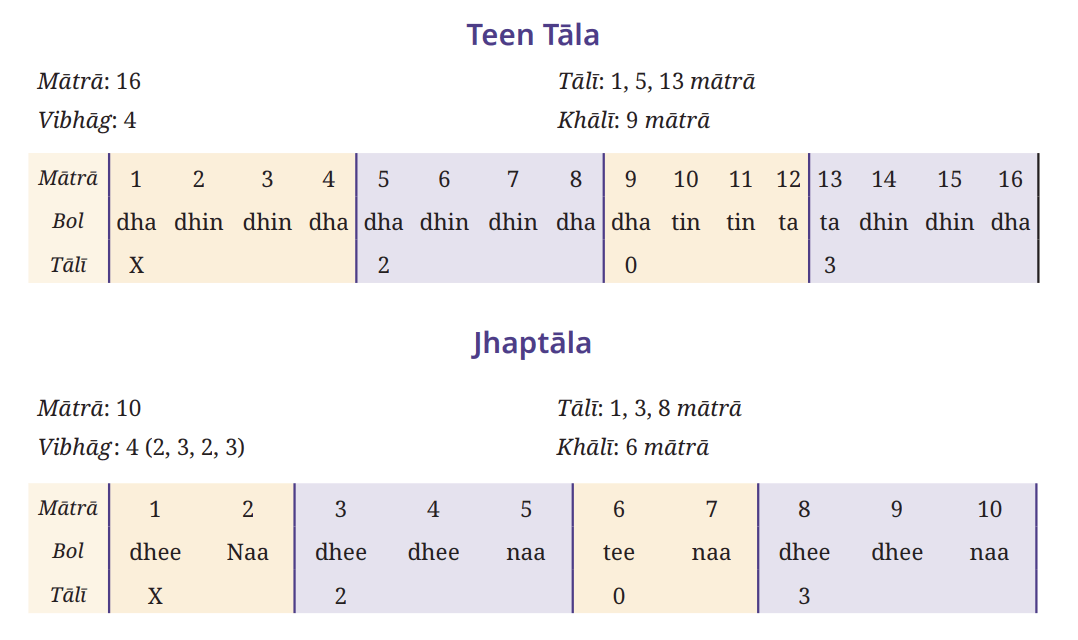
It is the rhythmic cycle in Indian Classical Music that organises beats into a repeating pattern. Let us revisit the basic tālas in Hindustani and Carnatic Music.
Tālas of Hindustani Music
Thekā: The basic pattern of tabla strokes or rhythmic syllables that defines a tāla in Hindustani Music.
Mātrā: A single beat within a tāla
Vibhāg: A division or group of beats within a tāla
Tālī: A stressed beat in a tāla, usually marked by a hand clap
Khālī: An unstressed or 'empty' beat in a tāla, usually marked by a wave of the hand
Sam: The first and most important beat of a tāla cycle
Note to the Teacher:
Demonstrate the counting of tālas or share a video in class.
Activity 8.2
Identifying the various bols
Listen to a recording of the theka being played on the tabla and try and identify its bols.
Note to the Teacher:
Play a recording of the theka of Teen Tāla, or use a mobile app. Assist students as they try and identify the bols corresponding to the tabla sounds.
Activity 8.3
Finding sam
Try and follow along the tabla theka of the bandish being played in class and identify the sam as you follow the tāla.
Observe how the artist, in their elaboration, arrives at the sam in different ways.
Note to the Teacher:
Play a performance of a bandish in Teen Tāla or Jhaptāla. Help the students follow the tabla theka and identify the tāla. Encourage students to appreciate the process by which the artist arrives at the sam.
Tālas of Carnatic Music
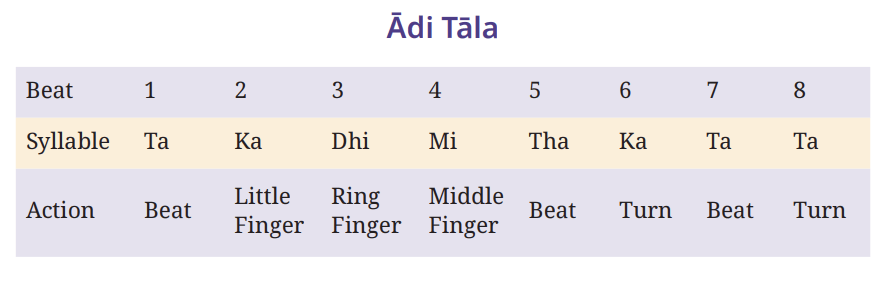
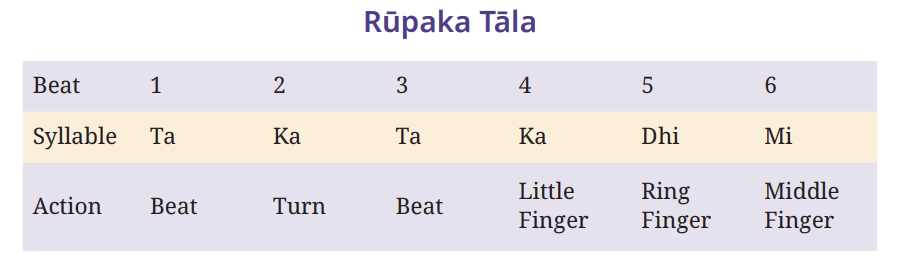
Carnatic Music also has several tālas, of which two most popular are Ādi Tāla and Rūpaka Tāla. Let us revise counting the tāla with our fingers as shown below:
Activity 8.4
Listening to a song and identifying the tāla pattern
As you listen to the song, first react naturally to the beat by tapping your feet, clapping your hand, etc.
Now, try and find how many beats this tāla cycle has.
Note to Teacher:
Play any song with a strong rhythm in the class.
Activity 8.5
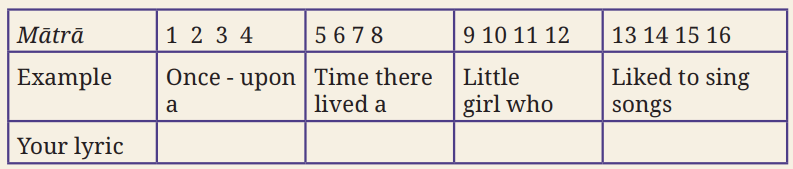
Write a lyric to tāla
Tāla is used to arrange svaras and lyrics into definite patterns in a song. Fill in the lyrics in any language to fit the below tāla cycles with one syllable per beat and then recite it.
Teen Tāla (Hindustani)
Rūpaka Tāla (Carnatic)
 You can use any words in the rhythm, for example, Tvameva Mātā Pitā Tvameva.
Activity 8.6
Fitting your song to tāla
Go back to the song you created in Chapter 6 Activity 6.7 (My family tradition).
Does your song naturally fall into a tāla or rhythm pattern?
How will you modify it (by speeding it up, slowing it down, elongating or compressing a syllable, or adding or removing a word) to fit it to a specific rhythm pattern?
Try singing or reciting your song while keeping a tāla/steady beat. How does this change the feel of your song?
Through this activity, we observe how tāla can provide structure and definition to a song, and indeed this is one of the factors that differentiate prose (which you will find in a story) from song lyrics.
EXERCISES
Q1. Explain the following in one line:
i. Şhādava-sampūrņa
ii. Vibhāg
iii. Jātis in Hindustani Music
Q2. If a rāga has 6 svaras in the arohana and 6 in the avarohaņa, what is the jāti of the raga. Give an example from the rāgas you have learnt.
Q3. Which are achala-svaras/ prakriti-svaras and chala-svaras/ vikriti-svaras? Explain with examples.
Q4. Name two rāgas and their scales derived from Śhankarābharaņam.
Q5. Answer the following:
i. A rāga with 5 notes is called
ii. The Melakartā system was devised by
iii. Vishnu Narayan Bhatkhande grouped the Hindustani rāgas in the system.
iv. Complete the series SMGR, RPMG
Q6. What is the difference between Jatisvaram and Svarajati?
Q7. Give a brief introduction of Raga Hamsadhvani.
Q8. Describe one system of classification of rāgas with examples.
Q9. Find out about the contributions of the following stalwarts to Indian music.
i. Tānsen
ii. Kumar Gandharva
iii. Mīrābāī
iv. MS Subbulakshmi
Q10. Identify the Raga-jāti based on the following:
i. 5 svaras in āroha and 6 svaras in avaroha
ii. 6 svaras in āroha and 5 svaras in avaroha
iii. 5 svaras in aroha and avaroha
iv. 7 svaras in aroha and 7 svaras in avaroha
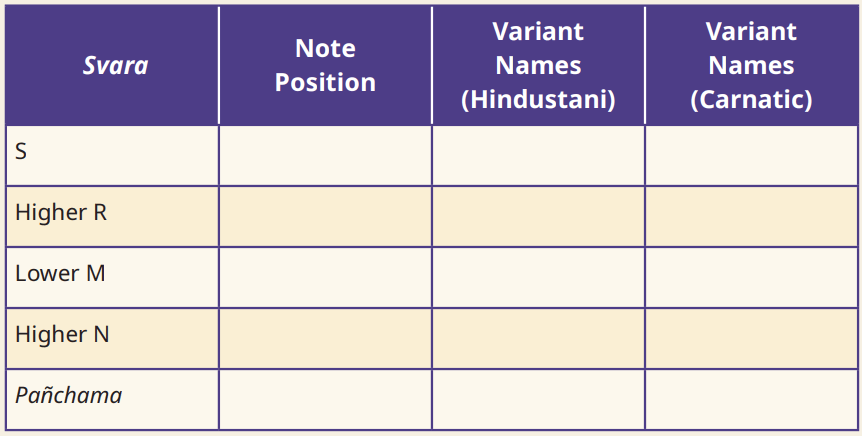
Q11. Complete the table.
Q12. Write the tāla lipi (notation) of Teen Tāla.