11 Dance as Visual StoryTelling

Many Indian dance forms are deeply rooted in the tradition of storytelling. Often described as dṛiśhya-kāvya, or visual poetry, Indian dance uses movement, gesture, and facial expression to communicate meaning clearly and powerfully. Through this expressive tradition, dancers bring to life a wide range of narratives — from classical literary works such as Kālidāsa’s Abhijñāna-Śhākuntalam to modern interpretations of Shakespeare’s Romeo and Juliet; the rhythms of seasonal cycles and the journey from sowing seeds to harvest, scenes from everyday life, and the lived experiences of people.
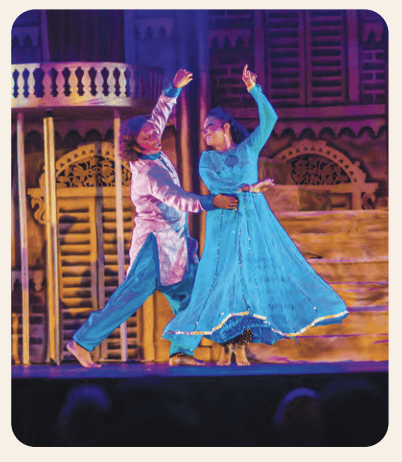
Fig. 11.1. Romeo and Juliet in Kathak
In the previous chapter, we saw examples of the four types of abhinayas. The integrated use of abhinayas in dance allows for the emotion and intent to be transmitted to the audience. Let us creatively explore Āṅgika, Vāchika, and Āhārya Abhinayas!
Āṅgika Abhinaya
It refers to using the body as a tool for communication and articulation in dance. Every dance form has its own movement vocabulary and signature movements that distinguish it from others. The āṅgika can include various types of stylised movements such as sthāna, chārī, gati, utplavana, bhramarī, and hastas, which you can recall from previous grades.
Strike a sculpturesque pose
◈ The sixth-century CE Dancing Śhiva from Badami is depicted with 18 hands, and permutations and combinations of these hands can lead to 81 different dance poses!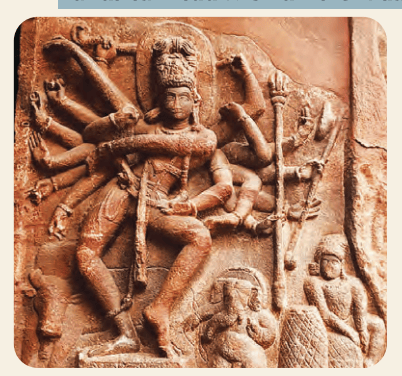
Fig. 11.3. Sculpture of Dancing Śhiva, Badami, Karnataka ◈ Identify a few poses with hand gestures and try them out yourself.
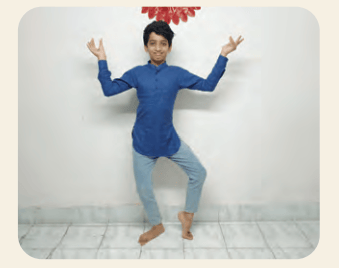
Fig. 11.4. Striking a pose depicting Dancing Śhiva
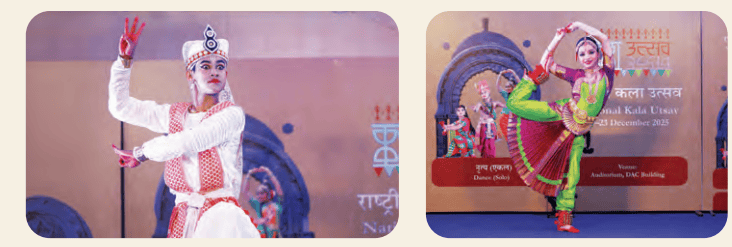
Fig. 11.5. Dancers depicting dance of Śhiva
◈ Add any movement, walk, jump, spin, or combinations of these to create your own movement sequence that communicates a story reflecting the dance of Śhiva as seen in the sculpture.
Vāchika Abhinaya
It refers to the use of verbal elements such as speech, poetry, lyrics, narration, and dialogue for expressive communication in dance. This even includes the recitation of rhythmic syllables. Through Vāchika Abhinaya, the dancer communicates the essence of the story or shares the energy of the performance. These aural elements create the soundscape that shapes a dance’s movement vocabulary
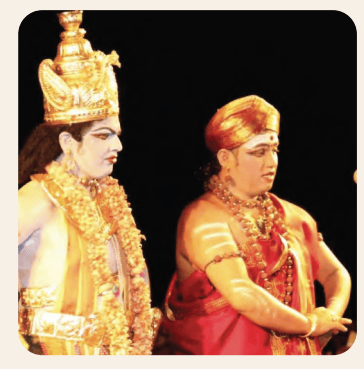
Fig. 11.6. Vāchika Abhinaya in Kuchipudi
The movements of the Kolī dance of the fisherfolk community of Maharashtra are a mimetic representation, portraying the rowing of boats, casting of nets, waves of the ocean, etc., using oars and fishing nets as props.
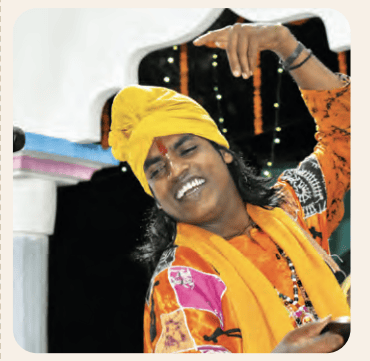
Experience dance through sound, song, and silence
◈ Dance with instrumental music: Perform signature movements of any regional dance that uses only instrumental music. You may also use claps or rhythmic syllables such as dha, ta, ka, dhin, or create your own syllables while dancing. Here are a few examples for you — Tārpā dance (Maharashtra), Diṁsā dance (Andhra Pradesh), Kaikoṭṭikaḻi (Kerala), and Rāut Nāchā (Chhattisgarh).◈ Dance with lyrical music: Perform the signature movements of a regional dance form that uses songs with lyrics. For example, Bihu (Assam), Ghoomar (Rajasthan), Dhamāl (Haryana), and Rāuf (Kashmir).
◈ Dance to your own singing: Sing a regional song learnt in your music class and perform simple movements in any dance style of your choice.
◈ Share and compare your experiences of dancing to instrumental music and lyrical music.
◈ Did you feel you were communicating through your dance? What emotions did you convey?
◈ How did you feel while singing and dancing simultaneously? Compare it to when you dance without singing.

Note to the teacher: Divide the class into groups so that each group experiences all three aspects of the activity in short segments. After the activity, allow time for students to discuss their observations and experiences of responding to different vāchika elements in dance.
Āhārya Abhinaya
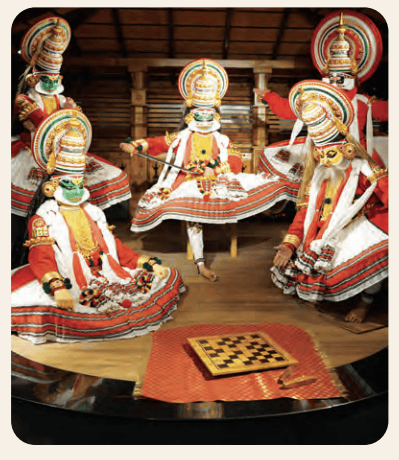
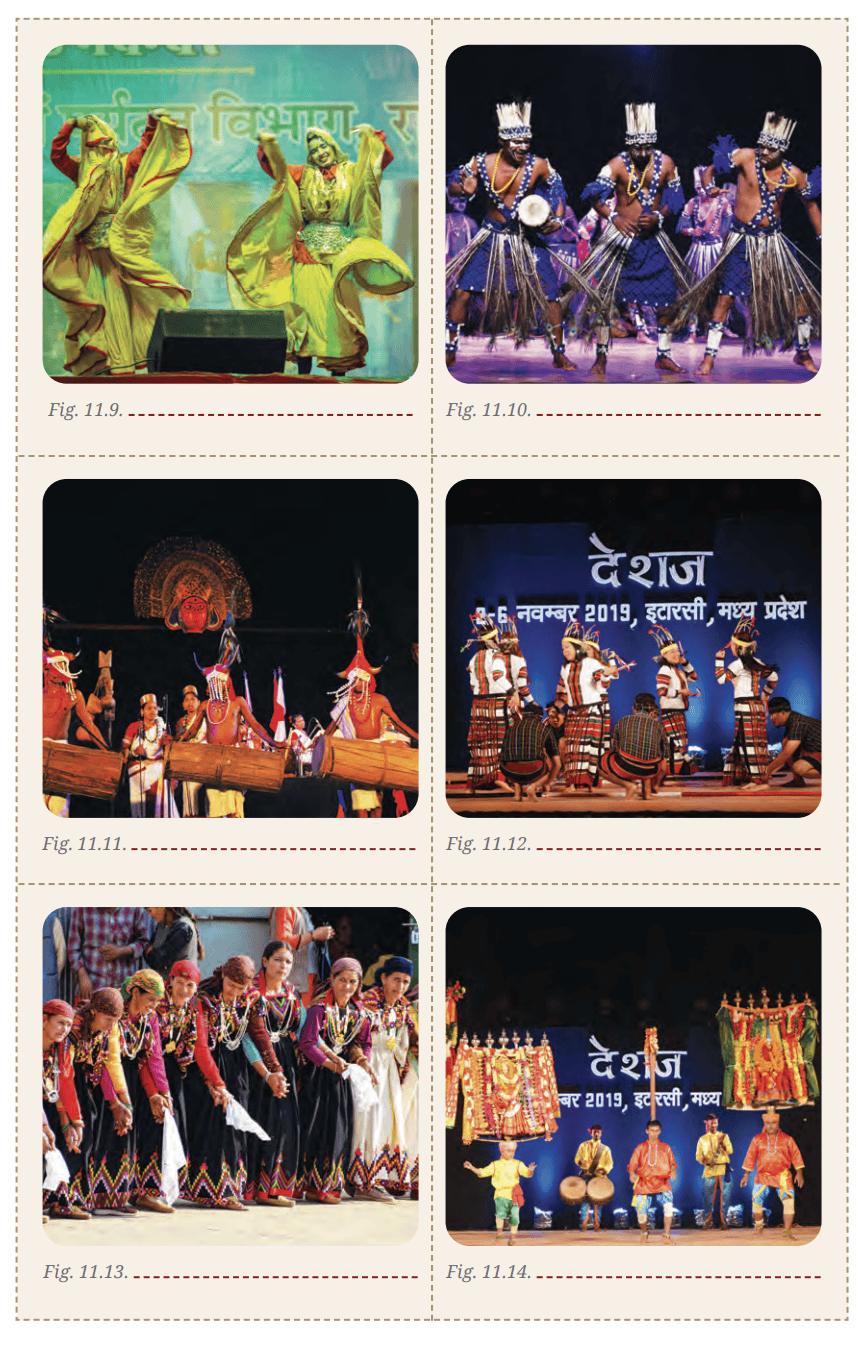
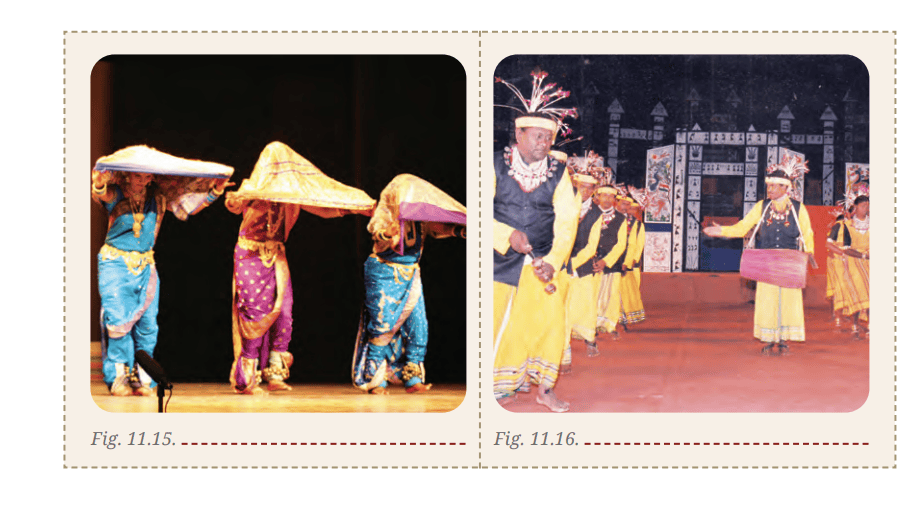
It is the use of āhārya (visual elements) such as costumes, make-up, and props to convey visual narratives, cultural context, and mood in dance. A striking feature of any dance is its costume and make-up. Often, a dance form can be identified simply by its costume, as it reflects the region’s textile and jewellery traditions. Props may also support rhythmic patterns. For example, the Lezim with its metal cymbals provides aural accompaniment to the energetic Lezim dance of Maharashtra, while the chikkā, a wooden clapper used in Bhangra from Punjab, adds both visual and rhythmic complexity. In harvest dances, movements often imitate farming activities and representative props may be used.
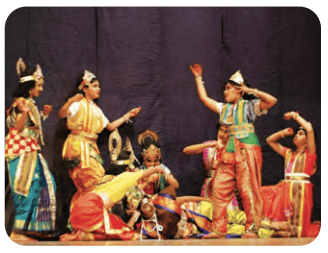
Fig. 11.8. Students performing in different costumes
Spot the āhārya and identify the dance
◈ In Figs. 11.9–11.16, identify the dance form based on the costume, make-up, and accessories, and write its name below.◈ The dance forms (in no particular order) are: Lāvaṇī (Maharashtra), Cheraw (Mizoram), Kullu Nāṭī (Himachal Pradesh), Baigā (Madhya Pradesh), Pūjā Kunitā (Karnataka), Siddi Dhamāl (Gujarat), Bastar (Chattisgarh) and Phāg (Haryana).
EXERCISES
Q1. Describe and show how you can use these elements in your Āṅgika Abhinaya.
Choose any two of the following.
i. Chārī/ gati
ii. Utplavana and bhramarī
iii. Hastas – Hand gestures (Grade 8 Textbook Kriti)
Q2. Which of the Vāchika Abhinaya elements have you explored? Describe how
each of them helped you communicate your idea and thoughts?
---------------------------
---------------------------
---------------------------
Q3. In which Indian dance forms do the dancers simultaneously sing and dance,
either solo or in group. Give three examples and mention the states they
belong to.
Q4. Explain the elements of Āhārya Abhinaya in two dance forms you have
learnt in class. Can you connect any of the āhārya elements with what you
have learnt in Visual Arts?
Q5. Do you think appropriate costume enhances the movement or the āṅgika of
any dance form?