
Chapter 17
Branches of Visual Arts
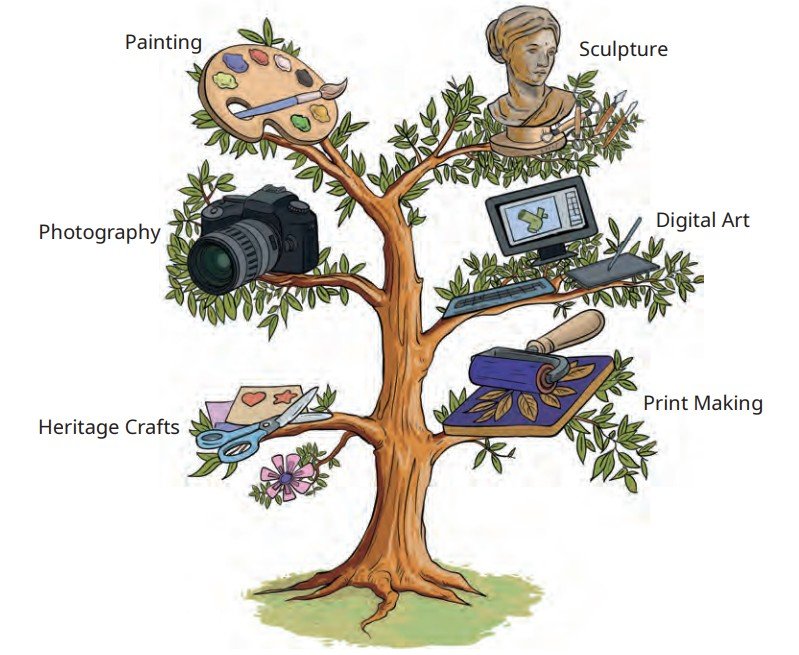
The Visual Arts comprise a broad range of art and design practices. When people say that they are visual artists, it is usually followed up with the question, ‘What kind of visual arts?’ In this chapter you will learn about the many branches of Visual Arts and get a brief insight into the respective careers relating to each of these branches.
Note to the Teacher
Encourage students to explore types of Visual Arts that they are interested in. Assign groups to enquire about each branch mentioned here. For the benefit of the entire class, a presentation can be made by each group.
Activity 17.1
As you read about each category given below, choose one or two that interest you.- Explore and document the work of any two artists, designers, or craftspersons mentioned.
- Refer to artists, view their artworks, and watch films/ interviews.
- What kind of visual art does the artist practice?
- What had been their inspiration, and how did they learn the art form?
- What are the subjects or themes that they are interested in?
- Why do you think their work has received recognition?
Forms of Visual Arts
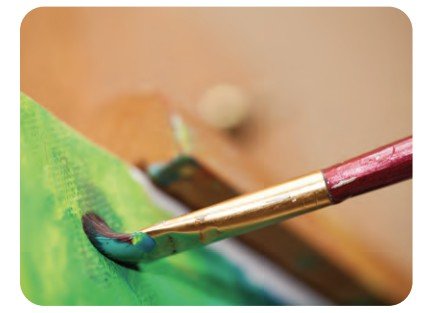
Drawing and painting
Both of these involve creating pictures on two-dimensional surfaces with mediums like pencils, pens, pastels, inks, oil paints, watercolours, acrylic paints, tempera, and natural dyes on surfaces like paper, fabrics, walls, etc.
Some famous artists- Nandalal Bose (Padma Vibhushan)
- Abanindranath Tagore
- Jamini Roy (Padma Bhushan)
- Amrita Sher-gil
- Ganga Devi (Padma Shri)
- Jivya Soma Mashe (Padma Shri)
- Ram Kumar (Padma Bhushan)
- Nasreen Mohammedi
- K.C.S. Panicker
- K.M. Adimoolam
- Raja Ravi Verma
Sculpture
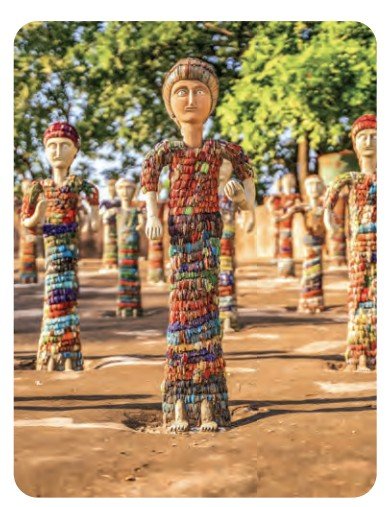
It involves creating three-dimensional artwork using a variety of materials like clay, wood, stone, metal, fibre glass, plaster, fabric, natural fibres, recycled materials, etc.
Some famous artists- Devi Prasad Roy Choudhury (Padma Bhushan)
- Amarnath Sehgal (Padma Bhushan)
- Ramkinkar Baij (Padma Bhushan)
- Sankho Chaudhuri (Padma Shri)
- Meera Mukherjee (Padma Shri)
- P. V. Janakiraman (Padma Shri)
- Mrinalini Mukherjee
- Pilloo Pochkhanawala
- Raghav Kaneria
- Nagji Patel
- Somnath Hore
Printmaking
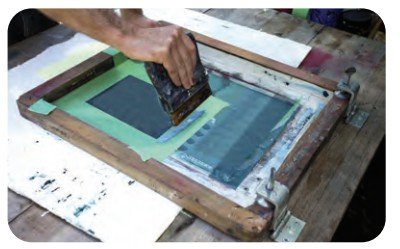
Techniques in printmaking allow artists to make multiples of the same artwork in editions. The processes involve creating an image on a surface like a woodblock, metal plate, stone, linoleum, etc., with carving/ engraving tools and mediums that make it suitable for inking. After the surface is inked with a roller, a sheet of paper is placed over it and pressed either manually or using a printing press. In the case of wood-block printing on textiles, the inked wood block is pressed onto the fabric in specific patterns.
Woodcut, lithography, etching, and screen printing are some of the commonly known printmaking processes.
- Chittoprasad Bhattacharya
- Haren Das
- Krishna Reddy (Padma Shri)
- Jyoti Bhatt (Padma Shri)
Photography
It involves creating artwork using digital tools, software applications, still/ video cameras. It may be clarified that photography is different from photo journalism

Photo journalism focuses mainly on documenting events, people, places, and nature for reportage.
Fine art photography might include documentation but also extends to explorations in image-making, visual effects, compilation, and photo-montage (compilation of different photographs/ images).
Some famous artists- Lala Deen Dayal
- Sawai Ram Singh II
- Umrao Singh Sher-gil
- Homai Vyarawala (Padma Vibhushan)
Applied arts and design disciplines
The applied arts contain many subcategories of design disciplines like graphic design, product design, industrial design, animation, film and video, textile, fashion design, etc. Designers find creative solutions for many problems and necessities of everyday life by creating functional objects and spaces and effective visual communication.
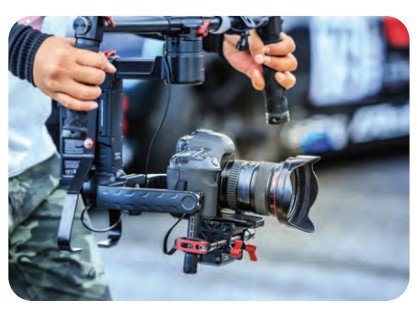
- Dashrath Patel (Padma Shri)
- R.K. Joshi (Padma Shri)
- Martand Singh
- Rohit Khosla
- Satya Paul
- G.K. Gokhale
- Ram Mohan (Padma Shri)
- Satyajit Ray (Bharat Ratna)
Heritage crafts
These include a rich variety of arts traditions that involve handcrafting and simple machines to design and produce objects, fabrics, toys, and artefacts for various everyday needs of people. India is a treasure trove of heritage crafts that specialise in various materials and processes.
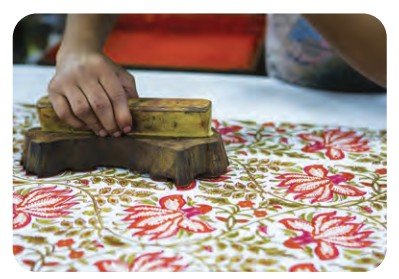
Many of these traditions have been integrated with other design disciplines like product design, furniture design, ceramics, glass, textiles, and so on.
Some famous artists- Kamaladevi Chattopadhyay (Padma Vibhushan) — crafts revival
- Pupul Jayakar (Padma Vibhushan) — crafts revival
- Haku Shah (Padma Shri)
- Nilima Baruah
Find out about Padma awardees or any craftsperson from your region or state.
Arts research and management
Let us explore the importance of Art History and its connection to museology:
Art History is a discipline where one studies the development of art in various geographic regions across time and the social, cultural, and environmental factors that influenced changes.
Museology is another discipline which gives evidences of Art History. It is an important discipline that involves museum management, museum education, and preservation (restoration and conservation).
Disciplines that are closely related to the Visual Arts
Architecture combines structural engineering and design to make buildings for a variety of functions.
Archaeology combines various branches of science and history to study artefacts and other evidences that help us formulate a picture of the past.
Activity 17.2
Interact with visual art professionals
You may have many questions about branches of Visual Arts as well as visual artists. With the help of your teacher, find artists from your region, to contact and interact with, either in person or online to learn about the practical aspects of their work.EXERCISES
Q1. Imagine that an arts and crafts festival is being organised in your locality/ town. Many visual artists are invited to help the organising team.Match the professionals with their assignments.
Q2. List any four branches of the Visual Arts.
Q3. Write about any branch of the Visual Arts that you are interested in. Reflect on your experience of different forms of Visual Arts and write which one appealed the most to you.
Q4. While experiencing performing arts like Dance, Music, and Theatre, did you find the role of Visual Arts in enriching it?
Q5. Individual Project Create a motif or personal logo in colour, inspired by Indian traditional designs (For example, textiles, crafts, architecture, etc.).
- Artwork size: A5 paper
- Create at least two iterations before finalising your artwork.
- Incorporate either complementary or analogous colours in your colour scheme using a suitable medium.
- Write a short paragraph explaining your ideas and inspirations behind the design.
- Group size: Three to four students
- Artwork size: Approximately 85 × 60 cm (half a chart paper)
- Each group should collaboratively decide on a theme and materials for their artwork.
Notes
------------------------------------------------------------------------------------------
---------------------------------------------
---------------------------------------------
---------------------------------------------
---------------------------------------------
---------------------------------------------
---------------------------------------------
---------------------------------------------
---------------------------------------------
---------------------------------------------
---------------------------------------------
---------------------------------------------
---------------------------------------------
---------------------------------------------
---------------------------------------------